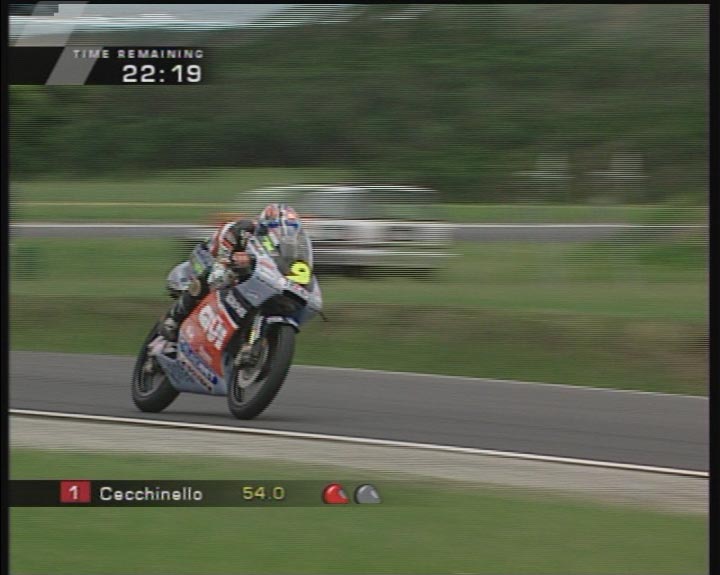
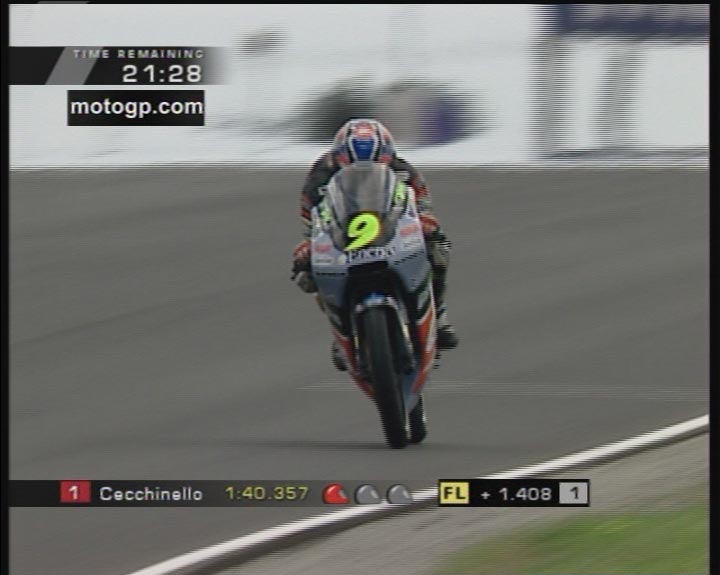
31/10/00
I was out all day so update is late not that there much to report. Thanks to all that turned up in the chatroom I reckon there was about 30 people that popped in and out of the room dureing the whole chat.
Not much happening today I have been out thats why the site updates so late not much happening anyway
From my emails & ICQ
There is a 3M panel dish available in Sydney
Really it is quite old but in fair condition, Took it down last week and its killing the grass.
So, its first person with $50 and the means of transport has it.
Replaced it with a 3.6m 4 section solid, and used for monitoring digital radio feeds to pacific islands.
Bob
Phone 0411 025 456
NEWS
Crown Media talks with Modi Entertainment on Kermit; merges service with Hallmark in Asia
From Indian.television.com
US-based Crown Media Holdings, parent of Crown Media International, is in talks with the Modi Entertainment Network (MEN) to set up an Indian joint venture for kid's channel, Kermit. Crown is exploring whether a relationship of this kind will help increase its distribution and advertising revenue.
Kermit has been distributed by MEN in India over the past year or so and more than 5,000 IRDs have been placed with cable operators to enable them to receive the encrypted service. The channel charges cable operators a carriage fee of around Re 1 per subscriber. Indian cable ops have also paid up advances for the IRDs.
Elsewhere in Asia, Crown has taken the decision to relaunch Kermit as a day part service on Hallmark, which is also being recast and reintroduced with a snazzier look and better packaging. Kermit will cease to be telecast as a separate 24 hour feed over Asia from 1 November.
DTH gets go-ahead; but final clearance still some time away
From Indian.television.com
The group of ministers on DTH - headed by home minister L.K. Advani - met once again on 30 October and said they had no reservations on giving it the go-ahead.
Since television comes under the purview of the information and broadcasting ministry, minister Sushma Swaraj and her team will prepare a note which is to be presented to the Union Cabinet for approval within a fortnight.
From current indications, it appears as if the GoM is in favour of a 49 per cent ownership cap, an open set top box regime, no specific need for broadcasters to go via the Prasar Bharati's service, and a licence fee.
The details will however become clearer over the next few days.
DTH looks set to get go-ahead from ministerial group; awaits Cabinet nod
The old bugbear is finally out of the way. Ku-band direct to home television (DTH) looks set to get the go-ahead finally after a three year ban on sale of Ku-band reception equipment. The group of ministers on DTH - headed by home minister L.K. Advani - met twice yeterday to flesh out the issue, but couldn't come up with a final set of recommendations, though in principle they agreed that it should be cleared and presented to the cabinet for its approval.
Among those participating in Sunday's meeting were Advani, finance minister Yashwant Sinha, information technology minister Pramod Mahajan, information and broadcasting minister Sushma Swaraj, and the law minister Arun Jaitley.
The ministers were slated to be meeting at the time of writing and draw up a final set of recommendations. It is quite likely that they will recommend that DD be the main DTH operator in partnership with private companies. Additionally, it is expected to allow limited foreign pariticipation in DTH.
Both Star TV and Zee TV - along with Malaysian operator Measat, which has a two year old pact with the state-owned network - will be watching anxiously what the GoM will finally propose.
30/10/00
Live chat tonight 8.30pm Sydney time onwards, also I am in there from 9.30pm NZT for anyone else in NZ that wants to chat satellite stuff. I upgraded my link checker so all links should be %100 now a few pages needed fixing and have been uploaded, now I have that sorted I can start work on the Satellite Sports page. There dosn't seem to be much happening at the moment.
From my emails & ICQ
this from ADI, There is a change for this week Seri A match.
Below are the match that can be seen on RCTI in Palapa 2.
The Time are italian time. These matches also can be seen through RAI International on PAS 2 FTA
RAI INTERNATIONAL 1 E NORD AMERICA
Mercoledi 1 November - Ore 14.15
all'interno de "La grande Giostra del Gol"
Serie A: JUVENTUS - UDINESE
RAI INTERNATIONAL 1 E NORD AMERICA
Mercoledi 1 November - Ore 22.40
Serie A: INTER - ROMA
nb: as usual SCTV is for English Premiere League and transmitting on
Saturday and Sunday,
Ussually Saturday match at 9:00 pm Jakarta-Time and Sunday match at 11:00 pm Jakarta-Time.
RCTI - Seri A Italia, Sunday and Monday match Jakarta-Time or Saturday and Sunday match Italian Time.
The first match is usually on at Sunday Morning at 1:30 am Jakarta-Time, and then 8:00 pm Sunday and the last is 2:00 am Monday, all Jakarta-Time
regards,
Adi
From the Dish
Asiasat 3S 105.5E "Zee Music" on 3700 V is now unencrypted.
Intelsat 702 176E has completed its move from 177 East to 176 East.
NEWS
Hitachi and The Fantastic Corporation Announce Partnership to Develop Direct-to-Home Multimedia Broadcasting Service
From Satnewsasia.com
Hitachi, Ltd (TSE:6501/NYSE:HIT), one of the world's largest electronics companies and The Fantastic Corporation (Fantastic), a global leader in broadband multimedia, announced today that they have agreed to co-develop a Direct-to-Home Multimedia Broadcasting Service over satellite for Asia Pacific.
Under the terms of agreement, both companies will co-operate to study and develop new exciting media services for today's sophisticated and Internet-savvy consumers by first initiating a feasibility study. Fantastic will license its broadband content distribution and management software to Hitachi to enable the distribution of the content, and will also provide consultation and media expertise to determine the effective usage of broadband technologies and multimedia content. Hitachi will provide the hardware, facilities and will also engage in a range of initiatives in the media and entertainment industry for content aggregation and distribution.
This multimedia broadcasting service aims to deliver all categories of mass market digital multimedia content effectively and quickly to Internet enabled devices such as PCs, home appliances and set-top boxes. Using the push technology, Fantastic's software will enable consumers to receive an enhanced media experience that combines entertainment, interactivity, shopping, personalized content and fun. The content can be broadcast daily, weekly or on a needed basis through audio/video streaming, package delivery or cache delivery.
"We are very excited about this collaboration with Fantastic and its high quality broadband multimedia broadcasting technology. Hitachi will develop businesses such as the management of responses with interactive systems, efficient ways to provide content, TV-commerce including auctions and so on. Fantastic's management system for broadcasting is a very good fit as a basis for our services" said Kimitoshi Yamada, General Manager of e-Service & Business Development Hitachi, Ltd.
"The next evolution in the media scene is about to explode with new forms of interactive entertainment that tailors to individual consumer's lifestyles, convenience and interests -free from the limitations of bandwidth. Just like the Internet has fundamentally changed how we communicate globally, we are about to witness another mega communication wave with Broadband," said Mr. Tsuneo Sakai, President of Fantastic Japan. "We are pleased to be working with Hitachi to stimulate this new wave of innovation with media and e-commerce services that takes the best of television and Internet -- an enriched service that consumers can soon experience anytime, anywhere."
This announcement follows a series of successful broadband pilots that Fantastic has already conducted globally. One of these recent pilots is done with Telstra in Australia, where broadband channels containing games, news, advertisements and live video streaming were constantly broadcast via satellite to PCs at selected customer sites throughout Australia over a two-month period. Another pilot was conducted with mobile phone leader Nokia, showing handheld devices, successfully receiving multimedia content at speeds of 14.95 megabits per second -- enough to support several simultaneous TV quality video streams in the palm of the user's hand. These pilots were based on unidirectional broadband content delivery with dial back options.
The partners expect that the first services will be available to the consumers in the second half of 2001.
Hitachi, Ltd., based in Tokyo, Japan, is one of the world's leading global electronics companies, with fiscal 1999 (ended March 31, 2000) consolidated sales of US$75.5 billion (8,001 billion yen). The company manufactures and markets a wide range of products, including computers, semiconductors, consumer products and power and industrial equipment.
The Fantastic Corporation (Zug, Switzerland) is the leading provider of software solutions for data broadcasting. This is an emerging communications technology which combines point-to-multipoint digital broadcasting with point-to-point Internet connectivity, in order to deliver rich interactive media content to PCs, digital set-top boxes or handheld devices (including 3G mobile phones) over any broadband IP network.
Additional information on The Fantastic Corporation may be obtained at www.fantastic.com.
By merging the inherent bandwidth and speed benefits of broadcasting technologies with the interactivity of the Internet, data broadcast provides superior content distribution and interaction in an increasingly IP-centric world. Fantastic's end-to-end software supports the rapid growth of the "data broadcast" industry.
Fantastic's global partners and customers include BT plc, Telecom Italia, Deutsche Telekom, Loral Space and Communications, Reuters, Lucent Technologies, Intel, Singapore Press Holdings and Inktomi. Fantastic is a public company, quoted on the Frankfurt Stock exchange using the symbol: FAN
The Fantastic Corporation is a registered trademark. Channel Management Center(TM)(CMC), Channel Editorial Center(TM)(CEC), MediaSurfer(TM) and Fantastic SmartCaster(TM) are trademarks of The Fantastic Corporation.
Arirang TV Appoints a New Head of International Marketing
From www.SatnewsAsia.com
Arirang TV, Korea’s best entertainment and information channel, has announced the appointment of Nicolas Hong as the head of international marketing.
As a director of international sales and marketing team, Hong stresses his prior marketing goal lies on securing more than doubled number of households around the world by the end of the year 2001 and develop strong ties with present partners in the region.
Prior to his new post, Hong was in charge of channel distribution for the European region in this company. Hong’s diverse experience in the field of television includes the head of acquisitions in Korea’s On-Media (HBO, OCN and Tooniverse) and Samsung Entertainmend Groul (SEG).
Headquartered in Seoul, Arirang TV brings Korea’s best entertainment and information programming ranged from drama and music to the latest news coverage and documentaries to the international audience.
Since the launch as the regional satellite broadcaster in the Asia-Pacific region in 1999 and its coverage extension to the whole world on September 2000, Arirang TV is now available in over 15 million homes across the world.
29/10/00
Very small update today (Well its Sunday, your lucky to see an update at all)
The 500cc Motorcycles from Australia are live on Anteve (Palapa C2) and Star Sports Asia (Asiasat 3) also the feed should be on Pas 2 same location as yesterdays report. Has anyone seen feeds of the Rugby League World Cup?
I am working on splitting up the feeds page, to individual satellites. Also I am working on a Satellite sports page, let me know where you always watch a particular sports program etc. WWF on RCTI etc, all I need is day and time and channel, like below. Or failing that just the channel it screens on. I especially need help with the football ones
|
WRESTLING
|
| WWF Smackdown |
RCTI, Friday 22.30
|
| Ekushey TV, Friday 7.30pm (Unconfirmed) | |
| WWF Raw | Star Sports Asia |
| WWF Metal | Star Sports Asia |
| WCW | Indosair, Sundays 14.00 |
From my emails & ICQ
R.Anthoney reports
9.30 a.m Syd Pas 8 3900 H Sr 27500 Fec 3/4 "College Football, Airforce Academy vs Notre Dame" in with CNBC Asia,
might be worth watching this location for other NFL feeds most probably for Japanese pay tv services.
28/10/00
Just a small update today, Cricket tonight via I701 is NZ vs South Africa ODI starting at 6.55pm Sydney time.
From my emails & ICQ
Via the Apsattv mailing list
Thaicom 3 3600 H Sr 26667 Fec 3/4
DD World (channel name on reciever is Dos when
downloaded/scanned) previously on VPid: 2435, APid: 2436, is now on VPid: 515, APid:680.
Anyone have an idea about what happened on Thaicom 3
between Wednesday and Thursday?? ALL the channels on
Thaicom 3 went Off - air for some time and when they
came back on DD WORLD had it's Pids changed
S. Singh
(Craigs note any other reports of odd Thaicom 3 problems?)
Bill Richards reports
0225 UTC 28/10/00 Pas2 3860 H Sr 10850 Fec 3/4 Vpid 308 Apid 256 "Qantas Australian GP motorbike race"
Click for fullsize.
From the Dish
Agila 2 146E "TWS Cinema has started on 3853 H, Sr 3600 Fec 3/4 Vpid 4130 Apid 4131
Optus B3 156E "CentreLink" has left 12407 V
Panamsat 2 169E "MBC (South Korea)" has started on 3981 H Sr 2982 Fec 3/4 Vpid 3601 Apid 3605.
They also have a web video stream which dosnt appear to be working at the moment
27/10/00 2nd update
Trouble uploading the page due to an Ihug outage has delayed things,latest update is Zee on As3 has encrypted again.
27/10/00
Sorry, I didn't get the page finished before I had to go into town. The usual fairly large Friday update, A VTV4 (Vietnam) website and program guide link added to Thaicom 3 page.
From my emails & ICQ
Bill Richards notes the following
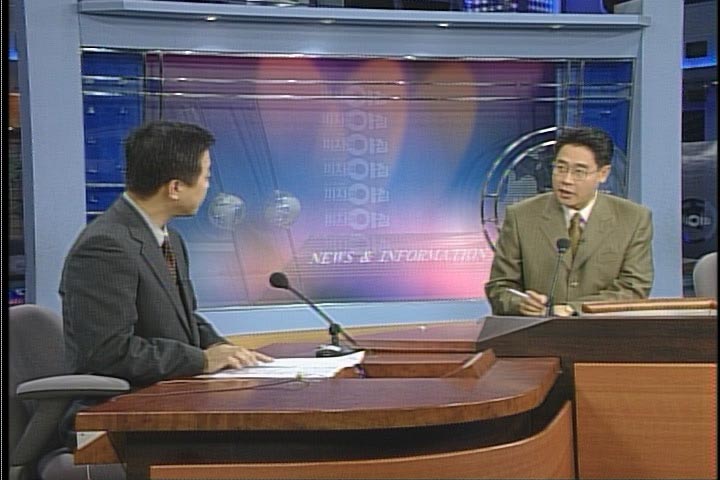
2230 UTC Pas2 3981 H Sr 2982 Fec 3/4 Vpid 3601 Apid 3605 "MBC South Korea 24hour service"
Via Apsattv mailing list , Zor reports
7.42pm 26/10/00 All Zee channels are unencrypted as I write this email. They're also advertising the new Zee MGM
channel starting November 1
also via the mailing list P.Eade reports
5.44pm NZT 27/10/00
"NBA Basketball" I701 4194 RHC, S/R 5632, Fec 3/4,A 650, V512, P8190 ,Freq swapped to 4186R later
10:52: NZT 26/10/00
American "World Series" (what a joke!) Baseball live FTA on I701
"10 Australia" MCPC transponder 3765RHC S/R 29900 FEC 7/8
Ident "Channel 4" A1420 V&PCR1460
Cheers
Peter Eade
Also from Peter this interesting email,
Hi Craig
I See your'e looking for NZ/SA cricket feeds again.
Yes, it's on I701, last couple of one day matches FTA on 4194R ,S/R 5632, FEC 3/4, A650, V512, PCR8190.
Idents as "TVNZ HBH E198 M792"
Same Ident on signal on 4162 but encrypted!
For the benefit of your Perth viewer this signal is coming from SA
via New Skies 703 @ 57 East on one of 4161, 4169, 4179, 4187, or 4195 all RHC.
Also listed at Lyngsat are 3709 and 3718 LHC.
Refer http://www.lyngsat.com/nss703.shtml
These are all TVNZ transponders,SCPC with a S/R of 5632 and FEC 3/4.
For a "Network Overview" chart Refer http://www.tvsat.net.nz/
If he can see I701 @ 180 then take a look for the "TVNZ_PERTH_25"
signal @ 4052 or thereabouts and he will see a Spec. Analyser
display of the receive levels in Perth of the RHC signals from NSS703.
Not all of these are retransmitted to I701 but some will appear on
4044, 4052, 4060, 4162, 4170, 4178, 4186, or 4194 all RHC.
Note that most are encrypted but still several FTA (including cricket).
These transponders are also used by "TVC": I haven't identified this.
All these signals are SCPC at a S/R of 5632, a FEC 3/4 and all have the same
PCR PID 8190 (1FFEh)
Common Audio PIDs 256(0100h), 640(0280h), or 650(028Ah).
Common Video PIDs 308(0134h), or512(0200h).
Peter Eade
Friday Feeds Bit
Starting this Friday 27/10/00 Look for Live NBA, on I701 and probably Pas 2 maybe in with Fox feeds, Also the Senior PGA might be there with the Fox Feeds.
Saturday 28/10/00
9.00 a.m Syd "ESPN Sportcentre" this feed has been seen in with the Fox news Boquet on Pas 2
10.30 a.m Syd Baseball Major League World Series game 6 (I701 see above for details)
6.55 p.m Cricket South Africa vs NZ ODI again check I701 see above for details
Sunday 29/10/00
2.55 p.m Syd World 500cc motorcycles (this one live from Australia, feeds should be on Pas 2, Optus B1 and Optus B3 maybe I701 as well)
From the Dish
Apstar 2R 76.5E "AXN promo" on 3920 H is now encrypted.
Apstar 2R 76.5E "AXN Thailand" has started on SID 2, Vpid 1260 Apid 1220 Encrypted.
Apstar 2R 76.5E "The Disney Channel Asia" has started on 3880 H Encrypted Vpid 2360 Apid 2320.
Thaicom 3 78.5E 3551 H "Serena" Sr 13333 Fec 3/4 Vpid 2065 Apid 2066 has left
Asiasat 3 105.5E 4135 V "Zed TV 2" Sr 15000 Fec 3/4 Vpid 35 Apid36
Asiasat 3 105.5E 3700 V "All Zee Channels here reported to be FTA currently"
Agila 2 146E "KSBN Movie" on 3853 H has been replaced by a test card.
NEWS
Digital TV nightmare stirs
From http://news.com.au
By Mark Westfield
THE Howard Government's digital television strategy is in disarray just two months before the service is due to start.
The three commercial networks face a delay of at least a year because technical problems have postponed the introduction of their chosen technology.
Also, the world's big set-top box makers are insensitive to the pleas of the Australian industry to produce the units in time for the January 1 digital start demanded by the Government because the production run would be relatively short.
UK-based Pace, the world's largest set-top box maker, normally deals in production runs of 500,000 to 1 million and has not been tempted to tender for the Australian industry which would require less than one-tenth that number initially.
Seven, Nine and Ten took out advertisements in national and metropolitan newspapers last week calling for expressions of interest to supply up to 40,000 digital set-top boxes.
This is a last-ditch bid to find another technology which would allow some Australian households to receive digital transmissions through their analogue television sets by New Year's Day.
Communications Minister Richard Alston has told senior network executives that the Government wants the January 1 starting date for digital transmissions to be kept. Last week's advertisements were the industry's response to the pressure from a government facing considerable embarrassment in an election year.
Senator Alston and Prime Minister John Howard backed the networks strongly by giving them free spectrum for digital transmission and extended the ban on new networks to January 2007. The Government also has severely restricted the type of service that datacasters can offer to ensure that they do not in any way compete with the networks.
As a result, the main potential players in datacasting, John Fairfax, News Ltd (publisher of The Australian) and Telstra have decided not to proceed with their plans.
The set-top units would cost the networks about $200 each, or $8 million all up, to sell them on a subsidised basis to a small fraction of the six million households with TV.
However, the technology will be inferior to the standards promised by the networks and the Government.
The boxes will need to be upgradeable to MHP when it becomes available. MHP, or media highway platform, will be the highest standard digital technology allowing high definition as well as multi-channel coverage.
General manager of the Federation of Australian Television Stations, Mr Tony Branigan, confirmed yesterday that there would be a delay in the introduction of MHP, but believed it could be available by the middle of next year.
"It's a question of timing," he said. "The regulatory timetable set by the Government is out of step with the availability of the units."
He said the call for tenders could attract set-top producers from Europe, North America or Asia. Other industry participants believed the delay would be at least 12 months and as much as 18 months.
Whichever interim system the networks take, the industry believes it will not be able to deliver high-definition television or interactivity between viewer and advertiser, two selling points the commercial networks used to persuade the Howard Government to give them exclusive use of the technology and the spectrum on which to broadcast it.
The spectrum given to the networks is conservatively estimated to be worth $5 billion. Other spectrum users, telephone companies in particular, have to pay for it.
The set-top box technology is crucial to the success or otherwise of digital because dedicated digital sets are estimated to cost at least $10,000. Australia's weak dollar will only make the imported sets more expensive. Because the networks were able to persuade the Howard Government to mandate not just high definition, but a standard unique to Australia called 1080i, the sets will also have to made especially for Australia.
One industry participant described the networks insistence on this standard, which has been rejected in every other industrialised country, as a "spectrum grab" which will enable them to use spare spectrum for other commercial uses.
Telstra ready for next steps of Asia adventure
From
By Andrew White
FRESH from rejigging the terms of its venture with Richard Li's Pacific Century CyberWorks, Telstra has signalled it may dilute its 60 per cent shareholding in the Hong Kong wireless operation to help build a pan-Asian business.
Telstra is also looking to unify some wireless businesses in the region under a franchising model, with the Hong Kong and Australian operations forming the foundation.
Telstra chief executive Ziggy Switkowski said "quite a few global telcos" had approached Telstra about swapping or sharing assets in the region.
But Dr Switkowski said he was puzzled by reports that US giant AT&T was in talks about joining another leg of the PCCW deal, a joint venture operating Asia-Pacific undersea cables carrying internet and telephony traffic.
A week ago, Telstra unveiled revised terms of the PCCW deal which included reducing its cash commitment by $1 billion, to $3 billion, and increasing its stake in Hong Kong's No.2 mobile phone company from 40 per cent to 60 per cent.
PCCW head Richard Li has since flagged a sale of some of PCCW's shares in HKT to reduce its $US9 billion ($17 billion) debt burden and Dr Switkowski yesterday confirmed plans to float the business next year.
But Dr Switkowski said floating the HKT business alone was not the most attractive proposition as the partners seek to build a regional mobile business.
Telstra could "at a minimum" lose 9 per cent of its 60 per cent holding in HKT to trade for reciprocal equity in another company.
"Once that model is established and those assets are identified and some cash is actually put in place, then I think we have a structure, a very credible structure, to take to the public market -- and that's pretty much the game plan and we'll see how that plays out over the next 12 months," Dr Switkowski told Nine Network's Business Sunday program.
The joint cable assets, known as Internet Protocol Backbone Co, could be floated within the next nine months, with Dr Switkowski labelling a $US6 billion estimated value as "within the range".
Dr Switkowski said Telstra was insulated from PCCW's debt worries because its investments were in the assets and businesses, rather than the parent company.
Optus puts all cable bets on 'strategic' hold
From http://news.com.au
By GEOFF ELLIOTT
CABLE & Wireless Optus cable network has been placed on care and maintenance until it can find a buyer as the company attempted to contain the fallout from relevations in The Australian yesterday of huge losses on the company's cable business.
Australia's No. 2 carrier labelled the documents published yesterday as outdated and said the scenarios outlined "are no longer under consideration".
The documents, which C & W Optus said were "some months old", included big capital expenditure plans to take C & W Optus's cable business into a "market-leading" and profitable position.
But the company yesterday said it had reversed its thinking on the capital expenditure initiative under the planned NewCMM spin-off outlined in yesterday's report.
That comes after the company has failed to find a buyer for the business, and as the parent company, Cable & Wireless, appears unwilling to stump up more capital for the loss-making network.
Analysts said C & W Optus was now telling the market the spending cuts could mean the company posts a trading profit on the network this financial year.
But the big losses forecast in the documents published yesterday, and its revelations that to make the network a big profit centre would require another $3.1 billion in capital expenditure over the next five years, unsettled investors.
C & W Optus's shares fell about 13c, or 3 per cent, to $4.10. The company's stock now stands down about 47 per cent from its peak – worse than other big telcos Telstra and Telecom Corp of New Zealand.
C & W Optus chief executive Chris Anderson said the document, compiled by Goldman Sachs and based on C & W Optus internal forecasts, was based on the company attaining a "market leadership" role over its chief rival Foxtel.
But now that the company was cutting capital expenditure the documents were irrelevant, and any decisions made on the cable were now in the context of the company's "strategic review".
One of the architects behind that is Stephen Pettit, a board member on both C & W Optus and its parent company Cable & Wireless.
Mr Pettit admitted the capital-intensive nature of telecommunications was changing the business case of telcos, but denied this meant he was foreshadowing a break-up and sell-off of C & W Optus.
He said reports that there was a split between the parent company, which has five directors on the board, and the five independent directors, were incorrect.
However, sources say there has been concern among the independent directors about the parent company's role in the review of C & W Optus's business.
Mr Pettit said the strategic review was driven by Mr Anderson, who also sits on a senior executive committee at the parent company.
26/10/00
Lots of news items today, I can't seem to find news of the Indonesion stations does anyone have a tip as to a good site that has tv related info and news from the channels there?
From my emails & ICQ
Bill Richards reports the following feed
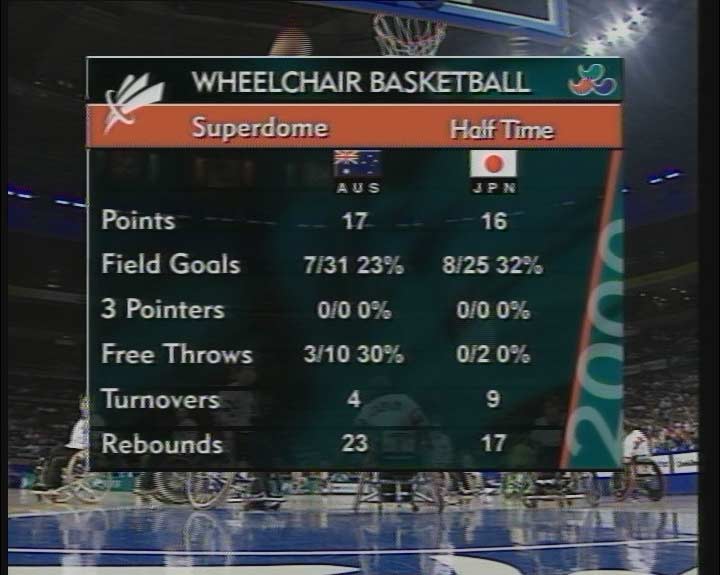
0850 UTC Panamsat 2 169E 3855 H Sr 6110 Fec 3/4 Vpid 1160 Apid 1120 "Paralympics feed Aust vs Japan Basketball"
I'm not sure this is the right forum for this question, if not somebody please point me in the right direction.
I already have an installation c/w 3.8 m dish and FTA digital and analogue recievers, however I am also in a "black spot' for receiving SBS. I know that by buying an irdeto receiver and enabling it with a smartcard I will receive SBS via Aurora. My problem is that my existing dish seems to go out of whack quite often causing picture breakup and lost signals, the reason for which I am not sure ( excess play in the dish linkage?). Is it possible ( and practical) for me to add a 80 cm fixed dish capable of receiving Aurora on the house wall and cable it into the existing installation. Would I be able to utilise the dual polarity LNBFon my existing dish installation although it would be remote from the smaller dish.
Is this all too hard? All feedback appreciated.
Doug
(Craigs note, its hard to guess but your dish sounds like it suffering from some localised interfearance, either that or its not quite aligned properly? for Aurora I would go with a second small dish that way your big dish is free if someone wants to watch Aurora. If you buy a new all in 1 receiver with dig/ana/positioner and card slots it will will be probably take 2 seperate dishs off it easy enough.especially if the receiver has two inputs, but you can always use splitters and 22khz switch or diseq (not sure what the acronym is) for the new digital receivers)
I was just watching BIZ Asia on CNN. They had a story regarding Pacific
Century Cyber Works (PCCW) deciding to slash funding to the NOW project.
This announcement seems to have assisted the PCCW shares to increase in
value in the last 24 hours.
The story said that NOW was intending to rapidly roll out to Australian and
Indian viewers in the near future (NOW is already on cable in Hong Kong).
The slashing of funding may affect this roll out.
Mark
From the Dish
Apstar 1A 134E 4045 V "SCTV - Sichuan TV" Sr 6620 fec 3/4
Agila 2 146E 3835 H"CN TV" Fec 3/4
Asiasat 2 100.5E "Sky Racing Channel 3 on 4020 V is encrypted again.
NEWS
US studios eye Foxtel investment
From http://www.afr.com.au/investment/20001025/A8077-2000Oct25.html
By Luke Collins
On December 2 the company will launch a number of new channels, including a music service targeting older listeners. (See text below for more details)
The fragile ownership structure of Foxtel could be set for a shake-up as the four Hollywood studios that supply product to the pay-television group consider whether to take an economic stake in the company.
The studios - Paramount, Universal, Sony Columbia TriStar and Twentieth Century Fox - have requested access to Foxtel's financial records to determine whether to invest.
Under the terms of the agreement that created Foxtel five years ago, the studios have the option to buy non-voting stock to gain an economic interest in the company.
Foxtel's voting shares will remain in the hands of its 50 per cent owner, Telstra, and its 25 per cent investors, Mr Kerry Packer's Publishing and Broadcasting and Mr Rupert Murdoch's News Corporation.
Each voting shareholder has the right to veto decisions, meaning progress can be made only when all three agree. That system has, for six months, kept Telstra at loggerheads with PBL and News Corp about Foxtel's transition to digital services, which is tentatively scheduled to be completed by July 1, 2001.
The dynamic would be altered by the introduction of the studios, which own The Premium Movie Partnership, the firm that supplies Foxtel's Showtime and Encore channels. News Corp owns Twentieth Century Fox. All the studios are regarded as supporters of Mr Murdoch and Mr Packer over Telstra.
The size of the economic interest the studios can acquire is unknown. Executives familiar with the agreement dismissed suggestions it could be as much as 8 per cent of Foxtel's fully diluted equity. "Much, much, much less," one said, although the financial outlay for the studios was described as "significant".
Analysts conservatively value Foxtel at $2billion and potentially much more if it can successfully enter the interactive services market. Its time frame for expanding services is being narrowed by the sale process of the rival Cable & Wireless Optus' broadband cable network and the announcement on Monday that the regional pay-TV group Austar United Communications had bought microwave spectrum, potentially allowing it to enter capital city markets.
Foxtel's core pay-TV operation remains buoyant, this month signing a record 13,000 subscribers in one week to take its customer base to 675,000.
On December 2 the company will launch a number of new channels, including a music service targeting older listeners. It has not completed its pay-per-view movie plans but will offer a second channel screening its Showtime premium movie service with a two-hour delay, allowing viewers who miss movies on Showtime to watch them later on the alternative channel.
Austar acquires additional spectrum in Melbourne and Sydney
From http://203.62.157.235/press.asp?action=show&record=1
Austar United Communications today confirmed that it had acquired 35 Mhz and 31.5 Mhz of spectrum in the 3.4 Ghz bands in Melbourne and Sydney respectively.
The spectrum was acquired for $14 million in the auction conducted by the Australian Communications Authority.
John Porter, Chief Executive of Austar said, "This spectrum complements the 2.3 -2.4 Ghz capacity we have acquired from TARBS. It has the same characteristics and uses, so it gives us more bandwidth and therefore greater flexibility in the two largest markets.
"We will use this spectrum to provide high speed data services initially to small and medium business customers. The spectrum can also be used for video, including interactive television, and telephony services using voice over IP technology. Spectrum in the 3.4 Ghz bands will not become available until April 2002, however, this will not be an issue for Austar as we will be able to launch services with our 2.3 Ghz spectrum.
"One of the benefits of this additional spectrum is that it will reduce the need to build additional towers to increase useable bandwidth as customer demand grows. This is because we will be able to operate the different frequencies from the same towers," said Mr Porter.
Austar will launch trials of its two way high speed data service with its partners ADC and Cisco in November and plans to offer services in the capital cities before the end of 2001.
Zee TV gets organic with Chakra TV
From www.indiantelevision.com
Zee Telefilms Ltd's organic channel, in planning for the past couple of years, has finally been given a name-Chakra and is being readied for a lauch.
The niche, "alternative lifestyle" channel's concept stems from the wealth of knowledge available in India of the country's past - scriptures, herbal medicine, organic farming, spiritualism, etc. Because of the increasing demand in the Western markets for ancient Indian values and products, the channel will initially target the US and UK markets. But very little film or TV content on ancient Indian knowledge is available. "Freshly produced programming in English" is being specially commissioned for the channel, says the head of Chakra, Alok Dutta.
The proposed channel will launch with a four hour band, after acquiring a three month bank of programming. Depending on the success of the English programming , and the demand, the programs could be dubbed in European and other languages. Although Dutta refused committing a firm launch date, because of competitive reasons, he hopes to launch soon. However, ZTL had committed at it's Annual General Meeting to launch at the end third quarter-early fourth quarter 2000.
As part of the business plan, the channel will transcend from sampling visual " knowledge to experience", by marketing a range of Ayurvedic, herbal and other products via e-commerce and alliances. Chakra is open to all kinds of alliances - content, carriage, distribution, sourcing and marketing. Dutta expects the channel to be "unique and sustainable."
Chakra's business model is pay subscription revenues from the UK and US markets , and e-commerce from products, and consultancy. Dutta said that ZTL will invest Rs 2000 million over three years and expects break even in five years.
Zee launches 5 new programming initiatives
From Zeetelevision.com
Zee TV has always been the pioneer in providing its viewers innovative, trailblazing and ground-breaking programmes. It has always symbolizedand served diverse demographics to provide the basic framework to give vent and shape to the aspirations of millions of South Asians, handling a vast treasure trove of family entertainment.
Thus, on this entertainment landscape, Zee TV has tempered to encapsulate its past 8 years of pathbreaking talk shows, rip roaring sitcoms, enthralling soaps and outrageous game shows, to take viewers into a total new-world of real life theatre experience, flights of fantasy, enthralling mega-buck game-show tickets and a star-spangled entharalling sitcom.
Thus, this October, Zee TV will provide a richly creative and pioneering programming mix with `RANGSHALA`, that will enrich the viewers experience into the world of theatre for the 1st time on Satellite Television, on the last Saturday of every month. In order to create an ambience of real life theatre experience, special sets have been created to give the show an authentic and rich cultural look.
Antakshri in a new format with prize money upto Rs. 1.28 crore each episode
Antakshri, every Friday at 20.30 hrs will have not only have a new format but winners can walk away with a prize winning booty of nothing less than Rs. 1.28 crores on each and every episode.
Continuously endeavouring to telecast new and innovative programming for its viewers, Zee TV will present 2 brand-new programmes. These are dramas which have the Zee trademark of strong story lines and emotions.
`ITTEFAQ`, to be telecast every Friday at 8.00pm, launches Rajesh Khanna on the small screen, is a story of people who are strong-willed but at the same time vulnerable and emotional. A story on inter-personal relationships with emotional experiences and their crises in life.
`BABUL KI DUWAYEN LETI JAA` on air every Mon-Fri at 10.15pm is an engrossing soap that revolves around 5 girls, their lives and invisible bonds between them. A tale of true friendship, of the trials and tribulations in life and how all 5 of them got what they wished....only to realise their dreams were based on wrong assumptions.
From Game Shows and Drama to the first fantasy on satellite TV...
And if that`s not enough, starting 18th October, magical feats, flying horses, magical palaces, jinnies and fairies will abound TV sets as a love story between a thief, Ahmed, and a fairy princess, Yasmin, in the form of `Thief of Baghdad` based on the Arabian Nights will be telecast on Zee TV every Wednesday at 8.30 pm
Thus, Zee TV boasts of a judicious mix of programmes which focuses entirely on value based entertainment, as it revolutionises, television viewing by setting benchmarks of wholsesale entertainment, high production value and interactive shows.
Zee TV has also extended its prime time fare from 6pm to 11:30 pm alongwith the above programme introductions.
Regulation of Streaming Media
From http://www.aba.gov.au/about/public_relations/newrel_2000/69nr2000.htm
What is the status of streamed Internet services in the regulatory scheme administered by the Australian Broadcasting Authority? Where do they fit in the three main kinds of services regulated by the ABA - broadcasting services, datacasting services and online services?
This was the main issued addressed by the Chairman of the ABA, Professor David Flint in an address to the Streaming Video World conference in Sydney today.
"Until last month it was a moot point whether streamed Internet services fell within the definition of broadcasting. However, with effect from 24 September 2000, the Minister for Communications Information Technology and the Arts determined that Internet services do not fall within the definition," Professor Flint said.
"So, even if an Internet service passes the 'look and feel' test of broadcasting, as far as the ABA is concerned it is definitely not broadcasting - unless the service uses the broadcasting services bands. These bands are the parts of the radiofrequency spectrum that are used by free-to-air radio and television in Australia."
"Datacasting via the broadcasting services bands is a potential new medium for delivery of streamed services. It is a potential competitor to the Internet. Alternatively it may be a means for delivering the Internet."
"There has been some confusion about the scope of the rules governing datacasting, with a concern in the industry that these same limitations are intended to apply more generally to Internet services. This is not the case."
"'Datacasting' refers to any digital data transmission using the broadcasting services bands, other than those converting television services are required or permitted to transmit. Datacasting does not refer to any other kind of streamed media. For example, if a television receiver is able to access streamed media the special rules governing 'datacasting' would only apply where the material is delivered via the broadcasting services bands."
"As you can see most streaming will fall outside of broadcasting and datacasting regulation."
"It is likely that streaming will fall under the content regulation of online services. This is directed to community concerns about illegal and offensive material, for example child pornography. It is unlikely that any civilised society would tolerate such material. The fact that this material emanates from a foreign source may not and probably will not ensure that this can be perpetrated with impunity."
"In addition, other aspects of content regulation may be, and in some way already are being addressed by international co-operation."
"For example, the Asia-Pacific Regulatory Roundtable considered a paper, Principles for Transborder Satellite Television Broadcasting in the Asia-Pacific Region, in September 1999."
"These principles are now being considered by various governments in the region. They set out appropriate standards, for example that children be protected, and that news and current affairs should aim to be accurate, fair and balanced, and respectful of the privacy of individuals. Also, the principles provide that advertisements, including those for products such as tobacco, alcohol and medicines should comply with the domestic rules of the transmitting country."
"It is likely that there will be more international co-operation in ensuring that children are protected, and a broad consensus is observed on such matters as sex, violence, criminal activity and drug abuse."
Pay TV drama repeats itself
From http://www.news.com.au/common/story_page/0,4057,1347504%255E462,00.html
By FINOLA BURKE and GEOFF ELLIOTT
IT was dubbed NewCMM. A Cable & Wireless Optus offshoot offering pay TV and interactive internet services.
It had a senior management team in place led by chairman and Optus director Sean Howard and former C&W plc executive Adrian Chamberlain as chief executive officer.
It was to float on the Australian Stock Exchange within 12 months.
A separate Optus pay TV offshoot? If it sounds familiar, it is.
Only a few years ago Optus absorbed pay TV offshoot Optus Vision, buying out minority investors like Kerry Packer and Kerry Stokes, aiming to cut costs and turn it into a profitable operation.
But it remains a deadweight on Optus's profitability. Forecast documents obtained by The Australian indicate the company would have posted trading losses of $208.8 million this financial year ended June 30.
After deferring capital costs, the operating loss before depreciation and amortisation comes back to $110.8 million.
But this result was predicated on spending $682 million this financial year building a satellite TV service and almost doubling last year's capital expenditure on the broadband cable.
The sale document prepared by Goldman Sachs charts a bullish future for NewCMM, predicting that by 2005 the company could have 972,854 broadband customers – which includes telephony customers; 503,539 satellite TV subscribers; and just under 900,000 dial-up internet customers.
It was also to build on its long distance and local call reselling business, predicting 1.7 million residential customers and 234,614 small business by 2005.
But the business case was not enough to convince Austar to take on the challenge and become a strategic partner with Optus. Austar valued NewCMM at about $1.5 billion after taking into account the significant capital requirements for the company to reach these targets.
The Goldman Sachs documents – based entirely on C&W Optus's internal forecasts – outlines a five-year capital expenditure program approaching $3.1 billion.
Now Optus's plan is to bundle NewCMM in with its mobile phone operations in any asset sale, creating a $15 billion consumer-oriented business.
This is exactly what Kerry Packer was after earlier this year when his Publishing and Broadcasting weighed into negotiations with Optus about buying the broadband cable.
At the time, Optus baulked at the move.
25/10/00
Livechat tonight 8.30pm Sydney time onwards. Not much else happening, NZ vs South Africa Cricket ODI is tonight 11.30pm Sydney time. Reports from a user in Perth says he couldn't find it last match with a 3M dish and scanning 57E to 100E, other cricket tonight is Sri Lanka vs Zimbabwe ODI from Sharjah. If anyone sees feeds of these games please let me know.
I found some interesting dishs at this site http://www.satellitedish.com/face.htm
From my emails & ICQ
The following from Telsat,
Greetings,
Hope you are well and business is brisk..
We have a client who urgently requires 1,000 CI IRDETO CAMS version 2.06.
Please quote your best price for 1,000 pieces, also please advise delivery time frame.
Thank you very much for your time and support and look forward to hearing from you very soon.
In the mean time best regards from "Down Under".
Selwyn Cathcart
If you can help, email them [email protected]
From the Dish
Intelsat 702 is moving from 177 East to 176 East, with 0.2 degrees/day.
Agila 2 146E "CN TV" has started on 3835 H Sr 3600 Vpid 4130 Apid 4131
Steve Cosser goes against Telstra
From http://www.smh.com.au
By JANE SCHULZE and KEVIN MORRISON
Why didn't he call...a pay TV winner is back for a slice of the spectrum cake.
Mr Steve Cosser, one of the few to make money from the pay TV company he founded, Australis Media, yesterday revealed plans to re-enter the Australian market with a telecom company geared to compete against Telstra.
Mr Cosser, who has lived in London since selling his remaining stake in Australis in 1995, was yesterday revealed as a director of Akal, the company that won the bulk of 3.4GHz spectrum auctioned by the Federal Government.
Akal paid $95.5 million for spectrum licences across regional and metropolitan Australia. It now plans to launch a telecom company offering a full-range of services through a broadband wireless network.
"Telecommunications is the world's fastest growing business and we plan to shake up the local market by offering the first real facilities-based competition to Telstra in the local loop," Mr Cosser said.
Another Akal co-founder, consultant Mr Chris North, said the company had a range of local and international investors and would spend a "significant" sum.
"We think we got it very cheaply," he said. "We had a lot more money in the bank to spend on it, but we were lucky that Austar made a few mistakes in the bidding, so we got off cheaply." Austar paid $14.1 million for 3.4GHz spectrum, just a day after spending $140 million on acquiring spectrum in the 2.2GHz band from ethnic pay TV operator TARBS. Austar claims, however, that it gained greater capacity than was available on the 3.4GHz band.
Mr North said Credit Suisse First Boston was advising Akal on its funding. Asked if Akal now intended to sell on the spectrum, he said: "Christ, no. It has taken us four years to get this far. We are not about to give it up."
Mr North, a lobbyist for Seven Network, said the television company was not an investor in Akal.
"We are here to be a telephone company. We will concentrate on wireless local loop but, to be a telephone company, you have to be able to offer interstate and overseas calls and a range of data speeds for Internet access."
He said new wireless technology would soon enable it to offer video-on-demand services.
Mr North praised the Government's decision to disallow Telstra from competing for the spectrum. "We wouldn't have played [in the auction] if Telstra had played. They would have put a dead hand on the technology," he said, noting that Telstra had eight ways to access homes.
He said he and Mr Cosser had worked on Akal's business plan for four years and paid less for the spectrum than expected.
The company would launch, "sooner than expected" and customers would be able to use their existing telephones
Austar plays its ace
From http://www.australianit.com.au
Mark Westfield, - Insider
JOHN Porter's decision to take regional pay TV operator Austar United into the capital cities is shaping as a masterstroke.
Although the market is still mulling the significance of Austar's purchase of metropolitan spectrum from Mike Boulos's Television and Radio Broadcasting Service for just $140 million, Porter is poised to outmanoeuvre the established broadband players, Foxtel and Cable & Wireless Optus, both hobbled by internal problems. For Foxtel, Porter's imminent appearance on its metropolitan turf, where 70 per cent of the Australian population resides, is a timely alarm call to snap the partnership out of the strategic slumber into which it has fallen.
Austar will soon be offering telephony, data, and voice-over IP services of the type Foxtel should be marketing. Unless it resolves its internal disagreements, it will be in danger of losing the edge it has achieved as the dominant pay TV provider.
Porter's decision to buy the TARBS spectrum is far more ominous for C&W Optus and its chief executive, Chris Anderson, however.
Not only is Porter about to bang on Anderson's doorstep looking to snatch large chunks of C&W Optus's subscriber base, but the Austar boss has also skewered C&W Optus's longed-for sale of its hybrid fibre-optic coaxial cable network. Austar was the only realistic buyer, offering a large component of cash and a digestible portion of shares in a liquid stock, Austar's US parent UnitedGlobalComm.
Anderson's asking price was too high. He wanted at least $1.5 billion for a cable passing 2.1 million homes. Porter has bought a capital city wireless network with similar capacity which, with fill-in from his satellite access, reaches all 4 million metropolitan homes.
Anderson has been left high and dry and is scrambling now to excite new interest in his assets. He is presiding over an arranged liquidation, with his parent Cable & Wireless Plc considering exchanging its stake for the inter-city and metropolitan loop backbone fibre network for its chosen corporate and data services.
Talk that UK production house Granada was putting together a consortium is probably coming out of C&W Optus and should be treated with caution.
The squabbling between the Foxtel partners over ownership share and branding seems trifling in comparison with Anderson's problems.
It has held up development of the sort of services Porter will soon be offering, however. The three partners, News Limited (publisher of The Australian), Publishing & Broadcasting and Telstra, are all pointing fingers of blame at each other and News and PBL have threatened in the past to walk completely.
A recent research paper by Macquarie Bank's Alex Pollak reveals, correctly, that the Foxtel partners have loosely agreed to a July 1, 2001, date by which the service will have switched to digital. Once that happens, Foxtel can then offer interactive services which should confirm the TV set as the gateway to the home rather than the personal computer. As Pollak points out, television penetration in Australia is 100 per cent and for PCs it is about 50 per cent.
Not only can Foxtel use Telstra's cable, which passes 2.5 million homes, to offer interactive services (if Telstra can be dragged to the table to agree), the partnership also has the use of satellite to fill in those metropolitan areas not passed by the cable.
It has the same potential market as Austar, but with the huge run-up of 670,000 subscribers.
Foxtel will be looking to Britain's BSkyB as the model for its expansion of services, and the subsequent increase in value that this would bring. BSkyB increased its subscriber base by 30 per cent in 1999, its first year of digitalisation.
Digital services such as home shopping, banking and travel along with a simple email, will be higher margin than the loss-making pay TV package. Macquarie estimates digitalisation will allow Foxtel to increase its monthly charge per subscriber by at least $5 on average.
Now Austar has crashed the cosy city duopoly, timing will be all-important to the three players.
The left-of-field event which could cause some distress to this pair would be a sale by C&W Optus of its cable to a well-funded operator.
Prime NZ Two Years From Profit.
By: Abe Orchard
From www.spectrum.net.nz
Prime TV Australia is says that it is still 2 years away from profit in New Zealand after almost 18 months into an expected three year path to financial returns outlined in its previous two annual reports.
In its annual report released today the company, headed by New Zealander Brent Harman, is reported to be heading back to the black after the sale of its 50 percent stake in Argentina's Azul Television in March.
Chairman of Prime Australia Paul Ramsay, who is also chair of Paul Ramsay Holdings which owns 38% of Prime said in the annual report that the company the company had overcome most of the immediate challenges facing it after selling the stake in Azul. ``The 1999/2000 results are the last that will be negatively impacted by the losses of Azul Television, with consolidation of those losses having been discontinued from January 1, 2000,''
Mr Ramsay said in the report ``Now that Argentina is out of the way, the focus properly returns to the group's core operations in Australia and the recent start-up in New Zealand.” Prime TV New Zealand lost $A8.8 million before interest, tax, depreciation and amortisation in 1999/2000
Pakistan Television to launch news channel by November 3rd
ISLAMABAD (October 24) : Pakistan Television (PTV) will launch its news channel by November 3, Managing Director PTV Yousuf Beg Mirza said here on Monday.
Addressing a press conference he said, the transmission will remain on air round the clock.
The news show will be telecast daily from 7 am to 9 am. The news bulletin will be aired after every hour.
He denied the reports appeared in a section of press that the news channel was being shelved. He said 135 persons had been recruited for the news channel and none of them had been fired.
He said, Rs 15.6 million had been spent on the news channel and, "the people will see revolutionary changes with the launch of this channel," he added.
"The government has given us free hand as it believes in freedom of press and expression,," he said and added "we appreciate and commend this policy of the government."
He said the Prime Television had been given the contract through open tender.
He said new tenders would be invited at the expiry of this contract.
He said Prime TV was to buy programmes worth Rs 210 million over a period of three years. He said so far it has bought programmes worth Rs 80 million.
Responding to a question, he said, the decision with regard to award of contract was given by the Board of Directors and not by a single person.
He said PTV would launch its transmission for North America according to its plans. "The transmission will be started in the next 15 days," he added.
In response to a question, Mirza said PTV has done business worth Rs 910 million till 1996 while it various companies owed Rs 550 million to it.
"Now our business has reached Rs 2 billion mark."
He said PTV has given contract for its licence fee for Rs 630 million.-APP
Web audio, video receive low quality scores
By Reuters
From http://news.cnet.com
Special to CNET News.com
Think the video clip you downloaded from that Web site is grainy, jerky, and in a word, unwatchable? A new study confirms it.
San Mateo-based Keynote Systems, a consultant group specializing in performance on the Internet, has created an index measuring the quality of live audio and video streaming at 20 popular Web sites. The average score: a dismal 1.87 out of 10, with 10 denoting near-DVD, broadcast quality.
That means listening to music as if being underwater, or watching a video clip as nausea-inducing as the shaking camera shots used in the movie "The Blair Witch Project."
"You'll notice the jaggies; people want to watch their entertainment without jagged edges," said Martin Marshall, analyst at Silicon Valley technology research firm Zona Research.
The top broadcaster in the study, MTV Interactive, scored a 3.46 out of 10. Other high-rated sites were Barnesandnoble.com for audio e-commerce, WUSL-FM 99 in Philadelphia for broadcast radio, and CNBC.com for financial audio.
Keynote admits the scale is a bit stacked against the Webcasters because the highest possible score a Webcaster could get is around 6.0, which is about the same quality as a home video. One video clip, however, would only fill about a quarter of a computer screen and unlike a videotape, it would tend to pause and start again without pressing a key.
"That annoys the hell out of people," said Matt Parks, a product manager at Keynote. "The scores are relatively low because Web surfers are used to flipping on the TV or listening to audio CDs. By setting a very high bar, it gives the industry something to drive forward to."
Webcasters are taking measures to make watching the Net as pleasurable as watching television. Internet service providers (ISPs) are laying fiber-optic cable for broadband networks to the home, which will speed the delivery of pictures and make them appear less jerky. Broadband connections are widely expected to be commonplace by 2004.
RealNetworks, for instance, unveiled an improved software player on Monday that would allow surfers to download CD-quality music at only 64 kbps.
Most modems can send and receive at 56 kbps; broadband connections such as digital subscriber line (DSL) or cable modems transmit around 300 kbps.
Still, another problem exists: Video streams can get bogged down not just at the "last mile" to the home PC user, where faster modems and digital lines speed streaming, but they also can bottleneck at many other locations on the Internet and at the broadcaster's own server.
For instance, people downloading high-resolution video and finding the picture still appears grainy are probably experiencing "packet loss," which is usually because of overloaded networking equipment at ISPs, Parks said.
Another common problem--waiting a long time for a song to start playing--can be compounded if Webcasters send their streams from a few, powerful computers, rather than have the song sent from a large number of less powerful server computers located near customers, Parks said.
Keynote estimates that one in 10 businesses already stream video or audio from their sites. For them, Keynote offers a service that lets companies track the quality of the music and video when it arrives at the consumer. This data can be used by companies to negotiate so-called Service Level Agreements with Web hosting companies or by ISPs to ensure that video-quality is as good as promised--or their money back.
Still, the Web is improving in responsiveness. Two years ago, it took an average of 7 seconds to download a single Web page from a popular American Web site. Today, it takes about 3 seconds, according to Keynote.
24/10/00
Not a lot happening today. I fixxed the programming link to Rai on Asiasat 2. There is cricket tonight England vs Pakistan ODI from Pakistan (maybe on Ptv) keep an eye out for a feed of it at 0930 GMT.
From the Dish
Nothing to report!
NEWS
Austar puts heat on city pay TV
From http://www.theage.com.au
By JANE SCHULZE
Australia's major metropolitan pay television companies may soon face their biggest threat after the regional pay TV and Internet group, Austar, yesterday paid $140 million for Television & Radio Broadcasting Services' city-based spectrum.
Austar will initially use the spectrum to provide high-speed Internet access to the small business and residential market from the fourth quarter of next year. But eventually it may offer interactive pay TV services to metropolitan residents.
Austar spokesman Bruce Meagher said the company now had the opportunity to offer pay TV services in the city, but it would be a soft launch.
"If we are selling a broadband data service aimed at small to medium enterprises, we might package a video offering with some business or news channels and datacasting-type services," he said.
"We are not looking immediately at addressing the broad consumer pay TV market."
However, Austar has an advantage over the other metropolitan pay TV companies, Foxtel and Optus Television - it has begun offering pay TV interactivity.
"We would assume a lot of channels would be interactive by that stage (when the system is launched)," Mr Meagher said.
Austar will begin trialling two-way high-speed Internet access on its microwave spectrum with partners ADC Inc and Cisco Systems in December.
Austar chief executive John Porter said the microwave spectrum purchase meant the company would provide the same receiving equipment in cities as it does in regional areas.
"Another advantage is the fact that a microwave network is scalable in line with demand," he said. "Unlike a cable network, there is no need to build out the network except where there is a customer to service."
Austar has been considering the purchase of Cable & Wireless, Optus' cable-based consumer and multimedia business.
Mr Meagher yesterday said the spectrum purchase meant that deal was now less likely. "But there are still reasons why you would do it, and we believe we are one of the few companies in Australia interested in the residential broadband and video market," he said.
"It's a question of whether there are other buyers and how much they want to sell it."
But Austar has withdrawn from bidding for the 3.4GHz spectrum. It had bid up to $86 million for that spectrum, which gave buyers access to 65 MHz of spectrum. The spectrum bought from TARBS has a greater capacity, with 98MHz.
Foxtel chief executive Jim Blomfield said he was unconcerned about Austar's move because it would have limited city programming.
"Pay TV is all about providing the best programming to subscribers and Foxtel has always welcomed competition on that front," he said.
Mr Meagher agreed Austar only had the right to broadcast the Showtime or Encore movie channels in regional areas.
The same applies to Fox Sports and the pay TV channels produced by its 50 per cent-owned production company, XYZ Entertainment.
But he said the company would explore the possibility of broadcasting TARBS ethnic channels in the city, and could package the Seven Network's sports channel, C7, and international sports network ESPN into a special offer.
TARBS chairman Mike Boulos said the transaction was not the way the company first imagined. Initially it wanted a joint venture with an equity partner, but was "delighted" with the outcome. He said TARBS had already converted its subscribers from the microwave system to satellite.
Ethnic TV has world plans
From http://www.theage.com.au
By JANE SCHULZE
Mike Boulos, the chairman of ethnic pay TV company Television & Radio Broadcasting Services, has flagged a possible stock exchange listing to help fund the company's international ambitions.
The move follows yesterday's sale of TARBS' microwave spectrum to pay TV group Austar for $140 million, after paying $60 million for the initial spectrum licences and the cost of converting the licences for uses other than pay TV.
Mr Boulos said most of the proceeds would be reinvested in the business, which he hopes will eventually provide multicultural pay TV services worldwide.
Mr Boulos said he expected the company's capital expenditure requirements would be $100 million over the next 12 months and between $50 million and $100 million the following year.
But that was only if the company continued to concentrate on its existing ethnic markets and "doesn't cover other ambitions we might have", Mr Boulos said.
He said the company would appoint Macquarie Bank as its adviser to raise the capital it needed from the equity market.
"We haven't ruled that (a listing) out," he said.
TARBS, which Mr Boulos said would break even in 12 months, wanted to "build a real business before it goes to the market".
TARBS provides 26 ethnic pay TV channels across Australia - increasing to 39 in December - and 72 ethnic radio stations.
As part of the licence sale, Austar has agreed to consider launching TARBS' channels on its services operated around the world by its parent company, UnitedGlobalCom.
"Austar will, over time, enable us to bring to the rest of the world the ability to deliver certain ethnic channels wherever appropriate to complete with what we would call World TV," he said. "We see no reason why you can't see channels from all over the world no matter where you are in the world."
Mr Boulos said TARBS had more than 152,000 viewers for its services in Australia, although he would not reveal subscription numbers.
He said the company hoped to have 250,000 viewers within a year.
Its ambitions include providing specialised telephony services to migrants' home countries and one-way video on demand services through the A-band spectrum TARBS continues to own.
Mr Boulos said TARBS had exclusive global rights to 90 per cent of its programming and expected to on-sell its channels to overseas markets.
He expected the Australian market would eventually represent only 30 per cent of TARBS' total business.
CNN announces new anchor line up
From www.Indiantelevision.com
CNN International's prime time news programmes Biz Asia and Asia Tonight and Asia Tonight will have new anchors as of 23 October. Dalton Tanonaka will anchor the network's financial news programme Biz Asia. Karuna Shinsho will anchor the evening news shows Asia Tongith and Asian Edition.
"CNN is committed to excellence in journalism and the highest standards of presentation. Dalton and Karuna represent experience, credibility and professionalism. They are unquestionably the strongest evening anchor lineup in Asia," says Bill Baggitt, vice president and managing editor for CNN International Asia Pacific.
23/10/00
Live chat tonight in the chatroom 8.30pm Sydney time onwards, site update is a little late its a holiday here. I saw in one of the newsgroups that I702 will move from 177E-176E tonight. It may be worth monitoring 4166RHC and 4188RHC for analog cards these channels were usesd a lot by the Koreans dureing the Olympics. There should be some analog cards go up before and after it shifts to aid in dish realignment.
From my emails & ICQ
A new channel on Thaicom 3, 3551H, Sr13333, Fec3/4, Vpid 2065, Apid 2066.
However the channel goes off-air at times.
Sorry could not get the name.
S.S.
(Craigs note, this was reported earlier as Serena?)
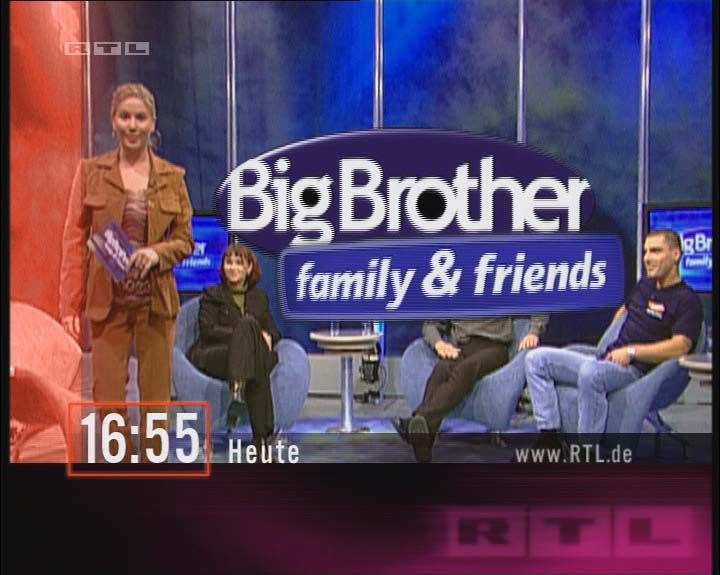
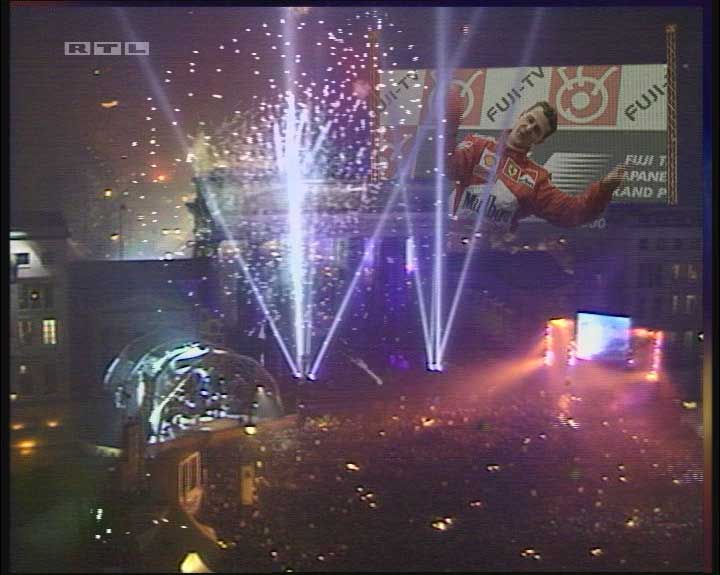
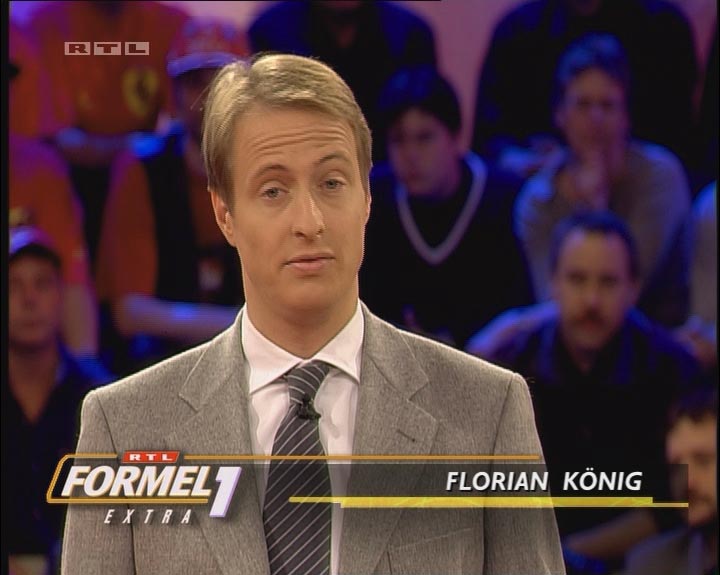
Bill Richards has supplied more of his top quality screenshots.
Panamsat 2 169E 3855 H Sr 5632 Fec 3/4 Vpid 308 Apid 256 "RTL Feeds"

From the Dish
Panamsat 8 166E "Lakbay TV" is back on 3813 V Sr 5044, Fec 3/4, Vpid 4096 Apid 4097
Asiasat 3S 105.5E 4135V "Zed TV 2" Sr 15000 Fec 3/4 Vpid 35 Apid 36
NEWS
Austar to acquire TARBS spectrum
From http://203.62.157.235/press.asp?action=show&record=1
Austar United Communications Limited and Television and Radio Broadcasting Services Pty Limited today announced that they had agreed on the sale of TARBS's 2.3-2.4 GHZ (MMDS) spectrum to Austar.
This spectrum will give Austar up to 98 MHz of bandwidth in each of Sydney, Melbourne, Brisbane, Canberra, Adelaide and Perth, suitable for high speed, broadband data, video, including interactive television, and ultimately voice telephony using Voice over IP technology.
Under the sale terms, TARBS maintains its suite of A Band apparatus licences in the 2.0-2.1 GHz range and also its transmitter sites and customer equipment.
In consideration for the MMDS spectrum, Austar has agreed to pay TARBS $140 million in cash and to also explore opportunities to distribute TARBS's pay television content over networks in which Austar or its parent, UnitedGlobalCom, Inc. (UGC), have an interest. Of the cash consideration, $110 million will be paid on completion with the remaining amount plus interest to be paid on or before 31 August 2001.
"For some time Austar has seen an opportunity in the capital city markets, especially for high speed data services directed at the small to medium enterprise, SOHO and high user residential markets," said John Porter, Chief Executive of Austar United Communications.
"The acquisition of this spectrum gives us a low cost means of entering those markets, using technology with which we are very familiar and in a manner which complements our regional strategy."
Mike Boulos, Chairman of TARBS, noted that "Austar has chosen to acquire its preferred spectrum, giving it a common platform in metropolitan and regional Australia. This deal positions Austar with a very valuable, cost effective transport stream which will allow it to deliver wireless broadband services Australia-wide."
"The agreement to sell only the MMDS spectrum delivers to us the necessary funding to allow TARBS to become the dominant and most comprehensive multicultural network in Australia", said Regina Boulos, Chief Executive Officer of TARBS. "Importantly, this deal also paves the way for closer co-operation with Austar and its parent UGC for the distribution of selected TARBS pay television content in New Zealand, Europe, South America and the United States".
Austar currently offers one way high speed internet access, together with chello broadband, throughout regional Australia. In December, with its partners ADC Inc. and Cisco Systems, Austar will begin a trial of two way high speed data over the MMDS network. Two way data systems are already deployed on commercial and trial bases in the USA and Europe.
"The MMDS spectrum gives us the capacity to do everything we plan to do in the cities. It is available for use today. It will use the same equipment as we are deploying in the regions and thus bring economies of scale," said Mr Porter.
"Another advantage is the fact that an MMDS network is scalable in line with demand. Unlike a cable network there is no need to build out the network except where there is a customer to service.
"As a result of this transaction Austar will withdraw from the current 3.4GHZ spectrum auction. We anticipate acquiring a small amount of spectrum through the auction process in Sydney and Melbourne. We believe that we will be able to use that spectrum to complement our MMDS network," Mr Porter concluded.
The sale is subject to Foreign Investment Review Board approval.
TARBS was advised by the Corporate Finance Group of Macquarie Bank Limited.
Austar was advised by Salomon Smith Barney.
Austar quits 3.4GHz spectrum auction
From http://www.it.fairfax.com.au
AAP
Austar United Communications today announced it will withdraw from the Australian Federal Government's 3.4GHz spectrum auction.
The company said it would "anticipate acquiring a small amount of spectrum through the auction process in Sydney and Melbourne" after revealing details that it will acquire Television and Radio Broadcasting Services' 2324GHz MMDS spectrum to Austar.
This spectrum will give Austar up to 98MHz of bandwidth in each of Sydney, Melbourne, Brisbane, Canberra, Adelaide and Perth, suitable for highspeed broadband data, video, including interactive television, and ultimately voice telephony using voice over IP technology.
Under the deal, TARBS maintains its suite of A band apparatus licences in the 2021 GHz range and also its transmitter sites and customer equipment.
Austar will pay $140 million in cash for the multipoint microwave distribution system (MMDS) spectrum, $110 million on completion of the deal, and the balance plus interest by August 31, 2001.
It also agrees to explore opportunities to distribute TARBS' pay television content over networks in which Austar or its parent, UnitedGlobalCom (UGC) have an interest.
Austar chief executive John Porter said his company sees opportunities for high speed data services in capital city markets, particularly for small to medium enterprises, small office and home office users and high user residential markets.
The acquisition of this spectrum gives us low cost means of entering those markets using technology with which we are very familiar and in a manner which complements our regional strategy,” Porter said in a statement.
TARBS chief executive Regina Boulos said the sale of the MMDS spectrum gives the multilingual network the necessary funding to become the dominant and most comprehensive operator of its type in Australia.
Importantly, this deal also paves the way for closer cooperation with Austar and its parent, UGC, for the distribution of selected TARBS pay television content in New Zealand, Europe, South America and the United States,” Ms Boulos said.
As a result of this transaction, Austar will withdraw from the current 3.4GHz spectrum auction, Porter said.
Austar has bid $26,364,940 to date in the auction. Bidding in the auction at the end of round 44 has closed at more than $110 million.
Digital TV nightmare stirs
From http://news.com.au
By Mark Westfield
THE Howard Government's digital television strategy is in disarray just two months before the service is due to start.
The three commercial networks face a delay of at least a year because technical problems have postponed the introduction of their chosen technology.
Also, the world's big set-top box makers are insensitive to the pleas of the Australian industry to produce the units in time for the January 1 digital start demanded by the Government because the production run would be relatively short.
UK-based Pace, the world's largest set-top box maker, normally deals in production runs of 500,000 to 1 million and has not been tempted to tender for the Australian industry which would require less than one-tenth that number initially.
Seven, Nine and Ten took out advertisements in national and metropolitan newspapers last week calling for expressions of interest to supply up to 40,000 digital set-top boxes.
This is a last-ditch bid to find another technology which would allow some Australian households to receive digital transmissions through their analogue television sets by New Year's Day.
Communications Minister Richard Alston has told senior network executives that the Government wants the January 1 starting date for digital transmissions to be kept. Last week's advertisements were the industry's response to the pressure from a government facing considerable embarrassment in an election year.
Senator Alston and Prime Minister John Howard backed the networks strongly by giving them free spectrum for digital transmission and extended the ban on new networks to January 2007. The Government also has severely restricted the type of service that datacasters can offer to ensure that they do not in any way compete with the networks.
As a result, the main potential players in datacasting, John Fairfax, News Ltd (publisher of The Australian) and Telstra have decided not to proceed with their plans.
The set-top units would cost the networks about $200 each, or $8 million all up, to sell them on a subsidised basis to a small fraction of the six million households with TV.
However, the technology will be inferior to the standards promised by the networks and the Government.
The boxes will need to be upgradeable to MHP when it becomes available. MHP, or media highway platform, will be the highest standard digital technology allowing high definition as well as multi-channel coverage.
General manager of the Federation of Australian Television Stations, Mr Tony Branigan, confirmed yesterday that there would be a delay in the introduction of MHP, but believed it could be available by the middle of next year.
"It's a question of timing," he said. "The regulatory timetable set by the Government is out of step with the availability of the units."
He said the call for tenders could attract set-top producers from Europe, North America or Asia. Other industry participants believed the delay would be at least 12 months and as much as 18 months.
Whichever interim system the networks take, the industry believes it will not be able to deliver high-definition television or interactivity between viewer and advertiser, two selling points the commercial networks used to persuade the Howard Government to give them exclusive use of the technology and the spectrum on which to broadcast it.
The spectrum given to the networks is conservatively estimated to be worth $5 billion. Other spectrum users, telephone companies in particular, have to pay for it.
The set-top box technology is crucial to the success or otherwise of digital because dedicated digital sets are estimated to cost at least $10,000. Australia's weak dollar will only make the imported sets more expensive. Because the networks were able to persuade the Howard Government to mandate not just high definition, but a standard unique to Australia called 1080i, the sets will also have to made especially for Australia.
One industry participant described the networks insistence on this standard, which has been rejected in every other industrialised country, as a "spectrum grab" which will enable them to use spare spectrum for other commercial uses.
Zee TV lets go of MD Vijay Jindal by partnering him; promotes new team
From www.indiantelevision.com
When ZTL chairman Subhash Chandra brought in R.K. Singh as chief executive and created a caucus of senior executives like Deepak Shourie, Dev Naganand, Uma Ganesh, everyone said that managing director Vijay Jindal had fallen out of favour with the mediapreneur and his days were numbered with ZTL. However, Jindal stayed put and the wags stopped wagging their tongues.
Today, it become clear that it was only a matter of time. The company sent out a press release saying that "it has now been decided between the Company and Mr.Vijay Jindal that in order to harness his entrepreneurial capabilities the Company will support him to set up his own media investment company."
Jindal is slated to hold 60 per cent of the Rs 100 million equity capital of the new company with 40 per cent being held by ZTL. The press release additionally states that "following this Mr.Vijay Jindal will be relieved from the executive responsibilities of the company and would be Advisor to the promoter shareholder for a period of next three years."
The release quotes Chandra as saying "that the Group encouraged executives to graduate and become entrepreneurs. We are with them in their pursuit to realise their dreams."
The press release quotes Jindal as saying that he was "looking forward to getting into film production and various media related activities which will not be in conflict with the business interest of ZTL."
The decision was taken at the board meeting held yesterday to decide on the company's Q2 results. Following the acceptance of the new order, the board abolised the post of managing director with Deepak Shourie, R.K.Singh and Dev Naganand being appointed as wholetime Directors.
22/10/00
Well as usual the Boxing was a sham, be thankfull you didn't pay out $49.95 U.S to watch it on a pay per view like some unfortunate Americans did. At least Tua vs Lennox Lewis will be a real fight. Speaking of sports there cricket on tonight NZ vs South Africa, it could be at 57E and at I701 game starts 11.30pm Sydney time. Some signals have appeared on Ge1a at 108.2E this isn't expected to cover Australia but may be worth a look you never know the printed beams may not be %100 correct. The Malaysia Grand Prix feeds are running see below for details. Spacenet 4 as mentioned Friday is on its way to 172E who knows what it will be usesd for there?
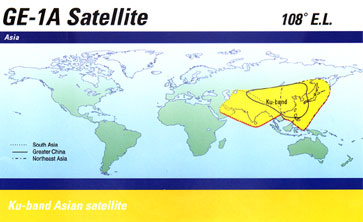
From my emails & ICQ
FEED ALERT! Reported 22/10/00 1.41pm Syd via apsattv mailing list
Panamsat 2 169E 4027H Sr 20000 Fec 3/4 Vpid 33 Apid 34 "MAIN FEED
Panamsat 2 169E 4027H Sr 20000 Fec 3/4 Vpid 36 Apid 37 "PIT CAM"
RTL feeds of the on-air and pit cam have started already on PAS2 (same freq
as warm-ups reported in the last few days). The race starts at 2PM Kuala
Lumpur time which is 5PM Sydney time.
Mark
The following Feeds spotted by Bill Richards last night
0615 UTC Thaicom 3 78.5E 3670 H Sr 2169 Fec 3/4 Vpid 4610 No other PIDS being transmitted !Broken jerky video suspect MRTV
Maybe testing a new format ???
(Craigs note, this image as received weird maybe some kind of widescreen test?)
0820 UTC Asiasat 2 100.5E 4095 V Sr 5632 Fec 3/4 Vpid 308 Apid 256 "Malaysian GP Racing Feed"
From the Dish
Intelsat 604 60E 4166 R "News Feed" PAL_Analog Audio 6.60
Intelsat 604 60E 4188 R "Feed" PAL_Analog Audio 6.60
GE 1A 108.2 12451 V "Test Card" Sr 6000 Fec 3/4
GE 1A 108.2 12471 H "ESM TV" Sr 19510 Fec 3/4
Agila 2 146E 3822 V "Occassional Feed" Sr 5725 Fec 7/8
Agila 2 146E 3835 H "ESC" Ntsc _Analog Audio 5.35
Agila 2 146E 3853 H "HKSBN Movie" Sr 3650 Fec 3/4 Vpid 4144 Apid 4145, Movies have started here!
Agila 2 146E 3890 H "Occassional Feed" Sr 14075 Fec 5/6
21/10/00
Nothing to report up the top, Have a nice day :-) Don't forget the boxing on RCTI
From my Emails & ICQ
Live transmission of sports from Indonesia.
PALAPA C2, ALL ARE JAKARTA TIME:
SCTV -
Saturday Oct. 21, 21:00 - Soccer - Liverpool vs. Leicester City
Sunday Oct 22, 22:00 - Aston Villa vs.Sunderland
RCTI -
Sunday Oct 22, 01:30 - AC Milan vs. Juventus (big match)
Sunday Oct 22, 20:00 - Verona vs. Lazio
Monday Oct 23, 01:30 - Perugia vs. Parma
also check The European Champion League on next Tueday or Wednesday RCTI also transmitting live.
Indosiar -
Saturday Oct 21, 10:00 - BOXING - Mike Tyson vs.Andrew Golota
ASIASAT 3S Analog -
Starsport - Live - Sepang F1 Grand Prix - Check the time through
Reported by Sungadi via apsattv mailing list
A few feeds reported Friday night via the mailing list
Friday 0950 UTC,
Panamsat 2 169E 4027H Sr 20000 Fec 3/4 Vpid 33 Apid 34 "total world sports" test card then motor car racing interviews Nokia reports as MAIN FEED (Maybe in preparation for Malaysian Grand Prix)

Checkout the image above very very nice quality!
Panamsat 2 169E 4027H Sr 20000 Fec 3/4Vpid 36 Apid 37 "RTL MALAYSIA" test card " " PIT CAM
Friday 1000 UTC,
Panamsat 2 169E 3854H Sr 6200 Fec 2/3 Vpid 32 Apid 33 "Tennis Feed" Nokia reports as SSTV-DBS-1
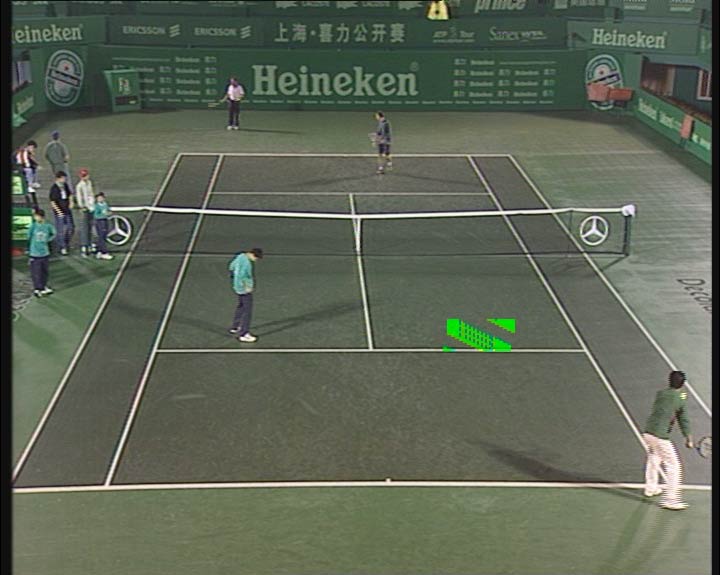
Friday 1006 UTC,
Panamsat 2 169E 3868H Sr 10998 Fec 2/3 Vpid 32 Apid 33 "Asian Feeds, boardgame?"
Thanks to Bill Richards for these
Friday 1230 UTC Presidents Cup 2000 Golf is on
Panamsat 2 169E 3992V Sr 26470 fec 7/8
Reported by Robert Anthony
From the Dish
Panamsat 8 166E "Knowledge Channel" has left 3706 V
Panamsat 8 166E "Lakbay TV" has left 3813 V .
20/10/00
Does anyone know where Spacenet 4 is moveing to? its shown on Lyngsat as at 165W? Also just gone up is N-Sat 110 at 110E. I have been playing with "Snappy" a video digitizer that works via the printer port. It was top of the line for its time.Its very good as I can plug it into the laptop it does very high quality grabs, see the sample below. Screenshots below taken directly of my Tv (NZ , channel 1)
Sorry about such a small update today not much is happening, The Crickets on late tonight so hopefully I will get into some updateing of the other pages.

Click Above for Fullsize

Friday Feeds Bit
Please report any feeds via [email protected], so they are shared when they are happening and not the next day..
Friday 20th
10.00 GMT India vs Sri Lanka Champions Trophy ODI (Live on the encrypted Sony MAX channel) This may be fed to the U.S via I701 TVNZ.
11.30 pm Syd , "NZ vs South Africa 1st ODI" Check I701 4052R and Pas 2 3961 freqs where ICC Cricket was seen last time. This will be double hop via 57E I think Check feeds page for other locations crickets been seen on
Saturday 21st
??? not sure what time (check your pay tv guide) but look for Boxing Tyson vs Golota on I701 and Pas 2 also encrypted on Star Movies, usually these are on the Indonesion channels also.
Sunday 22nd
Malaysian Grand Prix, unsure of time should be same timezone as Australia. Coverage in Malaysia is via TV3, Should be on I701 and Pas 2/8, try 3803V(pas2) also live on Star Sports Asia
From the Dish
Thaicom 3 78.5E 3551 H " Serena Lottery News" Sr 13333 Fec 3/4 Vpid 2065 Apid 2066
Thaicom 3 78.5E 3583 V "Raaj Plus has been replaced by an info card"
N-Sat 110 is new at 110E I don't think this will offer any beams towards Australia and NZ, may be worth checking if they start doing testing.
NEWS
Alston tunes in to an ugly picture
From http://www.smh.com.au
By ANNE DAVIES
Digital TV: just how prepared are you?
Tick, tick, tick, tick. In 75 days Australia is due to begin digital television broadcasts. But does anyone out there own a digital TV yet?
It's a problem that's been haunting Communications Minister, Senator Richard Alston, who has pinned his political future on a plan for digital TV which owes much to the superb lobbying efforts of the commercial television networks.
When it comes to digital TV, Alston and Prime Minister John Howard have backed the commercial television networks at almost every policy turn.
They gave the networks a free digital TV channel each, and they embraced the networks' vision for High Definition Televion rather than use the spectrum for more services or for multichannelling. They agreed to keep competition out till 2007 while the networks digested the $800 million cost of upgrading their studios. And they agreed to hog-tie the only new services permitted - datacasting - with all manner of rules limiting their profitability.
Which is why, when Alston discovered three months ago that there was little prospect of a single piece of consumer equipment being on the market in Australia before June, he was deeply unhappy.
Alston had discovered the problem when he was trying to sort out another brawl on the sound standard for digital TV. The television equipment companies told him this was the least of his worries, because they couldn't get any agreement on what sort of digital equipment the networks needed. The digital TV set-top boxes are, in effect, computers. And just like any customer, the manufacturers needed to know what the networks wanted to do with digital TV. The networks replied that they needed to know what the boxes could do. It was going round in circles.
Alston was so alarmed he called a high level meeting in Sydney of all the network heads: Kerry Stokes, James Packer, John McAlpine, Jonathan Shier and Nigel Milan. Perhaps he reminded the networks of his generosity to date. After all, the free spectrum is probably worth at least $3 billion.
The result was a press release last week in which the networks offered to underwrite the manufacture of the first set-top boxes to the tune of $6 million. Chickenfeed, really.
In practical terms, the person who buys one of these boxes will be able to get a clearer picture but not High Definition Television. It will allow them to receive multiple camera angles and the additional channels offered by the ABC. And it will allow a small amount of interactivity, but you'll need a modem.
The initiative will at least allow Alston to point to some working digital equipment by the time the election is called later next year, if not by January.
But the broader question is whether the entire policy is misguided. A quick review of digital TV internationally must be making Alston nervous.
In the UK, where the additional capacity has been made available for new subscriber services, almost 25 per cent of households have converted. In large part, it's because the pay-TV companies are giving the boxes away, but it's also because of choice.
In the US, where HDTV is supposed to be the driver, uptake is woeful. The networks are winding back on the amount of HDTV they broadcast, with ABC cancelling its HD broadcast of Monday night football after Panasonic withdrew its backing.
NBC's line-up is The Tonight Show with Jay Leno and the occasional movie, while CBS is leading the pack with its prime time line-up in HD.
The US regulator is certainly worried. Federal Communications Commission chairman, Mr William Kennard, warned two weeks ago that it might take until 2025, instead of 2006, to reach 85 per cent digital take-up, the trigger point for the networks to hand back their old analog channels. "Basically, the broadcast networks were the beneficiaries of the biggest government giveaway since Peter Stuyvesant bought Manhattan from the Indians for $24. You can barely buy lunch in Manhattan for that now," he said in New York.
"To compound the public damage of this protectionism, the broadcasters have decided to sit on these two highly valuable properties - licensed to them for free by Congress - for as long as they can."
Kennard said it was time for Congress to get tough with the networks. He wants the 85 per cent trigger dropped because it's an incentive to go slow; he wants rules about capabilities of new TV sets after 2003; and he wants the networks to pay an escalating "spectrum squatting fee" for each year they occupy two frequencies beyond 2006. The proceeds from the "squatter's fee" could be used to help fund the digital conversion of public television, especially in rural areas, he suggests.
There's nothing like a financial incentive to hasten progress. And it might prove a winner in rural electorates in the next election, perhaps?
Favourites emerge in Optus bid
http://www.smh.com.au/news/0010/20/business/business5.html
By KEVIN MORRISON
Telecom Corp of New Zealand and Japanese mobile phone operator NTT DoCoMo have emerged as favourites to buy the mobile and broadband cable assets put up for sale by Cable & Wireless Optus.
With Wednesday's closing of expressions of interest in the Optus assets, it is understood that Telecom NZ and DoCoMo lodged a joint submission outlining their interest in acquiring the Optus businesses.
If the Telecom NZ-led proposal fails, it is believed that DoCoMo would be prepared to make a tilt at gaining control of the Optus assets either alone or with partners.
However, DoCoMo's partner in other markets, Hutchison Telecom, which is controlled by Hong Kong conglomerate Hutchison Whampoa, will not participate in any bid for Optus assets due to its controlling stake in the local mobile operator Hutchison Telecommunications Australia.
Sources said Singapore Telecom may have lodged a bid for the assets, although it was not believed that there was much interest from Europe or US carriers, since groups such as Deutsche Telekom have enough on their agenda such as financing bids for third generation (3G) mobile phone spectrum and for its $US45 billion ($86 billion) takeover for US mobile operator VoiceStream.
Another potential acquirer, Vodafone Pacific, also is believed not to have bid for the Optus assets, since this would raise regulatory issues with the Australian Competition and Consumer Commission (ACCC). A combined Vodafone-Optus would have about 51 per cent of the mobile market of around nine million customers.
Regional pay TV and Internet group Austar told Optus that it remained interested in the broadband cable business, but the terms of its offer have not changed from earlier discussions.
Sources said the sale of the mobile and broadband businesses could be completed before Christmas or early in the new year, just before the local 3G auction, which is scheduled to start late January.
"Optus do not want to be in a situation where it has to fork out another $500 million on 3G, so I think they want to wrap it up before then," said a telecom analyst.
Telecom NZ would be relying on DoCoMo to fund any bid, as the NZ carrier's balance sheet will be fully stretched once it completes the buyout of AAPT, where it now owns about 92 per cent.
A joint bid by Telecom NZ and DoCoMo for the two Optus businesses would see the NZ carrier merge its existing mobile business of about one million customers with the Optus mobile business of around three million customers to create a carrier with the same number of subscribers as Telstra
TVSN Shareholders vote to approve Austar deal
http://203.62.157.235/press.asp?action=show&record=1
An Extraordinary General Meeting of the shareholders of TVSN Limited voted today to accept the proposed alliance between TVSN and Austar United Communications.
The deal will see Austar issued with 50% of the shares in TVSN, on a fully diluted basis. In return Austar will guarantee long term carriage of TVSN's pay TV channel and TVSN will become a key part of Austar's push into t-commerce on its interactive television platform and e-commerce through Austar's internet offerings.
"This decision marks a major turning point for TVSN," said Peter Walker, Chairman of TVSN Limited. "The shareholders have indicated that they want to be part of the tremendous growth opportunity offered by Austar's aggressive interactive commerce strategy.
"TVSN has proved its capabilities in the television home shopping environment. Now we can use our technology, merchandising skills and fulfillment capabilities across a much broader platform to reach new audiences and to sell different merchandise associated with content created by Austar and its associates."
"We are delighted that the shareholders of TVSN have endorsed our strategy," said John Porter, Chief Executive of Austar United Communications. "Austar is a market leader in interactive television and plans to establish a strong position in all forms of electronic commerce.
"We have always recognised that one of the greatest challenges in the interactive commerce environment is to match the technological possibilities with the practicalities of retailing. These include managing inventory and delivering goods to meet customers' requirements.
"TVSN has those capabilities in abundance. When you combine this with TVSN's state of the art digital broadcast facility you can see that this company is a great fit for Austar."
Following the shareholders meeting the Board of TVSN Limited will be reconstituted with 4 directors appointed by Austar and 3 directors representing the interests of other shareholders, including Peter Walker who will remain the Chairman of the company.
GoM may opt for free-for-all in Ku band DTH services
From http://www.hindustantimes.com
HT Correspondent
(New Delhi, October 17)
The information and broadcasting ministry has narrowed down on two alternative models — free-for-all and restricted competition for the introduction of direct-to-home (DTH) television broadcasting in the country.
Earlier, in July 1999, the Election Commission of India had prevented the government from taking a decision to grant an exclusive licence to the state-owned Doordarshan for DTH services.
In a fresh note to the Group of Ministers (GoM) on DTH, headed by Home Minister L.K. Advani, the ministry has now suggested that the government may allow unlimited number of service providers to offer DTH services.
Contending that a laissez-faire system will lead to free, fair competition and add value to consumers, the ministry has said that it would facilitate the convergence of existing broadcasting, telecom and Internet services.
In addition, the ministry believes that this model will minimise red tape and abolish the complex and controversial process for selection of licences. However, some conditions pertaining to technical parameters, content, security, monoply, ownership and uplinking will be imposed on operators.
On the other hand, the ministry has also recommended a restricted competition model, under which DTH licences will be awarded to Doodarshan along with a limited number of private service providers.
It has argued that since the number of private operators would be limited, the selection should be done through an "open auction" process.
The logic behind this suggestion is to derive maximum advantage from the DTH technology which is primarily a distribution platform for television (TV) channels and in a literal sense means any TV service which is directly received by the viewers without intermediaries like cable operators.
In the context of broadcasting regulations, DTH refers to the distribution of multi-channel TV programmes in Ku or higher band (11.7 to 14.55 gigahertz - Ghz) by using a satellite system that transmits direct to subscriber premises.
Presently, all satellite broadcasts in India take place in the lower C-band in the frequency range of 3.4 to 6.65 Ghz. The basic difference between Ku-band and C-band transmission lies in the fact that Ku-band signals require a very small dish antenna of 12 to 18 inch diameter while lower C-band requires a large dish antenna of 8 to 16 feet diameter.
DTH also requires a set top box (integrated receiver decoder) at the subscribers end for decoding and accessing the programmes and services.
These set top boxes are programmable and remote controlled by a centralized subscriber management system
19/10/00
Not much happening today a bit of a light update, this months Csatt online satellite magazine is up. It usually has a bit more of local interest than just the Indian stuff the Scatindia magazine has.
From my emails & ICQ
Hi Craig
I wrote to austv to find out about their new, poor quality digital signal on Palapa C2.
Their reply was as follows!!!!!???
Dear Hans
Thank you for your enquiry.
Australia Television does not have a digital signal on PALAPA C2
we are an analogue satellite channel and we don't have any plans
to convert to digital.
Kind regards
Silvana Cricri
Publicity Manager
Australia Television International
It's obviously so bad even they won't own up to it. The signal is still there by the way.
Cheers
Hans
(Craigs note, it must be someone useing their analog signal as a source for some testing)
From the Dish
Panamsat 2 169E 3872 H Sr 6002 Vpid 1160 Apid 1120 "Paralympics"
Panamsat 2 169E 3864 H Sr 6669 Vpid 2160 Apid 2120 "Paralympics"
NEWS
News Corp's Murdoch says Foxtel can become BskyB of Australia
From http://www.afr.com.au/
AAP.
News Corp Ltd chief executive and chairman Rupert Murdoch says Foxtel can become the British Sky Broadcasting of Australia.
He also told shareholders that negotiations with Telstra Corp on Foxtel are taking a long time but he's hopeful of a breakthrough soon.
Telstra owns 50 per cent of Foxtel, while News Corp and Publishing and Broadcasting Ltd each have 25 per cent.
News Corp has previously called on Telstra to reduce its holding in the Foxtel pay tv joint venture.
Reports surfaced earlier this month that there were rumblings of discontent between the Foxtel partners.
PBL and News Corp were reportedly unhappy that they were unable to agree with Telstra on strategies for the future, particularly regarding interactive services.
Some newspaper reports had suggested that News Corp and PBL were considering pulling out of their investments in Foxtel.
MurdochFox news channel to make profit next quarter
From http://www.it.fairfax.com.au
AAP
News Corp chairman Rupert Murdoch today said the company's Fox news channel business was expected to make a profit in the next quarter.
The Fox news channel will be in profit in the next quarter or at the very worst breakeven,” Murdoch told shareholders at the company's annual general meeting in Adelaide.
Murdoch said also that the company's cable channels in America will make a lot of money in the coming year.
Successful cable channels in America with their dual flow of revenue from advertisers and subscribers are making a lot of money and we expect a lot of success there in the coming year.”
Seven jockeys for place in digital future
From http://www.it.fairfax.com.au
AAP
Seven Network executive chairman Kerry Stokes today said the broadcaster was well placed for the introduction of digital television.
In the company's annual report released today, Stokes said Seven had completed the most significant year in its history “and today is well placed for the forthcoming introduction of digital television and other new communications technologies”.
&lea the Games of the XXVIIth Olympiad in Sydney represented a defining and memorable chapter in the history of the Seven Network,” he added.
.While the Olympic Games were a major project for us over the past 12 months, we also focused on our future as a company, and put in place the platforms for our development in a challenging and changing communications landscape.”
Stokes said Seven had restructured its broadcast and nonbroadcast businesses to improve cost management and operating efficiencies while continuing to improve the level and quality of program production and enhancing the network's audience delivery and sales performance.
Stokes said Seven's subscription television business C7 planned to broadcast the Australian Football League and other major sports on Telstra's multimedia cable, building on the success of its Olympic Games coverage.
Longer term, we are planning a portfolio of new channels for subscription television, available on all delivery platforms.”
Seven's broadcast of the AFL on C7 follows a protracted court battle between the broadcaster, pay TV company Foxtel and Telstra.
Earlier this month, Seven said the full bench of the Federal Court had ruled against Foxtel's claim it had a protected contractural right to a guaranteed number of channels on the broadband cable.
Stokes said the reengineering of Seven's television business over the past 12 months had created the model for the company's future in digital TV with the forthcoming commissioning of new digital broadcasting centres in Melbourne and Sydney.
These centres, based on videoserver technology, will be the only centres of their type in Australia placing Seven at the forefront of the creation of content from the same servers for application in broadcast and subscription television, online, wireless and broadband.
Stokes said the new centres were a physical representation of the future for Seven”.
We will continue to focus on television, and develop new opportunities in a digital landscape.
and, in the coming 12 months, our knowledge and understanding of consumers, our expertise in content creation, and through our new broadcast centres, an ability to create and deliver content across a number of different communication mechanisms, will allow us to build a significant presence in all forms of communications leveraging the strength of our broadcast television business.”
In the annual report, Seven said it remained committed to the growth of its mobile telephony business B Digital. Seven held 80.3 per cent of B Digital's outstanding stock at the end of the financial year.
Seven also said B Digital expected its Australian operation to see its first profitable trading month by the end of the current financial year.
In addition to its i7 internet business, Seven said it has been pursuing investments in a number of online businesses and further developing its own content as part of a longterm strategy to become a leading aggregator of content.
Importantly, the development of a strong and significant presence in subscription television also forms part of the strategy for the growth and development of i7 as an online and broadband business not just a company focused on online.
With C7's sports channels as our cornerstone, we are also planning the introduction of additional channels focusing on news, entertainment, information and movie programming.”
Tenth Broadcast India exhibit - Digital is the Key
From indiantelevision.com
India's most comprehensive TV exhibit, Broadcast 2000, launches into its 10th year at the World Trade Centre in Mumbai from 19-21 October. Broadcast India this year is slated to feature 250 exhibitors from all over the world spread over 60,000 sq ft of exhibit space. It will encompass TV acquisition, edit, special effects, broadcast, satellite cable, film, FM, etc.
The show is expected to top last year's 30,000 professional attendees from South Asia and adjoining countries. The focus this year is on digital technology. Organizer Ramesh Meer says that this year the attendees will be "exposed to everything they need for work- from a screw to high end equipment."
On show will be acquisition equipment from world leaders JVC, SONY, Panasonic and Thompson Broadcast's Studio & ENG/EFP Digital & Analog Cameras. Camera lenses will be showcased by Canon, Fuji and Cooke Optics.
Film camera and equipment on display will include ARRIFLEX Film Cameras 65, 35, and 16mm. Lighting for Film and Television. Portable Film projection and Video Transfer System. Locpro 35 X-ray and Instrumentation Camera. ARRI TECHNO 35, Medical Analysis System-ARRI QANSAD. Cine Analyser ARRIPRO 35. ARRILASER Recorder. COOKE OPTICS LIMITED will feature Cooke S4 prime lenses, claimed to be the world's preferred 35mm motion picture lenses.
The edit suites will include - Sony, Panasonic's DVC Pro range, and Thompson Broadcast VTR suites, among others. The Associated Press' Electronic News Production System will also be showcased at the exhibit. Its features include scripting, programme rundowns, planning, contacts, messaging, third party device control, external publishing, news wire management, full text searching, tightly integrated resilience capabilities and the ability for journalists to work in almost any language.
The special effects platforms will be provided by Matrox's Digi Suite LX, Silicon Graphics 's UNIX and recently launched NT platform solutions. Discreet Logic in the largest stand in the exhibit, will showcase solutions on the UNIX and NT platforms including 3D Max and Edit. Besides International special effects heavyweights AVID/SOFTIMAGE, Combustion, US Animation, 2D CEL Animation S/W from Toonboom Technologies, Video Raid RT/SCSI from Medea Corporation, and DPS's latest version of Velocity and Reality engines.
Studer, Soundteam , Tascam and Tannoy will display the latest in audio equipment. Studer's range will include DigiMedia radio automation and the On-air flexible mixing system.
Orad Hi Tech Systems Ltd, which was recently acquired by Real Image Technologies, will display it's Virtual Systems, Real Time Live Graphics and animation systems, Virtual advertising system for live events. Seagate Technology International will display its full range of storage solutions for the broadcast, film and the multimedia industry. Distributor Compuaid Enterprises will show the Oxberry and latest LCD projector of laser graphics, Internet video solutions, Scientific Atlanta will offer solutions including video compression to deliver content to cable operators, the fiber optic and coaxial cable-based broadband access systems.
Broadcast India 2000's huge exhibition gives an opportunity for programme providers, broadcasters, film producers, technicians, FM aspirants and other professionals to sample the latest in digital technology.
18/10/00
Live chat tonight in the chatroom 8.30pm Sydney time onwards. Sorry about the site update today its been rushed as I didn't have a lot of time spare to do it.
From my emails & ICQ
Pas2 0920 UTC 3864 H Sr 6620 Fec 2/3 Vpid 1160 Apid 1120 "Panamsat NAPA test card"
Regards
Bill
(Craigs note sports feeds seen there before "3867H" with same settings, according to the feeds page log)
Hi,
I'm a regular visitor to your satellite Tv news site. I've been quite impressed by the daily updates on your site.
I was wondering if you would be able to answer my question with regards to some channels on PAS-8.
My location is in Perth WA, and I am using a Phoenix 333 receiver with a 2.3M mesh dish. The signal strength of CNN on 3780 MHz is about 30% which gives a fairly reliable reception. But I am unable to receive the EWTN channel on 3940MHz and the ABS-CBN channels on 3880MHz. Are these channels of a much weaker signal strength CNN or does it sound like there is a problem with my system setup ?
Regards
Site Visitor
Craigs note, I am not sure about Pas 8 in Perth, %30 sounds very low.
Looking at the coverage chart Pas8 should be strong in Perth even with a 2.3m mesh dish
http://www.satcodx-op.com/PAN/eng/coverage.cgi?PAN008CH
1st check all connections and cables
2nd then the ird for drift
3rd then the lnbf if you have one or the feedhorn.(if it is skew control you should try this first)
4th If this dosnt help your dish may be out of alignment
5th Send more info!
From The Dish
Panamsat 2 169E Occasional feeds on 3864 H, Dig, Sr 6620, Fec 2/3.
NEWS
9 Gold offers film makers a platform
From www.indiantelevision.com
Starting 4 November, Channel Nine Broadcasting will flag off the launch of Director's Cut on DD2 under which exclusively-produced films for television by well known Indian directors. Pankaj Prashar, Tanuja Chandra and Saeed Mirza will be telecast on the channel.
The once a week two hour feature film band will air on Saturdays between 8pm to 10 pm each month. The channel will own the copyright, and telecast the films only on DD Metro's prime time band Nine Gold.
Although channel managers refused to divulge production cost details, industry sources said that the estimated budget planned by the channel is Rs 1.4 million. The director will be paid separately as further incentive, added the sources. This is the first private channel based in India to contract well-known Indian directors to exclusively make movies for television.
Discovery, ESPN in talks with DD
From http://www.economictimes.com
Sudipto Dey
DISCOVERY Channel and ESPN are in talks with Doordarshan to air programmes on the DD Metro channel.
To be aired five days a week, Discovery is expected to have a one-hour slot in the afternoon. To begin with, Discovery’s programmes will be in English, though the channel has plans to introduce programmes dubbed in Hindi at a later date.
The royalty for the one-hour programming block is pegged at Rs 5 lakh per hour, officials said.
ESPN is slated to offer software for the sports band on DD Metro which will be aired between 6 pm and 7 pm every weekday.
DD Metro is also in the process of developing a two-hour programming block for kids between 4 pm and 6 pm every weekday. Plans are afoot to source software relating to children from serveral porduction houses including Bueno Vista and Crest Communications.
The new programmes are expected to hit the small screen over the next month, officials said. Kerry Packer-HFCL promoted Nine Broadcasting currently airs programmes on DD Metro from 7 pm to 10 pm every day.
These programmes are repeated in the morning between 9 am and 12 pm. Doordarshan has already tied up with B4U channel for block-buster movies to be aired both on DD National and DD Metro.
The national broadcaster is currently in the process of re-positioning DD Metro channel. Plans are afoot to have integrated metro programming for all cities. "The regional programmes on the metro channel may find space in the national channel", senior Doordarshan officials indicated.
Currently, DD Metro is available both in terrestrial mode and as a free-to-air satellite channel in Delhi, Mumbai, Chennai and Calcutta.
Cable system will end up the winner
From http://www.economictimes.com
Rajiv Handa
HOMESPUN content and distribution companies like Zee, Jain TV, Crest Communications and Sri Adhikari Brothers turned out to be the multi-baggers of ‘99. One year later, they are a pale shadow of their glorious selves. Analysts routinely used to tom-tom these companies as the convergence plays of the new century.
The idea of blurring lines between different products is perfectly reasonable, but arguments that "suddenly" consumers will adopt starkly different features, like both voice and product functionality, in the form of a single gadget are wildly overstated.
So it does not come as a surprise that new initiatives announced by the technology guys every week do not hold much mettle.
If "convergence" does not gel, bring another ploy. This one revolves around distributing content. Entertainment industry icons claim that, "though content is king, distribution will be God".
Perhaps the cable TV industry needs a reality check. Consider Zee Telefilms — widely regarded as a convergence bandwidth play. It commenced operations eight years ago as a content production and marketing company.
It has a finger in the entertainment, information, media and knowledge segments. But unconsolidated revenues for FY2000 were in the vicinity of $70 million. A piffling size for an organisation seeking to raise $ 1billion through an ADR, to fund its expansion plans.
Mind you, Zee already owns content. What it has to do is to re-exploit and re-cycle content through analogue and fiber-optic systems. It has its role cut out.
My premise — which to many is quite controversial — is that the cable systems will become the de facto delivery platform for broadband services.
The cable plant is the only scalable, secure and economically feasible delivery network for the oncoming explosion in broadband demand.
Other technologies currently in play will prove to be vastly inferior, especially those that include copper based solutions, like digital subscriber lines.
Wireless may have a hand in the game for narrow-band applications on mobile devices. However, cable will prove to be the overwhelming broadband platform for the home.
SitiCable, a Zee subsidiary provides the most dominant last mile link to the customer by delivering conventional TV channels utilising its bandwidth of 550 to 750 MB in the analogue currency.
The same pipe can also be utilised to pump in a number of new services and products including video-on-demand, gaming, near video-on-demand, banking and e-commerce, besides access to the internet.
The irony here is that this is just the supply side of the story. Will consumers bite by investing in Set Top boxes, cables, cords, connectors, personal dishes and antennas is the other side.
Will an individual consumer be comfortable changing wires and moving unwieldy key boards, to access the internet and the television signals? Or will he stick to the simpler things of life, like using a lap top to access the net and the TV for broadcast?
Peripheral proliferation has created more trouble in the past than it was worth, because the user constantly juggled different cords and gadgets that needed to be plugged in, unplugged and stored.
The irony is, that Zee is playing in the same arena as Murdoch’s Star and Sony, both large global players which compete fiercely for content and distribution and have resources to the full.
Zee in turn is focused on the access network, or the part of the network closer to the customer. Besides Zee, other media companies are also formulating plans to suit their own needs.
But bigger growth will never be an easy task, for media players. The relative strength I see is Zee’s positioning. It is laying hybrid fibre co-axial cable to control the last mile to the consumer.
In course of time, broadband compression solutions will elevate Zee to an integrated broadband solutions provider, whose value will become increasingly evident in lock-step with consumer broadband demand. Let this round of convergence play out.
17/10/00
Thanks to those in the chatroom last night, even though it was a little quiet, whats on for today not a lot page has been trimmed and got some more info on ZED Tv. Oh yeah I got my 128megs in the mail, now running fine on 196 megs!
Message to Nokie3 from the chatroom , send me an email and we will try and sort out your Nokia problems.
Try this page for Studio23, Abs-cbn, Knowledge tv guides.
Click HERE
From my emails & ICQ
WANTED
Digital Satellite Receiver...no special preference to make...will consider any that are available
reply with make/model and price to,
The Antenna Man
Craig Julian
(NEW ZEALAND) Ph 06-758 1633
[email protected]
(RE:Cheap multisystem VCR's being discussed in apsattv's mailinglist)
The RCA video at Big W stores in Australia does PAL and NTSC. But it doesn't do French SECAM, just Middle Eastern MESECAM which is useless in the South Pacific.
A SECAM video is not needed for CanalSatellite (which has a PAL option) but is needed for RFO which carries all the French sport in Tahiti and New Caledonia. You just can't buy them in Australia and New Zealand: I've given up and order them from Noumea where you can buy a true PAL/NTSC/SECAM multisystem sixheader for about NZ $500.
David Furrows
(Craigs note, I think RFO wont be available for much longer, and the Russians have all disapeard. Is there a need anymore for Secam record capability?)
From the Dish
Thaicom 3 78.5E "Raaj TV info card has left 3510 V
Panamsat 8 166E "ABS-CBN Channel 3" 3880 V (MPEG-2) is currently FTA
Panamsat 2 169E 4148 V Sr 24430 Fec 2/3 "Hong Kong Jockey Club raceing"

NEWS
Education channel launched
From www.timesofindia.com
Zee Interactive Learning Systems, a fully-owned subsidiary of the Zee Network, launched ZED TV, India's first 24-hour education channel on October 12, at a function in the Taj.
It was inaugurated by Sushma Swaraj, union minister for Information and Broadcasting. Also present was chief minister Vilasrao Deshmukh.
Zed TV will provide round the clock education, infotainment, training and education to the entire spectrum of Indian society. It plans to use the medium of TV to promote learning, and to raise awareness as well as provide tangible learning to the target audience. It's programming is built around a unique four level methodology, the first of its kind which leverages television, internet, interactivity and personal contact. The target audience is 20 million cable and satellite homes across the country.
On the occasion, Subhash Chandra, chairman, ZEE Network, said, "We want to leverage on our expertise in the broadcast media, to provide learning that leads to national growth and the greater good of society. The channel is the first step in helping India achieve its potential as an information super power." Uma Ganesh, president and CEO, Zee Interactive Learning Systems added, "The value, we as a people place on learning is second to none. But somehow, the learning infrastructure of the country has not been able to keep pace with the demand. ."
There will be pre-school programmes to introduce learning concepts to a child through songs, dance and a clown called Jadoo. There will also be corporate programmes focussing on the financial and industrial sector, programmes to inform the viewers about information technology, and it's developments as well as consumer programmes.
Zee interactive to invest Rs 120 crore in Zed TV
From http://observerindia.com/
MUMBAI
Zee Interactive Learning Systems Ltd (ZILS), the 100 per cent subsidiary of Zee Telefilms Ltd, has envisaged an investment outlay of around Rs 120 crore in the next one year for creating a technology based learning network for its 24 hour learning channel, ZED TV.
The channel, first of its kind in the country, provides round the clock education, infotainment and training for the entire family, Uma Ganesh, president and CEO of ZILS, told reporters Thursday night here prior to the inauguaration of the channel by union information and broadcasting minister Sushma Swaraj. The learning channel, which would initially be free to air, seeks to exploit the medium of TV to spread learning across the country, she said and added that programming was built around a four level methodology involving TV, internet, interactivity and personal contact
Programmes on ZED TV were targetted at pre-school/school children, youth, women, coporate executives, for acquiring it skills, consumers and training. Ganesh said the target audience was the 20 million cable & satellite homes across the country and the language of the programming was mainly english. When asked about revenue to be generated by the channel, Subhash chandra, chairman of Zee Network said ‘the returns are very good and we expect Rs 500 to Rs 700 crores in revenues over the next five years’.
KU-band INDIA DTH service may be cleared October 16
From http://business-standard.com
Anjan Mitra in New Delhi
KU-band direct-to-home (DTH) television service, through a pizza- sized dish antenna, may just become a reality in India. The group of ministers is slated to meet today to take a final view on the issue.
According to government sources, the GoM has been deliberating on the issue for the past several months and a near unanimity has emerged on most issues. At present, dealing in, maintaining or selling equipment capable of receiving TV signals over 4800 Mhz (KU-band signals) is banned in India.
However, the issue of set-top boxes/decoders may be a small hurdle still. While a majority in the GoM are in favour of an “open” box system which will be capable of accessing any KU-band DTH service in India (in case of a multiple service scenario), the broadcasting industry may not support it.
The sources said, similar views on an “open” box system was discussed last week during a meeting the new information and broadcasting minister Sushma Swaraj had with James Murdoch, chief executive of Star TV.
The industry feels that if the government insists on an “open” system, as prevalent in some affluent countries like Japan, then running a KU-band DTH service and related infrastructure may not be a good commercial proposition.
Why should a particular DTH service provider subsidise the decoder box cost for India if it’s going to be an ‘open’ system? If boxes are not currently subsidised, then there will not be very many takers here because of the cost factor,” an industry observer explained.
Meanwhile, according to the sources, the I&B ministry, under Arun Jaitley, had prepared a note on the issue of KU-band DTH which had listed several options before the government.
One of the options mooted by the I&B ministry envisaged that Prasar Bharati form a joint venture with private satellite channel operators and this joint venture company managing the susbcription management system (SMS)—- a set-up to collect susbription money from susbcribing homes.
Another option listed by the I&B ministry for the GoM’s consideration states that Prasar Bharati be the sole player in the DTH arena and operates and manages the SMS too. The private satellite channels can come on to the platform with their channels as content providers.
MTV India, Asiacontent.com launch website
From http://observerindia.com/
MUMBAI
Music channel MTV India, in partnership with asiacontent.com, on Friday launched a website with five channels including music, movies and campus-life primarily targetting young people.
Asiacontent.com would bring its internet expertise to ‘MTVIndia.com’, while brand expertise and experience would come from MTV, Andrey Purushottam, managing director, asiacontent.com, told newspersons here. “Similar websites - mtvasia.com, mtvchina.com, mtvkorea.com and mtvtaiwan.com had been launched earlier,” he added. “Mtvindia.com would have a mix of information on local and international music, including a comprehensive searchable database of international and indian artistes, a section dedicated to regional music and unlisted bands and artistes,” he said.
Alex Kuruvilla, managing director of MTV India, said the site was also high on interactivity. The ‘MTV yantra’ allows users to customise their information requirements and download it from the site on the desktop.
16/10/00
Live chat tonight 8.30pm Sydney time onwards. I am very happy today NEW ZEALAND WON THE CRICKET! and close to $1 million Dollars in prize money! I would be more happy if my 128megs ram turned up seems with the storm on Friday there were no freight sailings between the North and South Island. Checking with the dealer finds my package went to Christchurch by mistake with some others :-( Oh well Satfacts turned up in the post so at least I can read that while I wait.
Details updated on the following Satellite pages
Jcsat 3, Optus B1, B3, Pas 8, Pas 2, Intelsat 701
From my emails & ICQ
Some feeds on Pas 2 were reported in the satellite newsgroup alt.satellite.tv.australasia
Seen at 1700 AEST 15/10/2000
Pas 2 3929V Sr 10322 Vpid 0308 Apid 0256 (Motorcycle racing)
Pas 2 3873H Sr 6620 Vpid 4130 Apid 4131 (Japan Open Tennis)
These ones reported by Bill Richards.
0800 UTC 15/10/00 Pas 2 3929 V Sr 10317 Fec 3/4 Vpid 308 Apid 256 "Vertical colour bar test card"
0815 UTC 15/10/00 Pas 2 3961 V Sr 5632 Fec 3/4 Vpid 308 Apid 256 "Cricket NZ vs India ICC Final"
Pas2 3929 V Sr 10318 Fec 3/4 "Motorcycle Raceing"
Motorcycle Raceing was probably the 500cc Grand Prix 500 Motegi, Japan
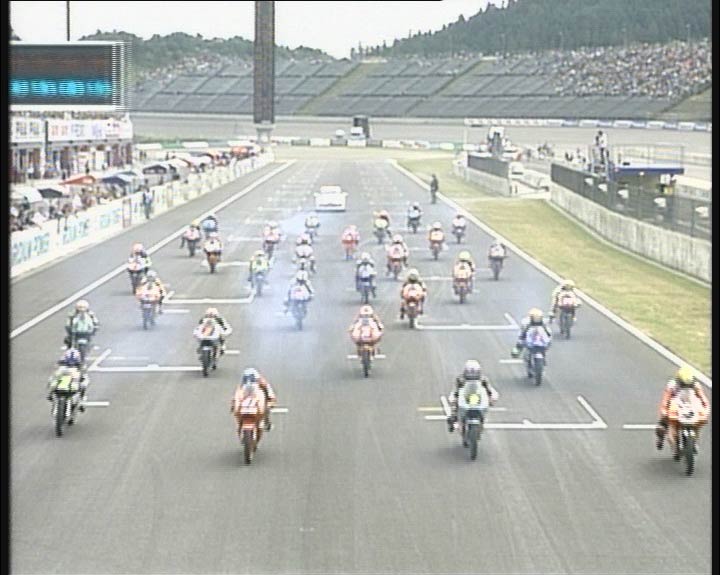
From the Dish
Panamsat 8 166E 3880 V "ABS-CBN Channel 2 " is FTA at the moment click HERE for program schedule
Lyngsat reports a mystery signal on Thaicom 3 3671 H Sr 2168 Fec 3/4??
NEWS
There is a new service from Lyngsat http://www.uplinkstation.com/
Sony SET Seeking Strategic Partners
From www.satnewsasia.com
India/Oct. 15, 2000/Satnews Asia/ -- Sony Entertainment Television (SET) in India, the first venture of Sony Pictures Entertainment of America, has opened discussions with regional satellite channels to form strategic alliances through equity stakes.
Kunal Dasgupta, SET CEO, said the company already has four channels and is in conversation with several other groups. He said two of them will join SET before the end of the year.
"On the international front, we have just signed on with Astro in Malaysia and are on Cakrwarta in Indonesia," Dasgupta told indiantelevision.com. "We are getting a couple of dollars per subscriber from Astro... We are opening up South Africa soon to be followed by Australia. We also think there is a good deal of scope for Set Max in west Asia and we will take it there," he said.
He said SET has so far earned Rs 600 million from our international operations.
There are reports SET has also begun discussions with the ETC group, which airs a music and Punjabi regional channel, Disney, and Nimbus Communications, which plans to launch two channels later this year.
SET's line-up ranges from the supernatural to the light-hearted, from talk-shows to life-style improvers, from the most glamorous events to legendary blockbusters. SET's programs are seen in over 24 million households throughout India, Pakistan, Sri Lanka, Bangladesh and Middle-East.
Early this month, EchoStar Communications Corp. announced DISH Network(TM) will be offering the most comprehensive South Asian language packages featuring top-rated entertainment services from India with four package offerings -- Zee TV, TV Asia, Sony Entertainment Television (SET), Bollywood For You (B4U) and Zee Gold.
SET in US will offer over 1,500 hours per month of exclusive South Asian programming like blockbuster movies, serials, sitcoms, lifestyle programs, game and talk shows, live concerts, current affairs programs and newscasts. SET expects to attract about 55,000 subscribers in America.
Dasgupta also said SET will consolidate and will focus on both advertising and subscription. "We will also move out more internationally and into the Net," he said.
SET had been competing more aggressively with Rupert Murdoch’s STAR TV and Subhash Chandra’s Zee Telefilms Ltd.
SET is also set to launch in South Africa on the Multichoice platform this October. Preparations are also underway for the launch of SET in Europe, through an alliance with a Scandinavian DTH company, Telenor and in Australia, through Optus.
SET is broadcast from Sony Pictures' facility. Sony Pictures Television Limited (SPTL), in Singapore and beamed through PAS-4, the Hot Bird of Asia.
15/10/00
Just a small update today, I fixxed the Pas 8 table I posted yesterday was it was for PAS-8 (H) 3940 SR 27690 FEC 7/8. While I follow the NZ vs India ICC Cricket Final tonight I will be busy updateing the satellites pages I have been meaning to do this for a while.
From my emails & ICQ
This tip was posted on the apsattv mailing list
I have been looking for a VCR that records NTSC 4.43, NTSC 3.58, Secam and
Pal as well as playing back tapes in all formats. I found one today - and it is at a unbeatable price.
RCA VRA905 AU. Its at Big W Stores (Australia) for $194.00 !!!
It is a two head machine and only has mono audio, but I have been looking at
other multi-standard recorders for around $400 - $500.
It works just fine, now I can record any signal from the dish regardless of format!
The manual mentions a New Zealand model as well - RCA VRA905NZ.
Mark
(Craigs note, looks like a bargain cheap machine ideal for useing with your seperate analog receiver for tapeing Star Sports etc.)
From the Dish
Lots of FTA on St1 88E at the moment (If you can get it let me know which part of Australia you are in and what size dish, that way I can start on our own special coverage maps)
St 1 88E 3468V "KSB Movie 1" Sr 26667 Fec 1/2 Vpid 1160 Apid 1120
St 1 88E 3468V "KSB Movie 2" Sr 26667 Fec 1/2 Vpid 1260 Apid 1220
St 1 88E 3468V "KSB Drama" Sr 26667 Fec 1/2 Vpid 1360 Apid 1320
St 1 88E 3468V "KSB ARS Games" Sr 26667 Fec 1/2 Vpid 1460 Apid 1420
St 1 88E 3468V "KSB TV Movie" Sr 26667 Fec 1/2 Vpid 1560 Apid 1520
New here on 3506H "BBC World", "Deutsche Welle TV", "Bloomberg TV Asia" Replaceing Taiwan TV, CASA, and Global TV
St 1 88E 3506H "MMBN info" Sr 23437 Fec 3/4 Vpid 770 Apid 771
St 1 88E 3506H "Rainbow Channel" Sr 23437 Fec 3/4 Vpid 772 Apid 773
St 1 88E 3506H "Hot Channel" Sr 23437 Fec 3/4 Vpid 774 Apid 775
St 1 88E 3506H "TTV" Sr 23437 Fec 3/4 Vpid 776 Apid 777
St 1 88E 3506H "CTV" Sr 23437 Fec 3/4 Vpid 778 Apid 779
St 1 88E 3506H "FTV" Sr 23437 Fec 3/4 Vpid 780 Apid 781
St 1 88E 3506H "CTS" Sr 23437 Fec 3/4 Vpid 782 Apid 783
St 1 88E 3506H "BBC World" Sr 23437 Fec 3/4 Vpid 785 Apid 784
St 1 88E 3506H "Mega Movie" Sr 23437 Fec 3/4 Vpid 786 Apid 787
St 1 88E 3506H "Deutsche Welle TV" Sr 23437 Fec 3/4 Vpid 788 Apid 789
St 1 88E 3506H "Bloomberg TV Asia" Sr 23437 Fec 3/4 Vpid 790 Apid 791
Palapa C2 113 4089H "Australia TV" Sr 14060 3/4 Vpid 512 Apid 650, as reported yesterday
14/10/00
Good news an Alladvantage cheque turned up in my mailbox for $78 I expect this will be the last one as I am no longer useing them as they have changed to a new jackpot system. I am looking forward to NZ vs India in the ICC cricket final Sunday night.
Theres a lot of Indian channel related news today , a few people have asked why I bother with it, India is one of the fastest growing satellite and cable tv markets in the World. A lot of the news relates to the Dordashan and Zee channels which are viewable in Australia.
From my emails & ICQ
Palapac2 H signal? My Nokia is awaiting parts for its PSU, so I can not give you all the details,
but on the same Transponder as CNA is another 14MSymb signal, Look for it at 4083.
Regards Dave.......
(A follow-up to this Below)
Latest report Bill Richards finds the following with his Nokia Saturday 2.20pm Sydney time
Palapa C2 4089 H Sr 14060 3/4 Vpid 512 Apid 650 "Aust tv" he notes no audio currently and signal is analog uplink and contains snow!

Palapa C2 4089 H Sr 14060 3/4 Vpid 513 Apid 651 "No pic or sound"
Robert Anthony reports the Pas 8 FTA CMT signal is gone and supplies a scan of Pas 8
FYI, CMT was FTA on VPID 2660, APID 2620 for three days last week while still encrypted on VPID 2760, APID 2720. Now CMT FTA (at VPID 2660, APID 2620) is a Pamansat Napa Card (again).
I have also included the "special" channels for upgrading the Scientific Atlanta IRD for PAS-8 CMT subscribers.
This is what was on PAS-8 (H) 3940 SR 27690 FEC 7/8 at 0100 GMT 14 OCT 00.
|
EPG Service Name |
VPID | APID | What is found there |
| ??? (PAS-8 Napa Feed One) | 2660 | 2620 |
PanamSat Napa Card |
| Virtual Channel 21 | 2860 | 2820 | Color Bars |
| Turner Metromux | 2460 | 2420 | Encrypted |
| EWTN Metromux | 2560 | 2520 | FTA |
| EB net - Zen Entertainment | 2260 | 2220 | PanamSat Napa Card |
| The Golf Channel | 2160 | 2120 | Encrypted |
| RAV TV - Zen Entertainment | 2360 | 2320 | PanamSat Napa Card |
| P8 - CMT Metromux | 2760 | 2720 | Encrypted |
| CMT DCP Upgrade Channel | 2760 | 2720 | Encrypted (SA IRD Program Download Until 21 OCT 00) |
| CMT CCP Upgrade Channel | 2760 | 2720 | Encrypted (SA IRD Program Download Until 21 OCT 00) |
Bill Richards writes.
Measat2 11540 H Sr 30800 Fec 5/6 Same channels Just FEC change
Regards
Bill
Bill Also has supplied us with a ZED Channel screenshot (Zee Education channel, screenshot for the gallery)
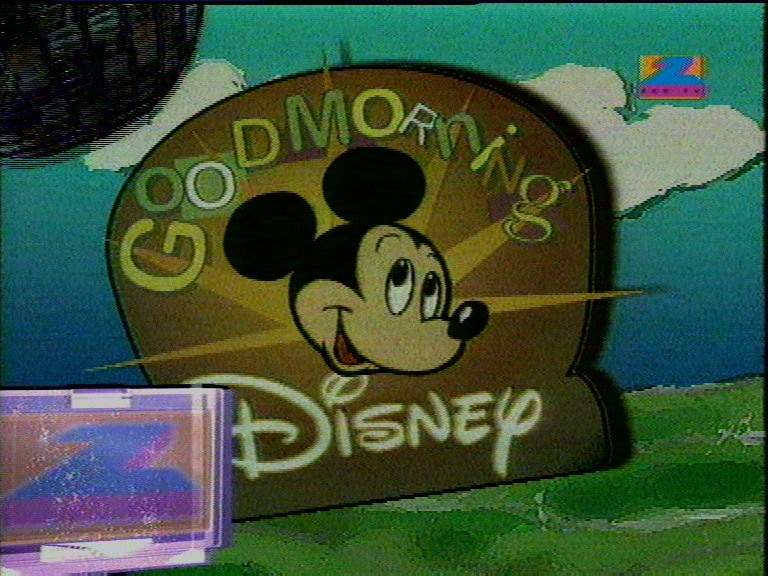
The Following Supplied to me from Telsat
Dear All,
I understand that some of you have been experiencing problems receiving our signal.
Please be sure to read the attached document stating the necessary steps to upgrade your equipment.
Kind regards,
Zara White Marketing & Affiliate Relations Co-ordinator
Country Music Television Australia Pty Ltd
Technical Advisory: PanAmSat has created virtual channels 200 and 400 for the DCP and CCP Unforced OS downloads in the Napa PAS-8 MCPC. The OS download is required to ensure successful reception of the CMT signal in the POR region. An unforced download is the method the PCC system uses to download the decoder OS software at the discretion of the receiver operator. (I.e. unforced downloading of OS software will not take effect until the down link operator triggers the process by pressing the Standby button on the receiver.) During the upgrade process, video and audio will be disrupted for approximately 3 minutes for each download. Below are the instructions on how your affiliates may upgrade their SA PowerVu D9223 decoders to the latest DCP and CCP versions. (DCP and CCP must be performed separately).
Ensure that the down link receiver is locked to the PAS-8, transponder 12C carrier. (The download can not be achieved if the receiver is not locked to the signal). The down link receiver must be tuned to Virtual channel 200 for the DCP download. Operator must press the Standby button on the receiver to commence the New DCP download process. A Boot menu should appear on the receiver’s monitor with version numbers gradually changing. Once normal programming resumes, the DCP download has been completed. The down link receiver must be tuned to Virtual Channel 400 for the CCP download. Operator must press Standby button on the receiver to commence the New CCP download process. A Boot menu should appear on the receiver’s monitor with version numbers gradually changing. Once normal programming resumes, the CCP download has been completed.
Warning: !!!!!!!!!!!!!!!
Once the download procedure has been initiated
under no circumstances should it be interrupted by either the up link or the down link operator; Interruption of the download may cause the software of the decoder to be wiped out.
Down link operator should confirm the upgrade procedure was successful by checking the versions in the Commercial Decoder Status Menu (pressing Menu #0). Upon confirmation of the new versions (DCP 2.31/XXX, CCP XXX/2.40) the operator must tune the decoder to channel 20 to resume regular CMT programming.
Important Note: Failure to upgrade decoders by 2100 GMT on Friday October 20, 2000 may result in disruption of the CMT signal.
I wonder if you can help me?
I have friends here from the Middle East and they would love to watch the
Asian Cup soccer tournament live - being played soon in Lebanon. Do you know
if it will be broadcst on a satellite channel viewable in NZ?
I don't have sat tv in my home but wish to in the near future. We may be
able to track a friend down that does have a sat system.
Any help would be happly received.
Cheers
Brian
Craigs reply,
"Yes you are in luck all the games are live on Starsports on asiasat 3
this is a fta channel you can receive in NZ with a minimum dish size of 1.8M solid"
Also we just received an email containing a lot of info on satellite Soccer coverage!
Soccer can be seen through Indonesian channel on Palapa 2C
RCTI will transmitting:
Sunday Oct 15,
1:20 am Jakarta Time: Seri A Itali - Inter Milan vs. Napoli - Live
19:55 pm - Bologna vs. AC Milan - Live
Monday Oct 16,
1:20 am - Lecce vs. AS Roma - Live
Wednesday Oct 18,
1:30 am Champions Cup - Lazio vs. Arsenal - Live
3:45 am - Real Madrid vs. B. Leverkusen - Taped delay
Thursday Oct 19,
1:30 am - AC Milan vs. Barcelona - Live
3:45 am - B. Muenchen vs. PSG - Taped delay
SCTV will transmitting:
English Premiere League
Saturday Oct 14, 21:00 pm - Leicester City vs. Manchester United - Live
Sunday Oct 15, 22:00 pm - Derby County vs. Liverpool - Live
Another soccer transmission can be seen through (all in Jakarta Time):
Asiasat 2: TV5 France - France League - Saturday Oct 14, 2:30 am - PSG vs. Merseille -Live (Check TV5 site)
Asiasat 2: and 3S: RTPi (Portugal): Potuguese League - Sunday Oct 15, 5 am - Desp. Aves vs. Sporting Lisbon.
Asiasat 3S: Star Sport (analog): Spanish League - Sunday Oct 15, 2:00 am - Deportivo La Coruna vs. R. Madrid - Live
All soccer Asian Cup 2000 Lebanon will transmitting Live. Please check http://www.espnstar.com.
For Indonesian who live in the region (not in Indonesia) they can see the Indonesian team against Kuwait today Oct 13, at 23:30 pm Jakarta time.
Indonesia vs. China, Oct 16, 21:00 pm
Grand Prix 500 Motegi, Japan - Sunday Oct 15, 10:30 am Jakarta Time
regards,
Adi
From the Dish
Panamsat 8 166E "CMT Pacific Rim on 3940 H is encrypted again.
Measat 2 148E New FEC for the Mediasat mux on 11540 H 5/6.
Asiasat 3 105.5E "Zed TV" has started on 4136 V Sr 15000, Fec 2/3, Vpid 32 Apid 33.
NEWS
Zed TV launched at glittering function in Mumbai
From www.indiantelevision.com
The much delayed launch of the education channel Zed TV from the Zee TV stable finally took place late last evening at the hands of Indian information and broadcasting minister Sushma Swaraj. Other attendees at the function were Maharashtra chief minister Vilasrao Deshmukh, the Himachal Pradesh chief minister, and the edication minister for Maharashtra Anil Deshmukh.
Swaraj said that she was delighted to launch the educational channel, because it was something that India needs at a time when parents are tearing their out because children are tuning into television to watch movies, soaps, series and normal TV pulp programming. The other political leaders echoed that sentiment and went out of their way to praise Chandra for his venture. "You are doing what we should be doing," they all said.
She however cautioned that the channel's fate will be decided by its programming. "A 24 hour educational channel is a bold initiative; it's a promise you will have to live up to," she said.
The channel is however starting with just five hours of original programming going up to eight hours daily, says Chandra. Initially to be aired in English it will be made available in six languages altogether, he added.
The channel will have programming targetd at various age groups right from toddlers to to school children to youth to professionals to women to senior citizens, disclosed Zee Interactive Learning Systems CEO Uma Ganesh. "It will whet Indian's appetite for learning and will drive viewers to the zeelearn.com web site, the Zee Career Academy and Zee LiveWire centres," she said.
"We expect to do a revenue of Rs 5,000-7,000 million per annum from our entire education business in the next five years," she added.
UTN awards rights to Zee TV
Our eFE Bureau
Urdu Television Network (UTN) has awarded Zee TV exclusive rights of carriage in the Indian and Middle East markets. "We are happy that Zee has welcomed UTN's inclusion in the network's direct-to-operator and direct-to-home bouquet," said UTN chairman Khalid Bhaimia. Zee TV, in consideration of the carriage, has agreed to extend its marketing and management expertise, particularly in the areas of content and packaging to UTN on commercial terms. Said Zee Network chief executive officer, "While Zee stands to benefit in terms of richer content in its DTO bouquet, UTN benefits from the management expertise of Zee."
UTN is South Asia's only Urdu language entertainment channel and draws content from all over the world. Starting November 1, UTN will air shows like Irshad (a musical game show by Vivek Agnihotri and Pallavi Joshi), Zeenat (a drama serial produced and directed by Ravi Rai) and Urdu films from India and Pakistan.
(Craigs note, UTN is on Asiasat 3 FTA Currently)
Zee TV opts for actor Anupam Kher as millionaire show host; even as TV World print run rises
From www.indiantelevision.com
It came as a surprise to most. Zee TV has hired veteran actor Anupam Kher, who made his mark as father yearning for his US-based son's ashes in an eighties movie and in comic roles in other movies, as host of its millionaire show Sawal Dus Crore Ka.
Kher will have to work hard to keep audiences glued to the game show that will launch end October. His natural talent will be pitted against the vigorous month long training that super star Amitabh Bachchan had to undergo before finally going on the studio floor for filming for Kaun Banega Crorepati, the Indian vershion of Who wants to be a Millionaire?
It will be Indian ingenuity versus a tried and tested hosting style and formula that has worked in almost every country that Who wants to be a millionaire? has been adapted for.
Why did Zee TV opt for Kher? "The format of the show is more important than the host. Kher is known for his versatile performances and Sawal Dus Crore Ka will give him the best opportunity to test his versaility," a Zee TV spokesperson says.
Meanwhile, the show seems to be giving the near moribund Zee TV Guide TV World a shot in the arm thanks to the fact that viewers will stand to win Rs 500,000 if they have a copy of the magazine in their homes during the game show's telecast. Its print run has gone up to 275,000 and it will go up further to 500,000 by the time SDC starts airing in end October, according to Zee Publishing CEO Deepak Shourie.
DD to take on ‘KBC’
From Tribune News Service
NEW DELHI, Oct 12— Doordarshan is looking forward to taking on Star TV’s “Kaun Banega Crorepati “(KBC) with its new line of innovative programmes to be launched on DD(Metro) in collaboration with Australia’s Channel Nine.
As a start, Doordarshan has decided to extend its ‘golden hours’ slot by another hour to 10 pm and is hoping to completely overhaul its choice of programmes by the middle of November. This, Mr Rajeev Ratna Shah, the Chief Executive Officer (CEO) of Doordarshan, felt would bring back the advertisement revenue to it.
Interestingly, the hour-long extension coincides on weekdays with the telecast of KBC on Star TV, which has taken away a substantial chunk of viewership from other channels.
However, Ms Ravina Raj Kohli, Chief Executive Officer of HFCL - Nine India ,who has linked up with Australian media magnate Mr Kerry Packer’s Channel Nine, denied that the aim of the extension was linked to the Star TV game show. She said that her company was of the view that KBC could not be countered with another game show, but some other good programmes.
Ms Kohli added that it was not necessary that one game show had to be matched by another. It was more necessary to have innovative programming.The HFCL Group Chairman,Mr Mahendra Nahata, also addressed the press meeting.
Mr Shah also announced that the additional ‘golden hour’ slot would commence from October 16 and the entire three-hour programme would be repeated the next morning from 9 am to 12 noon on DD II. He said the aim was to have family programmes from 12 noon to 3.30 pm, children’s programmes till 6 pm, and sports and young adult programmes till 7 pm.
The children’s hour will be slotted anew by November 14, Bal Divas, he added.
Mr Shah said DD II was now available terrestrial and via satellite (PAS 4 and INSAT 2B) and in both analogue and digital mode. Thus, while 30 per cent of the TV homes were linked to cable and satellite TV, DD II was available to 45 per cent of TV households within the country.
The terrestrial beam of DD II was being increased to 45 high-powered transmitters and 65 low-powered transmitters. Thus,it would soon reach 81 major cities terrestrially. He announced that digital receivers had been given to all 44 head-ends in Mumbai.
Mr Nahata said Mr Packer’s Channel Nine had put in $ 238 million into the Indian company. But he emphasised that the entire management and programming was Indian. He said the HFCL (Himachal Futuristic Communications Limited) had entered television production primarily in view of the convergence of technologies taking place the world over.
9 Gold to start 9 pm-10 pm block with soaps, series
From www.indiantelevision.com
HFCL-Nine Broadcasting India Ltd is to complete the 7 pm to 10 pm programming block it had bid Rs 1,210 million for by starting to air a clutch of series and soaps between 9 pm and 10 pm cum 16 October on DD Metro, the government owned channel. The branded block called Nine Gold will additonally air sitcoms, dramas and two-hour movies by leading directors.
Amongst the new shows to be launched figure: Smriti, Patang, Mooch Nahin To Kuch Nahin, Chonch Ladi Re Chonch, Agar Tum Na Hoten, Hum bhit to Hain Tumarhe, Tedhe Medhe Sapney and Khaki.
The shows feature popular stars like Tom Alter, Salil Ankola, Bhagyashree, Rajesh Khera, Anju Mahendroo, Raghuveer Yadav, Benjamin Gilani and many more.
Nine Gold will additionally introduce 'Directors Cut', a series of two-hour movies featuring a variety of storylines, brought to the small screen by leading directors and scriptwriters like Saeed Mirza, Praveen Nischol, Tanuja Chandra, Pankaj Parasher and Aruna Raje.
According to both Ravina Raj Kohli CEO of HFCL-Nine Broadcasting and Prasar Bharti chief R.R. Shah, the earlier 7 pm to 9 pm block is doing very well, thank you. Kohli says that Nine Gold has managed to snare 23 of the top 50 programme slots in all centres in all TV homes across India, based on TAM Media's TRPs during 17-23 September.
According to Shah, DD Metro is refurbishing itself and is to get new look courtesy from 14 November when a gaggle of new shows targeted at kids between 3 and 6 pm. This includes Teletubbies which is being brought to DD by the BBC.
Shah points out that DD is making a serious effort at ensuring better transmission of DD's signal in Indian TV homes. The state-owned network is installing an additional 110 transmitters by next year to ensure that viewers in even the smallest towns can tune into the channel
13/10/00
Theres an update on the Pas 8 CMT situation over at Satfacts website it will be FTA untill the 21st of OCT. Also a new edition of Scat India the satellite and cable magazine for that region, click on the image above to get all the latest the goings on in the the Indian Satellite scene. Many of the channels mentioned are available via Asiasat 3 and the Insats. Meanwhile the pay tv Networks are doing something in the last day or so which is causeing a few problems for those useing modified orignal smart cards. Those useing "Emulation" report no problems.
Cricket feed tonight is India vs South Africa should be a great game! Winner plays New Zealand in the final Sunday night
From my emails & ICQ
Anonymous reports
"the providers are "playing" with timezone blocking & channel id expiration. this mainly affects MOSC (Modified Original Smart Cards) and some goldwafer cards... pretty much a waste of time on the providers part. overcome in a matter of minutes....
Friday Feed Bit
(If you see a feed of interest especially sporting events send an email to [email protected] and everyone on the mailing list will receive it pretty much straight away) get the feeds when they happen not miss out when they are posted as news the next day!
Possible Feeds that may turn up this weekend (all times in Sydney time)
Friday 13th
5.45pm Syd Pas2 3961V Sr 5631 Fec 3/4 Vpid 0308 Apid 256 ICC Knockout South Africa vs India
also on Intelsat 701, 4052 RHC Vpid 308 Apid 256 Fec 3/4 games are also live on Dordashan (analog/digital on Insat 2e)
8.30pm Syd Dunhill Cup Golf from Scotland (Check I701 TVNZ feeds)
Saturday 14th
8.30pm Syd Dunhill Cup Golf from Scotland (Check I701 TVNZ feeds)
Sunday 15th
5.25am Syd italian Serie A Soccer (think this screens on one of the Indo channels)
8.00am Syd PGA Tour Golf
10.30am Syd Baseball Major League Check I802?
3.45pm Syd Cart Grand Prix of Australia, (Espn feeds are on Pas 2 3803V usually or 3934V also check B1,B3)
5.45pm Syd Pas2 3961V Sr 5631 Fec 3/4 Vpid 0308 Apid 256 ICC Knockout FINAL NZvs (South Africa or India)
also on Intelsat 701, 4052 RHC Vpid 308 Apid 256 Fec 3/4 games are also live on Dordashan (analog/digital on Insat 2e) Final is possibly on PTV as well
6.00pm Syd Soccer Sydney Olympic V Kingz (try B1 /B3)
8.30pm Syd Dunhill Cup Golf from Scotland (Check I701 TVNZ feeds)
8.55pm Syd World Superbikes Championships (usually seen on channel 10 feed I701)
From The Dish
Zed Channel is not inside Zee's Boquet on Asiasat 3 its on 4135V Sr 15000 Fec 2/3 (unconfirmed, freq details)
Sorry no fullsize screenshots yet off this channel
Panamsat 8 166E 3940H "CMT Pacific Rim" is now in FTA untill 21st OCT see above for more details
Palapa C2 113E Occasional feeds seen on 3897 H Sr 3000 FEC 2/3.
GE 1A 108.2E GE 1A is now geostationary at 108.2 East.
Asiasat 2 100.5E "Sky Racing Channel 3" on 4020 V is currently FTA
Insat 2E 83E 3979V "DD 8 - Andhra Pradesh" has left
NEWS
Sahara TV starts Urdu bulletin
Sahara TV has started a daily Urdu bulletin at 8.50 am. Said Mr Mahesh Prasad, president, Sahara TV: ``This extension of our news telecasting in Urdu will increase our viewership substantially and is a first in satellite news telecasting in India.'' The bulletin is telecast live with breaking news on par with Hindi and English news telecast.
New PC Video Cards add TV Tuners and VCR type features
3dfx is finalizing the development of its VoodooTV 100 PCI, VoodooTV 200 and
VoodooTV-FM, the first in its line of multimedia products. VoodooTV 200 and
VoodooTV-FM are the first products to introduce "tuner on a chip" technologies to the
PC. All three products add enhanced channel management and stereo capabilities,
.mp3 encode capabilities and enhanced digital video recording to the feature lists of
competing products. In 2001, 3dfx expects to announce products from their
complete roadmap of multimedia enhancements that feature emerging technologie
such as high-definition television, digital video encoding, and decoding products and
related technologies.
VoodooTV 200 is engineered with silicon tuner technologies that support FCC cable
and stop channels from bleeding into each other. The card also features a stereo TV
signal, MPEG capture, digital VCR, .mp3 encoding, stereo FM radio reception, and
NTSC and PAL support. VoodooTV 100 brings basic mono TV for users who just want
the basics, including channel access, worldwide application support and a digital VCR
option.
AXN plans adventure trip for viewers
From www.economictimes.com
Chaitali Chakravarty
NEW DELHI
IF YOU are irreverent and daring, AXN Asia is willing to sponsor your rugged lifestyle. The action movie channel has chalked out a $2-million off-air marketing blitzkreig for India which will give viewers a real-time experience of adventure sports.
The buzz is expected to translate into favourable market sentiments, distribution surges and stronger ratings. Industry sources point out that AXN Asia has woken up to the fact that it is becoming increasingly important for channels to interact and connect directly with viewers, to give them a firsthand taste of on-screen excitement which they generate through onground activities.
Sony, Zee, MTV, Channel V, National Geographic have started doing it already through award nights, cultural programmes and other promotional activites.
Not that AXN is doing too badly in India. According to the latest ACNielsen Peoplemeter reading for the month of August, of all the established international channels, AXN enjoys prime time rating of 0.15 per cent which is two steps behind Star Sports and ESPN.
AXN, however, would like to see its position improved, which it feels could be achieved by creating an experience for viewers off-air. It would, however, like to do it differently. ``We cater to a mind band which has no cultural buyers. For whom television is a form of escapism and not a source of information,’’ says Ricky Ow, sales and marketing head of AXN Asia, who is on his maiden visit to India.
He will meet up with corporate houses which could be the prospective sponsors of programmes both onair and off-air.
The Sony Pictures-owned channel has more in its basket. ``AXN movie festival is one of our many initiatives to connect with viewers directly. Next on cards is, getting fiery youngsters to participate in international adventure sports. For instance, AXN sponsored two Indians to the AXN World BMX Championships 2000 at Cologne. The whole idea is to be relevant in the new economy and get integrated into people’s lifestyle,’ he adds.
Coming up are a bunch of blockbuster movies on air like True Lies, Twelve Monkeys, Waterworld, The Frighteners, The Quick and The Dead, Desperado and others. Premiering April next, is the Eco Challenge series which is a reality adventure show featuring 76 teams representing the finest adventure athletes from 26 counties. They will be seen racing over a 300 mile rugged course in Sabah in Malaysian Borneo.
``We plan to hold similar treks in India as well. The winning team will get to participate in The Eco Challenge in Malaysia. It is a fiveday trek through very rough terrain. The challenging part of the whole exercise is that during the entire journey, a team is allowed to sleep only for four hours,’’ says Ow.
Vijay TV seeks partners for children programmes
From http://financialexpress.com
Padmaja Shastri
Vijay Television Limited is looking for a strategic alliance in the area of children-based programming. The Tamil channel is also planning to introduce three-four new programmes early 2001 as a new year offering.
In keeping with the channel's brand positioning as a `complete family entertainer' it is striving to present a good mix of programmes that will interest every member of the family. As a part of this endeavour, it had earlier tied-up with NDTV for news content, Hyderabad-based Padmalaya for mythological content and more recently with Discovery Channel for infotainment programmes.
Talking to The Financial Express, Vijay TV's chief executive officer Mr Rohit Adya said that children's programmes could be one more area where the channel could collaborate for content. However, it is yet to initiate the process and conduct dialogues with anybody, he said.
The channel will tie-up with anybody for quality content as long as it's a win-win situation and leads to enhanced viewership in both soft prime band and prime time, he added.
The new programmes in the pipeline include a business show, a daily sitcom, a programme focussed on women and a breakfast show. The channel is yet to fine-tune the details of these programmes. The business show will be produced in-house, said Mr Adya.
According to him, the channel is concentrating on alternate genre programmes to increase penetration as well as revenues.
Copyright © 2000 Indian Express Newspapers (Bombay) Ltd.
Increased Asian viewership for BBC World
From http://financialexpress.com
A new research has indicated that Asian viewership for BBC World has increased by 11 per cent. The Pan Asia Cross Media Survey 2000 (PAX) revealed that the channel's weekly audience reach across Asia Pacific had risen to 15.4 per cent since last year's survey.
Balaji Telefilms signs MoU with Star Plus
From http://financialexpress.com
Balaji Telefilms Ltd (BTL) has signed a MoU with Star Plus for a daily serial-Kahani Ghar Ghar Ki.
The serial is estimated to run for one year. Apart from that, BTL also has a weekly serial-Kalash.
12/10/00
WOW am in shock today NZ beat Pakistan and are through to the final of the ICC Knockout! We Play South Africa or India in the final.Note the India vs South Africa semi-final is Friday night so no use looking for the feed tonight. ZED (Zee Education TV) channel launched (Zee boquet Asiasat 3) today see below, it will be fta I think untill next year. No my installer hasn't turned up yet..
From my emails & ICQ
From Bill R, "the Sr of Mediasat on Measat is in fact Sr 30800"
From Hans Spitaler
Hi Craig
CMT is fta on Pas 8 3940 and 3945
Did you know it was an Australian channel? I was surprised to find out it was an Australian production.
cheers
Hans
Also R.Anthony reports ESPN Atlantic is FTA again.
From the Dish
Nothing to report!
NEWS
Zed TV to launch today
From www.indiantelevision.com
After a number of postponements, Zed TV, the education channel from the Zee TV group is to be launched on 12 October. The channel is being beamed off Asiasat 3S. It will initially be digital free to air but will be converted into an encrypted and paid service in the near future.
The launch is slated to take place at the hands of information and broadcasting minister Sushma Swaraj. Zed TV CEO Uma Ganesh says the channel is expected to tot up an annual revenue of Rs 1,000 million per annum in five years.
At start up, it is offering programming bands targeted at toddlers, school going children, youth, women, IT professionals, and shows targeted at lay consumers.
"We have talk shows, quizzes, cookery, and game shows - to make education fun," says Ganesh. "There are also shows to make consumers aware about law, finance, parenting."
Students will also be taken through tutorial programmes around entrance exams to specialised courses such as management, engineering, hotel management etc.
Ganesh says the channel is going to be the star of the Zee TV pay bouquet. "It will be a must carry channel on cable TV networks because of its content," she says.
NZ Sky Television Interactive TV Launch Delayed 5 Months
By Stephen Wright
Of DOW JONES NEWSWIRES
WELLINGTON (Dow Jones)--Technical issues have forced New Zealand's number one pay television operator, Sky Network Television Ltd. (A.SNT), to delay the introduction of interactive television by up to five months, the company told Dow Jones Newswires late Monday.
Sky's Chief Financial Officer Paul Smart said the company's interactive service, also know as Open TV, won't be available until mid-February because modification of existing television set-top decoders is taking longer than expected.
Earlier this year, Sky said the basic interactive television services, including email, would be available to digital satellite television subscribers by September or October.
"Nothing's particularly going wrong with it, but in some respects it's a bit of a world first - the development that's going on. There's four major contractors that are having to work together," Smart said.
"The difficult bit is taking the existing software out of the (set-top decoder) and putting new software in, which requires quite a bit of rewriting of existing software to do, so that's really where the hold up is," he added.
When the interactive service is launched, Sky's digital television subscribers will initially have access to an electronic program guide and an interactive weather service, Smart said.
Email will be ready around mid-March, interactive advertising by the middle of 2001 and a fuller shopping service by the end of 2001, he said.
The email service, and probably the weather service and electronic program guide, will be supplied at minimal or no cost to Sky's existing digital television subscribers, Smart said.
"There won't be any incremental charge. We see those more as customer retention and acquisition tools. If we can get our churn (the rate at which subscribers disconnect) down by using those products, obviously it's paying for itself in that regard," he said.
As of June 30, Sky had 377,000 subscribers, with 162,000 subscribing to the digital television service.
Sky is 49.6% owned by New Zealand media group Independent Newspapers Ltd. (A.NWS)
Zee TV reveals Sawaal Dus Crore Ka game show format
From www.indiantelevision.com
Zee TV has pulled off the curtain on its Sawaal Dus Crore Ka game show format. For starters, the show will air at 8:30 pm three days a week cum end this month.
A selection process will result in 21 of the millions of contestants who have sent in their entries being part of the first buzzer round. Three questions will be asked to select three contestants for the second round. Whoever answers the question right first moves into the second round.
In the second round, the three contestants will be pitted against each other and whoever gets two out of three questions right will move into the rounds that follow; the others will be eliminated.
He/she will be in the hot seat. Three questions will be hurled at him; if he gets two of these right he will progressively move onto the next round.
The buzzer round gives the winner Re 1. For each subsequent round, a zero is added to that figure. To win the magic figure of Rs 100 million he will have to go past nine rounds of questioning. Shoudl he/she fumble and go wrong in round eight, he will get only Rs 1 million as the prize money.
The questions are being devised by Derek O'Brien of Cadbury Bournvita Quiz Contest fame. The host had not been announced at the time of writing.
Zee TV has, however, kept the viewer in mind too: viewers could win anywhere from Rs 15,000 to Rs 2,000 should they have a copy of TV World, the Zee TV programming guide with them. Each copy of TV World will have a six digit number printed on its cover. During each show one number will be generated by a computer and announced. Should a viewer have a TV World copy with all six digits matching he stands to win Rs 200,000; if he/she has five digits matching the prize is Rs 15,000; if four, it is Rs 4,000.
11/10/00
Live chat! tonight 8.30pm Sydney time onwards
Not much today new either! except my Compaq laptops back and its got a new screen. The ICC Cricket match tonight is NZ vs Pakistan should be on in the usual locations.
From the Dish
Measat 2 at 148E "Thai TV Global Network, Maharishi Open University, TRT International" are on 11540 H, SR 30000 Fec 3/4.
Thaicom 3 at 78.5E "Raaj TV" has left 3510 V.
Thaicom 3 at 78.5E "ATN Music" has started regular transmissions on 3554 V, Asian beam.
NEWS
TVs not ready in time for digital
From http://news.com.au/
By MICHELLE GILCHRIST and DENNIS SHANAHAN
THE revolution will not be televised the digital TV revolution, that is.
The three commercial networks have conceded this week there is unlikely to be digital television equipment in shops in time for the start of digital TV on January 1.
The federal Government is concerned that instead of being another symbol of the "new economy", digital TV could become a severe embarrassment next year if too few viewers have compatible TVs.
So the Nine, Ten and Seven networks have agreed to underwrite production of the nation's first batch of digital TV receivers, at a cost of up to $6 million.
This week the three networks said that despite "months of negotiation" with television makers, there was no prospect of digital TV equipment in time for the January 1 start date.
Unconvinced there is even a market for digital TV in Australian, manufacturers do not want to take a risk on the new product, so the three commercial networks have agreed to take the risk for them.
They have agreed effectively to make the first order for set-top boxes themselves. But with just 2½ months until the start date, even those are unlikely to be available by January 1 and they are unlikely to cost the $300 originally promised – more likely $500 or more, though a Nine network spokesman stressed yesterday that prices should come down "fairly quickly".
Existing TV sets will work after January 1 because networks must transmit the analog signal for eight years.
But viewers who want to receive the extra services when digital TV begins will need a digital TV or a set-top box that converts the digital signal for their analog set.
Digital TV already had a setback when the so-called datacasters – which had included News Limited, publisher of The Australian, John Fairfax and Telstra – pulled out of trials. Datacasting could include services such as home shopping, banking and interactive games.
Failure of digital TV to take off could be a severe embarrassment for the Coalition, which hopes to campaign on its new economy credentials at the next federal election.
Senior ministers are concerned at the lack of equipment and believe a new economy cannot afford to have digital broadcasts being made without an audience.
The aim is to have much higher take-up rates of digital TV than in the US and Britain.
Digital TV has been a big success in Britain, where nearly one in five households has a digital TV or set-top box just 20 months after its launch.
But Britain's digital TV regime was boosted by heavily subsidised set-top boxes, a marketing pattern that Australian TV networks do not want to follow.
Communications Minister Richard Alston has been pushing the free-to-air broadcasters – particularly Kerry Packer's Nine network, which led the campaign to secure digital TV for the three networks – to kick-start the production of set-top boxes.
Ironically, it could be the ABC that boosts digital TV, and the federal Government, in time for the next election.
The ABC hopes its digital TV services, including interactive games, news and up to two new channels, will begin around July next year.
Discovery to speak Tamil on Vijay TV
From www.economictimes.com
Our Bureau
CHENNAI
DISCOVERY Channel’s select programmes will be dubbed in Tamil and aired on Vijay TV, a regional channel owned by UTV, from October 17, following a collaborative tie-up between the two.
Discovery Channel will air its programmes as a block on Vijay TV, every Tuesday and Thursday from 5.30 PM to 6.30 PM. The entire line-up of programmes will then be re-telecast on Saturday from 3 PM to 5 PM.
The Discovery Channel block on Vijay TV will comprise of some of the best programmes including Medical Detectives, Ultrascience and Ultimate Guide,” Kiran Karnik, managing director, Discovery Communications India and Rohit Adya, CEO, Vijay TV told a press conference here.
Currently, Discovery Channel is available to viewers across India, as a 24-hour channel, simultaneously, in English and Hindi. Tamil is now the second Indian language that Discovery Channel will be available in.
This alliance came about because of the Tamil speaking viewers’ interest in Discovery’s realitybased entertainment. And we worked very fast on this,” Karnik said. While Discovery Channel is keen to expand its regional reach, it has no plans in the immediate future, he added.
The collaboration with Discovery Channel will give our viewers the very best in infotainment programmes and consolidate our soft prime band,” Rohit Adya said. The two channels have entered into a revenue sharing arrangement for the proposed block.
Discovery Communications India, the Indian arm of Discovery Networks International, has also launched Animal Planet in addition to Discovery Channel. A family-oriented 24-hour pay channel, Animal Planet has an estimated 6.5 million viewer base.
Zee prunes ad rate for its 'Sawaal Dus Crore Ka'
From www.economictimes.com
Rajiv Goel
NEW DELHI
ZEE Television, which has devised its own game show — 'Sawaal Dus Crore Ka' — to rake in some of the moolah that's been flowing into Star's KBC, has pegged its ad rates for the show at 23 per cent lower than KBC, setting the scene for a fierce competition for ad revenue between the two game shows.
The spot rates of KBC are steep — it's a hefty Rs 9.79 lakh for 30 seconds slot, which translates into Rs 3.26 lakh per ten seconds. Compared to this, SDCK will charge Rs 2.5 lakh for a 10 second slot.
Zee has created a new category in the tariff card, named 'Zee Kohinoor', for SDCK. Otherwise, Zee has hiked ad rates by an average of 20 per cent. This was confirmed by company sources and media planners.
This hike, felt ad agency sources, would make media planners rethink their strategy as Zee is no longer the kind of favourite it was a few months ago.
Company sources said Zee expects SDCK to notch a higher TRP rating than KBC as the structure of the Zee programme involves viewer participation.
Despite that, the channel has decided to position its ad rates much lower than KBC which, in turn, is expected to induce competition among the two channels for attracting advertisements.
Zee's revised tariff, applicable from October 1, 2000, has effected a hike ranging from 10 to 29 per cent across different programme categories. After the revision, Zee ad rates — with the exception of SDCK — are marginally higher than Star rates which were revised with in August 2000.
Star, Sony, Zee come under Income-Tax dept scrutiny
From http://financialexpress.com/
Bella Jaisinghani
Mumbai, Oct 9: The Income Tax Department is understood to have conducted searches at the premises of leading television channels - Star TV, Sony Entertainment Television and Zee TV - in Mumbai on Friday. While there was no official confirmation, industry sources (who termed it as a ``routine raid'') said files and papers were taken away from these offices by IT officials.
The IT officials had apparently received a tip-off specifically concerning the alleged ``undeclared income'' and property that was transferred abroad by the Star TV network.
The channels too did not confirm about the searches. Sainath Iyer, head of PR at Zee TV, termed the IT investigations as a routine industry survey.
``An official of the rank of deputy municipal commissioner accompanied by his aides visited the Worli office of Zee TV to find out about the functioning of the industry. They met the personnel in the finance department, made some routine enquiries, and left. Most of the staff did not even know of their visit. It was business as usual.''
Mr Iyer, however, did not attach much importance to the visit since other TV channels were similarly questioned. Rajesh Pant of Sony denied that any search was conducted by the IT officials. Sony CEO Kunal Dasgupta was unavailable for comment. Sony board officials Sudesh Iyer and Jackie Shroff were not in Mumbai either. Mrs Ayesha Shroff, Mr Shroff's wife, said she was not in a position to confirm or deny the reports.
It is conjectured that the high popularity and rising TRPs of Star TV, after the mega success of Kaun Banega Crorepati, could have led the IT department to conduct the searches. With Zee and Sony also planning to launch similar quiz shows, the same could be true for them as well.
Num TV to broadcast cricket matches live on Internet
From http://financialexpress.com/
Num TV, the Internet broadcasting portal of Pentamedia Graphics Limited, plans to live broadcast cricket matches over the Net. "We will try to get the rights from the cricket boards or enter into an arrangement with television channels", said Mr V Chandrasekaran, chief executive officer of the company.
The unique feature of the cricket broadcast would be that the viewer can choose the camera angle which they would like to watch. About 14 different angles will be available. The broadcasting portal would also consider live relay of first class cricket matches.
The venture has roped in Mr Krish Srikkanth, former Indian captian, a its sports consultant. Mr Srikkanth said that they would look at providing coverage of other sports with tennis to be included at the earliest.
During the current ICC-Knock out tournament, live updates in audio, video and text updates have been provided. Mr Srikkanth also answered on-line interactive questions.
The response has been very good, with queries coming in from all over the world, says the former cricket captain.
Mr V Chandrasekaran says that an investment of $12 million has been made in Num TV and the venture is expected to break even in six months. It has 2,00,000 registered users and 5000 paid subscribers.
10/10/00
Not much at all happening today, I orderd another 128 megs ram for my pc I hope it works this time.I notice Satfacts site has been updated. Tonights Cricket Pas 2/I701/and DD on Insat 2e is England vs South Africa should be a good one. NZ has made it through to the semi's to play Pakistan on Thursday Night. As for the Aussies well I guess there home by now :-)
From my emails& ICQ
09:50UTC 9/10/2000
Pas2 3860H Sr 12208 Fec 2/3 Vpid 4096 Apid 4097 MPEG 4:2:2"Wrestling Feed" Audio FTA but Video is pixalated.
Regards
Bill
(Thanks for that, Andrew R from Axiom Compusat services suggests its the Brisbane WCW Monday Nitro feed going to the U.S)
Milan told me in the Chatroom last night the Azteca 7 Mexican on I701 has gone
Michael George suggests Thaicom 3, Alpha channel should have the Greece vs Albania soccer Thursday morning live at 2 am.
From the dish
Asiasat 2 100.5E "Astra Vision" and "RTL Tele Letzebuerg" have left 3660 V
These Palapa C2 items are KU band, North Beam and posted for some of our asian readers
Palapa C2 113E 10970 V "ETTV Shopping" has replaced "Tzu Chi TV" on PIDs 50/51.
Palapa C2 113E 10970 V "Karaoke" has replaced "STV-MTV" on PIDs 66/67.
Palapa C2 113E 11130 V "Big Love" has replaced "ETTV" Shopping on PIDs 45/56.
Palapa C2 113E 11130 V "School Movie" has replace "Movie TV" on PIDs 54/54.
Palapa C2 113E 11130 V "STV" has replaced "HuaXia TV" on PIDs 82/83
Panamsat 8 166E "ESPN Atlantic Network" 4020 H is encrypted again.
Intelsat 701 180E "XHIMT - Azteca 7" has left 3762 R
Intelsat 701 180E feeds on 3936 R (NTSC) have stopped.
NEWS
Satellite launching station may be no-show again
From www.abc.net.au
Australia's fourth attempt to establish a satellite-launching station could be on the brink of collapse.
Negotiations over a site on Christmas Island for the station appear to have broken down.
After two-and-a-half years of planning, Asia Pacific Space Centre (APSC) has closed its office on the Indian Ocean island, following failed talks with mining company Phosphate Resources Limited (PRL) over land for the $800 million facility.
PRL says 52 per cent of its land had been earmarked for the satellite-launching station and it was not happy with the timing or financial framework for the deal.
The president of the island's chamber of commerce, Russell Payne, says he fears APSC will relocate its project to Brazil.
Networks place first digital set-top box order
From www.theage.com
By JANE SCHULZE
Tuesday 10 October 2000
The free-to-air television industry has stipulated that the first digital set-top boxes available in Australia must be capable of Internet access, but may not decode high-definition TV signals.
The Ten, Seven and Nine networks have sought to accelerate the roll-out of the boxes by jointly underwriting the first order of the boxes at a cost of up to $20 million.
They have called for expressions of interest from box manufacturers to provide the boxes by the start of digital TV on January 1 next year.
The Ten Network's general manager of business affairs, Susan Oddie, said the first order of equipment was likely to be for between 10,000 and 20,000 units. Industry experts have estimated the boxes, which convert digital TV signals for delivery to analogue TV sets, to cost between $500 and $1000.
The boxes will enable TV viewers to receive enhanced programming (such as multi-view camera angles) from the commercial TV networks, multi-channelling from the ABC and SBS, and datacasting services on existing TVs. But the networks' specification for the box stipulates it must include a modem to enable Internet access.
"If there is the capability of a back channel as it's being developed, then it's common sense to include it," Ms Oddie said. The industry had not decided whether the boxes should be able to decode high-definition TV signals. "We don't expect this to be the maximum specification of what will be available in the market, but this is a minimum threshold," she said.
The TV network's desire to broadcast cinema-quality high definition signals has been a source of complaint within the wider media industry, as other media companies say high-definition eats up spectrum that could have been used to provide other services. Ms Oddie said the networks would recoup their outlay on the first order when the boxes are sold at retail stores.
"We are aiming for it (the box) to be as cheap as possible, subject to it having specifications that it's upgradeable, so it's too early to estimate a price," she said.
She said the broadcasters' action was prompted by the failure of manufacturers to ensure boxes would be available for the start of digital TV after 18 months of discussions.
"A guaranteed order focuses their mind on timely delivery," she said.
The expression of interest also stipulates that the boxes have an open system with a non-proprietary Application Program Interface.
That will mean consumers can access services from a range of providers, including datacasters, and both the TV networks and datacasters will know the system for which they should write software applications.
Ms Oddie said the industry did not have a preference for the type of software as long as it was an open system.
"That's why we are seeking expressions of interest to determine what can be delivered and in what time frame," she said.
Fox 8 nips off share of TV's Olympic audience
From www.theage.com
By JANE SCHULZE
There was little good news for the Seven Network's television rivals during the Olympics, with the Olympic network systematically stealing the ratings thunder.
But there was one television service that swam against the tide and actually managed to increase its share of viewing during that period - the pay TV channel Fox 8.
Fox 8, which programmed a 24-hour-a-day Simpsons Fanfest, increased its viewing levels from an average of 26,000 people in the month before the Olympics to more than 53,000 during the event.
Leigh Monti, the chief executive of the pay TV sales company Multi-Channel Network, said the channel emerged with a 6 per cent share of viewing in homes with pay TV.
He said Fox 8's success was evidence of the advantages of pay TV's niche programming, a factor contributing to the industry's expectation that it will gross $50 million in advertising revenue this year, up from last year's $35.5 million.
He believed the decision by the free-to-air companies to increase advertising rates by up to 10 per cent over the summer should provide greater opportunity for the pay TV industry.
"I tend to agree (with the rate increase) if it's a supply and demand thing, but it puts the onus back on the advertising agencies to justify the cost to the client when there are many other options these days," he said.
The pay TV industry regularly spruiks its advantages in the lead-up to summer, when its viewing levels increase. Mr Monti said that in October last year pay TV had an average audience in the all-people demographic of 250,000 in homes with pay TV, a figure that grew to a peak of 350,000 during summer.
Its share of the 16 to 39-year-old audience was 45 per cent of pay TV homes in October, but peaked at 55 per cent over summer.
"Any advertising agency that's looking at advertising over summer can't ignore the fact that pay TV has an increased share of audience across that period," he said.
The industry's advertising rates increased as its audience grew, but did not increase according to the time of year.
Mr Monti said pay TV was now in 19 per cent of all homes and reached 24 per cent of the population.
Watchdog for private channels soon in Pakistan
RECORDER REPORT
ISLAMABAD (October 10) : The government has decided to constitute an Authority to regulate the functioning of private electronic channels in the country.
The Federal Cabinet would shortly approve an ordinance for this purpose. According to the proposed ordinance, the Regulatory Authority would comprise nine members, mostly from the private sector.
The authority would issue the license for private radio and TV channels from March next year. Under the proposed ordinance, a criteria would be established for issuing the license, sources in the information ministry said.
The government has also decided to allow five types of channels in the private sector. These channels are: satellite, National, Provincial, Local, and specialised. All channels would have the permission to broadcast the News bulletins.
The details would be worked out later for each category of channels, sources said.
The new proposed authority would have complete independence. Of the nine members, the authority would have seven members, including chairman from private sector. Two members would be from the government, one from the information ministry, the other from the wireless board, sources said.
Copyright 2000 Business Recorder (www.brecorder.com)
STAR TV TO LAUNCH NEW PACKAGE
News Corp.’s Star TV will invest more than $300 million in India over the next
two years, with the majority of the resources going towards the launch of a new
bouquet of channels that will also be aimed at other south Asian countries. An
education and health channel will launch in the first quarter of 2001, followed
by a women’s channel and the local version of Fox Kids. Star is also in
discussions to distribute Disney Channel in India. Star TV also aims to extend
distribution of its Hindi-language general-entertainment channel Star Plus and
its 24-hour news network, Star News.
SET PLANS GLOBAL EXPANSION
Sony Entertainment Television (SET) launches on Echostar in the US in October
as part of a five-channel ethnic Indian package. Included in the package are
Zee Gold, TV Asia, Zee TV, B4U and SET. SET expects to attract about 55,000
subscribers in the US. October also marks SET’s launch in South Africa on the
Multichoice platform. SET will be bundled with Zee TV and B4U. SET’s European
expansion includes an alliance with Scandinavian DTH company, Telenor. Optus
will carry the Sony service targeting 100,000 ethnic Indians in Australia.
STAR TV AND GIGAMEDIA IN JOINT-VENTURE
Rupert Murdoch’s Star TV has joined forces with Taiwanese internet company
GigaMedia to invest more than $100 million in developing internet and pay-TV
services for Taiwan. The two companies are forming a 50:50 joint venture to
provide premium television services, including enhanced TV, home shopping,
email and other e-commerce applications. As part of the deal, Star will
part-finance the two-way upgrade and digitisation of GigaMedia’s network of 29
cable partners in Taiwan. The move highlights the growing rivalry between Star
and Richard Li’s Hong Kong-based Pacific Century CyberWorks (PCCW), which is
also striving to become Asia’s leading provider of pay-TV and internet-based
entertainment. Talks between PCCW, GigaMedia and Taiwan’s Era Communications,
to form a similar broadband alliance, fell apart last month.
9/10/00
Live chat in the chatroom tonight as usual 8.30pm Sydney time. ICC Cricket Feed tonight is NZ vs Zimbabwe. There isn't any news section today.
Page trimmed and archived.
From my emails & ICQ
(From Hans Spitaler)
Hi there Craig
I have a couple of new Indian channels.
Insat 2E 3448 V "Kairali Channel" Analog (main language is Malayalam)
Insat 2E 4005 V "Eanadu TV" Analog (main language Bengali)
Also I saw live pictures of Japan F1 on Star Sports Asiasat 3 analog
Cheers, Hans
(Craigs, note I think those have been there a while unless they improved or changed their beams?)
(From Andy, apsattv emailing list)
Japanese Grand Prix was on Pas 2 3802 v 6620 3/4 as well
(From Bill Richards)
Japan Grand Prix Feed 8/10/2000
Panamsat 2 169E 3934 V Sr 20000 Fec 3/4 Vpid 33 Apid 34 Main Feed, Vpid 36 Apid 37 Pit Cam
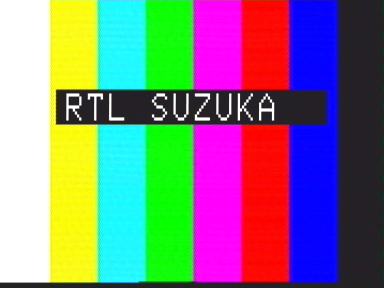
Bill also took a look at Measat 2 KU and found the following
11478 H Sr 30000 Fec 7/8 Vpid 161 Apid 84 HALLMARK ENCRYPTED
11478 H Sr 30000 Fec 7/8 Vpid 165 Apid 100 "CBS" ENCRYPTED
11478 H Sr 30000 Fec 7/8 Vpid 168 Apid 112 "RPN 9" ENCRYPTED
11478 H Sr 30000 Fec 7/8 Vpid 169 Apid 116 "ABC 5" ENCRYPTED
11478 H Sr 30000 Fec 7/8 Apid 175 Adult Music Mix FTA
11478 H Sr 30000 Fec 7/8 Apid 177 Light & Easy FTA
11478 H Sr 30000 Fec 7/8 Apid 178 Classic Rock FTA
11478 H Sr 30000 Fec 7/8 Apid 179 Golden Oldies FTA
11540 H Sr 30800 Fec 3/4 Has exactly the same channel line-up as Optus B3 12336V MEDIASAT !!!!!!
11664 H Sr 30000 Fec 7/8 Vpid 161 Apid 84 "National Geographic Channel" ENCRYPTED
11664 H Sr 30000 Fec 7/8 Vpid 165 Apid 100 "CNBC" ENCRYPTED
11664 H Sr 30000 Fec 7/8 Vpid 166 Apid 104 CNN ENCRYPTED
11664 H Sr 30000 Fec 7/8 Vpid 169 Apid 116 "Bloomberg TV" ENCRYPTED
11664 H Sr 30000 Fec 7/8 Apid 176 Jazz FTA
11664 H Sr 30000 Fec 7/8 Apid 177 MY (Chinese music channel) FTA
11664 H Sr 30000 Fec 7/8 Apid 178 OPUS CLASSICS FTA
11664 H Sr 30000 Fec 7/8 Apid 179 CURRENT HITZ FTA
And not forgetting the cricket seen on Pas 2
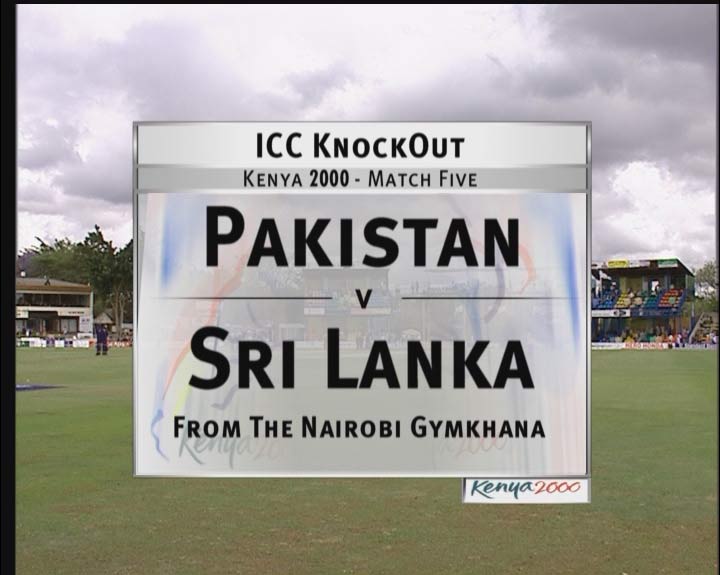
A few of the recent FTA Channels on Pas 8


ESPN, Studio 23

Knowledge, Lakbay Tv
Regards
Bill
As promised last week screenshots of Palapa C2 Space TV, FTA's at the moment

BBC World, Big Love, Etshop
Open TV, CASA


School TV, Set, STV
These will go onto the Palapa C2 Gallery page soon when I update it.
From the Dish
Measat 2 148E
A new Astro mux has started on 11478 H, MPEG-2, SR 30000, FEC 7/8,
line-up: Hallmark, CBS, RPN 9, ABC 5, Mix, Light & Easy, Classic Rock
and Golden Oldies. The TV channels are encrypted, but the radio channels
are in clear. See details above
A new Astro mux has started on 11664 H, MPEG-2, SR 30000, FEC 7/8,
line-up: National Geographic Channel, CNBC Asia, CNN International,
Bloomberg TV Asia, Jazz, My FM, Opus and Hitz. The TV channels are
encrypted, but they radio channels are in clear. See details above
A Mediasat mux has started on 11,540 H, MPEG-2/clear, SR 30000, FEC 3/4,
with exactly the same line-up as on Optus B3: 12,336 V. Line-up:
Thai TV Global Network, Maharishi Open University, TRT International,
TRT FM and Voice of Turkey.
8/10/00
Nice to see Australia lose the cricket last night :-) Tonights game in the ICC tournament is Sri Lanka vs Pakistan it should be great match my pick is Sri Lanka. let me know if you see the Japanese Grand Prix feed later this evening. It may be live on RCTI Palapa C2 probably on Pas 8 and I 701. Could be FTA also on one of the chinese asiasat 2 channels.
The feeds page was updated, with the Pas 2 cricket feed checking it reveals TVNZ used that Freq for Rugby, so possibly its in use by TVNZ.
Asiasat 3 page updated, the following Sahara TV P2 link, Urdu tv P1 program link, Asiaplus added, Sabe TV P2 link added
Page will be trimmed and archived tommorow
From my email & ICQ
ESPN still FTA on Pas 8 with Baseball, motorraceing Soccer etc (R.Anthony)
Bill.R supplied screenshots of Pas 8 Espn, Abs-CBN,Knowledge,Lakbay and Studio 23 cable These screenshots will be online tommorow, along with the Palapa C2 shots he did earlier last week. I will do them after the page trim otherwise the page will take forever to load.
From the Dish
ST1 88E "STV-MTV" has left 3506H MMBN info has replaced it
Panamsat 2 169E "Occasional Panamsat Napa feeds on 12465 V , Sr 6620, Fec 2/3
Panamsat 2 169E "Maharishi Open University" has left 12386 V
Panamsat 2 169E "Australia vs India ICC Knockout Cricket" feed on 3961V Sr 5631 Vpid 308 Apid 256.
Panamsat 8 166E "ESPN Atlantic" remains FTA!
Intelsat I701 180E "EuroSport" has started on 11060 V, Encrypted
NEWS
Slightly OLD but I found UTN Urdu TV's (Asiasat 3) has a press release

Urdu Television Network (UTN)
A press release
The first purely entertainment oriented Urdu channel has begun test transmission and will launch officially with a proper program line up on Tuesday July 11th at 6:30 pm UAE standard time.
UTN has a programming mix that comprises of Pakistani and Indian software with a greater emphasis on Pakistani programming. There is a lot of performing talent in the region but only a small part of it gets recognized or proper exposure. This is particularly true of Urdu language programming which does not have much of a platform for exposure.
UTN will provide viewers with entertainment in the Urdu language 24 hours a day. Initially overnight transmission will comprise of song capsules.
Beaming from AsiaSat 3S 105.5 degrees East, on transponder number 1V, the downlink frequency is 3660 megahertz. The downlink polarity is vertical and the transmission is analogue, free to air.
There will be no news telecasts or programs bearing any political or current event information. The format is non- stop alternate entertainment.
UTN is based in Sharjah and the playout and uplink will be from Singapore. Mr.Khalid Bhaimia, the Chairman , at a recent press conference promised that UTN will provide high quality plays, drama serials, Urdu movies, music and comedy. Viewers of UTN will be treated to a feast of Urdu language programming which they have not had an opportunity to see before in this part of the world.
ContactPakistan.com will provide weekly schedule of UTN on its site. Please check out our Home Page.
(Craigs Note, the link to the Schedule page has been added to Asiasat 3's page)
Urdu TV channel gears up for October Oficcial launch
From www.sharjah-welcome.com
Transmission to provided entertainment to 200 million Urdu speaking viewers
Urdu Television Network (UTN), Sharjah's first purely entertainment-based satellite channel, which started its test transmission last month, is set for an official launch in October this year.
"Once launched, the 24-hour UTN transmission aims to provide entertainment to an estimated 200 million Urdu speaking viewers in 50 countries in the first phase of its operation," Khalid Bhaimia, Chairman of UTN, told Gulf News.
He was in Sharjah on a short visit to finalize arrangements for the official launch. He said that UTN, which was the first international Urdu channel, would expand its transmission to North America and Canada in the second phase of its operation.
It would reach an audience in Europe in the third phase within a few years. UTN, which is claimed to be a purely entertainment-oriented Urdu channel, has a programming mix that comprises Pakistani and Indian material, with greater emphasis on Pakistani programs.
"Our aim is to promote Urdu culture and provide high quality Urdu programs., including plays, drama serials, Urdu movies, musical programs., comedy plays, chat and game shows, quiz programs., sports, history, art and Mushairas. Bhaimia is a London-based Pakistani banker and businessman who has been involved with broadcasting for the last ten years.
He said that UTN hoped to sustain its market niche in countries from Turkey to Australia, especially in the UAE, India and Pakistan. Beaming from AsiaSat 3S 105.5 degrees East, on transponder number IV, the down link frequency is 3660 megahertz.
The down link polarity is vertical and the transmission is analogue, free to air. The playout and the uplink is from Singapore. "Viewers of our channel will be treated to a feast of Urdu language programming which they have not had the opportunity to watch before in this part of the world," Bhaimia said, adding that there was plenty of quality material available in Urdu.
He did not agree with rumors that his channel could not sustain itself purely on Urdu material because of a lack of quality program in the Urdu language. "There will be no news telecasts or programs. bearing any political or current events information.
The format is non-stop entertainment," he explained, and added that production houses from UAE, UK, India and Pakistan had contacted them to provide quality programming. "This speaks volumes about the success and popularity of our channel even during its test transmission which did not show us at our best," he noted.
Bhaimia said it was a purely commercial channel and he was not politically involved with any party or country. "We are a private company with offices in Sharjah to be close to our audience, suppliers, advertisers and customers. We don't want to be linked with any particular country," he maintained. He said that UTN would remain free to air and would not join digital pay-television networks in the near future.
"Our channel is already reaching around five million homes through cable operators in India only, in addition to millions of viewers in other parts of the world." He claimed.
DD2-Channel 9: Things are looking up
From www.indiantelevision.com
Channel Nine India is quite pleased as punch about the performance of its shows on the 7-9 pm block on DD2. The company has sent out release highlighting how DD shows were performing before its launch and post its launch.
The management claims to have signed some top notch advertising clients among which figure HLL, Nestle, Paras and Emami, "all of which have commited large amounts of ad-spends on our programs" says a spokesperson.
Hectic activity is on at the channel to kick off the new 9-10 pm block which is slated to launch in mid-October.
New TV licences issued
Broadband content group Access1 and Internet service provider TPG have been issued pay TV licences by the Australian Broadcasting Authority.
But Access1 and TPG will not take on the major pay TV players, Foxtel, Austar or Optus, as both are planning to focus on niche services. TPG already offers limited subscription TV services and plans to offer satellite Internet access soon.
Access1 uses Telstra's Big Pond high-speed Internet service and Davnet's communications network in CBD areas to supply services such as Bloomberg TV to personal computers using video streaming technology.
Access1 chairman David Spence said the company needed pay TV licences for providing its existing services. The ABA issued Access1 with 30 pay TV licences, while TPG was issued with 22 licences.
Optus has nearly 200 licences and Foxtel has about 70.
7/10/00 2nd update
FEED ALERT Australia vs India Cricket live feed this afternoon Sat 5:45 pm AEDT of cricket
PAS2 3961V Sr 5631 vpid 308 apid 256.
Reported on Apsattv mailing list 7/10/00 By Colin Ferris
7/10/00
The updates late today as I was outside clearing up around the dish ready for the guy to come and do the site check. I forgot to do the possible feeds page yesterday, Look for Japanese Grand Prix feeds Saturday, (race is Sunday Night 8 Pm) Possibly these will be via Pas 8 probably via I701 as well.
ICC Cricket tonight is a top match Aus vs India, last ICC tournament the Aussies were knocked out by India in the first match!
Watch it on the I701 feed, or Insat 2e (DD1 - National: Insat 2E 3830V Sr 4998 and Analog: 3849V)
While I follow the Aus vs India cricket on the net tonight (live audio at cricinfo) I will try to get the sats page updated
Astra Vision/RTL on Asiasat 2 ? see below the email from them
From my emails & ICQ
This Email received from Astra Vsion reguarding their transmissions on Asiasat 2!
Craig,
As you may have heard, we have activated a turnaround station in Cyprus a
couple of months ago, which enables us to provide a one-stop shop to
broadcasters and multimedia service providers in Europe and Asia.
Broadcasters or multimedia service providers using ASTRA to reach their
European viewers can thus re-broadcast their services via AsiaSat to serve
audiences in the Asia/Pacific region. We expect that numerous broadcasters
and service providers will take advantage of this connectivity enhancement.
The distribution of ASTRAVision and the RTL programme which you mention is
provided upon a specific request by the government of Luxembourg. On
Saturday, Oct.6, the current head of state, Grad-Duke Jean, will abdicate
and the country will celebrate the accession to the throne of the new
Grand-Duke, Henri. It was the government's wish that the festivities should
be broadcast to Asia, in order to enable the Luxembourg embassies in China,
Japan, etc to celebrate accordingly. These are temporary broadcasts in
Luxembourg and French language which will cease on Sunday night.
I hope that this gives you a clearer picture.
With kindest regards,
Jean-Paul Hoffmann
Corporate Communications Manager
Pas 8 ESPN has one of it's transponders FTA (ESPN Atlantic) on 4020MHz (H) 26466 7/8
Robert Anthony, NT
(Craigs Note, This was reported Friday night via the mailing list (May be encrypted again by now))
"Siam Global" reports
JUST TO LET YOU KNOW : MADAGASCAR STILL GOING STRONG ON LMI. IN FACT ITS THE ONLY AFRICAN PROG RECEIVABLE IN SE ASIA
BEST WISHES FROM BANGKOK.
From the Dish
LMI 75E "TV Malagasy is still here"
Palapa C2 113E "Anteve" has left 4055 V, Vpid 513 Apid 514, now only on PIDs 257/258.
Panamsat 8 166 E "ESPN Atlantic" Network on 4020 H has been switching encryption on and off since Friday night
Panamsat 8 166 E "Animal Planet Asia" on 12726 H has been switching encryption on and off may be worth checking
Optus B3 156E "Phoenix Chinese" has replaced Austar Olympic Games on 12376 H, Vpid 517 Apid 645(Encrypt)
Optus B3 156E "Austar Olympic Games" has left 12376
Optus B3 156E "The two Foxtel Olympic Games" channels have left 12438 H
6/10/00
A local satellite installer is comming to my place next week to do a site check, then hopefully things can move a little faster as to getting the dish up! A note for those following the ICC Cricket theres no match tonight. I have a feeling that the Astra vision stuff on Asiasat 2 may turn into another "Tarbs programming source"
added URL's for (Asiasat 2 page) I will update all the satellite pages tonight hopefully they will be updated and online tommorow. I may even find programming info for the channels below
Henan TV
Guangxi
Hunan
From my emails & ICQ
Forgot to mention this one the other day, Milan in the chatroom mentioned Azteca 7 programming is still on I701 see below for details click here for programming, dont forget to check out "LOS SIMPSONS" :-)
Bill R does his usual excellent job and supplies the following screenshots for the gallerys (click for full size)
Astra Vision Asiasat 2
WANTED
Dynalink50 remote control, new or 2nd hand
email me at [email protected]
This from Lyngsat..
* Unknown signal on Intelsat 701 at 180E:
There is an unidentified carrier on 12519 H on K, receivable in New
Caledonia, about EIRP over us in the vicinity of 40dBW.
This carrier was not there before, any suggestions?
It's digital, about 25000 in SR judged from the occupied bandwidth.
From the Dish
ST 1 88E "Cha Cha Channel" on 3632 V is now in clear.
Palapa C2 113E "Cha Cha Channel" on 4000H and 11130 V is now in clear.
Palapa C2 113E Signals on 3500H have ceased
Asiasat 2 100.5E "Inner Mongolia TV" on 3830 H Vpid 255 Apid 256.
Intelsat I701 3762R Sr 29900 Fec 7/8 "Azteca 7" this mexican channel still reported here
NEWS
AUSTAR Switches Local High Schools to Sky News Australia
AUSTAR today announced that it has added Sky News Australia to its educational initiative called Switched on Schools.
Since launching Switched on Schools, at the beginning of this year, AUSTAR has provided over 300 high schools in regional and rural Australia free access to four of the world's leading news and documentary channels.
Switched on Schools provides regional high schools a satellite dish, decoder box, installation and five channels of programming free of charge. The channels are National Geographic, Discovery, CNN, The Weather Channel and from today, Sky News Australia.
Sky News commenced its 24-hour service in February 1996, becoming the only Australian produced subscription - TV News channel. Every hour on the hour Sky News brings Australians the latest from across the nation and around the world. It aims to provide its viewers with the most comprehensive mix of local, national and international news as well as current affairs, sports, business, weather and lifestyle programmes.
Programmes available on Sky News Australia include News on the hour Every hour, Business Daily, Viewpoint, Health News, Defence Watch, Regional News Australia, Sportsline, Showbiz Weekly, Fashion TV, The Book Show as well as the latest news from the United States and Britain.
"The response we have received from high schools and their local communities has been extremely positive with approximately 300 highs schools becoming an AUSTAR Switched on School so far. Adding Sky News Australia to Switched on Schools should increase this number to well over 350 high schools this year," Bruce Mann, Managing Director of AUSTAR says.
"The benefits of becoming an AUSTAR Switched on School are immense. Having free access to five international educational channels gives high-schools in regional Australia the opportunity to significantly enhance their teaching programs and provides students with resources that rival those enjoyed by their city peers," Mr Mann said.
"Being the Australian news channel, Sky News is proud to take part in AUSTAR's educational initiative. Australian News and Current Affairs are an important part of studies and I know Sky News will be a valuable educational tool." Angelos Frangopoulos Sky News Australia's Managing Editor concluded.
Richard Li sniffs at Star ISP deal
From www.theage.com.au
By JOSHUA FELLMAN and THOMAS LAU
Friday 6 October 2000
The gloves are off: James Murdoch was amazed when reporters told him CyberWorks had used a conference call with reporters to suggest questions they should ask at the press conference. Did they really do that he asked twice.
James Murdoch and Richard Li, sons of two of the world's richest men and rivals in bringing interactive entertainment to the region, have taken the gloves off.
Mr Murdoch's Satellite Television Asian Region (Star), a unit of father Rupert Murdoch's News Corp, and Mr Li's Pacific Century CyberWorks, who compete, traded barbs after GigaMedia, one of Taiwan's largest Internet service providers, spurned a partnership with CyberWorks and linked up with Star instead.
CyberWorks yesterday heaped scorn on Star and GigaMedia's plan to provide broadband Web access in Taiwan through television set-top boxes linked to cable, minutes before they announced the venture at a press conference.
It's just another limited service,” said CyberWorks executive Jeffrey Bowden. “We are broadband into the home and broadband out of the home, and they are broadband into the home and narrowband out. It's like comparing night and day.”
Because CyberWorks and Star may be about to enter battle for access across Asia as countries deregulate their broadcasting and cable markets, the criticism may be aimed at denting Star's reputation in other markets.
For his part, James Murdoch has scorned Mr Li's grand vision for a global broadband broadcasting service. “I fail to understand how one can define a free-to-air, English-language rehash of circa-1980 MTV as a global multimedia-broadband-interactive TV service,” he said in a speech he gave in Scotland in August.
Yesterday, Mr Murdoch reacted with amazement when reporters told him CyberWorks had used a conference call with reporters to suggest questions they should ask at the press conference. “Did they really do that?” he asked twice.
Mr Murdoch declined to speculate on CyberWorks' motives. “Why don't you ask them yourself?” he said.
However, he did answer one of the “planted” questions: an inquiry as to whether the set-top box could reach a broad enough market.
Mr Murdoch replied that the set-top box was an “inexpensive” means of reaching the 80 per cent of Taiwanese homes already hooked up to cable. Many of those 4.8 million homes did not have computers, and were not likely to hook up to digital-subscriber phone lines (DSL), he said.
ȍSL is very expensive and hasn't proven to be successful yet,” said Bruce Churchill, Star's chief operating officer.
Earlier this year, CyberWorks stole Star's planned Hong Kong broadband distributor when it bought Cable and Wireless HKT, the city's biggest phone company. News Corp had backed rival Singapore Telecommunications in the bidding war for HKT. Star is now going it alone in Hong Kong.
Neither Mr Murdoch nor Mr Churchill would comment on the more recent collapse of Star's plans to set up a joint venture with GigaMedia and ERA, a Taiwanese movie maker, to provide Chinese-language broadband content. GigaMedia chief executive Raymond Chang said the parties could not agree on a business plan.
GigaMedia chairman Chester Koo said Mr Li remained “a friend”, and he hoped for future cooperation with CyberWorks.
Star's joint venture with GigaMedia should improve its distribution in Taiwan. Mr Koo said he would like to see the venture with Star expanded to Hong Kong and elsewhere.
“This agreement isn't exclusive,” said Mr Murdoch, who said talks with GigaMedia began long before the proposed GigaMedia-CyberWorks joint venture collapsed. “Nothing in it would prevent other joint ventures.”
News Corp bought the then largely English-language Star from Mr Li and Hutchison Whampoa flagship of Mr Li's tycoon father Li Ka-shing in two stages, in 1993 and 1995. It converted Star into a multilingual service that has found its biggest success in Hindi-language broadcasting to India.
Friction between the Li and Murdoch families may date back to that time. Some analysts said News Corp paid too much ($US870million ($A1.62billion) for the unprofitable Star. BLOOMBERG
Seven wins cable feud
From www.theage.com.au
Friday 6 October 2000
Seven Network yesterday scored another win against Foxtel and Telstra in its battle for access to Foxtel's broadband cable to deliver its C7 Sports channel.
The full bench of the Federal Court yesterday backed the Olympics broadcaster when it ruled against a claim by Foxtel that it had a protected contractual right to a guaranteed number of channels on the broadband cable.
Seven applied to Telstra and Foxtel last year to broadcast its C7 sports channels using the cable and the set-top boxes but had been blocked by the two companies.
In March, Supreme Court Justice Brian Tamberlin ruled that Seven and another pay TV operator, Television and Radio Broadcasting Services (TARBS), should be granted access.
But Foxtel and Telstra appealed to a three-member Federal Court tribunal, which ruled against them in August.
Yesterday's full bench ruling means Foxtel has no special protected rights to the cable.
"Seven looks forward to broadcasting the AFL and a range of sports on the Foxtel cable as soon as possible," the telecaster said in a statement yesterday. It said it now intended to make C7 available on Foxtel on an ongoing basis.
"Seven is hopeful that Foxtel and Telstra will finally accept the umpire's decision and agree to broadcast C7 permanently on the Foxtel cable - not pursue any further appeals."
Seven shares yesterday closed six cents weaker at $7.55 while News Corp - which owns 25 per cent of Foxtel - dropped $1.16 to $23.70.
Telstra shares gained 17 cents to $6.25. AAP
STAR GOLD: ALL IS NOT WELL
From www.indiantelevision.com
Star Gold was launched with a lot of song and dance last month in Mumbai. The classic Hindi movie channel has, however, not received the kind of push it needed from the senior management.
Net result: several cable operators have refused it carriage. The network has not managed to strike deals with large MSOs such as RPG Netcom, InCable, and Siticable. The only cable system to have come to some arrangement with it is Hathway Cable & Datacom, and that too because of the 26 per cent equity stake that Star TV has taken in it. Other affiliates of Hathway such as WinCable and Shri Bhawani Cabletel are also showing the channel on their networks.
The Star TV management is believed to be meeting to find an out of the jam the channel has got into. It will have to work some magic to get Star Gold into viewers' homes.
5/10/00
Thanks to all those that turned up in the chatroom even if it was pretty dead and didnt get busy untill later on. Cricket tonight on I701 is England vs Bangladesh (oooh that could be close!) also see below its on DD1 as well. I cut down on the news stuff to put on the site today as I need a bit of a break, I may do some fixing up and checking of the sat pages later.
From my email & ICQ
Milan confirmed in the chatroom that I701 4052 RHC Sr 5632 Fec 3/4 is showwing the ICC Cricket Knockout with coverage from 6pm Sydney time.
Raj via ICQ also confirmed that The same tournaments is screening on DD1 - National: Insat 2E 3830V Sr 4998 and Analog: 3849V
From the Dish
LMI 1 75E "TV Malagasy" has left 3980 V
ST 1 88E 3468V "KSB channel 5" Sr 26667 Fec 1/2 Vpid 1560 Apid 1520
ST 1 88E 3468V "KSB channel 6" Sr 26667 Fec 1/2 Vpid 1660 Apid 1620
Panamsat 2 169E "BVN TV" and "TV Chile" have left 3901 H, replaced by test cards.
Panamsat 8 166E "CNBC US" has left 3900 H , replaced by a test card.
Palapa C2 113E A new mux has started on 3500 H, MPEG-2/clear, SR 26850, with many test cards, PIDs 512/640-517/660 see below also
These as reported last night 4/10/00 via the apsattv mailing list
PalapaC2 113E 3500H SR 26850 FEC 3/4
3500 H "ESPN Test card" Sr 26850 Vpid 512 Apid 640
3500 H "ESPN Test card" Sr 26850 Vpid 512 Apid 641
3500 H "ESPN Test card" Sr 26850 Vpid 514 Apid 648
3500 H "ESPN Test card" Sr 26850 Vpid 514 Apid 649
3500 H "ESPN Test card" Sr 26850 Vpid 514 Apid 650
3500 H "ESPN Test card" Sr 26850 Vpid 514 Apid 651
3500 H "ESPN Test card" Sr 26850 Vpid 515 Apid 652
3500 H "ESPN Test card" Sr 26850 Vpid 515 Apid 653
3500 H "ESPN Test card" Sr 26850 Vpid 515 Apid 654
3500 H "ESPN Test card" Sr 26850 Vpid 515 Apid 656
3500 H "ESPN Test card" Sr 26850 Vpid 516 Apid 657
3500 H "ESPN Test card" Sr 26850 Vpid 516 Apid 658
3500 H "ESPN Test card" Sr 26850 Vpid 517 Apid 660
3500 H "Star Sports" Sr 26850 Vpid 513 Apid 644
3500 H "Star Sports" Sr 26850 Vpid 513 Apid 645
3621 H "Test Default Prog" Sr 6000 Fec 3/4 Vpid 1110 Apid 1211
3897 H "NBC News" Sr 3300 Fec 2/3
NEWS
PRESS RELEASE Asia Plus Joins AsiaSat 3S on Oct 1
Asia Satellite Telecommunications Company Limited (AsiaSat) announced the signing of a lease agreement earlier with Asia Plus Broadcasting Limited for one C-band transponder on AsiaSat 3S. The capacity will be used to broadcast an analogue television channel named Asia Plus Satellite Television (Asia Plus TV) launching officially on 1st October, the 51st Anniversary of the People’s Republic of China.
Asia Plus TV, based in Hong Kong, is the only Chinese language television channel that carries programmes in HDTV (High Definition TV) format with superb video and audio broadcast quality.
Asia Plus TV will carry Chinese focused programming such as entertainment and information. Programmes are being produced throughout Greater China with hubs in Shanghai, Hong Kong and Taipei. Asia Plus TV can be received from AsiaSat 3S at 105.5 degrees East at the downlink frequency of 3640 MHz, horizontal polarisation.
AsiaSat 3S is broadcasting some of Asia’s most popular television services such as Arirang TV, CCTV, CETV, Cartoon Network, CNN International, Ekushey TV, Network of the World (NOW), Pakistan TV, SABe TV, Sahara TV, STAR TV, Sun TV, TNT, Zee Network and UTN.
AsiaSat 3S is a Hughes HS-601HP satellite, with 28 C-band and 16 Ku-band linearised transponders and an estimated 16-year operational life. The C-band footprint on AsiaSat 3S covers over 50 countries in Asia, the Middle East, Australasia and the Commonwealth of Independent States. The Ku-band coverage consists of two high powered fixed beams serving South Asia and East Asia, as well as an in-orbit steerable beam.
AsiaSat is Asia’s leading provider of high-quality satellite services to both the broadcast and telecommunications industries. AsiaSat is a wholly-owned subsidiary of Asia Satellite Telecommunications Holdings Limited, a company listed on both the Hong Kong (SEHK: 1135HK) and New York (NYSE: SAT) stock exchanges.
Inquiry's Sky box view cheers TVNZ
From www.nzherald.co.nz
05.10.2000 - By RICHARD BRADDELL
Television New Zealand is celebrating a small victory after the telecommunications inquiry recommended that digital TV-top boxes to be used by Sky Television should be regulated.
The inquiry recommended that Sky's conditional access - in effect the boxes that allow only Sky subscribers to view its programmes - be put under a level of regulation, requiring the industry to work towards a common standard.
In effect, the same boxes could be used, on commercial terms negotiated with Sky, to enable competing content providers and free-to-air television to offer their interactive services using the same boxes.
The boxes would be programmed to allow access to services for which subscribers had paid.
"We think the inquiry has done an excellent job," TVNZ spokesman Liam Jeory said.
"Our argument, which appears to have been accepted, was that in the converging world bringing together telecommunications, broadcasting and other media, there exist bottlenecks to gateways, that are real and potential."
Sky executives could not be contacted for comment yesterday, although the company has previously opposed regulation.
But Telstra Saturn's chief executive, Jack Matthews, said he was caught by surprise by the recommendation.
He had formed no view as to whether it would be in his company's interests.
Telstra Saturn has a reselling arrangement with Sky which it will use to bundle content in areas not covered by its Wellington cable network.
An open standard might enable Telstra Saturn's half-parent, Austar, to beam in content to Sky dishes if it had a transponder pointed at New Zealand.
But it might also open up Saturn's own cable modem decoders to competing content providers.
Content companies would favour open standards, and distribution companies would not, Mr Matthews said.
4/10/00
Live chat tonight 8.30pm Sydney time onwards. Quite a lot of NZ related news today in the News section in fact todays update is a mega news edition. ICC Cricket tonight is Sri Lanka vs West Indies check for it on I701. Disapearing Russians Channels confirmed over at Satfacts website go there for details on it.
Watch a recording (Realplayer Required of GE-1a Satellite Launch)
For those that asked GE-1a will be located at 108.2E with Telkom 1 and useing KU band but probably not beaming stuff our way. Click here for more info on it http://www.geamericom.com/satellite/ge1a.html
I reckon those in the NT might manage a signal.
From my email & ICQ
Bill.R has supplied screenshots of the Space tv channels on Pal C2 that are currently FTA, they will go up soon as I get time to work on the Satellite pages and the gallerys.
The following feeds on PAS-8 have no signal as of 1015Z 3 OCT 00:
PAS-8 4180 (H)
The following feeds on PAS-2 have no signal as of 1025Z 3 OCT 00:
PAS-2 3860 (V)
PAS-2 4110 (V)
PAS-2 3902 (V)
PAS-2 4083 (V)
PAS-2 3803 (V)
PAS-2 3768 (H)
I presume that all of these dropped because of the end of the Olympics?
Also noted
I checked CNBC on Telcom 1 yesterday and the power was effectively
non-existent. However I rechecked it again this evening and the power is
significantly up from my earlier report of 9/28/00
Robert Anthony (NT)
(Thanks Robert, the 3735 Asiasat 2 feeds of Eurovision/Olympics and ZDF 2 have gone also)
From the Dish
Thaicom 3 78.5E "Raaj TV" has left 3510V Analog, replaced by an info card.
Thaicom 3 78.5E "ATN Music" has started regular transmissions on 3554V Sr 13333 Fec 3/4 Vpid 513 Apid 641
Asiasat 2 100.5E 3660 V Sr 27500 Fec 3/4Vpid 2432 Apid 2433"RTL Tele Letzebuerg" 17-22UTC is new sharing with Astravision
Asiasat 2 100.5E The occasional feeds on 3735 V have stopped.
Panamsat 2 169E Feeds on 3768 H 3902 V and 4083 V have stopped
Panamsat 8 166E "MSNBC" and "CNBC US" have left 3940H replaced by test cards.
Panamsat 8 166E "Animal Planet Asia" on 12726H (TPG Boomerang) is in clear again.
Panamsat 8 166E The occasional Sydney feeds on 4180H stopped.
NEWS
TellyDots Launched By Channel 7 and TV3
From http://www.spectrum.net.nz
By: Emma Philpott
New Zealand and Australia will be the guinea pigs for a ground breaking interactive promotion that may reduce channel flicking during the ads.
Next week TV3 will launch tellyDots, a promotion which uses new technology that allows marketers to check whether their ads are being watched.
Retailer BP, fast-food company Restaurant Brands and TV Guide will trial the technology, which has not yet been used on English-speaking anywhere in the world.
A similar promotion is being launched on Australia’s official Olympics broadcaster, Channel 7, today. The New Zealand promotion starts next Friday.
Participants in the promotion will get give-away tellyDots when they visit KFC, Pizza Hut and BP. They attach the dot to a televised logo on their TV screen during promoted TV3 programmes, and film on the 50c sized dots will slowly develop as the programme is watched. The whole programme must be watched to go into the draw to win a prize.
Five million of the dots will be launched during a four-week promotion.
Australia's C&W Optus Looking for Asian for Satellite Partner
From www.Satnewsasia.com
Australian carrier Cable & Wireless Optus is looking at the Asia Pacific region for an equity partner for its $1 billion satellite business.
The company said a partner was needed to keep its satellite division competitive in the rapidly expanding industry. C&W Optus reportedly issued an information memorandum last week on the partial sale of the satellite assets.
In a statement released today, the company said, "While Optus has a strong and profitable business, it is exploring options because it wishes to remain internationally competitive over the longer-term - both domestically and in the Asia Pacific region."
"The company believes an appropriate partner will deliver substantial benefits including cost savings due to economies of scale and additional capacity, as well as providing access to substantially more satellites."
After the announcement, shares in CW Optus bounced from a 10-month low after the group confirmed plans to sell its $1 billion satellite division. Analysts believe the telecommunications carrier is seeking buyers for all its consumer businesses to focus instead on its high-growth data and business services arm.
C&W Optus' satellite business comprises four operating satellites which generated revenues in the year to March 31 of $163 million. Assets include the $500 million flagship C1 satellite joint venture with the Australian Defence Force (ADF), which is due to be launched in late 2001. The satellite is designed to enhance the company's capacity to deliver next generation direct-to- home television, Internet, telephony and high bandwidth data communication throughout Australia and into Asia. The C1 satellite will be a hybrid communications and military satellite with a 15 year life span.
C&W Optus also has two A series Hughes satellites, the Optus B1 and B3 satellites and a set of nine earth stations linked by a broadcast operations centre.
Earlier this year Optus engaged investment bank Merrill Lynch to find a buyer or equity partner for its satellite business after selling its mobile telephony towers in March to US group Crown Castle International for $200 million.
Cable & Wireless Plc managing director Graham Wallace recently reiterated the global focus of the company remained firmly on the business and data market.
The announcement helped push Optus stock 12¢ higher to $3.87, lifting it off a 10-month low of $3.75.
Only six months ago, Optus shares peaked at $7.48 amid expectations the company would soon strike a deal offloading its $3 billion broadband cable infrastructure.
In another statement, C&W announced it was conducting an ongoing review of structural and strategic options for all three of its operating businesses, Data and Business Services, Mobile and Consumer & Multimedia.
The company said it was enjoying dramatic growth and increased market share. "The market value of Cable & Wireless Optus has increased five fold in the last three years. After-tax profit was $265 million last year – compared with a $600 million loss three years ago. To build on this growth and success, the company now believes it appropriate to examine which structures for the three businesses will optimise their already impressive growth prospects and create the greatest value for shareholders."
C&W Optus said the review will include options which Optus has already been examining – including an equity partnership in Consumer & Multimedia, a regional branding and equity alliance for its Mobile business or new investment partners.
Developments in the Asian Teleport Industry
From www.satnewsasia.com
By Peter I. Galace
Teleports role are also changing.
Still recovering from the currency crises but with eyes on the future, Asia teleports are undergoing major changes in preparation for a new wave of growth that is now sweeping the whole region.
Most Asian countries have realized the importance of teleports in developing their IT and telecommunications projects. The rapid growth and usage of multimedia and Internet services as well as the growing popularity of DTH television have prompted Asian governments to build their own teleports. But because of the still reeling effects of the regional currency crises, more flexible and market oriented models are being adopted. In some countries like Malaysia and Thailand, teleport projects have been downsized but new and even more ambitious projects are being undertaken such as those in Japan and Hong Kong.
Hong Kong has remained the satellite hub of Asia. This label is being further reinforced beginning January 1 this year when the Hong Kong government opened to competition the operation of non-cable based external telecommunications facilities, primarily satellite. The government now also allows Hong Kong-licensed broadcasters to use their uplink and downlink facilities to carry third parties' programs.
Because of this, companies worldwide now find business opportunities in the provision of external telecommunications services and vendor equipment to potential satellite services operators especially with the grant of five pay TV licenses to five firms in last July 4 this year. Secretary for information technology and broadcasting Carrie Yau believes the grant of five new licenses would result in 149 new channels and 1,000 new jobs in the former British colony.
Last year, Hong Kong started the development of a Cyber-Port at Telegraph Bay on the Pokfulam waterfront, a project of the government in partnership with the private sector. The Cyber-Port will be a multimedia and information services hub designed to be a platform for the growth of Hong Kong's value-added service industries and a prime catalyst for growth in our major economic sectors, especially for IT and telecommunications. The project has the strong support of Pacific Century CyberWorks (PCCW) Chairman Richard Li, the company that now controls Hong Kong Telecom.
Hong Kong Telecom (HKT) operates two teleports, located strategically along the Southeast coast of Hong Kong Island overlooking the Pacific Ocean at Stanley and Cape D'Aguilar. The facilities include a total of 20 antennas, ranging from 7 m to 30 m in size, with each earth station having enough spare capacity to ensure fail-safe communications. The facilities are capable of supporting full-time or occasional international television services, data broadcast services, VSAT services , multimedia satellite services and Inmarsat services. The facilities are claimed to be the largest in Asia.
HKT teleports serve an extensive range of satellite systems including ApStar, AsiaSat, Inmarsat, Intelsat, Palapa, PanAmSat, and TDRSS. Even after the limited liberalization last January 1, 2000, HKT continued to control the lion's share of international capacity.
Another major teleport operator in Hong Kong is Hutchison, one of the three major partners in the Asia satellite communications consortium, which launched AsiaSat 1 in April 1990. The satellite offers C-band coverage and provides high power transmission for voice, data and television services to a potential audience of 2.7 billion. The consortium's second satellite, AsiaSat 2, was launched in November 1995 and provides both C and KU capabilities. AsiaSat 3 was launched in late 1997, and a fourth is under construction.
Hutchison also operates VSAT services under its Hutchison Corporate Access. It has offices in Singapore, Hong Kong, Japan, Shanghai, Beijing, and India. They provide end-to-end VSAT based satellite telecommunications solutions to companies operating in remote areas or locations with poor quality connectivity in Asia and the Middle East, including voice, fax, hi-speed data and video through private link via VSAT technology. Its main customers are corporate clients with manufacturing facilities, MNCs, financial institutions, ISPs and educational institutions.
There has been significant investment in infrastructure in recent years even by several smaller Hong Kong teleports, such as additional optic fiber land lines into China and submarine cable links, making Hong Kong the telecoms hub for the mainland and Asian region.
Singapore: broadcasting hub of the region
In addition to its prime geographical location, Singapore has excellent infrastructure and offers a friendly business environment. These unique qualities have attracted international broadcasters to base their operations in Singapore to be near the still largely-untapped consumer markets in the region.
Singapore’s deregulation policies have also further strengthened the operations of teleports in the city-state. Singapore Broadcasting Authority operates with a clear and consistent set of guidelines allowing industry players to carry out business activities with ease. Today, satellite broadcasters are not required to comply with Singapore's internal program and advertising laws when they broadcast to the region, and there are no foreign ownership restrictions, nor onerous censorship requirements for these broadcasters.
In recent years, the broadcasting industry in Singapore has experienced rapid growth with the influx of international satellite broadcasters. Today, 18 satellite broadcasters uplink from Singapore, such as AXN, BBC, Channel-i, Business News (Asia) Pte, Discovery Asia, ESPN STAR Sports, Expand Fast Holdings, HBO Asia, MediaCorp News, MTV Asia, Nickelodeon, Sony Entertainment Television (SET), Singapore International Foundation and Walt Disney Television. Together, they offer a wide spectrum of programming to television viewers in Southeast Asia, East Asia, the Indian subcontinent and other parts of the world.
Currently, there are four satellite earth stations in Singapore - ST Teleport, SingTel Telecast, SIMCOM and Asia Broadcast Centre -- providing reliable transmission links to other parts of the world. Apart from being uplink and downlink service providers, some also provide comprehensive and technologically-advanced production studios and editing suites to meet the diverse needs of their clients. Services include the full-range of facilities for playback and satellite transmission, products and applications for Digital Audio Broadcast (DAB), Digital Television (DTV), and wireless broadband digital multimedia broadcasting (DMB).
Lim Hock Chuan, CEO of Singapore Broadcasting Authority says they are committed to developing Singapore as the premier broadcast hub and promoting digital broadcast services in Singapore. “The introduction of DAB and DTV in Singapore is part of SBA's initiative to bring in innovative broadcasting technologies and services to the region. We work in partnership with the industry to promote and facilitate hardware and software developments in the broadcasting industry.”
Asia Broadcast Centre is Asia's largest independent production, post production, playback and satellite transmission facility. It offers state-of-the-art digital environment to launch channels in Asia. Asia Broadcast Centre offers a fully outsource turnkey service package. SingTel Telecast is one of the leading broadcast and satellite service providers in Asia. Tailoring customized solutions for international broadcasting, telecommunication, multimedia and other commercial ventures worldwide. SingTel services include: satellite video uplink and downlink in digital or analogue format for full-time and occasional use; satellite transponders on ST-1 and others; digital compression and encryption; playout and post-production facilities; satellite video-conferencing; recording studio and more.
ST Teleport operates a modern, state-of-the-art satellite earth station facility and is ranked as one of the leading broadcast centers in Asia Pacific. It provides satellite services and other value-added services such as Inter backbone, network origination, business TV and production, post-production services. ST Teleport is positioned as a true, one-stop, fully integrated broadband service provider.
SIMCOM is part of Media Corporation of Singapore Pte Ltd. has terrestrial transmission infrastructure for radio, television and data broadcast and has facilities for satellite uplink/downlink Its Satellite Uplink Centre, located at Caldecott Broadcast Centre, provides comprehensive and high quality uplinking facilities and editing services. Currently, it is uplinking programs of CNBC Asia and Singapore International Television (SITV) to the Palapa C2 satellite.
The World Teleport Association (WTA) and Telecommunications Magazine last year presented Singapore with the first-ever "Intelligent City of the Year" award at the Intelligent Cities, Buildings and Transportation Conference. The award recognized Singapore's visionary IT 2000 master plan and highlights several of Singapore's key IT initiatives. These include SingaporeONE, the world's first nation-wide broadband network, as well as widespread efforts to promote the Republic as an Asian electronic commerce hub.
Japan’s “teletropolis” project
Japan is now engaged in the construction of the Tokyo Teleport Town project, which has been transformed from a single-centered to a multi-centered structure. The project is seen as a preparation for Tokyo to become a 21st century international metropolis for the future's advanced information oriented society. The construction is significant in the light of Japan’s recent pronouncement that it plans to overtake the United States in Internet infrastructure.
The Telecom Center Building, an advanced high-tech building is envisioned to serve as Tokyo Teleport Town's information base. The Telecom Center Building boasts of advanced information and broadcasting systems, telecommunications and CATV networks that will utilize multimedia applications.
Malaysia’s Multimedia Super Corridor
In 1996, Malaysia’s Prime Minister Dr. Mahathir Mohamed launched an ambitious project, the Multimedia Super Corridor (MSC), attracting investment and support from the world’s most renowned Information Technology companies.
As originally conceived, MSC is 15 kilometers wide and 50 kilometers long, that starts from the Kuala Lumpur City Center (KLCC), housing currently the world’s tallest twin towers, and stretches south to the region’s largest international airport, the Kuala Lumpur International Airport (KLIA), and Putrajaya which is to be the new federal government administrative center.
Since its inception, the MSC has already attracted 205 MSC-status companies, including 29 world class companies such as Motorola Multimedia, Microsoft, Sun Microsystems, Reuters and Oracle MSC. Considering that the target was to have 50 such companies by 2003 and 17 already have their regional headquarters based in the MSC, the numbers alone attest to the fact that the MSC is clearly on and even ahead of schedule.
Malaysia is developing a teleport concept for Putrajaya and if realized, it will be the second Asian country after Japan to subscribe to this telecommunications revolution.
Thailand’s Teleport and Digital DTH Services
The Thaicom Teleport and Digital DTH Center houses the equipment and facilities supporting domestic and international satellite broadcasting services of Thailand. Source signals and programs originating in Thailand are pre-processed at the customer's premises and sent to the Thaicom teleport via fiber optic cable or microwave. Foreign customers with facilities uplink directly to a Thaicom satellite for turnaround by the teleport in cases where a transmission needs to be sent on to another satellite, for instance for broadcast to the United States. The teleport provides many other related services and facilities such as a video conference system, a television studio and post production equipment.
As one of Asia's first Direct-to-Home operators, Shin Satellite's teleport offer comprehensive network operations and services, including tape playback and signal re-transmission, digital compression using the MPEG-2/DVB standard, encrypted subscriber management and conditional access services, uplinking, satellite transponders and the return path for transactional or interactive services.
The Teleport and DTH Center also provides a complete transmission service for hundreds of analog and digital channels.
India: More freedom in the air
The Indian government has recently finally decided to further liberalize the uplinking regime for Indian TV companies. From August 1, they would be allowed to uplink from India directly instead of having to go through the Videsh Sanchar Nigam Limited (VSNL).
This means that they can set up their own captive “teleports” for uplinking. But they would continue to have the option to go through the VSNL until such time as they set up their own facilities or should they choose to remain dependent on VSNL.
Only recently, the government has also announced private telephone operators will be allowed to carry international voice traffic (ISD calls) ahead of the original schedule of April 2004, with VSNL ceasing to be such from April 1, 2002. But as part of the introduction of competition, VSNL will be compensated with a $156 million package.
Earlier, the government also ended VSNL's monopoly in Internet services, allowing private ISPs to set up their own international gateways and permitting them to access international bandwidth independently.
Last year, the Government had permitted TV companies with 80 per cent Indian shareholding and management to uplink from India but it was mandatory for them to go through the VSNL. There were also a host of other "ifs" and "buts" and each application for uplinking was to be decided "on a case-by-case basis."
The government decision gives Indian TV companies a free hand as far as uplinking is concerned. For foreign TV companies, however, local uplinking would continue to be a “no-go” zone, though there are indications that gradually they may also be allowed to come on board. A beginning might be made with news channels such as the BBC and the CNN.
Previously, Doordarshan was the only company, which had the uplinking facility. However, permission for live uplinking was given to the private channels on occasions like the golden jubilee celebration of India's Independence and the funeral of Mother Teresa in the past. The policy was liberalized in 1998 and gave some freedom to the Indian companies. However, the applicant had to be an Indian satellite channel with resident Indian equity holding of not less than 80 percent and effective management control being with the resident Indians. And it was also possible only for the companies’ that had uplinking facilities through some other country.
Before the rules were relaxed, the programs had to be taped and sent to Singapore, Hong Kong or Bangkok for uplinking. Programs were uplinked and downloaded to the respective channel’s base station and again uplinked to the satellites before the footprint was beamed back into the country. Uplinking to foreign satellites was granted through the International Telecommunications Union.
With this development, the TV channels can cut down the lead time for programs. Uplinking can be done directly from any of the VSNL earth stations at major cities such as New Delhi, Calcutta, Chennai and Mumbai.
MEDIA RELEASE
SKY TELEVISION LAUNCHES NEW PAY-PER-VIEW CHANNELS
SKY Television announced today that it would be adding to its pay-per-view offering through the introduction of two new pay-per-view channels beginning Sunday 1 October.
With these new services, SKY introduces a suite of options ranging from broad appeal blockbuster movies to adult entertainment.
Since the introduction of its digital service, SKY has broadcast a variety of pay-per-view events including the Woodstock and Oasis Concerts, the blockbuster movie, The Matrix, International Boxing, WWF and WCW Wrestling.
The new pay-per-view channels are an example of how interactivity delivers real choice to consumers allowing them to order what they want to watch with a click of a button” said Nate Smith, SKY’s Chief Executive Officer.
The charge for the service will vary depending on the product, with blockbuster movies selling for just $6.99.
SKY’s pay-per-view service, available to digital subscribers only, includes a Parental Locking device to ensure that only viewers over the age of 18 years can access adult entertainment.
SKY Television now has 188,000 digital customers, which represents nearly half of its 392,000-customer base.
Sky Initiates Interactivity
Posted by Keith Newman - nz.internet.com on 03/10/00 07:04
Sky TV subscribers get their first taste of true interactivity this month with the ability to order pay-per-view movies and in the first quarter of 2001 this will extend to include weather, games and email.
To gear up for the new level services Sky is currently testing the ability of digital subscribers to have their set-top boxes to call back through the telephone socket included at installation.
From this month digital viewers can order movies from two channels by simply clicking their remote control device. From early next year they’ll be offered an add-on device to the set top box capable of up to 20 hours of video storage. That means pay-per-view movies can be stopped at any point and restarted when the viewer is ready.
Sky will also be offering a wireless keyboard to subscribers once its ready to launch on-line games, interactive weather and an email service, all in the first quarter.
The new service are based on the Open Media software platform and will eventually open the way for a raft of home services including home shopping, concert bookings, interactive game shows and sporting events.
One of the first services to be launched will allow viewers to scroll down the map on the existing weather channel, select their area of interest and get the forecast for that region. The cost to subscribers of the new hard drive and keyboard has not yet been determined.
It’s not yet been decided who Sky will partner with for the email service – it may be a partnership with Xtra or Sky may decide to become its own internet service provider, according to communications manager Bridget Gardner.
Sky currently has 188,000 digital customers – almost half its total subscriber base of 392,000 customers.
Its effort in getting into new media have been slow as it is still focussed on shifting its analogue base of customers across to the new digital satellite offering and with the increasing number of channels its has on offer has not had sufficient capacity to offer internet or interactive services.
It has however been working on its web site to provide real time statistics during rugby and rugby league matches and offered chatroom facilities during international rugby games.
Sky like most digital TV providers is yet to make a profit. In June Sky announced revenues of $263 million – up 11 per cent on the previous year. However the cost of developing its digital system meant an overall loss of $27 million. In the decade that Sky has been operating here it has invested over $600 million and lost over $100 million having achieved penetration into 25 per cent of homes.
Wireless digital data stream on the horizon for New Zealanders
From http://www.nzherald.co.nz/storydisplay.cfm?storyID=153857&thesection=technology&thesubsection=general
04.10.2000 -
CHRIS BARTON reports on the quest to deliver fast internet, interactive TV and telephone services to the home via one wireless digital data stream.
It is the Holy Grail of wireless communications - a digital data stream beaming fast internet, interactive TV and phone calls to and from the home.
Wireless network provider Walker Wireless aims to realise the quest for consumers, possibly by this time next year.
The firm has shown it can deliver fast internet to roof-mounted antennas at hundreds of Auckland businesses, using transmission equipment in the Sky Tower and at other high points around the city.
It is also testing adding voice calls to the bit stream with a technology known as voice-over internet protocol. Businesses could soon be using Walker Wireless airwaves for video conferencing, as the company continues its $20 million national network expansion.
The next step is to bring the same wireless digital pipe to aerials atop kiwi homes. With Sky TV already delivering digital television channels to dishes on about 177,000 New Zealand homes, it is easy to imagine what else Walker Wireless wants to see coming through its air gate.
Enter SkyCable, a subsidiary of Canadian regional broadcaster Craig Broadcast Systems. A few months ago the company parlayed its ownership of two 8MHz bands of New Zealand MDS (multipoint distribution system) frequency for a 10 per cent stake in Walker Wireless.
In Manitoba, SkyCable has used a similar frequency band since 1996 and today delivers up to 120 digital TV channels to about 10,000 subscribers.
It will soon roll out another MDS wireless network in British Columbia.
The basic package, with about 30 TV and 30 audio channels, including television-top box and no installation charge, starts at $C29.95 ($48.75) a month.
SkyCable also uses the frequency, which requires line-of-sight from antenna to transmitter, to provide fast internet (between 1.5Mbps and 3Mbps) to home PCs at $C40 a month for unlimited access.
So why would a Canadian regional broadcaster invest in New Zealand?
"I like it here," says SkyCable president Boyd Craig. "You have a population of 3.8 million. From our experience of the markets we're in, that's a substantial number of people. It's got the same growth potential that we see in Canada."
In truth, SkyCable also had a bit of luck. About three years ago Mr Craig received a call from someone in Honolulu hawking New Zealand MDS frequency. In July 1990, our Government sold 12 lots of the now valuable 2300MHz to 2396MHz band by "second-price sealed bid" for a total of $1.39 million - an average of $116,000 per 8MHz chunk.
The big beneficiary of that auction was Telecom, which took eight lots. TVNZ's transmission arm, BCL, and Sky each bought one, and two lots went to a firm called Multiband Television.
Multiband sold to the guy in Honolulu, who sold to Boyd Craig for $US1 million ($2.4 million).
In May, Mr Craig sold the MDS frequencies to Walker Wireless in a cash-and-share deal worth $US2.5 million. The frequency is a valuable asset for Walker Wireless, which has been using general licence 2.4GHz, 5.8GHz and 900MHz frequencies to deliver fast internet to businesses. But with other players - Wilson Neill subsidiary Radionet, Savoy Equity's IPfinity and Clear Communications - offering similar wireless services, the general licence band threatens to become overcrowded.
The potential for clutter in a frequency range that anyone can use free explains Walker Wireless' keen interest in the current 2G and 3G spectrum auction.
The company has been in a three-way tussle in recent weeks with Telstra and BCL for a segment of spectrum just below MDS.
The eight lots, labelled "1098," are not arranged in natural pairs like the other 2G and 3G frequencies. That makes them unsuitable for use with next-generation cellphones - also destined to receive and send internet and video communications to consumers. But 1098 is suitable for fixed line-of-sight links to send and receive broadband data.
It is easy to understand BCL's interest. It is in the business of delivering both analogue and digital transmissions for TVNZ and other businesses.
And despite concerns that it might be using its deep pockets to hoard 1098 frequency to keep competitors such as Walker Wireless out, Telstra/Saturn can also make a case. It intends to roll out national cable infrastructure over the next three or so years and could use the 1098 and other 2G frequencies to supplement its cable plans - particularly in less-populated areas where digging trenches or slinging wires between existing power poles is uneconomic.
Mr Craig believes spectrum auctions are not always in the public interest. He is concerned that, with no "use it or lose it" clause, auctions can encourage hoarding. The MDS frequency is a case in point - unused by Telecom for the past 10 years except for a brief stint during the America's Cup when it was leased to TVNZ.
In Canada, MDS frequency allocation follows a very different process. Would-be users must apply to the Canadian Radio-Television and Telecommunications Commission and make and state their case. Once the frequency right is assigned, the user returns a percentage of revenue.
And in Canada, Mr Craig points out, speciality channels are required by law to sell their TV programmes to all other broadcasters at the same price. That enables SkyCable to carry the major networks' content, as well as movies and sport.
"The [Canadian] Government is encouraging competition among providers. That way you don't get the problems, say, Saturn had here with its cable network because Sky wouldn't make its sports coverage available," he says.
Walker Wireless thinks it can sidestep the problem of who gets what TV content by promoting itself as a neutral wireless network available to all.
The approach has had some success, with several internet service providers employing the network to provide fast access to business. But while that strategy may translate to the home for fast internet access, the addition of other wireless services - such as toll calls and TV content - is likely to be more problematic.
If Walker Wireless' plans continue at their rapid pace, the convergence of telecommunications and broadcast services is something the Government will need to grapple with - and soon.
TVNZ has already pointed out that the TV-top box needed to receive digital content and services should not be left at the mercy of the free market. It argues that access to consumer TV-top boxes should be governed by a regulator, in much the same way as access to consumer telephone lines is proposed.
India's Pentamedia, Broadcast Worldwide Sign Netcasting Pact
From www.SatnewsAsia.com
/ -- Pentamedia Graphics Ltd. and Broadcast Worldwide, a regional satellite network of India, has entered into an Internet broadcasting alliance with Television Aimed at Regional Audiences (TARA), a latent entity of Broadcast Worldwide.
The deal between the two companies was signed recently by V. Chandrasekaran, chairman & CEO of Pentamedia, and Rathikant Basu, CEO of Broadcast Worldwide according to newsbytes.com.
Broadcast Worldwide operates regional satellite network covering the Indian subcontinent. The regional satellite brand Tara currently has four regional channels - Marathi, Bengali, Punjabi and Gujarati. It plans to add two to three more in the near future. Tara programs are replete with programs ranging from serials, talk shows, chat shows and feature films.
Asia’s entertainment major PentaMedia core expertise is in entertainment graphics concentrating on animation and special effects for the Big, Small and the Personal screen. The Company’s operations are fine tuned into the areas of film/broadcasting, video, CD/DVD and internet entertainment. Recently the company announced posting a turnover of Rs.392 crores for the year ended as against Rs.281 crores (only multimedia) the corresponding year. A rise of 38.1% in turnover. The turnover for the quarter ended March 31st, 2000 is Rs.110.18 Crores.
PentaMedia is responsible for the creation of the the entertainment portal called Num TV. NumTV.com is trying to position itself as the entertainment gateway in the Internet industry. Besides having content from south Indian television channels, the tie-up with TARA adds nationwide content in various Indian languages, thereby making it a complete Indian entertainment portal.
Apart from this, Num TV will have its own channel or contents, particularly aimed at children and youth and support music channels and channels for magazines and journals. Online education and business portals is also supported by Num TV.
"Pentamedia has certainly opened greater avenues for us and this association has left us with the best to achieve," says Basu. "The stage is set for TARA to change television and make it alive and vibrant, just like the people it portrays."
TARA will now be available across the globe through NumTV.com, the entertainment broadcasting online portal. Apart from the television content, NumTV.com is replete with five media channels - stage, print, radio, film and television.
The ability to broadcast entertainment across the world with the state-of-the-art infrastructure provided by Pentamedia, the audio-video compression techniques and the video streaming facility puts NumTV.com as a one-of-its-kind unique concept in the world, Chandrasekaran said.
Recently, it was reported that Broadcast Worldwide was planning to enter the markets with a public issue of around Rs 100 crore. Broadcast Worldwide needs about Rs 140 crore for its regional television channel project over the next two to three years. Broadcast Worldwide is a joint venture between Basu & Associates and Sterling Infotech with each holding a 50 per cent equity stake
3/10/00
Sorry about the late site update, I had other things to do. First up and hot off Apsattv's egroups mailing list the ICC cricket Knockout tournament. This may also be on Ekushey tv anyone checked for it?
Page Trimmed
FEED ALLERT 3/10/2000
Cricket ICC Trophy Knockout Tournament From Nairobi, Kenya,
Kenya vs India
Intelsat 701 4052 RHC (Sr5632??) A256 V308 PCR8190 FEC3/4
Peter Eade
(Thank Peter more on the Cricket Below and in the news section)

Here the schedule for the rest of the tournament
Match Schedule
All matches start at 06.45 GMT and are 50 overs per side
Date Match
1. 3rd October India v Kenya
2. 4th October Sri Lanka v West Indies
3. 5th October England v Bangladesh
6th October Rest Day / Official Function
4. 7th October Australia v Winner 1
5. 8th October Pakistan v Winner 2
6. 9th October New Zealand v Zimbabwe
7. 10th October South Africa v Winner 3
1st Semi Final 11th October Winner 5 v Winner 6
12th October Reserve Day
2nd Semi Final 13th October Winner 4 v Winner 7
14th October Reserve Day
Final 15th October Winner 1st Semi Final v Winner 2nd Semi Final
16th October Reserve day for Final
From my Emails and ICQ
Asiaplus screenshot seen on Asiasat 3 3640 H
Craig I came across the following interesting channel this morning. It
is on Asiasat 2 on the Saudi transponder on 3660 vert SR 27500 FEC3/4,
it is in clear pal and is a test transmission for ASTRA tv . The audio
is in French with the odd English announcement. This seems to be tied up
with the European Astra system as it is mentioned and the pictures show
maps of Europe. If you need any more information please email me. I am
situated in Southern NSW by the way.
John Lukey
(This is all I could find on it...)
Betzdorf, July 4th, 2000
ASTRA CONNECTS EUROPE TO ASIA
ASTRA-AsiaSat gateway opens one-stop-shop solution
On the occasion of the official visit of the Prime Minister of the People's Republic of China, Mr. Zhu Rongji, to SES' headquarters and satellite control facilities in Betzdorf (Luxembourg) today, SES is pleased to announce that the ASTRA-AsiaSat gateway is now fully installed and operational.
Based in Cyprus, the gateway creates a single-hop turnaround for Europe-based broadcasters and multimedia service providers who want to make their services available throughout Asia, Australasia and the Middle East.
Services from ASTRA's digital customers at 19.2° East and 28.2° East can be downlinked to the Cyprus hub station and uplinked to AsiaSat 2 at the orbital position of 100.5° East for retransmission to audiences within the AsiaSat footprint.
This new technical facility provides a simple and efficient route for SES' clients who now only need to contract with SES to reach potentially 3/4 of the world's population under the combined ASTRA and AsiaSat footprints.
Comments Romain Bausch, Director General and Chairman of the Management Committee of SES: "Europe's and Asia's leading satellite operators are combining forces to create a one-stop-shop solution that will offer our clients an easy way of significantly extending the reach of their services. Following the installation of an ASTRA-Net multimedia platform in Hong Kong, this is a major step towards achieving our objective of establishing a broadband satellite infrastructure with global connectivity."
From the Dish
ST1 88E "Tzu Chi TV" has replaced "ETTV Shopping" on 3550V Vpids 50 Apid 51.
Also FTA at the moment
"Open TV", "BBC World" and "STV-MTV" on 3550V
"Movie TV", "SET International" and "HuaXia TV" on 3632 V
Asiasat 2 100.5E 3660V "Astra TV" Sr 27500 Vpid 2432 Apid 2433 Fec 3/4
The occasional feeds on 3900 V have stopped
The occasional feeds on 3710 V have stopped
Palapa C2 113E "Tzu Chi TV" has replaced "ETTV Shopping" on 3760H and 10970V Vpid 50 Apid 51.
Also FTA at the moment.
"Open TV", "BBC World" and "STV-MTV" on 3760H and 10970V
"Movie TV", "SET International" and "HuaXia TV" on 4000 H and 11130 V
Panamsat 8 166E The test card on 4040V has left
Animal Planet Asia on 12726 H is encrypted again.
Panamsat 2 169E Sydney feeds on 3860V and 4110 V have stopped
NEWS
* GE-1A Launched
Rocket: International Launch Services Proton/Block DM; Payload: GE-1A; Date:
1 October 2000, 2300 UTC; Launch Site: Baikonur,Kazakstan. The satellite was
initially put into a circular 228-km parking orbit, then raised by the Block DM
upper stage into a geostationary transfer orbit of 7,400 x 35,786 km. Satellite
separation occurred at 0545 UTC. Signal acquisition was achieved at 0546 UTC.
The launch was carried out by Russian Strategic Missile Forces teams in conjunction
with the Russian Aerospace Agency. It was the 11th Proton launch of 14 planned for
this year.GE-1A is a high-powered, all Ku-band satellite composed of 28 active
transponders. It will operate at 108 degrees east longitude and features three
beams covering China, Northeast Asia and the Philippines and South Asia including India.
GE-1A SATELLITE SUCCESSFULLY LAUNCHED TARGETS INDIAN CUSTOMERS
From www.indiantelevision.com
Another bird has gone up in the sky with its eye on the Indian market. Americom Asia-Pacific (AAP)'s GE-1A satellite was launched successfully yesterday by ILS from from the Cosmodrome in Baikonur, Kazakhstan, singalling the operational beginning of Americom Asia-Pacific, the joint venture formed by GE Americom and Lockheed Martin Global Telecommunications.
Andreas Georghiou, AAP's President who also serves as GE Americom's Senior Vice President of Global Satellite Services, said "With next month's operation of GE-1A, we look forward to realizing our plan of bringing high-quality Ku-band satellite service to this important region."
GE-1A, a powerful K[J Purvis2]popou-band satellite, is to be be located at 108.2 degrees east longitude and is expected to provide services via three beams to greater China, south Asia including India, and northeast Asia and the Philippines. The spacecraft has 28 active 36 MHz Ku-band transponders with 120-watt TWTAs. The GE-1A satellite is an A2100AX spacecraft, manufactured by Lockheed Martin, for a minimum useful life of 15 years.
The satellite is expected to be fully operational by November 15, 2000, and will deliver Internet applications, VSAT, data and telecommunications services, cable and broadcast programming.
AAP was formed in 1998, to provide high-powered capacity and state-of-the-art services to ISP's and their customers, programmers, telcos and carriers throughout the Asia-Pacific region. It has established its headquarters in Singapore with additional sales and technical support teams in Beijing and New Delhi.
ESPN ANNOUNCES CRICKET ANALYSIS SYSTEM FOR ICC KNOCKOUT
From www.indiantelevision.com
ESPN announced the launch of the world's most advanced scoring and analysis graphical system, NAMADGI with the ICC Knockout tournament beginning October 3. The Namadgi system named after a hillock near Canberra, Australia was created over an 18 month period by a team of software developers headed by Steven Hodgeman and Donavan Edge and ESPN 's producer Joy Bhattacharya. The analysis system can provide 260 charts of the live day's play, based on 11 parameters each from bowling, batting and fielding. For instance, the bowling data will be compiled including where the ball was, what it did off the air, the bounce of the ball, and what it did off the pitch. The qualitative analysis will emanate based on the weightage factor, which team plays who, and whether the matches are played at home, on neutral ground or away from home.
Manu Sawhney, Managing Director of ESPN Software Ltd. said that the Namadgi was a fourth generation system, having successfully passed through testing score cards, ball by ball, with two or three variables, and now with 11 variables for batting, bowling and fielding. The analysis system will be integrated with the Cricket Ratings system in partnership with Samsung India. The live ball by ball analysis will be framed over an 18 month period, and include data from all International cricket matches played by teams telecast on ESPN, Star Sports and other channels. "The Namadgi scoring and graphical system will raise the bar in cricket analysis by offering players, commentators and viewers a tremendous opportunity, "Sawhney pointed out." For us, it will offer various avenues for clients to be associated with." Added well known commentator Harsha Bhogle, "the Namadgi data will help commentators frame a complete picture of the match."
ESPN will include an interactive element at the ICC Tournament as well. Viewers can ask questions to expert commentators on the game situation, player performance, team strategy or forecast via live phone-ins. ESPN producer Bhatacharya said that the data and analysis will be available on the Internet at www.espnstarsports.com for consumer and corporate use.
2/10/00
Livechat tonight in the chatroom usual time 8.30pm Sydney time. The big news today being HDTV on Asiaplus on Asiasat 3 Time to splash out $10000 on a HDTV for those important Chinese soaps and opera's ;-)
From the Dish
LMI AP-1 130E TNT (+7h) has left 3675 L (more Russians leaving hmm dosnt look good for our part of the world If your missing the Russian channels take a look here most of them are available via Net streaming.
Asiasat 3 105.5E "Asia Plus" has started regular transmissions on 3640 H, Analog promising the best of Chinese/Asian TV and HDTV broadcasts. Useing ATSC format I think. I will add it to the Asiasat 3 page later. You may need the Chinese Font to view it.
NEWS
Zee Telefilms to launch sports channel next year
From www.zeetelevision.com
Financial Express
Zee Telefilms will start its 24-hour sports channel, Zee Sports, by early 2001. The company will, however, start with 3-4 hours of sports programming this December. Zed, the educational channel, will be launched next month. Next in the pipeline is the launch of Organic channel, which will have programmes like alternate medicine and ayurveda.
Zee expects to see a revenue growth of 30 per cent in the first half of the current Fiscal at Rs 450 crore, compared to Rs 346 crore in the corresponding period of the previous year. The growth in net profits would, however, be lower due to the startup expenditure in new business activities. Zee expects the Alpha group of regional language channels to garner revenues of Rs 800 million in the current Fiscal. While pay revenue would account for Rs 450 million, the balance Rs 350 million would be from ad earnings.
Zee plans to invest Rs 600-700 crore for content creation and setting up of new channels. The company plans to launch its game show, Sawal 10 Crore ka, by mid-October. Zee Telefilms chief executive officer RK Singh expects the show to garner higher advertising revenues than Star Plus` Kaun Banega Crorepati. Zee TV`s television ratings points would improve in the later half of the current Fiscal, he believed.
For the hybrid fibre cable (HFC) project connecting 26 cities, Zee will invest Rs 2,500 crore. Zee Telefilms chairman Subhash Chandra said the company would dilute up to 20 per cent in SitiCable to a strategic investor to raise cash for the project. SSKI and the investment banking arm of American Insurance Group are the merchant bankers for raising funds for the project. ZTL plans to offer broadband and video on demand services. Though the main problem is subscriber addressability, the laying of HFC pipes would address this problem.
Hollywood studio MGM has picked up a 30 per cent in the Zee Movies channel. On the international front, Zee has recently started broadcasting in Australia, New Zealand and the Middle East.
* GE-1A pre-launch details
An International Launch Services Proton/Block DM is to put GE-1A [A for Asia]
into geostationary transfer orbit on 1 October, 2300 UTC. The end user will be
Americom Asia-Pacific, LLC, a joint venture formed by GE American
Communications, Inc. and Lockheed Martin Global Telecommunications.
Built on a Lockheed Martin Space Systems A2100AX platform, is equipped with
28 Ku-band FSS transponders with 36 MHz bandwidth and 120 watts each. The will
serve the following regions: Greater China: 8-16 transponders; NE
Asia/Philippines: 8-16 transponders; South Asia: 0-8 transponders. The
spacecraft, which has a planned service life of 15 years, will be located at
108.2 degrees East.
* HDTV channel on Asiasat 3S
Asia Satellite Telecommunications (AsiaSat) announced the signing of a lease
agreement with Asia Plus Broadcasting Limited for a C-band transponder on
AsiaSat 3S. The capacity will be used to broadcast an analogue HDTV (High
Definition TV) channel named Asia Plus Satellite Television.
Asia Plus TV carries Chinese focused programming such as entertainment and
information. Programmes are being produced throughout Greater China with hubs
in Shanghai, Hong Kong and Taipei.
1/10/00
Not a lot today bit of news and a few freqs to try, pics wanted of the games closeing ceremony tonight. Looks like a new package on St1 88E looks like a clone of Asiasat2 Euro package.
From the Dish
St1 88E New channels testing here?? 3760V Sr 26667 fec not known "DWTV,TV5,Rai Int, Savor?" reports needed
Asiasat 3 105.5E "P-200??" 12500H Sr 29473 Fec 3/4 anyone get this?
Pas 8 166E "Studio 23" 3795V sr 7355 New freq?
Pas 8 166E "MTV India has left 3740 H replaced by a test card
Optus B3 156E 12500H Sr 29473 Fec 3/4 has started
NEWS
From TSi Channel News
VIETNAM
HBO AND CINEMAX TO SWITCH OFF SATELLITE PIRATES
HBO and Cinemax claim that up to 90 per cent of people receiving their
programmes in Vietnam are doing so illegally, and have threatened to take
viewers to court if they refuse to surrender pirate satellite-feed decoders.
Last week, HBO identified its two legitimate distributors and warned that
dealings with other companies violated international copyright and Vietnamese
laws. A source said many unwitting offenders included key hotels, serviced
apartment blocks and foreign embassies. Hoang Huu Huan, executive director of
NacenComm’s electronic and communication division, which with Vietnam Cable
Television is one of HBO’s two distributors in the country, said the estimated
10,000 illegal decoders in circulation were costing the company hundreds of
thousands of dollars in lost revenue. “Decoders are smuggled from Thailand and
the problem has become bigger recently with more smuggled decoders which can
receive [Thailand’s] United Broadcasting Corp [UBC] package,” Mr Huan said.
That package is transmitted via the Thaicom satellite whose footprint also
covers Vietnam, but UBC is not authorised to market its product in Vietnam.”
AXN IN MORE THAN 19 MILLION HOMES
Three years after launching, action and adventure TV network, AXN Asia is now
distributing its 24-hour service to more than 19 million households in the
region, a 160 per cent increase from last year. Besides Taiwan, India and
China, AXN is also available in Hong Kong, Singapore, Thailand, Philippines,
Sri Lanka, Pakistan, Nepal, Malaysia and Indonesia. In China, AXN is seen on a
day-part basis in 22 million households across the country. The Sony
Entertainment Pictures company has been aggressive in expanding its reach with
a number of carriage deals signed in recent months. In August it signed a
distribution agreement with Hong Kong’s Cable TV to launch its East Asia feed.
Earlier in May, AXN switched to SkyCable, Philippines’ biggest cable system,
from former distributor Home Cable.
RTP INTERNACIONAL ON ASIASAT
Radiotelevisao Portuguesa International (RTPi) and Radiodifusao Portuguesa
(RDP) are new partners in the European Bouquet on AsiaSat 2. Dr. Burkhard
Nowotny, Deutsche Welle director of international distribution, announced that
from next January, RTPi and RDP will transmit their Portuguese TV and two radio
programmes in digital via DW’s transponder on AsiaSat 2. RTPi and RDP have been
on AsiaSat2 for five years, but only in analogue. Test transmissions have
started on September 22. RTPi is the sixth TV company and RDP the ninth radio
broadcaster to go out to Asia and Australia on AsiaSat 2.
INDIA
WVGM TO DISTRIBUTE INDIAN CHANNELS
India1s broadcasting authority, the Prasar Bharati, has awarded a subscription
and marketing contract for two of its international channels entertainment
channel DD World and DD News and Current Affairs to Sri Lanka’s World View
Global Media (WVGM). The public broadcaster recently invited global tenders,
which attracted 11 bidders. The Sri Lankan company won a five-year contract
worth US$14.04 million for DD World and US$820,000 for DD News and Current
Affairs. The channels will be downlinked on WVGM’s DTH platform and telecast in
the UK, US, Canada, Australia, and New Zealand.
SET SEEKS STRATEGIC ALLIANCES
Sony’s India-based venture, Sony Entertainment Television (SET), is believed to
have opened discussions with local and regional satellite channels to form
strategic alliances through equity stakes. SET1s aim is to extend its bouquet
and compete more aggressively with Rupert Murdoch’s STAR TV and Subhash
Chandra’s Zee Telefilms Ltd. SET has begun discussions with the ETC group,
which airs a music and Punjabi regional channel, Disney, and Nimbus
Communications, which plans to launch two channels later this year.
TV18 SEEKS PARTNER FOR NEWS CHANNEL
Programme provider, TV18, is seeking a partner for the new news, current
affairs and IT/technology TV channel it plans to launch in March 2001. The
Delhi-based company plans to invest Rs1.2 billion over three years in the
venture. TV18’s operations in India include a stake in CNBC India.
ZEE TELEFILMS SELLS CABLE NETWORK
Indian cable and satellite broadcaster Zee Telefilms plans to sell up to 20 per
cent of its fully owned cable network, Siticable. The move will help finance
Zee’s ambitious expansion plans which include a hybrid fibre optic-coaxial
cable network across India, production studios and a string of multiplexes. Zee
Telefilms has also announced that is expects first half revenues for the
2000-2001 financial year to rise 25 per cent to $100 million compared to $80
million in the first half of the previous year. Meanwhile MGM has confirmed
that it will take a 30 per cent stake in the co-branded movie channel it is
launching with Zee through the relaunch of Zee’s existing channel Zee Movies.
Catching The Bledisloe Cup Or The FTSE Live At 38,000 Ft. May Soon Be Possible
Media Release From: Inmarsat Ventures Ltd
Imagine watching the Bledisloe Cup live or having the latest financial news delivered direct to your seat as you cruise through the sky at 38,000 feet.
Imagining may soon be reality on flights into and out of New Zealand, and around the world, as airlines begin to evaluate the introduction of live satellite-fed sports and news services on long haul flights.
Inmarsat Ventures Ltd, a leading global mobile satellite communications company, has formed a joint venture with Live Inflight Video Entertainment Limited to bring live television news and sports broadcasts to long haul airline passengers. The services will be provided by a new company, Airia Limited. The global service is due for launch in the second half of 2001.
Initially the Airia service will consist of two channels, one carrying news provided by the BBC, and the second sports from Trans World International who have the broadcast rights to many international sporting events.
The new joint venture will enable airlines to receive live television feeds direct to the cabin utilising Inmarsat's existing network of satellites. As of April 2000, Inmarsat already served over 76 per cent of modern long haul wide-bodied aircraft with safety and passenger voice communications, and the new service will utilise existing hardware already fitted to those planes.
Michael Storey, president and CEO of Inmarsat Ventures Ltd said: "The beauty of this system is that it makes use of the Inmarsat antennas already fitted to over three quarters of modern long-haul airliners and many corporate jets, therefore minimising the additional on-board equipment needed to provide a global news and sport feed live to the
passengers.
"Also, once our next generation Broadband Global Area Network comes available we will be able to increase the bandwidth available and offer a wider range of channels as demand builds from passengers," he added.
Programmes will be tailored to meet the requirements of individual airlines. This allows the possibility of specially tailored programming or focused advertising on particular routes and journeys.
Mike Stevens chairman and CEO of Airia Limited confirmed: "This is an extremely exciting opportunity which marries reality and practicality with innovation and choice. According to a report from Frost & Sullivan, the total world wide Air Transport In-Flight Entertainment (IFE) Market revenues are forecast to be about US$2.2 billion in 2000 and are forecast to grow to over US$4 billion by 2005."
Zee to launch mega mythological serial - Jai Ganesha
From www.indiantelevision.com
Talk about rivalry between channels. After gameshows being all over the place, its now time for the gods to rein over the television set of the earthly creatures. Well if you don't know what we are talking about (with the promos all over the place, you definitely will), it's now Zee TV's turn to air the serial on Ganpati-bappa. Zee television announced that it will start its mythological mega serial Jai Ganesha on 1 October.
Having directed successful serials like Chandrakanta and Betal Pacchisi, director Sunil Agnihotri seems to be very enthusiastic about his new serial. "I showed pilot episode to Zee some one and half year back, and since then I am following the serial like my dream" replied Sunil. The source of information were the epic Puranas and the research institute in Baroda.
What is interesting is that the serial starts not from the birth of Lord Ganesha but from the war between Parashuram and Ganesha, and then in a typically filmy style the birth of Ganesha is shown in flashback.
Sunil and company are said to have spend heavily on the special effects front.
Interestingly Sony has changed the telecast timing to 8:45 am from earlier 9:00am. Zee has kept the same timing. Now it is only the viewers who will decide about the fate of Ganesha.