31/03/03
Prime TV (NZ) installed a UHF transmitter locally last week, nice pic at my place even on rabbit ears next to the pc, but all weekend the pic was breaking up and a Sky decoder rainfade message was on screen. Seems whatever size dish they put up for the link to take the signal off of Sky NZ was way to small! I estimate they would need about a 2.4M to cope with the winter weather conditions that the site receives. It doesn't help that Primes signal is on one of Skys weaker transponders.
Apna FM is up and running on Sky NZ B1, 12671V Apid 661 Sid 1109 (channel 109)
Also new on the same transponder is "Coming soon" Vpid 512 Apid 650 Sid 1090 (To be channel 90??) (this one might be Skys Rural channel?)
Satfacts updated
From my Emails & ICQ
From Chris
Hi all, Syd Mor Her last Sat had a very interesting article on impacttv,
Business section.
Regards Chris
(Craigs comment, anyone have a copy of this??? or any info that they can send me about this?)
From Bill Richards
Optus B3 156E 12336 V Sr 30000, FEC 2/3 , Apid 562 SID18 Unkown new radio service has started "RNW3"
JcSat2A 154E 3916 V "BYU" change of S/R 3703, FEC 3/4
Regards
Bill
From the Dish
Intelsat 701 180E 3794 R "TV Globo Internacional" has started , PowerVu, SR 6108, FEC 3/4, PIDs 1160/1120.
PAS 8 166E 3860 H "CTS" has left again, replaced by a test card.
Optus A3 164E 12501 H "TRT International, BVN TV, SET Asia, TRT FM and Voice of Turkey" have started, Fta, SR 30789, FEC 3/4, SIDs 1-6, PIDs 257/258,521/649, 1260/1220, 4353 and 4609.
Agila 2 146E 4080 H "WCPI" has started regular transmissions, Fta SR 2165, FEC 3/4, PIDs 1160/1120.
Telkom 1 108E Updates in TelkomVision, Irdeto 2: MATV has replaced Star World on 3460 H, PIDs 464/465.TV 7 (Indonesia) and Arirang TV World have replaced National Geographic Channel Asia and Channel V International on 3580 H, PIDs 148/145 and 272/273.
Asiasat 2 100.5E 3769 H Occasional feeds, SR 1500, FEC 7/8.
Asiasat 2 100.5E 4064 H and 4078 H "SpeedCast" has started, SR 7500, FEC 7/8.
Asiasat 2 100.5E 4087 H "SpeedCast" has left
Thaicom 3 78.5E 3418 V FEC for ATN Bangla: 2/3.
Thaicom 3 78.5E 3441 V FEC for Channel Nepal on : 2/3.
Thaicom 3 78.5E 3551 H The RR Sat promo has left .
Thaicom 3 78.5E 3626 V "Nepal 1" has started, Fta, SR 15556, FEC 3/4, PIDs 512/640,Asian beam
Thaicom 2 78.5E 3970 H "MCOT Thai TV 9 and MCOT FM 100.5" have left (PAL).
Apstar 2R 76.5E 3780 V "TV Malagasy and Radio Madagascar" have started on , SECAM, 5.80and 7.80 MHz.
Satellite Launches
Launch window for Asiasat 4 with Atlas on 11 April: 00:09-01:21 UTC.
NEWS
France Seeks Global Reach Via New TV News Channel
From http://www.reuters.com/newsArticle.jhtml?type=topNews&storyID=2459844
PARIS (Reuters) - While the world watches the Iraq war on U.S., British and Arabic satellite television, France has stepped up plans for an international TV news channel that would offer an alternative vision of world affairs in the years ahead.
France, which led the opposition to the U.S. war in Iraq, has asked media groups to present by April 22 proposals for what is described as a "CNN a la francaise."
"It seems necessary, given the long international crisis that is beginning," said Dominique Baudis, head of the state broadcasting supervisory body, the Conseil Superieur de l'Audiovisuel (CSA) this week.
"What we're aiming for is a channel that would give a French and European view of things," said Jean-Paul Cluzel, chairman of the state-owned Radio France Internationale (RFI), which is working with state-owned France Television on a proposal.
Prime Minister Jean-Pierre Raffarin spelled out the broad lines in a document sent to media groups last week.
The idea is to have the channel up and running next year and beaming into homes, hotels and media newsrooms much like U.S-owned CNN, Britain's BBC World and more recently Qatar's Arabic language al-Jazeera.
President Jacques Chirac mentioned the idea in his reelection campaign last year, without offering any deadline, and a parliamentary committee was originally asked to produce a report on it by mid-May.
POWER OVER PROFIT?
So far, the project is very much about politics and world influence, and not about making money.
Media groups such as the privately owned LCI TV news channel, which caters to a mostly domestic audience, are eager to join a project targeting viewers worldwide but aware of the limits of the French language and the costs of such a station.
"LCI already exists and therefore it can be used as a basis for the famous CNN a la Francaise very quickly," said Laetitia De Luca, head of communications at LCI, a 10-year-old, news-only subsidiary of television company TF1 .
"There is no international advertising market and to create such a channel would cost a lot of money. So the government will have to dig into its pockets," she added.
At public and private media groups, executives are keeping their cards close to their chests on the finer details of the proposals they hope to finalize in the next month.
Cluzel at RFI said it was plausible to start up an international news venture in French but survival in the longer term would require branching out into English and Arabic at least.
He estimated that the channel could operate at a cost of around 30 million to 35 million euros a year, a bill that would rise with the introduction of broadcasts in other languages.
Cluzel had no comment on the possibility of a public-private venture with LCI and highlighted that it would take years to build up a channel of the fame enjoyed by CNN, BBC World or al-Jazeera.
MAKING A NAME
CNN, launched in 1980 and owned by AOL Time Warner, made its name in the first Gulf war in 1991. It says it now reaches more than 81 million households in the United States and 161 million households internationally.
BBC World has been on the air since the early 1990s.
Launched in 1996, al-Jazeera has taken the Arab world by storm and made its name in the Afghan war with exclusive footage of Osama bin Laden. The Arabic television network is estimated to count more than 35 million viewers now.
In the French planning, another player seen as key is news agency Agence France Presse (AFP), which along with RFI has an extensive network beyond French borders.
AFP said it only wants to be involved as a service provider on a commercial basis, providing text, audio and video footage to the future news channel for a fee but not changing anything else in the agency's core activities and structure.
"AFP wants to be a partner through provision of services but not the pilot," said Yves de Saint-Jacob, multimedia development director at AFP.
Stephen Hess, an expert on media and world influence at the Brookings Institute in Washington, said the French project was an understandable desire in the current international climate.
"In these times it's politically desirable but it's probably not economically viable," he said, adding that it would need to be funded extensively by the state to stay in operation. (additional reporting Antonina Vorobyova, Paul Carrell and Merissa Marr)
This week it’ll be raining news on TV in India
From http://www.hindustantimes.com/news/181_223370,0008.htm
Big wars make for big news. So perhaps this is a good time to launch a news channel. But even so, Indian viewers are likely to be shocked and awed by the plethora of news channels that will rain down from the skies this week.
Sahara Samay, the first of seven proposed news channels from the Sahara group, is already on the air. Star News becomes an all-Hindi channel run by Star itself from Monday. At exactly the same time, existing content provider NDTV plans to launch not just one, but two news channels in Hindi and in English. And though it is cagey about the exact launch date, Aaj Tak is expected to unveil its English channel later next week.
There are already Zee News and Aaj Tak on the air, so Indian viewers will get an unprecedented seven 24-hour news channels.
Most hyped have been the NDTV and Star channels. Star hopes to get the big audience numbers with its Hindi programming and with cross-channel promotion on the massively successful Star Plus. Its channel is expected to be less political in tone — it is the only one to be headquartered in Mumbai not Delhi and slightly tabloidesque in character.
NDTV's English channel will be called 24x7 and will feature the familiar Star News faces (Arnab Goswami, Barkha Dutt, etc.), plus the recently unfamiliar Prannoy Roy who will actually bother to host programmes for his own channel. The Hindi channel will be called India, will feature a new team and has theme music by A.R. Rahman.
Aaj Tak English is expected to begin with a headline news format (reflected in the name of the channel) and hopes to replicate the enormous success of Aaj Tak Hindi (the country's top news channel) by using the same editorial team headed by Uday Shankar.
So far, Sahara Samay has met with a positive response. But it is early days yet and the battle has only just begun.
Sahara Samay National, Uttar Pradesh to launch on 28 March
From http://www.indiantelevision.com/headlines/y2k3/mar/mar148.htm
MUMBAI: The stage is set for the launch of Sahara Samay. Starting 28 March, 'Sahara Samay National' Hindi news channel and 'Sahara Samay Uttar Pradesh', the city-centric satellite news channel, will broadcast their fare seven days a week - 24 hours a day.
Sahara India Pariwar's broadcasting arm had announced its ambitious plans to launch a slew of of television news channels some time ago. Sporting the new true blue patriotic logo's on the screen, the test run of the first two Sahara Samay news channels to be launched has been on air for the last two weeks.
While ace television personality Vinod Dua, who had been associated with Sahara TV since its inception, is an advisor to the whole project, other important cogs in the team include Sahara Samay National news channel head Arup Ghosh; Sahara Samay city-centric regional news channels for UP, Bihar, MP and Rajasthan head Prabhat Dabral; Delhi & NCR channels head Shireen; and Mumbai channel (covering Maharashtra & Gujarat) head Rajiv Bajaj.
An official release says that the besides the rest of the news channels in the bouquet, Sahara's media initiatives also include television, print and satellite radio channels.
While the Sahara Samay National will cover the news nationwide, Sahara Samay Uttar Pradesh - a city-centric regional news channel will cover news from six cities namely Lucknow, Kanpur, Varanasi, Agra, Gorakhpur and Dehradun. Meanwhile, Sahara's media and entertainment head Sumit Roy announced: "Other city-centric channels will be launched in the next four months to cover all 31 cities as planned."
All Sahara news channels are free-to-air digital satellite channels. The release claims that the news channels employ advanced automated electronic news production and state-of- the-art transmission technology.
According to the release, the Sahara Samay news channels will offer in-depth news coverage from far and wide with a team of over 1000 journalists using 50 main news bureaus which will be further connected with the 1600 V-SAT centers for news gathering across the country. In addition to a fleet of 18 OB Vans, DSNG vans and fly-aways to offer quick on-the-spot live coverage, the channels have also employed a round-the-clock helicopter team round-the-clock for special aerial coverage.
Pay channels in a fix, govt says go ad-free
From http://www.moneycontrol.com/news/highlights/newsdetail.php?filename=news27032003111946.htm
The I&B Ministry has told pay channels to become ad-free from July 14, when the set-top box becomes mandatory. The channels will have to decide on their source of revenue - subscription or advertsing.
The Information and Broadcasting, I&B, Ministry has told the satellite channels that if they want to remain pay channels after July 14, they will have to decide on their source of revenue - subscription or advertising. Pay channels, the ministry insists, will have to be ad-free. They cannot earn money through both subscription and advertising, it says.
Reacting to this, a Zee TV official told CNBC India, "We have to decide on two to three options. We have sufficient time. And we have to read the fine print."
The ministry has pointed out that this is the practice in the US and other developed countries. The ministry is making set-top boxes mandatory for receiving pay channels from July 14, and wants the channels to take a commercial break. This would enable viewers to watch the programmes on television without commercials aired during frequent breaks.
In India, most satellite channels earn money through subscription and advertisement revenues. The ministry, keen on pushing the Western logic, has reportedly got an assurance from the Advertising Standard Council of India. As of now, the ad-spend on television channels, is roughly around Rs 4,000 crore (Rs 40 billion) annually.
New Punjabi TV channel from May
From http://www.tribuneindia.com/2003/20030328/punjab1.htm#17
A Canadian broadcasting company run by two Punjabi NRI brothers has decided to launch a new Punjabi satellite TV channel from Punjab for Punjabi viewers across the globe by the end of May this year.
Talking to TNS, Mr Ravinder Singh Pannu, president and chief executive officer of Pannu Broadcasting Inc., running Sur Sagar TV and Radio channels from Toronto, Canada, revealed that the new channel, NRI TV, would be launched by the end of May.
Having its headquarters at Ludhiana, the broadcasting company planned to set up its studios at Chandigarh, Bathinda, Ludhiana, Jalandhar and Amritsar, he said.
With uplinking facilities from Noida, the company decided to set up the studios with latest technology available in the world to ensure better visual and audio quality. He said all cameras and other equipment required for studios and launch of the channel were being purchased from Canada.
It may be mentioned that Pannu Broadcasting Inc. first started its TV programme for east Indians on City TV, Toronto, in 1986. In 1992, the company started broadcasting TV programmes in coastal areas all over Canada.
T S I C H A N N E L N E W S - Number 13/2003 30 March 2003 -
A weekly roundup of global TV news sponsored by TELE-satellite International
Editor: Branislav Pekic
Edited Apsattv.com Edition
A S I A
AUSTRALIA
VOTE ON MEDIA OWNERSHIP DELAYED
The Australian government has abandoned a plan to put its contentious media ownership legislation to a Senate vote this week. Under pressure from the Senate's four key independent lawmakers, Communications Minister Richard Alston chose on March 26 to postpone further debate until June. In the interim, Alston will continue talks with the independents, whose votes are crucial if the minister's proposed dismantling of local cross-media and foreign ownership restrictions is to become a reality. Alston's backdown comes after one of the Senate independents, Meg Lees, warned the government's haste in calling a vote on media ownership would likely bring about the bill's failure. The coalition government wants to modernize Australia's 15-year-old media ownership regime, and has the general backing of industry players. But the conservative government lacks a majority in the Senate, requiring an extra four votes to pass legislation. Under the current rules, a television licensee cannot own more than 15% of a newspaper in its licence area and vice-versa, and foreign companies cannot own more than 15% of a TV station or 25% of a major newspaper.
REGIONAL DIGITAL TV PLANNED
The digital television network could be extended to more regional areas under Australian Broadcasting Authority (ABA) proposals. The ABA released proposals to allot and assign digital channels for television repeater services at 16 locations. This means digital television could extend to inland NSW, regional Queensland and Tasmania. The ABA also said it identified as yet unassigned channels to be used for other purposes, such as datacasting. And it released a draft variation for Sydney, Newcastle, Wollongong and the Central Coast of NSW to vary channel allotments for digital repeater services.
CHINA - HONG KONG
MTV LAUNCHES CABLE MUSIC CHANNEL
MTV Networks said on March 26 it will launch a 24-hour music cable channel in China's southern province of Guangdong. The channel, due to begin broadcasting within days, would reach an estimated one million households in Guangdong, one of China's richest provinces, The distribution deal was signed with Guangdong Cable Networks, the major cable player in the province. MTV has piped the network via satellite to a limited audience of luxury hotels and residences catering to foreigners and has also syndicated hourly blocks to stations in about 45 cities and regions, reaching a potential 60 million households. AOL Time Warner's CETV, News Corp's Star TV and Phoenix Satellite TV - 38 percent owned by News Corp - have rights to broadcast via cable operators in Guangdong. MTV has been in China for eight years. It produces a number of shows for MTV China, has hosted awards ceremonies and sponsored Chinese musicians performing abroad.
PROFITS FLAT AT TVB
Hong Kong's Television Broadcasts said on March 26 its 2002 net profit was virtually unchanged on year despite declines in its advertising income in the city, due to stringent cost controls and growth in operations abroad. The dominant free-to-air TV broadcaster reported a net profit of HK$589.9 million for the fiscal year ended December 31, 2002, up 0.1% from HK$589.4 million a year earlier. Its 2002 bottom line was restated from HK$596 million to reflect adjustments in its accounting policies. Revenue fell 3% on year to HK$3.16 billion. Revenue from its terrestrial TV broadcasting operation, the bulk of which comes from advertising, fell 12% to HK$1.78 billion. TVB said Galaxy will launch a 24-channel service in late 2003, containing five core channels carrying TVB's Chinese language programs. It said the service will be expanded to 40 channels within 18 months of the launch. Also, TVB said its new production and administrative headquarters will require a cash expenditure of HK$500 million in 2003.
CCTV CARRIES CNN PROGRAMMING
China's state television broke with its traditional foreign news coverage on the first day of the war by carrying CNN International's live reports from Iraq while providing simultaneous translation. In addition to its own reporting and analysis, China Central Television broke into CNN coverage on three channels, its international CCTV-1, domestic CCTV-4 and English-language CCTV-9, beginning with President Bush's live speech. CCTV is one of 900 radio and television broadcasters in which CNN has reciprocal agreements, including 67 in the Asia-Pacific region, which typically allows each to air the other's news coverage. CNN is typically seen on the mainland only in residential compounds where foreigners are allowed to live and hotels rated three stars and above. Currently operating 12 channels with a potential audience of 1.1 billion, CCTV has been a member of the ABU since 1973.
INDIA
STAR, ZEE AND CNBC TO REDUCE FOREIGN STAKE
Several television news channels including Star, Zee and CNBC said they would cut the foreign investment to 26 per cent per cent to comply with new uplinking policy, guidelines for which were announced on March 26. Star News President Ravina Raj Kohli said in a statement “we welcome the guidelines and will comply with them. Star News will undergo seamless transition to a 24-hour Hindi news service from March 31, 2003 onwards, when the contract with our current content supplier comes to an end”. As per the guidelines, while Star - which is wholly foreign owned - and CNBC India each gets three months’ time to comply with the foreign investment cap, channels like Zee already uplinking from India have been allowed up to one year to almost halve its existing foreign equity. Earlier, Zee News chief Laxmi Goel told PTI “The Indian stake in Zee Telefilms now stands at about 48 per cent. We will bring down the foreign stake in this company to 26 per cent within the next one year”. Speaking from Mumbai, CNBC India’s Chief Executive Officer Haresh Chawla said “we will work towards complying with the guidelines”. In CNBC India, while Raghav Behl’s TV 18 holds 49 per cent equity, the majority 51 per cent is held by CNBC Asia. As per the guidelines, any channel applying for uplinking news be registered in India, majority of board of directors, its CEO and those exercising editorial control must be resident Indians.
STAR INTERESTED IN NEWS CHANNEL
News Corp.-backed Star TV is planning to reapply for a license to a broadcast a news channel in India. The company's first attempt was scrapped when the government introduced regulations limiting foreign ownership of channels to 26%. Star, which has already set up much of the infrastructure for the planned channel, will reapply with a local partner to meet the equity restrictions.
SCOPUS WINS DOORDARSHAN CONTRACT
Scopus Network Technologies reported on March 27 that Doordarshan, India's national television service, has selected Scopus digital broadcast platforms to further upgrade its digital broadcast infrastructure. Scopus' digital broadcast platforms are being used to expand an existing nationwide terrestrial transmission system. During the first half of 2003, Scopus will supply over 1,000 IRD-2800 professional Integrated Receiver Decoders to Doordarshan for operation at hundreds of reception sites throughout India.
PAKISTAN
CABLE TV LICENSES TO BE ISSUED
Pakistan is set to license domestic cable TV broadcasters, a move that could bring all-news stations and homegrown soap operas to as many as 10 million viewers in the South Asian nation. Pakistan's government plans this month to approve licenses for as many as seven new channels, some of which already broadcast from offshore, said Mian Muhammad Javed, chairman of the Pakistan Electronic Media Regulatory Authority. Cable providers already offer their 10 million subscribers some local programming and 50 international channels, including CNN, BBC World, Al-Jazeera and StarWorld. Pakistan Television's three domestic stations have a combined reach of 50 million viewers. Two offshore broadcasters - U.K.-based ARY Digital and Hong Kong-based Indus Television owned by the Shaheen Foundation, a group of retired Pakistan Air Force officers - broadcast to Pakistan cable providers under an ordinance passed by the military government on March 1, 2002. Four of the other would-be broadcasters applying for licenses are based in Lahore: Virtual University, Mashriq Television Ltd., International Marketing & Trading Ltd. and Tele World Top End Ltd. The fifth applicant, AVT Prime Ltd., is in the country's capital, Islamabad.
THAILAND
MCOT SEEKS TO BECOME REGIONAL HUB
The head of the Mass Communication Organisation of Thailand (MCOT) has set an ambitious goal to turn the state enterprise into a major broadcaster in the Asia-Pacific region. "Thailand is the hub of the region because of its geographic location," director-general Mingkwan Sangsuwan said on March 23, adding that MCOT would soon invest in new infrastructure and technology to better compete with Singapore and Hong Kong. Channel 9 and the Thai News Agency are the agency's key businesses, while at the same time it handles Channel 3, the United Broadcasting Corp and 62 radio stations. Mingkwan did not give an exact time frame for the planned transition. Since Mingkwan took office in July last year, he has radically shifted the focus of the once-dormant organisation to pave its way to become a major regional broadcaster. He is currently looking at increasing the agency's efficiency by amalgamating overlapping units and setting up new departments to launch planned projects. Channel 9 has already implemented its first phase by updating its 20-year-old logo and boosting airtime for news programmes by more than 150 per cent over the last year. It plans to add entertainment programmes - the third phase of its improvement - on April 1, while the final phase will be completed by year's end. Mingkwan's plan is already showing dividends: Channel 9's profit surged 29 per cent after the first phase was implemented. He claimed that Channel 9's profits would increase by 50 per cent following the second-phase implementation.
PROFIT BOOST FOR CHANNEL 5
Royal Thai Army Radio and Television, operator of TV Channel 5, on March 26 reported a dramatic 67 per cent jump in net profit to Bt480 million for 2002. The strong performance was credited to its aggressive business strategy, in particular the restructuring of its business arms. The company said it generated revenue of Bt1.2 billion. Lt-General Thira Boonpitak, director of TV Channel 5, said the decision to increase the military's shareholding in TMB would depend on the Bank of Thailand, TMB, and the military. Currently, the Royal Thai Army holds a stake in TMB via TV 5 Co Ltd, a wholly owned subsidiary of TV Channel 5. This year, Thira said he expects the television operation to post Bt600 million in net profit from Bt1.2 billion in revenues. TV Channel 5 surprised the television industry by regrouping its subsidiaries with the announcement of new TV programmes.
28/03/03
Sorry no update today, in fact I might even take a break and have the site updated on Monday
27/03/03
Solar outages are affecting some people around this time of the year so don't panic if you lose your signals for a short while.
Med TV on B3 Globecast Encrypting April 2nd?
From my Emails & ICQ
From Wmeng
Hi Craigs,
For Chinese Iraq War Update pls refer to
PAS 8 (166E) 3836V 13240 -3/4 - CCTV 4 & CCTV 9 (Translate from CNN news)
PAS 8 (166E) 3860H 28000-5/6 - CTI TV (Translate From CNN and AL -Jazeera TV)
PAS 8 (166E) 3836V 22000-3/4 - TVBS Newsnet USA ( Translate from CNN news)
ASIASAT 3S (105.5E) 4000H 26350 - Phonix news & Phoenix Chinese (translate from FOX News)
regards
wmeng
From Siam Global
AT AROUND 1800 HRS GMT WEDNESDAY IRAQI TV RESTARTED ON THE FRENCH BOUQUET ON INTELSAT 704 66 DEGREES EAST AFTER BEING KNOCKED OFF THE AIR BY U.S CRUISE MISSILE STRIKES ON BAGHDAD BROADCASTING CENTRE .
PRESUMABLY IT WILL STAY UNTIL THE U.S FINDS THE FEED AND BOMB IT AGAIN.
ESSENTIAL VIEWING FOR THOSE WISHING TO GET BOTH SIDES OF THE PROPAGANDA WAR....IF ONE CAN PUT UP WITH THE IRAQI MUSIC WHICH OCCUPIES 80-90 PERCENT OF THE TRANSMISSION TIME !
SIAMGLOBAL BKK
From ANON
Hi Ya
I too was curious about the "Roof top Dish" that Austar claimed would make for increase in subscribers.
Sent an enquiry to ASX to see what they could find out
- here is the reply.
Dear Anon....,
Thank you for your e-mail to our Surveillance unit which has been passed on to me for response.
I have contacted the company clarify the statement made by John Porter, CEO of Austar United Communications Limited, and it is evident that the quote in the Herald Sun is a misquote. The information should read that there is to a new satellite being launched which will increase the range or 'footprint' of the broadcast - i.e. there will be no requirement nor are there any plans
to redeploy new satellite dishes.
If you wish to seek further clarification on this nspecific issue, I suggest you contact Austar directly. Should you have any further questions, please do not hesitate to contact me.
Kind regards,
Stephen Yan
(Craigs comment, it makes more sense now)
From the Dish
Optus A3 164E 12340 V "Win TV West" has started, Fta, SR 30000, FEC 2/3, PIDs 1236/1537.(This satellite is inclined please send me a report if you manage to recieve it)
Optus B1 160E 12574 H "Mix 106.3" is back on , Fta, SR 1851, FEC 3/4, APID 1063.
Optus B3 156E 12501 H "FX Australia" has left .
Asiasat 3 105.5E 3920 H The info card has left (NTSC).
Asiasat 2 100.5E 4087 H "SpeedCast" has started , SR 7500, FEC 7/8.
Thaicom 3 78.5E 3551 H The God Channel India has replaced TCT , Fta, PIDs 769/770.
PAS 10 68.5E 4184 H The Verestar mux has left .
Intelsat 704 66E 3805 R "Sky News" has left .
Intelsat 902 62E 4180 L A British Telecom test card has started, Fta, SR 31532,FEC 2/3, PIDs 514/670.
NEWS
Bombing 'blacks out Iraqi TV'
From http://www.theage.com.au/articles/2003/03/26/1048653742434.html
Iraqi state television and another channel run by President Saddam Hussein's son were knocked off the air this evening by coalition air raids on Baghdad, TV sources told AFP.
Iraqi satellite television was still broadcasting normally, while state television came back on air after a 45 minute blackout.
The latest raids came around 0815 Wednesday AEDT on Tuesday, and air raid sirens did not sound.
State television as well as the youth channel run by Saddam's elder son Uday went off the air after AFP reporters in the capital heard explosions from the raids.
Earlier in the day, US General Stanley McChrystal said coalition forces would continue striking at symbols of Saddam Hussein's regime, including the Republic Guard forces headed by Saddam's son, Qussay.
APTN brings war into Chinese drawing rooms
From http://www.indiantelevision.com/headlines/y2k3/mar/mar135.htm
LONDON: Associated Press Television News (APTN), the world's leading television news agency, made broadcast history when it helped bring live coverage of the war in Iraq to the Chinese state television, China Central Television (CCTV).
CCTV is one of 40 broadcasters which has signed up to APTN Direct - a new service which delivers two satellite channels of live, war-related coverage to it existing subscribers.
When war broke out, CCTV broke into scheduled programming, using APTN coverage from Baghdad and also live coverage of war planes taking off from the USS Constellation in the Persian Gulf. "China watchers say it is the first time they can remember CCTV breaking into scheduled programming for an international news event. It is certainly the first time they have run live pictures from an American warship in action," said Nigel Baker, APTN's Director of Content.
APTN used a videophone with a gyroscopic antenna to deliver live pictures from the USS Constellation. The live video was used by broadcasters worldwide. APTN was also the first organisation to broadcast live pictures of Umm Qasr, in southern Iraq, using a specially-equipped desert friendly vehicle fitted with a customised light-weight satellite uplink. A similar vehicle was also used to deliver live coverage of the bombing of Mosul in northern Iraq.
APTN made a multi-million dollar investment in technology and satellite capacity to deliver the APTN Direct service, which allows broadcasters to access live material of the war - including pictures from Iraq, Kuwait, Qatar, Turkey, and the Persian Gulf. The 40 customers were signed in the two weeks before war broke out.
Said Baker: "This must be the fastest roll-out of a news agency service and demonstrates the intense international interest in live news coverage." APTN currently has 120 staff and 14 uplinks deployed in the Middle East. It is also the only international organisation providing transmission facilities for broadcasters - remaining in Baghdad since the conflict started.
APTN Direct was launched on 14 March 2003, and is available to customers of its main channel - known as the Global Video Wire.
Murdoch sparks TV rights stoush
From http://www.theaustralian.news.com.au/common/story_page/0,5744,6185249%255E7582,00.html
LACHLAN Murdoch is not afraid of inciting debate, and his recent comments on anti-siphoning at the pay-TV industry conference have unleashed a firestorm of argument.
Murdoch, the chairman of News Limited, which owns The Australian and 25 per cent of pay-TV group Foxtel, told the conference that reform of the anti-siphoning system was the next great regulatory hurdle facing pay TV.
"Anti-siphoning" refers to the legislative regime that lists 40 sports which are to remain on free-to-air television rather than go to pay TV.
But Murdoch's attack on the system, which Foxtel claims is the most onerous in the world, has attracted a swift response from the free-to-airs.
Seven's broadcast chief Maureen Plavsic launched a defence of the regime earlier this month, then last week Ten's TV chief John McAlpine jumped into the fray. He told a business lunch Murdoch's assertions had been discredited, "but pay continues to assert it as fact".
The dissension is due to differing views from the free and pay-TV sectors on how much of the sport on the anti-siphoning list is actually shown on free TV.
Murdoch told the pay-TV conference free TV does not broadcast 85 per cent of the sport on the list. "And 75 per cent of the hours are never shown at all – live delayed or even in a highlights package. It's as astonishing as it is indefensible – a disservice to sports fans and sporting codes across the country," he said.
But the free-to-air TV industry group, Commercial Television Australia (CTVA), says in 2000 free TV broadcast 72 per cent of all sports on the list, not including delisted events or highlights packages. (Pay TV says its figures have been audited by Ernst & Young, while the free-to-air figures have only been "reviewed" by KPMG.)
So why the discrepancy?
The answer is each group has based its calculations on different assumptions.
Pay's figures are based on the total number of hours on the anti-siphoning list (ie, every round of every sport), which adds up to about 7000 hours of sport a year. But free TV uses "available TV hours", or the number of hours it says the sports rights holders allow the free-to-air networks to broadcast, which in 2000 amounted to 1726.5 hours (excluding highlights and analytical packages).
CTVA chief executive Julie Flynn says they have never used all the hours on the list when making their calculations.
"There may be 6000 hours of tennis, but unless you can devote 16 channels to the 16 rounds we don't believe you can use it as a reasonable figure," she says. "It has to pass a fair dinkum test at some stage."
But pay TV says it's ridiculous to use "available hours", as any meaningful analysis must cover the list in its entirety.
Flynn says golf tournaments, for example, only allow the last nine holes to be broadcast.
But Fox Sports' chief operating officer Jon Marquard says that only relates to the US Masters, and it repealed that restriction two years ago. "You are only limited at the end of the day by the cost [of broadcasting more hours], but this issue goes to the point of why is every single match protected?" he says.
And Foxtel spokesman Mark Furness says each of the 31 matches of this year's National Soccer League are on the list, but Seven says it will only cover the Grand Final. "But on CTVA's analysis, they would claim the sport is being covered by the open [free] broadcasters even though 97 per cent of the matches are not being telecast at all," he says.
So if CTVA argues it shouldn't include all the hours on the list in its calculations, doesn't that mean the list should be reduced?
That question was put to John McAlpine, who argued strenuously against the idea. "With a sporting event that we have paid a lot of money for, we are not going to allow Fox to come and pick and choose what we don't touch," he says.
But what about less interesting matches, say, occurring before the quarter-final stage? No, again.
"It goes back to a normal commercial arrangement," McAlpine says. "At the end of the day every single deal that comes on the table, there is room for pay in that mix, but there is no room for exclusive coverage on pay TV."
The existing anti-siphoning list expires in 2005, and CTVA has called on the Government to extend it a further 10 years "as a matter of urgency".
But Murdoch reaffirmed pay TV's desire to move to a dual rights system instead, where free and pay-TV groups bid separately for the rights they need without excluding each other. "The European approach of a dual rights system would, within a regulatory context in this jurisdiction, appear to be the most rational way forward," he says.
He says a new regime is needed to recognise that, "more sport and more live sport is available in the subscription sector than anywhere else".
But the free-to-airs believe the real motive of pay TV is to gain more "exclusive" sports rights.
"The debate is about getting exclusivity and they want that because it drives subscription take-up," Flynn says. "Sport is the battering ram for pay TV."
But Foxtel's Mark Furness says that is "a furphy put up by them to try and frighten the Australian population". "We want a dual rights system where we acquire the subscription TV rights and they can have the open broadcast rights, but neither of us could hoard any rights," he says.
"In the US and New Zealand, where there is no anti-siphoning, the big events go to the open broadcasters because they have the large advertising revenues with which to bargain with the rights holders.
"We could never compete against that."
But McAlpine says Ten's ratings, and therefore its advertising dollars, would fall if the same picture was seen on free and pay TV. "So it naturally flows that we can't afford to pay the same for rights as the subscription model can," he says.
That would mean more exclusive sport would move to pay TV, he says. And McAlpine did not believe that a dual rights system would make the rights of free TV to big sports any cheaper.
Viaccess fights back piracy
From http://www.advanced-television.com/pages/pagesb/newsdaily.html
French satellite platform TPS has just carried out a major anti-piracy sweep with a new twist, catching up with those using pirate cards to override the Viaccess conditional access system and get full access to the platform while only paying a basic subscription.
TPS says the move has completely blocked the terminals in which a pirate card had been inserted recently. An error message on the screen invites the viewer to call the TPS call center on a premium rate number. TPS has also instructed all its distributors not to swap out any terminals that have been blocked in this way. When the number is called the viewer is identified and the subscription details checked. He is then given a code to enter to unblock the terminal. The code is specific to each subscriber. TPS keeps a list of the subscribers involved so will be able to keep track of any who try to renew the procedure several times. It has also knocked out all the 'lost' or 'stolen' terminals - mainly rental terminals taken from supermarkets using a false address.
A few weeks earlier Viaccess carried out a trial of this approach on certain networks of cable operator Noos, which also uses the same access control system and similar terminals (albeit in a cable version) to TPS.
This method has the advantage of curbing piracy without going to the expense of a full card swap out.
TV station keeps cool about porn signal
From http://www.iol.co.za/index.php?click_id=79&art_id=vn20030325054159115C547267&set_id=1
The owners of South Africa's first adult entertainment satellite television channel are taking the name of the company to heart and aren't all that bothered by the authorities' attempts to close them down.
Don't Panic TV, which had broadcast sexually explicit films 24 hours a day for four months, said they had not contravened local broadcast laws, although the Independent Communications Authority of South Africa clearly disagreed.
Icasa said Don't Panic was contravening South African laws because it did not have a licence to broadcast. But the company said it did not require a licence because it merely relayed a signal and did not broadcast it.
'I would not have invested millions in the venture'
Representatives of the company met Icasa officials last week but were unable to resolve a dispute over the interpretation of South African broadcast legislation.
Don't Panic South Africa relays the station signal from Italy via Britain to Southern African viewers' home dishes by means of the Panamsat 7 satellite.
Local viewers need only to buy Don't Panic smart cards to access the channel.
Stanley Mamaregane, senior manager of licensing, monitoring and complaints at Icasa, said: "We stated our position to Don't Panic during the meeting, and they will receive it in writing during the week."
George Horn, the owner of the South African distribution rights, said: "I would not have invested millions in the venture if it were illegal and faced closure."
Sahara Hindi news channel from March 28
From http://economictimes.indiatimes.com/cms.dll/html/uncomp/articleshow?msid=41482113
MUMBAI: Sahara India will launch its 24-hour Hindi news channel, Sahara Samay, on Friday along with 31 city-centric Hindi regional news channels.
The test run of Sahara Samay news channels has been on for last two weeks, Sahara Media & Entertainment head Sumit Roy said in a release here on Wednesday.
Initially, the company would launch Sahara Samay Uttar Pradesh to cover six cities while other such channels would be launched in next four months, he added
Preparations begin for INSAT-3A launch
New Delhi,Wednesday, March 26, 2003: Preparations for the launch of Indian telecommunications satellite INSAT-3A have begun at the the Kourou Spaceport in French Guyana.
Space engineers have begun moving the launch vehicle to the final assembly building, satellite launch agency Arianespace announced today.
The Ariane-5 launcher will liftoff with a dual payload of INSAT-3A and Galaxy-XII of PanAmsat early next month, it said.
Of the five satellites planned under INSAT-3 series, INSAT-3B and INSAT-3C were launched earlier.
Ariane-5 launched INSAT-3B in March 2000, while INSAT-3C was put in orbit by Ariane-4 in January last year.
INSAT-3A has several communication transponders in C-band, extended C-band and Ku-band.
The satellite also carries meteorological instruments comprising a very high resolution radiometer, CCD camera, data relay transponder, apart from search and rescue payloads.
India defines rules for TV satellites
From http://cnews.canoe.ca/CNEWS/MediaNews/2003/03/26/51409-ap.html
NEW DELHI, India (AP) - Media baron Rupert Murdoch's Star TV will be able to use Indian satellite facilities to provide live coverage on its new 24-hour news channel only if it gives up its majority stake in the channel, officials said Wednesday.
The government said new foreign ownership rules, approved by Cabinet last week, stipulate that foreign companies can't hold more than 26 per cent equity in a channel that has a satellite uplink from India.
The head of the news channel and a majority of the members on its board must be resident Indians, Information and Broadcasting Minister Ravi Shankar Prasad announced.
Hong Kong-based Star's fully owned Indian subsidiary plans to launch a 24-hour news program April 1. Uplinking from India enables any news channel to offer live coverage of events, which is crucial for staying in competition.
But Star will either have to set up a new company, allowing its majority stake to be vested with Indians, or forgo live coverage. It can still launch the channel by electronically shipping its programs to Hong Kong and beaming them through satellite from there, but that might cause Star to lag behind Indian channels on breaking news.
Star officials in India could not be reached Wednesday for comment.
In the past, the government did not have a clear policy on foreign ownership of television channels.
In 2000, it allowed foreign television companies to uplink from India after obtaining permission from the government. But, no company had applied to uplink a news channel, until Star did a few months ago.
The government said its decision on restricting foreign ownership of television news channels in India was justified because such channels can influence opinion.
26/03/03
Still taking a break , site should be back and updated on Thursday
25/03/03
Sorry no update today feeling a bit sick to many late nights I think.
Chatroom is still on though at 9pm NZ and 83.0pm Syd time onwards, not sure if i will be in their for long though
24/03/03
Cricket final was good to watch Australia with Australia trashing India as expected.
For those asking about Impactv I will try and get some info from them about the current status of their project.
Please keep those war feeds coming in for the feeds page. I did find this link last night but not really of use to most of us as they are on on satellite that can't be received here.
http://www.dxmonitoring.com/satellite/iraq/
A new digital FTA Indian radio is coming soon on Sky NZ on B1.
From my Emails & ICQ
From Zapara
Mystery signal found.
Optus A3 164deg E incl 5.7deg +/-
12340 Vert 30000 2/3 Win TV W.A looks like it is on a Western beam.
VPID 1236
APID 1537
TEXT 1538
PCR 1536
SID 1
PMT 32
There are several other signals on that satellite around 12525 Vert and
12301 Horz, the Nokia does not resolve them in DVBedit.
As the satellite is incl I only have a small window of aprox 1 hour to check the signals.Using a 1.2mt Offset dish.
From David Ross 23/03/03
Asiasat 2 3985 V Sr 6664 Fec 7/8 "Malaysia G.p Feed for RTL"
Regards Dave...
(Craigs comment, looking at the Asiasat 2 feeds log interesting to note the Macau G.P was also seen on this freq 2 years ago)
From Zapara 23/03
Pas 2 4027 H Sr 20000 Fec 3/4 "Malay GP" for RTL german, main and pit cam (same as Asiasat 2 feed?)
(Craigs comment, this one also was logged same freq back during the malay G.P in 2001!)
From A7mad
Optus B3 Fox Footy channel changes
Heres the list
1. FFX NSW/ACT 12438MHz (H) 29473 3/4 CHID 1102 VPID 513 APID 641
2. FFX QLD 12438MHz (H) 29473 3/4 CHID 1112 VPID 523 APID 651
3. FFX VIC 12501MHz (H) 29473 3/4 CHID 1209 VPID 520 APID 648
4. FFX SA 12501MHz (H) 29473 3/4 CHID 1210 VPID 521 APID 649
5. FFX WA 12501MHz (H) 29473 3/4 CHID 1211 VPID 522 APID 650
6. Fox Footy Channel 12501MHz (H) 29473 3/4 CHID 1204 VPID 515 APID 643
What has happened is Fox has ridded us of all the Fox Footy State channels and replaced it with just one, however they have made 5 Fox Footy Extra channels for each state...
From Mr humax 22/03
B1 Election Feed NSW Election Feeds 12397 H 7200 3/4
From me 21/03
B1, 12430V sr 6666 Fec 3/4 "NBL baskeball" feed
From the Dish
PAS 2 169E 12363 V Occasional ABC feeds, SR 3977, FEC 3/4. (asian beam)
PAS 8 166E 3940 H Occasional ABC feeds on , PIDs 2960/2920.
Optus B1 160E 12574 H Mix 106.3 has left .
Optus B3 156E 12501 H "Fox Footy Channel has replaced Fashion TV" , enc., PIDs 515/643.
Optus B3 156E 12336 V "BVN TV" has started, Fta, SID 23, PIDs 503/560.
Palapa C2 113E 3728 V "NBN" has left (Digicipher 1).
Asiasat 2 100.5E 3660 V VIRI has left.New APIDs for IRIB Radio 1 and Radio Payam: 2693 and 2694.
Asiasat 2 100.5E 3854 H New APIDs for Chutian Radio and Hubei People's Radio on : 34 and 35.
Insat 2E 83E 3525 V "Occasional ICC feed"s on , PIDs 449/450.
Insat 2E 83E 3790 V "AIR" has started Fta, APIDs 1212.
Thaicom 3 78.5E 3685 H "Indiavision" has started regular transmissions on , Fta, SR 6830, FEC 3/4, PIDs 1160/1120.
Thaicom 3 78.5E 3551 H "Daystar TV has again replaced TCT",Fta, PIDs 769/770.
Apstar 2R 76.5E 3767 V Occasional feeds on , SR 4283, FEC 3/4.
Eutelsat W5 70.5E 12648 V Occasional feeds on , SR 4340, FEC 3/4.
PAS 10 68.5E 3913 V New PIDs for YTN on : 33/36.
Intelsat 704 66E 4055 R "Iraq Satellite Channel" has started, Fta, PIDs 320/330.
NEWS
INSAT-3A to be launched on April 8
From http://timesofindia.indiatimes.com/cms.dll/html/uncomp/articleshow?msid=41168462
BANGALORE: After a delay of nearly two months, India's latest and advanced communication satellite, INSAT-3A, is all set to be launched on April 8, sources in the Indian Space Research Organisation said on Sunday.
"INSAT-3A will be launched on April 8. But advancement or postponement by one or two days cannot be ruled out," top sources in Bangalore-headquartered space agency said here.
The spacecraft would carry communication transponders in C-band, Extended C-band and Ku-band, meteorological instrument comprising Very High Resolution Radiometer, Charge Couple Device Camera, Data Relay Transponder and Search and Rescue payloads.
It would be lifted into space by European space consortium Arianespace's Ariane-5 rocket from Kourou in French Guyana, South America.
The launch was originally planned for mid-February.
According to Arianespace officials, the launch was delayed because of a mishap on December 11, when a souped-up version of Ariane-5 veered off course shortly after lift-off and had to be destroyed by ground control.
After the failure, Arianespace carried out checks on its Ariane-5 rocket and took corrective measures, they said.
Along with INSAT-3A, the Ariane-5 would also carry Galaxy XII, another telecommunication satellite. Officials said that the delay was in no way influenced by the disintegration of the space shuttle Columbia on return to earth on February 1, killing all seven astronauts.
ISRO also plans to launch another satellite in its INSAT-3 series - INSAT-3E - from the Arianespace's base later this year. It will carry communication transponders in C-band and Extended C-band, ISRO sources said.
The Indian space agency is also currently engaged in developing INSAT-3D, an exclusive meteorological satellite carrying advanced meteorological payloads - a six channel imager and 19-channel sounder.
After the launch of INSAT-3A, ISRO would focus on the planned launch of GSAT-2 on board GSLV-D2 (Geosynchronous Satellite Launch Vehicle) by June this year from Sriharikota island.
GSAT-2 will carry four C-band, two Ku-band India beam transponders and one Mobile Satellite Service payload.
Besides the use of high pressure Vikas engines in GSLV-D2, increased propellent was proposed to be used for core stage solid motor as well as composite payload adapter with mass improvement in equipment bay, ISRO said.
The INSAT-4 series would have seven satellites, ISRO said, adding the transponder capacity of this series had been worked out after evaluating the requirement projected by different uses/user departments.
By 2007, INSAT system would have about 250 transponders in various bands catering to a demand of up to 11 Giga Bits Per Second (GBPS) capacity, it said.
Boeing to provide upgrade of satellite ground facilities
From http://biz.thestar.com.my/news/story.asp?file=/2003/3/24/business/boein&sec=business
THE Boeing Company, whose subsidiary Boeing Satellite Systems entered into a deal to sell a third satellite to Binariang Satellite Systems Sdn Bhd, will provide an upgrade to the MEASAT ground facilities on Pulau Langkawi, as well as training and launch support services.
In a statement issued following Binariang's announcement on Friday that it had entered into contracts to buy the high-power commercial communications satellite, the US firm said the new Boeing 601HP satellite had been designated MEASAT-3.
It would join the existing Boeing-built MEASAT-1 and MEASAT-2 spacecraft in the Malaysia-East Asia Satellite (MEASAT) system.
Boeing said MEASAT-3 would be co-located with MEASAT-1 at 91.5 degrees east longitude and will provide expansion and back-up capacity for Binariang to meet the increasing market demand for satellite services within the region.
“Based on the success and reliability of the initial two Boeing satellites, we are delighted to once again appoint Boeing as the manufacturer of MEASAT-3,” Tun Hanif Omar, director of Binariang Satellite Systems, was quoted as saying in the statement.
“The MEASAT fleet enjoys one of the highest utilisation rates within the region.
“The launch of MEASAT-3 ensures Binariang can continue to serve the growth requirements of our existing customers while providing additional capacity for fully integrated video, data and VSAT services in Asia and new markets in South and Central Asia, Middle East and Africa,” he said.
“Boeing is very pleased to continue its long-standing relationship with Binariang, to whom we have provided Boeing 376 satellites and ground systems since 1994,” said Dave Ryan, president of Boeing Satellite Systems International, a subsidiary of Boeing Satellite Systems. – Bernama
Binariang Satellite To Buy Measat-3 For US$132.5 Mln
From http://www.bernama.com.my/B2002/news_business.shtml?business/bu2103_15
In what is a definitive development that Malaysia will launch its third satellite into space, Binariang Satellite Systems Sdn Bhd has entered into contracts to buy a satellite for US$132.5 million (RM503.5 million) from Boeing Satellite Systems International Inc.
The satellite, Malaysia East Asia Satellite or MEASAT-3, would be the third launched by Binariang Satellite and would be delivered by Boeing Satellite to a launch site to be designated by the end of May 2005.
This was announced by Malaysian Tobacco Company Bhd (MTC) in a statement to the Kuala Lumpur Stock Exchange (KLSE) here Friday.
Binariang Satellite, a wholly-owned subsidiary of MTC with a paid-up share capital of RM300 million, is mainly involved in the operation of a regional satellite network for broadcasting, telecommunications, multimedia and Internet applications and investment holding.
The expected life span of the satellite is 15 years and it would consist of 24 C-band and 24 Ku-band transponders, with the latter having flexible switching capability over Malaysia, India and China.
The Ku-band footprints covers Malaysia, India, China while the C-band footprint covers Asia, West Asia, Eastern Europe, Africa and Australia.
Binariang Satellite also said that it would procure launch services and insurance for MEASAT-3 at a later date.
As for Boeing Satellite, which is headquartered in El Segundo, California, it is a wholly-owned subsidiary of The Boeing Company.
Binariang Satellite would pay for the satellite through borrowings, which might involve U.S. Export-Import Bank Support, and internally generated funds of the company.
MEASAT-3 satellite would provide the platform for future growth of the MTC group and ensure Binariang Satellite's position as a strong regional satellite operator.
The statement also said that Boeing Satellite is required to obtain an export license for the delivery of MEASAT-3 to Binariang Satellite.
T S I C H A N N E L N E W S - Number 12/2003 23 March 2003 -
A weekly roundup of global TV news sponsored by TELE-satellite International
Editor: Branislav Pekic
Edited Apsattv.com Edition
A S I A
AUSTRALIA
DUNA TV STARTS BROADCASTING TO AUSTRALIA AND NEW ZEALAND
Hungarian public broadcaster Duna Television has begun transmissions to Australia and New Zealand. Speaking on March 18, Duna president Istvan Pekar said this was a major step in uniting ethnic Hungarians culturally. This measure, and the beginning of broadcasting to North America in December, had turned Duna Television into a satellite channel for the Hungarians of the world. Pekar hoped that before long its eight-hour broadcast, which is repeated twice each day, would be available to the 130,000 ethnic Hungarians living in Latin America and to the 12,000 in South Africa. Pekar said he was counting on several tens of thousands of viewers in North America and on a few thousand in Australia and New Zealand, and if there was an interest, Duna would consider including English sub-titles to the programming, he said. Duna Television's president said that once legal issues were settled, he would like to also transmit the channel's European broadcasts to overseas viewers.
CHINA - HONG KONG
CCTV PLANS TWO NEW TV CHANNELS
China Central Television, the state-run national broadcaster, plans to launch two new specialized channels this year as it positions itself for the eventual launch of China's first premium pay-TV services. The two new channels will be a 24-hour news channel and a "youth" channel that will broadcast cartoons and educational programs, CCTV vice president Li Xiaoming said. He didn't give details on the business plan for the channels, but said they will start broadcasting in the second half of 2003. The new channels will bring CCTV's total output to 14 channels, which includes a sports channel and an English-language channel, as well as oddities like a channel dedicated to traditional Chinese opera. CCTV had previously disclosed plans for the news channel, but not the youth channel. CCTV's main channels must by law be available to every household in the country, but its launch of the new channels is part of an effort to develop other, niche offerings that could be offered only to consumers willing to pay for them.
THIRTY PAY-TV CHANNELS TO BE LAUNCHED
The director of China's State Administration of Radio, Film and Television (SARFT), Zhang Haitao, has told a cable TV seminar that China plans to launch 30 pay-TV channels within two years, as part of its reform of the broadcasting industry. China Central Television (CCTV), as well as provincial TV stations, will be authorised to run pay channels by SARFT, which is currently drafting the relevant regulations. CCTV will be able to take advantage of its rich resources to provide programming for the pay channels, said CCTV vice director Li Xiaoming. He said the channels would generally be thematic, such as films or science. CCTV has an archive of 200,000 hours of taped programmes and 22,000 hours of films.
STAR TV TO BROADCAST TO MAILAND
Rupert Murdoch's ambition to conquer the mainland's television market moved a step further with permission to beam its Chinese-language channel [Xingkong Weishi] to select areas nationwide. Star Group, a wholly owned subsidiary of the media mogul's flagship News Corp, confirmed its Mandarin television channel Xingkong Weishi can now legally be broadcast to three-star or higher-rated hotels, foreign compounds and other select areas on the mainland. Star, along with European sports news channel EurosportNews became the latest foreign TV broadcasters to win approval from the State Administration of Radio, Film and Television to broadcast in China, bringing the total number of authorised foreign TV channels to 30.
INDIA
GOVERNMENT SETS CAP ON FOREIGN TV INVESTMENTS
In a setback to Star TV's proposed 24-hour news channel, Indian Government on March 18 fixed a cap of 26 per cent on foreign investment in TV news channels seeking to uplink from India. It asked existing news channels having foreign equity like Zee News to disinvest within a year to fit into the foreign investment limit of 26 per cent. Briefing reporters after a meeting of the federal cabinet which fixed the cap, Indian Parliamentary Affairs Minister Sushma Swaraj said foreign investment in news channels includes foreign direct investment, foreign institutional investment, external commercial borrowings and investment by non-resident Indians. However, for entertainment channels there will be no cap as they could have 100 per cent foreign investment under the existing policy, Swaraj said. At the same time, entertainment channels having news bulletins or current affairs programmes would fall under the 26 per cent cap, she said. Star TV, which was the first wholly-owned foreign channel to request for uplinking from India for a news channel, will now have to apply afresh. After Star TV, which is to launch its news channel on 1 April, similar requests were made by BBC and CNBC
23/03/03
Sunday no update
22/03/03
No update this weekend, back Monday
21/03/03
Not many war feeds around, most of the video footage seems to be from video phones. Which is not very good for feedhunters.
sorry about how late the site is the problem is searching for news and about 10 billion satellite related news items referring to satellite guided misiles and bombs.
Optus A3 active??? 12340 V Sr 29990 Fec 2/3 ??? can someone with tracking gear take a look?
Some nice screenshots today, Pas 10 and Insat 2E pages have been updated
From my Emails & ICQ
From Zapara
Subject: [Apsattv] Asaisat 2 scan
I did a scan with the Nokia on Asiasat 2 last night and came up with the following feeds etc
3754 Vert 6108 3/4
3887 Vert 5630 3/4
3896 Vert 5630 3/4
3936 Vert 6664 7/8
3945 Vert 6664 7/8
3985 Vert 6664 7/8
Even though Lyngsat has several of these freqs listed the providers are
alternating the Symbol rates and FEC depending on Bandwidth demand traffic.
I checked this morning and several of the feeds are off , so I assume it is just a matter of keep checking, traffic ATM would be fairly slow anyway as it is night time through Europe.
(Craigs comment, let me know if you see war related stuff on these feeds)
From Steve Johnson
V8 Supercars, Optus B1, 12430vt, SR 6110, FEC 3/4
Steve J
NZ
From Chris Pickstock
BBC World
Now running on B1, 12336 H, sr 6980, one of the ABC interchange frequencies.
Chris
From Gul Dukat
Insat 2E Screenshots from the Zone beam


Splash Channel, Tamilan TV, Win TV


ETV Uttar Pradesh, ETV Madhya Pradesh, ETV Rajasthan, ETV Bihar
From Zapara
2 more Pas 10 screenshots.


KBS World, KTN
From the Dish
Intelsat 701 180E 3769 R "TBN, HRT 1 and Duna TV"are still Fta.
NSS 6 95E 12647 H Sr 27500 Fec ???? (Can someone have a look here? perhaps a nokia scan?)
Yamal 102 90E STS (+7h) is encrypted again.
Thaicom 3 78.5E 3551 H "Daystar TV" has replaced TCT , Fta, PIDs 769/770.
Eutelsat W5 70.5E 11675 H Occasional feeds, SR 5632, FEC 3/4.
Eutelsat W5 70.5E 12660 H Occasional feeds, SR 3500, FEC 3/4.
PAS 10 68.5E 4184 H "TCT" is back on , fta, PIDs 1560/1520.
NEWS
Leading Chinese Manufacturer Designs Zarlink Demodulator Into Key Module For Satellite Digital TV Set-Top Boxes
From Press Release
Leading Chinese Manufacturer Designs Zarlink Demodulator Into Key Module For Satellite Digital TV Set-Top Boxes
Zarlink Semiconductor (NYSE/TSX:ZL), today announced that JiangSu YinHe Electronics, a leading Chinese supplier of digital TV equipment, has designed Zarlink's MT312 demodulator chip into its latest RF (radio frequency) front-end for satellite STBs (set-top box).
JiangSu YinHe Electronics is using Zarlink's high-performance MT312 chip in an advanced SNIM (satellite network interface module) for digital TV STBs. The company's innovative SNIM recently won a Science and Technology Improvement Award from the Ministry of Science and Technology in Jiangsu province.
JiangSu YinHe Electronics selected Zarlink's MT312 chip for its very convenient, highly automated, channel scan feature. When a customer installs a new satellite receiver, the MT312 chip scans, selects, and tunes digital TV channels across the complete satellite broadcast band in about 10 minutes - with virtually no user input. Demodulators from other vendors can take hours to perform the same function, and require consumers to input variables such as frequency, code rate, and symbol rate.
"The auto scan function on the MT312 is a compelling end-user feature that differentiates our SNIM from competing products," said Wu JianMing, Chairman of the Board, Jiangsu YinHe Electronics. "We are selling the SNIM to digital TV STB manufacturers throughout China."
JiangSu YinHe Electronics is using Zarlink's MT312 in its TDS-2135DA SNIM, which delivers complex RF tuning and decoding circuitry in an easy-to-use, off-the-shelf module. The SNIM receives satellite TV signals based on the DVB-S (Digital Video Broadcasting - Satellite) standard, processes them, and outputs high-resolution MPEG-2 (Moving Picture Expert Group No. 2) data.
"Our MT312 chip has the most advanced satellite auto scan capability in the industry," said Richard Yuan, product manager, China office, Zarlink Semiconductor. "We make it easy for manufacturers to offer user-friendly, convenient interfaces on their satellite receivers."
Growing portfolio of digital TV products
The MT312 is a single-chip, variable rate digital satellite QPSK (quaternary phase shift keying) demodulator. The device's fast auto-scan capability is achieved, in part, by a very efficient state machine that minimizes software overhead on the main system processor. The MT312 demodulator is also easy to program, and has the lowest power dissipation in its class.
The MT312 is in full production in a small, 80-pin MQFP (metric quad flat pack). For more information please visit http//products.zarlink.com/profiles/MT312.
Zarlink is currently developing a next-generation satellite demodulator and tuner. The company also offers a range of devices for DVB-T (Terrestrial) products, including the MT351 and MT352 terrestrial demodulators, and the ZL(TM)10310 and ZL10311 DVB-T SoC (system-on-chip) processors.
About YinHe Electronics
Jiangsu Yinhe Electronics Co. Ltd. develops, manufactures, and markets a wide range of digital TV and PC products, including tuners, RF modulators,digital satellite receivers, STBs, casings, switch-mode power suppliers, and other accessories. The company is headquartered in a 120,000-square-meter facility in China's Jiangsu province, near Shanghai and the Zhangjiagang
Tax-Free Zone. Jiangsu Yinhe was formed in 1975 and has more than 1,300 employees. For more information, visit www.yinhe.com.
About Zarlink Semiconductor
Zarlink employs its formidable analog, digital and mixed-signal capabilities to offer the most compelling products for wired, wireless and optical connectivity markets and ultra low-power medical applications. For more information, visit www.zarlink.com.
Certain statements in this press release constitute forward-looking statements within the meaning of the Private Securities Litigation Reform Act of 1995. Such forward-looking statements involve known and unknown risks, uncertainties, and other factors which may cause the actual results, performance or achievements of the Company to be materially different from any future results, performance, or achievements expressed or implied by such forward-looking statements. Such risks, uncertainties and assumptions include, among others, the risks discussed in documents filed by the Company with the Securities and Exchange Commission. Investors are encouraged to consider the risks detailed in those filings.
Zarlink, ZL, and the Zarlink Semiconductor logo are trademarks of Zarlink Semiconductor Inc.
India limit hits Star
From http://www.advanced-television.com/pages/pagesb/newsdaily.html
The Indian government has tightened restrictions on foreign investment in television news channels. For this reason Star TV, the pan-Asian broadcaster controlled by Rupert Murdoch, is to delay its April launch of a wholly owned 24-hour Hindi-language news channel. The government decided to cap foreign investment in local news channels at 26 per cent. Although the government did not have a clear policy on foreign ownership of television news channels previously, the new policy reflects its concerns that too much foreign ownership could negatively affect editorial content. The Indian arm of the US broadcaster CNBC and Zee Telefilms, a top Indian media group with large foreign shareholders, may also be required to adjust their equity structures, according to the FT. Some eight national and regional news channels are due to be launched from April 1, joining the six already on air. The expansion was partly triggered by Star's decision not to renew an unusually generous contract with its Indian news provider, New Delhi Television, and launch its own Hindi-language channel.
Existing news channels have a year to conform to the new ceiling of 26 per cent foreign ownership, which includes portfolio, foreign direct investment and holdings by expatriate Indians.
AsiaSat doubles dividend
From From http://www.advanced-television.com/pages/pagesb/newsdaily.html
Asia Satellite Telecommunications has been able to double its dividend to shareholders from the same figure in 2001, even though net profit fell for the company amid over-capacity concerns in the regional marketplace.
AsiaSat said that its profit fell by 1.47 per cent to a total of E72 million and that revenue dropped by two per cent to E123 million. However, the Hong Kong-based company was still able to deliver a cash dividend of more than E0.6 a share, compared to the 2001 pay out that was 50 per cent less.
Part of the dividend was because AsiaSat was not planning any major capital expenditure on new investments or acquisitions and it could therefore put the cash towards shareholders, according to chief executive Peter Jackson.
The news comes as AsiaSat prepares for the launch of AsiaSat 4 in April and the completion of an earth station in Hong Kong. The company said that it was also looking to partner other companies in direct to home TV projects that it had identified as a likely growth area in the future.
AsiaSat is sitting on a E58 million cash pile, a solid bulwark against the uncertain economic outlook in Asia, as well as overcapacity and under-use of transponder capacities for satellites servicing the region.
20/03/03
Well the war has started, I will try and get the "iraqwar2003" page up soon. Please start contributing, Satellite,Freq, Sr,Fec, Pids (if needed) and what you see, "War feed" is fine. Other coverage such as channels going FTA such as CNN or Fox news are of interest of course. Also scan the skys some satellites may have changed beam patterns or increased power etc.
BVN has started on the Globecast mux, but there is an Audio problem with noise on the right channel select the left audio channel until they have it sorted out.
From my Emails & ICQ
From Zapara
Insat 2e 83deg E
Looks like the Zone Beam signal levels have improved .
I can now pick up all the zone beam services on Insat 2e except on 3485 Vert and 3525 Vert
signal levels with a Nokia and DVB2000 2A 00 is threshold
3434 vert Sky Bangla 43 00
3485 vert ETV - Eenadu TV no signal
3525 vert Splash (India) no signal
3580 vert Aaj Tak 37 00
3615 vert Jaya TV 50 00 (This one strongest)
3790 vert DD Podhigai 31 00
3979 vert DD Metro 2E 00


Sky Bangla, AAJ Tak news and Jaya TV
Dish is a 2.7mt solid with dual c/ku feedhorn location Perth W.A
Another report of Insat 2E Zone beams in W.A
From Gul Dukat
3430 V Sky Bangla 49 00
3485 V ETV - Eenadu TV 36 00
3525 V Splash (India) 4E 00 (encrypted - irdeto of some form)
3580 V Aaj Tak no signal - but im impatient
3615 V Jaya TV 60 00
3643 V Asianet 63 00
3699 V Kairali Channel 7F 00 (this one took a while to lock)
3790 V DD Podhigai no signal - but im impatient
3830 V DD Bangla 65 00
3910 V DD Telugu 89 00
(i gave up here)
for comparison reasons i have here a 12ftr with just a stock c-band
setup. Perth W.A.
(Craigs comments how about some reports from South Australia?)
From the Dish
JCSAT 3 128E 3960 V "FTV Entertainment" mis now encrypted.
Yamal 102 90E 3594 R "STS (+7h)"is Fta again.
Thaicom 3 78.5E 3551 H New PIDs for TCT: 769/770.
PAS 10 68.5E 4064 V The radio channels in the TARBS World TV mux are Fta.
PAS 10 68.5E 4184 H "TCT" has left again.
Intelsat 906 64E 3884 L "Radio Free Africa and Kiss FM" have started, Fta, APIDs 4211 and 4213.
NEWS
Pentagon Scrambles for Satellites
From http://www.washingtonpost.com/wp-dyn/articles/A56320-2003Mar19.html
Military Buying Access to Commercial Vehicles to Meet War Needs
In the past few months, the Pentagon has been able to move more than 200,000 troops, 1,100 aircraft and dozens of warships within reach of Iraq, but it is still trying to accumulate enough satellite capacity to serve the communication and strategic needs of its vast invasion force.
Industry sources say the Pentagon has been scrambling to buy up access to commercial satellites to bolster its own orbiting space fleet. The military needs the bandwidth to support an information-age battle plan that depends on the ability to transmit huge amounts of data to troops in the field, planes in the air and even weapons in flight.
The Defense Department declined to comment yesterday, but in other public statements officials have said the military is using 10 times the satellite capacity it used in the 1991 Persian Gulf War, when there was a similar scramble for spectrum.
The Pentagon "is hoovering up all the available capacity," said Richard DalBello, president of the Satellite Industry Association, a trade group.
At the same time, the world's media organizations, including U.S. and European broadcast networks, are competing with the military for satellite time. Almost every news organization with journalists in the region depends on satellites to transmit voice and video to their editors and producers in offices thousands of miles away.
In recent months, several companies have announced deals with the U.S. government to provide more satellite capacity. On Jan. 17, Space Imaging Inc. won a five-year, $120 million contract to provide satellite images to the secretive National Imagery and Mapping Agency. A rival company, DigitalGlobe, won a similar contract but declined to discuss its price tag.
Eutelsat SA, a satellite company based in Paris, won a $100 million contract last fall, The Washington Post reported earlier this month. The company declined to comment.
Intelsat, a Bermuda-based company that operates out of the District, also declined to offer specifics about its work for the United States. "We can confirm we have seen an increase in government and military traffic," said spokeswoman Jodi Katz.
The international scramble for satellite time began to heat up suddenly in November, but the ailing industry has been showing signs of life since late 2001, when the United States launched strikes against the Taliban in Afghanistan, according to Nathanael G. Chabert, chief technical officer of the London Satellite Exchange, a British-based broker of satellite time. "Afghanistan saved some satellite operators from bankruptcy," Chabert said.
In addition to the satellite capacity the government is buying up from commercial providers, the military has at least three orbiting fleets of its own, according to Marco Caceres, senior space analyst with the aerospace research consultant Teal Group Corp.
The military is probably planning to use much of its newly acquired commercial capacity as a backup for its own satellites, Caceres said. The commercial satellites are also used for non-military tasks, such as communications between soldiers and their families back home or importing television signals from U.S. networks.
The war in Iraq likely will put to the test a new generation of weapons that depend on the military's ability to transmit huge amounts of data through the airwaves. For instance, an unmanned drone known as the RQ-1 Predator is flown remotely by pilots who may be halfway around the world but remain in control the craft via a satellite connection.
The Predator is a huge consumer of bandwidth, according to Thomas E. Eaton Jr., president of PanAmSat Corp.'s G2 division, which is under contract to provide satellite connections for the weapon.
Eaton said the company's government contracts have been on the rise since the Sept. 11, 2001, terrorist attacks. "We view this as an important sector for the industry given the current situation" and the needs of homeland security, Eaton said. He declined to say how much revenue the company is generating through the deals.
In response to the sudden spike in demand for communications with Iraq and the surrounding region, Inmarsat, a British-based satellite company, redirected one of its spare satellites to the region. Many in the media and even some in the military prefer Inmarsat because it has the ability to transmit voice and large amounts of data, including video images via satellite.
Sharri Berg, vice president for news operations for Fox News, is concerned that as the action heats up in the region Inmarsat will not have enough capacity to handle all the demand. "There are 600 members of the media embedded there, all using the same satellite phones," Berg said. She noted that Inmarsat declined to sign contracts with media companies that would have guaranteed access to a satellite. "I think Inmarsat feels they need to meet the military's demand," Berg said.
An Inmarsat spokeswoman said in an e-mail that the company puts all of its customers on equal footing.
Media companies such as Fox pay about $1.50 per minute for voice communication via satellite and about $6 per minute to transmit video.
The shortage of capacity over Iraq is in part a result of the country's historic refusal to allow companies to put satellites in stationary orbit over the country, according the London Satellite Exchange's Chabert. The communications satellites now serving Iraq are, in effect, relaying signals to the region from other orbits.
But not all satellites are affected by the international restrictions. Unlike geostationary communication satellites, which hover 22,500 miles in space as they spin in sync with the earth, low-orbit satellites are permitted under international law to spin around the globe at over 17,000 mph. There is no prohibition against the United States or another country from using them to take highly detailed pictures of downtown Baghdad as they fly just 423 miles above the earth.
Inmarsat pushes satellite to meet war demand
From http://www.zdnet.com.au/newstech/ebusiness/story/0,2000024981,20273019,00.htm
Satellite communications operator Inmarsat has pushed its backup satellite into the front line to meet the expected demand triggered by the impending Iraq conflict.
The company has created an additional region -- Indian Ocean Region West -- within its global area network (GAN) that provides mobile ISDN services.
The media is expected to be a major user of the service. Videophones linked by Inmarsat’s 64 Kbps ISDN service were used extensively to report from Afghanistan, and according to a Inmarsat spokesperson the UK Ministry of Defence alone has accredited 700 media representatives for Iraq. Other major users of the GAN include government and aid agencies.
The satellite tasking change leaves Inmarsat with four in-orbit spares.
"We are confident that we can meet the growing demand for our services in this region by the world media and aid agencies," said managing director Michael Butler.
To the public, satellite phones may be almost synonymous with voice traffic, but data now represents 54 percent of the company’s revenue from on-demand services.
Last November, Inmarsat launched its Regional Broadband Global Area Network (Regional BGAN) service with a footprint covering 99 countries in Europe, North Africa, the Middle East and the Indian subcontinent. Initially providing 144 Kbps IP Internet connectivity, the service offers better performance and coverage than terrestrial GPRS. Regional BGAN uses a satellite modem roughly the size, shape and weight (1.6kg) of a small notebook PC.
When the Inmarsat-4 satellites are launched in 2005, Regional BGAN speeds will increase to 432 Kbps.
PAY-TV pirates are siphoning at least $50 million a year from the industry.
From http://news.com.au/common/story_pag...55E2862,00.html
Black-market operators selling decoding devices or smart cards that give viewers extra channels are doing backyard deals in stores and shopping centre car parks, cruising pubs and clubs, and doorknocking homes for business.
The Australian Subscription Television and Radio Association has set up a hotline to dob in offenders amid concerns that pirates have snared tens of thousands of customers.
About 1.5 million homes and businesses are signed up for pay TV.
Industry experts believe up to 10 per cent of subscribers are deliberately or unwittingly using the illegal system.
Federal law bans the manufacture, distribution or sale of equipment that can be used to illegally receive pay-TV.
Offenders face fines of up to $60,500 or up to five years' jail.
Scam marketers can also face fraud, theft and related charges under state laws.
Illegal smart cards decode encrypted TV signals and are designed to let customers with just a basic subscription get access to more channels than they have paid for.
In a bid to stamp out revenue losses, ASTRA is lobbying to also make it a crime for customers to use black-market equipment.
"We see this as another way to deter criminal behaviour and get the message through," executive director Debra Richards said.
Police this month raided three Victorian electronics stores and charged three men accused of pay-TV piracy.
Detectives seized smart cards selling for $250 and allegedly used to illegally access television services.
Business records, a computer and equipment allegedly used to make pirate smart cards were also confiscated.
A 64-year-old and 28-year-old from Rosebud and a 43-year-old from Frankston will face court later this year.
The charges follow the recent court sequel to Victoria's first pay-TV piracy distribution investigation.
Antenna installer Roger Rivo, 38, of no fixed address, was fined $20,000 in January after admitting making pirated Foxtel smart cards.
Rivo pleaded guilty to charges of possessing a machine to make false documents, making a broadcast decoding device, and distributing such a device.
Sunshine Magistrates' Court heard Rivo sold the cards for $250 each or as part of a satellite package for $1200.
Last year, six cases were prosecuted in Victoria and NSW and more than 3000 smart cards seized.
ASTRA's anti-piracy hotline is 1800 428 888.
19/03/03
I will put up an Iraq2003 feeds page as soon as reports start coming in of news feeds etc. I expect Fox News to go Fta via Asiasat 3 possibly CNN as well. As for feeds, Asiasat 2 and perhaps Pas 10 might be the ones to watch.
Not much else to report today.
From my Emails & ICQ
From Fishing Fishing
Subject: Re: [Apsattv] WWE via satellite
I happen to catch WWE on the Dubai Sports Channel on Asiasat2 around 8:40am
this morning in Melbourne. Not sure what time it started/finished. It was in English.
happy fishinggg
From NK
Subject: Réponse du service clientèle TV5 à votre courrier du 07/03/2003
Nous avons bien reçu votre message et nous vous en remercions.
En effet, l'ensemble de l'offre analogique de Palapa devrait basculer en numérique dans les jours qui viennent, y compris TV5.
Sincères salutations.
Véronique Brunet
(Craigs comment, TV5 Analog leaving Pal C2)
From the Dish
Intelsat 802 174E 11638 V An AFN mux has started, PowerVu, SR 28000, FEC 3/4, NE Asian beam, line-up identical to Hot Bird 4: 10775 H, except Z-FM Bavaria and AFN Power Network Bavaria.
PAS 8 166E 3860 H "PTS" is back on , Fta, PIDs 460/461.The occasional feeds have left PIDs 410/411.
Thaicom 3 78.5E 3600 H "Herbalife Asia" has started, Fta, PIDs 519/720, Mon 12-13 UTC.
LMI 1 75E 3990 V "TV Malagasy and Radio Madagascar" are back on , SECAM, 5.80 and 7.80 MHz.
PAS 10 68.5E 3836 H "BBC World" is now Fta. (War related I think)
PAS 10 68.5E 3904 V "YTN" has left .
PAS 10 68.5E 3913 V "KBS Korea and YTN" have started, Fta, SR 6510, FEC 3/4, PIDs 768/769 and 3601/3604.
PAS 10 68.5E 4064 V "TGRT FM, Radio Vaticana and Cem Radyo" have started, Fta, APIDs 660-662.
PAS 10 68.5E 4184 H "TCT has replaced TSR 1", Fta, PIDs 1560/1520.
Intelsat 902 62E 4180 L The British Telecom mux has left .
NEWS
Nine's war poser
From http://foxsports.news.com.au/story/0,8659,6150732-23209,00.html
LIVE coverage of Australia's World Cup campaign could be derailed if war breaks out.
Channel 9 has the exclusive rights to the World Cup, but, like the other networks, would likely provide a blanket coverage of the war.
That would mean the World Cup final would take a back seat.
Nine's Melbourne program manager Len Downes said last night it was too early to make any decision.
"I've had conversations today with various people, not just on the cricket, on the whole thing, and we've just got to play it as each day goes," Downes said.
"First of all, we don't know when the war is going to start.
"Then we have to take into account what vision we'll be getting.
"I think we've just got to play it by ear over the next few days.
"It's like September 11. With September 11, we started blanket coverage and then gradually as things got more difficult in terms of vision, we went back to normal programming."
Downes said with Australia in Sunday night's final, Nine are obligated to provide coverage.
(Craigs comment, I know what I would prefer to watch, either way one side is going to get a thrashing...)
Inmarsat deploys extra satellite in Middle East
From http://www.forbes.com/markets/bonds/newswire/2003/03/18/rtr910595.html
Global satellite communications company Inmarsat said on Tuesday it has deployed a fifth satellite to the Middle East region to handle the expected increased demand from the news media and aid agencies as a war in Iraq looms.
News organizations are one of the biggest users of the company's Global Area Network, which allows television networks like ABC, the BBC, NBC and CNN to connect videophones and run live broadcasts from the field.
"Given what's building up in that region, we have a lot of increased interest from the whole group of broadcast agencies," Stephen Rogers, director of corporate marketing, told Reuters.
President George W. Bush on Monday gave Iraqi President Saddam Hussein until late Wednesday U.S. time to leave the country or face an invasion to eliminate alleged stores of weapons of mass destruction.
The U.S. government has warned journalists and aid workers to leave Iraq ahead of a possible conflict. ABC, NBC and CNN have pulled some reporters and crew from Baghdad following that warning but some media personnel remain on the ground in Iraq.
The United States has allowed print and television reporters to be embedded in military units that will be on the front lines of a conflict in Iraq and to file using satellite telephones and videophones.
Users pay about $5,000 for the hardware to link up to the Inmarsat network and through service providers or distributors pay about $6 a minute to feed video and roughly $2 per minute for voice services.
"This business is a growth and a very good performing business, contrary to the rest of the satellite sector and probably the broader telecommunications sector," Rogers said.
Inmarsat, whose owners include big European telecommunications companies such as Britain's BT Group Plc <BT.L>, Deutsche Telekom <DTEGn.DE>, France Telecom <FTE.PA> and Norway's Telenor <TEL.OL>, also provides satellite links for governments, including the United States, as well as aid agencies like the Red Cross.
NBC is owned by General Electric Co. (nyse: GE - news - people), ABC by Walt Disney Co. (nyse: GE - news - people) and CNN by AOL Time Warner Inc. (nyse: GE - news - people)
Reuters Group Plc <RTR.L>, the leading global news and information provider, is also a user of Inmarsat services.
18/03/03
Livechat in the chatroom tonight 9pm NZ and 8.30pm Syd time onwards. Might be quiet as the crickets also on.
Tarb's and Al-Manar channel, interesting to note Tarb's adding this controversial channel. Al-Manar TV, is a privately owned station controlled by the fundamentalist movement Hezbollah. This link has some very interesting info http://www.terrorismanswers.com/groups/hezbollah.html. Did Tarbs pay for "rights" to broadcast this one? or just make a financial donation to them? The website for Al-Manar tv also requests "Donations" http://www.manartv.com/
BVN channel via Globecast on B3 start has been delayed until the 20th.
Satfacts magazine for March has arrived in my mailbox, I have not had a read through it yet. The print quality is rather poor this issue.
From my Emails & ICQ
From Bill Richards
Some more Thaicom 3 Tarbs screenshots


Nile Drama, Esc 1, Esc 2


Tele Liban, Jame jam, Future TV USA
From the Dish
PAS 8 166E 3860 H "Hallmark Channel Taiwan" has started, Fta, SID 3, PIDs 430/431.PTS has left.
Agila 2 146E 4189 V "NBN" has started, Digicipher 1/fta, SR 3250, FEC 3/4.
Asiasat 3 105.5E 4020 V "Sahara National" has started testing, Fta, PIDs 513/660.The Sahara Rajistan tests have left, replaced by a test card.
Yamal 102 90E 3594 R "STS (+7h)" on is encrypted again.
Insat 2E 83E 3790 V "DD Podhigai" has started regular transmissions , Fta, SR 5000, FEC 3/4, PIDs 1110/1211, zone beam.
Thaicom 3 78.5E All channels in TARBS World TV are encrypted again, except BVN TV and Jame-Jam TV Network 3.
Thaicom 3 78.5E 3480 H "Radio Greece and Radio Italia" have started, MDS, APIDs 662 and 664.
Thaicom 3 78.5E 3585 V "Shop 24 Seven" has left , replaced by a test card.
LMI 1 75E 3990 V "TV Malagasy and Radio Madagascar" have left (SECAM). (Have they really left or have the just gone digital?)
PAS 10 68.5E 4064 V "TelePace, TV Moda, Marco Polo, SIC Internacional and National TV of Armenia"
have started, MDS.
PAS 10 68.5E 4184 H "TSR 1" has started, Fta, PIDs 1560/1520.
NEWS
Australian spy network watches for missile plumes
From http://www.alertnet.org/thenews/newsdesk/SYD282824
Australia's network of spy stations is providing vital support for the United States even as politicians battle with the public over sending troops anywhere near Iraq.
A satellite relay station called Pine Gap, a military base near the outback town of Alice Springs in the dead centre of Australia, is the ground station for satellites which cover Middle East oil fields, southern Russia and China.
Anti-war demonstrations have already been staged at Pine Gap, despite its remote outback location, and organisers promise to spotlight that base and others in the event of war.
"Our immediate plans are for emergency action at 5:00 p.m. (0600 GMT) on the day that war is declared and clearly we're gearing up immediately for that," said John Hallam, a spokesman for anti-war organisers in Australia.
Richmond Air Force Base, to the northwest of central Sydney, could also become a focal point for protesters, he said.
Richmond is home to the VIP Air Force fleet and would be the base to which body bags were returned in the event of war.
More crucially, the intelligence collection and surveillance systems based in remote Australian locations form a key part of the Echelon spy network shared by the United States, Australia, Britain, Canada and New Zealand since the late 1940s.
The systems were used to find and feed information to coalition forces during the last Gulf War.
As a second Gulf War looms, Pine Gap would be crucial in sending information to field commanders, defence sources said.
SMART ATTACK
Smart weapons require imagery, and Australia's intelligence infrastructure is primed to deliver it to U.S. commanders.
In the build-up to war in Iraq, the United States has cited an array of tactical superiority based on satellites ranging from those that guide cruise missiles and 2,000-lb (907-kg) bombs to their targets to others that intercept enemy chit-chat and instantly transmit videotape from spy drones.
The United States and Britain now have some 250,000 troops in the Gulf region, ready for a showdown with Iraq over its alleged weapons of mass destruction. The Pentagon has also deployed B-2 Stealth bombers as well as a dozen missile-firing ships.
Images of military and civilian targets, and images of the extent of damage after a bombing campaign, can be relayed between the theatre of war and central command stations.
Similarly, the infrared traces of an enemy missile launch can be detected, enabling the relay of information back to anti-missile batteries.
As well as Pine Gap, jointly run by the United States and Australia, the U.S.-Australian naval communications base at Exmouth on the extreme point of the North-West Cape provides a crucial listening post. A telecommunications facility near Geraldton in Western Australia, used for monitoring millions of phone calls, emails, fax messages and computer data messages, also provides Australia with an internationally important surveillance capability.
Former defence minister Peter Reith recalled last year the image of Iraqi scud missiles being launched at Israel and Saudi Arabia during the last Gulf War.
"Missile early warning information from the Joint Defence Facility at Nurrungar, now relocated to Pine Gap, was critical to defence against these attacks," Reith said.
"How much more vital would it have been if Iraq had been delivering weapons of mass destruction?"
ALREADY LISTENING
Echelon, set up to eavesdrop on the Soviet Union and its allies but now used to monitor global communications, has also been used as a primary weapon in the U.S. "war against terror".
Fed by a global network, U.S. National Security Agency computers use a dictionary search method which looks for key words to sift through intercepted telephone, email, fax and computer data -- at a rate of about three million per minute.
"It's not something that defence makes any public statement about," a defence spokesman said.
However, earlier this month, Australian Defence Minister Robert Hill confirmed that the facility had already played its part in the United States' war against terror.
"It's public knowledge that Pine Gap already has an early warning role," he said in a radio interview after the Department of Defence released a strategic review which set out how the events of September 11, 2001, had changed Australia's outlook.
17/03/03
BVN is now listed on B3, 12336V Globecast mux, on Vpid 503 Apid 560 Sid 23 but no actual broadcast yet. Though they were testing BVN with video on Adhoc on Saturday night.
Correction, yes Duna tv is Hungarian
From my Emails & ICQ
From Bill Richards
Some Tarbs screenshots FTA off Thaicom 3


MBC Europe, BVN, BKTV


Al-Manar, RTS, Pink Plus


Perviy Kanal, Nile Variety, Nile Family and kids
From Various people
The outback scenery feed is still appearing on B1 12393 v Sr 17998 Fec1/2
From Simon
Hello i went to the ch v bus to day in geelong and it was feed on b1 with this Astralinks truck

Simon
From the Dish
PAS 2 169E 4087 V "Al-Manar TV and Syria Satellite Channel" have started, Fta, PIDs 515/643 and 516/644.
Agila 2 146E 4092 H "Solar Entertainment Network, IBC 13, Solar Sports Network and 702 DZAS" have started, Fta, SR 9760, FEC 7/8, VCs 100-103.
Koreasat 2 113E 12330 H "Super Action has replaced OCN Action" ,PIDs 1500/1501.
Koreasat 2 113E 12530 H "Etomato TV has replaced Bloomberg TV South Korea" Fta, on ,PIDs 230/231.Hao TV is now encrypted.
Thaicom 3 78.5E Several changes in TARBS World TV.
Intelsat 906 64E 3742 R The test card has left again.
NEWS
New Skies Targets $22 Million Revenues From India In 2003
From http://www.financialexpress.com/fe_full_story.php?content_id=30218
New Delhi: New Skies Satellites, the global satellite communications company, hopes to get $21-22 million worth of revenues from the Indian market by December 2003. For the year ended December 2002, the company had done $12.03-million worth of business from India, according to New Skies Satellites chief executive officer Dan Goldberg.
New Skies has 20 customers in India, which include Reliance Infocomm, Data Access, Primus Telecommun-ications, Satyam, Sun TV and Lashkara. Mr Goldberg said he expects most of the companies’ additional business in India to come from the television channels, followed by telecom companies. He added the company is in talks with all international long distance operators of India for expansion of current deals as well as new deals.
New Skies has commercially deployed a satellite ’NSS-6’ in December 2002 for the pan-Asian region. NSS-6 can provide a total capacity of 4 gigabit, out of which 1 gigabit is set apart for India. With 4 gigabit, the satellite can beam 150 digital video channels or transmit 120,000 simultaneous phone calls, Mr Goldberg said. For India, New Skies can handle 30,000 simultaneous phone calls.
The company had a total revenue of $200.5 million for the year ended December 2002, out of which 6.5 per cent was contributed by the Indian market. “India is the second-largest market for us after the United States,” he said. The company got 37 per cent of its revenues from North America, 23 per cent from India, Middle East and Africa, 20 per cent from Europe, 13 per cent from Latin America and 7 per cent from the Asia-Pacific market for last year.
The company would also replace another satellite NSS-703, with NSS-8 by end of 2004. The satellite will provide coverage of Europe, the Middle East, India, Africa and Asia. Globally, New Skies got 40 per cent of its business from video broadcasters, with telecom operators and Internet service providers accounting for 60 per cent of its revenues.
Intelsat Set To Launch Two Satellites For India By Mar ’04
From http://www.financialexpress.com/fe_full_story.php?content_id=30219
New Delhi: The $1-billion satellite and networking company, Intelsat Ltd, is planning to launch two satellites covering India by March 2004. By May 2003, the company is launching a high-power Ku band satellite at 85 degree orbital location.
“India is a very important market and now with the telecom deregulation in this market, we see a high demand for satellite and interconnectivity solutions,” Intelsat Global Sales & Marketing Ltd vice-president of global sales and customer support Malcolm Campbell told eFE.
Further, the company is planning to launch another satellite covering India apart from Africa and other parts of Asia Pacific. “We are yet to decide whether to launch a Ku band or a C band satellite but surely there is a demand for another satellite,” he said. At present, most of the company’s satellites cover India.
The company, which used to sell only satellite space, is now also concentrating on offering interconnectivity solutions that include fibre connectivity, satellite uplinks, multiplexes, international point-to-point lease circuit, co-location services, corporate networks and Internet trunking. The solution called Global Connect provides bandwidth upwards of 64 kbps.
“In the last nine months, we have come across a strong demand for one-stop connectivity solutions and hence the need to offer this along with satellite space selling. In India too, we are starting to offer the value-added solutions,” Mr Campbell said.
Intelsat has recently opened its sales and marketing office in New Delhi. In India, the company sells its solutions and services through its prime customers, Videsh Sanchar Nagar Limited (VSNL) and Software Technology Parks of India (STPI). VSNL is one of the top five customers for Intelsat, besides being a strategic investor in the satellite company.
The company has recently launched IS-907 which it claims is the most powerful satellite. The IS-907 will provide enhanced C-band coverage for America, Africa and Europe and high-power Ku-band to Western Europe and West Africa.
Broadcasters like Aaj Tak are already using leased satellite space from Intelsat. “In due course of time, we will also look at working out partnerships with content providers in order to sell value-added services to customers,” Mr Campbell pointed out.
T S I C H A N N E L N E W S - Number 11/2003 16 March 2003 -
A weekly roundup of global TV news sponsored by TELE-satellite International
Editor: Branislav Pekic
Edited Apsattv.com Edition
A S I A
AUSTRALIA
HUNGARY’S DUNA TV TO LAUNCH IN AUSTRALIA
The Hungarian-language satellite channel Duna Television (DT) will start beaming its programmes to Australia in mid-March under a recent contract signed with a broadcasting corporation, Hungarian News Agency MTI learned on March 7. DT officials said the channel would launch its experimental broadcast for some hundreds of subscribers in a few days. The eight-hour programmes, aired three times a day, will be identical with those broadcast to North American viewers. Launched at Christmas in 1992, Duna Television added digital broadcast to its analogue service on December 18, 2002, making its programme receivable in the United States six days later.
OPTUS ENDS INTERACTIVE TV TRIALS
Optus on March 13 switched off its interactive TV trial but predicted digital TV would represent a key component of its business in the future. Optus has the option to receive digital TV services from Foxtel thanks to last year's landmark content-sharing alliance. Foxtel, which in January bought Optus's digital media assets, plans to spend $600 million digitising its cable network by October this year. There are concerns however, that the digitisation of Foxtel's network could be delayed by Optus's failure to launch its C1 satellite on time. The C1 satellite was supposed to launch in the March quarter but was delayed until the June quarter after Ariane5, the rocket employed to send it into space, exploded. Mr Dalgleish said C1 was still on track to launch by the end of June. Services which had proved popular among the 3,000 Sydney homes included electronic program guides and video-on-demand.
TELSTRA TO RESELL AUSTAR PAY-TV SERVICES
Telstra has announced deals with Austar United Communications that will see it take complete ownership of the pair's TelstraClear joint venture in New Zealand, and allow it to bundle Austar's pay-TV service in regional Australia, the Sydney Morning Herald reported. Telstra will pay €14 million for the remaining 42 per cent of TelstraClear, which reported a loss of €18 million before interest and tax (EBIT) for the six months to December 31.
CHINA - HONG KONG
AOL SEEKS TO SELL CETV STAKE
According to wire reports, AOL Time Warner is in negotiations to sell a stake in CETV, its entertainment channel in China, to billionaire tycoon Li Ka-shing's media portal Tom.com. Talks are said to still be in the early stages, but Tom.com is reportedly eager to invest in the Mandarin-language channel, which is available in the Guangdong province in southern China and reaches an estimated 20 million homes.
INDIA
FILM AND TV INSTITUTE TO LAUNCH TV CHANNEL
Film and Television Institute of India (FTII) plans to launch a range of new courses including a re-launch of its acting course. Two seats in each course will be reserved for foreign and non- resident Indian (NRI) students. The institute will launch four one-year TV courses in addition to three-year diploma course. FTII also plans to launch a FM radio as well as a television channel and utilise its spare technical capacity to outside producers.
NDTV TO LAUNCH TWO NEWS CHANNELS
New Delhi Television, the producer of the news content on Rubert Murdoch's Sky satellite service in India, is launching two new news channels in India. Though no launch dates have been announced, NDTV is lining up a Hindi news channel and an English-language news channel to go to air within the next two months.
JAPAN
WOWOW TARGETS 2.5 MILLION SUBSCRIBER
Satellite broadcaster Wowow is targeting 2.55 million subscribers by March 2004, after forecasting 2.51 million subscribers for the year to March 2003. The Wowow subscriber count came in at 2.5 million at end-February, although this figure was down 15,000 from a month before.
SINGAPORE
DOUBTS OVER PAY-TV LICENSE
Singapore's Senior Minister of Sate for Information, Communications and the Arts, has told the country's parliament he is not sure the market will be interested in a second pay-TV license. The government decided to offer a second license after consultants said the market could support a second operator that would promote innovation and competition.
16/03/03
Sunday no update
15/03/03
What a load of rubbish from NZ in the cricket last night, still a chance for NZ to make the semi final if Zim beat Sri Lanka tonight but I hope they don't as I don't think NZ deserve to be there based on the last 2 games.
Those on the mailing list with Hotmail email addresses may be having trouble, Hotmail has decided my mailing list is spam and is not accepting it. Not much I can do other than recommend you get a free email account elsewhere.
A correction to this posted yesterday
Channel 1 "HRT 1 (Croatian)" V2160 A2120 Croation
Channel 2 "Globcast Australia feeds" V2260 A2220
Channel 3 "Trinity Broadcasting Network" V1360 A1320 English
Channel 4 "Globecast Australia Feeds" V1460 A1420
Channel 5 "Duna TV" V2560 A2520 Dutch
Channel 4 is in fact Pacific Television Center Los Angeles feeds
Some more changes coming in this mux soon
From my Emails & ICQ
From Robertasman
PAS 2 New Arabic channels at Tarbs Mix
Tarbs mix has two Arabic channels Al Manar and Syrian channel at Feq 4087 V SR 21000 Fec 3/4
From Gul-Dukat


TV Globo Internacional and Abc Asia Pacific (Both Pas2)

Matv (Asiasat 3)

Soundtrack Channel (Pas 8)
From the Dish
Asiasat 3 105.5E 4110 H "TVB 8 and TVB Xing He Channel" have started Fta,PIDs 1110/1120 and 1210/1220.
Yamal 102 90E 3594 R "STS (+7h)" is now Fta.
Thaicom 3 78.5E 3475 V "Jain Satellite TV" has started, Fta, SR 3300, FEC 3/4, PIDs 4132/4133, Asian beam.
Thaicom 2 78.5E 4144 H Radio Cambodia has started, Fta, APID 256, right channel.
NSS 703 57E 3886 R "Action TV" has started regular transmissions, Fta, PIDs 2081/2082. Fashion & Style has left.
NEWS
Austar is yet to shine
From http://www.heraldsun.news.com.au/common/story_page/0,5478,6128242%255E664,00.html
STRUGGLING regional pay-television operator Austar United will look beyond another loss to a future where it may one day break into the black.
Chief executive John Porter yesterday unveiled a $131 million loss for the year, vastly improved on last year's $682 million shocker.
While Mr Porter declined to give definite forecasts he said Austar was on track to report positive free cash flow by the end of 2004.
He claimed free cash flow was "an increasingly important measure of profitability" in the pay-TV industry.
Earnings before interest, tax, depreciation and amortisation improved more than $100 million to $22.6 million.
Mr Porter said he was confident EBITDA would remain in the black for the future.
But pay-TV customer numbers continued to fall, down 7 per cent despite their overall revenue contribution lifting 14 per cent.
Mr Porter said that reflected Austar's policy, introduced at the start of last year, to focus on wealthier customers.
"We took a hit . . . to our customer base but in the medium term it will pay off for us substantially.
"It's not about chasing market share for market share's sake.
"It's about making sure each and every customer we acquire . . . is contributing to the overall profit."
He said a new roof-mounted satellite dish, to be launched mid-year, would put another 200,000 homes within its reach. That "will no doubt re-energise subscriber growth".
But Mr Porter said 2003 had been tough for all pay-TV operators.
"Austar is not only a survivor of that process but is a company coming out of that with some good strength and some good opportunities."
He said tough economic conditions -- especially for Austar's drought-ravaged rural customer base -- meant 2002 was not a good year to chase customers.
But rather than discounting its services, Austar put the pressure on to its customers. Among its moves, it lifted customer contracts from a year to two years, lifted cancellation fines from $84 to $250 and introduced credit checks on some customers.
Based on overseas experience, Mr Porter said Foxtel's promise to digitise its network would provide further oomph.
Last year's content sharing deal between Optus and Foxtel, of which Austar is a net beneficiary, combined with falling operating costs and improved technology had brightened the view.
Mr Porter said plans to privatise the group were also on track.
Austar's shares fell 0.5 to 16.
(Craigs comment, "He said a new roof-mounted satellite dish, to be launched mid-year, would put another 200,000 homes within its reach." What the hell are they talking about?)
HK Asia Satellite May Boost '03 Growth Via Acquisition
From http://sg.biz.yahoo.com/030314/15/38yqp.html
HONG KONG (Dow Jones)--Asia Satellite Telecommunications Holdings Ltd. (SAT) said Friday it plans to achieve growth in 2003 through the acquisition of satellite-related assets in Asia.
Despite a 1.5% fall in net profit to HK$554.7 million last year, which it attributed to weak economic conditions, the satellite operator recommended a final dividend of 19 HK cents per share and its first special dividend of 25 HK cents.
This, taken together with an unchanged half-year dividend of 6 HK cents, represented a 36% dividend payout ratio for last year, a big jump from 2001's 14%.
However, Asia Satellite executives said they didn't intend to keep this ratio as a long-term policy.
"We choose to return cash back to our shareholders only if we see a low-growing environment, and last year is a fair indication of that...," Chief Executive Peter Jackson said.
The company intends to assess its dividend policy at the end of every year, he added.
Jackson said the company is seeking to acquire satellite-related assets in Asia in 2003, including direct-to-home satellite broadcast operations.
"We need the kind of business that can broaden the scope and expand the size of our company," Jackson said. "And we're well-positioned because we're still debt-free."
The company will make use of a US$250 million credit facility, should a suitable acquisition opportunity arise, he added.
Jackson, however, didn't give a clear indication of the outlook for the company's satellite rental business in 2003.
"Our business performance generally follows the economic recovery," he said.
Asia Satellite's overall transponder utilization rate was 64% last year, about one percentage point lower than in 2001.
Thai ShinSat Says IPSTAR, AsiaSat Satellites Can Co-exist
From http://sg.biz.yahoo.com/030314/15/38yom.html
BANGKOK (Dow Jones)--Thailand's Shin Satellite PCL (H.SST), or ShinSat, has no concerns about the positioning and frequencies of its iPSTAR satellite in relation to that of its Hong Kong rival, Asia Satellite Telecommunications Holdings Ltd. (SAT), a ShinSat official said Friday
The Nation newspaper reported earlier this week that the broadcast and Internet services provided by iPSTAR could be disrupted due to its close proximity to Asia Satellite's AsiaSat 4. AsiaSat 4 will occupy an orbital slot two degrees away from iPSTAR.
AsiaSat 4 is scheduled for launch this year, while the launch of iPSTAR is tabled for the first quarter of 2004.
"We are negotiating on frequencies and the (electrical) power of the satellites," Richard Jones, Shin Satellite's investor relations director, said in a briefing to analysts.
Jones said signal interference between any two adjacent satellites can be prevented by agreeing appropriate frequencies and power levels. He added that a ShinSat satellite and an AsiaSat satellite already happily co-exist in close proximity and have not jammed each other's frequencies. Jones didn't name these satellites.
Confirming earlier stories about the timing of the iPSTAR launch, Jones said the it would take place in the first quarter of 2004, as scheduled.
Elsewhere, the company is seeking compensation of THB500 million from the Cambodian government after anti-Thai rioters destroyed its premises in Phnom Penh in late January.
"But, the compensation we get will depend on the outcome of negotiations between the Thai and Cambodian governments," Jones said.
Meanwhile, he said ShinSat has settled the technical glitches which caused disruption to service from its Thaicom 3 satellite last month.
Jones said ShinSat didn't lose any customers after the problem with Thaicom 3, but the company had to pay compensation to United Broadcasting Corp. (H.UBC), Thailand's sole pay-television operator, which broadcasts via Thaicom 3. He didn't disclose the level of compensation.
Shin Satellite is a unit of Shin Corp. (H.SWC), a Thai telecom conglomerate founded by Prime Minister Thaksin Shinawatra
Asia Satellite net profit drops 1.47 percent last year
From http://www.spacedaily.com/2003/030314090719.u9k5wine.html
Hong Kong-listed Asia Satellite Telecommunications Ltd. said Friday its net profit last year dropped 1.47 percent due to lower sales and a provision for bad and doubtful debts.
The company, which leases satellite transponders that carry television signals and phone calls, said net profit fell to 554.7 million dollarsmillion US). Sales dropped to 950.8 million dollars from 969.5 million dollars.
The company, controlled by China International Trust and Investment Corp. and Societe Europeenne des Satellites, said it would rely largely on organic growth, acquisitions and partnerships to boost its business.
Intelsat says Galaxy pay-TV investment to break even in 3-4 years
From http://www.channelnewsasia.com/stories/corporatenews/view/34803/1/.html
US-based satellite giant Intelsat is optimistic its planned Hong Kong pay-TV joint venture, Galaxy Broadcasting, can break even in three to four years.
It is investing a total US$136 million in Galaxy along with local broadcaster Television Broadcast, which is better known as TVB.
Galaxy will be launched at the end of this year, and Intelsat is hoping it can target 300,000 subscribers.
For Intelsat, the Asia-Pacific region already accounts for 18 per cent of its revenues.
And it is hoping to increase that percentage, especially in the China and India markets, with its voice and data services.
"Asia last year represented around 17 per cent of our revenue. In total, out of 1 billion, 170 million came from this continent," said Intelsat CEO Conny Kullman during a stopover in Hong Kong.
When asked why Intelsat is confident that Galaxy will succeed and break-even within 3 years, when Hong Kong's pay TV market is already quite competitive, Kullman said: "We have great prospects here.
"I believe you have a market penetration of increment up of around 30 per cent. If you compare with other developed markets, that's a relatively low number.
"So we think there is quite a good growth potential for pay TV in Hong Kong itself. In addition, we see TVB as an excellent partner in bringing Cantonese programmes as well as Mandarin news, drama, family entertainment. We think they're a very strong partner in that respect," Kullman said.
The CEO also revealed why Intelsat chose TVB as a partner.
"We see an opportunity there. There are three elements; the first, we already have a strong business case for Hong Kong itself, second, other distribution that TVB needs around the world for their programmes and third, obviously Guangdong with Cantonese citizens is a target market for us down the future when regulators in China allows us to address that market."
On Intelsat's plans to list once the markets recover, Kullman said: "For pure business reasons, the right thing to do is to get the public equity so that we can do transactions/acquisitions using public equity.
"Secondly, we have ownership that's largely telecom operators and many have balance sheets where they'd like to get some cash. So for them, it's important to get the liquidity.
"So both for our business reasons and shareholders, bringing an IPO is the right thing to do and we'll do that as soon as markets improve. Unfortunately, they're not very good now but hopefully, we'll see some light at the end of the tunnel quite soon."
INSAT 3A launch by this month-end
From http://www.hinduonnet.com/stories/2003031502780700.htm
After a series of delays, the newest and advanced Indian National Satellite, INSAT 3A, would be launched towards the end of this month.
The European Space Consortium, Arianespace, which is to position the satellite in an orbit of 83 ½ degrees east over the Indian Ocean, said that its next flight would carry two communications satellites - the INSAT 3A and the PanAmSat, GALAXY XII - ``as from the end of March.''
The launcher, a Generic Ariane 5 flight, number 160, will launch the satellites.
The satellites are currently undergoing checks at the payload preparation facility at the Guiana Space Centre.
This will be the first Ariane 5G launch this year and another ``four or five'' more missions would feature the launcher this year.
Delays have marked both the development and launch campaign of the INSAT 3A, a hybrid satellite carrying a mixed C/Ku band transponders and a weather monitoring system.
Isro to launch seven INSAT-4 series satellites
From http://economictimes.indiatimes.com/cms.dll/html/uncomp/articleshow?artid=40263037
BANGALORE: Indian Space Research Organisation plans to launch seven satellites in the INSAT-4 series to augment its capacity to 250 transponders by 2007.
According to ISRO's annual report for 2002-03, the transponder capacity of INSAT-4 series has been worked out after evaluating the requirement projected for different uses and by user departments.
With INSAT-4 series, the INSAT system will have about 250 transponders in various banks catering to a demand of up to 11 giga bits per second capacity, the report said.
Distribution of transponders in INSAT-4 satellite series are: INSAT-4A 12 Ku band 12 C band, INSAT-4B 12 Ku band 12 C band, INSAT-4C 18 Ku band, INSAT-4D (spare) 12 C band, six Extended C band, INSAT-4E 12 C band, six Extended C band, INSAT-4F 12 C band, 6 Extended C band and in INSAT 4G 18 Ku band transponders, the report said.
The INSAT-4D satellite will be a spare satellite. The series will have 60 Ku band transponders, 48 C band transponders and 12 extended C band transponders, the report added.
Astro beams Celestial Pictures
From http://www.advanced-television.com/pages/pagesb/newsdaily.html
Malaysia's Astro direct to home satellite television platform has helped to launch the world's first Chinese-language 24-hour movie channel, Celestial Pictures.
Celstial Pictures was set up to showcase Chinese-language movies from the 1950s to the 1990s, with a significant number of titles made by the legendary Hong Kong-based Golden Harvest studio, although other Asian movie makers will appear on Celestial's programme line up.
The launch on Astro, which currently has around 800,000 subscribers, will be followed by deals with cable and satellite TV operators in Singapore, Taiwan, Hong Kong and mainland China, according to Celestial Pictures.
The launch of the service on Astro is further evidence that pay TV providers in Asia are concentrating more on locally-made product to boost viewer numbers, as well as increasing revenue from existing subscribers.
Speaking at the launch of Celestial Pictures in the Malaysian capital Kuala Lumpur, senior vice president Tony Watts commented , "A milestone has been set in establishing Chinese cinema entertainment and we are truly honoured to share this monumental day with Astro as the first partner of our global launch."
14/03/03
Running late and the cricket is due to start soon. So the screenshots I had planned to put up will be converted later tonight and go up in tommorows update.
Duna TV has arrived in the Globecast Mux on Optus B3
TVguide for Duna TV? http://www.dunatv.hu/press/amerika/index_en.html
From my Emails & ICQ
From Siam Global
AT 1600 HRS GMT THURSDAY THE THREE BT CHANNELS SHOWING SKY NEWS FTA ON INTELSAT 902 CHANGED TO COLOUR BARS WITH A SIGN READING:-
BRITISH TELECOM TOWER DIGITAL. AH WELL, BACK TO BBC WORLD ...
SIAMGLOBAL BKK
From FTA Sat Services
Intelsat 701 at 180deg
3769 R tp 11U Fec7/8 20000 "Globecast Australia DVB"
All channels running Free To Air Mpeg 2
Channel 1 "HRT 1 (Croatian)" V2160 A2120 Croation
Channel 2 "Globcast Australia feeds" V2260 A2220
Channel 3 "Trinity Broadcasting Network" V1360 A1320 English
Channel 4 "Globecast Australia Feeds" V1460 A1420
Channel 5 "Duna TV" V2560 A2520 Dutch
From the Dish
Intelsat 701 180E 3769 R "Duna TV and occasional GlobeCast" feeds have started on , Fta, PIDs 2560/2520 and 2260/2220.The occasional feeds have left PIDs 1160/1120 and 1260/1220.
PAS 8 166E 3860 H "Z Channel and the occasional feeds" have left , PIDs 920/921 and 430/431.
Optus B1 160E 12626 H and 12643 H FEC for the ABC South and ABC Northern muxes is : 7/8.
Optus B3 156E 12336 V "Duna TV" has started, Fta PIDs 502/550.
Apstar 1 138E 3677 H New SR for China Stock Channel on : 3616.
Apstar 1 138E 3860 V The MTV Networks mux has left .
Apstar 1A 138E 4070 V "Lady TV" has left .
Koreasat 2 113E 12530 H "Bloomberg TV South Korea" has started, Fta, SID 11,PIDs 230/231.
Koreasat 2 113E 12575 H "Yoon Sat 1" is now Fta.
Koreasat 2 113E 12731 H JoongAng Home Shopping has left , replaced by a test card.A test card has started on SID 31, PIDs 2128/2069, Fta.,SUN is now encrypted.
Asiasat 3 105.5E 4110 H "MATV and two test cards" have started Fta, SR 11230, FEC 3/4, SIDs 1-3, PIDs 1110/1120-1310/1320.(Keep and eye on this one its a Asian movies channel appears to have moved from Apstar 2R)
Yamal 102 90E 3533 L The test card has left .
Thaicom 2 78.5E 4086 H "TVT Channel 11" has started , Fta, SR 4689, FEC 3/4, PIDs 512/650.
Thaicom 2 78.5E 4144 H "TVK" has started, Fta, SR 3366, FEC 3/4, PIDs 308/256.
Thaicom 2 78.5E 3866 H It's MCOT FM 100.5 Fta, APID 651-653.
Eutelsat W5 70.5E 12647 H Occasional feeds, SR 4340, FEC 3/4.(Could be the one used for G.P feed ?)
Intelsat 704 66E 3853 L "CNBC Asia" has left .
Intelsat 906 64E:3742 R "A Pac TV test card" has started , Fta, SR 6620, FEC 3/4, PIDs 1360/1320, West hemi beam.
Intelsat 902 62E 4160 R "Occasional feeds" on , SR 6111, FEC 3/4, global beam.
Intelsat 902 62E 4178 R and 4193 R "Occasional feeds" on , SR 5632, FEC 3/4, global beam.
Intelsat 902 62E 4180 L All three Sky News have left , replaced by British Telecom promos.
NEWS
Austar posts $130m loss
From http://finance.news.com.au/common/story_page/0,4057,6125339%255E462,00.html
REGIONAL pay TV provider Austar United Communications today reported a full-year net loss of $130.981 million compared to a net loss of $682 million previously.
Earnings before interest, tax, depreciation and amortisation were $22.6 million in 2002.
EBITDA of $22.6 million represented a $100.7 million improvement from the 2001 year.
Chief executive John Porter said measures implemented by Austar throughout 2002 improved the company's operational performance, complementing the cost reductions accrued from the major restructure of its business at the end of 2001.
"Our television, mobile and data services each contributed positive gross margin during the year," Mr Porter said.
He said the contribution from the group's TV service improved by 14 per cent, despite a 7.0 per cent drop in the number of subscribers to 402,739 from 432,056 at December 31, 2001.
It had 21,460 mobile subscribers by year's end - up from 12,991 2001.
Austar's mobile and data services returned a $19.5 million improvement in gross margin contribution.
Mr Porter said mobile in particular achieved a solid result, with a 65 per cent increase in customers from the previous year.
"Looking forward, Austar will seek to consolidate this turnaround in performance, on the back of improved market conditions and a more rational subscription television industry, as well as our improved capital structure," Mr Porter said.
In the three months to 31 December 2002 Austar reported positive EBITDA of $13.0 million, representing a $6.6 million improvement from the third quarter of 2002.
Austar said gross margin contribution in 2002 increased by 31 per cent to $147.3 million from $112.3 million.
Operating, general and administrative expenses reduced by 35 per cent to $120.2 million, from $185.7 million in 2001.
Capital expenditure reduced by 59 per cent to $42.1 million from $101.5 million in 2001.
The company did not declare a dividend.
Optus ends interactive TV trial
From http://afr.com/companies/2003/03/14/FFXKTYOK7DD.html
Optus yesterday switched off its interactive television trial but predicted digital TV would represent a key component of its business in the future.
Martin Dalgleish, managing director of Optus's consumer and multimedia division, which houses the carrier's subscription TV assets, said despite the trial coming to an end Optus believed there would one day be significant demand for interactive TV services.
"We had a model which wasn't sustainable in the time frame given the high capital costs, but we think at some point digital TV will be inevitable," Mr Dalgleish said.
Optus has the option to receive digital TV services from Foxtel thanks to last year's landmark content-sharing alliance.
Foxtel, which in January bought Optus's digital media assets, plans to spend $600million digitising its cable network by October this year.
"That's an option that I previously didn't have, so from my perspective it's a big step forward because at some future point in time I can leverage a digital roll-out based on the best of our unique applications and what Foxtel can deliver to me as well," Mr Dalgleish said.
There are concerns however, that the digitisation of Foxtel's network could be delayed by Optus's failure to launch its C1 satellite on time.
The C1 satellite was supposed to launch in the March quarter but was delayed until the June quarter after Ariane5, the rocket employed to send it into space, exploded. Mr Dalgleish said C1 was still on track to launch by the end of June.
He also said Optus had gathered a significant amount of information on interactive TV from its trial, which covered 3000 Sydney homes.
"We got an awful lot of specific information about what works and what doesn't," he said.
Services which had proved popular included electronic program guides and video-on-demand. Mr Dalgleish said Optus had also trialled offering different content genres at various prices. Those services not as popular included t-mail and t-commerce.
"T-commerce represents quite a small revenue stream relative to the total opportunity. Frankly the bigger opportunity will be video and content-on-demand," Mr Dalgleish said.
He also said interactive gaming applications would be popular, although there were significant legislative impediments.
But while Optus may now have a large amount of interactive TV intellectual property, offering its subscribers Foxtel's digital service would require it to upgrade its existing set top box technology and network architecture.
Analysts are also concerned about the effect digital TV will have on Optus's analogue customer base.
"Optus and Foxtel haven't negotiated any pricing yet and supposedly there is less than 12 months til launch," one telco analyst said yesterday. "I think Optus is taking a softly, softly approach because it's not sure of the effect Foxtel's digital service will have on its existing pay TV customer base."
BBC in dock after scrapping Sky deal
From http://www.guardian.co.uk/business/story/0,3604,913787,00.html
The BBC's decision to ditch its satellite broadcast deal with BSkyB could result in a string of legal challenges from rights holders including football authorities and Hollywood studios, according to experts.
They say the decision to stop using BSkyB technology to encrypt BBC1 and BBC2 and "go it alone" on another satellite service will have serious implications for the corporation's sports rights deals, including those for Scottish Premier League football and Six Nations rugby.
BBC director general Greg Dyke said on Wednesday that the corporation would no longer pay BSkyB to scramble its signal, a move it claimed would save it £85m over five years. Mr Dyke said the signal from the Astra 2D satellite was aimed at the UK and Ireland and would not reach the rest of Europe, allowing digital satellite broadcasting to "break free from the straitjacket of subscription".
However, analysts said yesterday that digital satellite viewers in Spain, Germany and Italy would be able to pick up the BBC's channels free, as the satellite broadcast reaches beyond the UK's borders.
"Astra 2D is not as tightly focused as they claim," said Anthony de Larrinaga of SG Securities. "You can pick it up in northern France and parts of Spain. That's a potential problem if they have not got rights sorted out."
Under the BBC's two-year deal with the Scottish Premier League, agreed at the start of this season, it can show 38 live games per season but, apart from the Old Firm derbies between Rangers and Celtic, they must be broadcast in Scotland only.
A spokesman for the SPL said the league received assurances from the BBC that it would continue to black out broadcasts to the rest of the country. But industry experts insist this could not be done if the BBC was broadcasting non-encrypted signals to viewers without smart cards.
BSkyB sources said the BBC could not black out services to various parts of the country without using its conditional access system. The BBC said last night it would consider pulling the plug on individual matches to ensure no copyright deals were breached.
The only other option for the BBC would be to renegotiate its rights deal with SPL, and it faces similar renegotiations with other sports and film rights holders around Europe, who are also concerned that viewers outside the UK will be able to pick up the BBC's non-encrypted broadcasts.
Rights holders - particularly the big Hollywood studios - are concerned about English language broadcasts being picked up in countries in which they have arranged different rights deals.
Broadcasters have run into legal problems before for broadcasting matches without encrytion to countries without rights clearance. In 1997, the Premier League acted against a Norwegian channel beaming Saturday games into pubs in the UK using satellite equipment to receive programmes.
But the BBC said it expected no complaints from broadcasters or rights holders abroad because the number of viewers would be too small.
"They would have to retune their satellite dish and would lose every other service. It's not an easy thing to do," said a BBC spokesman. "There will always be some spillover, but it would be very few people. The effort they would have to go to would be huge."
- - - INTERNATIONAL: Africa Sat TV Platform - - -
From Skyreport
Africa Sat TV Platform Developing - According to U.K. publication Satcoms Insider, a rival for South Africa’s Multichoice satellite TV platform is in the works. "Wisdom Dish," a planned 56-channel operation targeting sub-Saharan Africa, has won
some seed money, and is seeking second-stage financing totaling $15 million. The company, based in Washington, D.C., projected that it can achieve break-even at a modest 58,000 subscribers paying at least $150 a year.
13/03/03
A new FTA on B1 for those of us in NZ? Regional channel Mercury Television from the bottom of the South Island hopes to be on Sky TV by September and to be FTA! Seems the G.P last weekend went via Eutelsat at 70.5E! not sure what size dish signals from that bird would need but perhaps those with suitable gear could have a look and see if they can find any signals from it.
Quite big news from the U.K today with the BBC splitting from SKY and going Free to air!
I have added a few more satellites on the left side of the page.
B3 and Pas 2 Gallerys have been updated
From my Emails & ICQ
From Dunk
A strange feed reported
4 Live video channels from the outback (I think)
The only thing you see move is a fly once in a while!
Optus B1 12393 V Sr 17998, Fec 1/2
Video1V-pid 32 A- pid 8191
Video2V-pid 36
Video3V-pid 35
Video4V-pid 34
(Craigs comment, this feed had an unusual resolution 640x576 according to my Nokia)
From Siamglobal
HAVING CHECKED THE FOOTPRINT ON SATCODX AS THIS SATELLITE IS NOT IN THE APSATTV LIST , I HAVE GOOD NEWS FOR THOSE IN AUSTRALIA.
THE SIGNAL SHOULD REACH ALL OF AUSTRALIA BAR THE EASTERN SEABOARD WHERE PRESUMABLY A MUCH LARGER DISH WILL BE REQUIRED.
SIAMGLOBAL BKK
PS INDEED GOOD NEWS FOR GEORGE YOUR REGULAR CONTRIBUTOR IN THAILAND .
NB THIS SAT NEEDS A VERY GOOD MECHANICAL CIRCULAR ENABLED POLARISER.
From the Dish
Nothing from Lyngsat!
NEWS
Austar sells TelstraClear stake
From http://www.theaustralian.news.com.au/common/story_page/0,5744,6118154%255E643,00.html
REGIONAL pay-TV group Austar yesterday recouped a fraction of its $NZ200 million-plus investment in New Zealand after selling its stake in TelstraClear to Telstra, its partner in the loss-making telecoms joint venture.
Telstra paid $25 million for Austar's remaining 42 per cent holding in TelstraClear – NZ's second biggest telecommunications group. But Austar will not face a writedown as it has already written off its investment to zero.
TelstraClear reported a net loss of $48 million in the half to December and Telstra expects it to break even by 2005.
Austar chief executive John Porter said TelstraClear's position was "a natural point of exit for Austar".
The move is the latest by Austar as it seeks to refocus on its core pay-TV business and awaits approval for the $63.5 million investment from the CHAMP private equity group.
That plan has hit a snag with the deal being referred to the Takeovers Panel.
CHAMP is also spending $US34.5 million buying out Austar bondholders, who last week approved the deal.
An Austar spokesperson denied the TelstraClear sale was due to funding pressure.
"No, it's just a very logical thing for us to do. It made sense for us and Telstra and TelstraClear," she said.
But others believe the extra cash was needed to help fund Austar's future growth.
"Their (Austar's) financial position is still very tight and I reckon that's one of the reasons why they are doing this," UBS Warburg media analyst Tony Wilson said. "They need more (financial) flexibility to be able to go out and promote their service."
Austar also said yesterday it had reached agreement for Telstra to "bundle" its pay-TV package in rural Australia.
This means Telstra will sell Austar services as part of a package with its telephony services. But the agreement is subject to approvals, with a bundled telephony and pay-TV offer not expected to be available until later in the year.
Austar has been in NZ since the mid-1990s when it created Saturn, a cable-based pay-TV, Internet and telephony business which in 1999 was valued by Austar at $162.2 million.
It merged with Telstra's NZ operations in February 2000 to form TelstraSaturn – a 50/50 joint venture. However, Austar's stake was cut to 42 per cent when in September 2001 TelstraSaturn bought Clear, the business once owned by UK telco giant BT.
The sale yesterday lifted Austar's shares 05.c to 15.5c.
FROM EUROPE TO AUSTRALIA IN ONE HOP
From Press Release
Paris, March 12, 2003
Eutelsat’s W5 satellite delivers live coverage of Australia’s Formula 1 Grand Prix from Melbourne to Europe With a live broadcast of the Formula 1 Grand Prix from Melbourne to Europe
Eutelsat’s new W5 satellite has officially extended the company’s reach into Australia as far as the south-east coast.
The transmission was conducted for the German pay-TV platform Premiere that broadcasts to cable and satellite homes in Germany and Austria. MTI, which provides broadcasting services to Premiere, uplinked four digital signals direct from the Melbourne Grand Prix with a flyaway antenna site to its teleport in Munich (Germany). The four signals, offering a choice of camera angles, were inserted into Premiere’s programming for live viewing.
“We are delighted that we can now offer users the possibility to connect Europe to Australia in a single hop through one satellite”, declared Giuliano Berretta, Eutelsat CEO. “With the launch over the last 18 months of W5, together with our three
ATLANTIC BIRD satellites, Eutelsat has extended its reach from the Atlantic right through to the Pacific. This geographic expansion equips us to provide our growing base of users with a package of services for intercontinental and regional communications.”
About Eutelsat
Eutelsat S.A. is one of the world's leading satellite operators. The company provides coverage across four continents, encompassing Europe, the Middle East, Africa,Asia, eastern North America, and South America. Eutelsat's satellite infrastructure gives it the flexibility to offer direct-to-home broadcasting, video distribution and contribution services, corporate network solutions and a portfolio of IP applications including broadband Internet access and Internet backbone connections. From its strategic HOT BIRD orbital position at 13 degrees East and other orbital positions, Eutelsat transmits more than 1250 television and 700 radio stations reaching an overall audience of 107 million cable and satellite homes.
www.eutelsat.com
(Craigs comment, Located at 70.5E start looking for more signals from this bird its KU and you will need a Universal LNBF)
BBC discards Sky
From http://www.advanced-television.com/index.html
The BBC will no longer be using BSkyB's conditional access system. In a surprise announcement the Corporation said that from 30 May it will broadcast its eight TV channels unencrypted from the Astra 2D satellite. This decision means that digital satellite viewers in the UK will be able to receive the BBC channels without a Sky viewing card through any make of digital satellite receiver. Current and future Sky subscribers will still be able to receive all the BBC's services. The move will save the BBC £85 million (E 127.5 million) in fees over the next five years. Half of the savings, the corporation said, will be used to improve access to all the BBC's regional services on digital satellite. The BBC national services in Scotland, Wales and Northern Ireland, plus, for the first time, all 15 regional variations of BBC ONE in England will all be available and listed together on Sky's EPG. BBC Director-General Greg Dyke said: "This is an important decision for the BBC which will save us a considerable amount of money. It will also bring new benefits to viewers right across the country, will broaden the appeal of digital satellite and enable as many people as possible to get the BBC's digital channels.
"For the first time ever, all the BBC's regional and national services will be available to viewers right across the UK. This means that a Scot living in London can get BBC ONE Scotland, or a native of Yorkshire, living in Cornwall could watch regional programmes from their home region."
The decision was based on moving the signals to 2B which has a more focused footprint for the UK and therefore removes the need to encrypt for rights purposes, and the opportunity to switch is the end of the BBC's current five year CA contract.
(Craigs comment, this is how it should be with Aurora are you reading this ABA?)
BBC plans to bypass BSkyB satellite
From http://www.guardian.co.uk/business/story/0,3604,913044,00.html
BSkyB was facing a rebellion last night from rival broadcasters over its fees for transmitting their channels, after the BBC claimed it had devised a way to beam programmes into satellite homes that could save it £85m over five years.
The move threatens to strain the relationship between Britain's two most powerful broadcasters, which are partners in the Freeview digital terrestrial service.
The BBC said that transmitting through a different satellite would enable viewers to be able to watch its eight channels without the use of a special card. ITV, which pays BSkyB £17m a year in transmission fees, said it, too, might take up the idea, while Channel 4 and Five were understood to be monitoring the situation.
They all pay BSkyB to "encrypt" their programmes to ensure rights contracts are not breached and shows are not seen overseas. BSkyB generates about £40m a year in fees from the terrestrial broadcasters, most of which translates directly into profit. "It's hard to argue that this can be anything but bad news for BSkyB," said Sarah Simon, analyst at Morgan Stanley. BSkyB shares fell 5% to 550p.
BBC director general Greg Dyke insisted: "This is not a campaign against Sky - far from it. I don't blame Sky for any of this, it's their job to make as much money as possible and it's our job to make sure that our programmes reach as many of the people who pay for them as possible."
The change will also mean increased access to BBC regional services, for instance allowing viewers in the south of England to watch local news bulletins from Scotland or the north-west.
The BBC said £40m of the savings would be ploughed into improving access to the regional services, although analysts say it is unclear how much money the corporation will save.
Many believe the BBC will still need to buy services from Sky to make its plan a reality and may not save as much cash as it hopes.
Owners of a Sky set-top box could find that BBC1 and BBC2 occupy different positions on their electronic programme guide (EPG) after the current deal between the broadcasters expires in May but both partners are expected to try to minimise any confusion.
Chris Bryant, Labour MP for Rhondda and a member of the Commons media select committee, welcomed the BBC's move.
"I think it's important that no one operator should hold the key to everybody's viewing across the UK.
"Sky is in charge of the encryption service for the BBC in many parts of the country, such as my constituency, where there isn't the choice of cable or Freeview. It's important that the BBC is able to transmit in the clear."
Mr Bryant said Sky would incur the wrath of regulators if it attempted to downgrade the BBC's position on the EPG. "The communications bill says very clearly that they have to be given 'due prominence'. I'm sure Ofcom would take the view that due prominence doesn't mean channel 653."
Clive Jones, joint managing director at the ITV network, said the BBC had been forced to take the dramatic step because regulators had failed to control BSkyB.
"This is the fault of a regulatory regime that allows a dominant market player to extract monopoly prices from customers without fear of recourse from the regulator," he said. Regulators say Sky can charge the fee to help recoup the cost of the £2bn in spent building a digital network."
· BBCi, the corporation's new-media division, is cutting about 100 jobs on its websites to pay for increased technical costs and the expansion of its interactive television services. The service has grown rapidly over the past four years.
APTN will launch Direct to cover the Gulf war
From http://www.indiantelevision.com/headlines/y2k3/mar/mar61.htm
MUMBAI: No news may be good news but bad news is great news. So while Bush is chalking out his invasion plan for Iraq, the Associated Press Television News (APTN) has already made arrangements to capture the action live.
APTN is launching two extra channels under brand name APTN Direct. The video news agency will be providing the signals to the television news companies who subscribe its main satellite service - the Global Video Wire.
According to an official release, the London based new gathering company has invested 12 months of planning and multi-million dollars in hardware, software and satellite capacity to provide live coverage in the event of a new Gulf war.
APTN Direct will be providing live coverage of events as they unfold in Iraq, Kuwait, Qatar, Turkey, Israel, and Britain and the United States, as well as live reactions from other parts of the world.
The channels designed for the war coverage will commence its telecast at 12:30 pm on 14 March 2003 or earlier, if necessary. For the initial three months the channel will operate for 24-hours a day, seven days a week.
While the move to launch APTN Direct may be recent, the news agency has already begun transmitting news videos from Baghdad since October 2002 via a satellite uplinking truck stationed in the Iraqi capital. It has a total of 120 staff with 40 cameras deployed throughout the Middle East.
The release also claims that APTN has readied 12 satellite earth stations to the region, including five truck-mount ones. The trucks deployed are specially-constructed desert-friendly vehicles with the latest, lightweight uplinks mounted on the roof.
Meanwhile the team in the field, for maximum mobility and speed of deliver, has also been equipped with the latest software to allow them to transmit video over satellite telephones.
(Craigs comment, Asiasat 2? Encrypted?)
NDTV channel to be called 24x7
From http://www.business-standard.com/today/story.asp?Menu=24&story=10038
The English news channel by the Prannoy Roy-promoted New Delhi Television (NDTV) will be branded 24x7 (24 hours, seven days a week), while its Hindi news channel would be called NDTV India, with “India” in Hindi, sources close to NDTV said.
Both the channels are expected to go live on April 1, 2003, when NDTV’s contract with Star TV to produce news from India expires.
NDTV had recently unveiled its new logo designed by the Los Angeles-based TAG Creative Brand Solutions in collaboration with NDTV’s design team, as a prelude to the launch of its two channels late last month.
NDTV is expecting to ride on a presence of local programmes and local language coverage to build a viewership base.
While the NDTV Hindi new channel would be run by the company called NDTV World, the English channel would be under NDTV Ltd.
NDTV has tied up with The One Alliance, a Sony Entertainment and Discovery joint venture, to distribute its two news channels in India. NDTV’s news channels would be digital as well as encrypted.
However, the pricing of The One Alliance bouquet would remain unchanged for the time being.
Besides, as a prelude to the launch of its 24 hour television channels, NDTV has also upgraded its broadcasting and production facilities by investing into acquiring new software technologies for the purpose.
This investments would now enable NDTV to create promotions and packaging for its content as well as channel branding in-hhouse and achieve good on-air quality.
(Craigs comment, Panamsat 10, Power Vu encrypted, maybe fta for a short time though)
Sahara Samay Rashtriya entrance at 7 pm
From http://www.indiantelevision.com/headlines/y2k3/mar/mar59.htm
DELHI: First there was one. In a quiet way, very unlike the group, Sahara Samay Rashtriya, the national news channel from the Subrata Roy-promoted Sahara India, will make its debut few hours from now around 7 pm.
The big bang announcement about the launch of the news channel(s) is expected around month-end from Sahara and a week before that a media campaign is also slated to break.
From this evening, the national news channel, headed by former NDTV/Star News anchor Arup Ghosh, would be made available countrywide through the IRDs. For some time now, Sahara had been testing the signals and the national news channel was visible in Rajasthan and surrounding areas as the satellite signals had been tuned to be received by the boxes meant for the Rajasthan-specific news channel when it is launched later as part of phased launches of seven region-specific news channels.
Last month while talking to indiantelevision.com at the corporate headquarters in Lucknow city, Sahara group's managing worker a.k.a. chairman and managing director Subrata Roy had said that the total media project, envisaging print and electronic medium ventures, would attract investments of over Rs 6 billion.
Roy had also asserted that over 70 per cent of the total investment envisaged had already been made and that the group was close to striking a content deal with TV Asia, once promoted by film star Amitabh Bachchan and another NRI businessman.
Sahara sources today indicated that not all the aspects of the digital free to air national news channel would be unveiled at one go and only over a period of time the new shows and concepts would be introduced.
(Craigs comment, Asiasat 3 for this channel)
12/03/03
Sorry I couldn't make the chatroom last night, my isp was having a router outage which made international traffic difficult. I did manage to get in using my brothers isp for a short while. But that was costing $$, anyway I was busy watching the cricket. A good game that see-sawed in the end Australias way. The way things are going NZ could end up playing Aus again in the semi finals, I think on that same pitch which could make things interesting.
From my Emails & ICQ
From Siamglobal
Subject: SKY NEWS
YES, GREAT NEWS FOR ALL UK EXPATS ! AS YOU REPORTED , WE CAN CONFIRM SKY NEWS COMING THROUGH LOUD AND CLEAR IN S.E.ASIA FOR THE FIRST TIME IN FOUR OR FIVE YEARS WHEN IT ENCRYPTED.
THERE ARE FOUR CHANNELS ON THE TRANSPONDER : STAR TV SKY NEWS WHICH IS ENCRYPTED AND THEN THREE OTHER BRITISH TELECOM CHANNELS WHERE SKY NEWS IS FTA.
FORTUNATELY AFTER WATCHING FOR A COUPLE OF HOURS IT DOES NOT APPEAR TO FOLLOW THE GUNG HO AMERICAN POLITICAL STANCE OF OTHER MEDIA BELONGING TO MURDOCH SUCH AS FOX NEWS AND THE SUN NEWSPAPER.
ITS STANCE APPEARS NEUTRAL WHICH SHOULD PLEASE AUSTRALIAN AND NEW ZEALAND WHICH HOLD OPPOSITE VIEWS ON THE IRAQ CRISIS.
LET US HOPE THAT UNLIKE FOX NEWS DURING THE AFGHAN WAR IT STAYS FTA AFTER ANY POSSIBLE WAR IS OVER !
SIAMGLOBAL
BANGKOK
From John Harrison
B3, freq 12527 V SR. 30000, Fec 3/4, Aurora Mux Currently FTA Radio
From the Dish
Apstar 1 138E 3902 H "SBN 21" has started, Fta, SR 3000, FEC 1/2, PIDs 352/353. (Anyone in northern Aus get this the Fecs low)
NEWS
Australian Satellite Exceeding Expectations
From http://www.spacedaily.com/news/aust-03d.html
FedSat's Global Positioning System receiver is supplying navigation information to help in tracking the satellite. Centre researchers use the past position data, in a mathematical model, to accurately predict the satellite's future position.
Just three months after its launch, the Cooperative Research Centre for Satellite Systems' FedSat scientific and engineering satellite is supplying a wealth of information to Australian and international researchers.
"All of the experiments on board are functioning well and the amount of valuable data from the satellite grows daily," said Executive Director Dr Brian Embleton.
Highlights of the satellites performance to date include:
Operation of the NewMag magnetometer, which measures electric currents in the ionosphere above the Earth. The instrument in being used to gather information on the impact of charged particles from the sun upon the "space weather" which can disrupt communications and affect power grids on Earth.
Initially, the device is being used in conjunction with ground-based instruments in the Polar Regions, as part of an international research program involving scientists from Japan, Australia, the USA and other countries.
Commencement of experiments aimed at developing new types of computers for use in space. FedSat's "High Performance Computer" uses re-configurable logic which enables operators in the ground to make changes to the on-board hardware.
This feature could be exploited in new-generation satellite computers which can be effectively "repaired" by ground command after being damaged by the effects of radiation.
FedSat's Global Positioning System receiver is supplying navigation information to help in tracking the satellite. Centre researchers use the past position data, in a mathematical model, to accurately predict the satellite's future position.
Data from the receiver are also used to probe the electron content of the Earth's upper atmosphere, an important factor for determining the efficiency of communication systems that rely on reflections from the ionosphere.
FedSat's primary ground station in Adelaide is communicating with the satellite every week day and most weekends. The innovative fast-tracking Ka band ground station in Sydney was opened in late February. Together, the ground stations have proven the successful operations of the complex, multi-band communications system on board.
The satellite's Star Camera has been brought into regular use to accurately determine the orientation of the satellite. This step increases the scientific value of the data obtained from the magnetometer.
"The commissioning stage of testing the performance of a new satellite often lasts many months, especially when the satellite is the first one an organisation has built.
"FedSat is probably more complicated than any other satellite of its size, but we have managed to orient it correctly, we have extended the 2.5 metre boom holding the magnetometer space science instrument, and we have progressively brought each payload into operation, all in a relatively short time," said Satellite Program Manager Mirek Vesely.
"We have found that the power system is better than we had expected, so we are able to run the experiments for longer than we had planned."
The satellite – the first built in Australia in more than thirty years – carries scientific instruments and engineering test equipment.
The Cooperative Research Centre for Satellite Systems, which carried out the project, intends to use information from the satellite to carry out research and development in space science, navigation, satellite computer systems, and communications.
The Centre currently employs fifty-one staff, and about forty post-graduate students are engaged in the Centre's education program.
FedSat was one of four satellites successfully launched from Tanegashima Space Centre on 14 December by the fourth flight of Japan's H-IIA rocket. It was the first foreign satellite launched by this vehicle.
Under a special arrangement between the CRCSS and the National Space Development Agency of Japan (NASDA), the launch service was supplied in exchange for scientific data from the satellite. Late last month over ten researchers from NASDA joined their Australian colleagues in Adelaide to study the first scientific results from the satellite's three-year mission.
PanAmSat says results 'on track' in first quarter
From http://www.forbes.com/personalfinance/retirement/newswire/2003/03/11/rtr903499.html
NEW YORK, March 11 (Reuters) - Satellite operator PanAmSat Corp. (nasdaq: SPOT - news - people) expects to meet its financial forecasts for the first quarter, although the overall market is poor, the company's chief executive said on Tuesday.
"We're doing fine," PanAmSat Chief Executive Joseph Wright told Reuters in a telephone interview when asked about the current quarter. "We're on track despite a bad market."
The company said in January that it expected to earn 13 cents to 17 cents in the first quarter on revenue of $190 million to $200 million.
Wright also said PanAmSat closed its $8 million purchase of Hughes Global Services, the government services arm of Hughes Electronics Corp. (nyse: GMH - news - people), which owns 81 percent of PanAmSat.
The acquisition should add $20 million to $30 million to revenueS in 2003, Wright said, but he was not ready to update the company's forecasts for the year.
"We're going to take a look at what the overall picture looks like," he said. "We're actually doing fairly well holding guidance flat. I think you're going to see most of the fixed satellite service companies being flat to down this year."
PanAmSat said in January it expected to earn 52 cents to 62 cents a share in 2003 on revenue of $790 million to $820 million, which would about unchanged with 2002.
Wright said PanAmSat bought the Hughes Global Service business primarily in anticipation of increased government spending due to world events and homeland security.
"We expect the U.S. government, from what they've said they will do, to increase the $400 million in annual contracts with commercial satellite providers substantially above that level," he said.
PanAmSat stock was down 23 cents, or 1.8 percent, at $12.86 in afternoon trade on the Nasdaq stock market.
India's Sahara Television Buys Tektronix Equipment
From Satellite today
Sahara Sanchar Nigam, parent company of Sahara TV, has purchased Tektronix [NYSE: TEK] video test and measurement instruments for its eight new TV channels and new uplink earth station, located in Noida, Uttar Pradesh, India.
Sahara, which is adding seven channels to its Sahara TV line-up, is taking advantage of the Indian government's recent decision to license private companies to own and operate satellite uplink earth station. A new uplink facility in Noida, near Delhi, makes Sahara's previous uplink from Singapore redundant.
(Craigs comment, this is for the News service on Asiasat 3)
11/03/03
Livechat tonight 9pm NZ and 8.30pm Syd time, Aus vs NZ cricket on at the same time so not sure if the room will be very busy or not. Never mind I expect you to all visit during the lunch break!
Did anyone find a local shop selling the digital satellite tests magazine? If not I found a website where you can order it
http://www.wotsat.com/book.html
From my Emails & ICQ
Nothing to report
From the Dish
Optus B3 156E 12336 V "TV Korea" is now encrypted.
Thaicom 3 78.5E 3530 V "TVK and Radio Cambodia" have left .
Thaicom 3 78.5E 3538 V "Jain Satellite TV" has left .
Thaicom 3 78.5E 3815 V "DD Punjab" is back on , Fta, SR 5000, FEC 3/4, PIDs 308/256,Asian beam.
Intelsat 902 62E 4180 L "Sky News" has started, Fta, SR 31530, FEC 2/3, PIDs 513/660-515/680, global beam.(This should make you happy George?)
NEWS
Sky Channel tightens the noose on media pirates
From http://afr.com/companies/2003/03/11/FFXZFUAA3DD.html
TAB's national racing television service, Sky Channel, claims it is winning the war against piracy, which is costing the group millions in lost revenue every year.
The company has moved to prevent hotel owners from illegally accessing the Sky service, which costs venues $12,000 a year.
Sky received Federal Court orders allowing it to raid pirate hotels and seize illegal smart cards and set-top boxes.
It has raided hotels in Victoria and NSW this year, which led to the arrest and laying of criminal charges against an installer who helped a hotel. Sky said it was targeting other hotels.
Sky's commercial service provides Sky Channel to hotels, clubs, TABs, and racecourses for more than 100 live race meetings a week via a satellite dish and a decoder box to 5,600 customers. The company's pay TV service, Sky Racing, is available to 1.5 million subscribers through the Optus, Foxtel and Austar platforms.
TAB is believed to be losing $5 million a year from venues illegally using smart cards to get the service from Optus's digital satellite.
Piracy is estimated to affect between 5 per cent to 10 per cent of pay TV revenue in Australia. Sky has settled one case against a Victorian hotel, which led to compensation payments and issuance of a public apology.
Sky Channel chief executive Geoff Want said: "We are pleased with the overall outcome of this case, but will remain vigilant in our campaign to eliminate piracy around the country.
"Piracy is a crime, and now it's just a matter of time before the noose is tightened around the neck of other pirates."
Mr Want said pay TV carriers and the Australian Hotels Association had helped in the campaign.
TAB bought the Sky channel from Rupert Murdoch's News Ltd and Kerry Packer's Publishing & Broadcasting Ltd in 1998, for $260 million, to diversify its earnings base and is seeking to boost returns.
In the first half, TAB's media operation, which runs Sky Channel, posted an EBIT rise of 22.6 per cent to $13.2 million.
- - - PanAmSat Continues to Shy Away from Ka-Band - - -
From http://www.advanced-television.com/pages/pagesb/newsdaily.html
PanAmSat continues to be lukewarm on Ka-Band and its future prospects, canceling
construction of a Ka-Band satellite and sending signals that it may halt the building of another spacecraft.
In a Securities and Exchange Commission filing released late last week, PanAmSat said that in December it terminated a
non-contingent agreement with Orbital Sciences for construction of a Ka-Band satellite. The company said the termination is part of its Ka-Band strategy, which included relinquishing all but one of its U.S. Ka-Band licenses.
PanAmSat also said it's exploring the business case for a remaining Ka-Band satellite under construction by Orbital, "and may conclude that we will not pursue the construction of this satellite to completion," the company said in the filing.
The commercial satellite operator controlled by Hughes Electronics relinquished all but one of its U.S. Ka-Band licenses in January.
PanAmSat has filed for nine Ka-Band orbital slots through the Australian Communications Authority (ACA), the country's telecommunications commission, and the application has been forwarded to the International Telecommunications Union for approval.
PanAmSat said the return of its U.S. Ka-Band spectrum, which would've required the launch of service by 2005, will give the company more time to place Ka-Band satellites in service. Ka-Band, which is being pursued by companies like EchoStar and WildBlue Communications, promises to deliver next-generation satellite services, including broadband.
Galaxy expected to be new star on HK pay-TV scene
From http://www.channelnewsasia.com/stories/corporatenews/view/34441/1/.html
When Hong Kong's Television Broadcasts or TVB's pay-TV venture Galaxy Broadcasting hits the market this year as the city's fifth operator, analysts are saying that it is likely to be the only serious contender to incumbent Wharf's i-Cable.
Despite five new licences granted back in 2000, newcomers have made very little headway in gaining on i-Cable's market share.
Channel NewsAsia takes a look at the Hong Kong pay-TV market and draws parallel for other Asian countries, like Singapore, opening up their markets.
It has taken pay-TV operators in developed markets like the US and Europe more than 20 years to reach market penetration rates of 60 percent to 70 percent.
Asia's learning curve is likely to be faster.
Small cities like Singapore and Hong Kong have already reached the 30 percent mark in less than half that time and the introduction of more players will only speed the process up.
Mr Simon Twiston-Davies, CEO of Cable and Satellite Broadcasting Association of Asia, said: "At the moment, we see in Hong Kong and in Singapore about 30 percent in penetration by multi-channel TV.
"It takes a while to build up viewership and subscription and that means that 70 percent has yet to take up the opportunity. That means there is huge growth potential for both markets. So does Singapore need to learn something from Hong Kong? I think that there's lots of upside for both parties."
The Singapore government plans to award a second pay-TV licence this year despite incumbent StarHub Cable Vision still unable to turn in a profit after seven years.
In the Hong Kong experience, the city already has four operators, but nine-year old i-Cable remains the dominant player with the lion's share of subscribers, at 600,000.
And while the Hong Kong government issued five new licences back in 2000, only Galaxy Broadcasting, Television Broadcasts or TVB's pay-TV venture with Intelsat is likely to be i-Cable's only significant competitor when it launches at the end of this year.
With its pedigree as Hong Kong's premier free-to-air broadcaster and wealth of content, TVB's Galaxy is optimistic about breaking even in three years, what i-Cable had taken in seven.
Mr Felix Ho, Analyst at Celestial Securities, said: "The TV business is quite specific because of the high fixed costs, so if the company cannot boost the ARPU in the future, the high fixed cost nature can drag on the profit performance quite substantially."
For i-Cable, the average revenue per user or ARPU has fallen by half from HK$298 to under HK$160, or US$21 per month.
Analysts believe that Galaxy's entry into the pay-TV market will have negative impact to both TVB and i-Cable shares.
Increased price competition will mean further erosion to subscriber revenues with only the consumers benefitting.
This is of course good news to the subscriber, as pay-TV providers will scramble to provide the best possible content at the best possible price.
Surely, this will attract more viewers in future to pay up and tune in.
Nalini Singh eyes new C&S market with Nepal 1
From http://www.agencyfaqs.com/www1/news/stories/2003/03/11/5816.html
The first thing that greets you when you step into the office of TV Live India (on the sixth floor of the Kanchanjunga building in New Delhi’s Cannaught Place) is a steady stream of people flowing in and out of the office. The place is brimming with life.
We found managing director Nalini Singh – who still evokes images of her firebrand style of journalism – seated next to her table, strewn with paper. “There is so much excitement in the office,” she observes.
The excitement is palpable. The launch of her Nepalese-Hindi entertainment channel Nepal 1 is just round the corner. Singh, however, doesn’t want to commit to a date until the final product is ready. “We are still checking the audio, the colour, the picture quality,” she reveals. The test transmission has been on since February 14 in Kathmandu.
Nepal 1 is targeting the Nepalese population in north-eastern India and in Kathmandu initially; but the possibility of beaming to the Nepalese population outside of India and Kathmandu is not ruled out. The channel is beamed via Thaicom 3 satellite and is uplinked from Delhi.
As Singh goes full steam with her project, one question that comes to mind is, why a channel in Nepalese, especially in a scenario where regional channels are finding it difficult to grow in India? And more importantly, with the TV advertising market in Nepal pegged at a measly Rs 25 crore, what are the prospects of growth for Nepal 1?
While there are no absolute answers, Singh rationalises her venture on two levels. The first being emotional. “Because my family home is in Sursand, the town closest to Janakpur in Nepal, the place has had a deep influence on me,” Singh explains. “Moreover,” she adds, “Nepalese is an Indian language, according to the 8th Schedule of our Constitution; but sadly, it has not got its due in media. Also, regional channels operate on a rationale quite different from mass channels. They supply first and then create demand. If you are concerned about advertisers, there are quite a few big spenders in the market, including HLL and Dabur.”
So far as advertisers from India are concerned, Singh informs her marketing team is already in talks with some, but refuses to give out names. On the content front, Singh is currently in talks with a bunch of producers, the idea being to supplement content generated in-house with that sourced from independent production houses in Nepal, north-eastern states of India and Mumbai.
Positioned as an infotainment channel, the content of Nepal 1 would essentially be a mix of music, movies and soaps. Singh is quick to add, “Of course, we will decide our course as we feel our way through.” What is certain however is that music will be one of the key drivers of Nepal 1. “Nepalese people are great singers and extremely fond of music. So music is going to be an important part of the channel’s programming,” she explains.
The going will not be too easy for Nepal 1 though. Apart from the state-owned Nepal TV (NTV), and Channel Nepal, run by one of Nepal’s bigger cable operators Spacetime, reports indicate some 40 foreign networks are eyeing the market of Nepal with keen interest. Also in the contention are five new entrants, three of which are metro channels that plan to broadcast their programmes free-to-air terrestrially. These include NTV's metro channel, Kantipur Television and Image Metro. Then there is Shangri-la channel and Avenues television, which plan to take the satellite route. Last but not the least, the Chinese government has undertaken a turnkey metro channel project for NTV.
So what is Nepal 1’s strategy to fight competition? “The mantra of success,” says Singh, “is innovation – sourcing compelling, low cost content.” Besides that, Singh adds, “There will be an element of new generation TV in Nepal 1 that will give us an edge over other channels.”
However, media experts do have concerns on the distribution front as well as about the actual C&S reach among Nepalese households, both in India and Nepal. But no one is disputing Nepal 1’s potential as an advertising opportunity though. Opines Anita Nayyar, executive director, India-North, Starcom, “The youth population in the north-east is quite high and their psychographics is, let me put it this way, very MTV. Which is why MTV and CHannel [V] do really well there. Again categories like apparel and cosmetics are big money spinners in this region. What Nepal 1 can offer is a very focused platform to the media people, who have been dependent on newspapers and the two music channels to reach that audience so far.”
It is clear Singh is all set to tap this audience.
10/03/03
Some changes going on on B3 Globecast, TVkorea has encrypted.But Duna TV due anyday now.
From my Emails & ICQ
From Bill Richards


Arirang World 1 and TCT both from Thaicom 3
From Mark
Just to confirm asiasat launch date as 10th of april
Optus C1 down for 15th April
ARIANE LAUNCH MANIFEST ( 5 Mar 2003)
V Date Vehicle Payload
--------------------------------------------------------------------------------
159 15 Feb 03 44L-40 Intelsat 907
160 10 Apr 03 5G'-14 Insat 3A, Galaxy 12
161 15 Apr 03 5G+-01 Optus C1, BSAT 2c
13 Jun 03 5 ?, Mars 2003 µ-mission
Jun 03 5 Anik F2
Jul 03 5 ?, SMART-1
4qt 03 5 Syracus 3
4qt 03 5 DirecTV 7S
2hf 03 5A AMC 13
Galaxy 5R, Galaxy 1RR, WildBlue 1 (iSKY 1), Loralsat 2, AmeriStar, LunarSat?,
Artemis, Syracus 3A, WildBlue 2 (iSKY 2), Amos 2, Insat 3E, Galaxy 1RR
(PAS Light 2), Agrani 2, Inmarsat 4, e-BirdT, SatMex 6 (Morelos 4, Solidaridad 1R)
(Craigs comment, I don't think that list is right, no date has been announced for the Luanch of Insat 3A as it has been delayed same as C1)
From George (Thailand)
Thai Channel 11 has moved new settings are Thaicom 2/3 78.5E 4086 H "TVT Channel 11 started here" Sr 4866 Fec 3/4 ?
Various feeds reported from the G.P on B1, 12420v and 12430V
From the Dish
PAS 2 169E 3771 H "YTN" is back on , Fta, new SR: 9041, FEC 3/4, SID 3, PIDs 49/52.
PAS 2 169E 4126 H New SR and PIDs for NBN: 3075 and 1160/1120.
PAS 2 169E 12317 V Occasional TBS feeds, SR 6620, FEC 3/4.(Asia beam)
PAS 8 166E 3940 H "The Golf Channel" has left , replaced by occasional feeds.(not sure about this!)
Optus B3 156E Updates in Austar/Foxtel: CNN Financial Network, TCM Australia and Fox Sports 1-2 have left 12376 H.Animal Planet Australia & New Zeeland and Odyssey have left 12564 H.Ovation - The Arts Network has left 12626 H, PIDs 522/650.
Optus B3 156E 12595 V "Sport 927" has replaced "Rhythm FM", Irdeto 1, APID 1873.
JCSAT 3 128E 3960 V "Rainbow Channel 2" has left .
Palapa C2 113E 11132 V "J Wave Sat TV and XXX" have started, Viaccess 2, PIDs 74/75 and 176/177.
Koreasat 2 113E 12290 H All channels are now encrypted.
Koreasat 2 113E 12617 H "Total Living Broadcasting" is now encrypted.
ST 1 88E 3632 V "Savoir Knowledge, Taiwan Music Channel and CASA TV" are now encrypted.
Thaicom 2/3 78.5E 3551 H "TCT" has started, Fta, SID 3, PIDs 2562/2564.
Thaicom 2/3 78.5E 3554 V "SS Music, Shop 24 Seven" and the occasional feeds have left .
Thaicom 2/3 78.5E 3640 H "ERT Sat" is now encrypted.
Thaicom 2/3 78.5E 3665 H "Korean Central TV" has started, Fta, SR 3367, FEC 2/3, PIDs 308/256, global beam.
Thaicom 2/3 78.5E 3678 H "Korean Central TV" has left .
Thaicom 2/3 78.5E 3865 H "MCOT Thai TV 9 and Radio 9/Radio Thailand" have moved here from 3800 H, Fta, SR 7030, FEC 3/4, PIDs 512/650 and 651. TVT Channel 11has left 3865 H.
Thaicom 2/3 78.5E 3866 H Occasional TVT Channel 11 feeds on , SR 2733, FEC 3/4.
Thaicom 2/3 78.5E 3866 H Radio 9/RTEC Radio Thailand has started, Fta, SID 2, APID 652.
Thaicom 2/3 78.5E 4086 H "TVT Channel 11 started here" Sr 4866 Fec 3/4 ?
Thaicom 2/3 78.5E The UBC DStv mux on Thaicom 2: 12595 V has moved to Thaicom 3: 12521 H, SR 25776, FEC 2/3, same line-up and PIDs.
Thaicom 2/3 78.5E 12696 V "VTV 3" has left .
NEWS
New DVB satellite modulation scheme drops Turbo coding
From http://www.eetimes.com/sys/news/OEG20030307S0009
DUBLIN, Ireland — Looking to dramatically boost capacity for digital TV satellite transmission, the DVB Project is rolling out new extensions to DVB-S, the European standards group's nine-year-old global standard for Digital Video Broadcast for Satellite.
A draft specification, called "DVB-S2," scheduled for delivery next month, "will not use Turbo coding, which may come as a surprise to a lot of people," said Ulrich Reimers, professor at Institut fuer Nachrichtentechnik (Braunschweig, Germany). Reimers served as chairman of the DVB Technical Module during a DVB conference being held here this week.
Reimers declined to elaborate on the modulation scheme the technical group would use in place of Turbo coding.
The DVB group's decision on a new coding scheme for satellite transmission could have far-reaching implications for a number of chip companies such as Broadcom, STMicroelectronics and LSI Logic. They have invested heavily in their own proprietary technologies to improve satellite transmission. Many have focused on Turbo coding, although each company uses proprietary elements in hopes of scoring design wins from satellite operators working to upgrade their systems.
The DVB group established target features for DVB-S2, relative to the current DVB-S spec, to enable a "capacity increase by more than 30 percent under the same transmission conditions, or ruggedness increase for the same spectrum efficiency," Reimers said.
The group also hopes to achieve backward compatibility using hierarchical/layered modulation. Further, it wants to use adaptive coding and modulation for interactive services. This would allow maximum usage of transponder resources, Reimers said.
Before reaching a decision, Reimers said DVB underwent a series of rigorous scientific tests over the last 10 months. The process included testing at RAI Research Center (Turin, Italy) "running all the simulations in parallel to verify the self-assessment results of each proposal submitted to the group," he added.
Without elaborating, Reimers hinted that the new modulation scheme would apply a new forward error correction scheme connected to the present modulation scheme used for satellite transmission. The group expects such a solution to be available in 2004, he added.
Moreover, the group said it does not expect chip implementation to be overly complex. "We chose the winner because of a small footprint on a chip," Reimers said.
Frequency coordination for Paksat-1 achieved
From http://www.hipakistan.com/en/detail.php?newsId=en19031&F_catID=&f_type=source
ISLAMABAD, March 8: Information Technology and Telecommunications Minister Awais Ahmad Khan Leghari on Saturday said the country had achieved frequency coordination for the Paksat-1 communication satellite.
Terming the event a breakthrough, the minister while briefing newsmen at his office, said now all the 34 transponders could be used optimally and the expectation of generating revenues was possible by aggressively marketing its potential.
The satellite could only be utilized after removing frequency constraint by making it coordinated with neighbouring satellites, he said.
We could now put together a more viable business plan for the follow-up satellite, especially when we have three to five years to work on it, Mr Leghari said.
He said the opportunity gave the government more space in getting partners and the ability to acquire funding for building and launching the country's own satellite, besides developing necessary capabilities.
He said the breakthrough came after President Gen Pervez Musharraf's visit to Russia, after which the Russian ambassador was involved in a dialogue, though a team was involved in meeting international operators over the last few months.
The Paksat-1 was positioned in the slot allocated for Pakistan at 38 degrees east, in a geosynchronous orbit, 36,000km above the earth.
The government hopes to use the satellite for educational intranet, virtual university, tele-medicine, internet bandwidth, video conferencing and private channels. It will also cover Africa, Iran, Afghanistan, Russia and India.
The satellite has been leased for 5 years at an initial cost of $4.5 million, while $30 million has to be paid in 5 years.
The government is planning for a follow-on satellite to fully exploit the slot that might cost $250 million and for which PC-1 has been forwarded to Executive Committee of National Economic Council.
The minister said that the satellite had 34 transponders and a capacity of 1.3 gigahertz. Through this capacity, 220 satellite television channels could be run simultaneously and it is three times the total Internet bandwidth coming into the country.
The minister said that though country had the satellite and it could file with the International Telecommunications Union (ITU), the ability to use its potential was dependent on the ability to co-ordinate with operators of nearby satellites or those who had priority.
He said the location of the satellite was very valuable since it could cover the region from the tip of South Africa to the Far East.
The minister said he would hold meetings with different ministries to take benefit of e-governance and satellite. Health and education ministries, the higher education commission and Virtual University could take advantage of the satellite, he said.
He said the private sector, especially the private TV channels, would be encouraged to utilize the satellite through commercial packages.
Mr Leghari said the neighbouring countries would be encouraged to benefit from the satellite provided the national interest was not hurt.
About the telecommunications deregulation policy, he said his ministry had completed its recommendations and the summary would be submitted before the cabinet in two or three days.
"We are answerable to the people," he said and added that the government had studied every aspect of the policy prepared by its predecessors and prepared its own recommendations.
T S I C H A N N E L N E W S - Number 10/2003 9 March 2003 -
A weekly roundup of global TV news sponsored by TELE-satellite International
Editor: Branislav Pekic
Edited Apsattv.com Edition
A S I A
AUSTRALIA
SEVEN REPORTS IMPROVED FINANCIAL RESULTS
The Seven Network on March 5 announced improved six-month net profit for the period ending December 31. The broadcaster posted a 20% increase in net profit to AUS$65.2 million and that figure also includes a write-down of AUS$5.4 million for the company's listed investments in new-media companies. In announcing its results, Seven said it has implemented a debt-reduction program and hopes to raise AUS$100 million over the next 12 months from the sale of assets. Seven's share of the nation's television viewers declined to 26.4 per cent in 2002 from 29.4 per cent in 2001 after it lost a 44-year contract to broadcast Australian football to Ten Network Holdings, Nine Network and pay-TV operator Foxtel.
AUSTAR SET FOR CHANGE IN OWNERSHIP
Pay-TV company Austar United Communications is one step closer to a change in control, with creditors of United Australia/Pacific voting in favour of a reorganization plan. The plan, which is sponsored by Castle Harlan Australian Mezzanine Partners (Champ), is subject to a confirmation process by the U.S. Bankruptcy Court in New York, which is scheduled to hear the matter March 18. If approved, the plan will give Champ a 63.2% interest in United Austar, which in turn owns 80.7% of Australia's Austar. The balance of United Austar Inc. is owned by Liberty Media Corp.'s UnitedGlobalCom. The plan remains subject to other conditions, however, including the approval of Austar's banking syndicate. Champ, an affiliate of New York private equity investment firm Castle Harlan Inc., hopes the plan will take effect from late March or early April. It will then make a takeover offer for the remaining 19.3% of Austar.
MURDOCH SPEAKS OUT ON SPORTS COVERAGE
Lachlan Murdoch, News Ltd. chairman and chief operating officer of News Corp., has criticised the government's sports ant siphoning regulations. Murdoch described the regulations, which are designed to protect live free-to-air coverage of 40 listed major sporting events, as "unacceptable." News Corp. owns 25% of pay-TV market leader Foxtel, with Kerry Packer's Publishing and Broadcasting also holding 25%. Telco Telstra owns the other 50%.
FOXTEL PREVIEWS DIGITAL TV SERVICE
Pay-TV operator Foxtel has previewed its digital service, set for launch in fourth quarter of 2003. According to CEO Kim Williams, it will offer 30 near-video-on-demand channels on the 120-channel platform, with personal video recorders (PVRs) to be launched in 2004.
AUSTAR ADDS BBC WORLD
Since March 1, BBC World, the BBC’s commercially funded international 24-hour news and information channel, is available on Austar’s service in Australia. Austar is Australia’s leading satellite television provider now offering BBC World on Channel 35 as part of their “basic service”, at no extra cost to customers. BBC World combines an in-depth, impartial view on the world’s news, business and weather with award-winning current affairs, documentary and lifestyle programming. Drawing on the world’s largest newsgathering operation, comprising 58 international news bureaux and 250 correspondents worldwide, the channel is now available in over 250 million homes globally.
CHINA - HONG KONG
DIGITAL TV BROADCASTS START IN GUANGZHOU
Guangzhou has officially launched digital television broadcasts across the city, which will eventually replace the analogue system, after a successful test-run on March 1. The digital broadcasts are being channelled through Guangzhou's cable TV network, to which most Guangzhou families have access. The cable TV operator will translate analogue signals of all existing channels into digital signals and then transmit them through the cable network. It will also continue to transmit analogue signals for subscribers who don't want to switch to the digital system. To view high-quality digital broadcasting through a traditional TV set, viewers must buy or rent a ``set-top box'' to decode the digital signals. Set-top boxes sell for between 700 yuan (HK$660) and 1,100 yuan, while monthly rentals are about 30 yuan. In the next stage of digital TV development, a great variety of new, value-added services would be added to digital TV broadcasting in Guangzhou, including so-called interactive television, Guangzhou's Information Times reported. This would allow Guangzhou residents to order special programmes to view, read government information, take distance learning courses, do shopping and banking and pay bills. Pilot digital TV broadcasting is also occurring in Beijing, Shanghai and Shenzhen. The Information Times, however, did not say what digital broadcasting system Guangzhou was using.
MURDOCH GETS APPROVAL FOR CHINESE CHANNEL
News Corporation's Star Group has been granted a licence to broadcast its Chinese-language TV channel in China. The Rupert Murdoch-controlled broadcaster says it will be able to broadcast to hotel rooms and foreign Chinese compounds. The new licence is an apparent consequence of Star's recent agreement to air China's CCTV-9 English-language programs on the BSkyB satellite network in Great Britain. Star TV's Xing Kong Wei Shi was licensed in 2002 to broadcast its Chinese language entertainment programs in the Pearl River Delta region of Southern China.
SUN TV IN JOINT VENTURE WITH ETTV
Sun Media Group said on March 5 its TV content provider Sun TV would set up a joint venture with Taiwan-based Eastern Broadcasting Company (ETTV) and Jet TV to provide programming for its Sun TV Entertainment Channel. Sun Media Group executive director Jerry Wu said the joint venture would have a registered capital of HK$200 million. It would be 40 per cent owned by Sun TV, 30 per cent by ETTV, and 20 per cent by Jet TV, which in turn is 60 per cent owned by Sun Media. The remaining 10 per cent would be held by the management staff of the joint venture company, including ETTV president David Chang. Sun Media Group chief executive officer Bruno Wu said Sun TV Entertainment Channel would have annual operating expenses of HK$20 million. The joint-venture would provide at least 16 hours of content, he said. For the six months ended September 2002, Sun Media's net loss widened 16 per cent to HK$43.36 million, while turnover plunged 34 per cent to HK$96.12 million from a year earlier.
CCTV ON EXPANSION COURSE
Chinese state broadcaster CCTV is in talks with foreign broadcasters to expand its presence in overseas markets and promote a better understanding of China, the South China Morning Post has reported. CCTV's Vice-President Zhang Changming said the discussions were about helping the broadcaster distribute its programmes and reach a wider foreign audience. CCTV is also considering starting a third international channel to carry a wider range of programmes. The moves were aimed at promoting better understanding of China, and not necessarily at making money, Mr Zhang said. After 10 years pursuing overseas expansion, CCTV's two international channels -- Chinese-language CCTV-4 and English-language CCTV-9 -- reach only about 10 million TV households worldwide, the newspaper said.
CHINA PREPARES OWN DIGITAL TV STANDARD
China will soon unveil its own digital cable television transmission standard, which has been developed with reference to Europe's digital video broadcasting system, Hong Kong's Standard newspaper has reported. The newspaper quoted a senior official in the Standardisation Administration of China as saying three top engineering universities were working to develop the DVB system. It includes the three basic standards for digital broadcasting -- digital cable transmission, digital satellite transmission and digital terrestrial transmission. The official named the universities as Tsinghua University in Beijing, University of Communications in Shanghai and Zhejiang University in Hangzhou. Beijing, Shanghai, Guangzhou and Shenzhen are currently receiving a test transmission of digital cable television. China has spoken of promoting digital TV broadcasting all across the country by 2015.
INDIA
SET-DISCOVERY TO SEED 10,000 DECODERS FOR NDTV
SET-Discovery India will be seeding 10,000 decoder boxes for the two news channels of NDTV, according to India Business Insight. Cable operators can either pay Rs3,500 for a single decoder box or pay Rs6,500 for the two channels. It is planning to further introduce 5,000 boxes in the market by June 2003 for distributing new channels across the country. NDTV and SDIPL have a three-year distribution contract. NDTV will be airing its news channels in Hindi and English on the PAS-10 satellite. SDIPL is a joint venture between Sony Entertainment India and Discovery Networks India while One Alliance is its umbrella brand. NDTV's tie-up with Star News will come to an end on 1 March 2003.
MIXED OPINIONS OVER STAR UPLINK PLANS
The Indian government is taking different position over whether to allow News Corp.'s Star TV to uplink locally. Star wants to uplink an Indian 24 hour news channel. Indian policy currently allows any company to uplink from India for the Indian market, but only the Communications ministry agrees that this should remain in place. The Home and Finance ministries think that there should be a 49% foreign ownership limit on broadcasters uplinking from India, while the External Affairs office thinks that the limit should be 26%. These last two options would block Star's channel. The issue will now go to the Indian cabinet.
JAPAN
MEDIA OWNERSHIP RULES TO BE REVISED
Japan's Telecommunications Ministry is set to relax media ownership laws in order to alleviate financial pressures on small terrestrial broadcasters and digital satellite operators. From April 2004, local TV stations will be allowed to merge and national broadcasters will be able to acquire bankrupt stations as subsidiaries. National networks will also be able to own up to 50% of digital satellite platform, compared to the current third.
CNN AND JCTV LAUNCH CNNj
CNNj, CNN's new channel created exclusively for audiences in Japan launched on February 28 but began broadcasting in full on March 1. CNNj is a unique combination of three of CNN's award-winning networks: CNN/U.S., CNNfn and CNN International. A collaboration between Japan Cable Television (JCTV) and CNN, CNNj offers Japanese viewers an exclusively tailored program schedule created based on audience feedback and market research. The new channel also comprises increased Japanese translation of news and feature programs. CNNj will feature programs not previously seen by audiences outside of the United States, including: CNN/US's American Morning with Paula Zahn; CNN's three-hour flagship news and feature program; Connie Chung Tonight; CNNfn's Street Sweep; and The Biz. JCTV, CNN's distribution partner for 21 years, will increase the hours of Japanese translation on the channel by seven hours a week, to a total of 126 hours per week. JCTV and CNN have had a long-standing business partnership since JCTV made CNN available to Japanese television audiences in 1982, and Japan became the first country outside the United States to distribute CNN. Today, CNN is available via SKY PerfecTV!, SKY PerfecTV!2 and cable to four million households and 100,000 hotel rooms across Japan.
NHK TO AIR MORE MOVIES
Japanese public broadcaster NHK will up the number of movies it airs from April. The broadcaster will up the number of movies aired across its five channels to 80-90 per month. NHK's channels range from terrestrial to high definition to satellite. New dedicated movie slots will include classics, blockbusters and Japanese strands, among others.
MALAYSIA
CELESTIAL LAUNCHES MOVIE CHANNEL
Hong Kong-based Celestial Pictures launched its inaugural movie channel, Celestial Movies, on Malaysian satellite broadcaster Astro on March 3. Celestial, which owns the extensive Shaw Bros. film library, is owned by Malaysian-based conglomerate Usaha Tegas, which is a major shareholder of Astro through Measat Broadcast Network Systems. In addition to Celestial's restored Shaw Bros. classics from the 1950s through the '90s and new acquisitions, Celestial Movies will carry locally produced programming and documentaries. The channel also owns rights to Golden Harvest titles from the 1990s. Celestial Movies will be packaged with the Phoenix Channel and Astro's Shuang Xing 1 and 2, which carry television dramas. The channel is scheduled to launch throughout Asia, Australia, North America and Europe in the coming year.
RTM TO BE FINANCIALLY INDEPENDENT IN SIX YEARS
Malaysian Information Minister Tan Sri Khalil Yaakob says that Radio Television Malaysia (RTM) is expected to be financially independent six years after it is converted into a corporation in June this year. He says that RTM will be given five years to make the necessary adjustments in terms of broadcasting, planning and expenditure as a corporate body.
PAKISTAN
TAJ TELEVISION GETS CRICKET RIGHTS
The Pakistan Cricket board has signed a TV deal with Taj Television for the rights to all international matches hosted by the PCB for five years from April 2003 for $42.6 million. Under its current deal with TWI, the PCB receives about $11 million, and TWI bid offered a minimum of $30 million to retain the rights. Taj TV won in a bidding process that attracted interest from six groups.
SINGAPORE
SET SATELLITE TAKES CABLERS TO COURT
Singapore-based SET Satellite has gone to the Delhi High Court in order to stop Indian cable operators illegally transmitting pictures from the Cricket World Cup, for which it is an official broadcast partner. Specific charges have been levelled at Rajkot-based City Video Channel.
TAIWAN
LIVE BROADCASTS OF CCTV CHANNELS BANNED
Live broadcasting of CCTV programmes will be banned in Taiwan in retaliation for Beijing's refusal to allow reciprocal television rights to the island's broadcasters. The ban, which takes effect on March 6, involves the 41 island cable TV operators carrying China Central Television's channel four signals. The operators will be fined between NT$40,000 and NT$200,000 every time they break the ban. CCTV-4 has been transmitted to Taiwan for 10 years through its distribution agents, Era Communications and Eastern Television. Last year, the Taiwan broadcasting authority cut CCTV-4's daily air time from 24 hours to eight. The head of the cable TV section of Taiwan's Department of Radio and Television Affairs, Ching Stone, said the ban was due to a lack of fair and equal treatment by mainland authorities. Four Taiwanese channels - Eastern TV, Era Communications, Set TV and USTV - applied to the mainland's State Administration of Radio, Film and Television for broadcast rights last year, but failed to win approval. The Taiwan broadcasting authority said that to demonstrate its desire to have a friendly dialogue with Beijing, it would allow local broadcasters to tape certain CCTV-4 programmes, with separate approval needed for onward transmission. Changming Zhang, vice-president at CCTV, criticised the Taiwan government's decision, saying it was an unwise move. "It is against public interest," Mr Zhang said. "The channel is built to serve global Chinese and has been welcomed by lots of Taiwanese . . . It has been providing valuable information to the Taiwanese public and has served well in promoting cross-strait understanding." Mr Zhang rejected claims that Beijing was being unfair by not granting Taiwan broadcasters reciprocal rights.
THAILAND
UBC GETS GREEN LIGHT FOR PRICE HIKE
United Broadcasting Corp. (UBC) has received approval to raise its subscription prices by Baht160 ($3.76) across all packages from start-May. "The approval of the price increase is due to UBC's rising operating costs, which are not adequately reflected in the current service fees," the pay-TV operator said in a statement. The company has struggled to contain programming cost inflation, especially as many of these deals are dollar denominated. The 2003 programming budget is Baht2.5 mil. UBC's premium package now costs Baht1,412.97. At the end of last year, UBC had 437,845 subscribers. UBC has operated its service for 13 years and has a 25-year concession contract.
9/03/03
Ah Sunday go away!
8/03/03
Back Monday
7/03/03
G.P on this weekend some feeds already reported via B1
Cricket World Cup Feed continue on B1, 12524 H
Optus B1,B3, Pas 2, Pas 8 Pages updated
From my Emails & ICQ
From Various
G.P Feeds
B1, 12420 V SR 6110, Fec 3/4, Vpid - 308 Apid - 256
B1, 12430 V SR 6110, Fec 3/4
From Dave Knight
SAT - B3
FREQ - 12336V
SR - 30000
FEC - 2/3
Mediasat adhoc showing a close up of the Sydney Harbour Bridge (North Pylon,Eastern facing side).
Channel Caption is: Setanta (Testing)
(Craigs comment, Setanta Sports from Ireland use to run here via Globecast they broadcast Irish Football to pubs and clubs in Australia., usually PowerVu encrypted)
From the Dish
PAS 8 166E 3860 H.A few changes to the radio channels here
Agila 2 146E 3717 H New FEC for TCT : 5/6.
Agila 2 146E 3775 V New PIDs for Isla: 4240/4241.
PAS 10 68.5E 3778 V New PIDs for CMM Music : 4194/4195.
NEWS
Europe opens its deep space link
From http://www.newscientist.com/news/news.jsp?id=ns99993470
The European Space Agency's first deep space listening post was opened in Western Australia on Wednesday, providing a crucial communications link to remote parts of the Solar System.
ESA already has a number of ground stations around the world capable of contacting spacecraft that are relatively close to Earth. But the new antenna will provide a link to spacecraft up to 900 million kilometres away, well past the orbit of Jupiter. This capability will be crucial for keeping in touch with a number of planned European missions into deep space.
The new antenna is 40 metres tall and holds a dish 35 metres across (Image: ESA)
"The main gain for Europe is that the new ground station means that we are less dependent on support from NASA's Deep Space Network," says Peter Barratt of the UK's Particle Physics and Astronomy Research Council. "Priority for ESA missions cannot always be guaranteed using the NASA system."
ESA also has to pay for use of the NASA network, although Barratt told New Scientist that it is not yet clear whether running its own antenna system will reduce costs. The new Australian antenna, sited 150 kilometres north of Perth, cost 28 million Euro to build.
Communication crunch
Weight and power constraints make it difficult for spacecraft in deep space to send a strong signal back to Earth. This means sensitive antennae are needed to receive the data.
Many ESA and NASA missions are planned for deep space in the next decade, making the new antenna vital if a communication crunch is to be avoided.
The first of the ESA missions, Mars Express, will launch in June 2003 carrying an orbital craft and the British lander Beagle 2. The Rosetta spacecraft, which is expected to launch before the end of 2005, will then travel to beyond the orbit of Jupiter to attempt to land on the surface of a comet for the first time.
Venus Express, scheduled for launch in 2005, aims to study the planet's atmosphere and subsurface.
Bandwidth download
Chris Lee, part of the team at Imperial College London behind Rosetta's plasma instrument, told New Scientist: "The more spacecraft that go up, the more bandwidth and places around the world to download stuff we need."
The 630-tonne antenna is 40 metres tall and holds a dish 35 metres across. The dish can be swivelled into the right orientation and will be controlled remotely from ESA's European Space Operations Centre in Darmstadt, Germany, and the Perth International Telecommunications Centre in Gnangara, Australia.
The antenna is capable of transmitting and receiving standard 2 GHz and 8 GHz frequency communications. It also has the capacity to operate at the 32 GHz frequency, which is proposed for future missions into deep space.
ESA plans to build a second deep space antenna at a European latitude sometime in the future.
HK Sun Media To Tie Up With Eastern Broadcasting
From http://sg.biz.yahoo.com/030307/15/38nke.html
HONG KONG (Dow Jones)--Sun Media Group Holdings Ltd. (H.SMG) said two of its units had struck a deal with Taiwanese broadcaster Eastern Broadcasting, to run and provide content for the Sun TV Entertainment Channel.
Sun Media said its unit Sun TV had struck a deal with Eastern Broadcasting Company for its unit Jet TV to provide at least 16 hours of programs daily for the channel.
The tie-up, Sun Media Chairman Bruno Wu said, is part of the group's plans to relaunch the Sun TV Channel and "reach a profitable satellite TV business model for the Chinese market."
The deal will limit the entertainment channel's yearly costs to HK$20 million a year, he said. Six months of "relentless efforts," he said, had brought down Sun TV's costs to HK$40 million a year. A previous figure wasn't immediately available.
Founded in April 2000, Sun Media said recently it planned to change its name to Leadership Publishing Group Ltd.
6/03/03
I have some further info about Duna TV these are the guys that will be handling the subscriptions to it. www.aaacom.com.au
Website for Duna tv is http://www.dunatv.hu/
Info for BVN channel
Website for http://www.bvn.nl/
Some info in English about BVN http://www.bvn.nl/html/english.html
Tv guide for BVN http://www.bvn.nl/html/program_guide.html
Sports 927 radio is new in the mux on B3, 12595V Apid 1873 Sid 525 Irdeto encrypted. Website for them is http://www.sport927.com.au/
From my Emails & ICQ
From John Harrison
Melbourne AGP2003 Test Pattern Up
B1 12429V SR 6110, Fec 3/4 Vpid 308 Apid 256
(Craigs comment, Feeds of this last year went to Europe via LMI at 75E! so might be worth a check there but Pas 10 is maybe more likely)
From Iwan
Subject: [Apsattv] YTN's new SR on PAS 2
Good day,
YTN on Pas 2 is still there new SR is 9040 and same freq 3770 H
From the Dish
No Lyngsat today.
Pas 8 166E 3880V Rumours of changes here on the 7th?? can someone check it.?
NEWS
No sex, we're South African
From http://www.news24.com/News24/South_Africa/News/0,6119,2-7-1442_1329094,00.html
Sex channel here to stay
Cape Town - The Independent Communication Authority of South Africa (Icasa) wants sex off the airwaves.
Authorities that were slow to react at first, now want to stop the sex channel, Don't Panic, from broadcasting to South Africa.
Stanley Mamaregane, senior manager at Icasa, said the organisation planned to clamp down on pirate broadcasters that operate without a licence to broadcast in South Africa.
The porn channel, which has been broadcasting explicit sex scenes 24 hours a day since the beginning of the year, broadcasts from Spain, but its signals can be picked up in South Africa from the PAS 7 satellite.
Viewers just need a special smart card in their decoders to receive the signal.
At least two more sex channels will probably be broadcasting to South Africa by the end of the year.
"Don't Panic's attitude is that they don't need a licence. They enable people to pick up a signal - a signal they don't have approval for.
Even though it originates from another country, nobody has permission to draw on that signal and to distribute in to the public. This makes Don't Panic illegal," Mamaregane said.
George Horn from Pretoria, who has the distribution rights of the porn smart cards in South Africa, said his legal team is of the opinion that Icasa's argument is unfounded.
(Craigs comment, interesting situatuation and I don't see how they can stop it!)
UBC: Without commercials, expect red ink forever
From http://www.bangkokpost.com/Business/06Mar2003_biz57.html
Firm hopes regulator will reverse policy
United Broadcasting Corp Plc (UBC), the country's largest pay-television operator, may never be profitable unless two critical issues affecting its operations _ piracy and a ban on running commercials _ are tackled, says chief executive Sompan Charumilinda.
UBC would continue to lose money in the short term, after accumulating losses of 12.8 billion baht over the past decade, he said yesterday.
The company has now pinned its hopes on the establishment of the National Broadcasting Commission (NBC), an independent body that will be responsible for carrying out broadcasting liberalisation, to make changes that would improve its revenue outlook.
The NBC may allow pay-TV operators to carry advertising, paving the way for a significant financial resource for the company, Mr Sompan said, adding that other revenue sources for the company were scarce.
In Asia, only Thailand did not allow pay-TV stations to carry advertising, he said.
Currently, UBC's only source of revenue is monthly subscription fees, currently approaching five billion baht a year. The company has 437,845 subscribers and projects an increase to 500,000 by the end of this year.
Mr Sompan acknowledged concern about subscribers' response to Tuesday's announcement that UBC would raise its monthly fees for the Gold package of 29 channels to 1,413 baht from 1,253 baht, effective in May, citing higher operating costs.
On Tuesday, Tongthong Chandransu, a director of the Mass Communication Organisation of Thailand (MCOT), said the price adjustment by UBC would help the company ease its debts, bringing in an additional 500 million baht over the next year.
Currently, UBC holds two licences, as it is the product of a merger between rivals IBC and UTV seven years ago.
The 25-year satellite TV service licence held by the former IBC will expire in 11 years, while the 25-year cable licence held by the former UTV will end in 16 years.
UBC has also had trouble increasing its subscriber base because many provincial cable operators pirate its signals. It moved last month to offer programme package sales at 150 baht per subscriber per month to provincial operators to curb the piracy rate.
Currently, there are 246 provincial cable-TV operators with a total of 800,000 subscribers. Mr Sompan said only 78 of them had licences from the Public Relations Department.
So far, UBC said, 100 operators had expressed interest in its packages.
UBC shares closed yesterday at 15.50 baht, up 50 satang, in trade worth 23 million baht.
India to launch 9 space missions in 2003-04
From http://www.hindustantimes.com/news/181_204688,0008.htm
India's space programme would not be affected because of the Columbia disaster and nine space missions are to be launched in 2003-04, Lok Sabha was informed on Wednesday.
Four launch vehicle missions and five satellite missions are slated for 2003-04 followed by two launch vehicle missions and four satellite missions the next year, Minister of State for Space SB Mookherjee said in reply to a question.
He said India had a self-reliant space programme which was supplemented by bilateral agreements of cooperation between ISRO and US National Aeronautics and Space Administration and Russia in the area of space applications.
NDTV pulling all stops for channels' launch
From http://www.indiantelevision.com/headlines/y2k3/mar/mar24.htm
NEW DELHI: Well, news is filtering out from the closely guarded headquarters of the Capital-based TV software company-and-soon-to-turn-broadcaster NDTV.
The two proposed news channels from Prannoy Roy’s company are likely to be called NDTV News in English and NDTV Samachar in Hindi. The company has already unveiled a new logo, designed by US-based TAG that is being sported by the gun mikes used by correspondents for reporting on Star News.
However, NDTV World, the subsidiary of NDTV that will look after the running of the Hindi channel, is yet to receive permission from the government for uplinking from India. Along with the likes of Star, TV Today Network (Aaj Tak) and Rajat Sharma’s Independent News Service, NDTV World too is waiting for the Indian government to take a stand on new norms for news channels uplinking from India (including ownership and equity patterns), as has been repeatedly advocated by various ministers in the government.
The two channels, as per Roy’s assertions during a rare interaction with journalists last month, will not be launched in a phased manner, but simltaneously around 1 April. NDTV’s five-year content deal for Star News channel with Star ends on 31 March 2003.
Though Roy has steadfastly refused to divulge much detail about the news project, satellite industry sources have indicated that the two NDTV channels, along with those of Sony Entertainment TV and Discovery, are likely to be beamed through Panamsat 10, a new generation satellite that was co-located with PAS-4.
Meanwhile, NDTV is pushing ahead with other aspects of a broadcasting company, including recruiting personnel for editorial, marketing and ad sales. Some marketing and ad sales professionals, earlier working with Star India, are rumoured to be joining NDTV. However it is not clear whether Raj Nayak, former executive vice-president (ad sales) of Star India, would also be involved with NDTV directly or indirectly.
On the technology front, NDTV is pulling out all the stops in an effort to dish out news in a state-of-the-art format with `cut-offs’ for local news for various regions.
NDTV has also ordered eyeheight master control equipment for integration with its in-house automation system. The contract is through India-based, Benchmark Microsystems, a leading local broadcast systems integrator.
5/03/03
Good news! Globecast on their B3 mux will soon offer BVN dutch channel, and it will be a FTA channel! Also Duna TV should be up and running by about the 12th of March (maybe earlier). Duna TV should run Fta for about 1 month before they encrypt it. I hope to have the pricing details for Duna TV soon for those interested in it.
Not much else to report today
From my Emails & ICQ
From Klaus
To whoever it may concern,
I am writing this e-mail from Sydney Australia. I would like to make an
enquiry if possible. I have been living in Italy for the last 10 years and
now I have returned home to Australia. I am desperate to find out if it is
possible to receive Italian channels through a satellite. I don't mean the
Rai International channel. The channels I am interested in are Canale5,
Italia1, Rete4, Rai1, Rai2, and Rai3. I can't get any information at all from
anywhere.
For me the cost wouldn't be a problem. I am very desperate at the moment. I
know it would be very difficult but I would do nearly anything to receive
these channels. If you know any way at all that this could be possible, could
you let me know.
Thank you for your time.
Regards,
Klaus.
(Craigs comment, As far as I know none of those services are available in Australia. You may want to look at Tarbs, they offer Tele Italia, Tv Moda, Alice, Leonardo, Inn, Telepace, Rai international, TelePace and Video Italia. Not exactly big name channels but that's about your only option. http://www.tarbs.com.au/ )
From the Dish
PAS 2 169E 3771 H "KBS TV 1, YTN and MBC" have left .
PAS 8 166E 3940 HA test card has started , Fta, PIDs 2960/2920.
Agila 2 146E 3717 H "TCT" has a New SR, FEC and PIDs for : 2550, 3/4 and 4130/4131.
Agila 2 146E 3866 H New PIDs for One TV : 1160/1120.
Agila 2 146E 3870 H "IBC 13" has started, enc., SR 3000, FEC 3/4, PIDs 1160/1120.
Agila 2 146E 4080 H Occasional WCPI feeds, SR 2170, FEC 3/4.
Measat 1 91.5E Celestial Movies has started on Astro ch 39.
Thaicom 3 78.5E 3640 H "ERT Sat has replaced Public TV of Armenia", Fta, PIDs 522/650. (bet this goes fast)
NEWS
WA space station to open
From http://www.news.com.au/common/story_page/0,4057,6076268%255E1702,00.html
THE European Space Agency will formally open its first deep space ground station in Western Australia tomorrow, three years after construction first began.
The ESA station and its antenna, which supports a 100-tonne, 35-metre dish at New Norcia, 134km north of Perth, will become part of the agency's global tracking station network.
The 40-metre high, 630-tonne antenna will be used to communicate with the ESA's first mission to Mars this year.
In that mission, the Mars Express orbiter spacecraft will be launched as part of an international flotilla of spacecraft sent to study the planet.
New Norcia - best known for being Australia's only monastic town - was chosen to host the station because of its excellent weather conditions.
It was also deemed to be sufficiently far from urban areas, which emit transmission signals that could disturb the satellite's operations.
SET moves court to stop World Cup piracy
From http://timesofindia.indiatimes.com/cms.dll/html/uncomp/articleshow?artid=39270881
NEW DELHI: The official broadcaster of the ICC Cricket World Cup 2003 has approached the Delhi High Court to stop illegal airing of the matches by cable operators.
SET Satellite (Singapore), which has exclusive rights to broadcast the championship in South Africa has secured an injunction against a Gujarat-based cable operator which was illegally telecasting the matches by pirating the signals.
Justice Vikramjit Sen in an ex-parte order restrained Rajkot-based City Video Channel from broadcasting the matches in any form.
SET through its advocate Sandeep Sethi, alleged that City Video was guilty of infringing the broadcast rights of the event.
SET submitted that it has the exclusive rights in India and several other countries in the region to transmit, broadcast, exhibit and make available to public any audio and video and highlights package of the World Cup.
Alleging that the broadcast of the matches by the operator was an infringement of the rights bestowed to it under the Copyright Act, SET Satellite said it has only granted licences to select cable operators in India to transmit the broadcasts.
SET said City Video Channel was not granted any licence and it was receiving signals by unauthorised means and distributing to its subscribers in illegal manner.
India's satellite broadcast equipment market to soar: PWC
http://timesofindia.indiatimes.com/cms.dll/html/uncomp/articleshow?artid=39265662
BANGALORE: The market for satellite broadcast equipment in India is expected to grow almost five times to about 110,000 units in the next five years, a recent report by PriceWaterhouseCoopers (PWC) said.
The growth will be driven by new applications such as distance education, internet, rural connectivity, banking and finance and gaming industry, the report on the VSAT industry by PWC, conducted for the fiscal 2001-02, said.
"Over the last year, the industry had benefited greatly from increased adoption of IT by non-IT companies, favourable regulations and overall macro-economic business confidence. Given the market structure and growth opportunities only the top two to three players may exist over the next four to five years," PWC said in a release here today.
The report said Hughes Escorts Communications with a market share of 35 per cent was the leader in the satellite service provider segment.
Freeview surpasses ITV Digital in four months
From http://www.netimperative.com/cmn/viewdoc.jsp?cat=all&docid=BEP1_News_0000049726
Freeview, the BBC's replacement service for the defunct ITV Digital is in 1.4m homes - 200,000 more than the ITV Digital service could claim - just four months since its launch, according to new BARB figures for March due out this week.
Andy Duncan, director of marketing and communications for the BBC, revealed the figures at today's FT Broadcasting and New Media Conference adding that a new campaign promoting the service would be revealed at the end of this week. The growth means that Freeview can claim 3m viewers, prompting Duncan to describe the service as a valuable third platform in the digital TV market, behind satellite and cable.
The service, which was launched in October backed by a major campaign on BBC channels, was sprung after the BBC won the digital TV licence previously held by ITV for the ITV Digital service that collapsed last year. At its peak, ITV Digital had 1.2m subscribers.
The take-up of Freeview has been sparked, said Duncan, by a clear marketing strategy aimed at potential digital viewers generally ignored by Sky and the cable giants. He said that existing digital services were aimed at the populist ABC1, 18-35 consumer, leaving less technologically literate groups largely untapped.
He said, however, that Freeview was 'complementary' to the commercial digital services and that he could forsee households using cable or satellite services, alongside Freeview for other rooms.
Duncan added that the Beeb was now happy with its range of services for the forseeable future having launched a bevvy of new channels in the past twelve months, culminating in the new BBC Three, launched last week.
However, criticism continues to flow over the funding of digital services through the licence fee, while many license fee payers still do not use digital services. Duncan estimated that 15m UK homes are still without any form of digital TV service.
(Craigs comment, not really satellite related but it shows how Digital terrestrial tv should be done.)
4/03/03
Live chat tonight 9pm NZ and 8.30pm Syd time onwards
Colour Bars are up on Globecast B3, 12336V possibly for Duna TV. Also on B3 Some Optus channels have left?
Not much else to report today
From my Emails & ICQ
Nothing to report
From the Dish
PAS 8 166E 3860 H "Z Channel" is now encrypted.It's Hwazan Satellite TV on PIDs 910/911.
Optus B3 156E 12336 V "Colour bars" testing on Vpid 502 Apid 550 Sid 22
JCSAT 3 128E 3960 V "Hot Channel" has left .
-
NEWS
SET-Discovery To Seed 10,000 Decoders For NDTV Channels
From http://www.financialexpress.com/fe_full_story.php?content_id=29279
Mumbai: SET-Discovery One Alliance plans to seed 5,000 decoder boxes to cable operators within three months for distribution of NDTV’s two news channels.
Cable operators will have the option of paying Rs 3,500 for one decoder box or Rs 6,500 for the two channels. NDTV will use Iredeto boxes. “We will be seeding 10,000 decoder boxes for the two NDTV channels. We plan to feed the market with 5,000 boxes in three months. This will ensure that the new channels are well distributed across the country,” said SET-Discovery India Pvt Ltd president Shantonu Aditya. Prannoy Roy’s NDTV has a three-year distribution contract with SET-Discovery, a joint venture between SET (Sony Entertainment India) and Discovery Networks India. One Alliance is the umbrella brand of SET-Discovery.
NDTV’s two news channels will be on PAS-10, the same satellite as Sony’s. Though NDTV plans to launch an English and a Hindi news channel immediately after its contract to supply content exclusively to Star News expires on March 31, the company has received uplinking permission from the government for one channel only. NDTV World is awaiting clearance from the government, along with Star News, TV Today Network, Bharat Broadcasting Channel from the Videocon group and Rajat Sharma’s Independent News Service.
Though Prannoy Roy’s proposed news channels will be pay, One Alliance is yet to decide whether they should price the cable operators by increasing the bouquet cost. Currently, the SET-Discovery bouquet which includes HBO is available for Rs 55 a month per subscriber home.
The thinking is that they should keep the prices at the current fee as the ICC World Cup will be over by then. With conditional access systems (CAS) set for implementation in four metropolitan cities from July 14, One Alliance feels that there will be stiff resistance against any price hike.
“We have not finalised yet whether we should hike our monthly subscription fee after NDTV’s news channels join our distribution bouquet,” said Mr Aditya. One Alliance will lose business news channel CNBC in its bouquet from March 31, 2003. CNBC has decided to join the Zee-Turner distribution bouquet after the expiry of its distribution contract with SET India.
With several news channels to be launched this year, the best way to guarantee penetration for the NDTV channels would be to continue increase the price of the One Alliance bouquet. “One Alliance can offer the NDTV channels as part of the bundle, without asking cable operators to pay more. This way they will get the reach as we won’t feel the burden,” said a cable operator in Mumbai.
3/03/03
"What Satellite and Digital TV" have put out their annual buyers guide for satellite equipment. It should be available from most decent magazine shops. They have changed the name slightly to "Digital TV Tests 2003 The Ultimate buyers guide" the cover is mostly Red and white if you are looking for it in the magazine stands. There are reviews in it of about 28 receivers and various other pieces of satellite equipment.
Hong Kong Jockey Club race feed does anyone know the current location and status of this service?
From my Emails & ICQ
From Bill Richards 28/02/03
Pas 2 4035 H "AFL Feed" Sr 6110 Fec 3/4
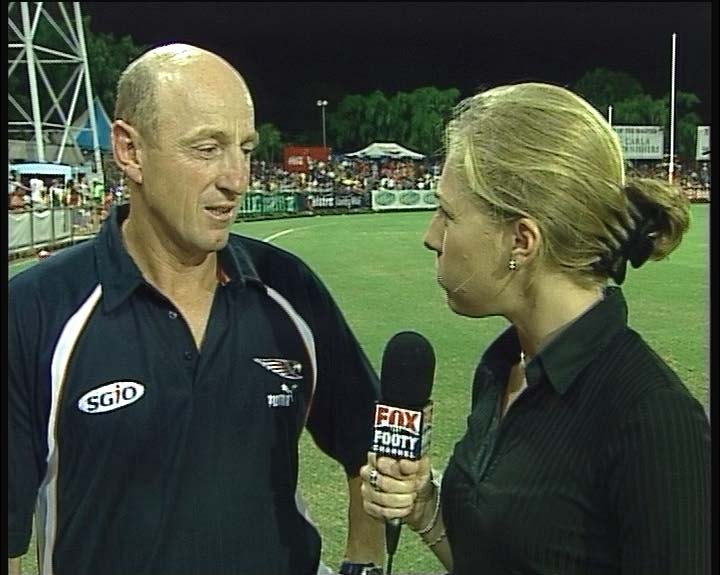
From Bill Richards 1/03/03
Pas 2
0405 UTC
4054 H "Sabrate School" Feed Sr 5420, FEC 1/2
Vpid1160 Apid1120 SID1Eng/French
Vpid1160 Apid1122 SID2 Span/Progese
Regards
Bill
From Jeff in W.A
Phoenix Chinese analog on 3920 Mhz horizontal on asiasat 3 has a notice up
for viewers to tune to its digital service on 4000 Mhz.
From John McDermott 01/03/03
Brisbane v Geelong Wizard Cup B1, 12420V 6110 from Cairns, FNQ
From Various
V bus feeds each day on B1 12430 V 6110 3/4
"I'm a Celebrity Get Me Out of Here" feed continue on B1 12430 V Sr 6668 Fec 3/4
From the Dish
Agila 2 146E 3775 V "Isla" has started, Fta, SR 3000, FEC 3/4, PIDs 4112/4113.
Apstar 1 138E 3902 H A test card has started , Fta, SR 3000, FEC 1/2, PIDs 352/353.
JCSAT 3 128E 3960 V "Rainbow Channel 2" has started, Viaccess 2, PIDs 1216/1217,01-05 HKT. CTS and CTV are now encrypted.
JCSAT 3 128E 12613 H "CNN J has replaced CNN International Asia", enc., PIDs 2064/2068.
Asiasat 3 105.5E 3920 H "Phoenix Chinese" has left (NTSC), replaced by a test card.
Yamal 102 90E 3717 L "Rambler Teleset" has left again.
PAS 10 68.5E 3778 V New PIDs for CMM Music : 4130/4131.
NEWS
Let pay-TV play hot sport: Murdoch
From http://www.theaustralian.news.com.au/common/story_page/0,5744,6057932%255E643,00.html
NEWS Limited chairman Lachlan Murdoch says changing anti-siphoning rules should be the next regulatory challenge for the pay-TV sector, after last year's approval of an industry restructure.
He said the anti-siphoning regime, which prevented pay-TV broadcasting popular sports events such as Ashes cricket tests, should be changed to a dual-rights system.
Mr Murdoch told an Australian Subscription TV and Radio Association conference yesterday that the regime had been extended until 2005, but should now be removed.
"I believe anti-siphoning is the next battlefield of reform for our industry," he said.
"It would provide immediate consumer benefits."
There are no anti-siphoning systems in the US or New Zealand. But Mr Murdoch said Europe's dual-rights system was the most rational approach for Australia.
"In the spirit of co-operation, surely there is a middle ground which can recognise that more sport and more live sport is available in the subscription sector than anywhere else," he said.
A dual-rights system would allow free and pay-TV groups to separately bid for free and pay-TV broadcast rights to sports events, with neither being excluded from bidding.
The free-TV sector continues to oppose change, saying dual rights would undermine the regime and lead to a migration of sport to pay-TV.
The anti-siphoning issue is expected to be canvassed in a report on competition in the pay-TV sector by the regulator, due next month.
Mr Murdoch said anti-siphoning was one of an "extraordinary" range of regulations applying to pay-TV, which was "still a start-up sector by most measures".
Already under way are reviews of the restructure, a pay-TV content review, and a review of interactive gambling – which was being held "before we even have a chance to launch or to think about launching those services".
Mr Murdoch, who chairs the company that owns The Australian and 25 per cent of pay-TV group Foxtel, said the restructure, which had allowed Foxtel and Optus to share pay-TV content, gave the industry a "fair and compelling opportunity to grow".
It would lead to Foxtel's digitisation, but he said it would not make Foxtel immediately profitable.
"Our reward will not be in immediate profits (but) the chance to deliver the kind of quality of TV services Australians have demanded," he said.
Mr Murdoch also highlighted pay-TV's contribution to media diversity – a key negotiating point in the coming debate on the removal of cross-media and foreign ownership restrictions.
He said Foxtel already broadcast 47 channels owned by 39 different local and international companies.
These include eight movie channels, five sports channels, 10 general entertainment and three documentary channels.
"And this diversity will multiply in the digital world," Mr Murdoch said.
He urged the remaining free-to-air networks, such as Seven and Ten, to accept Foxtel's offer to retransmit their digital TV signals, saying it would increase penetration of their digital service 5000 per cent.
The free-TV networks have held out from agreeing because, like Foxtel, they must pay their own transponder costs for the satellite pay-TV service.
Pay-TV rules under review
From http://foxsports.news.com.au/story/0,8659,6054396-23210,00.html
ANTI-siphoning laws for sports shows needed to be changed and were being reviewed, the Federal Government has said.
The News Corporation Ltd's deputy chief operating officer Lachlan Murdoch today called on the Government to drop the laws.
The laws give free-to-air channels the first chance to buy broadcast rights for a range of selected sports.
Mr Murdoch urged the Federal Government to abandon the television industry's anti-siphoning laws, branding them restrictive.
He said scrapping the laws would deliver immediate benefits to sports fans across Australia.
Communications Minister Richard Alston's spokesman today said there was a need for change but the Government was mindful people were used to watching main sports on free-to-air television.
"We have publicly acknowledged a need for some changes to the regime," Senator Alston's spokesman said.
"We are currently reviewing the regime. "But we are also mindful of the long tradition of people being able to watch major sporting events on free-to-air television."
Earlier the Federal Opposition agreed with Mr Murdoch that there was a case for re-examining anti-siphoning rules.
Opposition communications spokesman Lindsay Tanner said there was a case for re-examining the laws.
"Although there is a case for some change in anti-siphoning, it is vital that the integrity of the anti-siphoning regime is maintained to ensure that all Australians are able to watch their favourite sporting events on television," Mr Tanner said.
Footy on 48 hours a day
From http://www.heraldsun.news.com.au/common/story_page/0,5478,6061335%255E11548,00.html
FOOTY fans have scored again - a second dedicated AFL channel is to be launched on pay-TV.
FOX Footy Extra will air from Sunday, March 23, at 7.30pm.
Victorians already have live AFL action on free-to-air channels Nine and Ten.
But, according to Foxtel director of AFL operations Rick McKenna, we are insatiable when it comes to the national winter sport.
"What's wrong with 48 hours of footy a day? You can't have too much football," he said.
"Footy fans have a voracious appetite for the game and, more particularly, for their team.
"The idea with Footy Extra is for footy fans to know their team's games will be screened in the same prime-time slot every week.
"There couldn't be better news for footy fans on the eve of the home-and-away season."
Mr McKenna said it was important to have a second channel to give viewers an alternative.
"We recognise footy fans aren't that interested in . . . a rival team, so this gives them another choice," he said.
"It's all about watching your own team and there's a better chance to do that now."
The new station will be available to subscribers of the FOX Footy Channel at no extra charge.
Victorians will have their own version of Footy Extra, which will feature Melbourne-based teams in prime-time slots.
The station has struck a deal with the ABC to provide games from the VFL, SANFL and WAFL.
"We recognise the importance of supporting - not only at the elite level, but in grass-roots football and we have access to a 10-year VFL finals archive," Mr McKenna said.
There will be five different versions of FOX Footy Extra - Victorian, NSW, West Australian, South Australian and Queensland.
Each will be programmed individually to give priority to that state's teams.
"We saw an opportunity to focus on the local markets," Mr McKenna said. "It means if you come from South Australia, games featuring the Crows and Port Adelaide will be on prime time."
The SA and WA versions of FOX Footy Extra will also feature a special edition of the popular live footy talkback show, White Line Fever.
Industry sources said Foxtel footy was watched in an estimated 400,000 homes across Australia and the second channel would boost that figure.
Shin Satellite Reports Slight Drop in Net Income
From satnewsasia.com
Lone Thai satellite operator Shin Satellite pcl (ShinSat) announced a drop in net profit to US$33 million in 2002 from US$36 million in 2001. Sales increased slightly to US$116 million from US$112 million.
The results confirmed analysts’ predictions. Analysts expected revenues from transponder leasing and satellite equipment sales to remain flat while expenses would run higher. Expenses did rise, to US$87 million from US$75 million. Analysts also said the depreciation of the Thai baht against the US dollar also negatively affected ShinSat’s revenues, over 90% of which is dollar denominated. Analysts predict a weak outlook for ShinSat this year.
Rising Star
From http://www.asiatele.com/ViewArt.cfm?Magid=4&Artid=18808&Catid=5&subcat=55
It seems this is the year of the satellite. New Skies Satellites' NSS-6 is freshly occupying 95º E longitude (see 'Lifting Asia's Capacity', page 50, Jan/Feb 2003), and Shin Satellite's iPStar will take off later this year.
Shin Sat's executive chairman, Dumrong Kasemset, thinks that its 2003 revenues will grow 25% to 7 billion baht (US$163 million), thanks to contributions from its Internet units and Indochina businesses. But he expects that revenue from its core satellite operating business is likely to be flat this year.
However, that may well change when the US$350 million high-speed iPStar, seen as a major source of revenues in the next few years, is launched. Yongsit Rojsrivichaikul, chief commercial officer and vice-president, Shin Satellite, explains.
What are the initial responses to the new satellite?
iPStar is a different kind of product that comes with many opportunities. The iPStar Satellite can carry up to 45Gbps, compared to conventional ones that are able to carry 2Gbps.
However, we are only focused on broadband. When we talk to telcos and broadband operators, they agree that it is a powerful and compelling technology and business opportunity.
Telcos look at satellite as a last resort as they prefer to deploy ADSL and fibre. That is, what they have available to them. Broadband take-up rate in most countries is gradual rather than rapid.
With [a] satellite, they have a more flexible choice. Why? They do not have to upgrade switches in the central office. They can go anywhere their customers are, and they can choose to deploy only where broadband access is needed.
What about costs associated with satellite technology?
Satellite usage may have higher costs than ADSL, but the economics of its flexibility may see it being cheaper in the long term. But the scale and cost of structure of iPStar has a compelling proposition.
How do you intend to approach the market?
Here is our marketing strategy: Firstly, we have to change the perception of telcos such that they will consider satellite as a viable alternative. So we are very focused on working with other telcos as they are natural users of satellite bandwidth.
Second, we are highlighting the cost structure, scale, and flexibility of iPStar. Never before has a satellite service offered this option of broadband access. The more scenarios the better, so we need to deploy one after another to showcase iPStar's capability. Third, the creation of applications, which is linked to the first point.
I believe that satellite broadband can deliver broadband applications better than terrestrial networks, primarily because of its multicasting abilities.
What are some examples of these applications?
For example, applications that take advantage of multicasting, like hotspots. In New Zealand, for example, a lot of co-op/farms in the rural areas can use WLAN technology. If mobile operators want to expand hotspot coverage to complement 3G/mobile spread, it is cost-prohibitive, whereas a satellite can be used as bandwidth on demand. It is a powerful hybrid technology for mobile operators.
Another application is video-on-demand (VoD) and interactive TV (or IP to TV), where operators can target vertical markets which are using broadband VSAT. In fact, the cost structure is better addressed for the existing market.
The mass market is also easily served, as the technology is now available to the masses.
How do you intend to work with partners?
We are offering a co-operative model for partners. We do not just sell equipment or bandwidth alone.
We are saying to them: "Let us work hand-in-hand to build the business together". So we offer our expertise technology, infrastructure, bandwidth, and they tackle the market, customers, operations, services, and local marketing.
We believe our model makes it easier for partners to bring iPStar to market quicker, and the reason we can do it is because we come from a 'ready to market' position as the initial expenditure is already done.
What about associated equipment?
We still have to build the gateway in each country, but it is not too expensive. It costs a few million dollars to build first-generation gateways, but for those pumping out 100Mbps, the incremental cost will be low. First-generation gateways have been built in Myanmar, Thailand, and India, but these were bought by our users.
The second-generation ones will be based more on the co-operative model that I described. So we can create the synergy to sustain the market in the longer term.
Second-generation iPStar gateways will cost about US$10 million and can handle up to 2Gbps, so the cost per bit is very low.
We hope to deploy about seven gateways to cover most of Asia by 2003. These gateways will come online in late 2003.
The ground terminals are just dishes with built-in modems, and some will also have routers or servers built-in to cater for hotspot applications.
The cost of such a dish will be in the range of US$1,500?US$1,700, depending on the size of antenna.
Based on our calculations, the iPStar, when launched, is capable of handling up to a million terminals, and it can optimise performance to fit broadband applications.
What about returns on investment for your customers?
There is a good chance that iPStar can be the de facto standard in the market due to the sheer volume of terminals in the market, where our ground segment uses new OFDM, new turbo codes, and a new network management system. The older satellites are a retrofit of older technology, namely, DVB RCS.
This works in iPStar's favour as the dynamic link allocation maximises output 99% of the time. Fixed modulation link on the other hand averages out the highs and lows, which wastes more energy and bandwidth.
In addition, we improve reliability and capability of the iPStar ground segment by using spot beams that can re-use frequency. There is no onboard processing; the intelligence is on the ground and gateways. And we use proprietary technology that accommodates more than 100 beams on one satellite, with Ku band for users and Ka band for the gateways.
Can you share your plans for sales and tech support for iPStar?
I believe that iPStar will be a strong player on a regional level in a year's time [after launch]. Our key activity is to visit governments and go directly to partners. We will position iPStar as an infrastructure and wholesale play. It is an enabling technology. Local marketing will come mostly from partners.
The combined team for iPStar/Thaicom for sales and marketing is more than 50 people and this number will be increased by 20-30%. We plan to open sales offices in China, India and Australia, which are key markets. For gateways, we will eventually have 18 offices in each country.
The markets we pursue all had some kind of broadband satellite before, but our partners hold the licences, not us. We merely sell wholesale bandwidth and supply the gateways.
What are your benchmarks for success?
As long as we can maintain cash flow, that is good for us. It is a humble aim, to maintain the bottomline. Our cost structure will allow partners to sell services including marketing and so on. The wholesale price is worked back from that; it still provides a good margin for us.
Compared to traditional satellites, we do not need to sell a lot of capacity to break even. iPStar is a satellite project that has gotten full funding for deployment. Commercially, it is the only broadband satellite that is ready to launch.
We are ready to offer commercial packages with partners; in some markets we have already launched using existing satellites.
T S I C H A N N E L N E W S - Number 9/2003 2 March 2003 -
A weekly roundup of global TV news sponsored by TELE-satellite International
Editor: Branislav Pekic
Edited Apsattv.com Edition
A S I A
SET ASIA JOINS ARAB DIGITAL DISTRIBUTION
Sony Entertainment Television Asia, the international feed of India's Sony Entertainment Television, is now available as part of Pehla, the Asian entertainment channel bouquet on the Arab Digital Distribution platform in the Middle East. SET and SET Asia are offered in more than 100 countries around the world. ADD packages and distributes Arabic-, English-, and Hindi-language channels across the Middle East, North Africa and Europe.
AUSTRALIA
NEWS CORP EXPECTS “EXPLOSIVE GROWTH” IN PAY-TV SECTOR
News Corp, a partner in the Foxtel pay-TV joint venture in Australia, said on February 28 that the local industry is "on the brink of seeing explosive growth". Lachlan Murdoch, the eldest son of founder Rupert Murdoch, said growth will depend on the industry tackling overregulation of program siphoning, creating services that appeal to viewers, and service improvements. On regulatory issues that have hampered the expansion of pay-TV in Australia, according to industry participants, Murdoch said the key problem is anti-siphoning legislation which effectively hampers the amount of sport that can be shown on pay TV. The dominant Foxtel operation is 50% owned by Telstra Corp. with 25% stakes each held by News Corp. and Kerry Packer's Publishing & Broadcasting Ltd.
DBA ENCOURAGED BY TAKE UP OF DIGITAL BOXES
Digital Broadcasting Australia (DBA) said it has been encouraged by improved sales figures for the set-top boxes needed to access digital services. Speaking for the DBA, Nadia Mercinsky said 35,000 digital units had been sold in Australia by Christmas 2002. Digital television was launched in Australia in January 2001. The government had planned to phase out the analogue system by 2008, but the lacklustre take-up rates have forced the government to rethink its timetable.
AUSTRALIAN PAY-TV PREPARES FOR DIGITAL CHALLENGE
Australian Subscription Television and Radio Association chairman John Porter told a pay-TV conference on February 28 it had been a struggle to move the industry forward, given the tough competition from free-to-air television rivals. He said penetration of pay-TV - currently around 22 per cent of households or 1.5 million subscribers - would strengthen ahead. During the Astra 2003 forum, Foxtel announced it would launch its digital service in the last quarter of 2003, with the services to feature an initial 144 channels, with around 15 per cent of those earmarked for rivals. Foxtel's junior rival Austar United Communications is planning to add news and information channel BBC World to its services from March 1. Foxtel chief executive Kim Williams agreed the outlook for the pay-TV industry was much stronger than a year ago, after the agreement that Foxtel and Optus could share content and infrastructure. He said Foxtel planned a new Fox Footy Extra state-based channel to be launched on March 23. It would be supplied at no extra cost to existing Fox Footy customers. Mr Williams said Foxtel had put forward digital retransmission proposals to free-to-air channels, Ten, Seven, ABC, SBS and Nine; with agreements reached or close with Nine, ABC and SBS.
PRIME TV REPORTS FINANCIAL RESULTS
Regional broadcaster Prime Television on February 26 reported a 0.6% fall in net profit to A$7.7 million for the fiscal first half ended December 31. The result was marred by a A$7.6 million nonrecurring charge, most of which relates to a previously announced restructuring and management downsizing, but helped by a A$4.2 million tax benefit. Prime reiterated its expectation that full year earnings before interest, tax, depreciation and amortization from Australian operations will be "broadly flat" with fiscal 2002.
CHINA - HONG KONG
TV MARKET UNLIKELY TO OPEN SOON
China is not likely to open up its TV industry further to foreign media and entertainment companies any time soon, a senior official at China Central Television (CCTV) has been quoted as saying. Zhang Changming, Vice President of the national broadcaster, told the South China Morning Post that China's TV industry had opened up enough to foreign participation. Mr Zhang said two foreign companies that operate channels in China -- AOL Time Warner and STAR TV - were not likely to be permitted to extend their services beyond the Pearl River Delta region in southern China in the near future.
INDONESIA
NEW BROADCASTING BILL TAKES EFFECT
The new broadcasting law has taken effect despite not being approved by President Megawati Sukarnoputri, according to The Jakarta Post. The law has been criticised by many in the broadcasting industry because it gives the authorities new powers to intervene in broadcasting activities, sparking fears of censorship. It mandates the establishment of a powerful Indonesian Broadcasting Commission (KPI), which will have sweeping powers over the broadcasting industry. The commission will have nine members, all chosen by parliament. Under the constitution, a bill takes effect 30 days after being passed, with or without the President's approval.
IRAN
ARABIC LANGUAGE SATELLITE NEWS CHANNEL LAUNCHED
The Islamic Republic of Iran Broadcasting has launched an Arabic-language satellite news channel for a trial period of two-months. Al-Alam (The World in Arabic) began broadcasting on February 23 for six hours a day. Director Mohsen Roghani said Al-Alam, which currently uses four satellites, will be available worldwide following the imminent signing of a contract for carriage on a fifth satellite.
JAPAN
PANEL URGES CHANGE IN TV OWNERSHIP RULES
A Public Management Ministry study group officially released its final report February 27 urging the government to ease TV station ownership rules. The ministry is expected to respond by drafting bills to revise relevant laws. The Study Group on Broadcasting Policy's proposal to review the current ban on the ownership of several television stations by one company is intended to support financially troubled commercial broadcasters. The policy, formulated by the advisory panel to the ministry's director general of the Information and Communications Policy Bureau, calls for revising the Broadcasting Law to allow one broadcaster to acquire a controlling interest in another. The panel also urged the government to ease restrictions on broadcasters holding stakes in broadcasters in neighboring prefectures in an effort to promote realignment of the regional broadcasting industry. However, some claim the deregulatory efforts are insufficient and that deregulation alone will not lead to a shakeup of the local broadcasting industry. Under the current Broadcasting Law, television broadcasters are prohibited from operating more than one station in a single service area to prevent media companies from overly influencing and manipulating public opinion. In addition to the diversification of broadcasting media, local TV broadcasters are burdened with hefty outlays in preparation for terrestrial digital broadcast services that they plan to start by the end of 2006. According to the National Association of Commercial Broadcasters in Japan, the nation's 127 commercial broadcasters will be required to invest a total of about Y560 billion to start terrestrial digital broadcast services, an average investment of about Y4.5 billion per station.
NEW ZEALAND
PUBLIC BROADCASTER CHARTER PRESENTED
A new era in New Zealand broadcasting was ushered in on February 29 as TVNZ began to give effect to its Charter. For the past 14 years, TVNZ has operated as a State Owned Enterprise with a purely commercial focus. The TVNZ Bill splits the existing TVNZ Group into a television company (TVNZ) and a new transmission company (Transmission Holdings Limited) from 1 July 2003. The legislation requires TVNZ to balance its commercial performance with a set of public broadcasting objectives, set out in the Charter.
SINGAPORE
RECOMMENDATION FOR RETURN OF DIALECT PROGRAMMES
Singapore's Programme Advisory Committee has recommended that Chinese dialect television programmes be reintroduced after a break of 24 years. All Cantonese serials from Hong Kong have been dubbed into Mandarin since Singapore launched its Speak Mandarin campaign in 1979. The committee -- set up by the government to provide feedback on TV and radio programmes -- said it believed the proposed change would not undo the progress made or cause a backlash. Suggestions of committee members range from just a few Cantonese sentences in a programme to a full Cantonese film festival on a particular channel. The Media Development Authority said it would take the committee's recommendation into consideration when it reviewed its dialect guidelines later this year.
SOUTH KOREA
YTN TO REACH GLOBAL AUDIENCE
YTN, a South Korean cable news channel is hoping to double its global audience to 2 million following a deal with satellite company PanAmSat for transmission in the Americas, Australia, New Zealand, Northern Europe and Africa. The deal takes effect March 1.
THAILAND
UBC TO LAUNCH ENTERTAINMENT CHANNEL
Thailand-based United Broadcasting Corporation is launching a local-language entertainment channel, based around the E! Entertainment format, in order to boost subscriptions to its pay-TV platform. UBC sees local content as key to expanding its reach, having localized six of its 29 channels including MTV and Channel [V]. The platform has 400,000 subscribers, up 30,000 in 2002.
A F R I C A
SOUTH AFRICA
CHANGES IN MEDIA REGULATIONS EXPECTED
South African authorities have agreed the need to amend the country's media sector and changes are likely to be introduced this year. Current rules preclude foreign companies from owning more than 20% of TV stations. Cross media ownership rules prevent publishers from buying into broadcasters.
NEW FINANCIAL TV CHANNEL TO LAUNCH
On April 4, former investment analyst Peter Armitage will launch a new satellite TV service, directly into financial sector offices. The service, using the Sentech satellite link, will run from 07:00 to 19:30 on business days. Business Television Network (BTN) is also backed by academic and business consultant Prof Andy Andrews and stock broking firm Barnard Jacobs Mellet. The daily format will include market statistics, hourly news and interviews with market experts, CEOs, analysts and fund managers.
ONE MILLION DECODERS SOLD
Multichoice Africa and Altech multimedia subsidiary UEC Technologies on February 27 celebrated the delivery of the millionth digital satellite television decoder manufactured for the pay-TV company. The milestone came in the wake of the recent launch of Multichoice's dual view digital satellite decoder, a product developed in response to subscriber demand for the choice of viewing two separate satellite television stations simultaneously. The pay-TV station broadcasts throughout Africa, Europe, Asia and the US. CEO Nolo Letele said the company provided entertainment to about 900,000 subscribers in 49 countries in Africa and the Indian Ocean islands. UEC MD Francois Stols said the multimedia company had already produced more than 2-million decoders for customers internationally, and the dual view decoder was one way in which UEC and Multichoice had worked together on product development in the past decade. UEC focuses on the design, development, industrialisation and manufacture of compressed digital television and multimedia products and software for the global satellite, cable and terrestrial markets. Initially, UEC made and distributed products by third parties under licence.
2/03/03
It's Sunday go back to bed!
1/03/03
No update today, back Monday