30/06/02
No update Sunday
29/06/02
Another very quiet day not much news.
From my Emails & ICQ
From Zapara
I704 66E 4055 "wimbledon feed" in the French mux
From Me
Saturday Afternoon
B1, 12428 V Sr 6110 Fec 3/4 "V8' Super Cars "
From Bill Richards
Screenshot of Bali TV off Palapa C2

From the Dish
No sign of Lyngsat
NEWS
Uproar over dish spree
From http://www.mytown.co.nz
Home owners are furious council kept them in the dark about a further six 15m satellite dishes planned for their back yard.
The Albany residents were stunned this week as Shore News revealed Stratos New Zealand has consent to house up to nine satellite dishes at its Unity Drive site.
One of the dishes will rest just 30m from the nearest house and council’s decision to keep neighbours in the dark has rubbed salt in the wound.
?It makes me sick,” exclaims Manumanu Rogers. “It’s frightening they can do it without telling us.”
Mr Rogers says the dishes are “unbelievably ugly” and is not convinced they are completely safe – the secrecy makes him even more suspicious: “If there’s nothing wrong with them why didn’t they just tell us.”
He was astounded that US military holed up in Afghanistan are among Stratos’ military customers: “It makes us a prime target doesn’t it. They should be out in the middle of a paddock somewhere.”
Two doors down the three existing dishes loom large in Shirley Pittman’s dining room and lounge windows. She was “petrified” the day she came home to find the first of the antennae aimed at her home and was visibly shaken when she learned more were planned.
?They just can’t. I don’t know what I’ll do but the people round here will fight them tooth and nail.”
But council’s regulatory and hearings committee decided residents wouldn’t be “adversely affected” by the $30m-$40m project and it wasn’t worth telling them.
Council’s report echoed that of Stratos stating that the visual effects would be “minor” – but no one has been up to check out the view from nearby homes.
Martin Gledhill of the Ministry of Health’s National Radiation Laboratory, says if homes were in the path of the satellite beams it would be wise to record frequencies from those properties.
However, he doubts the houses would be directly in the satellite’s path because they would interfere with the signal.
Acting chair of the regulatory and hearings committee, Gary Holmes, used his casting vote to override the concerns of councillors Margaret Miles and Mike Tafua.
The District Plan deems the antennas a “controlled” activity, so even council is powerless to block them.
But Mrs Miles maintained residents had a right to know: “[Residents] should at least be given the chance to have their say and to see whether or not [Stratos] would be prepared to alter their plans after hearing them.”
Spokesman for Stratos New Zealand, Eric Jones, isn’t sure when construction will start, and says they may not need to install all six dishes and instead opt for only one or two.
French films on DD
From http://www.screenindia.com/20020628/tvnews3.html
From July 5, Doordarshan will telecast a number of French films on its network. All these films are either dubbed or subtitled in English. According to sources, Doordarshan has agreed to telecast as many as 26 French feature and television films on the DD Metro channel.
To start with, a total of six feature films will be telecast on DD Metro every Friday at 11 pm. These films are :
An Indian in the City by Herve Palud (July 5); Fanfan the Tulip by Christian Jaque (July 12); Witch Way Love by Rene Manzor (July 19); The Hickers by Philippe Harel (July 26); The Black Tulip by Christian Jaque (August 7) and Damned Nuisance by Edouard Molinaro (August 14).
The above mentioned films have been censored by CBFC but the remaining 20 films are yet to get Censor clearance. Doordarshan has proposed to have a self cut in order to help CBFC save time and energy. The process of Censor has already started.
These 26 feature and TV films are supplied by Canal France International (CFI) to Doordarshan free of cost.
?This is a test period. Both DD and the French company will discuss the overall performance and viewership of these films after the telecast of these films. Then both parties will discuss the issue of supply of French films on commercial basis,” said one DD official.
These films are being sent by Canal France International, to DD via satellite feed.It may be mentioned here that TVFI (Television France International, a body of French Television Companies) had been trying to have an agreement with DD on programme sharing for the last three years.
In 1999, a delegation at TVFI visited New Delhi and met RR Shah, then CEO of Prasar Bharati. At the meeting, the idea of having French films on DD was discussed and Shah had approved the project in principle.
ESS gets the biggest cricket name of them all in Sachin as brand ambassador
From indiantelevision.com
It's hotting up out there in the sports broadcasting arena. The latest card has been thrown by ESPN Star Sports (ESS) which today announced the signing of Indian cricketing icon Sachin Tendulkar onto his first ever exclusive TV channel contract.
ESPN Software India managing director Manu Sawhney with Sachin Tendulkar at the signing ceremony in London announcing the batting maestro's exclusive TV channel contract with ESPN Star Sports.
Under the three-year contract signed between WorldTel and ESPN Star Sports, Sachin will actively promote ESPN and Star Sports and join the channels on air in exclusive programming that will treat Indian cricket fans to Sachin in a new role on TV.
Manu Sawhney, managing director of ESPN Software India Pvt. Ltd. said: "It is our constant endeavor to innovate, create and bring compelling sports content from around the world for the millions of our loyal viewers. I’m sure our long-term association with Sachin will immensely enhance the value we bring to our viewers and business partners."
Queried as to the terms of the deal, Sawhney, speaking to indiantelevision.com over the phone from London, said it was a three-year contract that had a renewable clause built in and ESS expected that this was just the beginning of a long association.
Sawhney would not comment on the payout to Sachin which industry sources have put at Rs 50 million a year, but stressed the deal was not just about endorsements. According to Sawhney, "Sachin will be partnering us in excellence as far as cricketing programming is concerned."
Programming would be created with Sachin and around him, Sawhney said, adding it was an integrated and interactive approach that would include on-air, online, on ground and in print activity.
Asked how long the programme rollout would take, Sawhney said the shows were still under conceptualisation but would be on air before the end of the year.
The timing though, is what has has led to questions being asked as to whether the sports channel's choice of India's greatest cricketer ever as brand ambassador is a panic reaction to competition in the form of Ten Sports and SET Max which have got sports properties such as the World Cup Football, cricket tournaments in Morocco and ICC World Cup. Sawhney clarified that talks had been on with Sachin for the last six months and stressed it was not a knee jerk reaction to Sony's recent signing of Kapil Dev as its brand ambassador.
When asked wasn't there a BCCI stipulation that disallows contracted players from participating in any sort of promotional activities while matches are on, Sawhney said: "We will make sure that we do not break any rules and will abide by all ICC guidelines."
There's no denying that ESPN-Star Sports' has been losing its edge in programming with little high-profile sports properties to talk about. And it could possibly try to fill in the gaps by creative innovative funky programming featuring Sachin. A coaching show, exclusive down memory lane series on the genius who has been compared to Bradman, talk shows, ground events, and what have you are just some of the possibilities that arise.
For programming to succeed with Sachin as the host however, ESPN Star Sports will have to groom him no end, especially in voice modulation, something which he is sorely lacking. There's no doubt that Tendulkar is one of the better dressers and lookers in India, but some of the sheen is lost when he speaks.
There is some irony in that Tendulkar as ESS brand ambassador will be battling himself on the field as far as viewership is concerned when he is playing World Cup matches which will be viewed on SET MAX.
So there it is. Sony Entertainment has Kapil Dev, the man who brought home the World Cup way back in 1983 squaring up against today's hero. Two greats, but who will prove the greater in the viewership stakes? No contest? The audience will have to decide.
28/06/02
"The Wolf" radio seems to have gone from Sky TV, their site seems to be gone also, so it looks like George Fm has replaced it. Another quiet day keep looking around somewhere up there at the moment there should feeds for Wimbledon, The Natwest Trophy Cricket 3 team series from England, also from 2 a.m NZ time Live NZ vs West Indies Cricket. So keep looking around you never know what might show up and if all else fails try and get your wife/girlfriend to have a satellite mammogram ;-)
From my Emails & ICQ
From Victor Holubecki
The Quick channel on Palapa C2 has been replaced with TV5.
4080 H 28125 3/4
(Craigs comment, I presume its the French TV5 I guess its being used as a test signal like most other services there)
From Hans Versluys
Dear Craig,
As it happens, we have recently installed a 2.5m dish (through Pacific Antennas, Whangaparaoa, 025 789 160) pointing at Intelsat701 for the reception of WorldNet. The signal is very strong (10dB) here in Auckland, much more stable than WorldNet from AsiaSat2. WorldNet has 4 'virtual channels' on Intelsat, each with a different mix of programmes, plus a long list of radio channels.
The contact person at WorldNet for technical matters is Wayne Olson, BBG Telecommunications Maintenance Manager ([email protected]). He wrote to me regarding dish size and specifics:
<<Our satellite design on Intelsat 701 was conservatively designed for 4.5M antennas. It may be possible to use a smaller satellite antenna but we have not made reliable field measurements yet to verify that possibility. I know that's not what you wanted to hear but a higher power transponder was not available to us.>>
According to my system settings (I'm no specialist in satellite reception so don't ask me for specifics!) it's on 0.3886 Ghz Horizontal, 25000 KS/s.
The channel settings listed on my DigiPro decoder:
#1: video 3160, audio 3120
#2: video 3260, audio 3220
#3: video 3360, audio 3320
#4: video 3460, audio 3420
We re-broadcast channel 3, which has the programme schedule for IOR (on http://www.ibb.gov/tvschedule) It differs slightly from the AsiaSat2 WorldNet schedule.
Kind regards,
Hans Versluys
Director of Programming, Triangle Television
[email protected]
http://www.tritv.co.nz
PO Box 78-034, Grey Lynn, Auckland, New Zealand
+64 9 376 5030
From the Dish
PAS 2 169E 12297 H "National Open University" has started , Fta, Sr 3333, Fec 3/4, PIDs 33/34.
Optus B3 156E 12313 H "Austar Interactive TV" has started .
Measat 2 148E 11602 H "Hot Channel and Tzu Chi TV" have started on , Viaccess, PIDs 464/465 and 496/497. Afa TV has left this mux.
Apstar 1A 134E Lady TV has moved from 3884 V to 4070 V, Fta, Sr 5200, Fec 3/4, PIDs 32/33.
Yamal 102 90E 3489 L "TeleShkola" has starte, Fta, Sr 28000, Fec 3/4, PIDs 111/112.
NEWS
Voyeur gets women to bare breasts for satellite
From http://www.telegraph.co.uk
Four women have contacted police after being persuaded to stand topless in their windows or balconies so that a satellite could give them a mammogram.
The women, aged between 19 and 45, living in the Algarve, southern Portugal, were all contacted by telephone by a woman claiming to be a doctor.
She told them that a revolutionary method had been developed of conducting breast examinations by satellite.
They were told that the consultation would be free if they followed instructions by stripping to the waist and standing in view of the satellite.
One woman was so trusting that she took off all her clothes for the "examination".
Later, the women were telephoned with the alleged results of the examinations. The woman claiming to be a doctor then told them of her sexual desires in graphic detail.
(Craigs comment, any female apsattv readers are asked to contact my private email to arrange local mammogram by satellite tests when Optus C1 launches)
Banned Falun Gong Interrupts TV Programming in China
From http://www.voanews.com/
In China, members of the banned Falun Gong meditation sect have again hijacked TV satellites to interrupt programming. The first incident happened Sunday night. Instead of regular state television programming, Chinese viewers in parts of Shandong Province saw pro-Falun Gong messages flashing on their screens.
Then on Tuesday, residents of Yantai city, in Shandong, tuned in to find the message "Falun Gong is good" on their television sets for several seconds.
Frank Lu in Hong Kong is the director the Information Center for Human Rights and Democracy. He said mainland authorities have launched a massive investigation into what happened.
Mr. Lu said police in many provinces have been ordered to hunt down those who disrupted the television programs. He added the operation shows a good deal of sophistication since the Falun Gong would have needed an antenna more than three meters tall to interrupt the regular satellite television feed.
The Falun Gong said its members have resorted to taking over the airwaves briefly because they have no other means to express or share their beliefs in China. Sophie Xiao is a spokeswoman for the group in Hong Kong.
"These people didn't do anything wrong. They just believe in truthfulness, compassion and forbearance, and they practice spiritual beliefs," Ms. Xiao said. "They did nothing wrong to the government or the people. How come China can't tolerate this?"
She said Falun Gong activists in China are likely to stage similar protests as long as the government maintains its ban on the group.
The Falun Gong has disrupted television programs in at least four other Chinese cities this year. The other protests occurred in Harbin, Changchun and Anshan in the northeast and Chongqing in the southwest.
Last month, a Chinese court in Chongqing sentenced four members of the group to prison terms of up to 16 years. The court charged the Falun Gong followers with what it called using an evil cult to obstruct enforcement of the law, and sabotaging television broadcasts.
China banned the Falun Gong in 1999 as a public menace and threat to the government. The move came after thousands of Falun Gong followers staged a public demonstration outside of government offices in Beijing.
The ruling Communist Party has been taken by surprise by the size and organization of the group. The government alleges the Falun Gong urged followers to forgo needed medical treatments and uses brainwashing techniques.
In the three years the group has been banned, China has arrested thousands of members for re-education. Human rights groups charges scores of those detained have died in custody or mistreated.
Sony, Discovery India form channel distribution joint venture
From http://167.216.192.97/moneymatters/mmnewsstoryht.jsp?newsid=14842
Sony Entertainment Television India Ltd and Discovery Communications India said on Thursday they had formed a joint venture to distribute their channels in India.
Sony Entertainment said it would hold a 74 per cent stake in the new venture, SET Discovery Pvt Ltd, while the remaining 26 per cent would be with Discovery India.
Sony Entertainment's distribution business head Shantonu Aditya said the addition of Discovery left the company poised to become the top television network in the country.
The channels will include Sony, Sony Max, AXN, Discovery, CNBC and Animal Planet.
Sony Entertainment provides Hindi entertainment programmes, reaching over 29 million households, it said.
Discovery Communications' Discovery Channel was launched in 1995 and reaches over 21 million households.
27/06/02
Not much news today to report, it gets a bit like that towards the end of the week.
From my Emails & ICQ
From Gregor Bregar
Subject: I701
Craig,
can you let someone check for channel lineup on the following and let me know?
INTELSAT 701
Longitude: 180 degrees east
Freq: 3886 MHz
FEC: 3/4
Symbol Rate: 25.0 MS/s
Typ. L-band Freq: 1264 MHz
D/L Pol: RHC
Network ID: 6
Video : PAL/NTSC
Worldnet is supposed to be there, but I need exact lineup.
Best regards,
G. Bregar, SD
(Craigs comment, it's been there for several months now but I guess nobody out there has been prepared to sit down and list all the info. I actually supplied the Freq info etc to Lyngsat but he would not list it as I didn't have all the details of what was in the transponder, not sure how he expects to get all the details filled in if no-one knows to look there to check it out. Not that many are able to access I701 Cband anyway)
From the Dish
Optus B1 160E 12608 V "George FM" has started, Radio FTA , SID 1104, Apid 663.
Optus B1 160E 12707 V A Sky TV mux has started, Videoguard Encrypted, Sr 22500, Fec 3/4,PIDs 513/651-518/656, line-up: National Geographic Channel Australia,Discovery Channel Australia & New Zealand, TCM Australia,CNN International, BBC World and Animal Planet Australia & New Zealand. TVNZ TV One and TVNZ TV 2 have left this mux.
Apstar 1A 134E 4060 V "EuroSport" has started, Fta, Sr 7140, Fec 3/4, PIDs 34/35.
Asiasat 3 105.5E 3760 H "Channel Guide India" has left , replaced by a test card.
Yamal 102 90E 3539 L "ORR" has started , Fta, APID 257.
NEWS
Foxtel quietly plans to deal with watchdog
From http://news.com.au/common/story_page/0,4057,4573604%255E15306,00.html
FOXTEL CEO Kim Williams is hoping to avoid piecemeal debate on steps to be taken by the pay-TV group to alleviate competition concerns over its content-sharing deal with Optus.
The Australian Competition and Consumer Commission knocked back the proposed deal on Friday, saying it would lessen competition in a number of markets.
The deal was initially welcomed when it was announced in early March, but it has since been opposed by Telstra's competitors and numerous media companies.
Foxtel and Optus have now agreed to present enforceable undertakings to the ACCC in just over a week, that they hope will overcome its concerns. Williams has signalled that the creation of a transparent access regime would be one way of assuaging the ACCC, but he would not comment on other possible initiatives.
"We do not intend to have some serial process of negotiation through our media colleagues," he says.
"The presentation will be made in several weeks and we expect that to be the subject of public display and examination.
"We are not until then going to do some bit by bit exposition of what we are proposing to do."
The ACCC says it has problems with four main aspects of the deal. Foxtel and Optus, now operating loss-making pay-TV services, propose to share movie programming and to allow Foxtel's 50 per cent owner Telstra to bundle pay-TV with its other services.
The ACCC has accepted the position put by program suppliers, that the deal would effectively mean there would be only one buyer (Foxtel) in the program acquisition market. It also believes Foxtel will become the dominant distribution network, as the issue of access provision to the Telstra cable and Foxtel set-top box remains in dispute.
There would also be less competition in the supply of pay TV to homes as it would be hard for consumers to pick the difference between the Foxtel and Optus products, the ACCC says.
The final issue concerns the provision of a wholesaled Foxtel service to other pay-TV and telephony companies. The ACCC believes Telstra's equity stake in Foxtel will lead it to persuade Foxtel not to provide the channel package to its competitors.
And that could reduce competition in the telephony and broadband markets, the ACCC says.
Williams says Foxtel would work closely with the ACCC to ensure the deal progressed. "This agreement must proceed for Australia to progress and develop globally aligned digital services and technologies which serve Australian consumers," he says.
"A sustainable subscription TV sector will enable the next wave of investment required to advance Australian digital industries and expand consumer choices and competition in subscription TV, telephony, internet and broadband services."
The ACCC has also been asked to report to Communications Minister Richard Alston on the implications the proposed deal has on emerging services and markets. ACCC chairman Allan Fels says most of the watchdog's initial inquiries focused on the "here and now", but it was also looking at future markets.
"As broadband develops, certain markets which don't exist at the moment may develop and will want access to content," he says.
"That wouldn't be a great issue if Foxtel was just made up of pure content suppliers such as [The Australian's owner] News Limited and Publishing&Broadcasting, but because Telstra is involved it may be there might be competition issues in the future."
Hanoi restricts satellite TV to a select few
From ?
Except for top officials and foreigners, Vietnamese will be prohibited from watching 'bad' foreign TV broadcasts
HANOI - Only top government officials and a few others - mainly foreigners -will be allowed to watch international satellite television in Vietnam under a new government order, state-controlled media said yesterday.
Prime Minister Phan Van Khai signed the directive last week as part of a recent retightening of control over the media by the ruling Communist Party.
The media are viewed as the mouthpiece of the Communist Party.
All TV stations in Vietnam are operated by the government, and all newspapers are published by government or party-controlled organisations.
Recent articles in the official press about an increase in satellite dishes have warned that some foreign TV broadcasts are 'bad' but did not elaborate.
The government accuses the foreign media frequently of slandering Vietnam with negative reports on its human rights record, and of backing overseas 'hostile forces' out to overthrow the government.
According to the directive, the only Vietnamese allowed to view satellite TV nbwill be top party and government leaders, ministers and vice-ministers, ngovernors and vice-governors, city mayors and vice-mayors, and media norganisations, the newspaper Dau Tu reported.
Foreign organisations, including news agencies and foreign companies, and hotels with international guests will also be able to install satellite TV equipment, it said.
People who wish to import satellite TV dishes and receivers must seek npermission from the Trade Ministry, the newspaper added.
Ordinary Vietnamese, who are not allowed to install satellite dishes, have been able to subscribe in recent years to a government-run service called MMDS, which provides several foreign TV channels, including CNN, MTV, Discovery Channel and Star Movies.
Last week's directive reinforces an earlier ban on satellite TV viewing, which had been ignored by an increasing number of people, particularly in southern Ho Chi Minh City.
Satellite dishes and receivers have been available for purchase in some shops in the city.
The Communist Party marked last week's annual Revolutionary Press Day with
declarations that it would continue to control the country's media.
Its newspaper Nhan Dan carried an article saying the party would never allow any privately owned newspapers or magazines because without party and state control, the media could not be 'for the people and of the people'.
It also accused the Western press of favouring the rich and powerful.
Several Vietnamese newspapers played a prominent role in recent months inn investigating and revealing details of a corruption scandal in which senior officials and dozens of police were accused of protecting a notorious underworld gang in Ho Chi Minh City.
At least 93 people, including seven police officers, two prosecutors and a journalist, have been arrested for suspected links to the gang, led by Truong Van Cam.But last week, the Communist Party's top ideology official instructed all newspapers to limit their coverage of the scandal, saying their stories had revealed state secrets and caused internal divisions - both of which are mnpunishable with long prison terms. --AP
Lockheed Martin-Led Team Ships N-STAR c Satellite to Kourou for July Launch
From satnewsdaily
The N-STAR c telecommunications satellite, designed and built by a Lockheed Martin Commercial Space Systems/Orbital Sciences team for NTT DoCoMo, Inc., was shipped recently from the production facilities in Newtown, Pa. to Kourou, French Guiana, where it will be readied for a mid-July launch.
N-STAR c, which will be launched on an Ariane 5 launch vehicle, will operate in the S-band frequency band with a C-band feeder link from its orbital location at 136 degrees East longitude. N-STAR c is optimized for a 10-year life on-orbit, and will provide mobile telephony and data transfer services to Japan and its surrounding waters.
NTT DoCoMo, Inc., Japan's premier mobile communications company, provides wireless voice and data communications to tens of millions of subscribers. NTT DoCoMo is the creator of W-CDMA air interface technology, the new de facto global industry standard, as well as the groundbreaking mobile i-mode service.
For N-STAR c, Lockheed Martin served as prime contractor, providing the entire payload, which was integrated onto the Orbital Sciences Corporation's STAR-2 bus. The satellite was assembled and integrated at Lockheed Martin facilities in Newtown, Pa.
Iridium Satellite Secures Distribution Agreements with Major Telecom Providers in the Asia Pacific Region
From satnewsdaily
Iridium Satellite LLC today announced that it has added three major Asia-Pacific Telcos to its extensive global distribution network. The contracts with Singapore Telecommunications Ltd. (SingTel), Telstra Corporation Limited (Telstra) and Telikom Papua New Guinea (Telikom PNG) significantly enhance the availability of Iridium's global voice and data services to government, industrial and individual users in the Asia Pacific region. These deals, combined with recently announced agreements with Europe-based service partners Telenor Satellite Services, France Telecom Mobile Satellite Services and Xantic, reflect a growing demand for Iridium's unique remote communications offerings.
"The interest level by the international telecommunications community clearly validates our business plan," said Gino Picasso, chief executive officer of Iridium Satellite LLC. "Multinational companies, governments and individual users seeking remote communications capabilities have several new options to purchase Iridium services. Iridium fills a critical infrastructure void as 86 percent of the world's landmass and oceans are not covered by terrestrial wireless services."
The service partners, which will market and sell Iridium services through their global dealer networks, offer specific market expertise and expect the new remote capabilities afforded by Iridium to complement their existing portfolios of satellite-based services. Iridium's business model, which relies on delivering highly reliable and affordable service offerings to very targeted markets that require remote communications capabilities, attracted the new partners.
SingTel will deliver Iridium services to commercial shipping, forestry, aeronautical, energy, construction, mining and maritime customers throughout Asia.
Telstra strengthens rural and remote communications throughout Australia and is working with the Australian government to offer affordable rural telephony services.
Telikom PNG will reach 80 percent of New Guinea's population located in rural and remote areas, including potential customers: national disaster services, police and defense surveillance operations, health centers, mission stations and mining sites.
These latest additions to Iridium's extensive distribution network build on the many positive milestones experienced by the company over the last year. In February, Iridium successfully launched five spare satellites to ensure the life span of the constellation, which is expected to last until at least mid- 2010. The company completed its complement of 14 in-orbit spares with thesuccessful launch of two additional satellites on June 20, 2002.
7-10 Agrani satellite transponders to be used for DTH platform
From indiantelevision.com
After Star, it is the turn of the Subhash Chandra-controlled Essel Group promoted ASC Enterprises Limited (ASCEL) to apply for a DTH license.
When contacted, Ashish Kaul, ASCEL spokesperson told indiantelevision.com, "Yes we have applied for a DTH license."
Agrani Satellite Services Limited (an ASC Enterprise) has signed a turnkey satellite contract for India's first private sector satellite initiative, thus agreeing to procure a geostationary, C & Ku band satellite from Alcatel Space Industries of France. The deal involves 'in-orbit delivery' of the satellite and a ground control station by Alcatel and Arianespace will provide the Launch Services. The project is estimated to cost Rs11 billion.
According to Kaul, seven to 10 transponders on the satellite will be used for the DTH platform, while the remaining will be used for telecom purposes. There is no clear word though when the company proposes to launch the DTH platform. But considering the fact that the Agrani satellite is expected to become operational at the end of 2003, it can only be after that. One can expect that by then the picture on DTH will be very different from what it is today.
The high power KU band spot beam of the proposed Agrani satellite is ideally suited for DTH signals, as well as to provide domestic bandwidth to various telecom and Internet service providers (ISPs), analysts said.
The power of the Ku band transponder(s) on the proposed Agrani satellite is designed to take care of heavy rainfall in coastal and hilly areas of the country.
"The project will save foreign exchange outflow, enable TV channels to be up-linked from Indian soil using Indian Satellite system," a senior executive of an Indian-controlled broadcasting company opined.
ASSL is the first Indian private satellite system to be authorised by the government of India under the May 2000 SatCom policy framework. The government has also approved the equity participation of Alcatel and Arianespace in ASSL.
ASSL's Ku-band capacity offering features a high downlink power in India compared to the best available in the region, and a unique India-Europe connectivity that is suitable for Internet backbone access. ASSL also has the ability to offer turnkey bundled solutions and technical consulting services for India-specific requirements.
The Agrani transponders will support a broad range of applications ranging from TV broadcasting and DTH to rural and remote area communications, providing telecom media diversity along critical long distance routes to improve resilience against natural or man made disasters, private and public VSAT networks, domestic and international Internet backbone bandwidth as well as direct access and international connectivity among others.
Agrani may get DTH licence first
From http://economictimes.indiatimes.com/articleshow.asp?art_id=14190925
NEW DELHI: Subhash Chandra may finally pip Rupert Murdoch to the post in launching the country’s first direct-to-home broadcasting venture.
Chandra’s Agrani Satellite Services Enterprises sent its application for DTH to the ministry of information and broadcasting on Monday. Confirming the move, a spokesperson of the company, however, refused to give details about the project cost.
Interestingly, ASC’s DTH platform would be broadcaster neutral and be open to all the other rival channels, the company said. Subhash Chandra is also the promoter of Zee Telefilms that airs over a dozen cable and satellite channels.
Though ASC is an Indian company, global telecom players such as Alcatel and Arianespace hold equity stake in the Rs 1,100 crore Agrani project. The ASC spokesperson said being an Indian company, the clauses relating to 49 per cent cap on foreign direct investment and 20 per cent sectoral cap on media companies would not be applicable to the company’s DTH venture.
ASC Enterprises has signed a deal with Alcatel Space Industries of France under which it will procure a geostationary C and KU band satellite from the latter. The deal involves ’in-orbit delivery’ of the satellite and a ground control station by Alcatel whereas Arianespace will provide the launch services. The government has already approved the equity participation of Alcatel and Arianespace in Agrani.
ASC plans to use up to 10 transponders for the DTH platform, while the remainder will be used for telecom purposes. Agrani will have 12 C-band transponders in its Indian coverage beam and 12 C-band transponders in Asian coverage beam.
The 14 KU-band transponders are distributed over two beams, one for India coverage and the other over Middle-East, South-East Asia, or Europe. All transponders have a 36 MHz bandwidth, except the two KU-band transponders, which are of 54 MHz bandwidth. Each 36-MHz transponder is capable of transmitting up to 45 mbps or 8 to 10 compressed digital video channels.
The company is the second player to have jumped in the fray for a DTH licence after the government opened DTH broadcasting services in the country in November 2000. Earlier this year, Space Television, a company believed to be backed by Hong Kong-based STAR TV, had applied for a DTH licence with certain riders. However, the application was rejected by the government.
Broadcasting industry has been pleading with the government for relaxation in DTH norms and raising the FDI bar to 49 per cent. However, the government has not so far agreed to such pleas.
26/06/02
Good news! a new FTA radio station on B1 for people in NZ! I got a good reply back with a short and sweet answer from George FM about having their station FTA.
From: george <[email protected]>
"Done - free to air channel 104"
I have emailed them, thanking them for supporting FTA open access and offering to support any listener who wishes to find out about receiving Radio or TV via FTA in NZ. I have also forwarded instructions for them to post on their George Fm website for any listener who wishes to tune into George FM via a FTA satellte receiver. It would be nice if others emailed George Fm to show we appreciate them being FTA.
New link for Bali TV on Palapa C2 , this channel reported in Australia and NZ. Palapa C2 page has been updated including information on how to access the TVguide for this new channel. I can't find the program guide at their homepage but its available at the Balipost newspaper site.
http://www.balitelevisi.com/
From my Emails & ICQ
From Hans Versluys (NZ)
Subject: AsiaSat2 re-broadcasting rights
Dear Craig,
I read the question from Mike on your site regarding re-broadcasting AsiaSat2 channels on local community television.
We run the Auckland regional community channel since 1998 and we have re-broadcasting contracts with some AsiaSat2 channels.
For Deutsche Welle, contact Victoria Quade, [email protected]
For TV5, contact Isabelle Renou, [email protected]
For WorldNet, contact Joyce Ngoh, [email protected]
In our experience we have had no problems getting permission to re-broadcast programmes, but they do come with various restrictions attached.
I hope that may be of help to your correpsondent.
Kind regards,
Hans Versluys
Director of Programming, Triangle Television
[email protected]
http://www.tritv.co.nz
PO Box 78-034, Grey Lynn, Auckland, New Zealand
+64 9 376 5030
From Mike (NZ)
Subject: stratos albany newspaper item
a 15 metre satellite dish tower has been approved for albany,although north shore city councillors are divided over it.stratos new zealand sought council consent to install six satellite dishes at the company,s offices in unity drive.councillors margaret miles and mike tafua told the councils regulatory and hearings comittee on thursday the tower would spoil the views for nearby residents."i would not like to live in any of those highway properties and look out to see six satellite dishes to that extent"',mrs miles said."there is an adverse visual effect that will be more than minor".
From Chris Pickstock 25/06/02
5.40 pm SA time
Is there some Rugby on tonight? Right now, B1, 12420 V, sr 6980, there is a Globecast test card up saying "Foxsport Rugby, Gosford"
Chris
(Craigs comment it was Australia -A vs France -A", also reported on Satelindo on Palapa C2)
From the Dish
Activity on Sky NZ Optus B1, All are NDS encrypted. Sr 22500 Fec 3/4
Optus B1 160E 12608 V "George FM" FTA Radio Apid 663, Sid 1104 Pmt 275 128k J/stereo
Optus B1 160E 12706 V "National Geographic" Vpid 513 Apid 651 Pcr 149 Sid 1012 Pmt 265
Optus B1 160E 12706 V "Discovery" Vpid 514 Apid 652 Pcr 150 Sid 1013 Pmt 266
Optus B1 160E 12706 V "Animal Planet" Vpid 518 Apid 656 Pcr 154 Sid 1014 Pmt 270
Optus B1 160E 12706 V "CNN" Vpid 516 Apid 654 Pcr 152 Sid 1015 Pmt 268
Optus B1 160E 12706 V "??" Vpid 512 Apid 650 Pcr 148 Sid 1018 Pmt 264
Optus B1 160E 12706 V "BBC World" Vpid 517 Apid 655 Pcr 153 Sid 1026 Pmt 269
Optus B1 160E 12706 V "TCM" Vpid 515 Apid 653 Pcr 151 Sid 1044 Pmt 267
Apstar 2R 76.5E 3960 H "It's Cinemax Asia and Cinemax Malaysia", Digicipher 2/enc.
Intelsat 704 66E 4055 R "EuroSport News" has started, Fta, PIDs 2825/2823.
NEWS
Australian Media Groups To Be Consulted On Foxtel-Optus Deal
From http://au.news.yahoo.com/020624/3/a8pl.html
The Australian Competition and Consumer Commission (ACCC) will use consultations with Australia's major media companies to determine its stance on further content-sharing proposals between Foxtel and Optus.
The ACCC on Friday blocked the initial deal by Foxtel and Optus to reduce costs by sharing programs.
ACCC chairman Allan Fels said the proposed tie-up would likely breach the Trade Practices Act by lessening competition.
Today, Professor Fels, who wants a new draft of the proposed deal within two weeks, said the ACCC was planning to consult Australia's other major media bodies, including Fairfax Holdings Ltd, Ten Network Holdings Ltd and Seven Network Ltd, on the deal.
"We've had an offer from them (Foxtel) to present serious proposals to us concerning access," Professor Fels told ABC television."We'll look at them for a week or two after they've presented them to us in two weeks."Then they're to be made available to all those people ... for their reactions to us, as well as maybe to Foxtel."
Foxtel is 50 per cent owned by Telstra Corp Ltd, 25 per cent owned by News Corp Ltd (ASX:NCP) and 25 per cent owned by PBL Ltd (ASX:PBL).
Professor Fels said the ACCC had an open mind on whether Australia's pay-TV market was large enough to support two competing operators.
"We have simply decided that the original proposal clearly would substantially lessen competition in a number of markets," he said.
Professor Fels added that Foxtel and Optus had not attempted to invoke certain provisions based on the deal being potentially beneficial to the public good.
He acknowledged that SingTel could exit the pay-TV market if the ACCC stood by its decision to block the deal.
"We're getting plenty of submissions from different parties as to how seriously we should take that, and we are considering submissions from Optus and SingTel about the matter," he said."They've not said that they're pulling out, but they've said that it would be a setback to them and they might have to pull out if the deal was rejected."
Professor Fels also acknowledged the deal could provide some pro-competitive results to the pay-TV industry, such as equal access to content for both Optus and Telstra.
"But the (Trade Practices) act says that if a proposal would lessen competition in any market, it's a problem," he said."For example, consumers will basically have the same program being supplied to them by Foxtel and Optus, whereas at the moment they have a choice.
"Also regarding acquisition of content and channels and ... sports channels so on, at the moment there are two competitors - now there will essentially be one buyer."On the face of it, that's anti-competitive and raises an issue over the act."
The ACCC's initial blocking of the deal on Friday wrought havoc on the shareprices of most involved in the proposed deal.
News Corp shares plunged to a three-and-a-half year low, down 51 cents or 4.4 per cent, at $10.98.
Its preferred scrip was down 40 cents at $9.27.
PBL was down one cent at $9.10 while Telstra managed to gain one cent to $4.59.
Optus owner Singapore Telecommunications was down four cents at $1.33.
ASIA PULSE
Pakistan likely to buy satellite from US firm
From http://www.dawn.com/2002/06/25/top15.htm
Pakistan has sent a high level delegation to Germany for negotiating a satellite deal with American and European satellite operators after Turkey expressed its inability to do frequency coordination for the satellite, Federal Minister for Science and Technology Dr Atta-ur-Rehman, told Dawn.
Earlier, Pakistan had contacted Turkey to buy Anatolia 1 satellite and shift it from 50 E orbital slot, owned by Turkey, to 38 E orbital slot of Pakistan by February 2003.
The Hughes Global Services Company of the US has a major portion of shares in Anotolia 1.
Dr Atta-ur-Rehman said Pakistan had decided to buy two satellites, one to occupy the 38 E orbital slot and the other as a back-up option in the same slot. "Pakistan is holding negotiations with Hughes of USA for Anatolia 1," the minister said. Investigations show the Anatolia 1 satellite, for which Pakistan is now directly negotiating with Hughes company of the US, has a troubled history.
Recently a government-funded think-tank in Islamabad had warned the government about buying the second hand Anatolia 1.
According to the user manual guide of Anatolia 1 of the Hughes Inc. available with Dawn, in November 1998, an anomaly precluded battery recharge after the eclipse. The satellite, according to the manual, is operable 24 hours/day outside eclipse and 20 plus hours/day during eclipse.
Industry sources said Anotolia 1 was first sold to Indonesia in 1996 which claimed insurance money after the satellite developed electrical problems. The satellite was resold to the Hughes company.
The satellite, which started life as Palapa C1, is a series 601 satellite, built by Boeing. It was launched on Jan 31, 1996, using an Atlas 2AS booster and was slotted at 150 degrees East after launching from Kourou in French Guiana.
The sources said Anotolia 1, three years after its launch, developed electrical problems when its Battery Charge Controller failed, leaving the satellite with no way to recharge its onboard batteries after an eclipse period.
The sources further said that its mission to provide telecommunications links to Indonesia was finished after less than three years.
Indonesia settled an insurance claim and the satellite ownership passed to the insurance company. In January 1999, Hughes Global Services purchased the satellite from the insurers, and it was renamed as HGS 3. The work was started to develop procedures that would have allowed the satellite a useful working life but the satellite still does not generate sufficient power to keep it running through the eclipse periods, the sources said.
In December 2000, Kalitel, which is a USA-based company, leased HGS 3 from Hughes and moved it to 50 degrees East.
The sources said a high-powered delegation, which has now left for negotiations with Hughes and another European company in Munich, comprises Chairman of National Telecommunication Company Air Vice Marshal Maud, Suparco chairman Major-Gen Raza, PTCL chairman Akhtar Bajwa, director of legal PTCL, Aslam Hayat, director of Frequency Allocation Board Captain Iftikhar and Adviser ot IT Division Salman Ansari.
The American and the European satellite operators had chosen Munich, Germany, as the venue for meeting, sources said.
When asked about the troubled history of Anotolia 1, the minister said the final decision on the choice of the satellites would be taken by the cabinet based on the recommendations of the PAKSAT committee.
25/06/02
Live chat in the chatroom 9pm NZ and 8.30 Syd time onwards. Yes I know Worldcup soccer and Wimbledon are on might be a little quiet in there. Maybe some feeds of these 2 will be up there somewhere. Plenty of items in the news section today hope you find something of interest.
Mailing list problems,
Due to a problem at Yahoo Groups with one of their servers a lot of users have been shut out of the mailing list by being on the bounced list. I just cleared over 100 members off the mailing list. Those having trouble should unsubscribe and then resubscribe (please use the same name)
to un subscribe please send a blank message to
[email protected]
And if you wish to re subscribe
Wimbledon look for feeds, via Asiasat 2 perhaps?
Jcsat 8 at 154E anyone looked for this lately?
From my Emails & ICQ
From a Telstra Clear (NZ) Cable Customer
The letter arrived today - price of Sky Sports package increasing from
$10 to $14.95 from next Monday. That's a 50% increase - a bit
excessive, I think. And naturally, TelstraClear give their usual short
notice.
From Bill Richards
Some excellent quality screenshots of the new Macau mux on Asiasat 2


Macau-Eastlife tv, Chinese TV Guide


New cartoon Satellite tv, Macau Asia Satellite tv
From the Dish
Apstar 1A 134E 3884 V New PIDs for Lady TV: 32/33.
Palapa C2 113E 3758 V "RCTI Soccer Worldcup" feed, Sr 3300 Fec 7/8
Palapa C2 113E 3926 H "Bali TV" has started, Fta, Sr 4208, Fec 3/4, PIDs 308/256.(Can anyone in Aus or NZ get this now?)
Palapa C2 113E 4053 H "Bali TV" has left , replaced by a test card.
Yamal 102 90E 3539 L A TRT test card has started , Fta, Sr 3570, Fec 3/4,PIDs 308/256.
Apstar 2R 76.5E The Era Bouquet has moved from 12629 H to 12642 H, Viaccess 1, SR 21500,FEC 3/4.
CNN International Asia, Cartoon Network, TVB 8 and TVBS Newsnet on PIDs 169/116 have left this mux. CCTV 4 has started on PIDs 166/104, clear.
NEWS
Stardust Tests New ESA Deep-Space Ground Station in Australia
From satnewsdaily
The spacecraft Stardust, which is on its way to meet the Comet Wild 2 in January 2004, last week helped ESA to carry out final testing of the Agency’s first deep-space ground station, situated just 140 km north of Perth in New Norcia, Australia.
ESA’s new 35-metre telemetry, tracking and command antenna has a pointing accuracy of 0.01 degrees and will be a vital link in ESA’s Rosetta mission to the comet Wirtanen. This is one of the most ambitious scientific missions ever to be launched and is scheduled to take place early in 2003.
The 630-tonne antenna will be the main communications link between Rosetta and Mission Control at ESA’s European Space Operations Centre (ESOC) in Germany. It will also be used to transmit and receive data from other space missions sent to explore the Universe beyond the Moon, such as ESA’s Mars Express, also scheduled for launch in 2003.
Stardust, which is a NASA Jet Propulsion Laboratory mission, was selected for the tracking tests as it is on an interplanetary trajectory currently more than 300 million km from the Earth. As it passed over Australia on 8 June, at a maximum elevation of over 70 degrees, the New Norcia ground station successfully tracked the spacecraft and received its signals.
The main objectives of the tests were to confirm the quality of the pointing of the antenna and to see the downlink signal on a spectrum analyser - configured by a team from ESOC - to catch the low signals coming from the spacecraft. The characteristics of the signal, together with precise orbital data, were kindly provided by the Stardust team based at JPL. Their cooperation made it possible to localise the spacecraft spectrum approximately half an hour after the nominal downlink switch on.
Three days later additional tests were carried out to check the pointing and to confirm the capability of the Intermediate Frequency Modem System (IFMS) to track precisely the downlink carrier for orbit determination purposes. All the objectives were successfully achieved and the antenna has demonstrated that it is working well. Everything is now ready for the official handover to ESA in July 2002.
Satellite Operators Remain Bullish on Asian Market; Offer New Satellite Services
From satnewsasia.com
Despite the slump in telecoms and growing competition from cable, satellite operators remain optimistic of the future of the satellite industry in Asia.
CEOs of different satellite companies in Asia said they continue to expand coverage and operation and are focusing on services that do not directly compete with cable. Romain Busch, President and CEO of SES Global said his company is executing a four-pronged strategy to capture more business. He said the strategy consists of -- strengthening its core business, expanding its existing products and services in new geographic markets, driving capacity demand with new products and services, and strengthening its regional presence.
Takuya Yoshida, CEO of JSAT said there was a need to continue "expanding the horizon" to reach out to areas now covered by satellites and offer them new products and services.
Christopher Baugh, Principal Analysts of Northern Sky Research observed that the Asia satellite market recovery is still pending and that there was an overcapacity of 60 - 70%. However, he said there is a growing number of VSAT upgrades and leading prospects for opportunities include small offices and SMEs, government agencies and IP content applications.
At the Cable and Satellite Broadcasting Association of Asia (CASBAA) conference earlier this week, satellite operators said they are working to solve regulatory and tax issues in countries, such as Thailand, Malaysia, and the Philippines, which are hampering the growth of the industry. William David Wade, Deputy Executive Officer of AsiaSat said CASBAA is working with different government agencies in the region to "level the playing field."
CASBAA also announced the holding of the ninth annual CASBAA Convention this year to be held in Singapore on December 4-6 at Esplanade: Theatres on the Bay complex.
CASBAA is the region's leading non-profit trade organization for the promotion of multi-channel television and data transmission via cable and satellite networks. It represents some 110 Asia-based corporations, which in turn serve more than 3 billion people. Member organisations include, AOL Time Warner, Vivendi Universal, MTV, Arianespace, Discovery, ESPN STAR Sports, Intelsat, JSAT, ABN Amro, Hong Kong & Shanghai Banking Corporation, BBC, Bloomberg Television, Boeing Space Systems, STAR TV, AsiaSat and Turner International.
This week, glitz and gadgets were again the features of this year's CommunicAsia and Broadcast Asia held from June 18-21, although the annual trade show lacked the usual buzz as more companies opt out and the recovery in the high-tech industry remains uncertain. Despite this, a myriad of new products and services were unveiled for the first time previewing the latest the industry has to offer for Asia.
Steven Tan, chief executive of organizer Singapore Exhibition Services admitted this year's show is slightly smaller than last year, with the net area occupied by exhibiting companies sliding by 20 percent and the number of exhibiting firms falling by 12-13 percent.
But he said it is just a matter of time before the industry regains vibrancy and growth momentum. "Latest industry research lends strength to this outlook and there are sufficient reasons to be optimistic about the prospects for the region's ICT economy," Tan said.
This years CommunicAsia played host to 1,448 exhibiting companies from 41 countries, occupying 46,000 sq metres of exhibition space at the Singapore Expo. Ericsson leads the pack with an impressive 500 square metres booth.
It also featured the inaugural SatComm2002 sub-show has got off to a great start having garnered the support of more than 40 exhibiting companies including world leaders such as ACeS, Andrew, Arianespace, Boeing, China Sat, Gilat, Intelsat and Shin Satellite amongst others. Visitors were able to see can a demonstration of Gilat's newest VSAT, the 360E satellite modem that provides non-stop broadband Internet access to businesses. Indonesia's ACeS showcased the world's smallest fixed satellite terminal. eBiz2002.
CommunicAsia2002 was held concurrently with BroadcastAsia2002, Asia's largest broadcasting and multimedia exhibition. BroadcastAsia is billed as the industry's critical arena for technology updates, equipment sourcing and a great opportunity to network. Broadcast Asia also featured four shows: CableSat2002, ComGraphics&Animation2002, ProfessionalAudioTechnology 2002 and BroadcastAsia2002 International Conference.
Boeing Selects Mitsubishi Electric Corporation As Strategic Supplier for Next-Generation Antenna
From satnewsasia.com
Connexion by Boeing said that Mitsubishi Electric Corporation would design and produce the next-generation antenna for its high-speed data and Internet service.
The antenna will be optimized to provide commercial airlines and business jet operators with high-speed access to data, the Internet and streaming entertainment content during flight. Under the terms of the agreement, Connexion by Boeing and Mitsubishi Electric will work together to design the antenna and supporting subsystem, and to ensure its suitability for retrofit and in-line installation on Boeing aircraft, as well as other industry models. Mitsubishi Electric will also assist Connexion by Boeing ensure that the first antenna production unit is installation-ready when it rolls off the assembly line in late 2003.
?Our team conducted a rigorous review of key industry suppliers' antenna capabilities, and Mitsubishi Electric met the airline industry requirements, as well as our criteria for next-generation performance and cost,” said Connexion by Boeing President Scott Carson. “Having the right antenna solution supports our objective of delivering to the airlines a connectivity service that adds value, but not complexity, and one that will be service ready from Day One.”
Mitsubishi Electric has received direct industry inputs on performance, weight and power requirements necessary for the next-generation antenna to meet both passenger and airline operational connectivity objectives. The decision to move forward with the next-generation antenna design was mutually agreed upon between Connexion by Boeing and the airlines after conducting an extensive trade study of the necessary performance and communication requirements.
?We are honored to be a key part of Connexion by Boeing by providing an enhanced solution for the next-generation antenna. Connexion by Boeing's decision also ensures our leading position in the mobile satellite communications market,” said Tamotsu Nomakuchi, President & CEO of Mitsubishi Electric.
The next-generation antenna will incorporate a single aperture design that will provide enhanced satellite-to-aircraft scan angles and also use leading-edge beam pointing technology with enhanced electronics capabilities to precisely detect and track satellites from the aircraft during flight. Connexion by Boeing will use the Boeing phased array antenna for the commencement of commercial airline service demonstrations and migrate to the enhanced next-generation antenna once production, testing and certification are complete.
Gilat Announces New Customers in Korea, Mongolia and the Philippines; Gilat Expands Its Activities in India
From satnewsasia.com
Israel’s Gilat Satellite Networks Ltd. has signed contracts with three Asian companies to deploy broadband satellite communications networks at more than 560 sites and has expanded its business operations in India.
Gilat is providing Korea Telecom International (KTI) with 345 units of its Skystar Advantage VSAT product, a two-way, Internet Protocol-optimized equipment. Skystar is expected to enable KTI to deploy a wide range of interactive data and web-based applications for the education and corporate markets. KTI, a wholly owned subsidiary of Korea Telecom, also expects to use the VSAT network to provide corporations with enterprise-wide Internet access, IP-based interactive data and corporate training applications.
Radio Communications of the Philippines, Inc. (RCPI) has selected Gilat for a 159-site DialAw@y IP fixed rural satellite telephony network for use in its public call offices (PCOs) throughout the Philippines. The VSAT network also includes the provision of high-speed Internet connectivity. Gilat was also selected by Incomnet LLC to provide a two-way, DialAw@y IP network for use throughout Mongolia. The network includes an initial order of 60 VSAT terminals and is expected to be used by Incomnet to provide consumers and businesses with telephony and high-speed Internet service in the financial services, mining, tourism, retail petroleum and government markets.
In India, Gilat was selected by its long-time customer, HCL Comnet Ltd., to provide 360E satellite hub stations and 500 VSAT terminals. HCL Comnet has also completed the deployment of a nationwide, 600-site broadband satellite communications network for the State Bank of India (SBI). SBI, India's largest bank, which is using Gilat's Skystar Advantage and 360E VSATs for automatic teller machine (ATM) applications and other interactive data applications.
Bharti Broadband Networks Ltd. launched its Skymantra-Power Internet service-based on the 360E platform for the corporate, small-to-medium enterprise (SME) and small office-home office (SOHO) markets earlier this year. Bharti was the first Indian company to choose the 360E platform and eventually established for its client Sahara India one of the largest shared hub systems in Indian VSAT history. Comsat Max Ltd., another long-standing Gilat customer, chose the 360E platform in October 2001 and has already purchased 1,000 units.
Indian media recently reported that Gilat captured nearly 70 percent of the market for Time Division Multiple Access (TDMA) VSATs for the period April 2001 to March 2002. Gilat is a leading provider of telecommunications solutions based on VSAT satellite network technology and has shipped nearly 400,000 VSATs worldwide. The company provides satellite-based, end-to-end enterprise networking and rural telephony solutions to customers across six continents, and markets interactive broadband data services.
HK TVB Cuts Price For Pay TV Stake To Lure Investors
From satnewsasia.com
Television Broadcasts Ltd. (TVB), Hong Kong’s dominant free-to-air TV broadcaster, has slashed the price for a 50% stake in its pay-TV arm, Galaxy Satellite Broadcasting, to lure investors to the business.
Ronald Jones, senior manager of TVB's business development department, said TVB originally wanted to sell the stake in Galaxy for US$200 million but will now cut the price to make it more attractive. Jones, however, did not indicate a new price but said press reports setting the new price at US$100 million were wrong. The government demands that TVB reduce its stake in Galaxy to 50% or less by June 5 because of TVB's dominant position in the free-to-air broadcasting market. TVB was also forced to delay its pay-TV launch by 18 months after other license winners. TVB has applied for an extension of the deadline to February 2003 and is negotiating with potential investors in the project.
The government is widely expected to extend the deadline because i-Cable Communications would maintain its near monopoly status in the pay-TV market without competition from TVB. i-Cable has been the only pay-TV operator in Hong Kong since winning a license in 1993. TVB is expected to be a strong competitor because of its extensive programming experience and market experience.
Media reports earlier said TVB had not cancelled its US$64 million pay-TV project and that the company was talking to a number of potential investors. The potential investors include Pacific Century CyberWorks and satellite operator Asia Satellite Telecommunications Company (AsiaSat). Peter Jackson, AsiaSat CEO, said the company wouldn't invest in Galaxy on its own, as the project is too big, but that is was considering taking a smaller stake in Galaxy.
The only other potential rivals to i-Cable include U.K.-based Yes Television and Pacific Digital Media of Taiwan. Two of the original license winners—News Corp's Star TV and Sino-i.com's pay-TV arm, Hong Kong Network TV—have abandoned their pay-TV plans citing stiff competition.
Skyperfect Outlines New Digital Satellite Service
From satnewsasia.com
SkyPerfect Communications Inc. said its digital 110-degree communications satellite broadcast service it plans to launch July 1 will offer 59 channels and modest fees.
The service, Sky PerfecTV! 2, will include entertainment stations. SkyPerfect plans to charge subscribers a sign-up fee of US$22.7 and a basic monthly service fee of 390 yen. The service will enable consumers to access both services via a single receiver since it will be broadcast from a communications satellite at the same 110-degrees-east location as the broadcast satellite service. STS-107 thus continues a rich tradition of shuttle-based life science, earth science, physical science and commercial research that is beginning to reap benefits in the new era of the International Space Station.
Hitachi, Toyota to launch satellite network - paper
From http://news.cnet.com/investor/news/newsitem/0-9900-1028-20078064-0.html?tag=ats
Hitachi Ltd, Toyota Motor Corp and other major Japanese firms plan to set up a joint venture in October to offer advanced communication systems via a new satellite network to be launched in 2007, a Japanese newspaper reported.
The Nihon Keizai Shimbun said in its online Tuesday edition that the group will include about 10 firms, including leading electronics makers like Mitsubishi Electric Corp.
In 2008, the new company will start offering next-generation services with the satellite that will enable data transmission of a higher quality than on existing global positioning system services.
The system can be installed in cars to transmit satellite television or in mobile terminals to send information on such things as the availability of parking spaces, the paper said.
The government will provide 100 billion yen ($822 million) to develop and launch the satellites, while the private sector will pay to develop the transceiver and operate the system, the paper said.
CNBC Asia Pacific forges strong relationship with TV Tokyo through equity investments
From indiantelevision.com
They are firming their presence in the land of the rising sun. Singapore-hqed CNBC Asia Pacific and GE Equity - the private equity arm of the General Electric Company - today announced that they were pumping in $15 million in Japanese broadcasting major TV Tokyo and picking up three per cent of its total outstanding equity.
This marks the first time that an American television network has made an investment in a major Japanese broadcasting company and places the duo as its seventh largest shareholder. As a result of the transaction, CNBC Asia Pacific will become the provider of choice for business news to TV Tokyo - one of the five principal TV networks in Japan -- and its affiliates. Currently, approximately 10% of TV Tokyo's programming is focused on news and business. TV Tokyo plans to enhance further its business news offerings, bolstering its coverage of markets around the world. The two companies will continue to explore further areas of potential collaboration.
TV Tokyo covers 67% of national households through five network local stations in the major cities. Its programming includes original entertainment, news (with an emphasis on financial reporting) and animated series including Pokemon and Duel Monsters.
Concurrently, TV Tokyo will invest in Nikkei-CNBC, CNBC Asia Pacific's Japanese language television business news network. TV Tokyo will take a 14% stake in Nikkei-CNBC. CNBC Asia Pacific and Nikkei, together with Jupiter Programming, have been partners in Japan since 1999. Nikkei-CNBC currently reaches over 4.2 million homes in Japan, offering 18 hours of Japanese language business news daily, including Tokyo Squawk Box, Market Watch and Tokyo Power Lunch.
"This investment is a major building block in CNBC's global strategy. Over the past several years, CNBC has become the major means by which investors can get business news information on any company in the world - as soon that news happens." said Bill Bolster, NBC's Chairman of CNBC's international operations. "It's no longer enough to know what's happening in the markets where you live - you have to know what's happening in markets all around the world. CNBC can give investors that information. Our investment in TV Tokyo is cementing our position as the number one provider of television business news on a global basis."
"This investment underscores our commitment to quality global business news coverage in Japan and around the world," added Karen House, President, Dow Jones International. "CNBC Asia Pacific is Asia's premier business and financial information network - drawing on the vast resources of CNBC and the Dow Jones Asia network. This partnership with TV Tokyo further strengthens the brand and our ability to reach critical audiences in Asia."
Alexander Brown, President and CEO of CNBC Asia Pacific, said, "We welcome TV Tokyo's participation in Nikkei-CNBC as part of the broadening of CNBC's commitments to the Japan market. It is our belief that these investments will most importantly benefit Japanese viewers through the delivery of better business and financial news programming.
Indian government proposes to remove FDI and cross media irritants in DTH once again: is it the real thing this time?
From indiantelevision.com
The Indian government is believed to be considering a proposal to lift the 20 per cent foreign direct investment (FDI) cap in direct-to-home broadcasting ventures to 49 per cent. The difference this time: the voting rights will be capped at 20 per cent.
It is also proposing to the amend the cross media restrictions in a similar manner taking the cap up to 49 per cent but limiting the voting rights to 20 per cent, a senior information and broadcasting ministry official told indiantelevision.com late last night.
The lifting of the 20 per cent FDI ceiling means that DTH ventures could be in a position to attract enough capital. The inability to generate enough capital to flag off a DTH service has been a major constraint for Indian companies as they have been loathe to wait out the long gestation period that such a project would require to start generating profits. But one has to wait and watch whether foreign investors would be willing to cede control of a venture in which they would be pouring in hundreds of millions of dollars.
The hike in the cross media restriction limit could also prove attractive and will allow integrated media companies to exploit their content properties across another platform such as DTH. The key question is whether they would be willing to give up their voting rights.
Officials in the I&B say that an opinion has been sought from the department of company affairs on the issue of amending the FDI and cross media barriers and it has opined that prima facie it seems like the proposed changes seem all right.
However, this is not the first time that smoke signals have been sent out that the DTH regulations introduced in 2000 would be made more investment friendly. On several occasions in the past the government has made similar announcements only to find that it has not been able to translate it into action.
If the limit is removed and the norms are liberalised then it is quite likely that a risk-taking entrepreneur would take the plunge into DTH. One of the most interested players in the launching DTH in India has been global media baron Rupert Murdoch but his foray has been nipped in the bud by fearful rivals and an even more reluctant government.
24/06/02
New service radio service to transmit on Sky NZ, George FM will be on Skys channel 104 from July 1st. They've signed up with Sky to reach an even wider audience. I have already sent off an email to them explaining about the advantages of being FTA pointing out that National Radio, Concert FM, Wolf Radio are all FTA there in Skys service and that being FTA is an open access format that dosn't limit peoples access options.
B3 , 12336 V now has a Globecast card up, I guess we should be calling them Globecast from now on.
Model Flat
A new channel from Fashion TV, is FTA on Asiasat 2 "Model Flat" which is a Reality tv type look at a house full of Models. It has to be more appealing visually than Big Brother Australia ! here is the Homepage if your interested.
http://www.ftv.com/modelflat/modelflat.htm
Transmission parameters:
* Satellite: AsiaSat 2
* TXP: 4A
* Location: 100.5 Deg East.
* Uplink frequency: 6,017.42 MHZ
* Downlink Frequency : 3,792.42 MHz
* Transmit polarization : Horizontal
* Receive polarization : Vertical
* Modulation: QPSK
* Encoding: DVB-MPEG2
* Symbol Rate: 2.730 Msps
* FEC: 3/4
* BW : 3.7 MHz
From my Emails & ICQ
From Bill Richards 23/06/02
0840 UTC
Asiasat 2
Model Flat TV ?? 3792V SR 2730, FEC 3/4
No Video or Auto present
Vpid4194 Apid4195 SID1
Regards
Bill
From the Dish
Asiasat 2 100.5E 3792 V "ModelFlat" has started, Fta, Sr 2728, Fec 3/4.pids 4194/4195.
ST 1 88E 3582 H "NHK World TV and Arirang TV World 1" on PIDs 32/33 are time sharing.
ST 1 88E 3582 H "SET International and Star Sports" have replaced CTV and CTS ,Nagravision & Viaccess 1, PIDs 34/35 and 36/37.
Express 6A 80E 4125 R "Occasional TV Centr" feeds on , PIDs 161/84 and 165/100.
Express 6A 80E 4125 R New SID and PIDs for Novosti On Line Radio and ORR on 11-15 and 102-106.
PAS 10 68.5E Updates in Multichoice Africa:SuperSport 6 has started on 3836 V, Irdeto 2, PIDs 523/651.Idols has left 3863 V.New PIDs for RAI International 2 on 3716 V: 519/647.
NEWS
Clock ticks for Foxtel-Optus deal
From http://australianit.news.com.au
"ACCESS" is a small word that is about to give the federal Government, pay-TV players and some telephony groups a giant headache.
Foxtel chief Kim Williams is on the money when he says a transparent and enforceable access regime is the key to ensuring the thwarted Foxtel-Optus deal gains competition approval.
But making it happen is no easy feat.
If there was unfettered and commercial access to the Telstra cable and Foxtel set-top boxes today, then three of the concerns identified by the ACCC would be wiped out in an instant.
A proper access regime would provide the opportunity for more competition in the pay-TV sector.
That's because new pay-TV companies could then launch as they could gain access to pay-TV infrastructure with prior knowledge of the upfront costs they would need to make a quid.
And Foxtel (which owns its set-top boxes) and its 50 per cent owner Telstra (which owns the cable) know they are making enough money from providing that access to be able to meet maintenance costs, while also having an incentive to continue upgrading the network.
It all sounds so simple, but the reality has been horrifically different.
Telco companies and the Seven Network's defunct pay-TV sports channel C7 have been seeking access either on Telstra's telco network or to Foxtel's boxes for years without resolution.
The parties each cite their opponents' intransigence for the failure to seek agreement, and all the while the issue becomes increasingly complicated and antagonisms rise.
Such is its concern that Foxtel now says it will not invest the $500 million required to upgrade its network to digital until a new way forward is agreed.
Late last year, the independent Productivity Commission offered some solutions.
It criticised the ACCC's power to "declare" infrastructure - a move that means it can be involved in determining the price of access to those pipes.
And investors in infrastructure fear the ACCC may declare an access price below the rate needed to be able to maintain that asset.
And if your competitors get access to your pipe at a fraction of the cost to build it, why build it in the first place?
So the Productivity Commission suggested a new path be taken.
Options included an "access holiday" from the ACCC, binding rulings enabling a service to be exempted from declaration before it was built, or a regulatory compact with the ACCC, giving the owner the right to set prices.
The federal Government chose to try and create a new access regime which provides upfront certainty to investors, while also ensuring access to third parties.
Initial negotiations focused on a regime specific to a digital pay-TV platform.
But two months ago, the Government also raised the prospect of a broader "safe harbour" regime which would also encompass investment in other types of telco infrastructure.
Whatever is agreed, the move will require changes to the Trade Practices Act, and that means it has to be approved by the Senate.
As any Coalition politician knows, that is not easy.
Telstra, also considering investing in 3G infrastructure, unsurprisingly likes the broader regime. It also believes a pay-TV specific regime will be too easily portrayed as favouring the Packer and Murdoch media families, and so will not get through the Senate.
But Foxtel's other shareholders, The Australian's owner News Ltd and Nine Network owner Publishing & Broadcasting, are concerned the detailed work involved in preparing a broad regime means it will take forever to implement.
So that's one debate on the cards, even before the more difficult nitty-gritty issues (such as how to cost infrastructure and its maintenance, and how much profit is enough to be an incentive to continue upgrading the network?) even cross the mind.
The clock is ticking on the Foxtel-Optus deal, and for it to have any hope of getting ACCC approval many hard decisions must be made relatively quickly.
Ten Sports off INCableNet after raids
From indiantelevision.com
In the end, it was too good to last. Yesterday, Hinduja Group MSO INCableNet's subscribers who were tuned in to the quarter final match-up between new tournament favourites Brazil and England found themselves suddenly switched out.
The reason: raids that were conducted across the city at INCableNet headends by teams organised by Modi Entertainment Network (MEN), the Dubai-based sports broadcaster Ten Sports' distributor in India, for stealing unauthorised signals. Ten Sports has exclusive telecast rights in India and other South Asian countries for the World Cup.
Something of this sort has been on the cards following an order passed by the Delhi High Court on Thursday. As reported by the Economic Times, the path-breaking order empowers a Court Commissioner to enter the premises of any cable operator transmitting the signals without a licence, collect necessary evidence and initiate civil proceedings that could attract a hefty fine of Rs 2 million.
According to MEN, 19 headends across the city were raided. And as a further evidence gathering exercise, two subscribers per headend were also checked to check whether they were getting the signal.
A major raid was also organised at the Regent Hotel in the western suburb of Bandra, which is also serviced by INCableNet, MEN says.
The whole affair becomes more curious considering the fact that the Rajan Raheja-promoted MSO Hathway and INCableNet jointly announced on 7 June that they had thrashed out an agreement with Ten Sports to carry its signals. Hathway has been carrying Ten Sports since then. Not so INCableNet.
It was more than a week after the initial announcement that Ten Sports finally start airing on INCableNet. The reasons, according to INCableNet executives, being that were some internal issues that still needed sorting out.
These are the second set of raids that MEN has organised in Mumbai over unauthorised transmission of Ten Sports. On 31 May as well, MEN, armed with a restraining order issued by the Delhi High Court the previous day and applicable across the country, similar raids were carried out.
Judging by the latest standoff, it appears clear that internal issues will continue to impede on a resolution to this issue.
Mumbai cable operators in a spot
From http://economictimes.indiatimes.com/articleshow.asp?art_ID=13795974
NEW DELHI: The scene: A group of men huddled near a TV set, intently watching the Brazil-England quarter final World Cup 2002 soccer match being played out at Shizuoka, Japan. The location: A room at The Regent, Mumbai. One of men ask the hotel manager where the clear Ten Sports signal was being transmitted from.
Back came the response "IN Cable." And that was also a clear signal for the team in Mumbai to swing into action and record evidence of the transmission.
The charges: Gross violation of intellectual property rights. IN Cable Network does not own a licence to telecast the FIFA matches in Mumbai. The company will now be dragged to court and will have to cough up at least Rs 20 lakh damages for the offence.
The team was headed by the court commissioner, R S Chabra, — appointed by the Delhi High Court, empowering him to record evidence and initiate civil proceedings against the offender — unnamed during the trial, but apprehended during the raids that are currently on and will continue till the end of the soccer season across the country.
The judgement is seen as a landmark, echoing the John Doe order, common in the US and UK against unidentified infringers and resorted to when the IPR has a limited life.
"Even as we started recording evidence, the telecast stopped. It soon resumed, but this time it was the unclear signals from the Chinese channel , CCTV," says Shamnad Basheer, senior associate, Anand & Anand, the counsel for the aggrieved party, HMA Udyog, an exclusive distributor of Dubai-based Taj Television.
Taj holds the rights for the telecast of the football matches in India and other South Asian countries.
The same team stormed the control room of another head end operator in the Borivilli area in Mumbai on Saturday. Again, it turned out to be the premises of a distributor for IN Cable in the Borivilli area — Ganesh Naidu.
Oblivious of the IPR implications and hefty penalty he would attract, this operator actually contacted the local police complaining that a "fake" commissioner was questioning him on the Spain versus Korea match telecast.
High drama followed with a police team landing up to question the "unauthorised raid". There were sheepish faces all round, when the facts came to light.
Basheer said the Court team is now armed with sufficient recorded evidence of the infringements and would seek either civil or criminal justice. Under the Copyright Law of 1957, copyright infringement is a cognisable offence, attracting imprisonment of 6 months to three years and a fine of Rs 50,000 to Rs 2 lakh.
Aastha To Target NRIs In US
From http://www.financialexpress.com/fe_full_story.php?content_id=11760
Kolkata: Aastha, the 24-hour devotional channel of the Creative Magic Media (CMM) Broad-casting Network which beams from the Thaicom 3 satellite, will soon be available to viewers in the US.
According to an Aastha official, the channel has been beaming throughout the world except the US for the past nine months.
Aastha, which is focussed on the socio-spiritual scene, is eyeing the non-resident Indians in the US, the UK and Canada.
According to industry souces, the company is planning to either get on to a direct-to-home (DTH) platform or enter into an arrangement with multiple system operators (MSOs) to turn Aastha into a pay channel. Arrangements with operators in regions where the channel already has a footprint are also being firmed up.
However, the Aastha official denied that the channel had plans to go pay.
?I am totally unaware of any such move. As far as I know, the company has no plans to get onto a DTH platform or have tie-ups with MSOs. The channel is planning to go pay. As a free-to-air channel, we have the highest TRP,” he said.
Sanskara, another devotional channel beamed from the Thaicom-3 satellite that competes with Aastha for viewership, is already being shown in 53 countries including the US via global beam.
Mr Tarun Chopra, regional manager of Sanskara here said that viewers of sports, news and spiritual channels were very loyal, unlike those of entertainment or movie channels.
(Craigs comment, The global Thaicom beam dosn't reach into the U.S it has to come off some other satellite maybe one of the Euro ones)
TV Advertising In India, China Poised For Fastest Growth
From http://www.financialexpress.com/fe_full_story.php?content_id=11754
New Delhi: India and China will be among the fastest growing television advertising markets in the Asia-Pacific region in the next four to five years, according to the Global Entertainment and Media Outlook survey released by PricewaterhouseCoopers recently.
Although the underlying market will remain weak in 2002-2003, China and India will be an exception, the PwC report states.
Also, it adds that the ongoing FIFA World Cup tournament will augment TV advertising. However, recent reports have indicated that World Cup advertising has been somewhat affected with many of the top soccer teams being forced out of the tournament in the early stages.
Incidentally, advertising losses after Sydney Olympics 2000 was partly responsible for Australia registering a drop of 8.7 per cent in advertising in 2001.
But overall, the PwC study projects that TV advertising in Asia-Pacific would increase from $30 billion in 2001 to nearly $37 billion in 2006. Despite a weak market till 2003, an economic rebound is expected to fuel larger increases over the remaining period in the forecast period, it adds.
Japan, which is the Asia-Pacific’s dominant market, is expected to post low single-digit increases, while India and China may record average increases in double digits, according to the survey. TV advertising in India, which is pegged at $800 million now, would increase to $1,240 million by 2006, it states.
This study links innovative programming with higher viewership and increased advertising.
In a development that promises to promote local production and help realise the revenue potential of successful shows, countries are opening up their markets to formats from other countries, the study says.
And we have plenty of examples in India of this, from ‘Kaun Banega Crorepati (Who Wants To Be a Millionaire) to ‘Kamzor Kari Kaun (The Weakest Link).
As a point in case, the PwC report cites opening up of the Chinese television market as a way to boost revenues. China is beginning to open up its television market to international programming, attracting more advertisers, it adds.
Multichannel penetration of programmes is another focus point of this study.
Although advertising generated by multichannel programmes accounts for only 6 per cent of the total TV ads in 2001, PwC forecasts that the expanding marketplace will drive multichannel advertising to a 17.6 per cent compound annual growth over the next five years.
Significantly, multichannel broadcasting is expected to be a major source of growth in India too.
Although local economic conditions and television marketplace developments will determine much of the future of TV advertising in the region, it’s likely to follow a pattern of weakness in 2002 and 2003, a pickup in 2004 and healthy increases in 2005 and 2006.
Bored Italians want more ads on TV
From http://economictimes.indiatimes.com/articleshow.asp?art_ID=13851735
ROME: Italian television could never be accused of being highbrow, but it's apparently become so tacky that most Italians would rather watch adverts, according to a new survey.
Almost two-thirds of Italians say adverts "are among the most entertaining things on TV" and a third say they would be "sad" if there were no adverts, a survey of 980 viewers aged between 25 and 55 showed.
The survey was conducted on behalf of media group Starcom MediaVest at the annual Cannes festival of advertising.
Respondents said adverts did much more than regular programming to create TV personalities and excitement, particularly those commercials that develop a story over time.
(Craigs comment, perhaps Tarb's should add some Italaian advert channels!)
T S I C H A N N E L N E W S - Number 24/2002 16 June 2002 -
A weekly roundup of global TV news sponsored by TELE-satellite International
Editor: Branislav Pekic
AUSTRALIA
SINGTEL CLAIMS FOXTEL DEAL SECURES PAY-TV FUTURE
SingTel Optus, the Australian arm of Singapore Telecommunications Ltd.,
said on June 12 its planned deal with rival Foxtel will secure the future
of pay-TV services in Australia. Optus Chief Executive Chris Anderson said
the proposed deal with Foxtel, whereby SingTel Optus plans to air Foxtel
content, will help stem burgeoning losses in the industry. Foxtel is 50%-owned
by Telstra Corp., with News Corp. and Publishing & Broadcasting Ltd. each
holding 25% stakes. The issue is being examined by the Australian Competition
& Consumer Commission, which can veto the deal if it deems it anticompetitive.
"The proposed content deal between Optus and Foxtel will also help secure
the future of a reasonably small but important part of Optus' business,"
Anderson said, in reference to the pay-TV business. Optus Television, which
runs Optus' pay-TV services, has incurred heavy losses mainly due to high
fixed programming costs, as had Foxtel and rural pay-TV broadcaster Austar
United Communications Ltd. Moreover, he added that the future of Optus'
telephony and Internet services hinges on the success of its pay-TV service
because they are all bundled together.
CHINA - HONG KONG
PHOENIX CHAIRMAN TO INCREASE ATV STAKE
Phoenix TV chairman Liu Changle has taken control of free-to-air broadcaster,
Asia Television (ATV). A company controlled by Mr Liu has acquired 46 per
cent of the TV station from a joint venture in which he was also a shareholder.
However, the move still faces regulatory hurdles, including ownership and
residency qualifications. The transaction means Mr Liu has bought out his
former joint-venture partner and ATV chief executive Feng Xiaoping. Mr Feng
will be replaced as chief executive by Mr Liu?s business partner Chan Wing-kee,
a 6.7 per cent shareholder in Today's Asia, which bought the ATV stake for
an unspecified amount in cash and shares. Mr Liu owns the other 93.3 per
cent. Today's Asia owns 37.6 per cent of Phoenix TV, which is also part-owned
by News Corp. Dragon Viceroy - the joint venture between Mr Liu and Mr Feng
- took control of ATV from Hong Kong media tycoon Lim Por-yen in April,
1998.
CHANNEL V MOVES PRODUCTION BASE
Star TV-backed music service Channel [V] International will move its production
base from Hong Kong to Malaysia later this year. The company said that Malaysia
is a key market for Channel [V] International, one of seven channels under
the Channel [V] brand. All the others, which focus on China, Taiwan, India,
South Korea, Thailand and Australia, are already locally produced, while
the parent company is based in Hong Kong.
TAIWAN
ERA DIGITAL MEDIA LAUNCHES IDTV PLATFORM
Era Digital Media has unveiled its flagship - the multimedia IDTV (intelligent
digital television) platform. IDTV combines digital broadcasting, broadband
transmission, Internet web casting and satellite/cable to provide a real-time
interactive platform for access to news, entertainment and sports programming.
The service is designed for use by Taiwanese homes as cable operators digitise
the domestic cable network that serves nearly 80 per cent of homes on the
island. It may also put pressure on the government to allow cable operators
to increase the officially imposed ceiling on subscriber fees because of
the extra revenue generated by IDTV. Era Digital Media said that included
in the package is access to services such as TechTV, BBC World, Fashion
TV, Bloomberg TV, the Weather Channel, TVBS-N and movies. Other planned
services include Eranews and CNN-fn.
UNITED ARAB EMIRATES
IRDETO GETS TAJ TV CONTRACT
Irdeto Access has concluded a licence agreement with Taj Television for
delivery of its content protection system Irdeto M-Crypt. Taj Television,
a UAE based TV services and content provider, went live on air April 1 with
Ten Sports, an exclusive 24 hour sports entertainment channel tailor-made
for the Indian subcontinent. Irdeto M-Crypt, a compact conditional access
system developed by Irdeto Access, provides Taj Television with advanced
encryption capabilities and enables the company to securely and directly
deliver Ten Sports to authorised customers while managing access to that
content. The system is installed in Dubai, UAE. Ten Sports reaches audiences
in India, Pakistan, Sri Lanka, Nepal, Bangladesh and the Maldives. Apart
from live and classic cricket, the channel broadcasts the 2002 FIFA World
Cup and other popular sporting events including British Open Golf, Manchester
United Football and Formula 1 racing.
23/06/02
NO update
22/06/02
I spent a bit of time lastnight looking around at internet tv video streams, seems to be a big improvement, I noted several streams at 500k! and even 1 at 750k! a pity flatrate broadband is not common in Australia and NZ otherwise watching tv through the net could become a real option. Anyway a noted a few that are available via satellite such as TVRI now have video streams, I will have to look around and addd some more video links on the satellite pages.
Internet TV streams, try www.tv4all.com
Looking for info about the Foxtel situation? http://www.auspaytv.com/news/
From my Emails & ICQ
From Wendy
Hello Suttonc,
May you give me Freq & SR RCTI for W-Cup2002 to latest update
(06'21'2002)...???the latest freq 03752 and SR 04009 but i need for the latest update 06/21/02.
Tank's Before.
Best regards,
Wendy
(Craigs comment does anyone have the latest World Cup soccer feed freq? for RCTI on Palapa C2?)
From the Dish
Lyngsat hasn't shown up yet, never mind the info will go up Monday.
Pas 8 166E 3860 H "MTV Taiwan" added to the Taiwanese mux (Sr 28000 Fec 5/6)
NEWS
Foxtel to fight for merger
From http://news.com.au/common/story_page/0,4057,4557398%255E2,00.html
PAY-TV group Foxtel will step up its push to help new pay-TV companies use its services in a bid to win competition approval for its $1.3 billion content-sharing deal with rival Optus.
Foxtel and Optus are convinced they can address the competition concerns arising from their program-sharing bid, after the Australian Competition and Consumer Commission yesterday knocked back the proposal.
Despite the finding, ACCC chairman Allan Fels left the door open for approval, saying his mind was "quite open" on whether an acceptable deal could be put together by Optus and the Foxtel partners, including Telstra, News Limited (publisher of The Weekend Australian) and Publishing & Broadcasting Ltd.
The big media companies lobbied to win approval for the deal, which they say is crucial to stem big losses in pay-TV. Foxtel says it will not proceed with digitisation -- which could offer consumers up to 100 extra channels -- until the business becomes profitable.
Professor Fels said the parties would come back to the ACCC within a fortnight, with undertakings to address the commission's four main concerns.
Foxtel chief executive Kim Williams said the company would respond constructively to the ACCC's concerns.
He told The Weekend Australian a central issue was a "transparent and enforceable" access regime for analog and digital pay-TV.
"It cannot be emphasised sufficiently how comprehensive a countervailing measure access is," Mr Williams said.
Professor Fels would not comment on whether the competition issues could be fixed. "I wouldn't like to prejudge that question because we haven't seen what they're willing to offer," he said.
But Mr Williams said a presentation to the ACCC in two weeks would focus on access.
He said it was imperative to stop the huge losses in subscription television and achieve an outcome that was commercially workable and acceptable to the ACCC.
Optus was also upbeat, and chief operating officer Paul O'Sullivan said the preliminary finding was a typical stage in the ACCC process.
Professor Fels said Telstra's involvement made the deal more difficult, but backed away from any suggestion its 50 per cent share of Foxtel was a deal-breaker.
"That is an undecided question at this stage," he said. "We have simply put on the table the obvious -- that their role in Foxtel creates significant additional competition issues."
Communications Minister Richard Alston said it was important for the parties to address the ACCC's competition issues "as soon as possible".
Watchdog unplugs Foxtel deal
From http://www.theage.com.au/articles/2002/06/21/1023864500662.html
Foxtel's plans to remodel Australia's pay television landscape suffered a setback yesterday when the competition watchdog handed down one of its most controversial verdicts blocking a proposed programming accord with Optus.
After nearly four months of deliberations, the Australian Competition and Consumer Commission rejected the proposal in its present form on the grounds that it was anti-competitive and would disadvantage rival content suppliers.
However, ACCC chairman Allan Fels has yet to sound the death knell for the transaction and indicated it still had a chance of succeeding.
"Our mind is is quite open on whether or not we get it up," Professor Fels said.
Foxtel and Optus said they were confident the decision was just a regulatory hitch and that the content-sharing arrangement could still gain approval.
"We don't think they have made a final judgment - it needs some additional components in it if it is to meet any approval," said Foxtel chief executive Kim Williams.
Optus' chief operating officer, Paul O'Sullivan, said the alliance would improve its competitive strength and predicted it would be approved within a month.
The federal Communications Minister, Richard Alston, maintained that consumers would benefit from pay TV content consolidation because of improved access to a wider range of programming. The ACCC is finalising an industry report for the Federal Government, which has been in talks with the pay TV operators about digitisation for some months.
Foxtel's shareholders - Telstra (50 per cent), News Corporation (25 per cent) and Publishing and Broadcasting Ltd (25 per cent) - and Optus decided against fighting the decision in court or abandoning it. They plan to sweeten the deal to meet any regulatory concerns.
These are likely to include a commitment to the $500 million conversion to digital, to ensure there is competition from other content providers because of capacity constraints in the Foxtel analog network.
The undertakings, which will be made available to relevant industry participants, will also clarify issues relating to access to the Telstra cable network.
Media groups such as John Fairfax Holdings, the Seven Network and Neighbourhood Cable, which have lobbied against a content merger, applauded the ACCC ruling.
Foxtel and Optus held preliminary talks with the ACCC yesterday and plan to produce a set of legally enforceable undertakings within weeks to ease the regulator's concerns.
Professor Fels said the transaction in its present form had wide implications for the media, telephony and broadband sectors, which the ACCC consulted during its investigations.
Under the deal, Foxtel would buy $900 million of capacity on the Optus digital satellite and assume the $619 million of Optus programming contracts with Hollywood studios.
It is designed to provide Telstra with the firepower to renegotiate the costly contracts by increasing the number of subscribers. The studios are believed to be considering a 20 per cent reduction in exchange for another long-term deal to supply movies.
The ACCC noted four key areas where it felt the deal breached the Trade Practices Act, the first being Foxtel's competitive strength in content price-setting. Other areas of concern related to third-party access to Foxtel's channel distribution and the potentially anti-competitive effect of creating a programming monopoly.
It also raised the spectre of Telstra's 50 per cent ownership of Foxtel, saying this could potentially fuel the carrier's dominance in the telephony and broadband markets.
The programming transaction is predicated on Telstra being able to bundle the pay TV service with telephony and broadband to adequately compete with Optus.
The ACCC has yet to formally tackle this issue as Telstra is awaiting the outcome of the content merger before it makes a submission.
Optus contemplates lost vision
From http://www.theage.com.au/articles/2002/06/21/1023864500665.html
The future of Optus hangs in the balance after the proposed content-sharing agreement hit a regulatory wall yesterday.
The nation's second-ranked carrier has its fingers crossed that Foxtel can amend the deal to win the approval of Australia's corporate regulator.
Optus had threatened to shut down its pay TV and local telephony business, said to be losing about $350 million a year, if the deal was rejected.
But Optus chief operating officer Paul O'Sullivan said he believed any obstacles could be overcome because a programming merger would increase rather than reduce competition in the industry.
"The commission has narrowed down its concerns to a fairly finite list, and when we look at those we can assure it will make us a stronger competitor and will improve competition," he said.
But Mr O'Sullivan hinted that Optus' commitment to the local telephony business hinged on a positive ruling.
"In the unlikely event it doesn't go through, it means Optus is not going to be as strong and viable a competitor as it could have been and we would have to look at our options in that situation," he said.
"You'd have to say, what alternatives are there in order for us to compete, and I wouldn't rule anything in or out in terms of that."
Media executives who are opposed to the deal dismissed the threat as a negotiating tactic, but some analysts said they thought it was a reality.
"This certainly throws into doubt the whole pay TV business for Optus and its sustainability," a telecommunications analyst said.
The analyst said he believed the business would be put under "care and maintenance" if the deal was knocked back.
Under this scenario, he said, parent company Singapore Telecommunications would cut costs from all elements of the business, including sales and marketing.
But this would not solve the problem of the onerous programming liabilities that are locked in for the next few years.
The analyst said that to abandon the business now would be unpalatable because of contract commitments with Hollywood Studios, and he thought SingTel would be forced to delay this decision.
Asian ISPs eye 40G bps satellite
From http://idg.net/ic_877768_1773_1-3921.html
A new satellite to be launched towards the end of next year to carry Internet traffic can offer bandwidth at just 10 percent of the cost of conventional satellite systems, Thai company Shin Satellite PLC said recently at the CommunicAsia show.
The Ipstar broadband satellite will deliver 40G bps (bits per second) of capacity from its position in geosynchronous orbit, using new antenna designs to enable multiple beams for the increased capacity, around 20 times that of previous satellites, Shin executives said at the show. Shin expects its customers will mainly be ISPs (Internet service providers) who will resell Internet access to companies, public facilities such as airports and multiple-occupancy residential buildings.
The Ipstar system will offer dedicated Internet access at up to 512K bps download and 128K bps upload. Shared access can reach 2M bps download and 512K bps upload, Shin said.
Shin has already signed contracts to deploy Ipstar services with Malaysian company BayCom Sdn. Bhd., Shanghai VSAT Network Systems Co., Ltd in China, Videsh Sanchar Nigam Ltd.(VSNL) in India and Thai companies SiamSat and Samart Telcom. The National Education Network of Thailand has signed an agreement to use Ipstar technology to connect 40,000 schools nationwide by 2005, Shin said. Ipstar will also support VPNs (virtual private networks), videoconferencing and voice traffic, the company said.
Several developing countries in Asia have signaled their intent to extend Internet access to all their citizens, including those living in remote or mountainous areas. Often, these plans have been delayed by the high cost of providing cable links, especially in countries such as Indonesia or the Philippines which encompass several thousand islands.
Last month, Shin signed a deal with Myanmar's Bagan Cybertech IDC & Teleport, which will deploy an Ipstar system to provide rural telephony services to 3,000 villages. This system will use an already-launched satellite and begin service in the fourth-quarter of this year, Shin said.
The satellite will be launched by Arianespace from its launch site in Kourou, French Guiana, in late 2003, with service via the satellite expected to begin in early 2004.
Sattel aims high with iPSTAR launch
From http://hoovnews.hoovers.com
SHIN Satellite (Sattel), the country's sole commercial satellite operator, is set to become a global leader in broadband telecommunications after its new satellite iPSTAR is put in orbit next year.
"The satellite-based Internet services is the latest in advanced communications technology and will bring huge revenue growth for Shin Satellite," Sattel vice president Yongsit Rojsrivichaikul told Business Day.
Last year, Shin Satellite posted profit of one billion baht on revenue of four billion baht.
The iPSTAR project is financed through loans from Citibank and BNP Paribas, guaranteed by the US Export Import Bank, and France's Coface Group of Finance.
The new US$350 million iPSTAR will provide high-speed data transmission for Internet, remote learning, multimedia applications, teleconferencing, remote medical services, and internal communications equipments.
The new satellite can also provide a variety of entertainment services for subscriber-based television, interactive television, pay-per-view movies, video on demand, and interactive games, said Yongsit. also to households, the company is hoping for a 10-fold revenue growth in the years ahead, with iPSTAR being the mainstay of future income," said Yongsit.
The service will be available in more than 120 countries in Asia, Europe, Australia and Africa, said Yongsit adding that Shin Satellite would start providing services in Malaysia by June 2003, China and India by August 2003, Australia, New Zealand, Indonesia and the Philippines by around November 2003.
To be ready after the launch of iPSTAR into orbit, Shin Satellite is working hard with its foreign partners to explore suitable sites in the region at which ground sites comprising gateways, and user terminals, could be installed simultaneously to enable regional subscribers to access iPSTAR's Internet services.
"We have to ensure that the main ground sites have been completely installed at various points around the region before sending iPSTAR into the orbit," said Yongsit.
The firm and its strategic partners have been installing ground devices at various sites since 2001 and are now in the process of testing transponder capacity and correcting software glitches, he said.
BBC News 24 claims ratings victory over Sky News
From http://media.guardian.co.uk/broadcast/story/0,7493,741039,00.html
For the first time BBC News 24 has overtaken Sky News as the most watched 24-hour news service, intensifying the rivalry between the BBC's Gavin Esler, Philip Hayton and Jane Hill and Sky stalwarts Kay Burley and Adam Boulton.
The viewing figures show that News 24, which costs licence fee payers up to £50m a year and has struggled for five years to be accepted, has finally come of age.
Although the gap between the channels remains small, overtaking its rival is a huge psychological victory for News 24, which has been playing catch up with Sky News ever since it launched in November 1997.
According to research from Barb, 3.8 million viewers tuned in to News 24 each week during April and May, putting it marginally ahead of Sky News, which had 3.7 million.
The figures come at an opportune time for the BBC. News 24 is currently under review after the culture secretary, Tessa Jowell, ordered an investigation into whether a 24 hour news operation from the BBC was in the public interest.
News 24 was a top priority for the former director general, John Birt, who hated to see Sky beating the BBC in its heartland of news and current affairs.
The service has been constantly derided by BBC insiders and external critics.
The commercial news channels, particularly Sky News, have long accused the BBC of abusing its position by spending public money on a 24 hour news channel when several alternatives already exist in the market.
"These figures represent a massive endorsement of News 24's distinctive programming," said the BBC's head of television news, Roger Mosey.
"No other channel can match the quality, range and depth of our output and viewers are turning to News 24 in increasing numbers," he added.
The two rival channels have been locked in a bitter supremacy battle for years. Sky News - which this year picked up a Bafta for its September 11 coverage - is generally considered to be in the ascendancy.
However, the BBC has also overtaken Sky News in the monthly viewing figures. According to Barb, the average monthly reach for News 24 was 7.7 million in May, compared with 7.3 million for Sky News.
Sky dismissed the BBC's claims, pointing out News 24 was available across all digital platforms, while Sky News was only available on satellite and cable.
On digital satellite, where the two platforms go head to head, Sky News beats News 24 by two viewers to one.
Sky also claimed that, in a reversal of the BBC's traditional role, more viewers turn to the Sky service for major news stories.
For example, on September 11, twice as many people watched Sky News. On the day of the Concorde crash, Sky News had three times as many viewers as News 24.
In terms of the total share of viewing in all multichannel homes, Sky News still holds a slight lead, claiming a 0.7% share of total viewing in May compared with News 24's 0.6% share.
(Craigs comment, it would be good to see this one in our skys sure to have less hype than Foxnews)
China-Based Satellite Broadcaster Expands Service With Harmonic's Digital Headend Systems
From satnewsdaily
Harmonic Inc. (Nasdaq:HLIT) today announced that it has completed an expansion of the headend facility for China Broadcasting Film Television Satellite Co., Ltd (CBSat) which offers service throughout China. CBSat is using DiviCom(R) MV50 encoders, featuring advanced video compression and noise reduction capabilities, and multiplexing systems to deliver up to 30 additional channels of digital television. Harmonic also provided integration services for the headend expansion project.
Headquartered in Beijing and partially owned by CCTV China Central Television, China's state-run television system, CBSat is China's only Direct-to-Home broadcasting service. CBSat and Harmonic established a strong relationship in 1999 when CBSat selected DiviCom encoders and multiplexers for its initial satellite broadcast service.
According to CBSat, Harmonic's advanced digital video compression systems have played an integral role in their success by delivering high quality digital television services within the constraints of satellite bandwidth. Today, CBSat chose Harmonic again because of their excellence in product and technology, as well as their outstanding integration and support services.
"Now, with more than 50 channels of television, CBSat's capabilities are comparable to other broadcast services in China and throughout Asia," said Dr. Yaron Simler, president of Harmonic's Convergent Systems Division. "Our efficient MV50-based headend is the ideal solution for satellite broadcasters, such as CBSat, that need to maximize the number of channels and services delivered within a fixed bandwidth. We look forward to a continued strong relationship with CBSat as they innovate to develop a larger share of the expanding digital television market in China."
The DiviCom MV50 encoder is optimized for bandwidth-constrained or low bandwidth environments such as satellite broadcast networks. The encoder's unique combination of advanced compression algorithms, superior noise management capabilities and processing power allows operators to maximize their effective network bandwidth and deliver more channels of television. The noise reduction features eliminate many of the imperfections in the video as well as prevent blurring effects caused by rapid movement to provide a consistently high level of video quality.
Harmonic Inc. is a leading provider of digital video, broadband optical networking and IP delivery systems to cable, satellite, telecom and broadcast network operators. Harmonic's open standards-based solutions for the headend through the last mile enable customers to develop new revenue sources and a competitive advantage by offering powerful interactive video, voice and data services such as video-on-demand, high-definition digital television, telephony and Internet access.
Murdoch: 'I'm here to stay'
From http://media.guardian.co.uk/broadcast/story/0,7493,741592,00.html
The Murdochs in their own words
Rupert Murdoch has disappointed his rivals and potential successors by vowing to stay at the helm of his media empire until he is 100 years old.
The 70-year-old media mogul gave every impression of intending to carry on controlling News Corporation for at least another 30 years in a BBC2 documentary screened last night.
He proudly describes his heart as "perfect" and his cholesterol count as "zero", predicting that he will live to be 100 and reiterating his distaste at the idea of retirement.
"Retirement is something that was not on my radar screen and still isn't," says Mr Murdoch, describing the way that his marriage to his second wife, Anna, collapsed when she wanted him to cut back on his executive duties.
In an Australian documentary shown by BBC2 last night, Mr Murdoch is seen putting himself through a rigorous work-out including a near-comic session sparring with a boxing partner.
His eldest son, expected to take the top job at News Corporation when his father finally steps down, also hints that he doesn't expect him to give up the reins any time in the next 20 years.
"We're all striving to prove ourselves in those jobs and speculation about the fact that we must all be thinking about what might or might not happen in 20 or 30 years time is boring," says Lachlan, who works closely with his father in New York.
Mr Murdoch recently hinted in another interview that 30-year-old Lachlan's succession to the top job wasn't set in stone and that the running of the company might be more equally shared between him and his younger brother James, currently running Asian satellite network Star TV.
News Corporation has controlling stakes in a £30bn portfolio of media assets including SkyDigital, News International, Fox Television and 20th Century Fox. Collectively, Mr Murdoch's children are the largest shareholders in the company.
"I want them to be happy and be able to leave them great opportunities like my father left me. They don't have to but all the signs are they want it very much. I just hope they don't push me out too soon," Mr Murdoch laughs.
In the same documentary his mother reveals her shock when her son bought the News of the World. "It nearly killed me," she says. But he told her not to worry, "there are hundreds of thousands of people living in terrible conditions in London who have nothing in their lives basically and this is what they want."
Returning to his favourite theme - the English class system - Mr Murdoch says: "I'm not ashamed of any of my newspapers at all. I'm sick of snobs who tell us they're bad papers. Snobs who only read papers that no one else wants.
"I doubt if they read many papers at all. Whereas on most issues they consider themselves liberal radicals or something, they want to be imposing their taste on everybody else," adds the media tycoon.
The documentary also included rare interviews with Mr Murdoch's children including Prudence McLeod, his eldest daughter. She was the only one to speak candidly about her initial reaction to her father's third wife, Wendi Deng. "I couldn't believe it, actually. I just thought, you dirty old man," says Ms McLeod.
(Craigs comment, someone wheel him off to a retirement home somewhere before he destroys global pay tv any furthur)
21/06/02
The Foxtel / Optus deal has been blocked by the ACCC as expected. A lot of news items out about this today , I don't plan on posting all of them as I don't specialize in the pay tv side of satellite. If your looking for more news items I suggest you have a look over at http://www.auspaytv.com/news/ .
The bad news for today Asiasat 4 with Atlas is delayed from September to 30 January 2003.
Sorry about the page size I will trim it tommorow
From my Emails & ICQ
hallo, I'm dicky.
I stay to Indonesia. (manado)
I need help.
Can I fine to my reacever,channel up to 10.000 Mhz ? if I use LNB universal, can I fine it?
where I can get booster 300 DB or more?
I make TV CABLE traditional but channel ghosing.
I use 16 digital reacever (hyundai and ecosat)
modulator RF I use inside reacever.
booster for studio, DX ANTENNA 420 A
I use ch, 21,23,25,27,29,31,etc...
can you bring me solution for ghosing?
thank's .
sorry my english.
(Craigs comment, Ok I will start with the 1st question, yes you should be fine using a Universal LNB. 2nd Question about a "300DB booster" I believe there is no such product. If such an item is needed then your cable setup is badly designed. 3rd Question about ghosting relates to using the built in RF modulators of the satellite receivers , these are of not such high quality its much more professional to use the av connections with seperate professionally designed cable modulators, Also channel spacings should be spaced 4 channels apart 26,30,34,38. I hope this helps)
From the Dish
PAS 2 169E 12475 V "Occasional feeds" on , Sr 6620, Fec 3/4.
Telkom 1 108E A lot of activity in the TelkomVision muxes.(nothing FTA? interesting package of channels building up here)
ST 1 88E 3632 V All channels in the MMBN mux on are encrypted again, except BBC World, Tzu Chi TV, CASA and STV-MTV.
Express 6A 80E 3975 R "GTRK Sakhalin" has started, Fta, Sr 3000, Fec 3/4,PIDs 4130/4131.
PAS 10 68.5E 3716 V "BBC Food" has started, Irdeto 2, PIDs 518/646.
NEWS
Foxtel/Optus Proposal 'Likely To Breach Trade Practices Act': ACCC
From http://203.6.251.7/accc.internet/digest/view_media.cfm?RecordID=733
The Australian Competition and Consumer Commission has concluded that proposed arrangements between Foxtel and Optus in relation to pay television are likely to breach the Trade Practices Act.
"The Act prohibits any agreement that is likely to have the effect of substantially lessening competition in any market", ACCC Chairman, Professor Allan Fels, said today.
"The ACCC has concluded that the Foxtel/Optus agreement in its present form is likely to substantially lessen competition in a number of markets.
"The ACCC received detailed submissions from Foxtel and Optus and has had extensive discussions with them. Foxtel and Optus submitted that the proposal could provide pro-competitive outcomes in the retailing of pay TV and in telephony and would help the industry become viable.
"The ACCC has received submissions from and consulted with participants in the pay television and other industries that would be affected by the content sharing agreement. These include suppliers of content to Foxtel and Optus, suppliers of channels, free-to-air television stations, many participants in the telecommunications industry, broadband Internet service providers and consumer organisations.
"Four principal areas of concern have been identified at this stage. They relate to:
the acquisition of content;
the likely dominance of the Foxtel distribution network
the supply of pay TV services to households; and
the provision of channels to third parties who wish to supply pay TV to customers.
"Regarding the acquisition of content, presently Foxtel and Optus compete for program acquisition. They have competed for pay TV sports content and separately acquired movies from the major Hollywood studios. Under the agreement, competition between them to acquire programs would effectively cease. The resulting increase in market power would deliver significant negotiating strength to Foxtel when setting the price and non-price terms for program acquisition.
Regarding distribution, under the proposals there is likely to be a dominant network for the distribution of channels. Issues about access and terms and conditions of access by non Foxtel or Optus related content or channel suppliers arise.
"In the supply of pay TV to households, an important outcome of the agreement is the move towards Foxtel and Optus each supplying very similar, or the same, programs to consumers. Optus would become largely a reseller of Foxtel, in contrast to the present position where Foxtel and Optus offer competing programs. Whilst this may bring some benefit to consumers in terms of wider availability of programs from a single supplier, it may also lead to reduced competition.
?Regarding the provision of channels to third parties, the ACCC is also concerned that the combination of Foxtel's market power in pay TV and Telstra's ownership interest in Foxtel could lead to anti-competitive consequences in other markets. The increased control of content provided to Foxtel under the proposed arrangements could affect the supply of telephony, broadband and other services by infrastructure providers seeking access to pay TV programs. Issues concerning access and the terms and conditions thereof could arise”.
"The ACCC is also concerned that a 'first and last bid' right granted to Foxtel to acquire certain Optus assets would restrict the ability of potential purchasers to acquire Optus's programming contracts, its pay television business and its cable network if these became available.
The ACCC conclude that pay TV and free-to-air operators continue to be separate markets. The ACCC recognises the dynamic nature of the markets and notes that market definition can alter with market developments and regulatory change.
"There are a number of other matters which are relevant to this transaction. The ACCC will raise them in a report it has been requested to provide to the Minister for Communications, Information Technology and the Arts, Senator Alston. This report will provide detailed analysis of the implications of the proposed Foxtel-Optus arrangements for emerging markets.
"Foxtel and Optus have been advised of the ACCC's conclusions.
"Where the ACCC concludes a proposed transaction will breach the Trade Practices Act, the parties have four options:
the parties can proceed with the transaction – the ACCC may then seek Federal Court orders to prevent the transaction from proceeding;
the parties may withdraw the transaction;
the parties may offer undertakings, to try to overcome the competition concerns raised by the ACCC; and
the parties may seek authorisation of the arrangements by arguing that the public benefit outweighs the anti-competitive concerns", Professor Fels said.
The parties have indicated that they will offer undertakings. The Commission intends to consider them and consult interested parties and it will then determine whether the undertakings meet its competition concerns.
Further information
Professor Allan Fels, Chairman, (03) 9290 1812 or pager (02) 6285 6170
Mr Ross Jones, Commissioner, (03) 9290 1818
Ms Rachel Wolters, Media Unit, (02) 6243 1317
MR 157/02
21 June 2002
ACCC rejects Optus, Foxtel deal
From http://www.news.com.au/common/story_page/0,4057,4552480%255E1702,00.html
THE competition watchdog has announced a proposed Foxtel Optus deal is likely to breach the Trade Practices Act.
The Australian Competition and Consumer Commission had been widely expected to raise concerns over the plan today.
This afternoon it said the Foxtel Optus deal would substantially lessen competition.
"The ACCC has concluded that the Foxtel/Optus agreement in its present form is likely to substantially lessen competition in a number of markets," chairman Professor Allan Fels said.
The deal proposed would essentially see Optus showing Foxtel content, reducing costs and increasing telephony-pay-TV bundling opportunities. Foxtel would also assume $619 million of US programming liabilities.
Under a separate deal, also being examined by the ACCC, Telstra would be able to bundle Foxtel's pay-TV with telephone and internet services on a single Telstra bill.
Sky NZ hits 500,000 subscriber mark
From http://www.nzherald.co.nz/latestnewsstory.cfm?storyID=2047910&thesection=bus
Pay television operator Sky Network Television said today it had more than 500,000 subscribers, or 37 per cent of all New Zealand households.
As at June 20, Sky recorded a total subscriber count of 501,886 -- 135,992 analogue subscribers and 365,894 broadband subscribers including digital, commercial and others delivered through resale agreements, the company said in a statement.
Shares in Sky TV, 66-per cent owned by media group Independent Newspapers Ltd, last traded two cents lower at $4.70.
(Craigs comment, 500000??? In their dreams, what the heck does "365894 Broadband" subscribers mean? Sky's playing with Buzzwords here, the don't offer any internet services which is what most think of when the word broadband is used)
Formula One to carry on without hiccups on Star Sports
From indiantelevision.com
Speculation that the broadcast of Formula 1 racing in Asia on Star Sports was in question can now be laid to rest with the sportscaster's assurance that coverage will continue till the end of the season.
The speculation had been fuelled due to reports of financial difficulties faced by the distributor of the programming in Asia.
ESPN STAR Sports Managing Director, Rik Dovey says there will be no break in telecast even in China and that the channel has secured rights to the event till 2005. One of the markets affected by the failed F1 broadcast deals is China, according to an ESPN Star Sports (ESS)commissioned survey, wherein F1 was ranked the fourth most popular television sport particularly with Beijing males. Overall, during the last season of the F1, viewership of the races on STAR Sports saw a 13 per cent rise in North and Southeast Asia over the previous season, says a company release.
F1 action will continue to be broadcast live each fortnight on STAR Sports Asia, STAR Sports India, STAR Sports Taiwan and STAR Sports Southeast Asia, the release says. Preview show RaceDay starts off STAR Sports' coverage with a look at the race ahead, predictions, scenarios and past performances and how those are likely to develop in the day's race. This is followed by live broadcast of the race before Chequered Flag gets airtime for a recap including highlights, analysis, rankings and results, the post-race press conference and the awarding ceremony.
SpeedCast launches Pan-Asian two-way service using ViaSat technology
From indiantelevision.com
Hongkong headquartered SpeedCast, a broadband enabler of satellite based services, has launched its two-way broadband service using the Linkstar technology from ViaSat, delivering broadband Internet access and VPN (Virtual Private Network) services to enterprises throughout Asia.
The service allows users to download Internet content at speeds of up to 1.5 Mbps and upload data at maximum speed of 1.1 Mbps. An official release says that it will enable remotely located sites like resorts, factories, schools and retail outlets to enjoy true high speed two way Internet access. The service also offers a reliable solution for content providers to globally distribute their broadband content. In addition, multinational corporations can use it as a single solution to inter-connect their Asian offices via satellite, allowing high-speed communications and data transmissions via a VPN.
ViaSat's LinkStar system will allow SpeedCast to quickly deploy broadband Internet services to the most remote parts of the region, using cost-effective Very Small Aperture Terminal (VSAT) equipment. The service is delivered via the AsiaSat 3S satellite, with a geographical footprint covering more than two thirds of the world's population. SpeedCast is planning to develop partnerships with key players in all major Asian countries to heavily promote the service. Via Communication Network Sdn Bhd (VCN) in Malaysia and Micom in Mongolia are the first organisations to join the SpeedCast's Partners Network for two way VSAT services.
By combining ViaSat's two-way VSAT technology with SpeedCast's Asian network of satellite and service assets, SpeedCast Broadband will bring access to a variety of market segments under-served by traditional service providers, the release says.
CNN warms to India-specific news channel?
From indiantelevision.com
It all seems to be happening on the news channel front. The latest on this is that global news channel CNN International, whose parent company is AOL Time Warner, is reported to be seriously looking at launching an India-specific channel in the not-too distant future.
This was revealed to indiantelevision.com this evening by a senior executive of CNN Asia Pacific. The channel executive said CNN may either go solo or in partnership.
CNN has in the recent past reportedly been in talks with the Prannoy Roy-led NDTV to start an Indian service, but apparently the two have decided not tie the nuptial knot and have decided to go their own ways. NDTV is currently going through its own pending divorce pangs with Star India, which has decided to set up its own infrastructure and news channel under Ravina Raj Kohli.
CNN had earlier been in serious talks with the leading Indian news network, the Living Media-run Aaj Tak. Industry sources say CNN and Aaj Tak had wooed each other for a while, and a pre-nuptial agreement had almost been signed, but differences on certain issues resulted in the arrangement falling flat.
With the two potential matches not turning out right and the woes of its own parent AOL Time Warner globally, the news was that CNN had put its India news channel marriage and conception plans on hold. But now with the CNN Asia Pacific exec saying that the US news network is still hungering after an India foray, the action in the news business is likely to hot up further.
Landmark IPR judgment for Ten Sports
From http://economictimes.indiatimes.com/articleshow.asp?art_id=13606266
NEW DELHI: The stakes are high and the battle is on for the World Cup, but miles away in India a fierce legal tussle is on to protect the IPR of the FIFA World Cup television signal.
And in what is seen as a path-breaking order, the Delhi High Court has empowered a Court Commissioner to enter the premises of any cable operator who is transmitting the signals without a licence, collect necessary evidence and initiate civil proceedings that could attract a hefty fine of Rs 20 lakh.
More importantly, Justice Dalveer Bhandari has restrained even unidentified cable operators from stealing the signal.
The Order passed on Friday strongly echoes what is now known as `John Doe Order’ in IPR circles. John Doe orders which are common in the US and UK are granted against a class of unidentified infringers and is employed in the context of specific events, where the IPR has a limited shelf-life.
For instance, in Billy Joel Vs Various John Doe’s case in 1980, the court restrained unidentified bootleggers from selling counterfeit merchandise bearing the trademark Billy Joel on the dates of the concert.
Similarly, noted IPR attorney Pravin Anand has obtained an injunction against unidentified "Ashok Kumars" — rather cable operators who are illegally transmitting the Ten Sports channel which has the exclusive rights to cover the World Cup 2002 currently on in Japan and Korea.
The suit filed by Taj Television and HMA Udyog Ltd also named six defendants — four from Ludhiana where 90 per cent of the transmission was illegal, against whom the court has passed normal restraining and seizure orders.
Execution of the order has already begun with a team swooping down on Rajan Mandal of World Wide Cable, a franchisee of Siticable.
Caught red-handed he volunteered to sign up for the licence and as word spread so did the others in Ludhiana.
Surprise raids in metros like Kolkatta, Chennai and Mumbai are on the anvil as the World Cup moves towards D-Day on June 30.
While Taj Television Ltd based in Dubai has exclusive rights to the telecast in India and other South Asian countries, HMA Udyog Ltd is the distributor for Taj Television’s Ten Sports Channel in India.
It has entered into agreements with cable operators through its division, Cable Division Network. The problem, as is now widely known is that of the 40,000 odd cable operators in the country today, only 3,500 has entered into licence agreements.
Most of the others —including some prominent names — are transmitting the channel unauthorisedly. Some of them have licences in some cities and are unilaterally extending it to others.
Raids conducted just before the soccer season in Mumbai and Bangalore has not deterred them.
"Though criminal action is allowed under law, we cannot proceed unless we are confident that the cops are not in collusion," say Anand and Anand Advocates.
While the John Does Order is a shot in the arm for IPR enthusiasts, enforcement is still a tricky issue. After all there is a limit to what the retired registrar of the High Court can do as the Court Commissioner he cannot be physically present everywhere.
The only hope is that one raid in a certain pocket would elicit a chain reaction from other offenders.
Though HMA Udyog has distributed decoders to the licenced operators to decrypt Ten Sports’ signals, the infringers are indulging in "Return Path Stealing" which means they could be getting the signals either from a subscriber home or from another operator.
20/06/02
Sorry its only a small update today not much happening
From my Emails & ICQ
From Mike
Dear Craig,
Do you know if you can re-broadcast the free to air signals That I can receive on my C-Band and record them to SVHS, then put them on the air on community TV without breaching copyright???
(In particular those programs on worldnet_ asiasat 2)
Thanking you in advance
(Craigs comment, you will need to contact the channels concerned for permission. Worldnet should not be to difficult as they seem to be available on a number of regional channels.)
From the Dish
PAS 8 166E 3860 H "Star Chinese" has started, Fta, SID 12, PIDs 920/921.
Asiasat 3 105.5E 3900 V The test card has left .
NEWS
C1 to go live this year
From http://australianit.news.com.au/
ARIANESPACE says it will launch the Optus C1 satellite, which will also be used by the Australian Department of Defence, some time this year.
Although it was originally flagged for late 2001 or early 2002 when ArianeSpace won the launch contract in 1999, the launch has been delayed for several months.
But the company's sales and marketing director, Philippe Berterottière, said launch would take place sometime in 2002.
It would be one of several launches in the Asian region this year for the French company, which has the largest share of satellite launches.
Mr Berterottière said delays were usually linked to requirements from the customer - Optus in this case.
"It can be because the customer has wished to make a couple of additional checks - once it is launched it cannot be changed," Mr Berterottière said.
Other reasons could be changes in the telecommunications industry landscape that could occur in the two to three years it took to go from planning to launch.
"I don't know of a single one that has been launched on time," he said.
The French company, which draws the vast majority of its business from the troubled telecommunications industry, was bullish about the future. Richard Bowles, head of ArianeSpace's Singaporean office, said that in contrast to backbone cable infrastructure, there was no oversupply of satellite capacity.
He conceded the company was at the mercy of the telecommunications industry.
"We really don't drive the telecommunications industry. We are subject to the evolution of technology and the markets... and we will respond to that," Mr Bowles said.
Pay-TV revamp begins
From http://finance.news.com.au/common/story_page/0,4057,4543795%255E462,00.html
THE next phase of the pay-TV industry restructure could take place as early as today with the Australian Competition and Consumer Commission officially rejecting the Foxtel-Optus content deal.
There was speculation late last night that the competition watchdog may be forced to delay the announcement until tomorrow as it works the issue through its internal processes.
The rejection will come almost four months after the content-sharing deal was announced.
The ACCC is not expected to detail the undertakings it expects from Foxtel and its shareholders (which include The Australian's owner, News Limited) and Optus.
But the companies are well aware of what will be expected as they have been in daily dialogue with the competition regulator.
One of the main issues is the ability of Telstra to bundle pay-TV with its telco offerings.
The ACCC wants that part of the deal overseen by the usual "third line forcing" mechanisms of the Trade Practices Act which govern the offering of discounted services based on the provision of another service by a related company.
To overcome that, Telstra must seek a "notification" or approval from the ACCC, but it has yet to do so.
The ACCC will also want Foxtel and Optus to offer their content on commercial terms to smaller players such as Canberra's TransACT and Ballarat's Neighbourhood Cable.
While the guaranteed digitisation of Foxtel has often been raised as a likely ACCC request, government sources said yesterday the deal must be judged on its merits in today's analogue environment.
"The ACCC's consideration of Optus-Foxtel is about the current environment and whether it lessens competition in the analogue environment," a source said.
But others involved in the deal believe the ACCC will seek to link digitisation with the Foxtel-Optus deal.
But Foxtel will only digitise if there is an upfront access regime in place (so it does not have to provide access on uncommercial terms) and all parties agree those negotiations are far from complete.
19/06/02
Sorry about the page update today its been majorly affected by Ihug outages. Not much seems to be happening anyway so I have been watching the cricket.
From my Emails & ICQ
From Roger
HI CRAIG. WONDER IF YOU KNOW WHERE I CAN BUY A DISEQC SWITCH TO FEED UP TO FOUR DISHES INTO A STRONG SRT4600 RECIEVER. I SEE YOU CAN BUY THEM IN AUSTRALIA BUT IF I CAN GET ON IN NEW ZEALAND IT WOULD BE A LOT EASY. THANKING YOU FOR YOUR HELP.
ROGER
(Craigs comment, www.satlinknz.co.nz or www.telsat.com either one will have them)
From the Dish
Agila 2 146E 3834 H "PN TV" has started, Fta, PIDs 32/33. Korean?
Agila 2 146E 4082 H "HTV has replaced Ezmall Shopping" on , Fta, Sr 3000, Fec 3/4,PIDs 4112/4113. (Some type of spanish music channel?? for those that can get it?)
Asiasat 3 105.5E 4140 V "Zed TV" has left .
Yamal 102 90E 3576 L "Tumen TV, Radio Rossii Tumen and Kanal Melodia" are still on , Fta, Sr 4357, Fec 3/4, PIDs 308/256, 256 and 257, but weaker than before.
Yamal 102 90E 3582 L "Ladya TV" is still on , Fta, Sr 4295, Fec 3/4, PIDs 308/256,but weaker than before.
ST 1 88E 3632 V All channels in the MMBN mux are now Fta.
(D Smith)
NSS 703 57E 3750 R "Sun TV" is back on , PAL, East hemi beam.
NEWS
Call for law to break open Foxtel
From http://afr.com/companies/2002/06/19/FFXTNZ7OK2D.html
The Federal Government is likely to be asked to make new laws making Foxtel's content available to other players in the Australian communications industry if the pay-television group's controversial alliance with Optus is allowed to proceed.
The Australian Competition and Consumer Commission will tomorrow formally announce that the existing deal for Foxtel and Optus to share content breaches the Trade Practices Act.
Foxtel is proposing to share film and sports channels with Optus, allowing both to offer subscribers better combinations of pay-TV, telephony and internet, while Telstra has a separate plan to bundle pay-TV, internet and telephony services.
The regulator will leave the parties with three options: proceed with the deal and risk Federal Court action, seek authorisation of the deal on the grounds of public benefit, or provide the ACCC with undertakings.
The Foxtel shareholders Telstra, Publishing and Broadcasting and News Corporation are likely to chose the third route.
Foxtel's board members have been locked in meetings over the past two days as they work to find some resolution to the ACCC's concerns.
The ACCC is convinced that the proposed deal creates a content monopoly, giving Telstra the ability to entrench its power in telecommunications by denying rival groups the chance to bundle pay-TV content with telephone services.
Concurrent with its consideration of the deal, the ACCC has been asked to provide a report to Federal Communications Minister Richard Alston on competition in the Australian communications sector.
That report is likely to recommend the Government legislates to give rivals access to Foxtel content.
However, in the interim, it is likely Foxtel will be required to give formal undertakings to the regulator to provide open access to content before those commitments are enshrined in law.
What will be the focus of debate over the coming weeks will be the form of access given to both content and infrastructure.
Foxtel is likely to propose an all-or-nothing approach on content either third parties take a suite of channels, or they take nothing. They claim there will be no slicing or dicing of Foxtel content at a third parties' choosing.
Foxtel also wants a future regime for third party access to a Foxtel digital network which takes significant account of the estimated $1.2 billion Foxtel partners have invested in the business.
Commitment on a timetable for digitising the Foxtel network is expected to be an essential undertaking offered by the Foxtel parties if the deal is to be allowed to proceed, increasing Foxtel's channels from about 50 to more than 600.
John Fairfax Holdings chief executive Fred Hilmer yesterday met with the ACCC chairman, AllanFels, and ACCC mergers boss Ross Jones in Canberra to again voice concerns about the deal.
New national TV network planned for outback
From http://www.abc.net.au/news/australia/nsw/neweng/regeng-18jun2002-9.htm
Australia could have a new national television network by the end of the year if a plan being considered in the outback is successful.
A working group has begun planning for a community television station for rural and remote communities that would allow local groups to create and broadcast their own programs.
Group member Leon Ashby says the advent of cheap, high quality video cameras and editing software has paved the way for the new network.
"Most of the infrastructure's already in place for television coverage right across Australia by satellite," he said.
"Austar covers all, bar Western Australia and beams into Perth and other free to air, which is the RABBS system, channels like Westlink, they can transmit right across Australia as well. So the coverage is there."
Satellite heads converge at CASBAA forum
From indiantelevision.com
The second CASBAA Satellite Industry Forum got underway today at Singapore, with an audience of 200 senior industry professionals from across the world in attendance.
The Cable & Satellite Broadcasting Association of Asia (CASBAA) claims that the issues debated during the CASBAA Satellite Industry Forum are the agenda setters for an Asian market covering three billion people under a footprint running from Japan to the Middle East, from China to Australasia. Issues like new satellite services and new satellite technologies and the financing required, which are to be discussed at the forum, underpin the launch of a dozen satellites into geostationary orbit over Asia over the next five years, each satellite being worth up to US$ 250 million.
CASBAA CEO Simon Twiston Davies says he estimates the speakers, sponsors and delegates collectively represent 85 per cent of the global satellite communications industry, including names like Boeing, AsiaSat, Intelsat and Arianespace.
Keynote speakers at the CASBAA Satellite Industry Forum include chairman of SES Global Romain Bausch, operators of the Astra fleet in Europe and carriers of the BSkyB DTH package, JSAT CEO Takuya Yoshida, New Skies Satellites CEO Dan Goldberg, Boeing Satellite Systems president Randy Brinkley and Arianespace chairman and CEO Jean-Marie Luton.
The Cable & Satellite Broadcasting Association of Asia is the region's leading non-profit trade organisation for the promotion of multi-channel television and data transmission via cable and satellite networks and represents over 110 Asia-based corporations.
Discovery launches 24 hour high definition TV channel in US
From Indiantelevision.com
Discovery HD Theater is the latest innovation from the Discovery Channel stable.
The new 24 hour definition television network will be launched on HD platforms being rolled out by EchoStar Communications Corporation on its DISH Network satellite TV service nationwide, AT&T Broadband's Greater Chicago Market and in other markets by Charter Communciations and Cox Communications.
The launch makes Discovery one of the first media and communications companies in the US using digital signals for spurring the growth of HDTV and digital television, says a company release. Discovery HD Theater features fiction and non-fiction HDTV programming in all categories of entertainment offered by DCI, including nature, history, world cultures, geographic exploration, science, education, travel and vacation planning, world news and events, children's education and entertainment, health and medicine and how-to programming in the areas of home, hobbies and cooking.
Discovery HD Theater(TM) is delivered to cable systems and satellite providers via Satcom C4, Transponder 14 and will be delivered in 1080i high-definition resolution.
DCI says it will promote Discovery HD Theater in its chain of retail outlets - Discovery Channel Stores - across the US, through a marketing partnership with DISH Network. DISH Network will deliver a live feed of the Discovery HD Theater signal in these stores while showcasing DISH Network HD equipment and services in Discovery Channel Stores beginning this summer.
The network will provide continuous 24-hour HDTV programming repeated in three-hour blocks, and presented in a theatrical format.
Programmes less than 30 minutes long will have no commercial breaks; instead, they will be preceded and followed by commercial messages from the channel's presenting sponsors. Programs longer than 30 minutes will contain intermissions. Discovery HD Theater currently has more than 110 hours of high-definition hours available to be scheduled, and will more than triple its library by the end of 2003, says the release.
18/06/02
Live satellite related chat tonight 9pm NZ and 8.30pm Syd onwards.
Pages updated, Telekom 1, Insat 2E
From my Emails & ICQ
From Jack
Craig!
Is ZEE still FTA on B3. My receiver shows clear, but no picture.
I think they went back to fta. What is the story on this? and there
was no news on your site.
Many thanks.
Regards
Jack
(Craigs comment, its FTA in the evenings, encrypted in the daytime why??? because in the daytime the Phone Helpline is available)
From the Dish
PAS 2 169E 12475 V The occasional feeds have left .
PAS 8 166E 12455 H "Televisa Veracruz" has left .
PAS 8 166E 12432 H The occasional feeds have left .
Asiasat 3 105.5E 3760 H "Channel Guide India" has started , Fta, PIDs 1040/1041.(This one is on Thaicom 3 also on the Asian beam, what it is is a promo type channel advertising whats on on the many Indian channels)
http://www.channelguideindia.com/
Asiasat 3 105.5E 3713 H "MSTV Travel Channel" has left .
Asiasat 2 100.5E 3799 H "APTN Asia" is encrypted again.( I might send Lyngsat a message about this one, its FTA and Encrypted depending on content)
Yamal 102 90E 3576 L "Tumen TV, Kanal Melodia and Radio Rossii Tumen" have left .
Yamal 102 90E 3582 L "Ladya TV" has left .
NEWS
ACCC expected to reject Foxtel, Optus content deal
From http://www.theage.com.au/articles/2002/06/17/1023864403411.html
Australia's competition watchdog is poised to reject Foxtel's content-sharing proposal with Optus tomorrow on the grounds that it would severely disadvantage its competitors.
The impact of the deal on content and cable suppliers and the question of third-party access to Foxtel's pay TV network have been widely publicised concerns for the Australian Competition and Consumer Commission.
ACCC chairman Professor Allan Fels and his merger chief, Ross Jones, will finalise the decision during the weekly commission meeting tomorrow and announce it later that day, or early on Thursday at the latest.
Once the deal is blocked in its present form, Foxtel and Optus are expected to propose a series of undertakings to appease the regulator. A commitment to digitisation is likely to be included.
Conversion to digital will dramatically increase the number of channels available and increase opportunities for independent content suppliers. Foxtel has been reluctant to commit to the $500 million investment until the issue of access is resolved.
However, Foxtel's and Optus' undertakings will be predicated on events that have not materialised, given that no rules govern third-party access for digital under the Trade Practices Act.
Foxtel is said to have been working with the Federal Government on a framework for access, a move that is believed to have incensed some media rivals.
The rivals are also concerned about the possibility that Foxtel could have the power to deny third-party access if the deal is approved in its current form.
The ACCC has yet to fully address the issue of Telstra's proposal to bundle its products with the Foxtel service but has grave concerns about the impact on smaller telephony providers.
A Foxtel spokesman said the pay TV operator regularly held talks with the ACCC but was not in a position to second-guess its moves at such a critical time.
CanWest may be forced into fire sale on NZ TV
From http://www.theage.com.au/articles/2002/06/17/1023864403890.html
Ten Network parent CanWest Global Communications will be lucky to receive even half the $NZ150 million ($A129.4 million) asking price for its New Zealand TV stations, according to media analysts.
Endeavouring to slash its $C3.9 billion ($A4.49 billion) debt, CanWest has put its Kiwi media assets up for sale. CanWest is seeking $NZ150 million for its TV3 and TV4 stations from prospective buyers that include Ten and Prime New Zealand.
CanWest's RadioWorks and MoreFM radio networks are on the market for $NZ150-200 million.
Analysts yesterday scoffed at the suggestion bidders would be prepared to pay $NZ150 million for a TV business that is forecast to post an earnings loss before interest, tax, depreciation and amortisation of $NZ6 million this year. Analysts estimate $NZ50 million-80 million is a more realistic sale price.
Although TV3 and TV attract 28 per cent of viewers, the stations only account for 25 per cent of TV advertising revenue. Programming costs have also burgeoned as a result of the sagging NZ dollar.
CanWest is pitching a rapid turnaround in the financial fortunes of its TV division. The business is forecast to report a positive $NZ1 million EBITDA result next year, swelling to $NZ27 million EBITDA by 2005.
Ten Network has made an indicative offer for all of CanWest's media assets. Prime New Zealand has submitted a bid for just the TV stations. Final bids are due in a month.
CanWest is expected to lean on Ten - in which it has a 57.5 per cent economic interest - to pay up for the assets. Expanding across the Tasman will reduce the size of future dividends Ten can pay its parent. However CanWest's pressing need to cut its debt means it is likely to settle for a lump sum from Ten now. The Canadian company is also keen to manage its Australian and NZ businesses as one operation.
Ten executive chairman Nick Falloon is expected to drive a hard bargain. "Ten won't pay over for it," one media analyst said. "Nick's appointment was primarily to make sure that didn't happen."
Analysts believe CanWest has a far better chance of receiving $NZ200 million for its Kiwi radio stations. The radio business is tipped to report $NZ23 million EBITDA this year, rising to $NZ29 million in 2005. Its radio stations boast a 43 per cent audience share and 47 per cent revenue share.
Aside from Ten, both Austereo and RG Capital are bidding for CanWest's radio assets. CanWest's NZ operations could become much more desirable if changes to the Australian cross-media ownership laws are blocked. "If the rules don't change, the options for expansion may be limited again," said an analyst.
Technisat Develops ‘SkyStar’ USB Box for IP and MPEG 2 Reception Via Satellite
From satnewsdaily
TechniSat Data Services S.A., a subsidiary of TechniSat Digital Germany, located in Betzdorf/Luxembourg has announced the first mass production of SkyStar USB, a USB Box, designed for IP and MPEG 2 reception via satellite. TechniSat’s SkyStar USB is the only USB DVB device on the market which is fully certified by USB organization, and bearing the USB official logo.
TechniSat Data Services announced the first mass production lot of SkyStar USB Box, while SkyStar 2 DVB PCI cards are manufactured on a high volume level since the year 2000. The USB design is another consequent in the development of the so successful SkyStar 2 design. This results in the very easy-to-install routine, due to the fact that the software for both devices is identical, detecting during setup automatically a PCI Bus or USB port interface. This gives a major advantage to Service Providers, offering PCI and USB solutions to their customers. Both design concepts are using patent-pending Safe-BusTM (innovative hardware encryption technology) and FlexParserTM (PID filtering, IP UniCast and multicast filtering, MAC filtering) technology, giving major security and flexibility advantages to users.
Other non-relinquish features like Multiple transponder switching (automatical TP tuning) or section packing/interleaving are also supported.
The SkyStar USB box went through the approval and certification procedure at USB.ORG. Receiving the full certification, thus being the only USB box on the market today officially approved to bear the USB Logo, which can be found printed on the front panel of each box.
TechniSat entering mass production of SkyStar USB box to comply with world market demands. Market trends today are leaning more and more to the convenient plug-and-play device. Samples of SkyStar USB also with cable or terrestrial front end are available already, mass production is under progress.
TechniSat was the first manufacturer, offering the new generation of DVB IP PCI cards based on a one chip concept with MPEG 2 software decoding. By spring of 2002 TechniSat was already into mass production to comply with market requirements for low cost DVB PCI, solution, that was in great and urgent demand. The legendary SkyStar2 board is today the most sold DVB IP reception device worldwide. The card is mainly designed for IP reception over satellite but also provides FTA TV functionality.
The next stage in development followed soon. The market in ever growing demand for better solution, reached a critical point requiring further development process. USB standard 1.0 is limited in data throughput and therefore not ideal to be used for TV applications. Other solutions presented to Interdigital News suffered PC crash downs, picture freezing and other problems unacceptable to users. TechniSat Data Services never wanted to offer a simple "data only " USB solution, having in mind that the roadmap has foreseen CI and HD at a later stage. SkyStar USB box is the masterpiece result – a state-of-the-art product offering the best technical solutions in the easiest to use box.
More Worldcup Soccer Copyright Violations in India
From http://www.hindu.com/stories/2002061808110300.htm
Soccer rage hit the city today when more than a score of enraged football lovers staged a dharna in front of the Kerala State Film Development Corporation (KSFDC)-owned Kalabhavan theatre demanding that the management resume screening of the FIFA World Cup matches.
The dharna ended peacefully following discussions with the Sports Council president, C. Mohanachandran, and the KSFDC chairman, Vasudevan.
It was agreed that Kalabhavan would project live relay of the FIFA World Cup free for football lovers on Monday.
The Government-owned theatre had commenced screening of football matches last Saturday by projecting live cable feed on to the large screen using a C-DIT owned video-projector.
The screenings, which were much publicised through the media, drew a large crowd of urban football fans, including athletes of the Kerala Sports Council.
Tickets for the one-hour FIFA screening were priced at Rs. 25 for a balcony seat and Rs. 5 for the front rows.
However, a strong protest from various sections of the film industry had forced the KSFDC to call off the screening on Monday, causing much resentment among urban football fans.
On Sunday afternoon, a delegation led by the noted film directors, T. K. Rajeev Kumar, K. Madhu, Kireedam Unni and Kalliyoor Sasi, among others, had met the KSFDC management and expressed their protest over the decision to project the matches.
This had led to the KSFDC calling off the screening.
When contacted, Mr. Rajeev Kumar said that the industry was not against screening of football matches.
``We had actually suggested a shift of venue. There was no demand from our part to halt the screening. The industry representatives had suggested that the football matches be screened at the Tagore theatre venue instead of Kalabhavan,'' he said.
Mr. Rajeev Kumar said it was unethical on the part of the KSFDC to screen football matches at an approved Government theatre when the film industry was in a crisis.
Kalabhavan had to start the matinee show early at 2 p.m. and call off the first show to allow the football screening.
This was at a time when several Malayalam films were pending screening at the theatre.
Mr. Rajeev Kumar further said that the Government theatre had set a wrong precedent by screening live cable feed.
Theatres in rural areas, especially in Thrissur and Kozhikode, had followed suit.
``The KSFDC has legitimised illegal screening through the decision to project football matches. Private theatres could take this as an indirect sanction for DVD and VCD projection even of pirated movies,'' he said.
A legal expert said that by screening the live relay of the FIFA Cup matches, the KSFDC could be taken to task for violation of the Copyright Act.
The ``Ten Sports'' channel owns the sole right for the FIFA World Cup relay in India.
Meanwhile, there are unconfirmed reports that representatives of the sports channel had lodged an official protest with the KSFDC.
It was also alleged that the tickets for the FIFA screening were sold without proper counterfoil or rates printed on them.
Pay-TV piracy Decrypting is costing the satellite and cable TV industry $6.5 billion a year
From www.sfgate.com
Benny Evangelista, Chronicle Staff Writer Monday, June 17, 2002
Patrick doesn't consider himself a pirate, nor does he feel guilty about pulling down free satellite TV signals for the past two years.
The Bay Area resident, who did not want his full named published, uses a computer to descramble the TV signals beamed down from outer space, bringing him an unlimited selection of movies, sports and news.
"It's more of a hobby, it's more of a game," said Patrick, referring to the satellite TV industry's attempts to crack down on pirates, including transmitting signals that knock out the reception. "As soon as they turn you off, you go to a couple of (Web) sites, find a file, get it fixed. Sometimes you get it fixed within a half hour."
But officials of both the satellite and cable TV industries view these pirates as a multimillion-dollar headache -- not a game. In the past year, both industries have become more aggressive in their efforts to sink pay-TV pirates, including a new effort to use the 1998 Digital Millennium Copyright Act to hunt down people who have illegal satellite hookups.
DirecTV, for example, has sent about 10,000 legal notices to people around the country in the past six months demanding that they stop using devices that decrypt satellite signals or face civil or criminal prosecution.
"It's always important to go after the end users to send a message that it's not right to steal," said Larry Rissler, a former FBI agent who now heads the Office of Signal Integrity for DirecTV Inc., the El Segundo (Los Angeles County) company that is the largest U.S. provider of satellite TV service.
Last week, AT&T Broadband officials in Southern California used a 5-ton steamroller to crush 3,000 "black boxes" -- illegal set-top devices designed to unscramble cable TV signals -- that were seized by law enforcement officials during the last two years in the Los Angeles area.
"We thought we'd bring attention to this as an issue by doing more of a public destruction of the boxes," said Patti Rockenwagner, executive director of corporate communications for AT&T Broadband, which is the dominant cable TV service for the Bay Area.
The black boxes came from completed criminal cases that brought in about $2 million in fines to AT&T Broadband. Rockenwagner said the company still had 10, 000 illegal boxes being kept in storage as evidence in pending cases.
"A lot of boxes we recovered from illegal users who were then prosecuted," Rockenwagner said. "Many paid in excess of $2,500."
The National Cable and Telecommunications Association has estimated cable theft costs the industry $6.5 billion per year in lost revenue. The costs to the satellite TV industry are estimated to be hundreds of millions per year.
Consumer electronics groups, however, fear that this battle to control TV piracy could be used to bolster arguments from entertainment companies that all future digital devices have built-in anti-piracy technology.
Pay-TV piracy has been a problem ever since cable TV operators started laying cable. Pirates found low-tech ways to splice into the line to hook up their sets.
But in the digital age, pay-TV piracy has also gone high tech, particularly for satellite TV providers.
The services use set-top receivers that are able to decode digital signals beamed down from space with a device called a conditional access module, also known as a smart card. But the receivers will get signals for free with a hacked or counterfeit card.
Satellite companies are able to disable the counterfeit cards by transmitting electronic counter measures, known as ECMs.
But the Internet abounds with sites that dispense and share information about reprogramming smart cards that have been scrambled by an ECM. The sites also have forums for members who call themselves testers or hobbyists. Some sites advertise and sell the necessary equipment like counterfeit cards or card readers.
Patrick said he pieced together a system that works off an $80 satellite receiver, which came with a smart card, and a dish he bought at Wal-Mart. He feeds the signal through a computer, which has a program that decodes the transmission and sends it cleanly to the TV screen.
The Web master of the Digital Satellite Underground (www.dssunderground. com), a 6-year-old Canadian site, said in an e-mail to The Chronicle that more than 100,000 people have registered for its forums.
"Lots of people try to say it's a hobby to try to justify it," said the site's Web master, who goes by the name Deejay. "Yes, a small amount of people actually do learn things about electronics, and smart card tech, and do find it a interesting hobby, but from what I have seen, the majority of the public just wants free TV."
However, Deejay also said part of the blame rests on satellite TV companies that are charging subscription prices he called "way too high and out of control."
Rissler, however, scoffs at that argument and the contention that people are entitled to any signal that falls into their backyards. "There seems to be an almost alarming lack of appreciation on the part of some people on the concept of intellectual property," he said.
The most famous electronic countermeasure came on Jan. 21, 2001, when DirecTV beamed what became known as the "Black Sunday ECM." The ECM coded all access cards, making illegal ones inoperative.
That created an explosion of hardware devices that circumvented the Black Sunday ECM, Rissler said.
DirecTV responded by creating a team of its own investigators and lawyers, who go directly after the hardware distributors, using for the first time a provision in the 1998 Digital Millennium Copyright Act that makes it illegal to circumvent technology designed to protect copyrights.
The company has filed about 30 civil suits, and in a series of raids in California, Texas and Florida, seized equipment with an estimated street value of $4.5 million. In May 2002, the company won a $1 million judgment against an Indiana man who was swept up in one of those raids.
DirecTV even sued a radio personality who described on the air how he used a hacked access card to receive free programming.
In the last six months, DirecTV's lawyers have started contacting the customers listed in records seized during the raids.
"They say, 'We've identified you, we want you to stop, we want you to send us the device and, by the way, you owe us money," Rissler said. "We're getting a lot of settlements just on the demand letter."
Deejay, the Digital Satellite Underground Web site master, said he got rid of his equipment after the Canadian Supreme Court in April ruled that it was illegal for Canadian residents to decode U.S. satellite signals.
Now, Deejay said his site does not sell circumvention equipment, but is a forum on satellite encryption and smart card technology.
"We have been threatened by DTV and their lawyers, but nothing has ever come of it,," Deejay said. "Do they think they can stop people from talking about this stuff? One site gets shut down, and five more pop up to fill its place."
Cable operators haven't faced the same problem as the satellite providers, since cable boxes don't rely on smart cards. But cable TV pirates use a variety of methods, from illegally tapping into a cable line to using a black box.
Keith Relph, security director for AT&T Broadband's Bay Area cable operations, said his 40-member team finds about one black box per day.
AT&T Broadband dominates the Bay Area's cable TV market, with 1.8 million customers out of 2.6 million homes that could have cable. But Relph also estimates that approximately 10 percent, about 260,000 homes, have an unauthorized hookup.
Relph's security team monitors the area for electronic signal leakage. But Relph said that instead of initiating raids, sending a formal legal notice or beaming in electronic counter measures, the team leaves a door hanger that "lets them know they are in violation" and inviting them to become paying customers.
"We're trying to take a gentler approach," Relph said.
An official from a group representing consumer electronics-makers wonders if the problem of controlling pay-TV piracy could get dragged into a larger debate about using technology to protect copyright infringement of music, movies and other digital entertainment.
Jeff Joseph, vice president of communication for the Consumer Electronics Association, said there is already a proposal to install "selectable output control" technology in future cable TV set-top boxes that could give entertainment companies "remote control of America's living rooms."
Pay-TV piracy "is wrong, there are laws against that and there are penalties against that," Joseph said. "But let's not confuse piracy with what most consumers want to do. It can't come at the expense of home recording rights or technological innovation."
E-mail Benny Evangelista at [email protected].
17/06/02
A bit of a botch up the other day its Turkish channel Tarbs are running FTA as a month long promo. They are also offering to move any dish thats on B3 (for TRT) over to Pas 8 to try and tempt people. But will they move it back to B3 if you ask them?
Satfacts page updated
From my Emails & ICQ
From Joe 15/06/02
B1, 12397 H "SBS feed of Germany-Paraguay" sr 7200.
From Ross 16/06/02
B1, 12420 V Sr 6110 on optus b1 rally mishaps
From the Dish
PAS 2 169E 12292 H "CTS has replaced National Open University", Fta, SR 3722, Fec 3/4, PIDs 33/34.
Agila 2 146E 3736 H "ABC 5" has started, enc., Sr 3345, Fec 3/4, PIDs 1160/1120.
Agila 2 146E 3834 H "IBC TV" has left .
Asiasat 3 105.5E Star World India, Star Plus Pakistan, Channel V India and CNBC have
started on 3980 V, Videoguard, SIDs 1751-1754, PIDs 513/644-516/656.National Geographic Adventure 1 Asia has left this mux.
Thaicom 3 78.5E SIDs for the MRTV mux on 3569 H: 1-3.
PAS 10 68.5E 3863 H The SingTel mux has left .
Intelsat 804 64E 3669 R "TV Africa Francais" is now encrypted.
NSS 703 57E 3750 R "Sun TV" has left (PAL), replaced by an info card.
NEWS
Ten and Prime in play for NZ radio, TV
From http://www.theage.com.au/articles/2002/06/16/1023864378516.html
Ten Network and Prime New Zealand have lodged indicative bids for CanWest Global Communication's New Zealand media assets, on the market for $NZ350 million ($A302 million).
In an effort to cut its $C3.9 billion ($A4.5 billion) debt, Ten's Canadian parent, CanWest, is selling its NZ TV and radio stations.
CanWest hopes to sell its TV3 and TV4 stations for between $NZ100 million and $NZ150 million. It wants $NZ200 million for its radio stations.
JB Were is running the confidential sale process. Indicative bids were due a week ago and final bids close in a month.
Ten has bid for both the TV and radio assets. Prime NZ is bidding only for the TV.
Australian radio operators Austereo and RG Capital are believed to be interested in CanWest's MoreFM and RadioWorks networks.
Despite its recent trans-Tasman expansion, Publishing and Broadcasting Ltd has baulked at bidding for any assets. It has an option to take 50 per cent in Prime NZ, but is not involved in Prime NZ's CanWest bid.
PBL views the sale process as a ploy to attract "stalking horses" to push Ten into paying up for the struggling TV business.
Many believe CanWest will exploit its 57.5 per cent economic interest in Ten to extract the best possible price.
SingTel Confident of Australian Pay-TV Deal Within a Month
From satnewsasia.com
Singapore Telecommunications Ltd (SingTel) and SingTel Optus, its Australian unit, expect the Australian Competition and Consumer Commission (ACCC) to make a final decision on its pay-TV alliance with Foxtel in a month’s time.
Optus Chief Executive Chris Anderson said he hoped the ACCC would reach a decision “in the next few weeks.” Australian media, however, said a decision could come by next week. Optus and Foxtel have proposed a deal whereby Optus will carry Foxtel services, but the ACCC, which can veto the deal if it deems it anticompetitive, is concerned the move may be just that. Both companies have proposed reselling content and capacity on their rival networks to cut pay-TV losses. Foxtel is half owned by Telstra Corporation, Australia’s largest telco.
Optus Television, which operates Optus' pay TV services, and Foxtel have both lost heavily due to high fixed programming costs. Optus also said it would not oppose any conditions the ACCC may impose on the content sharing deal if they enhanced competition. Anderson believes that any conditions are more likely to be imposed on Foxtel than Optus because “that is about part of the access regime” and expects a “fundamental shift” to solve this problem. He made a veiled threat that the future of other services, including telephony, would be very doubtful if the Foxtel deal didn’t proceed in some form.
Hong Kong SAR to Give Controlling Stake in TV Network to China-backed Businessman
From satnewsasia.com
Phoenix Satellite Television Holdings intends to purchase a 46 percent stake Asia Television (ATV), one of two free-to-air TV networks, in a deal that has raised eyebrows among the telecom regulator and businessmen.
Phoenix Satellite chairman Liu Changle now controls 14 percent of ATV and will gain control of the company by purchasing the entire 24.2 percent stake held by Feng Xiao Ping, ATV's former chief executive. Phoenix TV is also 38 percent owned by Rupert Murdoch's News Corporation and Liu’s buy in not give Phoenix any direct stake in ATV. No financial details have been released. ATV has two channels (one in English and Mandarin; the other in the local Cantonese dialect) and both have millions of viewers in Hong Kong and China. ATV, however, is a poor second to dominant broadcaster TVB.
The deal, backed by Liu and his business partner, Chan Wing-kee, requires government consent due to cross-ownership and residency restrictions for TV networks. Liu is known to have strong ties with Mainland China and opposition to the deal centers around the probable loss of editorial independence in ATV.
Hong Kong’s Information Technology and Broadcasting Bureau said it needs time to study the submission before deciding on the approvals required. Liu is a former propaganda official of the People's Liberation Army (PLA). Chan is a Hong Kong delegate to the National People's Congress, China’s national legislature. Chan said ATV would maintain its editorial independence and avers that he has been supportive of freedom of speech. Should the deal push through, Chan would replace Feng as chief executive of the company.
Hong Kong's Broadcasting Ordinance requires holders of free TV service licenses to be an ordinarily resident in Hong Kong and does not require permanent residency. ATV wants a waiver of the residency requirement for Liu.
Proton Rocket Launches Russian Express A1R Satellite
From satnewsasia.com
A Russian Proton launched from Baikonur has successfully orbited the Express-A1R communication satellite.
The new satellite replaced a sister-satellite that was destroyed in a failed launch in October 1999. Express A1R will become the third of the next-generation Express A series to reach orbit, after two successful launches in 2000. The satellite's footprints will cover the European part of Russia, the CIS countries, the whole of Europe, the Middle East, Asia and Northern Africa.
The craft's 12 C-band and five Ku-band transponders will be used for TV and radio broadcasting services, and mobile telephony, data transmission, video conferencing and high-speed Internet. The 5,700-pound satellite will operate in orbit for at least 10 years.
The Russian Satellite Communications Company and the Intersputnik organization will both use parts of Express A1R's capacity and capabilities, splitting the satellite's services between the Russian government and the commercial market.
Additional information on Intersputnik is available at www.intersputnik.com.
Express-A satellites are designed for operation in the fixed satellite service. Their transponder payloads make it possible to retransmit all types of traffic, including television and radio programming, telephony, data, videoconferencing as well as high-speed Internet.
Russia's Krasnoyarsk-based NPO PM is the prime contractor for the Express-A-series satellites. The satellite bus was developed by NPO PM, while Alcatel Espace of France supplied the payload. The Express-A program is a major element of Russia's space program. Express A1R is designed to relay government radio and television programs to Russia’s central regions and CIS countries. It was manufactured at the Siberian Prikladnaya Mekhanika (Applied Mechanics) scientific production association with the participation of Alcatel. Russian space troops and Rosaviakosmos, the Russian space agency, carried out the launch.
(Craigs comment, this will be at 40E and will have the usual powerfull global type beams that the Russians and Intelsats tend to use, the footprint should reach Western Australia for those lucky enough to be able to get down to 40E. One thing I know about this satellite is the Russian channels plan to be digital on here with a bit of luck they will use the Global beams for it)
China Interested in Galileo, Europe's Satellite Navigation System
From satnewsasia.com
Europe’s troubled Galileo global navigation satellite system has received strong support from China, which has shown an interest in joining the US$3.2 billion dollar system.
China was considering either coming in during the development phase or in operating the system, said the German Transport Ministry. Chinese Science Minister Xu Guanhua earlier told German Transport Minister Kurt Bodewig of China’s interest in the system, which will compete against the U.S.’ Global Positioning System and the Russian equivalent called GLONASS. Galileo and its rivals, however, will be compatible with one other. Galileo will create a network of around 30 satellites and is backed by aerospace and electronics firms such as Airbus, Thales and Eutelsat. Galileo will end Europe's dependence on GPS, a military-controlled system.
Galileo will be deployed in four years. The first experimental satellite will be launched in late 2004 to test critical technologies, which being developed by the European Space Agency. Four operational satellites will be launched from 2005-2006 to validate the basic Galileo space and related ground segment. Once the In-Orbit Validation phase has been completed, the remaining satellites will be installed to reach the Full Operational Capability in 2008. The fully deployed Galileo system will consist of 30 satellites (27 operational and three active spares), positioned in three circular Medium Earth Orbit planes, some 24,000 kilometers above the Earth at an inclination 56 degrees to the equatorial plane.
Galileo will provide a highly accurate, guaranteed global positioning service. It will deliver real-time positioning accuracy by offering dual frequencies down to the meter range, which is unprecedented for a publicly available system. Positioning will be available under all but the most extreme circumstances, an advantage that will make it suitable for applications where safety is crucial, such as landing aircraft.
The EU hopes the private sector will meet two thirds of the cost after that. Public funds will be cut off by 2015. Galileo ran into trouble in December 2001 when some EU states refused to release cash for the project. Last March, however, EU transport ministers set aside 450 million euros for Galileo’s four-year development phase in addition to the 650 million euros provided by the European Space Agency
(10 Sports) Big plans after the World Cup
From http://timesofindia.indiatimes.com/articleshow.asp?art_id=13192642
Dubai-based Bukhatir promoted Ten Sports channel has emerged as one of the fastest growing broadcast channels in India, riding on the benefit of having telecast rights for the World Cup soccer. In less than hundred days, the sports channel claims to have a reach of 20 million Indian cable homes. Speaking to N Vidyasagar, Peter Hutton, programming and strategy head of Ten Sports, elaborated about the road ahead and the channel’s competition with ESPN-Star Sports.
What is the strategy after World Cup? How will you keep driving Ten Sports?
We are surprised by success. Our reach would be around 20 million cable homes in India. We have signed agreements with all the big MSOs across the country. The responses from viewers have been fantastic. We assure them round-the-clock action of the best of events from the world-sporting arena. We have already surprised people. We are confident that we will continue to surprise people.
Surprise ESPN-Star Sports also?
Oh Yes. Our target and focus is on the Indian audience. This is where we differ from our rivals. We slot programmes according to their needs. We don’t have any programme which are alien to Indians.
Ours is a sports entertainment channel. We have a strong line-up of programming for the rest of the year. We are confident that our viewership will continue to grow post-World Cup.
Will MSOs would continue to pay for Ten Sports after World Cup?
We hope to have a long time relationship with MSOs. We have lined up fantastic entertainments. We have WWF, Women’s tennis, champions trophy hockey, all of Narain Karthikeyan’s races live at the Telefonica World Series, Formula 1, Ryder Cup Golf, British Open and rights to Sri Lankan cricket, four triangular series annually in Morocco and Sharjah, and the Wisden Indian Cricketer of the Century awards show. There are other surprises, which I cannot divulge.
How will you make up without big cricket telecast rights?
You have to wait for next surprise. We have gained ground into the Indian market without cricket. We had spectacular ad support from companies. Soccer has now become the national conversation. We have plans to create and support local sports that caters to domestic viewers.
What is your loss from illegal transmission of World Cup soccer matches?
Very little. We have already scrambled the illegal feed of RCTI, the signal of which was transmitting out of Indonesia. In fact, it is no longer available in India for the matches.
HC officer to probe soccer rights breach
From http://www.hindustantimes.com/nonfram/170602/detCIT09.asp
The Delhi High Court has appointed a court commissioner to inspect the premises of cable operators to ascertain whether they are telecasting the Soccer World Cup in violation of copyright laws.
In his order passed on Saturday, Justice Dalveer Bhandari appointed R S Chhabra, a former joint registrar of the Delhi High Court, for the purpose. The order was passed on a petition filed by Taj Television, a United Arab Emirates based-TV company, which had alleged violation of its copyright by some cable operators.
Taj Television, which had launched the Ten Sports channel recently, told the Delhi High Court that it had the exclusive rights to broadcast the World Cup, being held in South Korea and Japan currently, in India.
Taj, represented by counsel Praveen Anand, stated that while 1,377 cable operators in the country had signed agreements with its distributor to telecast the World Cup.
However, some cable operators, who were telecasting the World Cup, had not signed agreement.
Counsel Anand stated that because of the illegal telecast, Taj was losing financially in terms of the license fees. He stated that it feared more losses as the World Cup was entering its final stages.
In its petition, Taj named certain cable operators as the offenders. However, in his order, Justice Bhandari has authorised the court commissioner to enter the premises of not just those cable operators named by Taj, but also other cable operators, and collect necessary evidence, including photographs and video films of those responsible for telecasting the World Cup illegally.
The commissioner, who has been authorised to take the help of technical experts and police officials during inspections, has been asked to submit a report to the court within three weeks.
Justice Bhandari stated that the court might consider appropriate civil and criminal action against the violators.
16/06/02
NO update Sunday
15/06/02
Tarb's are running a promo for the Italian channels they have on Pas 8 they are all fta currently. They will run FTA for 1 month.
New signal , B1 12320 V Sr 8000 Fec 1/2 no PAT being transmitted not sure what this is but someone mentioned seeing an Optusnet demo of 2 way satellite internet via 1.2M dish in NZ earlier this week.
Dwelle on Asiasat 2 is having troubles with the video stream. It has NOT encrypted (and dosn't plan to )
Fox News is back on Panamsat 2 3901H California mux (unconfirmed)
Rumour, New channel on SKY NZ on B1, later this year new "Rural channel"
From my Emails & ICQ
From Jeff 12/06/02
Hi Craig..
jeff from west australia..lower south west..
can confirm 3915v Sr 3426 Fec 3/4 on JCSAT2a at 100% on my nokia with flucuations
down to 50% and 0% .testing as i write no test card blank channel but
loads...6.26pm west oz time...
regards jeff
From Jason
Hi Craig,
That JCSAT2 test signal 3915 V Sr 3426 Fec 3/4 can be
received in Perth and is quite strong. ~65% with 2.3m
& Phoenix 333. The receiver shows the signal but does
not come up with any video/audio? Does any one know
the VID/AID for this signal ?
Jason
From Bill Richards
The 3916V signal reported as Jcsat2a/8 is not that sat !!
It is a unknown (to me) sat thats a little higher than pas8 !!
3916 Vert 3425 and 3/4 with a very strong signal level.
No PAT transmitted !!!
Im 100% positive its not Jcsat2/8.
Regards
Bill
From Joe 14/06/02
SBS soccer feed is on B1 12397, Sr 7200. Is currently showing highlights
of Russia-Belgium game. Was showing the game live earlier.
From Me 14/06/02
B1, 12428 V Sr 6110 Fec 3/4 "Boxing"
From Mike 14/06/02
Hi,
TARBS have added CCTV4 (Chinese) 61 and INN (Italain) 64 and Alice 65 (Italain).
Mike
From the Dish
PAS 2 169E 12475 V The occasional TF 1 feeds have left .
PAS 8 166E 12686 H All channels in the Jadeworld muxare encrypted again, now in Irdeto 2.
Apstar 1A 134E 3884 V "Lady TV" has started Fta, Sr 5200, PIDs 4130/4131.
Palapa C2 113E 3707 H "Myawady TV" is back, Fta, Sr 5926, Fec 3/4, PIDs 4194/4195.
Palapa C2 113E 4080 H New APID for RRI Pro 2 FM on : 664.
Asiasat 3 105.5E 3760 H "Southern Spice has left" , replaced by a test card.
Asiasat 2 100.5E The WorldNet mux has left 3765 H, moved to 3880 H.WorldNet has started on 3880 H, clear, SID 4, PIDs 7460/7420.
ST 1 88E 3632 V "Tzu Chi TV" is now Fta.
PAS 10 68.5E 3730 H "Channel J" is back on , Fta, PIDs 1460/1420, 01-02 UTC.
NEWS
Police crush pay-TV piracy
From http://www.heraldsun.news.com.au/common/story_page/0,5478,4505988%255E662,00.html
A POLICE sting operation in Melbourne has uncovered a multi-million dollar national pay-TV crime spree.
Detectives from a western suburbs police station have beaten federal police and the National Crime Authority in a race to uncover the massive TV piracy.
The Melbourne detectives launched an undercover operation to purchase sophisticated TV piracy equipment.
Police attended the fake purchase in Footscray on Wednesday, and the sting uncovered $10,000 worth of electronic pirating equipment. A man, who is to be charged on summons, is helping police trace the racket further up the criminal chain.
So far only Foxtel has been positively identified as a major target of the piracy, but police believe all pay-TV providers face a growing problem.
Foxtel spokeswoman Fleur Treasure said the criminals involved faced heavy penalties.
"It's subscription piracy which carries a possible five-year jail term and a $5000 fine," she said.
"It's something that's on the increase, but we can't put any figures on it."
A communications technician who has worked for Foxtel and Optus pay-TV companies said there were only two ways legitimate customer details could be obtained by criminals.
One was to hack into the company computer system and the other was to obtain the details from one or more installers working for the company.
The crime ring offered customers a package so they could get pay-TV programs without paying the subscription fee.
The top-of-the-line pirate package included a satellite dish, a set-top unit and a counterfeit access card for about $1500.
The vital piece of the piracy operation was the plastic card.
Blank smart-cards can legally be purchased over the Internet for less than $20 each, with discounts for bulk orders.
Criminals obtained details of a legitimate Foxtel customer from Foxtel records and implanted the real customer details on to hundreds of blank smart-cards.
The cloned cards and dishes were then sold to customers on the black market. The cards also contained stolen codes and encryption details enabling black market customers to get more than 100 channels.
Sources estimated the piracy scheme could be costing pay-TV companies tens of millions of dollars each year in lost subscriptions.
The basic Foxtel subscription package is $40 monthly by cable or $50 monthly by satellite service, but black market buyers were able to get far more than the 27-channel basic package.
Herald Sun audio-visual editor Peter Familari said pay-TV piracy was a huge and growing problem and he had been offered the pirate service.
"It was offered by someone on the outskirts of the audio-visual industry who knew of my involvement and interest," Mr Familari said. "They appeal to the greed factor by offering all these programs for nothing, and the dishes are small but powerful, so not easily spotted by neighbours or investigators.
"I was absolutely not tempted, because I loathe piracy, and piracy is theft."
(Craigs comment, this report is very short on facts and real information as to how the piracy scene operates, looks like they shutdown some card sellers which is good of course)
TV azteca on 701 again?
Globecast Supports World Cup Coverage - Globecast
is providing project management, uplink, digital
turnaround, encryption, and space segment for TV
Azteca's coverage of the 2002 World Cup in South
Korea and Japan. The company is providing the
Mexican television network with an uplink and
full-time channel on the Intelsat 701 satellite
for backhaul to North America, as well as teleport
support in Los Angeles and turnaround to Mexico
via Telstar 5.
(Craigs comment, can anyone look for this they were last on 701 during the Olympics, they used 3762 RHC Sr 29900 Fec 7/8)
PanAmSat comfortable with estimates, readies launch
From http://www.totaltele.com/view.asp?ArticleID=88141&pub=tt&categoryid=625
Company set to launch final satellite Saturday, completing US$2bn project.
Satellite company PanAmSat Corp., which is completing a turnaround to focus on higher-margin projects, is on track to meet Wall Street earnings estimates for this quarter and the fiscal year, its chief said on Thursday.
"Do I feel comfortable with the forecasts? Yes, I do. And I think there won't be any surprises," PanAmSat Chief Executive Joseph Wright told Reuters in an interview.
Wright took the helm of PanAmSat about nine months ago and has set ambitious goals that include cutting operational costs and pulling back from the expensive, and risky, business of sending up new satellites to meet uncertain future demand.
Instead, Wright prefers upgrading current service with replacement satellites that already have customers waiting.
The result has been improved margins as PanAmSat, which runs satellite operations from Manhattan Beach, California, completes a $2 billion plan to update existing broadcast satellites now orbiting over Earth's equator.
The last and largest satellite in that upgrade plan is due to launch on Saturday from the Sea Launch platform in the Pacific Ocean. Once in orbit, the Galaxy IIIC satellite will provide Internet, TV and data broadcasting services to the United States and Latin America.
The average earnings estimate for PanAmSat, which is 81-percent owned by Hughes Electronics Corp., calls for earnings, excluding charges, of 9 cents per share in the current quarter and 43 cents in the fiscal year, according to figures compiled by investment firm Thomson First Call.
Wright said his motto for weekly executive meetings, is "no surprises," and that applies on Wall Street, too.
LOOKING TO ALLIANCES
The math behind PanAmSat's more narrowly focused strategy is simple: It costs about $300 million to build, launch and insure a new satellite that will have a 15-year useful life. Sending up such a satellite in a new area to meet expected future demand means taking a loss for the first five years - or one-third of that term, Wright said.
But replacement satellites, with cash flow from existing customers, are far more profitable and generating immediate margins on an EBITDA basis (earnings before interest, taxes, depreciation and amortization) of 70-80 percent, Wright said.
"We're now running this like a business," he said.
Under the turnaround plan, PanAmSat has cut its annual operating costs by about $80 million to $220 million and slashed about $1 billion out of its planned capital expenditures over the next four years.
In future expansion efforts, Wright said, PanAmSat will spread the cost by forming alliances such as its 50-50 joint venture with Japan's JSAT Corp. in North America, since expanding alone is too costly, Wright said.
"We'll be doing that on a worldwide basis but only in markets that make sense ... not where there is overcapacity," Wright said.
Financial analysts expect only single-digit revenue gains for the industry in the foreseeable future, but PanAmSat sees bigger gains of its own in EBITDA and earnings due to its restructuring and the future demand for consumer-oriented broadband services.
Those services are being developed by its new corporate parent, EchoStar Communications Corp., the No. 2 satellite broadcaster in the United States. EchoStar is in the process of acquiring Hughes' DirecTV unit and also plans to acquire the controlling stake in PanAmSat.
EchoStar has said it will complete the PanAmSat deal independent of whether the DirecTV deal gets approved by regulators who are giving it sharp scrutiny.
When combined, EchoStar, DirecTV and PanAmSat will operate about 40 satellites, making the group the largest private operator, Wright said. Luxembourg-based SES Global, the largest competitor, will have a fleet of about 30 satellites, he said.
PanAmSat shares closed down 5.4 percent on Thursday on Nasdaq.
© 2002 Reuters Limited. All rights reserved.
Scientific-Atlanta appoints David Wheeler Australia, NZ country head
From http://www.indiantelevision.com/headlines/y2k2/june/june53.htm
Scientific Atlanta has announced that in order to increase its focus on the Asia marketplace it has named David Wheeler as country manager for Australia and New Zealand.
An official release informs that the strategic acquisition of BarcoNet late last year by Scientific-Atlanta offers many benefits to cable operators, programmers and broadcasters from the converged strengths of the two organizations.
Around the world, Wheeler and other Scientific-Atlanta managers are rolling out the company's integrated strategy of products, systems and services under the banner 'Stronger Connections, Broader Possibilities'.
Wheeler, who will be based in Sydney, returns to his native Australia following previous assignments with Scientific-Atlanta in Australia, Singapore and the US. Most recently he served as senior director, marketing for Scientific-Atlanta's Media Networks business unit - responsible for world wide marketing of the highly successful PowerVu digital video distribution system.
Scientific-Atlanta views Australia as an advanced broadcast and cable market populated by consumers who are early adopters of new technologies and applications.
Getting multichoice to skip pay channels
From http://economictimes.indiatimes.com/articleshow.asp?art_id=12793350
MUMBAI: Cable operators in India seem to be one step ahead of pay channels. Unable to pay high subscription fees (or just taking cheaper way out), the wily community of operators are finding newer and newer ways of pirating signals which beat the encryption technology of pay channels.
Part of the reason why Ten Sports, the channel that has telecast rights for World Cup football for the subcontinent, was forced to reach a compromise with the cable networks was because these operators were grabbing alternative free-to-air signals of foreign channels.
A Russian entertainment channel PTP was freely available in Mumbai but the language was a disadvantage. On Sunday though IN Cablenet down-linked the English language mainland Chinese CC 2 TV, which was as good as Ten Sports. These channels don’t beam to India but their free-to-air footprints are available over the Indian subcontinent.
ESPN Star Sports too has been feeling the heat for some time with innovative cable operators not willing to pay the sports network’s high rates, having got hold of decoders from other markets. These work just as well to deencrypt the signal in India.
For instance, a direct-to-home (DTH) multi-cahnnel South African platform called Multichoice Africa has a tieup with ESPN for distribution of its channel in the African continent. Cable operators have thus been able to access Multichoice IRDs or integrated receivers and decoders and use it in India to de-encrypt ESPN’s signals.
Two well-known cable operators have in an organised manner carved out the market between them and are marketing Multichoice decoders and login card to cable networks in India. Purchased from Dubai at about $1,000 a unit, these are sold in India at around $2,000 a piece. The issue blew up during the West Indies-India cricket series over which ESPN Star Sports had exclusive telecast rights for India.
A number of cable networks that did not have legal contracts with ESPN just plugged on the Multichoice decoders and provided live cricket coverage to their consumers. And ESPN could do precious little.
Interestingly, ESPN took a big Rajkot cable operator called Star Darshan to court alleging copyright infringement and seeking an injunction against the network from relaying the India-West Indies series. ESPN’s case was straight forward. It had a contract with Star Darshan for the two sports channels till December 16, 2001 after which the latter did not renew its contract.
However, when the India-West Indies series started in May, it was found that Star Darshan was ‘illegally’ distributing the ESPN and Star Sports signal using the Multichoice decoders and DTH viewing card. Since the cricket series rights were with ESPN, any unauthorised distribution of the signal amounted to piracy and ‘stealing of signals’. ESPN, in an interim application thus sought an injunction to block Star Darshan from distributing the sports channels.
A civil court in Rajkot, however, took the view that ESPN had brought no documents forward to show it had the exclusive rights to the West Indies series. The court also held that if there had been breach of contract, then the channel should sue the cable operator for monetary damages.
Indian firm plans prepaid card for pay TV
From http://www.business-standard.com/today/corp5.asp?Menu=2
The Hindujas-promoted INCableNet, the largest cable TV distribution company in India, is planning to introduce the concept of prepaid cards for access to the pay TV channels.
It has also initiated discussions with broadcasters to finalise the modalities of the arrangement.
The idea, similar to prepaid cellphone cards, is threefold. While it will enable easy monitoring of usage by creating an automatic subscriber database which will solve the nagging problem of under-declaration by cable operators, it will also ensure assured returns for the broadcasters, the multi-system operators (MSOs) as well as the government.
The move will also enable curb unauthorised access, INCableNet executives said.
Ashok Mansukhani, executive vice-president (corporate services) of Hinduja TMT, INCableNet’s holding company, said, “We are working on the modalities of introducing prepaid smart cards which will create an independent base of pay channel subscribers.”
Mansukhani added the move is in view of government’s recent step to notify the technical parameters for the manufacturing of analog and digital set-top boxes under the conditional access regime.
?We have set up an in-house team which has already initiated discussions with the set-top box manufacturers. We would initially facilitate the purchase of set-top boxes,” he added.
The smart cards could be inserted into the set-top boxes for usage and need to be refilled when the credit depletes.
The company is also planning to initiate discussion with the banks to facilitate refilling. Besides, refills would also be made available in the commercial establishments.
Currently cable TV subscribers have to pay for content they may not be interested in viewing. But when conditional access becomes a reality consumers will be able to chose channels they want to view and pay accordingly.
The system is called conditional access because the delivery of content is conditional upon the payment of subscription fees by subscribers.
Conditional access would be able to address the issues of high operating costs and low subscription rates which has forced local cable operators (LCOs) to under-declare their subscriber base.
The (MSOs) who supply the feed to the LCOs are under financial strain with heavy capital and operating expenditure and low revenues.
Besides, the broadcasters strongly resent under-declaration of subscribers by cable operators and have often arbitrarily increased pay channel rates or have switched off content to the erring operators.
Also a rise in pay channel rates without a corresponding rise in subscription rates has squeezed margins of cable operators.
Queen Elizabeth’s ‘Party at the Palace’ to be retelecast on DD Metro
From indiantelevision.com
‘Party at the Palace’, the spectacular pop and rock concert that took place on 3 June at the gardens of Buckingham Palace as part of the celebrations of the Queen’s Golden Jubilee, will be retelecast for the Indian viewers exclusively by Doordarshan on DD Metro.
The re-telecast will be on 16 june at 8:00 pm on DD Metro, an official release says.
The line-up of stars who performed at the concert include Sir Paul McCartney, Aretha Franklin, Sir Cliff Richard, Eric Clapton, Sir Elton John, Ricky Martin, Bryan Adams, ex-Spice Girl Emma Bunton and The Corrs.
14/06/02
Sorry, not feeling well since yesterday, Back either Saturday on Monday
13/06/02
Sorry no update today, taking a break
12/06/02
Thanks to those regulars that turned up in the chatroom. Some interesting late discussion on which European channels people would like to see up there fta. For those that emailed and said Zee on B3 was still FTA, yes they turned it back on as lines were jammed many people had not received the new cards for it. When I checked 6pm NZ time today the channels were encrypted. Not much to report today.
From my Emails & ICQ
From Joe
Jadeworld is FTA currently on PAS 8 at 12686H
From the Dish
PAS 8 166E 12526 H "Kanal D Fun, ATV and TGRT"are Fta.
PAS 8 166E 12606 H "Vizyon" is Fta.
JCSAT 2a 3915 V "test?" Sr 3426 Fec 3/4 ???
JCSAT 3 128E 3960 V "FTV, CTV and TTV" are Fta (what the heck is it with these channels on an off FTA all the time)
Asiasat 3 105.5E 3760 H "Southern Spice" has started , Fta, PIDs 1040/1041.
Asiasat 3 105.5E 3760 H "test card has started" Fta , PIDs 1050/1051.
ST 1 88E 3582 H All channels are now encrypted. TTV has left this mux.
NEWS
‘Black box’ designed for satellites
From http://www.msnbc.com/news/765024.asp
Each day a rain of human-made space debris falls to Earth. Much of this flotsam — from spent rocket stages and derelict satellites to paint chips and tiny bits of propellant — is consumed during the high-speed plummet through our planet’s thick atmosphere.
SINCE SATELLITE LAUNCHINGS began in the late 1950s, the decades have been littered with rocket and spacecraft parts tumbling out of the sky.
On some occasions, chunks of junk do make it through the atmosphere strike the surface, typically in remote land areas or ocean waters. But in rare cases, falling space debris can hit far too close for comfort. In 1960, a good-sized piece of Soviet Sputnik 4 fell on a street intersection in Manitowoc, Wis. In June 1969, small space fragments fell on the deck of a Japanese freighter.
Then there’s the 1978 crash of Russia’s Cosmos 954, which spread radioactive leftovers across Northwest Territories of Canada. More recently, in January 1997, a large propellant tank from a U.S. Delta 2 booster upper stage landed with a thump outside a home in Georgetown, Texas. A few years later, in front of startled onlookers, the same type of rocket fuel tank dropped out of the sky and plopped down near Cape Town, South Africa.
Lastly, just this past March, a titanium pressure sphere from an Ariane booster upper stage struck a home in Kasambya, Uganda. No injuries were reported.
CONSUMING STORY
Why is that certain space gear avoids being consumed during the heat of re-entry? Engineers are now diving into reasons why some hardware can survive a scorching fiery fall.
To help unravel a myriad of burning questions, one proposal is to equip spacecraft with tiny black boxes — devices akin to those installed on planes to help investigators sort out the what and why of mishaps and crashes.
For the last couple of years, experts at The Aerospace Corp. in El Segundo, Calif., have been looking into fabricating a “black box” for satellites.
“We need good data on what’s actually happening as a spacecraft breaks up during re-entry,” said William Ailor, director of The Aerospace Corp.’s Center for Orbital and Re-entry Debris Studies, or CORDS for short. “Re-entries are beginning to be a fact of life to those of us in the space business,” he said.
“We want to calibrate computer models to make sure they are accurate. To minimize hazards to people on the ground, you want to make sure your data is right and your models are good. Having this type of black box on a spacecraft is about the best way to do that,” Ailor told Space.com. Ailor said a patent on their black box design has been filed.
PAPERBACK RIDER
Aerospace engineers envision the black box about the size of a paperback book. Riding inside a satellite, the device is replete with its own re-entry heat shield. That permits the black box to function while the surrounding spacecraft is eviscerated in the drop toward destruction.
The low-in-weight black box is self-contained. No need for telemetry or power from any outside source. Embedded within a satellite or rocket stage, a thermal switch would activate the device when temperatures start to climb at the start of re-entry.
Loaded with ultra-small sensors, including accelerometers and a Global Positioning System navigation chip, the box would record the stresses and strains on the hardware during its fall from space.
The spacecraft black box is seen as cheap, totally passive and long-lived.
?It would sit there in orbit for years. Then, when the re-entry starts, it will come alive and make a phone call home,” Ailor said.
Following a blast furnace re-entry, the black box has five to seven minutes of free-fall time to broadcast what it has learned about the breakup. This recorded data is dutifully zapped up to orbiting satellites, perhaps of the Iridium series, Ailor said.
FIRSTHAND ACCOUNT
“We’re trying to get firsthand information, rather than make assumptions about how the heating goes,” Ailor said.
Better knowledge about the re-entry process should be a boon to space engineers.
For one, it could be cost-saver. “You may design a deorbit system into a spacecraft when you don’t need one,” Ailor said. Furthermore, the black box would tell the tale of when and where somebody’s space hardware has come down. In addition, say for a planetary probe gone awry — such as NASA’s Mars Observer and the Mars Polar Lander — the unit could relay back to Earth what actually took place, he said.
Ailor said the black box design for space vehicles has been funded mostly by way of his corporation. Some Air Force money has also helped move the idea forward. Additional support from other agencies is hoped for, he said.
“We don’t see any showstoppers,” Ailor said. One way to help calibrate the black box for future work is to mount it into a craft — perhaps a Russian Progress vehicle — then monitor the re-entry of that craft in a well-instrumented area, he said.
MELTING POINT
While black boxes can offer insight into complex re-entry processes, they aren’t likely to answer all questions. Considerable work is under way on spacecraft building materials too, and other techniques to deal with space debris.
Reactions of materials during hardware re-entry is one area of important research, said Nicholas Johnson, NASA’s chief scientist and program manager for orbital debris at the Johnson Space Center in Houston.
The space agency has a safety standard that requires all new NASA space projects to evaluate potential risks to people on Earth as a result of spacecraft re-entries, that is, if long-term on-orbit disposal is not selected, Johnson told Space.com.
“First, the limitation of high melting-point materials, such as titanium, beryllium or stainless steel, can reduce the amount of surviving debris. Of course, these materials are often chosen for specific properties needed for the spacecraft design,” he said.
Any substituted material must still satisfy the needs of space vehicle builders, such as strength, thermal expansion and other attributes, Johnson said.
Even high melting-point materials can meet their demise during re-entry if they are small enough or thin enough, so strict prohibitions on their use are not necessary. On the other hand, low melting-point materials — like aluminum — can survive re-entry depending upon the shape and mass, Johnson said.
“Therefore, an avenue of research is to determine where the demise/survival limits are for these materials,” the NASA space debris expert said.
NO SPECIFIC DESIGN STANDARD
For example, NASA has begun conducting studies on just how thick the wall of a tank can be — given its length, diameter and material makeup — before it is likely to survive re-entry. Such studies also need to take into account the effect of tank insulation materials, such as graphite epoxy wrapping material.
Johnson said one way to promote hardware demise during re-entry is by breaking the vehicle up into smaller components earlier in the re-entry phase, around 93 miles (150 kilometers) above Earth.
“This could be done conventionally, using small explosive charges, or with special materials that burn with high intensity. For many reasons, this solution is normally the least attractive,” Johnson said.
Johnson said that a specific design standard is not envisioned due to the widely varying size of spacecraft and, to a lesser extent, due to mission requirements. The NASA and U.S. government philosophy, as well as that of foreign space agencies, is to set the desired safety standard and to give spacecraft engineers flexibility on how to meet that standard.
“Of course, a controlled re-entry over a broad ocean area,” like that taken by Russia’s Mir space station and NASA’s large Compton Gamma-ray Observatory, “is a final option if re-entry risk goals can not be achieved by other means,” Johnson said.
11/06/02
Livechat tonight 9pm NZ and 8.30pm Syd time onwards in the chatroom.
Zee on Optus B3 has now encrypted I hope to put up details of the receiver and card later this week. For any site readers who are having problems, The service number for those in NZ to call is 050 89335465.
These pages and gallerys have been update Asiasat 2,3 Optus B1,B3, Apstar 2R, Palapa C2 screenshots still needed for various channels if you can help. If you can get Palapa C2 and live in Northern Australia hopefully with a Nokia then I need shots of Quick Channel, Ar Rahman, NBN,Bali TV, Indosair, TPI and Myawady. Please email me if you can help and I will let you know exactly the preferrd format for the images.
Interesting link http://www.indiantelevision.com/special/y2k2/spendtv.htm
From my Emails & ICQ
From Victor Holubecki
Asiasat 3, New channel on 3760 H Sr 26000 Fec 7/8. "SS Music." vpid 1040 apid 1041
(Craigs comment, Southern Spice music is off of NSS 57E, Considering Splash has moved from 57E as well maybe they will both be shifting to Asiasat 3? maybe making space for more TVNZ services on NSS)
From the Dish
PAS 2 169E 12697 V "Occasional feeds" on , Sr 6750, Fec 3/4, NE Asia beam.
Optus B3 156E 12336 V "All Zee Channels & Set Asia encrypted in the Mediasat Mux" Irdeto 2!
Palapa C2 113E 3752 V "World Cup feed for RCTI" Sr 4217 Fec 5/6 Vpid 308 Apid 256
Asiasat 3 105.5E 3760 H "SS music" Sr 26000 Fec 7/8 Vpid 1040 Apid 1041
NEWS
Hilmer's pay TV warning
From http://www.theaustralian.news.com.au/common/story_page/0,5744,4488988%255E462,00.html
FAIRFAX boss Fred Hilmer has warned a pay TV deal between Foxtel and Optus would create a cable giant that was likely to use its market muscle to lock-out rival media players.
Mr Hilmer told Channel Nine's Business Sunday the emergence of a dominant Foxtel would have few offsetting benefits for the public.
"It's going to create a monopoly that'll be held by people about whose behaviour we've had quite serious concerns," said Mr Hilmer.
Mr Hilmer's comments come as the Australian Competition and Consumer Commission (ACCC) will this week examine the deal, which would reduce programming costs by giving Optus access to Foxtel's content.
The head of Australia's second-biggest newspaper group said the proposal, if approved, will give the Foxtel partners total control over what content makes it to the pay TV platform.
This would most likely prevent any new players that wanted to compete with the Foxtel channels.
He also expressed fears a monopoly in pay TV would spill out into other markets.
"As a consequence of the AFL rights being bought by the pay TV consortium and PBL, our reporters were told they couldn't go into the locker-rooms after the games," he said.
"In a market that had nothing to do with pay TV, those rights were also bundled in."
Mr Hilmer said threats of Optus walking away from its loss-making pay TV arm were overplayed, designed to pressure the ACCC to approve the Foxtel proposal.
We're talking about a very large company that's a division of a very large global company, we're talking about the company that bought into that business with its eyes absolutely wide open.
"We've got a company that has a long term commitment through its programming contracts, to continue to provide this service."
"We've got a company that's still claiming benefits from bundling its service to its core business and we've seen no indication that they're going to leave the industry," he said.
Mr Hilmer said if Optus was going to quit pay TV in Australia then its customers would go to Foxtel for nothing.
"The Foxtel partners are bunnies for doing this deal because they're paying, by their estimates between $600 million and $1.3 billion to take on liabilities they don't need to take."
But an Optus spokesman maintains the deal, which would operate from November 1 until 2010, aids competition.
"It allows purchasers of subscription television get access to the very best content available," he said.
The spokesman warned Optus would seriously have to review the future of both its pay television and local telephony offerings if the proposal failed to get off the ground.
KT Selects AAP-1 for Full Gospel Church Service in South Korea
From satnewsasia.com
KT, Korea’s largest telecommunications operator, has signed a long-term partial transponder agreement on the AAP-1 satellite for the digital distribution of broadcasts from the Full Gospel Church in South Korea.
KT will deliver religious programming to over 200 Church-based receive sites in South Korea beginning June, and will expand the distribution beyond the Korean peninsula into other Asian countries. AAP-1 is a powerful Ku-band satellite located at 108.2 degrees east longitude that provides service via three beams to greater China, south Asia (including India) and northeast Asia and the Philippines.
AAP-1 is a powerful Ku-band satellite providing service via three beams to greater China, south Asia including India, and northeast Asia and the Philippines.
It features 28 active 36 MHz Ku-band transponders with 120 watt TWTAs. AAP-1 is an A2100AX spacecraft manufactured by Lockheed Martin Commercial Space Systems, and has a minimum useful life of 15 years. AAP-1 delivers Internet applications, VSAT, data and telecommunications services, cable and broadcast programming.
The Americom Asia Pacific (AAP) offer to KT is a complete service package on AAP-1 that includes high-powered Ku-band capacity facilitating the use of small downlink antennas at the Church locations and wide regional coverage, both of which are critical to KT's near-term and long-term programming plans for the Full Gospel Church channel. In preparing to support the distribution of the new religious channel with KT, AAP also cooperated with Dong-In, a Korean satellite equipment systems integrator, to provide local site support on the ground.
AAP said this latest agreement with KT further demonstrates the latter’s confidence in the quality and reliability of AAP’s satellite service. It noted that AAP-1 is quickly becoming recognized as a powerful satellite platform in the Asia-Pacific region for broadcasters, telecommunication companies, DTH networks, and IP service providers.
AAP is a 50/50 joint venture company of Lockheed Martin and SES Americom, one of the world's pioneers in specialized, satellite-based distribution services. AAP delivers secure, advanced-technology products and services to help enterprise customers maximize their telecommunications and information technology assets.
Additional information on Americom Asia-Pacific is available at www.americom-ap.com/ .
Telekom Malaysia Denies Stake Interest in Indosat
From satnewsasia.com
Telekom Malaysia, the state-owned telecoms monopoly, denies any interest in buying a stake in PT Indonesia Satellite Corporation (Indosat), that country’s long distance call operator.
In a statement, Telekom Malaysia denied “having made any formal expressions of interest in the Indosat stake.” It said a meeting between the Chairman of Telekom Malaysia and directors of Indosat was held as part of the program during the Indonesia-Malaysia Business Forum to establish and strengthen cooperative business relations between regional entities.
Indosat President Hari Kartana, who met Telekom Malaysia officials said, however, that Telekom Malaysia had shown interest in investing in Indosat. Indonesia plans to sell a 45 percent stake in the state-controlled Indosat this year as part of a government privatization program to help close the country's huge budget deficit.
Last month it sold an 8.1 percent stake in the firm, lower than a previously stated target of 11.3 percent, for US$110 million and is expected to sell a strategic stake later this year.
Sinosat Orders Chinese-Built Satellite
From satnewsasia.com
China's Sino Satellite Communications Co. Ltd. (Sinosat) has contracted the Chinese Academy of Space Technology (CAST) to develop its the Sinosat 2 communication satellite.
Based on a DFH bus satellite, Sinosat 2 will carry 24 Ku-band transponders and will be launched atop a Chang Zheng (or Long March) booster in early 2005.
Sinosat 1 is a French Alcatel Space SB-3000 platform. The satellite carries 24 C-band and 14 Ku-band transponders, covering China and Asia-Pacific regions, providing telecommunications, data transmission and TV broadcasting for customers within its footprint.
Sinosat 1 was launched successfully in July 1998. Due to the high injection accuracy of the LM-3B launch vehicle, the in-orbit life of Sinosat 1 was increased to 17.5 years from the designed 15 years. The satellite provides a range of telecommunications services (including television, telephony, and inter-banking data transmission) covering all China, the Indo-Chinese peninsula, Indonesia and the Philippines.
In 2001, Sinosat had planned to procure a satellite jointly with Intelsat from Astrium. The contract for this Intelsat APR-3 satellite was signed in February but cancelled in August after the U.S. Department of State refused to issue the necessary export licenses to launch the spacecraft atop a Chinese CZ-3B vehicle.
(Craigs comment, Sinosat 1 is at 110.5E is there anyone in Northern Australia who can receive it? I have heard unconfirmed reports of a 3M in southern Australia capturing cband and KU off this satellite)
Thuraya May Order Replacement Satellite
From satnewsasia.com
Thuraya Satellite Telecommunications Company of the United Arab Emirates is to order a third satellite from Boeing Satellite Systems (BSS) to replace its defective Thuraya 1 satellite now in orbit. A contract for a modified BSS-GEM satellite could be signed by June.
Malfunctions in its solar concentrators have reduced the available electrical power on Thuraya-1.The satellite provides mobile communications that can reach at least 2.5 billion people in 100 countries across the Middle East, North and Central Africa, Europe, the Indian subcontinent and Central Asia.
Thuraya's dual-mode service enables callers to use terrestrial GSM service any time in local networks or to automatically switch to satellite mode whenever the user is outdoors and out of local terrestrial reach.
The Thuraya-1 satellite was launched in October 2000 aboard a Sea Launch rocket. A second Thuraya satellite, Thuraya-2, has been built as a ground spare or to expand the capacity of the system. Thuraya also has an option for a third BSS satellite. Thuraya 2 will be lifted into orbit in January 2003 on a Sea Launch Zenit 3SL rocket.
Thuraya is a US$1 billion mobile satellite telecommunications project that will serve about 100 nations in Europe, Africa and Asia. Besides its integrated satellite-GSM handsets, Thuraya's product offerings include a vehicular adaptor, a home docking unit for indoor use and a fleet management system
Zee to uplink 4 additional channels from India
From www.asianage.com
The Ministry of Information & Broadcasting has given approvals to Zee Telefilms Ltd to uplink four additional channels directly from India. These channels are Alpha Kaveri, Alpha Bharathi, Alpha Krishna, and Alpha Urdu. With this, Zee Telefilms Ltd has received permission to uplink 10 channels from India through the teleport of Essel Shyam Communication Ltd, located at Noida.
Elaborating on this, Mr Sandeep Goyal, Group Broadcasting CEO, ZTL, said, “In our effort to being to our viewers and advertisers the synergies of our network, we will be offering all our channels under two broad categories, the regional channels under Alpha and national channels under Zee. Currently, we have Zee TV, Zee News, Zee English, Zee MGM, Zee Music, Zee cinema and Alpha Marathi, Alpha Gujarati, Alpha Punjabi and Alpha Bangla under the respective Zee and Alpha brands. In three-six months’ time, we will be relaunching the current Bharathi and Kaveri channels as Alpha Tamil and Alpha Kannada, which will soon go off-air for the makeover.”
DD Metro to continue as a terrestrial-cum-satellite channel
From indiantelevision.com
It's decided to maintain the status quo. The Prasar Bharati has said nyet to conversion of its entertainment service, Doordarshan Metro, as an exclusive satellite channel. DD Metro will continue as a terrestrial channel as it exists today, the Prasar Bharati said in a statement today.
Additionally, DD Metro will continue to be available - as it is currently - to cable TV subscribers through satellite delivery, the statement said.
"DD Metro will continue as a terrestrial channel. It will also be one of the revenue earners," a Prasar Bharati statement, quoting Prasar Bharati chief executive K S Sarma said.
The Prasar Bharati, according to the statement, has taken the decision after carefully considering the reach of the channel which is now available in most of the A, B1 and B2 cities of India.
DD Metro is also in the process of procuring programmes in the area of entertainment and several new shows are expected to be on air by August this year.
DD Metro, which is broadcast through 102 transmitters, covers 14.2 per cent of the total area and reaches 34.8 per cent of the population. It also has a viewership base of 42.3 million TV households.
Murdoch to bankroll cricket World Cup
From thesundaytimes
Rupert Murdoch's News Corporation has taken full financial control of the rights for the cricket World Cup, to be held in South Africa next year. The original marketers failed to meet their targets.
News Corporation, formerly a 50% partner in Global Cricket Corporation, bought out the World Sports Group for what an Australian newspaper described as a nominal sum.
World Sports will continue to sell sponsorship and advertising, but on a commission-only basis. The organisation has sold only four of a planned 12 major sponsorships for next year's World Cup.
The consortium guaranteed $550-million (about R5.5-billion) to the International Cricket Council (ICC) in return for the commercial rights to major cricket tournaments up to and including the 2007 World Cup.
Ali Bacher, executive director of the 2003 World Cup, said the commitment of News Corporation, a major global organisation, guaranteed financial success of the tournament.
Clauses relating to marketing and sponsorship rights in the contract between Global Cricket Corporation and the ICC are being disputed by the Australian cricketers association, headed by the former Test player Tim May.
May, who is also joint chief executive of the Federation of International Cricketers Associations, told The Australian newspaper that the federation has advised all international players not to sign ICC World Cup contracts. May said the ICC had sold players' rights it did not own as part of its deal with Global Cricket Corporation and that the contracts players were expected to sign with their national boards could lead to conflicts with existing individual endorsement and sponsorship deals.
He said he was only "10% satisfied" with a response from the ICC and hoped their next round of talks within two weeks would be more fruitful.
Bacher was confident the ICC would be able to resolve the issue.
"From the World Cup point of view, we have signed contracts with the boards of the competing countries in which they guarantee to take part with their best players."
10/06/02
More activity with RCTI on Palapa C2 latest details have 3473 H Sr 8000,FTA with soccer on Vpid 1160 Apid 1120 also reported is Palapa C2 113E 3752 V, Sr 4217.Fec 5/6 with World Cup Soccer FTA. Note this is the difficult beam for some and also note they don't make it easy with the 5/6 Fec.
I have asked Jcsat if they will put up some analog and digital test signals that we can tune to on Jcsat 2a.
There appears to be a problem with some Big Pond users having trouble with Yahoo Groups receiving post in the mailing list. Thats a Telstra problem and nothing I can do about it those users having trouble will have to complain to their ISP.
I started giving the satellite pages a bit of a overhaul, check Asiasat 2 and Asiasat 3 I added the channel languages plus signal type Analog/Digital and also I added information at the bottom for those satellites. Its about time I spent a bit of time adding new content have not done that in ages. If you can help out with screenshots of some of the new channels that are missing images then that would be great. I am after these images to start with from Asiasat 3. Xing Kong, Asia Plus, Pheonix Infonews, MSTV Travel, Bloomberg Asia and Indus vision. Then I can fill in some holes in the gallery pages.
From my Emails & ICQ
From Me 8/06/02
7.30pm Syd time
B1, 12420 V, Sr 6620 Fec 3/4 "NZ Maori rugby feed for Sky NZ"
B1, 12429 V, Sr 6110 Fec 3/4 "NRL"
From Bill Richards 08/06/02
Pas 2 3767 V Sr 6620 Fec 3/4 vpid2160 apid 2120 canal 13 test card
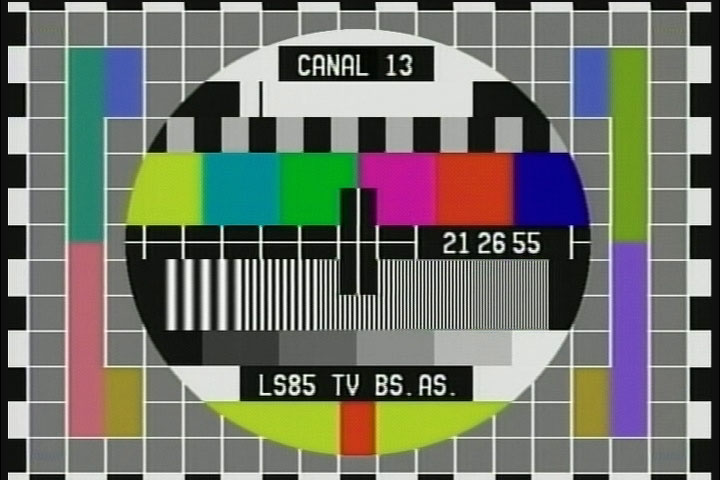
From Chris Pickstock via the mailing list
LEWIS v TYSON
I know this is a bit late, but B1, 12397 H was showing Pay TV's "Main Event"
channel this afternoon. As I am not into boxing I didn't realise it was a
big fight and never stayed around to see who was fighting.
Chris
(Craigs comment, a good reason to look around you never know what might show up on the weekends!)
From the Dish
PAS 2 169E 3897 V "Occasional feeds" on , Sr 6750, Fec 3/4.
PAS 2 169E 12341 V "Occasional feeds" on , Sr 13234, Fec 3/4.
PAS 2 169E 12438 V "Occasional feeds" on , Sr 6620, Fec 3/4.
PAS 2 169E 12474 H The occasional feeds have left .
PAS 2 169E 12475 V "Occasional feeds", Se 6620, Fec 3/4.
PAS 8 166E 3880 V "Myx Channel" has replaced Lakbay TV, Fta, PIDs 1960/1920.
PAS 8 166E 4050 V "NTV International" and the test card have left
PAS 8 166E 12366 H The test card is now encrypted.
Palapa C2 113E 3752 V "RCTI soccer feeds" Sr 4217.Fec 5/6
Asiasat 3 105.5E 3980 V "A test card has started", Videoguard, PIDs 517/660.
Asiasat 2 100.5E 3660 V "IRIB Radio 1 and Radio Payam" have started, Fta, SIDs 17-18,APIDs 2694-2695.New PIDs for Sahar Universal Network 1, Jame-Jam TV Network 3 and VIRI:2433/2434, 2693/2690 and 2435.
Asiasat 2 100.5E 3720 H "Fujian Traffic Radio" has started on ,, SID 1, APID 81.
Asiasat 2 100.5E 3765 H A test card has started, Fta, PIDs 7460/7420.(Worldnet mux)
Asiasat 2 100.5E 3793 V "Occasional feeds" on , Sr 2728, Fec 3/4.
ST 1 88E 3582 H A new mux has started, Fta, Sr 12860, Fec 3/4, PIDs 32/33-42/43, line-up: TTv, CTV, CTS, FTV, FTV News Channel and PTS.
Insat 2E 83E 3525 V "Splash" has started , Fta, PIDs 337/338. (Zone beam)
Intelsat 804 64E 3921 R "Uganda TV" is now encrypted.
NSS 703 57E 3888 R "Splash" has left , moved to Insat 2E. (Also testing on Asiasat 3)
NEWS
Taj Television approaches court
from http://www.hinduonnet.com/thehindu/holnus/07091805.htm
New Delhi, June 9. (PTI): The Dubai-based Taj Television Ltd, owner of the channel "TEN SPORTS", which has been granted the exclusive right to telecast the World Cup Football 2002, has approached the court against cable operators airing the matches unauthorisedly.
To begin with, the channel first approached the Delhi High Court and succeeded in restraining a Mumbai-based cable operator, operating on behalf of "In Centre", from telecasting the sports event by illegally capturing its signal.
Later, on a complaint by HMA Udyog Ltd, a Delhi-based company authorised by TEN SPORTS to enter into agreements with cable operators in India to grant licence to distributors, the Bangalore Police cracked down on cable pirates and raided a hotel and confiscated all equipment that were being used to transmit the signal.
When contacted TEN SPORTS counsel Pravin Anand told PTI that "the channel's legal team would keep watch over all the major cities and take speedy action against cable pirates".
In the first case, the channel alleged in the Delhi High Court that a cable operator was stealing the signals of TEN SPORTS channel and telecasting these to their own subscribers in violation of the Copyright Act.
Giving relief to the channel, Justice Sharda Aggarwal restrained the In Centre, their partner, proprietors, agents and franchisees from broadcasting, communicating, telecasting and streaming to subscribers through cable TV network or otherwise, the unlicensed copy of television programmes on the TEN SPORTS including the event of "FIFA World Cup".
Star TV warns cable firms about illegal activities
From http://www.philstar.com/philstar/News200206090705.htm
Some local cable companies may lose top-rating cable channels like ESPN, STAR Sports, STAR Movies, STAR World, National Geographic Channel and VIVA Cinema after cable provider STAR TV announced it may not renew their contracts.
STAR TV said yesterday it would now offer its channel in packages to give cable operators a break in prices, a 40-percent reduction from the previous rates. The "one-stop-shop" approach for five of STAR’s top channels in the Philippines is expected to provide improved programming options and will keep STAR competitive amid a tightening cable TV industry.
However, STAR TV said cable operators must agree to make a full, accurate and truthful declaration of their subscriber numbers. "Cable operators who prefer to continue underdeclaring subscriber base will not enjoy lower rates. We want to deal with cable operators honestly and even-handedly," said STAR regional director Charles Pollard.
"Leveling the playing field on which cable operators in the Philippines compete is the first major battle in STAR’s war against piracy," he added. STAR TV has learned that a large number of local cable subscribers tune in to STAR’s channels off cable systems whose owners, Pollard disclosed, steal or misuse STAR TV signals.
"Despite warnings, many still use foreign and illegally imported decoders and many submit fake subscriber names and addresses. It breaks all international norms and standards of commercial behavior and respect for intellectual property rights," Pollard added.
"Any operator who takes down our encrypted signal without authorization is a pirate and is simply trying to evade paying program providers while continuing to charge their subscribers. It’s unfair and it’s wrong," he said.
The move to package its channels has already received the support of the local cable TV industry. "STAR’s objective is something which we have been working on all these years, something we have been wanting to implement for a long time. We want to rationalize the industry, create fairness to all operators and improve industry standards," declared Manuel Dabao, president of the Philippine Cable Television Association (PCTA).
Even provincial cable operators, many of whom are supposedly the targets in the campaign against cable TV piracy, are backing STAR TV’s move. "This is a most welcome development for the smaller cable systems in the Philippines as the rate reductions of the STAR channel enable us to offer a complete lineup of programs," said Dave Ranile of Comsatel Cable TV in Cadiz, Negros Occidental.
Meanwhile, Sky Cable threw its support for STAR TV’s move to package its channels. Sky Cable managing director Lito Tria said there is a need for the cable TV industry to unite with programmers to address underdeclaration and piracy.
"For the long term viability of the industry, and for it to have the confidence to seek the support of the government for legislation needed by the industry, the industry’s dealings with various parties should be above-board," Tria added
T S I C H A N N E L N E W S - Number 22/2002 2 June 2002 -
A weekly roundup of global TV news sponsored by TELE-satellite International
Editor: Branislav Pekic
Edited Apsattv.com Edition
A S I A
ORBIT ADDS TBS CHANNELS
Middle Eastern digital satellite platform Orbit Network has added a pair of channels from Turner Broadcast Systems to its bouquet. Cartoon Network and Turner Classic Movies (TCM) will join the platform, meaning that the two channels will now be carried by every major platform in the region. Cartoon Network joins Orbit's existing Fun Channel and Disney Channel in the kids' package, while TCM will sit alongside Orbit's Hollywood Channel and Cinema City, and a MGM-branded movie channel. Until recently, Orbit carried Fox Kids and Star Movies but they migrated to rival platform ADD along with the rest of the Star Select package.
AUSTRALIA
TEN NETWORK SIGNS OUTPUT DEAL WITH PARAMOUNT
Ten Network has signed a 5-year, exclusive output deal for network TV programming with Viacom-owned studio Paramount International TV. Before the deal takes effect in 2004, Ten has second option on Paramount content in 2003, with rival Australian commercial terrestrial Nine having first choice.
SEVEN NETWORK SPELLS OUT PAY-TV OBJECTIONS
Seven Network has outlined a series of objections to Foxtel and Optus's proposed pay-TV merger. In its submission to the ACCC competition regulator, Seven is understood to have called for Telstra to ditch its 50% Foxtel stake or sell the cable network before the merger can go ahead. Seven also called for an A$15 price cap on the basic tier offering.
HALLMARK PREPARES TO RELAUNCH
The Hallmark Channel has re-launched on June 1, when it unveiled a major celebrity driven program initiative featuring event nights, theme weeks and new program start times. The re-launch is designed to provide the Hallmark Channel with a distinct Australian identity and a more viewer friendly schedule.
CHINA - HONG KONG
BLOOMBERG LINKS UP WITH TVB
Financial news provider Bloomberg Television has linked with dominant Hong Kong terrestrial Television Broadcasts (TVB) to gain carriage in the Special Administrative Region (SAR) of China. Unlike its TV business news rivals, CNBC, CNN and BBC World, Bloomberg Television has not been able to gain a slot on the SAR's pay-TV platform, i-Cable Communications. However Bloomberg Television has announced that it will be carried daily between 06:00 and 07:30 on the English-language TVB Pearl channel from July 1. This agreement will extend to the Cantonese service, TVB Jade in the third quarter. The agreement will give Bloomberg Television access to 2.1 million Hong Kong homes, adding to its claim of reaching 19 million households in the rest of Asia.
TVB COULD SCRAP PAY-TV PLANS
Television Broadcasts Ltd. will scrap its planned foray into pay-TV if the Hong Kong government doesn't extend a deadline for it to find investors for the project, a top executive said on May 29. "We can't help but give up" if the government doesn't grant an extension, Group General Manager T.K. Ho said after the broadcasting company's annual general meeting. TVB must find other investors because the government demands it reduce its stake in its pay-TV arm Galaxy Satellite Broadcasting to less than 50%, which was a condition for granting the company a pay-TV license. The deadline for compliance was originally June 30, but two weeks ago TVB asked the government for an extension until February 28, 2003. The company is still awaiting the government's reply, but Ho said he expects to receive it soon. He said TVB hasn't guaranteed the government that it will find an investor for its HK$5 billion pay-TV project even if an extension is granted. However, he added that he is still confident the company will launch pay-TV services.
INDIA
GOVERNMENT CONSIDERS CONDITIONAL ACCESS OPTIONS
The information and broadcasting ministry is mulling its options regarding the conditional access bill that would force viewers wanting pay channels to buy an addressable set top box. The lower house passed the bill, but it was blocked by the upper. A special ordinance may be introduced that bypasses upper house approval; the urgency justified on the basis that cable operators are arbitrarily hiking rates ahead of introduction of the new rules. Those opposed to the bill claim its speedy introduction has more to do with pressure from set top box manufacturers eager to open up a new market.
9/06/02
No update on my Birthday hehehe
8/06/02
Excellent news more FTA channels on Asiasat 2 read news section for details.
Big Fight, Lewis vs Tyson on Indosair via Palapa C2 Sunday. Check your local tv guide for "local" time, might be a few feeds of this one around as well. Start checking when the undercards are fighting and you may have located it by the time of the main event. This is where the mailing list becomes usefull. If you see it let others know.
More on the ongoing saga of 10 Sports vs Indian Cable Operators vs RCTI in the news section. Maybe after this we could see a crack down on out of area broadcasts of events broadcast by the Indonesian channels. Quite surprising they can show something like Lewis vs Tyson FTA and due to the footprint it goes into many countrys where its only available as a PPV event.
Program link for East Asia Life Channel (new Asiasat 2 MSTV MUX)
http://www.macaucabletv.com/schedule.phtml?channel=eastasia_life
From my Emails & ICQ
From Me
B1, 12420 V 6110 Fec 3/4 "V8 Supercars" 3.30pm Syd
From "sungadi:"
Try this link - Measat 1 91,5 E - VTV 3
http://www.vtv.org.vn/english/programs/vtv3/index.cfm?topic_id=T3
probably all wc in this channel.
anyone can get this channel with the WC match please confirm
Adi.
From the Dish
Nothing to report
NEWS
Macau Satellite TV Signs a Long-term Lease on AsiaSat 2
From Press Release
Asia Satellite Telecommunications Company Limited (AsiaSat) and Macau's Cosmos Satellite Television Co., Ltd (Macau Satellite TV- MSTV) announced today the signing of a long-term satellite transponder leasing agreement for the use of C-band capacity on AsiaSat 2.
Macau Satellite TV ( MSTV) will be broadcasting its five channels : Travel Channel, East Asia Channel, Cartoon Channel, Macau Asia TV Channel and the Chinese TV Guide Channel, in digital free to air MCPC format to viewers across AsiaSat 2's huge C-band footprint. A larger audience will be able to receive the programmes provided by MSTV. Furthermore, it is anticipated that MSTV will further expand the number of its channels in the future.
In addition to the above five channels, MSTV is also broadcasting the Five Star Channel and the Five Star Finance Channel on AsiaSat 3S's C-Band transponder, AsiaSat's other powerful satellite. After the commencement of this agreement, AsiaSat will carry all seven television programmes provided by MSTV.
Speaking about the selection of AsiaSat to carry its channels, Mr. Ng Fok, Chairman of MSTV said, " after having the two channels of Five Star TV onboard AsiaSat 3S, we are very satisfied with the quality of service provided by AsiaSat and its extensive coverage , and we therefore wish to use AsiaSat 2 to broadcast the rest of our channels. AsiaSat's powerful regional coverage across Asia and Australasia enables our programmes to reach a wider geographic audience. This will give us greater flexibility in our future expansion of services and more people can learn about Macau via satellite.
"We are very pleased to be welcoming MSTV, with its high quality programming, on board AsiaSat 2. AsiaSat 2 now carries over 50 television channels and a large number of radio channels, and has become Asia's most popular multilingual and multicultural satellite platform. We hope this long-term business partnership between MSTV and AsiaSat could be further explored and enhanced." Peter Jackson, Chief Executive Officer of AsiaSat, commented at the ceremony.
AsiaSat 2
AsiaSat 2, launched in November 1995, is a Lockheed Martin Series 7000 model and carries twenty 36 MHz and four 72 MHz C-band, as well as nine 54 MHz Ku-band linearised transponders. Its C-band footprint covers 53 countries embracing Asia, the Middle East, Australasia and the C.I.S. AsiaSat 2 also has a high-power Ku beam serving China, Korea, Japan and the surrounding areas.
MSTV
MSTV began broadcasting in May 1999. With business growing rapidly, MSTV has expanded to 7 television channels from its initial one channel. After a thorough evaluation, MSTV has decided to broadcast its 7 channels via AsiaSat's fleet in order to allow a larger audience across the region to enjoy MSTV's services. With this new platform, MSTV is able to expand its northern coverage from Mongolia to CIS, its western coverage from India to Turkey & Israel and its southern coverage expanding from Indonesia to Australia.
AsiaSat
AsiaSat is Asia's leading provider of high-quality satellite services to both the broadcast and telecommunications industries. AsiaSat serves telecommunications customers for public telephone networks, private VSAT networks and high speed Internet and multimedia services. AsiaSat is a wholly owned subsidiary of Asia Satellite Telecommunications Holdings Limited, listed on both the Hong Kong (SEHK: 1135HK) and New York (NYSE: SAT) stock exchanges.
For press enquiries, please contact:
Michael So
Marketing Manager, China
AsiaSat
Tel: (852) 2805 7071
Fax: (852) 2805 7038
Email: [email protected]
Vu Leong, Vice General Manager, Executive Director
Cosmos Satellite TV Co., Ltd.
Tel: (853) 785731
Fax: (853) 788234
Email: [email protected]
Fiona Yip
Marketing Communications Manager, China
AsiaSat
Tel: (852) 2805 6670
'RCTI' says trouble settled with FIFA over W. Cup rights
From thejakartapost.com
Indonesians will likely continue to enjoy viewing World Cup games for one full month as RCTI claimed on Friday it had seen off a threat by the international soccer body FIFA to revoke the sole rights the private TV channel holds to broadcast the spectacular one-month event.
FIFA scolded RCTI for allowing a spillover of its broadcast via satellite and threatened to strip it of the rights, unless the television network overcame the problem soon.
The admonishment was made on June 1 through KirchMedia, a giant international multimedia company appointed by the FIFA as holder of sole rights to air the games worldwide.
"The threat is serious. But we have explained to KirchMedia what steps we have taken to deal with this problem, and they may accept it," RCTI spokesman Teguh Juwarno told The Jakarta Post on Friday.
"God willing, there will be no more problems and the Indonesian people will continue to be able to watch the World Cup," he added.
Teguh said the country's oldest private television network had to select a number of games to broadcast each day to reduce the spillover from its satellite broadcasts into India, Singapore, Malaysia and several parts of Australia.
Consequently, the move has caused many Indonesian viewers dependent on reception via parabola to miss out on the international event, he added.
He argued that the spillover was unavoidable because the RCTI's satellite transponder's footprint spread into several parts of foreign countries, including India, Singapore, Australia and Malaysia.
Teguh apologized to disappointed Indonesian viewers for the channel disruption.
Previously, the House of Representatives lashed out at RCTI for ignoring the fate of 70 million Indonesians who were excluded from watching the games.
The affected 70 million viewers excluded many others who always relied on a parabola to receive a TV signal.
Legislators urged the private TV channel to share its rights with state broadcaster TVRI, which can reach more than 80 percent of the country's viewers.
"RCTI should be willing to collaborate with TVRI or other television networks so that the public's viewing rights can be adequately catered for," Bambang Sadono, a member of House Commission I, told a hearing with Minister of Information and Communications Syamsul Muarif on Thursday.
Indonesian channel eats into Ten Sports’ share
From http://economictimes.indiatimes.com/articleshow.asp?art_id=12151925
KOLKATA: There has been an invasion in the Indian skies. Even as Ten Sports continues with its live telecasts of the World Cup, an Indonesian channel has been beaming the matches too in parts of the country.
The channel, called RCTI, is a free-to-air digital brand. The channel is shown from the Indonesian Palappa C2 satellite.
Now, HMA Udyog, the distributors of Ten Sports in India, have moved to inform the brass of Ten Sports about the development.
Ten Sports, as we know, has been handed the World Cup broadcast rights exclusively for the Indian subcontinent by Germany’s KirchMedia.
KirchMedia is the global rights holder of the World Cup. “We learnt about the transmissions by RCTI soon after the World Cup kicked off. Shortly thereafter, Ten Sports was informed about this matter and that the RCTI broadcasts were in violation of the rights that Ten Sports held,” HMA Udyog sources said.
According to them, Ten Sports has “promptly” brought KirchMedia abreast of the issue. KirchMedia, which apparently had sold RCTI only the Indonesian rights, has asked RCTI to pull out its transmissions in India.
Cable operator sources said that signals of the RCTI channel are usually stronger in the eastern and southern circuit of the country. Therefore, the broadcasts were seen mostly in these regions. However, transmissions in other areas cannot be ruled out.
?It’s very difficult know whether an operator in some corner of the country is also managing to latch on to the RCTI signal,” operator sources said. “They can possibly get it with a bigger than normal dish antenna.”
?It’s clearly an illegal operation by RCTI as far as the showing of the matches in the Indian subcontinent goes.
?In fact, KirchMedia has told RCTI that it should immediately take remedial steps and switch off the transmissions in India, failing which RCTI will be exposed to full-scale legal action,” HMA Udyog sources said.
(Craigs comment, a few comments RCTI does not delibrately broadcast its signal into India its only by design of the footprint of the transponder they use that creates a signal into past of Asia. They are not targeting Indian viewers with their channel. If you read our World Cup 2002 page you will see plenty of channels that are FTA and carry the games. KirchMedia has to take a lot of blame for this missleading Ten Sports as to them having "Exclusive Rights")
Under fire for live telecast
From http://timesofindia.indiatimes.com/articleshow.asp?art_id=12212038
NEW DELHI: The distribution company for Ten Sports has served notices to several hotels which had issued advertisements inviting the public to watch the football World Cup matches on their premises.
The Metropolitan hotel in Gole Market received one such notice.
‘‘No one can promote and telecast these soccer matches in hotels or in any public place without obtaining permission from us,’’ said a Cable Distribution Network (CDN) official. CDN is a division of HMA Udyog Ltd which has got exclusive distribution rights to telecast football matches.
‘‘A permission is necessary since we have got the sole rights to telecast these matches,’’ explained a CDN official. CDN officials said they have served notices to hotels and clubs across the country.
Ten Sports distribution officials explained that hotels have to sign a deal — which may even include revenue sharing — for showing live Ten Sports soccer match feeds. Cable operators are going out of the way to capture footprints of some free-to-air East Asian TV channels to beam live the matches. In households where the operator could not tie up with Ten Sports are watching matches from the footprints of an Indonesian free-to-air channel.
‘‘We are interested in the live image of these matches. It doesn’t matter if the commentary is not in English,’’ said a west Delhi soccer fan who gets a feed from Indonesia. While Ten Sports, which has obtained the telecast rights of the World Cup matches, termed this as illegal, many in the industry viewed it as legal since they broadcast free-to-air feeds.
Siticable Network which all along was showing live soccer matches through some East Asian channels have now signed a deal with Ten Sports. ‘‘We are not showing the Indonesian channel anymore as we have entered into a deal with Ten Sports,’’ said a Siticable official. CDN officials said they have got orders from the Delhi High Court restraining illegal transmission of Ten Sports.
Ten beefs up weekend programming, focuses on Indian sports
From indiantelevision.com
Even as Ten Sports makes hay with World Cup soccer, it is making sure that the fledgling channel does not fade from public memory once soccer mania subsides.
The Taj Sports promoted channel has announced a new weekend programming line up termed 'Spectacular Sunday' to ensure continued viewer interest. Beginning this Sunday, the channel starts the day with a WWF fight, now rechristened the WWE Judgment Day. At 11 am, soccer dominates with three games - Mexico v Ecuador, Costa Rica v Turkey and Japan v Russia.
The evening's line up includes live coverage of Indian ace driver Narain Karthikeyan in the Motorsports World Series, followed by the World Cup highlights at 9 pm. Formula 1 will be beamed live from Canada at 10.50 pm.
The decision to telecast Karthikeyan's races live are part of an effort to bring in more of ethnic sporting action from the sub continent, says Ten Sports vice president, programming and events, Peter Hutton. "The idea is to increase the image of Indian sports; while the world cup has a huge following in India, the perception of Indian football is none too great here. That is why we have Indian captain Bhaichung Bhutia our studios during the World Cup too", he says.
There are other proposals for producing shows on ethnic games in the pipeline, but have 'be relevant, look good as well as be cost wise on the production front," he says. While a majority of ad slots for the soccer event have already been sold, there is still some space left in the last couple of weeks, says Hutton. While life for Ten Sports will continue to be event driven post World Cup, Hutton says the channel is trying to build up an audience in the 14 to 35 age group with its regular WWF shows and regulars like the chat show hosted by singer Raageshwari.
(Craigs comment, while not a FTA channel available via satellite, its been interesting to follow this new channel from startup to see how they attempt to crack the Indian pay tv market)
Prasar Bharati wants law mandating sharing of sports telecast rights by private TV channels
From indiantelevision.com
Stung by telecast rights holder like World Sports Group Nimbus and Taj Sports (managing Ten Sports channel) not willing to play ball, Prasar Bharati has decided to appeal to the third umpire - the Indian government - seeking a "level playing field" in the name of larger interest of the viewing Indian public.
"The Prasar Bharati board has decided to ask the government to come out with a legal framework, ahead of the enactment of the Communication Convergence Bill, which would make it mandatory for the satellite and cable rights holder(s) to share the feed (of events felt important for Indian viewers) with Doordarshan's terrestrial network," Prasar Bharati chief executive K.S. Sarma said today.
The Prasar Bharati oversees the working of pubcasters DD and All India Radio. Despite its corporatisation, which was modelled on British pubcaster BBC, the government (read the information and broadcasting ministry) still retains control over the functioning of DD and AIR.
Addressing a press conference in Delhi on Friday, Sarma said that the government, in consultation with the Prasar Bharati will decide on the events which are telecast worthy and of importance to the Indian viewers and will notify them which will make it mandatory for telecast rights holder to share them with DD and/or AIR.
Pointing out that Parasar Bharati cannot afford to pay "large and heavy fee" to acquire telecast rights, a la private satellite channels, Sarma said, "Instead, we'd prefer to go in for revenue sharing (with the company that markets the events telecast on DD)."
In recent times, Prasar Bharati has lost out on the live telecast of the ongoing soccer World Cup and is also under severe pressure from World Sports Group Nimbus on the issue of rights of ICC-organised cricket matches, the cable and satellite TV rights which are held by Sony Entertainment TV for six years.
According to Sarma, since the Prasar Bharati board has decided to refer the telecast issue to the government, the formal missive will "be sent soon."
However, he did not elaborate on the fact how the government can have a policy in isolation like this in place.
Chapter IX of the Communication Convergence Bill, 2001 details special provision in respect of certain services, specially live broadcasting of certain events.
The clauses read: "For the purpose of ensuring the widest availability of viewing in India of a national or international event of general public interest to be held in India, the central government shall notify the same well in advance.
"The national or international event of general public interest notified under sub-section (I) shall have to be carried on the network of a public service broadcaster as well. "In order to strive towards providing a level playing field for bidders for broadcasting rights or person interested in receiving broadcasting rights for events notified under sub-section(i), the Commission (the proposed super regulatory authority for IT, telecom and broadcasting areas) shall determine, well in advance of such an event, the principles and terms for the access to the network of public service broadcaster."
7/06/02
Another Analog signal bites the dust. Asiasat 2 Worldnet Analog has finally switched off according to reports. Replaced by a bigger stronger Digital signal with an eaiser to lock Fec of 1/2. Not good for us in NZ as Asiasat 2 is the lowest satellite for most over here the Analog signal was used by many people for dish alignment purposes. Australian SBS has luanched a world news channel on their digital service. Has anyone looked to see if this has been added somewhere on B3?
All seems very quiet at the moment.
From my Emails & ICQ
From Bill Richards
I Checked JcSat8 @0745UTC nothing new !!!!
From Jundong Wu
Hi, Craig
The last analogue signal on Asiasat2 (Worldnet 3880H)
has ceased, and a new digital Worldnet mux has started
on 3880H, SR20400, FEC1/2. The main channel loaded as
"CHANNEL ONE", VPID 7160, APID7120; the other radio
channels should be as same as that of 3765H. This new
signal is much stronger than 3765H.
Cheers,
Jundong Wu
From Jason
Hi Craig
The new Worldnet signal (3880H sr:20400 fec:1/2) on Asiasat2 is comming in much improved compared to the
old signal (3765H). It strength is ~35% in Perth on a 2.3m dish & phoenix 333 receiver.The old signal was
~17% which was unwatchable most of the time, its now at 0%(possibly switched off?). The new signal seems to
have two channels (labeled: channel one) Vid:7160,Aid:7120 & (labeled: ch 340 dedicated) Vid:7460,
Aid:7420. The second channel is a seperate worldnet feed. There are also 10 other audio channels which correspond to "channel one", Vid:7160,Aid's:7122,7130,7220,7222,7230,7320,7330,7420,7422,7430.
Regards
Jason
From the Dish
Palapa C2 113E 3752 V Occasional feeds on , SR 4217.Fec ?
Asiasat 2 100.5E 3880 H WorldNet, Voice of America, VoA News and RFE/Radio Liberty have left (PAL).
Asiasat 2 100.5E 3880 H A new mux has started, Fta, Sr 20400, Fec 1/2, line-up:WorldNet and 18 radio channels, same line-up as on 3880 H.
Intelsat 902 62E 3967 L "E.TV" is now encrypted.
NEWS
'RCTI' slammed as 70 million viewers miss W. Cup matches
From http://www.thejakartapost.com/detailheadlines.asp?fileid=20020607.A05&irec=4
Muhammad Nafik and Kurniawan Hari, The Jakarta Post, Jakarta
Holding the sole rights in Indonesia to broadcast the World Cup on television could turn out to be a poisoned chalice for RCTI as the House of Representatives condemned the country's oldest private television channel for ignoring the fate of 70 million potential viewers who were missing out on the month-long spectacular.
Considering the number of viewers that RCTI was unable to reach, the House urged the nation's largest private TV station to share the rights with state broadcaster TVRI, which could reach 80 percent of the country's viewers.
"RCTI should be willing to collaborate with TVRI or other television networks so that the public's rights can be adequately catered for," legislator Bambang Sadono told a hearing with State Minister for Information and Communications Syamsul Mu'arif.
"This is not about only one or two people, but more than 70 million Indonesian viewers," Bambang added.
The criticism came after dozens of people in the South Sulawesi capital of Makassar held a rally at the RCTI branch office there following technical problems that halted the broadcasting of several matches on Tuesday.
Happy Bone Zulkarnain, another House member, agreed with Bambang, suggesting that TVRI seek to cooperate with RCTI in broadcasting the World Cup so as to meet the public demand.
"The money for this could be set off against RCTI's debts to TVRI," he added.
TVRI president Sumita Tobing has said that RCTI owes the state broadcaster Rp 80.5 billion.
Barita, a senior TVRI official who represented Sumita during the hearing, said the state-owned television company was ready to broadcast the international games, but the matter was largely in the hands of RCTI.
RCTI spokesman Teguh Juwarno admitted that the private station could reach only 160 million Indonesian viewers.
Asked about the 70 million viewers who were excluded from the World Cup party, he simply said: "That's the government's business. We should not be blamed for that".
He said RCTI had offered TVRI and the other private broadcasters the chance of jointly purchasing the broadcasting rights from the world soccer body FIFA, but they were unable to afford the cost.
Teguh said the rights cost US$5 million and his company had to spend another $5 million so as to cover the total operational expenses of broadcasting the games from May 31 through June 30.
"On paper, we've already broken even. All the revenue is generated from advertisements," he said, but declined to reveal the potential profits from the venture.
Teguh said the main sponsor was the energy drink producer Extra Joss, which was contributing more than Rp 35 billion in advertising revenue to RCTI.
Other main advertisers included the Panasonic electronics company.
6/06/02
Jcsat2a 154E anyone looked for it yet this month? not much at all to report several people have already asked about the DVB-S PC satellite cards. Hopefully the info will go up soon for these as soon as it's provided! All very quiet today something big must be due to happen....
From my Emails & ICQ
From Steve Johnson (NZ)
Hi Craig. Have 1 x Scientific Atlanta SA 9223 for sale (authorised for CMT). $1500.00 -
Ph Steve (09) 238 3083 or (025) 938 313.
Email: [email protected]
From the Dish
Asiasat 3 105.5E 3760 H "Splash" has started testing , Fta, PIDs 1030/1031.
Measat 1 91.5E 4158 H "VTV 3" has started in digital, Fta, Sr 3000, Fec 3/4, SID 2, PIDs 308/256.
NEWS
Turf war for pay-TV technology
From
THERE was once a time in TV land when the question being asked was "The Money or the Box?"
That 1950s and '60s gameshow, Bob Dyer's BP Pick-a-Box, is long defunct, and soon so too will be the idea that the money and the TV box are separate.
The attachment of some sort of set-top box has created a new interactive revenue horizon for TV, and that means money other than from traditional advertising.
In Australia, the growing issue is who should have access to that box.
The vast majority of boxes in Australia are used to access pay TV. And the pay-TV companies - Foxtel, Austar and Optus - have installed these expensive boxes for free in return for subscriptions.
That has never been an issue - until now.
The announcement of the Foxtel-Optus content-sharing deal came as the free-to-air TV networks were realising their own rollout of digital TV set-top boxes was not working.
That focused their attention on the possibility of getting their digital TV signals into homes through the pay-TV boxes.
And Ten Network executive chairman Nick Falloon has taken the issue further, telling the Australian Competition and Consumer Commission the whole Foxtel-Optus deal should be delayed until it is resolved.
"We have to think about driving digital for free and pay, and working together makes sense," he says.
Specifically, the free-to-airs want all future pay-TV set-top boxes to have a dual tuner so their signals can still go through an antenna and not be reliant on pay TV's cable or satellite.
It would also mean consumers would only need one box for both digital free-to-air and pay TV.
But pay TV cannot see why free TV digital signals cannot go through their box, as analogue TV signals do.
"The dual tuner does not save anyone money," says Lachlan Murdoch, the chairman of The Australian's owner News Limited, which owns 25 per cent of Foxtel and manages the business.
"The componentry in those two boxes is different. With cable retransmission, Foxtel cable subscribers could receive digital TV without incurring additional cost or the technical complexities that go with dual tuners."
And the technical issues have recently become more challenging as the free-to-airs now also want commercial access to pay-TV subscriber management systems.
Falloon knows that for Ten to gain any of the future interactive TV revenue, it also needs back-end support.
For example, a viewer could book a movie ticket with the remote control but what happens if they have a complaint? And how are viewers billed? For those reasons, the free TV sector has begun to look longingly at the call centres operated by the pay-TV companies.
Falloon wants a free-to-air "gateway" in a pay-TV box and then to pay to use its back-end systems.
"Channel Ten will have to pay an amount to someone else anyway [to provide that back-end service] so you might as well make it a workable single TV system," he says.
But Murdoch says it makes more sense to simply retransmit the free-to-air's digital signal. He says no pay-TV boxes currently have even a free TV tuner, while a dual tuner box also requires dual conditional access and processing systems.
"If this is only about digital free-to-air let's sort it out today," he says.
"We can guarantee their [free-to-air] slots so they don't have to be worried about being at the end of a channel line-up."
And if they want to use Foxtel's subscriber systems for interactivity they could negotiate a fee, he says.
He also says interactivity creates further technical issues for the box, as Foxtel, Optus and the free-to-airs all use different interactive software.
And he is concerned Foxtel may be forced to continue servicing its digital box even if someone disconnects, as they'd still need the box to get free TV digital channels.
But Falloon believes the technical issues can be overcome, and a dual tuner remains the best option.
"There are hundreds of issues of a technical nature, all of which are solvable in my opinion," he says.
Then there's the issue of who pays.
The free-to-airs won't help pay for a box upgrade, saying they don't benefit from people just being able to see their digital TV signals.
And the pay-TV sector sees no reason why it should give its competitors a free kick.
Murdoch is also concerned about giving the free-to-airs uncontrolled access to Foxtel's subscribers, as the value of a pay-TV business is based on its subscribers and its ability to manage them.
"Why should the free-to-airs from their position of being highly protected be able to effectively ambush that subscriber base that the pay TV industry has developed," he says.
Falloon agrees free TV should not own pay-TV's subscribers, but believes a common set-top box and commercial access to the back-end system would add to pay TV's value.
The two also disagree on how much extra it will cost to create a single box. Falloon says the dual tuner costs up to $40 extra per box while Murdoch says it's up to $80, not including additional application software.
So if Foxtel is not the answer, what is? It could be an investment bank.
Macquarie Bank has specialised in infrastructure of all sorts, like toll roads and airports, and sees set-top boxes as just another infrastructure option. It recently paid $850 million for the TV towers owned by NTL Australia and may use that as part of an asset base funding a box rollout.
And if its boxes have a dual tuner and added functionality (such as a personal video recorder which enables people to skip ads) they could also be sold in shops, which could lead to cheaper Foxtel rates.
The theory says that if a viewer buys his or her own box (so Foxtel does not pay a subsidy) the cost of Foxtel's basic package could fall to $20 a month from today's $40.
But that is yet another angle on what is already an extremely complex issue, the resolution of which looks some way off.
PANAMSAT SETS RECORD WITH WORLD CUP COVERAGE
From Panamsat Press Release
PanAmSat Conducts Largest Event Broadcast in its History with More Than 17,000 Hours of Live Coverage to Over 24 Broadcasters in Dozens of Countries
PanAmSat Corporation (NASDAQ: SPOT) today announced that more than 24 top broadcasters, programmers and news agencies in over two-dozen countries are using the company global satellite network for delivery of the World Cup. With more than 17,000 hours of video transmission time booked to date, it is the largest special events offering in PanAmSat history. Through its coverage of the event, PanAmSat offers customers unparalleled global reach, state-of-the-art production and transmissions facilities, as well as the ability to uplink live directly from remote locations throughout Korea and Japan via mobile transmission units.
Our global resources, in conjunction with the collective expertise of our onsite special events staff, ensures that millions of viewers around the world experience the excitement of the World Cup,said Joseph R Wright, PanAmSat president and chief executive officer. Whether a broadcaster is a rights holder or a non-rights holder, whether they need 3 MHz or 54 MHz of satellite capacity, for 10 minutes or 10 hours, they can turn to PanAmSat to deliver the coverage.
According to Catherine A. Palaia, PanAmSat vice president of special events and occasional use broadcast services, the company is serving more than 24 countries during the worlds most-watched sporting event including: Argentina, Brazil, Canada, Costa Rica, El Salvador, France, Japan, Jordan, Mexico, Korea, Spain, the United States and the United Kingdom. PanAmSat, acting as a third-party provider for rights holders at the International Broadcast Center (IBC), is offering comprehensive services such as compression, transmission hardware and an encryption system, providing conditional access to the World Cup. In addition, PanAmSat is working closely with local Korean and Japanese satellite carriers and broadcasters to provide services such as Onse Telecom, DaCom, Japan Telecom and KDDI.
PanAmSat's special events team has been on site since April to ensure seamless service for its customers. The company is employing over 60 satellite paths and 30 transponders across 11 spacecrafts to transmit the games. PanAmSat, a Type One (T-1) carrier since November 1995, was the first U.S. company awarded this license by the Japanese Ministry of Posts and Telecommunications. The license enables PanAmSat, one of the only non-government entities in Japan to hold a T-1 classification, to offer international satellite-based services directly to customers in Japan. Under the umbrella of PanAmSat's license, customers will be able to obtain a temporary operating license in Japan so as to receive and then broadcast the games on their own network.
Official rights holders have the option of uplinking to the PanAmSat spacecraft directly from the IBC in Seoul, Korea. PanAmSat has coordinated with local production and transmission facilities so that non-rights holders and occasional-use customers can also uplink to a satellite in PanAmSat's fleet of 21 spacecraft for distribution.
In addition, PanAmSat Napa, Fillmore, Ellenwood and Homestead teleport facilities will serve as critical retransmission points for the onward delivery of live coverage from Korea and Japan to sites throughout the Americas and around the world.
In addition to this year World Cup, PanAmSat Broadcast Services Department has teamed with dozens of leading broadcasters and programmers to deliver hundreds of thousands of hours of live coverage of the worlds premier sporting and special events, as well as breaking news to audiences around the world. Past events include the 2002 Olympic Winter Games in Salt Lake City, 2000 Summer Olympic Games in Sydney, Australia, 1996 Summer Olympics in Atlanta, GA; the 1998 World Cup tournament in Paris, France; the 1999 Pan American Games in Winnipeg, Canada; and the 2000 Millennium celebrations.
Intelsat 905 Launch Successful: Satellite Fifth in Campaign to Provide Powerful Communications Solutions
From Intelsat Press Release
Date: 5 June 2002
Release Number: 2002-16
Intelsat 905 Launch Successful:
Satellite Fifth in Campaign to Provide Powerful Communications Solutions
Washington D.C., 5 June 2002 - Intelsat announced today that at 2:44 a.m.
EDT the Intelsat 905 satellite was successfully launched aboard an Ariane
44L vehicle. The satellite is expected to be operational in July.
The Intelsat 905 launch is the fifth in a nine-satellite campaign to replace
and significantly add to existing capacity by the end of 2003. The 905
satellite will be deployed at 335.5ºE and will offer capacity for telephony,
corporate networks, Internet, video and hybrid space/terrestrial solutions
to customers on its 72 C-band and 22 Ku-band transponders (measured in 36
MHz equivalent units). The satellite will provide high power Ku-band spot
beam coverage for Western Europe and much of North America and additional
C-band capacity to customers in Europe, the Middle East, Africa, North
America and South America.
Intelsat, Ltd. CEO Conny Kullman stated, "The successful launch of the
Intelsat 905 to 335.5ºE marks not only the one year anniversary of the
beginning of our current launch campaign, but also an historic anniversary
for Intelsat. The 335.5ºE orbital slot, our first location, also served as
the location of our first satellite, Early Bird. We expect that the
Intelsat 905 will follow in the footsteps of its predecessors by providing
reliable and powerful communications solutions to our customers for years to
come."
The Intelsat 603 currently holds the 335.5ºE orbital slot but will be moved
to 178ºE to create a new satellite role at that location.
Intelsat's next launch, the Intelsat 906 satellite, is scheduled to take
place from French Guiana, aboard an Ariane 44L launch vehicle, during the
third quarter of this year.
(Craigs comment, while this satellite dosn't offer anything to us the moving of I603 at 24.5W to 178E should!, time for everyone to equip with circular feeds if anything good turns up! Oh yes and a big thanks to Intelsats mailing list that spat out 15 copies of this item to me and probably everyone else.)
Soccer-hit Doordarshan eyes ICC world cup rights
From http://www.business-standard.com/today/corp6.asp?Menu=2
After the recent setback it received in bagging the terrestrial broadcasting rights of the football world cup, Doordarshan is charting out a strategy well in advance to bag the terrestrial right of the ICC Cricket Worldcup 2003 held in South Africa.
The board of Prasar Bharati is meeting tomorrow to finalise the strategy of the state broadcaster in acquiring the terrestrial broadcasting rights of the ICC World Cup matches.
"The board will give shape to the strategy that Doordarshan will have to take to bag the rights for the terrestrial rights for the ICC World Cup in India," a Prasar Bharati official said.
The meeting will also give shape to Doordarshan's negotiations with World Sports Group Nimbus which has the world wide telecast rights of the ICC matches for the next six years including the next two worldcup matches.
According to Prasar Bharati sources, some options before the board includes entering into a revenue-sharing agreement with Sony or work on a license agreement wherein Doordarshan pays a fixed fee for the matches it airs.
Doordarshan wants to make sure that set back it had with football worldcup does not repeat this time.
"Despite repeated attempts Doordarshan could not manage the football world cup match telecast. We want our strategy to be in place well in advance," the official said.
Sony Entertainment TV has the cable and satellite rights for airing ICC organised matches for the next six years from which it had bagged from World Sport Group Nimbus for a reported $250 million.
The cricket matches will be aired on SET Max channel where the programming is a mix of Hindi films and cricket.
The rights will allow Sony to beam over 300 days of international cricket including coverage of leading ICC championships.
Sony beat others such as ESPN for the cricket telecast rights for which bids were invited by WSG Nimbus some time back.
Proposal for DD Metro to become satellite channel
From http://www.hinduonnet.com/bline/stories/2002060601400200.htm
PRASAR Bharati seems to be in revamp mode yet again. The national broadcaster is contemplating converting its entertainment channel - DD Metro, which is a terrestrial channel - into a satellite channel and bring the infotainment channel, DD Bharati, on the terrestrial platform.
A top Prasar Bharati official said that this proposal is being considered as the corporation feels that there is need to have a second public broadcast channel. "We are looking at the concept, but no final view has been taken," said the official.
"Currently, DD Bharati is available only through cable. The programme-mix of the channel (mainly comprising health, fitness, culture and children's shows) is such that it can become the second public broadcast channel," he added.
Some senior officials of the Prasar Bharati board are of the view that the public broadcaster should cater to all segments of society. Currently, DD National offers news and current affairs, big events and other such programmes catering to the adult population. On the other hand, DD Bharati has programmes for children and other segments like health, fitness, culture, which are not adequately covered by DD National.
However, media analysts said that Prasar Bharati could run the risk of losing revenues if DD Metro is removed from the terrestrial platform and put on satellite. "DD Metro attracts advertising despite poor programming because of its reach. If that is changed, the channel could lose advertising revenues," said a Delhi-based media planner. Then, the channel would also have to compete with other private channels like Star Plus, Zee or Sony, which today dominate the entertainment segment.
Currently, DD Metro's terrestrial reach covers over 40 per cent of the country, while DD National reaches out to over 80 per cent. DD Bharati, meanwhile, has not really taken off with the channel attracting low viewership or advertising.
Leasing to pvt players mooted
Whether DD Metro switches from the terrestrial to the satellite platform, the expert committee for developing business models for the channel under Prasar Bharati Executive Director, Mr R.C. Mishra, has suggested leasing out the channel to a few private players.
Sources in Mandi House said that the a few well-known content providers have already met senior Prasar Bharati officials. "Balaji Telefilms, Creative Eye and a couple of other entertainment software providers have been doing the rounds," they said.
However, this idea is also in the incubation stage and no final decision has been taken, emphasised officials. Meanwhile, the channel is expected to complete revamping its content by August this year.
Last year, after the break-up with HFCL-Kerry Packer-promoted Nine Gold, it had invited bids from various production houses. In the interim, it had revived some of its old classics. "As and when the old shows complete their run, they will be replaced by new ones and by August, we expect the new programmes to be in place," he said.
5/06/02
The chatroom was very quiet last night where was everyone? Not much happening today it seems.
Details of the DVB-S cards deal are still being put together and should go up in the next few days.
State of Origin tonight?
From my Emails & ICQ
From Chris Pickstock
B3, 12363 V is not quite dead. There was a feed there this morning, a business type meeting. Loaded as "Mediasat", Vpid 4096, Apid 4097. At the conclusion there was a card up briefly saying "Airservices from Canberra", then the signal went dead. So dont give up on checking 12363V. The same feed was also on 12336 V at the same time.
Last night the World Cup match on SBS was on B1, 12397 H, Sr 7200, which is 7 Network feeds usually. Carried all the SBS logos etc.
Chris P
From Andrew Harrison
World Cup Soccer, All matches are being shown on I701 Ku, in French on the 2 FTA channels Tempo and TV Caledonie in the 11610 mux.
Andrew Harrison.
(Craigs comment, lets see the Indians try and and get that one ! haha)
From the Dish
PAS 8 166E 12455 H "Televisa Veracruz" has moved here from 12450 H , new SR: 2656.
PAS 8 166E 12336 H "TV 5 Asie" has left , replaced by a test card.
PAS 8 166E 12336 H The test card has left PIDs 1025/1026.
Apstar 2R 76.5E 12629 H "TVBS, TVBS Newsnet, TVBS Golden, Much TV and ERA news" are now encrypted.(Due to Worldcup football)
Intelsat 804 64E 3669 R "TV Africa East" is now encrypted.
NEWS
TV blackouts have fans pointing at spot
From http://www.nzherald.co.nz/
Soccer fans across New Zealand were horrified when just as Italy were about to score against Ecuador in their World Cup match, television screens blacked out for a few vital seconds.
And this was not the first time fans watching World Cup matches had their viewing disrupted by short blackouts.
Johnno Hunter, originally from England, said most games he had watched at bars, or at a friend's house, had been interrupted by at least one screen blackout of about five seconds.
Sky Television spokeswoman Andrea Rush said there was a problem with the coverage.
She said Sky was getting a feed from a TVNZ decoder, which was not completely compatible with the encoder encrypting and sending the coverage from Korea and Japan.
"This is unfortunate and is resulting in a black few seconds in most games for viewers."
Ms Rush said the problem was nationwide, and was also being experienced internationally as TVNZ's satellite service was contracted to provide the feed for other countries such as Australia and South Africa.
The problems were being experienced on both Sky Sport and Sky Digital channel 16.
TVNZ spokesman Glen Sowry said the host broadcaster's encoder in Korea was not compatible with the decoder at TVNZ. This problem was causing blackouts in the coverage every 12 to 15 minutes.
Mr Sowry said they had technicians working to fix the problem and they hoped to have it corrected in 24 to 48 hours.
Telstra to bill Foxtel majority: report
From http://australianit.news.com.au/articles/0,7204,4452875%5E15306%5E%5Enbv%5E,00.html
TELSTRA is likely to bill 70 per cent of all Foxtel subscribers by 2007 if the Foxtel-Optus content-sharing deal proceeds, a report by broker ABN Amro predicts.
The report agrees with the pay-TV groups' assertions that the industry is structurally flawed. It shows that every new subscriber actually costs Foxtel $70. The proposed restructure, which would enable Telstra and Optus to sell Foxtel with their telephony services, would create an economic industry, the report says.
ABN Amro media analyst Peter Shorthouse said Foxtel would not care that Telstra was billing most of its subscribers. "Foxtel says it doesn't care who sends the bill out, and Telstra feels that is a way of creating a direct billing relationship with the customer," he said. "It makes it less likely they will leave the Telstra phone service."
But, he said, Foxtel's move to take on Optus's $600 million in movie programming liabilities would cut Foxtel's gross margin from almost 50 per cent today to 28 per cent in 2003.
"If you remember the fuss about the Premier League (soccer rights) going to BSkyB (the UK pay-TV company), this decline is four times worse than that," he said.
Optus will initially profit from being able to use Foxtel's content, Mr Shorthouse said, but the effect would be neutral for both companies' profits for five years, with Foxtel benefiting most thereafter.
He said the Australian Competition and Consumer Commission was likely to approve the deal with conditions.
Fairfax mugs pay-TV
From http://australianit.news.com.au/articles/0,7204,4452064%5E15320%5E%5Enbv%5E15306,00.html
NEWSPAPER group John Fairfax Holdings has dramatically lifted its opposition to the pay-TV industry restructuring, saying the competition regulators should disallow it.
Fairfax previously suggested conditions be attached to the content-sharing deal between Foxtel and Optus, but now says the deal creates a monopoly that reduces competition.
"This is as important an area of media law change as the reforms of cross and foreign (media restrictions)," Fairfax chief executive Fred Hilmer said.
Mr Hilmer said Fairfax wanted to be involved in pay-TV, but even if Foxtel guaranteed it access it would still oppose this deal. "We would like the industry structure to stay as it is and evolve, but not into this form," he said.
Apart from program sharing, the deal enables Telstra, which owns half of Foxtel, and Optus to bundle pay-TV with their telephony services.
The Australian Competition and Consumer Commission is due to rule on the deal by the end of the month.
But Mr Hilmer does not believe Optus's claim that it will leave the local telephony market if the deal is thwarted.
"If Telstra and the other Foxtel partners believe that was not a false threat, then they should let it happen because it's a real windfall and doesn't cost you $1.3 billion," he said.
But Optus regulatory chief Paul Fletcher said the company had consistently said it could not continue justifying those losses to its parent company, SingTel, without reform.
Mr Hilmer also said price competition on pay-TV packages would be limited to 5 per cent without Foxtel and Optus acting as independent pay-TV companies.
Mr Fletcher said the deal increased Optus's pricing flexibility as its gross margins would now be positive.
Mr Hilmer said both pay-TV companies knew of Fairfax's ambition to be in pay-TV and rejected its proposals.
Mr Fletcher said Fairfax did not present concrete proposals or pilot tapes of shows, only "a generalised desire to have discussions".
Mr Hilmer said Foxtel chief Kim Williams had previously led AIM, a Fairfax/ABC pay-TV joint venture which eventually failed.
Live French Open on Dordashan
From http://www.hinduonnet.com/stories/2002060503261900.htm
Doordarshan will telecast live semifinals and finals of the French Open tennis championship on its Metro Channel (DD-2), from June 6 to 9.
The National broadcaster will also relay recorded telecast of the matches on its satellite channel, DD Sports, from 9.30 p.m. onwards, on all the four days.
The schedule: June 6: Women's semifinals, 5.30 p.m. onwards. June 7: Men's semifinals, 4.30 p.m. onwards. June 8: Women's final, men's doubles final, 6.30 p.m. onwards. June 9: Men's final, 6.30 p.m. onwards.
(Craigs comment, of course if you look in the right location you can watch the live feed also)
Cable guys want more
From http://cities.expressindia.com/fullstory.php?newsid=19542
Chandigarh, June 3: NOW that most of the city residents are getting live signals of the World Cup soccer — either on TEN Sports or the Indonesian channel — the next few days will see round two of the tussle. The cable operators have put their foot down, demanding a hike of Rs 50 to Rs 100 per connection while the consumers are refusing to play ball.
ⲫle operators are holding us to ransom,” says Atul Mahajan, a resident of Sector 22, “after every four months the cable guys increase the rates and we have to pay. This is sheer blackmail.”
With the increasing pressure from the residents, the cable operators finally decided to show TEN Sports. But the operators — led by SitiCable, the biggest network in Chandigarh — want to pass the hike onto the consumers.
SitiCable owner Sandeep Bansal says, “I want maximum people to watch TEN Sports, but they are not willing to pay. We showed TEN Sports for a while, but today we showed the soccer matches on a free-to-air Indonesian channel. TEN Sports will soon be on air permanently and our operators are drawing up a list of consumers in their area. We will then know what’s the actual hike should be.”
It has been learnt that TEN Sports is asking for Rs 14 per subscriber. SITICable in turn will ask respective cable operators to pay them Rs 17 per subscriber. Surprisingly, these cable operators then want subscribers to shell out Rs 50 to Rs 100 per connection, which will be about 300 per cent more than the amount they are paying.
SITICable Cable Operators’ Association president H.S. Bedi says, “We have to cover the cost of equipment and maintenance, so a hike is inevitable.”
Operators in the Northern sectors are expected to jack up the rates to nearly Rs 250 per connection, while the Southern Sector residents will be paying Rs 175-Rs 200 for the same. However, in Mohali and Panchkula, subscribers are paying around Rs 100-Rs 125 for TEN Sports.
With the hike in rates, not many would be interested in watching sports channels — especially if it means paying extra money for that — and here lies the trouble: Why should I pay for someone else?
(Craigs comment, this is why RCTI has been stopped from screening the football, Ten Sports were not happy about Indian cable operators running the RCTI feed instead of their own exclusive Ten Sports channel)
4/06/02
Livechat tonight in the chatroom 9pm NZ and 8.30 Syd onwards
Sorry about the site being down it was a problem with the host ISP. Don't forget to scroll down and read yesterdays update as well if you could not get the page yesterday.
Thinking about buying a DVB-S satellite tuner card for your PC? Don't do it yet!! I am busy arranging a special price offer on these units for Apsattv.com site readers!
The battle between 10 sports and India Cable Operators continues with several raids on cable networks illegally showing the Football Worldcup. I think 10 sports were mislead if they thought they were getting exclusive coverage for India a major event like the Football Worldcup is FTA in most countrys therefore its no surprise to find it on many fta satellite channels that go into other countrys. There is only 2 events where there is massive FTA satellite coverage like this, The Olympics and the Soccer Worldcup. To try and force encryption of any FTA satellite channel carrying the WorldCup into India only by design of footprint is a waste of time. They are better off asking the channels involved to put up onscreen warning such as "This Broadcast is off of "channel NAME" and if being viewed in India via cable is unauthorised", and offer some kind of bounty for dobbing in the Operator to Ten Sports.
From my Emails & ICQ
From Victor Holubecki
Asiasat 2 Worldnet's frequency (3765 pol-H SR-6100) seems to have a test pattern up.
vpid- 7460
apid- 7420
May want to do a search as there are other channels loading there, some with no video.
Asiasat 3 NOW TV's frequency (3760 pol-H SR-26000) has a test pattern up.vpid-1040 apid-1041
Was this up before?
From John Kahler


You can download the full size images from this Link
This mish-mash of LNBs, wood and zip ties is because we are currently
renting a townhouse so I can only have the one dish up.
The LNB with the blue cap is aimed at Optus B3 the one in the middle is
Optus B1 and the silver feed horn with white LNB is aimed at PAS 8.
The B3 LNB interferes with the signal for B1 as it is sticking out too far
but not enough to stop good reception.
I plan to move the B3 LNB back to it's own 90cm dish when we move near the
end of the year.
The PAS 8 LNB is only single polarity but since all Ku signals for Australia
are Horizontal it works just fine. I have had this LNB mounted for over 1
year now and it gives excellent results. The B3 LNB is ok but as I said it
will be moving back to its own dish anyway. B1 reception is good except for
very weak signals - I have to live with this until the B3 LNB gets removed.
Regards,
John.
From the Dish
PAS 2 169E 4026 V "TVBS, TVBS Newsnet, TVBS Golden, Much TV and ERA News" are now encrypted.
PAS 8 166E 12450 H "Televisa Veracruz" is now Fta, new FEC: 5/6.
Optus B1 160E 12606 H An ABC mux has started , Fta, Sr 14300, line-up: ABC Western, ABC Kids, ABC Fly TV and a test card.
Optus B1 160E 12626 H "ABC TV South" has replaced "ABC TV Western" , Fta, PIDs 2308/2309.
Optus B1 160E 12643 H An ABC mux has started Fta, SR 14300, a copy of 12626 H.
Apstar 1A 134E 3844 V A "Lady TV" test card has started on , Fta, Sr 5200, PIDs 4130/4131.
Palapa C2 113E 4080 H New APID for Anteve on : 664.
Palapa C2 113E 3473 H Some activity here with RCTI, please check and report 3 services here one with possible fake pids labled Rcti 2? RCTI no via or Audio on Vpid 1110 Apid 1211 PCR 1110, RCTI1 on Vpid 1160 Apid 1120 PCR 1120, RCTI on same pids (could be false ones sent int the data stream)
ST 1 88E 3632 V "CTV and FTV" are now encrypted.
NEWS
Foxtel saysOptus deal will cost $1.3 bln including satellites
From http://www.smh.com.au/breaking/2002/06/03/FFX0YUM8Z1D.html
Foxtel chief executive Kim Williams today estimated the cost of a proposed deal with Optus was $1.3 billion, including a large satellite agreement.
Mr Williams denied the deal, which is currently being examined by the Australian Competition and Consumer Commission (ACCC), would create a monopoly.
"We are supplying our content to Optus," he told ABC TV's Business Breakfast.
"It's a relatively expensive transaction in total because we've also signed the largest satellite agreement in Australian history taking up to 14 transponders on the new (Optus) C1 satellite from the end of this year
"I suppose the all round cost if you measure every component of the deal is around $1.3 billion."
Mr Williams said the agreement was about creating a sustainable business model for pay TV in Australia, not delivering a monopoly.
"That's an absurd proposition," he said.
"This agreement in no way constrains Optus from independently acquiring programming, it in no way touches Austar from its independent rights to acquire programming in regional Australia and of course Foxtel continues independently acquiring programs separately.
"It's not a monopoly, monopolies are single buyers or single sellers."
Mr Williams denied Optus and Telstra, which owns 50 per cent of Foxtel, would gain an advantage through their ability to bundle pay TV and telephony services.
"We're already in discussions with other junior telcos such as Primus and AAPT,with TransAct in the ACT and of course we already provide for neighbourhood cable in Mildura," he said.
He hoped the competition watchdog would finalise its decision on the agreement in the next few weeks.
Mr Williams reiterated Foxtel's plans to adopt digital technology in the third quarter of next year.
The deal will essentially see Optus showing Foxtel content, reducing costs and increasing telephony-pay TV bundling opportunities.
Meanwhile, Austar chief executive John Porter has told the Australian Financial Review that his company and Foxtel are looking at restructuring their XYZ joint venture to drive down programming costs.
XYZ's channels include Discovery, Lifestyle and Arena.
Ten Sports to keep an eye on signal theft
From http://cities.expressindia.com/fullstory.php?newsid=19465
Mumbai, June 2: REPORTS of certain unscrupulous cable operators stealing the signals of Ten Sports TV channel to relay the ongoing World Cup soccer matches has alarmed the channel to keep a strict watch to protect their exclusive coverage rights.
The regional head of Ten Sports, Alok Govil, told Mumbai Newsline on Sunday: ‘‘By and large, there are no illegal lifting of Ten Sports signals of the football matches. However, if it is proved that some of the cable operators are indeed stealing our transmission then we will definitely take action against them.’’
Reportedly, in some parts of eastern and western suburbs deferred live matches of the World Cup were relayed, apparently without the permission of Ten Sports. ‘‘In parts of Thane and Kalyan, the viewers did get to see some of the matches, but the reception was not very clear and most of the people missed this sneak football show, as no one knew that the matches were being shown on the sly,’’ said a resident of Mulund.
A resident of Goregaon added that they were somehow able to see a football match through an unknown foreign TV agency, but again the match was deferred live.
Meanwhile, stalemate continues in the negotiations between Ten Sports (which holds the sole television rights to telecast World Cup 2002 in Asia) and the city’s two biggest multi service providers (MSOs); InCable Net and Hathway.
B4U to become pay channel
From http://economictimes.indiatimes.com/articleshow.asp?art_id=11841904
KOLKATA: B4U Movies is going to be a pay channel. Digital channel will be encrypted by June with an MRP of Rs 8.90 from July 1 this year.
In same breath, plans are on to encrypt sister channel B4U Music by December 2002 and distribute it on basis of charging multiple system operators (MSOs) a ‘nominal” licence fee.
?We thought an MRP was a better way of going pay with a channel. There will be different discount schemes for operators signing on the channel. For instance, those coming up with bookings in first 30 days will be allowed a 15 per cent discount on the MRP,” Debashis Dey, B4U’s head of distribution, told ET.
Operators accepting pay package in first month will also be handed decoder boxes at ‘subsidised’ prices of around Rs 8,000 which is otherwise priced at Rs 14,000, according to Dey.
A special scheme for B4U Movies has also been charted out for rural operators. Here, operators will have to pay Rs 11,999 for a six-month booking period.
3/06/02
Monday and a holiday, do I rest and miss an update NO of course not I spent some of Sunday afternoon clearing some rose bushes and getting an area ready to grow a dish.
Pitcture quality on Zee on B3, A few weeks ago I mentioned the poor quality of Zee TV on the Mediasat mux. Checking B3 this weekend I see they have made some changes. They really have put the squeeze on these services! The Audio quality has taken a hit. Pay tv usually use 544x576 @ 3.5Mbits with 128k Audio.
Sony 480x576 1.990 Mbits 32Kbit Single Channel Audio
Zee TV 480x576 2.089 Mbits 64Kbit Dual Channel Audio
Zee Cinema 352x576 1.990 Mbits 64Kbit Dual Channel Audio
Mediasat 704x576 3.494 Mbits 256Kbit Dual Channel Audio
TRT 352x576 2.388 Mbits 64Kbit Single Channel Audio
TZU Chi 480x576 1.990 Mbits 64Kbit Dual Channel
Website for Skys new "The Living Channel" http://www.livingchannel.co.nz/
From my Emails & ICQ
From Peter Clark
Craig,
RCTI is the most watched free to air service in Indonesia. I would be staggered
if it was encrypted - TV coverage in Indonesia especially in the villages is
dependent on satellite delivery like no other region and soccer, or sepak bola
as they call it is the sporting choice of the masses. The little lady Madam
President Megawhatsher name would be strung upside down by her suspenders if
this ever eventuated.
(Craigs comment, take a look now I think they have encrypted it!)
From Bill Richards

From Me those screenshots from B1 12483V taken the other day when they were FTA



TV1 Australia, Fox8 and Prime TV NZ (running TVSN)

Saturn Choose and TVNZ TV2
From the Dish
Intelsat 701 180E 11610 H It's Tele Caledonie here, Mediaguard, PIDs 178/152, not TF 1.
Panamsat 2 169E "Muchtv and Era News are encrypted due to WorldCup football
"PAS 8 166E 3860 H SID for Z Channel is: 11.
Palapa C2 113E 4080 H "MTV on Sky 101.6 FM" has started on , Fta, APID 662.
Palapa C2 113E 4120 H "MTV Indonesia" has replaced "MTV South East Asia" , PAL/Fta.
Asiasat 3 105.5E 3760 H "Splash tv" Sr 26000 Fec 7/8, (English FTA kids channel with movies, testing)
Thaicom 3 78.5E The MRTV mux has moved from 3671 H to 3569 H, Fta, Sr 12500, Fec 3/4,global beam, line-up: MRTV, MRTV 3 and occasional MRTV feeds.
LMI 1 75E 12618 V "TVS" has started on , Fta, Sr 6624, Fec 7/8, PIDs 102/103, north beam.
NEWS
Sky's the limit for some subscribers
From http://www.nzherald.co.nz
Sky subscribers will pay more for the pay television service from July.
The price rise has left some customers feeling cheated or wondering if they are paying more for less.
The network has more than 476,000 subscribers to its digital and UHF services, but will not say how many are affected.
Sky spokesman Tony O'Brien said the network's programming costs had increased substantially over the past five years and it was passing on a small percentage of the cost to customers.
In a letter to customers, the network says the extra charges stem from increased costs over the past 12 months.
The cost of three Sky packages will increase.
The sports and Sky One package on UHF will increase by $5 a month, from $24.96 to $29.96, the digital start-up package plus Sky Sport will rise by $5 a month, from $47.90 to $52.90, and the complete digital package increases by $2.99 a month, from $70.19 to $73.18.
Auckland customer Brian Jacobson signed up to Sky just two weeks ago and was not told prices were on the rise. His subscription will rise by $1.15 a week.
Sky had included the MGM movie channel with Mr Jacobson's sports package, although he was told this week the channel would now be included in a package of four movie channels costing an extra $16.63 a month.
He is feeling "a bit cheated" by the network.
Another customer, David Long, was concerned his service had been eroded yet he was being asked for an extra $3 a month.
Sky took over TelstraSaturn's 26,000 pay television subscribers this year, making it the only major pay TV operator in the country.
(Craigs comment, this is rubbish from Sky the value of the NZ dollar is rising against the U.S $ if they stopped wasting money with low rate filler junk like "The Living Channel" and E! they could pass the savings onto consumers. It quite clear they are desperate to try and make a buck, don't believe the Subscriber figures either. Why attempt a price increase this month? well World Cup Soccer is on and All Black Rugby Tests people will be less keen to switch off and miss these major events. I have a feeling Sky's going to cut its own throat and face a massive public backlash soon if they continue as they are currently)
Raids put a stop to stealing of Ten Sports signals in Mumbai
From indiantelevision.com
No more unauthorised reception of the FIFA world cup soccer. Armed with a restraining order issued by the Delhi High Court last night, applicable across the country, Ten Sports has clamped down on cable ops in Mumbai city who have been illegally transmitting the channel since yesterday.
Led by a court-appointed commissioner, teams from the channel's distributors Modi Entertainment, have been scouting the western suburbs, including several areas in Bandra, Andheri East and Dahisar and have successfully shut down the decoders that have been poaching the signals from authorised MSOs who had signed up with Ten Sports.
MEN CEO, distribution, Rajan Kaaicker, said the five-page court order that had been obtained, had put paid to attempts to steal signals by affiliates of Hathway and InCableNet, which together cover 75 per cent of Mumbai city.
Kaaicker concluded by saying that the proof of the value that Ten Sports brought to the table could be seen from the fact that across the country all the major MSOs had signed on for the new channel. The only exceptions were IncableNet and Hathway in Mumbai and the Zee Group's SitiCable in Delhi, Kaaicker asserted.
Asked to respond to the complaint raised by InCableNet that MEN's demand for a declared subscriber connectivity of 200,000 (almost on par with what ESPN Star Sports gets) was absolutely unreasonable considering it was a new channel that had just got off the ground, Kaaicker had a riposte ready. According to him, purely going by the India cricket content on offer, after the India-England series in August, what Ten has would in no way be less than ESS. Kaaicker said that as per the information available to him, even the India-New Zealand series that was scheduled in December was likely to be cancelled as most teams would be busy preparing for the March 2003 ICC World Cup in South Africa.
An ESPN Sports spokesperson dismissed Kaaicker's assertions by saying the issue was the present context and not future projections. "In 2002 ESS has a total of 82 days of international cricket involving India. What does the competition have?" he asked.
After the current India-West Indies one-day series concludes tomorrow night, the Indian team would be in England before the month was out to play a triangular One-Day series involving Sri Lanka as well which kicks off on 27 June with the final to be played on 13 July.
From 25 July, a four-test series between India and England is there that concludes 9 September. Then in November India will travel to New Zealand to play two tests and seven one-day internationals.
"Thats a total of six months of India cricket on ESPN Star Sports," the spokesperson concluded.
Some plead, beg for World Cup on TV
From http://cities.expressindia.com/fullstory.php?newsid=19262
SOCCER fever is gripping the Capital, though many are being deprived of the pleasure of seeing the FIFA World Cup 2002.
For now, though, getting connected to WinCable would sound like a blessing, whereas, SitiCable viewers may feel the pinch for not getting access to Ten Sports, the channel with the rights to telecast the World Cup.
Since Ten Sports was new to the scene, not many were prepared to face this, particularly when they had got used to the other two sports channels.
As it happens to be a pay channel, Cable TV companies will be charging an extra Rs 14 for showing it. WinCable agreed to enter into such a contract with the new channel, whereas SitiCable did not, leaving its diehard soccer fans disappointed. One such area was Mayur Vihar-I, where viewers got the channel after the inaugural match between Senegal and France was over, thus missing out on the excitement.
Says a cable operator: ‘‘We cannot provide the channel because not many are willing to pay the charges, which (after adding the commission) would be Rs 15 per consumer.’’
The problem, as sources from SitiCable claim, is that soccer followers are limited to certain pockets, which is why it is ridiculous to burden uninterested viewers. ‘‘We need at least 90 per cent of the viewers to demand for a channel. For a mere fraction, it sounds irrational.’’
Though most viewers have not paid any charges to avail Ten Sports so far, the problem will arise when the cost is accommodated in the monthly rental.
However, it is reported that even SitiCable will show Ten from midnight, but this again will be limited to some areas. ‘‘Why should we burden people when they can view the same matches on free-to-air East Asian channels?’’ said Jawahar Goel of SitiCable. Though, he did not name them, viewers said no other channel was telecasting the World Cup.
Court’s red card to operators showing Ten Sports illegally
From http://cities.expressindia.com/fullstory.php?newsid=19263
TEN Sports, the official broadcaster of the World Cup Soccer, has got a stay from the Delhi High Court against cable operators.
The stay order means only operators who have obtained rights legally will be able to beam the channel. Justice Sharda Agarwal today issued an ex-parte order and restrained cable operators, their franchisees and agents from interrupting the channel’s signals and illegally relaying it.
The Court has appointed two commissioners, who with local police can raid the premises of operators and seize the equipment being used to relay the channel.
Amarjit S. Chandhioke, counsel for Ten Sports said: ‘‘Ten Sports, which has the sole broadcasting rights, noticed on Wednesday that its signals were being stolen and hence moved the court.’’
Taj Television, the owners of Ten Sports, had filed the suit against one Sunil Khattar and other cable operators. The court has issued notices to the operators and in the interim passed an injunction.
TEN Sports will show, at a price
From http://cities.expressindia.com/fullstory.php?newsid=19305
EVEN as soccer fans in most parts of the city had to do without as much as a glimpse of the historic World Cup win of Senegal over France this evening, monopolistic competition in the city’s cable business threatens to cast its dark shadow on the entire FIFA WC 2002. Tomorrow might, however, be another day with cable operators deciding to show TEN Sports, though for a price.
Barring a few areas where the consumer is still king, a majority of cable operators in the city are using this opportunity to armtwist the consumer into shelling out more than what is due. Going by simple arithmetic, showing TEN Sports would cost the cable service provider Rs 14, reveals Sandeep Bansal who heads Siti Cable — the service provider to a majority of the cable operators in Chandigarh. Yet Bansal insists he would jack up the cost to each operator by Rs 30 to Rs 50 per connection. ‘‘If the cable operators want the channel package, they will have to pay me between Rs 30 and Rs 50 per connection,’’ he says. Bansal denies that the men in the business are trying to cash in on the situation to fleece the consumer. ‘‘Sony and Discovery packages have already gone up,’’ he reasons.
As a consequence, cable operators in the city decided in a meeting this evening that the subscriber will have to pay Rs 30 extra. Says H.S. Bedi, president of the Chandigarh Siti Cable Operators’ Association: ‘‘We have decided tonight that from tomorrow morning we will show TEN Sports and we will increase the rates by Rs 30 per connection.’’
On the other hand, there are operators in the city and in parts of Panchkula and Mohali who are already showing TEN Sports — and at no extra cost. ‘‘These operators are serving very densely-populated areas,’’ contends Bansal.
Randhir Verma, president, Chandigarh Telecom Subscribers Association, says the consumer is a loser because he is not organised. The association plans to step in and take cable service under its umbrella. ‘‘Siti Cable has created a monopoly. These people are going back on their word,’’ he says. ‘‘Every operator pays the company for only half of the subscribers he actually services. By that rationale,’’ adds Verma, ‘‘the cost escalation for the operators is not much. They should absorb it themselves.’’
Report: China TV Ordered to Pull Ads
From http://www.lasvegassun.com/sunbin/stories/w-asia/2002/jun/02/060203681.html
BEIJING- A state television station has been ordered to stop airing advertisements with foreign celebrities, an official newspaper reported Sunday.
The ads on China Central Television are to be pulled following this month's World Cup soccer competition, said the Beijing Times, a tabloid published by the Communist Party's flagship People's Daily newspaper. Chinese are enthusiastic soccer fans and CCTV is broadcasting the event to the world's largest television audience.
Famous faces from South Korea, the United States, Canada and other countries have been big stars in the ads.
A number of celebrities from Hong Kong and Taiwan also star in ads targeting Chinese consumers, but it wasn't clear if their spots would be affected.
The paper said no explanation has been given for the ban, and quoted station ad department officials as saying they had been verbally notified but not given written orders.
Officials at CCTV's advertising department could not be reached for comment Sunday.
Hong Kong's TVB Predicts Profit Growth; To Quit Pay-TV If Gov't Won't Extend Deadline
From satnewsasia.com
Hong Kong's dominant broadcaster, Television Broadcasts Ltd (TVB), said it expects profitability in 2002 despite weaker advertising revenue.
Assistant general manager Cheong Shin Keong said advertising spending increased in May and June because of new product launches such as drinks and telecommunications services. He cautioned, however, that the strength of ad sales in the second half will depend on consumers' responses to the new products. Overall advertising income for the year will most likely be lower than 2001, he said. TVB reported turnover of US$429 million last year, of which about 60 percent was generated by advertising in its local broadcasting business. TVB's net profit dropped 23 percent in 2001 to US$76.4 million as Hong Kong's weak economy forced companies to cut advertising.
TVB said improvements in the company's other businesses would help offset sluggish local ad sales. General manager Ho Ting Kwan said he expected the group to see some growth this year.
TVB also said it was confident of finding a majority investor for its Galaxy pay-TV venture, which has been delayed by the company’s as yet unfruitful search for partners as required by Hong Kong regulations. TVB had asked the government for an extension of its HK$5 billion pay-TV launch to February 28, 2003 to give it more time to negotiate with potential investors. It now plans to use a cheaper combined satellite and fiber optic delivery platform for Galaxy instead of totally relying on satellite delivery.
TVB has also said it will scrap its planned entry into pay-TV if the Hong Kong government doesn't extend a deadline for it to find investors for the project. Group General Manager T.K. Ho said the company can’t help but give up if the government doesn't grant an extension. The company is still awaiting the government's reply. He said, however, that TVB hasn't guaranteed the government that it will find an investor for its pay-TV project even if an extension is granted. He remains confident the company will launch pay-TV services.
Five Japanese TV Broadcasters See Lower Net Profits
From satnewsasia.com
Five of Japan’s major private-sector TV broadcasters posted lower net profits in the fiscal year ended March as advertisers continued to pare down advertising spending.
Analysts said a fall in demand for highly-profitable spot advertisements was the main reason for the drop in profitability. Losses on investments in digital broadcasting affiliates were another factor behind the weak results. Only Television Tokyo Channel 12 Ltd. showed improved profitability while Fuji Television Network Inc., Nippon Television Network Corporation and Asahi National Broadcasting Company expect a drop in both group sales and profits, and plan to cut their dividend payments.
Tokyo Broadcasting System, Japan's third-largest commercial broadcaster, showed a one percent increase in Group sales, to US$2.34 billion. Spot advertising revenue, which generates nearly 90 percent of its sales, fell sharply in a still moribund Japanese economy. Net group profit, however, was down 23 per cent on losses from investments in a digital broadcasting affiliate. Tokyo Broadcasting said advertising spot revenue was expected to perk up in the second half but huge investment costs for its digital facilities, including loss-making digital satellite broadcaster BS-I and high retirement allowances, would wipe out any gains. The company foresees a 10.9 percent fall in ad spot revenues for the first half of the 2002/2003 business year, compared with a year earlier, and a three percent gain for the second half.
Fuji Television, Japan’s largest commercial broadcaster in revenue terms, suffered a 2.2 billion yen loss from an investment in a digital broadcasting unit. Fuji is ranked second in terms of viewership behind Nippon Television. All five, however, expect the World Cup soccer tournament from May to June to boost demand for ads but admit a significant recovery in demand is unlikely. Asahi National expects a 13 per cent year-on-year fall in spot-ad orders in the first half of the current term.
3 Japanese Arrested For Hacking NASDA System
From satnewsasia.com
Three employees of NEC Toshiba Space System Company were arrested for allegedly hacking into the computer network of the National Space Development Agency (NASDA), Japan's space agency, to spy on rival Mitsubishi Electric Corporation.
The Tokyo Metropolitan Police said Shunsuke Migita, 28, Shoichi Motohashi, 44, and Masao Amano, 40, all employees at NEC Toshiba, were charged with illegally obtaining Mitsubishi’s antenna designs for a high-speed Internet satellite from a NASDA computer.
Police believe Migita figured out the password to gain access to the NASDA computer. NASDA discovered the theft in February when Migita sent e-mails to some 80 people (including Motohashi and Amano) boasting of the feat.
NEC Toshiba Space System, a joint venture between NEC Corporation and Toshiba Corporation, is developing its own satellite for Internet connections.
2/06/02
No update Sundays
1/06/02
I have been so busy today, I just have not had time to put up various screenshots they should go up Monday.
Rcti on Palapa C2 to encrypt? for World Cup games due to issues with program rights? suposedly from tommorow lets wait and see. If you have changes or updates to the World Cup info let me know.
Optus B3, I moved my dish to B3 and looked using the Nokias Spec analyser, a big signal around 12480-12490V ? is this the rumoured QAM 16 Mux channel 10 is using
Space Pacific show will end its Mediasat weekend broadcasts from Sunday.
Interesting World Cup link http://www.rtr-tv.ru/service/video/RTRtransl.htm
Rumour "Globecast Australia" has bought Mediasat
From my Emails & ICQ
From Siam Global
Subject: BALI TV
Can confirm a very strong signal showing Bali TV on Palapa with full progamming.. It comes up under SatelindoLink.
Sincerely Siam Global BKK
(Craigs comment I found a progrm link for them, http://www.balipost.co.id/ click on the tv for the schedule)
From John Harrison
Signal report NET25 on Pas 8
LOCATION Townsville Qld
DISH 2.3 mtr Mesh
Sig Strength 75%
Sig Quality 75%
Also Telkom 1 108E Freq 3580 H Sr 28000 Fec 3/4 "Starworld" Currently FTA
From a Downlink site in Singapore?
PAS 2, 169E "Feeds" (4165V SR 27687 FEC 7/8) - decoder was locking but could not able to get A/V.
PAS 2, 169E "Much TV" (4026V SR 22000 FEC 3/4) - decoder was locking but could not able to get A/V.
PAS 2, 169E "Era News" (4026V SR 22000 FEC 3/4) - decoder was locking but could not able to get A/V.
Metromux - no antenna pointing at this satellite.
NAPSA 4 - no antenna pointing at this satellite.
Palapa C2 113E "RCTI" (3473H sr 8000 FEC 3/4) - decoder was locking and able to get A/V (RCTI).
Thaicom 1A, 120E "ITV" (3949V sr 6000 FEC 3/4) - could not able to check as there is no available signal.
Insat 2E 83E "Dordashan" - no antenna pointing at this satellite.
Thaicom 2, 3 78.5E "TVT Channel 11" (3865H SR 4688 FEC 3/4) could not able to check as there is no available signal.
PAS 10 68.5E "Feed" (3922V sr 26036 FEC 5/6) - decoder was locking but could not able to get A/V.
PAS 10 68.5E "Feed" (3868H sr 19998 FEC 3/4) - decoder was locking and able to get Video (Color bars only).
Intelsat 902 62 E (3722 LHCP SR 13333 FeC 7/8) - no available LHCP signal.
Intelsat 904 60E - no antenna pointing at this satellite.
NSS 57E "Feed" (3775 RHCP SR 12398 FEC 7/8) - decoder was not locking.
Intelsat 701, 180E - no antenna pointing at this satellite.
(Craigs comment, not sure what dish size or receiver they used but I have to wonder they didn't seem to know what Napsa 4 and Metromux are. Also some of the feeds mentioned up the top are mpg 4:2:2)
From the Dish
Intelsat 701 180E 11610 H "TF 1" has started , Mediaguard Encr, SID 7019, PIDs 178/152.
PAS 2 169E 12483 V "TF 1" has started , enc., Sr 6110, Fec3/4, PIDs 308/256, NE Asian beam.(Feed back for soccer coverage I am sure just like Univision has done)
PAS 8 166E 3860 H A test card has started Fta, PIDs 450/451.
PAS 8 166E 12463 H "Occasional Televisa Vera Cruz" feeds , Sr 3124, Fec 7/8.
Optus B1 160E 12707 V "TVNZ TV One and TVNZ TV 2are now encrypted in Videoguard. (18 services listed who knows what they are now though)
Koreasat 2 113E 12463 H "Occasional SBS feeds" on , Sr 5400, Fec 3/4.
Koreasat 2 113E Updates on 12290 H, Fta:CSN has replaced UBS on PIDs 800/801.UBS has replaced Wow Sat on PIDs 600/601.
Koreasat 2 113E 12530 H "Hyundai-Kia Channel, National Geographic Channel Korea and Uga TV" are now in Fta. Shopping Channel has left PIDs 300/301, replaced by a test card.
Koreasat 2 113E 12617 H "Mission Korea" has started , Fta, PIDs 34/35.
Koreasat 2 113E Updates on 12370 H, Fta MCN has started on PIDs 1860/1820. ACN has replaced Movie A on PIDs 1560/1520.
Sinosat 1 110.5E 4088 V The Macau mux has left , moved to Asiasat 2.
Asiasat 3 105.5E 3713 H "MSTV Five Star" has replaced MSTV ,Fta, Sr 5868, Fec 3/4,PIDs 450/451.MSTV Travel Channel is still on PIDs 650/651, in 4:2:2.
Asiasat 2 100.5E 3773 H "Reuters TV" is mainly encrypted again.
Asiasat 2 100.5E 4148 V A Macau mux has started, Fta, Sr 11850, Fec 3/4, SIDs 1-6,PIDs 250/251-652/653, line-up: Macau East Life TV, MSTV, Chinese TVGuide, New Cartoon Satellite TV, test card and Macau Asia Satellite TV.
ST 1 88E 3632 V "FTV has replaced FTV Entertainment", Fta, PIDs 3633/3617.
Insat 2E 83E 3625 V "Win TV" has started regular transmissions, Fta, PIDs 305/306.
NEWS
New Skies and TVNZ Satellite Services join forces to broadcast World Cup coverage to customers throughout Asia and Africa
From Press Release
The Hague, The Netherlands, May 31, 2002 – New Skies Satellites N.V. (AEX, NYSE: NSK), the global satellite communications company, today announced it is joining with TVNZ Satellite Services to deliver World Cup 2002 from Korea and Japan to millions of television viewers throughout Asia and Africa.
Sam Fairhall, managing director of TVNZ Satellite Services, said: “The coverage and power offered by New Skies’ satellites, as well as their technical support, are indispensable resources in our ability to provide services for events like these. Working with New Skies on the transmission of World Cup coverage, our customers’ audiences won’t miss a single goal.”
?When dealing with the World Cup, the most-watched sporting event in the world, broadcasters demand the highest-quality coverage and most reliable services,” said Rudo Jockin, New Skies’ senior vice president of sales and marketing. “The valued relationship and close cooperation between New Skies and TVNZ Satellite Services, as well as the depth of our collective resources and strong technical expertise, will ensure completely seamless transmissions to both our customers.”
New Skies and TVNZ Satellite Services will broadcast multiple World Cup video feeds over digital single- and multiple-channel-per-carrier transmission platforms on the NSS-703 Indian Ocean region satellite. Signals from 20 cities spread across Korea and Japan will be routed to the International Broadcasting Center in Seoul for uplink and distribution to locations throughout Africa and Asia.
Many broadcasters are relying on the companies’ services for a large share of their World Cup coverage, including China Central Television; Astro Malaysia; Dhospaak Communications Agency, Thailand; ETV Africa; Hong Kong Cable Television; Mauritius Broadcasting Corporation; SBS Australia; Singapore Cable Vision; and Supersport, South Africa.
One Alliance plans to offer 4 more channels
From http://www.business-standard.com/today/corp12.asp?Menu=2
One Alliance, the joint venture between Sony Entertainment Television (SET) India and Discovery Communications India, is planning to rope in four more channels.
The new channels will include a news channel, an English movies channel, a music channel, and a niche channel.
Speaking on the sidelines of a press conference, Kunal Dasgupta, chief executive officer of SET India said, “We are planning to offer four more channels through One Alliance. One of them would be a news channel. We have no intention of getting into editorial, and would restrict ourselves to distribution alone. The other channels would be a music channel, an English movies channel, and a special interest channel.”
The One Alliance bouquet comprises 6 channels at present. These are SET, SET Max, AXN, CNBC, Discovery and Animal Planet. The six-channel bouquet costs subscribers Rs 40.
Sony is known to be in talks with MTV for its inclusion in the bouquet. It is also in talks with a movie channel. Dasgupta declined to reveal any names.
However, he has not denied the possibility of roping in HBO, which is currently part of rival Zee Network’s bouquet of channels.
According to industry sources, SET may rope in Hallmark Entertainment Network, the only standalone English movies channel at the moment.
Meanwhile, SET Max, the movies and sports channel of the Sony network, today announced the appointment of former Indian cricket captain Kapil Dev as its brand ambassador.
The three-year contract can be renewed by three years. Kapil Dev and SET executives declined to reveal the contract amount.
Kapil Dev’s appointment comes in the wake of SET bagging exclusive cable and satellite television rights for the live telecast of all major tournaments from the International Cricket Council for a period of six years.
These include rights for two ICC cricket World Cups, three ICC Champions Trophies, and three under-19 Cricket World Cups.
DD1 will be totally revamped
From http://www.screenindia.com/20020531/tvcov.html
He is not new to Doordarshan. His tenure as the Director General of Doordarshan few years back, is still remembered as one of the most successful and effective in which many innovative and creative decisions were taken. Things changed after his departure from DD. Many good and not so good officers came and tried to run the organisation in their own individual style. Soon DD started losing ground. Falling revenues and viewership made it easier for satellite channels to dethrone DD from its top position. That’s why, KS Sarma, in his new role as the Chief Executive Officer (CEO) of Prasar Bharati Corporation, finds this job more challenging and full of responsibilities. "The challenge is big. There are so many things to be done," he says. The challenge is to bring Doordarshan and All India Radio to its top position. The challenge is also to define the role of a public broadcaster and reach maximum people of this country. But talk to his staff and his officers at DD and AIR, they all have full faith in the capabilities of KS Sarma. They all believe that he can get things in order and also bring back confidence in its staff. In this first exclusive interview, KS Sarma, talks about Prasar Bharati, its plans and strategies
What, according to you, is the biggest challenge before you, as the permanent CEO of Prasar Bharati Corporation?
The biggest challenge is to define the role of Prasar Bharati Corporation as a Public Service Broadcaster in a scenario where all over the world public broadcasters are faced with competition from a number of private channels, both in television and radio.
What is a public broadcaster? What should a public broadcaster be doing? What is its role in the changing media scenario? These are some of the questions before me which I am working out. According to me, the public broadcaster should look at the people of India as citizens and not as the consumers only. Most private channels look at people more as consumers and less as citizens. We, here at Prasar Bharati, look at them as the citizens of India first and then as the consumers. So the biggest challenge before us is to reach them as citizens, keep them informed, keep them educated and at the same time give them wholesome entertainment.
But there seems to be a kind of confusion between the government and Prasar Bharati Corporation about its future course. Should it be self-supporting financially or depend on the government aid?
The Government of India’s thinking is clear and so is our thinking. That thinking is, to the extent that is possible, we should be self-sustained. Now the question is how? We cannot become like a private channel. If we make that attempt, there will be no difference between a private channel and a public broadcaster. The classic example is Canada. They have a public broadcaster the Canadian Broadcasting Corporation (CBC). They are swamped by the system promoted by all the American channels which are also available in Canada that their identity as Canadian channel is losing ground. Similarly, our identity as the Indian broadcaster will have to be promoted.
Here again, how do we get that identity, as an Indian, as the citizen of India? For that, we have to promote our moral values, our heritage, and our national character. We, at Prasar Bharati Corporation, are dedicated to that.
What are your plans for generating revenues?
We are looking at raising resources through various ways. One of them is, hiring out our infrastructure which is not fully utilised, to private parties. For example, our studio with modern facilities and equipments are under-utilised. We have not done this in the past. But we want to hire out our infrastructure, hardware, and also our staff, if they are not being used by us.
Do you think hiring out staff of DD and AIR will be that easy?
Why not? We have been giving our people to BSEL (Broadcast Engineers) in the past. See, Doordarshan and All India Radio had the monopoly in the market for years as there were no other players. We have a huge reservoir of talent, including the retired people From DD and AIR at all levels. Private television industry today requires experienced and talented people and we have enough of them. But this can’t be done at our cost.
If we require them, we would use them first. We have the example of the IIMs before us. They give their staff 60 days in a year to do consultancy outside because they are experts in their fields. A similar situation is here in Prasar Bharati Corporation. Our engineers, our producers are comparable to the best in the world. We have sent our people to install towers in countries like Bhutan, Nepal and Mauritius.
We hear, Prasar Bharati is planning to bring DD Bharati on DD Metro’s (DD2) platform and give it the terrestrial base of DD2! Is it true?
Yes, we are discussing this proposal. DD-2 terrestrially covers 40 per cent of the country while DD 1’s reach terrestrially is 80 per cent. There seems to be a need for a second public broadcasting channel in addition to DD1. It is because DD1 is packed with News (30 per cent of total telecast time on DD1 is devoted to news), prime time is limited and DD1 is taking all the sports events of national and international importance. In addition to this, DD1 is also doing programmes for women, children, senior citizens and the weaker section of the society. We felt that as a public broadcaster Doordarshan should reach more children of our country but this was not possible through DD1 as its telecast time is already occupied. In many countries, there are certain good prime time slots reserved for children. We can’t do all this on DD1 only. So, there is a need for a second public broadcaster channel on which we will have enough space to do public broadcasting. Therefore, in the 10th plan there is a proposal for the expansion of terrestrial coverage of DD-2. DD-2 has a great terrestrial reach, at the same time it’s a satellite channel.The idea is, to give the terrestrial reach of DD2 to DD Bharati and make DD Bharati, the second public broadcaster. Currently, DD Bharati is a satellite channel. The nature of programming of this channel is quite different and one of the main interest of the channel is to telecast some very good programmes for the children.
But DD Bharati isn’t picking up. Advertisers are not keen on the channel.
It’s just a three month old channel and it is too short a time for any channel to stand on its feet. Satellite channels take at least three to five years to establish themselves. As you know, DD Bharati is presently a satellite channel.
What about DD 2? Will it remain a satellite channel?
Of course, yes. DD 2 will be there as a satellite channel. We are working on its future strategies. Regional channels are asking for HPTs of metro channel locally. Today,for a regional channel, terrestrial support in a day is very limited. DD2, as you remember, was started only for few metros but slowly its feed was taken away by regional Kendras and the channel was made more or less a national channel.
Is DD 2 being leased out to few big private players who can earn good money for the channel?
As I told you, I am discussing various options with my officials. Nothing is confirmed yet. But DD2’s main focus will be to provide healthy entertainment to the viewers and earn good revenues for Prasar Bharati. The whole channel will remain as a sponsored channel. Leasing out the channel (DD2) to a few private players is just one idea which we are discussing.
What is your plan for your main channel DD1?
DD1 will be totally revamped for the better. How and when, I can’t tell you right now. But I don’t want any slot on the channel to remain vacant. DD1, as you know, is our biggest revenue earner. So, sponsored programmes will be there. And, educative and informative programmes also will be there. Tell me, which other channel telecasts the spots on Aids, leprosy, and other diseases like we do? We have a responsibility towards the nation and its people. But at the same time, we can earn revenue too. Where is the contradiction? Many central ministries have shown keen interest in providing funds for our public service spots. So you can see that money has already started coming in.
The issue of defaulting companies who owe huge amounts to DD has been raised in the parliament recently. What is the status of that?
The Prasar Bharati Board has considered this issue in its recent meeting. The Board has set up a committee under Member (Finance) to solve this long pending issue and the committee has already started negotiations with the defaulters. We feel that arbitrations take years to settle.
It is a better idea to discuss with defaulters and convince them to pay their dues so that their relationship with Doordarshan grows and becomes fruitful for both. If any defaulter is genuinely not in a good shape, other options can be discussed. Some of the companies have offered their programming in lieu of their dues. UTV, for example, has offered us some of their good programmes worth their dues to DD. The committee is looking at these offers.