31/12/00
Last day of the year and a big thanks to all those people that helped with the site via contributions, news, pictures etc over the year. I have plenty of new things planned for the site in 2001. The main thing of interest today EMTV from PNG testing on Pas 8 perhaps they will shift from Asiasat 2? There may not be a site update tommorow
From my Emails & ICQ
For Sale
Dear Sir,
Could you please put the following ad in your site. Appreciated.
" Nokia 9800s , with Viaccess CAM , which was wrongly brought here is
for sale."
goldis@xtra.co.nz
(Please note this is in NZ)
This from Mark Fahey via apsattv mailing list
I case you haven't noticed the MTV Asia program (FTA) on PAS8 is just a
repeating loop of a few hours that went to air on MTV Asia a few weeks ago.
There are a lot of promos for MTV's terrestrial FTA UHF channel that starts
in the Philippines tomorrow (1/1/01). Perhaps this loop is just being used
to feed the UHF transmitter sites and tomorrow regular programming will
start. Though MTV Philippines will no doubt have some programming produced
in Manila many of the programs being promoted are the regular MTV Asia
programs from their studio in Robinson Rd Singapore. This feed may be how
the UHF transmitters will get their programming.
MTV Japan also commences tomorrow but I don't expect any of us down here can
see that.
Cheers,
Mark
(Hmm keep your eyes on the Pas 8 MTV 3740 H Sr 27500 Fec 3/4 see if anything new pops up)
This from Brian
Hello,
I have just installed a Sat to receive Internet data via Ihug / PAS8. I am using a Telemann Skymedia 200D card which does not have on board support for MPEG or any other TV.
Can you tell me if it is possible via software to receive/decode TV signals with this setup? I am keen to learn more about this medium and it has been a lot of fun so far!
Your site is extremely helpful as well. My complements indeed.
Kind regards,
Brian
(No you can't decode tv with this setup. Some have had success decodeing older analog encryption formats useing a tv card inside a pc and useing the pc to decrypt in realtime but its not very practical or viewable unless its an extremely fast pc.)
From the Dish
Panamsat 8 166E 3808 V "EMTV" Testing here Sr 5632 Fec 3/4 Vpid 1110 Apid 1211
NEWS
Digital age is here - but not the equipment
From http://www.smh.com.au/news/0012/30/national/national20.html
The TV revolution has arrived with a whimper, Anne Davies writes.
The much vaunted introduction of digital television on January 1 is set to begin with a whimper rather than a bang, with no equipment available for sale, and almost no high definition programming (HDTV) planned until mid 2001.
The television industry says the introduction of digital TV will be as revolutionary as the introduction of colour. It will change our lives, turning our passive relationship with the small screen into a more interactive one. And it will bring HDTV, offering cinema-quality pictures and surround sound.
But even though digital transmissions are due to begin on Monday, digital equipment will not be available for sale until late January.
And despite the commercial television networks saying cinema-quality HDTV would be the main driver for people moving to digital TV (and the reason why the networks each needed an entire new channel), at least one of them is yet to order its HDTV studio equipment.
This weekend the Nine network will begin distributing 2 million brochures on digital TV through Sunday newspapers - testimony to the lack of understanding about what digital TV is all about.
So what can we expect on Monday? First, the good news. Your old TV will continue to work, as analog transmissions will last until at least 2008.
Digital TV should be on display in large department stores now, and they will begin taking orders for set top boxes, which should start arriving in late January.
These most basic types, known as a "zapping box", will cost $699.
The box enables viewers to receive digital signals, delivering a ghost-free picture and wide-screen display (if you have a wide screen set), plus enhancements such as multiple camera angles.
But the box will not be capable of running interactive services, nor will it enable the reception of HDTV.
Some network executives hope an improved picture and wide-screen television will be a sufficient drawcard. "I think that the 16 by 9 display will be a significant factor in consumers deciding to buy digital TV equipment," says Ten's general manager of business affairs, Ms Susan Oddie.
In terms of program enhancements, the early offerings are likely to be attractive only to the most ardent of sports fans. Ten has already experimented with multiple camera angles at this year's Melbourne Cup and the Bathurst car race, and plans similar coverage of the Cannon Golf tournament in Castle Hill next month.
Nine plans to offer multiple camera angles and special statistics packages in its digital cricket coverage, while Seven is planning enhanced coverage of the Australian Open tennis.
Seven is also looking at migrating its teletext service to digital TV.
"Basically we see this 12 months as a period of development," says Seven's director of broadcast services, Ms Judi Stack.
Seven is unhappy that it cannot do more with the ability to carry multiple video images.
It argued for full "multichannelling" - separate streams of programming - so it could, for example, show more than one AFL game at a time, or use the extra channels to run its C7 pay TV service.
"The legislative environment places significant restrictions on us with multiview going forward. We have always said that multichannelling is the way to drive take-up of digital TV," says Ms Stack.
The other two commercial networks vigorously opposed multichannelling.
The ABC and the SBS, on the other hand, have been given permission to run entirely separate new channels, but a lack of funds has delayed their plans. "We will probably be starting [multichannelling] in the first half of the year," says ABC's director of technology and distribution, Mr Colin Knowles.
"There's little point in starting earlier and using up valuable program rights by broadcasting to nobody."
The ABC is likely to kick off with a part-time children's and educational channel. But its long-term future will depend on whether the Federal Government heeds its $40 million plea for funds.
SBS has put its plans for extra foreign language channels on hold, because of lack of funds.
The lack of extra channels might be a little embarrassing for the Government, but even more embarrassing will be the lack of high-definition television programs in the early years.
The networks sold the Government on the argument that HDTV would be the big driver for digital television, yet the commercial networks do not appear to be rushing into HDTV.
It is unlikely there will be any serious attempts at filming programs in HDTV until late in 2001, with the possible exception of Ten, which has cameras and an edit suite.
Seven, which has been the least enthusiastic about HDTV, is still to get board approval to order its HD studio equipment, but Ms Stack says the intention is to equip its new studio in Melbourne, due to open in late 2001, with HDTV equipment.
" We will meet the requirement of 20 hours of HDTV a week by 2003," she says.
The ABC also appears to have gone lukewarm about HDTV, perhaps because its managing director, Mr Jonathan Shier, has direct experience of the British market, where multichannelling in standard definition has led to strong uptake of digital television. In contrast, the US experiment with HDTV has been a disaster in consumer terms.
Only Ten appears to be demonstrating any enthusiasm for HDTV.
In practice there is little point in any HDTV programming going to air before June, when the first HDTV sets will hit the market.
According to Sony's product manager, television and home video, Mr Alex Streeter, an HDTV screen will be available in June or July for $7,999. This price does not include the set-top box, which is likely to cost $1,500.
Govt MP changes channel on digital TV
From http://www.abc.net.au/news/newslink/nat/newsnat-29dec2000-32.htm
A Federal Coalition MP backbencher has cast doubt on the Government's digital television policy.
Digital television broadcasts begin in Australia next Monday, but the technology to receive the broadcasts has not yet arrived in the country.
The Liberal MP for Moreton, Gary Hardgrave, says when they do arrive, digital televisions will be too expensive for most people.
"I would be very doubtful if there was any more than a handful of people watching this new technology when it dawns on Monday," he said.
"This could have been something that would have had the whole nation sitting up and looking forward to the first of January from a technical point of view but it is certainly not going to be that."
A spokesman for the Communications Minister, Richard Alston, says the Government expects the first digital sets to be available soon after the new year.
He says the introduction will be evolutionary rather than happening overnight on January 1.
Digital TV policy 'botched and blurry'
From http://finance.news.com.au/common/story_page/0,4057,1561732%255E462,00.html
THE federal Government has been accused of offering Australians blurry television, but no digital TV, from New Year's Day.
Opposition communications spokesman Stephen Smith told ABC Radio that the first order of set-top boxes, which are required to decode the digital signal for existing analogue sets, will not be available by January 1.
While some digital television sets can be bought in Sydney, they are priced between $7000 and $8000.
Queensland Liberal Gary Hardgrave, secretary of the Coalition's communications policy committee, told ABC Radio the Government had missed an opportunity and instead created a niche marketing policy.
"I would be very doubtful if there was any more than a handful of people watching this new technology when it dawns on Monday," Mr Hardgrave said.
Both Mr Smith and Mr Hardgrave said the unique platform that the federal Government had selected would make it more difficult to obtain cheap sets, as they were not currently being manufactured.
The three commercial networks have commissioned French company Thomson Multimedia to manufacture the initial 500 set-top boxes.
"It is not mass media policy we are doing here, it is very much so a niche marketing policy, and I think in that regard it is not working the way it should," Mr Hardgrave said.
Mr Smith said digital television, which carried the possibility of interfering with reception of existing channels when televisions were tuned through videos, was "botched policy and botched implementation".
"My most recent advice is that none of those 500 (devices) will be available for January 1, 2001, and so you might see the invidious contrast of transmission causing interference to peoples' current analgoue TV services but with no one having the opportunity of taking up digital TV."
He signalled a Labor government could seek to open the technology for use in datacasting, which could be used by media groups like Fairfax and News Limited (publisher of AustralianIT).
"One of the things that will come to consideration very early in a Beazley Labor government will be to look at freeing up the very onerous restrictions that the Government has placed on the new datacasting industry," he said.
30/12/00
A few pictures today and reader emails its always good to get some feedback. Site update is late because a big tree in my yard split in half crushing the dish (NO WAY just kidding) it was nowhere near the dish but it took a long time to clean up the mess and wait for someone with a chainsaw to finish it off.
From my Emails & ICQ
This from "SIAM GLOBAL" the man with the stuck Caps lock key
CAN YOU PLSE INFORM YOUR INQUIRER AND ALL OTHERS INTERESTED IN THE YURI BRAND OF SAT RECEIVERS THAT IT IS MANUFACTURERED BY A MR JK CHEW AND HIS COMPANY IS CALLED ADITRON . HE IS IN SINGAPORE AND HIS EMAIL ADDRESS IS aditron@singnet.com.sg
HE IS A VERY FRIENDLY AND HELPFUL MAN WITH A VAST KNOWLEDGE OF SATELLITE TECHNOLOGY
regards
SIAMGLOBAL BANGKOK.
John Kahler reported via apsattv mailing list, Saturday
"All channels in the Boomerang TV package on PAS 8 were FTA for a while Saturday".
Encrypted again later with CNN remaining FTA
Wally Howse reports via the Apsattv Mailing list
Optus B1 Pal Signals seen from Perth,
11870 MHz H vertical colour bars with word OPTUS across them (at 1400 UTC
28 Dec) and at about 0730 UTC today Friday program material for GWN news
possibly originating from Kalgoorlie WA)
12180 MHz V Test pattern marked OPTUS SYDNEY
Bill Richards reports,
2010 UTC 30/12/00
Asiasat 2 100.5E 3864 V "BTV Beijing TV Station Test Card" Sr 4418 Fec 3/4 Vpid 32 Apid 34
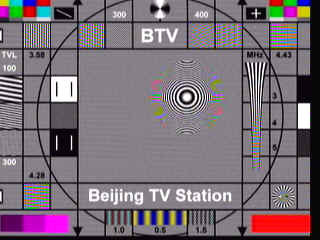
(Click for Fullsize)
From the Dish
Express 6A 80E 3640 R "Testcard" FTA Sr 5966 Fec 1/2 Vpid 4194 Apid 4195
Intelsat 704 66E "Occasional GlobeCast Espana" feeds on 4055 R Dig, Vpid 771 Apid 781
Asiasat 2 100.5E 3864 V "BTV Testcard" FTA Sr 4418 Fec 3/4 Vpid 32 Apid 34
Asiasat 3 105.5E 3900 V "NOW/PCMTSG" Sr 27890 Fec 7/8
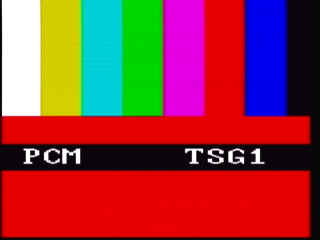
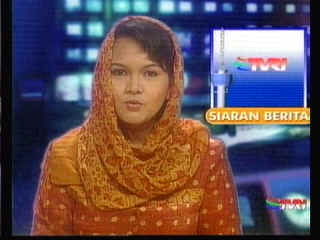
Telkom 1 108E 4014 H "TVRI" reported back here Sr 6000 Fec 3/4
NEWS
Zee takes fresh guard for the New Year, still eyeing sports
From indiantelevision.com
Zee Telefilms Ltd has lined up a new set of programmes for the Year 2001 and is planning to review its strategy and investment in the sports business. The programmes Zee has scheduled spans all its related channels and is in line with the recommendations made by consulting firm AT Kearney that the company restructure its various businesses while building some new core competencies. Towards that end, Zee's Alpha brand of regional languages will also feature a wide range of new programmes.
On the sports front Zee is working out new strategies after the huge setback it received in June in the bidding for telecast rights of all ICC-organised cricket matches. Despite posting the highest bid, it was arch rival Rupert Murdoch who walked away with the booty. That effectively killed off any hope Zee had of launching a channel in the near term.
Zee, meanwhile, plans to create newer streams of content in soccer and cricket. The company's board of directors was to meet on Friday to review the plans. Zee Chairman Subhash Chandra, in the company's annual report for 1999-2000, had said: "We are giving a new impetus to sports, especially cricket and soccer.
The company is also creating newer and newer streams of content in sports, particularly in soccer and cricket." It is learnt that Zee Sports is the frontrunner to obtain the three-year exclusive broadcast rights from WSG Nimbus Pvt Ltd of Singapore, for international cricket played in Sri Lanka, according to the Business Standard.
Zee is believed to have offered to cross-promote the event through its various channels including Zee TV and Zee News across the network. How Zee approaches its sporting ambitions this time round will make for interesting watching.
29/12/00
From my Emails & ICQ
This in responce to a readers request for info on a Yuri receiver yesterday
Hi Craig,
I believe this is a standard Analog receiver similar
to the model I've installed here in Malaysia.
He can contact me at 019-3690922, West Malaysia
for details on the installations.
Regards,
Shahjees
Kuala Lumpur
MALAYSIA
Bill Richards supplies, Some shots of the Taiwanese Channels from the Dish section,


TTV and FTV


CTV and CTS
From the Dish
St 1 88E 3550 V "TTV Taiwan" FTA, Sr 26667 Fec 3/4, Vpid 58 Apid 59
St 1 88E 3550 V "CTV Taiwan" FTA, Sr 26667 Fec 3/4, Vpid 60 Apid 61
St 1 88E 3550 V "CTS Taiwan" FTA, Sr 26667 Fec 3/4, Vpid 62 Apid 63
St 1 88E 3550 V "FTV Taiwan" FTA, Sr 26667 Fec 3/4, Vpid 64 Apid 65
Programming link
TTV (http://www.ttv.com.tw/ServiceWeb/weekly_pro.htm)
Asiasat 3 105.5E 4135 V "Zee News" has left Vpid 35 Apid 36
Palapa C2 113E 4071 H "Testcard" FTA Sr 14060 Fec 3/4 Vpid 1057 Apid 1058
Palapa C2 113E 4071 H "Testcard" FTA Sr 14060 Fec 3/4 Vpid 2081 Apid 2082
Palapa C2 113E 4071 H "Testcard" FTA Sr 14060 Fec 3/4 Vpid 3105 Apid 3106
Optus B3 156E All Zee and Alpha TV channels have moved from 12532 V to 12658 V
NEWS
Plenty of digital but no TV due to delay
From http://www.theage.com.au/business/2000/12/29/FFX1B2TA9HC.html
TV watchers will be unable to view digital TV when it launches in three days. The supplier of set-top boxes confirmed yesterday they would not be for sale until mid-January.
This will be a blow to the free-to-air TV networks, which underwrote the first shipment of boxes to ensure their delivery before January 1.
French company Thomson-Multimedia won the contract offered by the free-to-air networks to supply the boxes, but managing director Lawrie Ruddock said yesterday that only demonstration boxes would be available by New Year.
He would not reveal the reason for the delay, but said the boxes would be on sale by mid-January.
The TV networks had said in a statement announcing the contract in October that they were "keen to ensure the availability of affordable consumer equipment for digital TV on that date (January 1)".
The general manager of the Federation of Australian Commercial Television Stations (FACTS), Tony Branigan, said last night it had become clear in the past few weeks the boxes would not be available for sale on January 1.
"They have been moving heaven and earth to get 500 here (for in-store demonstrations), but the others won't be here until some time in January," he said.
Mr Ruddock said the underwritten shipment of 10,000 boxes had been fully pre-sold and another shipment was planned for between March and May.
He said the greatest demand had come from Victoria and New South Wales.
While the Federal Government will meet its deadline for the start of digital, the fact that no one will be able to see the new services for some weeks does not concern it.
A spokesman for federal Communications Minister Richard Alston doubted whether consumers would be "too perturbed" by a lack of boxes.
"If we miss it for a week or two I don't think it's of huge consequence," he said.
The spokesman also confirmed that the Federal Government, on behalf of the ABC and SBS, would contribute to the cost of retuning VCRs and pay TV set-top boxes that were affected by the start of digital transmissions.
The government will share with the commercial TV networks the cost of sending TV technicians to households unable to meet the cost.
"It (the total cost) is difficult to tell because you don't really know until you do it (turn on the signals) what will be the amount of interference," he said.
FACTS has contracted Hills Industries to do the retuning.
28/12/00
Not much happening today a few news items and a few pictures.
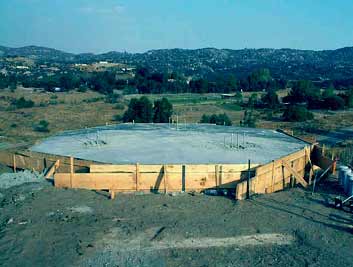
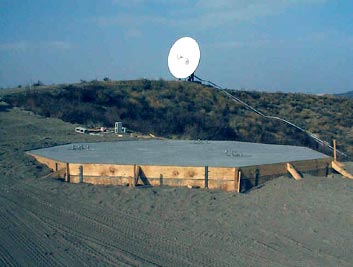
For those of you that thought I was useing to much concrete take a look at these pics.
From my Emails & ICQ
This from "Chua" in Malaysia
Need detail information on Yuri YRPS - 1000 LT
Satelitte Receiver System
Detail on installation and tuning.
(I am sorry but i don't have any information on that receiver. Perhaps another reader can help?)
From the Dish
Apstar 2R 76.5E 3780 V "DD North-East" has replaced TV Malagasy PAL,Analog ! 5.50 MHz.Audio
This channel formally known as" DD 13 - Assam"
ST 1 88E 3632 V "Savoir Knowledge" Channel is now encrypted.
Palapa C2 113E "Savoir Knowledge" Channel on 4000 H and 11130 V is now encrypted.
NEWS
Launch of DD channel for the northeast put off to Dec 27 (Today see from the Dish section)
From indiantelevision.com
Doordarshan has deferred to December 27 the launch of its channel catering to India's northeastern states.
The channel was earlier to be launched on Saturday but in view of Christmas celebrations this was postponed, Information & Broadcasting Minister Sushma Swaraj, said on Friday in New Delhi. She will be inaugurating the channel at Guwahati in Assam, reports Press Trust of India.
Chief ministers of all the seven states and Sikkim have been invited for the launch, she said. The channel will initially run for nine-and-a-half hours and will ultimately beam for a full 24 hours she added .
Swaraj said emphasis will be laid on local and regional items on the channel which is aimed at giving people of the remote areas better access to DD.
Dialogue: Sky's not the limit for set-top boxes
From http://www.nzherald.co.nz/storydisplay.cfm?storyID=166544&thesection=technology&thesubsection=general
Television New Zealand's latest digital initiative will establish a system of open access that benefits all viewers, writes JAMES MUNRO*.
Tom Frewen, in a Dialogue article, observed that a broadcast transmission system was a piece of infrastructure, like a railway but with 1.3 million branch lines. They all had to be the same gauge to allow competing firms free access to all consumers and vice versa.
It is this principle that Television New Zealand argued before the ministerial inquiry into telecommunications and which was accepted in that inquiry's report in October. The principle is that there should be open access to all digital set-top boxes on fair, reasonable and non-discriminatory commercial terms. Sky resisted this intensely.
Mr Frewen also stated that if a signal could not be translated into pictures on a screen then it was not, by definition, free-to-air. This statement draws a line in the sand around existing technology and systems, ignoring how those systems came to be in the first place.
A viewer cannot interpret the analogue VHF or UHF signals into video and audio without the appropriate receiving equipment - a television set and an aerial. The signals cannot be accessed otherwise. Reception is, and always has been, a cost to the viewer in buying the appropriate equipment.
In a digital environment the appropriate equipment includes a digital decoder, or set-top box, irrespective of whether a signal is encrypted.
TVNZ will encrypt its digital signal. This has nothing whatsoever to do with the signals being free-to-air, but it has everything to do with protecting the integrity of the broadcast system itself and preventing the misappropriation of TVNZ's signals by commercial organisations that do not support open access to the set-top box.
Open access is not about carriage of free-to-air signals. It is about allowing organisations such as TVNZ to introduce other services without first requesting permission from competing organisations such as Sky.
Open access is also a two-way street. It offers Sky, or any other network provider, the same open access to our networks as we require from them.
In effect, Mr Frewen was arguing that the Sky digital set-top box, installed in about 15 per cent of homes, should become the default standard for digital broadcast receiving equipment. This is a set-top box provided and owned by Sky, not the viewer.
To follow Mr Frewen's logic and using his railway analogy, that is the equivalent of not only ensuring we all run on the same tracks but that we are able to use only the coaches that Sky provides, unless we have open access.
The TVNZ-Telstra Saturn deal promises more than the emergence of Telstra Saturn as a national competitor to Sky in pay television.
It offers the establishment of a free-to-air platform in digital broadcast that will serve those viewers who wish to move into the digital environment but who do not wish to become a subscribers to a pay-television business.
TVNZ will ensure that free-to-air set-top boxes are available to viewers who wish to buy them. This box will provide the viewer with crystal-clear reception of TV One and TV2, plus any other free-to-air channels that decide to take up carriage on the system. The free-to-air box will be capable of e-mail and will later be able to be used for internet browsing. Internet browse access will require an ISP subscription, as does a personal computer.
TVNZ and Telstra Saturn are taking all care to ensure that we use compatible broadcast standards to Sky. This has little to do with encryption systems and rather a lot to do with more arcane and tedious detail regarding megasymbol rates, forward error correction and so on.
Sky's encryption system provider and the short-listed TVNZ-Telstra Saturn system providers are signatories to what is known as the DVB simulcrypt protocol. This means that it is possible to broadcast two streams in simultaneous encryption under different systems to be received freely by enabled set-top boxes.
It is the absence of a commercial agreement between Sky and other broadcasters for open access to the set-top box that will perpetuate a two-box system. The technology is not an issue. In isolation of such an agreement between Sky and TVNZ, Sky pay-subscribers can, in the foreseeable future, continue to enjoy TV One and TV2 on our analogue VHF transmission, which reaches 99.98 per cent of people.
In the past decade TVNZ has not cost the taxpayers of this country a cent and has returned hundreds of millions of dollars to the Government and it seems apparent that the Government will require TVNZ to remain at least self-funding in the future.
As a commercially funded broadcaster, like others all around the world, TVNZ faces the fragmentation of its revenue streams through the increase in channels, changing lifestyles and alternative sources of entertainment.
This is why moving to future digital opportunities is a survival strategy. TVNZ's launch of its nzoom.com portal represents one small way in which it is attempting to mitigate the risks of the fragmenting media world.
Mr Frewen's claim that the TVNZ-Telstra Saturn deal is a partial privatisation of TVNZ is laughable. TVNZ was a founding shareholder in Sky, Clear Communications, CNBC Asia and Fiji Television. None of these ventures led in any way to a partial privatisation of the core of TVNZ. They all helped to establish successful businesses.
The TVNZ-Telstra Saturn deal allows TVNZ to leverage its strengths to provide for new revenue lines, thereby contributing to the maintenance of our self-funding status over the long term. The deal also establishes a system of open access in the digital environment which, in our small market, must be a good thing for all New Zealanders.
*James Munro is Television New Zealand's general manager of strategy.
MPEG: The Next Generation :Enabling Technologies for the Digital Reformation
From http://www.tvbroadcast.com/issues/2000/1222/1222.10.htm
Many studies suggest that the rate at which new information is created is accelerating. Not only are we being deluged with information, it can now be shared with anyone, anywhere in a heartbeat. Digital networking, computers and the global phenomenon called the Internet are major contributing factors behind today's digital information epidemic.
Soon after the invention of Johann Gutenberg's printing press, the political and religious institutions that had controlled the flow of information for centuries saw their power diminished, as the reformation spread across Europe. But the free flow of information was short lived. First, enabled by the printing press, we experienced the growth of the publishing industry; newspaper barons gathered wealth and power by creating a choke-point between the information and the masses who wished to consume it. Then in the 20th Century we experienced the growth of the film industry and electronic mass media; their feudal realm is supported by an economic engine that thrives on the choke-points of the "few-to-many" electronic publishing paradigm.
The Feudal System
"Hollywood is not high tech. Hollywood is not even industrial. Hollywood is feudal."
So says Robert X. Cringely, of PBS fame. Cringley is the pseudonym for an investigative reporter who specializes in the technologies of the computer revolution. He recently wrote a commentary about digital technology and the impact that it may have on the feudal kingdoms of the mass media moguls [Entitled: "How MPEG-7 Might Change Hollywood Forever," Cringley's comments can be accessed at http://www.pbs.org/cringely/pulpit/pulpit20001214.html].
Speaking about the power behind the mass media, Cringley writes: "Power in the film and television businesses has always lain in the ability to control people, in building a web of allegiances so strong and deep that a king (a movie studio head or TV network programming boss), can order his lords (producers) to field an army of skilled warriors (directors, writers, and actors). "Superagents like Michael Ovitz (the Black Knight) put together packages of mercenaries for hire by the highest bidder. Motion Picture Association of America President Jack Valenti plays the Pope. There is even a guild system (the Directors Guild, Writers Guild, and Screen Actors Guild, for example). Everyone else, including the audience, is just a peasant."
Apparently Cringley shares my interests in MPEG technologies and the belief that the digital reformation is about to engulf the mass media. Although he does not have a firm grasp on the technology inside the MPEG-7 standard, his commentary is nonetheless right on the mark concerning the threat that the feudal lords of Hollywood and the television networks face as they are engulfed by the digital reformation.
The "high tech" image that Hollywood and the television industry have thrived upon is fading. Like the printing press was the enabling technology to bring literacy to the "peasants," ones, zeros and the computer technologies that use them are the enabling technology for the digital reformation we are experiencing today.
MPEG-7: Searching For An Image Of A Needle In An Image Of A Haystack
As we have stated previously in this series on the State of MPEG, MPEG-1 and MPEG-2 deal only with the coding of natural imagery and sound; while MPEG-4 adds support for the encoding of individual elements of a scene (both natural and synthetic) and for the local composition of these elements. (see: URL for the MPEG page where all of these stories will reside permanently).
MPEG-7, however, ventures into an entirely new, but critically important realm that's crucial if we are ever to gain control over the process of creating, distributing and managing digital media content. The following is a brief description of the work related to the MPEG-7 standard, written by the conveyor of MPEG, Leonardo Chiariglione:
"MPEG-7 is an audio-visual information representation that is different from the previous MPEG standards in the sense that what is represented is not the information itself but the information about the information. The technical content of the standard is as follows:
1. Systems provides the architectural framework of the standard, the carriage of MPEG-7 content and the binarisation of MPEG-7 content
2. Description Definition Language allows to create descriptors and description schemes
3. Visual provides standard descriptors and description schemes that are purely visual
4. Audio provides standard descriptors and description schemes that are purely audio
5. Multimedia Description Schemes provides standard descriptors and description schemes that are neither visual nor audio."
Like other MPEG standards, MPEG-7 will provide a toolkit for searching digital media content. This may be as simple as searching text tags on audio and image files for keyword matches. Or it may be as complex as searching vast content libraries for sounds or images with similar attributes; e.g. find "women in red dresses" or "sunsets."
Virage is one of many companies developing media asset management solutions that bridge the worlds of broadcast television and streaming media. This image is from their showcase page which can be viewed at the URL above.
The Society of Motion Picture and Television Engineers (SMPTE) is working closely with MPEG to develop metadata standards and a registry for the metadata. These standards will soon allow for the capture of metadata along with audio and video information on both tape based and server-based digital media storage systems. Meanwhile, companies such as Virage are bringing digital media asset management tools to market to deal with the task of managing assets in a networked environment.
Ultimately, each object contained in a visual composition will carry with it metadata that will allow us to trace that object back to its source. The implications are profound. When we have the ability to identify and trace the origins of digital media content, we have the enabling technology to replace the current mass media feudal system with content factories. All that we need is rules, and the trust that the new system will produce at least as much wealth as the one being replaced.
MPEG-21: Users, Actions, Digital Items, and Transactions
MPEG-7 is a key enabling technology for searching and identifying content, but it only scratches the surface of what is required to manage our digital media assets in a networked digital world. It would be fair to say that the keys of the kingdom will belong to those who figure out how to create a content management infrastructure that will allow anyone to access any content, anywhere at anytime.
Chiariglione provides the following overview of the latest work within MPEG. "MPEG-21 seeks to describe a multimedia framework and set out a vision for the future of an environment that is capable of supporting the delivery and use of all content types by different categories of users in multiple application domains. MPEG-21 assumes that there are Users (anybody in the value network) and Digital Items on which Users execute Actions that generate other Digital Items that can become object of Transactions. In order to make this possible, a number of technologies are needed that fall under the following categories:
1. Digital Item Declaration
2. Digital Item Representation
3. Digital Item Identification and Description
4. Digital Item Management and Usage
5. Intellectual Property Management and Protection
6. Terminals and Networks
7. Event Reporting."
Can MPEG provide a suitable environment to create consensus on such critical issues? Only time will tell, but the odds are stacked against them. The digital media landscape bears great similarity to the kingdoms of medieval Europe. Hollywood, the Networks, terrestrial broadcasters, cable, and DBS are all doing battle in hopes of gaining territory, or simply preserving their feudal kingdoms. Meanwhile, terms like broadband, DSL, streaming media and Internet send shudders of fear throughout the kingdoms.
But the biggest barrier to success for MPEG may be that it has the same Achilles' Heel as the kingdoms that are using its standards and working to extend them. First and foremost, MPEG is about the management of intellectual property (IP) rights. Not just the rights to the content that is encoded, but the rights to the technology behind those encodings. Under ISO rules, each company that participates is required to make its patents available to anyone who wants to use the standard at fair and nondiscriminatory terms. The net result is that a patent pool is usually created which is shared by all companies with IP in the standard. In the case of "toolbox" standard like MPEG-4 where only a subset of the tools may be used by a specific application, things can get very messy.
In order to create an infrastructure for collecting royalties for the IP in MPEG, a group called MPEG-LA (licensing authority) was formed. Unfortunately, this group is not currently able to provide a clear license to all of the technology required to implement standards such as MPEG-2, and the terms that the organization is seeking are not acceptable to many potential licensees. Compliance is relatively good among members of the patent pool, but there has been significant resistance from other industries.
A case in point is the computer industry. Clearly video has become an important part of the computing experience; many computers shipped today are capable of playing DVD movies, which use the MPEG-2 standard for video compression. And the computer industry worked closely with the DVD consortium to create the DVD-ROM standard that allows a DVD to store massive amounts of data. Yet MPEG-2 has not been implemented to its full potential in personal computers. There are two key reasons:
1. MPEG-LA would like a significant royalty (about $5) for every computer that ships with MPEG-2 decoding capabilities;
2. Hollywood does not want the "peasants" to be able to copy digital masters in whole or in part.
The net result is that MPEG-2 implementations on personal computers are a kluge. Typically the video is keyed into the VGA output just before it is output to the display; you cannot capture even a single frame for use in a presentation or your own creations. The licensing issue has been averted, either by refusing to pay or depending on third parties to pay the royalties on components that are used for MPEG-2 decoding.
Now that there are millions of DVD enabled computers in the hands of the peasants, MPEG-LA has assumed its role as the Sheriff of Nottingham. What follows are excerpts from an MPEG-LA press release issued November 20, 2000: "MPEG LA today announced that six leading global electronics companies and a major research university have filed suit against Compaq Computer Corporation for willfully infringing 26 patents that are essential to the MPEG-2 digital video compression standard. The lawsuit, which seeks damages that could amount to hundreds of millions of dollars, has been filed in U. S. District Court in Delaware. A related suit has been filed in Dusseldorf, Germany." "According to the complaint, Compaq manufactures and markets PCs that use patent-protected MPEG-2 methods and devices without having entered into licenses with the individual patent holders or the portfolio license offered by MPEG LA."
It is rumored that MPEG-LA is planning to extend the reach of its suit to include other computer and software manufacturers including Apple and Microsoft. Apple had intended to include full support for MPEG-2 in version 5.0 of QuickTime, but when this version was announced at the QuickTime Live Conference last October October, Apple indicated that there would be no MPEG-2 support because the company was unable to reach licensing terms with MPEG-LA.
27/12/00
Hope you're all having a nice holiday and your receivers are keeping nice and cool and not melting any cards. Its been just perfect here 30c each day not to hot or cool. Thanks to Keith and Ces (Local guys) I went for a walk about 2 minutes away today and came home with a 60cm Sky Dish for $25 NZ NEW condition with a Sharp branded LNBF and cable attached just need to get a F-Connector for it. Only thing missing was a mounting wall bracket which Keith said he saw some of at the local junk yard so will check there tommorow. I will pick up a F-Connector at the shop opposite as well.
A new site promiseing Optus B3 reference Data added to the links page,
http://www.geocities.com/optusb3satellite/
From my emails & ICQ
From Bill Richards, 2200UTC 27/12/00
Palapa C2 113E 4071 H "Channel News Asia (CNA)" Sr 14060 Fec 3/4 Vpid 33 Apid 34 SID 1
Palapa C2 113E 4071 H "Test Card (Test Channel)" Sr 14060 Fec 3/4 Vpid 1057 Apid 1058 SID2
Palapa C2 113E 4071 H "Test Card (Channel 2)" Sr 14060 Fec 3/4 Vpid 2081 Apid 2082 SID3
Palapa C2 113E 4071 H "Test Card (Channel 3)" Sr 14060 Fec 3/4 Vpid 3105 Apid 3106 SID4
Regards
Bill
I was wondering if you knew of any publications or websites, besides
this, that may help determine if there are any satellites I can receive
on Guam at 14.5N 145E.
Appreciate any help
Rick Bailey
Hi Yes surprisingly Guam is covered by quite a few satellites! here are a FEW
you SHOULD be able to get
Panamsat 2 & 8
Agila 2 (might need large dish)
Apstar 1&1A
Palapa C2
Asiasat 2 and 3
Thaicom 3 Global Beam and possibly the Asia beam depending on dish size
Thats just a few that SHOULD cover you according to the footprint maps at
http://www.lyngsat.com/asia.shtml
You may be out of footprint for a few beams so you will need the largest you can get your hands on. I would recomend you phone your local tv station and ask the engineers they will know what satellites can be received in Guam. There may be some pay tv signals floating in your direction.
My recommendation would be a 3.7M SOLID dish as minimum preferably a 5M solid thats KU-Rated as you should get the KU band from Pas8 or Pas 2. A dual feed with KU and Cband and a analog+digital receiver with positioner and card slots (important if theres any pay tv signal aimed your way)
Its difficult to know where some of the asian satellite beams end up as they are not always as published in the official footprint maps
Heres a few beams you should able to get
http://www.apstar.com/apstar1_d.html
http://www.mabuhaysat.com/cband.htm
http://www.thaicom.net/eng-thaicomsatellite/footprint-thaicom3.html
http://www.asiasat.com/asy3map.htm
Please let me know how you get on because I had another request from someone heading to the Marshall Islands (who will probably be worse off as to sat reception)
Perhaps some of my readers can help out on this one?
From the Dish
Nothing to report.
NEWS
Australian HDTV hits snooze button
From http://www.theage.com.au/entertainment/2000/12/27/FFX18OXF6HC.html
The revolution will be televised? Digital television has failed to excite consumer interest.
When I was a mere youngster and color television sets started appearing in shop windows, I was transfixed. On school holidays, I hovered around the local electrical appliance store for days on end, pretending that I was there for the benefit of my four-year-old brother.
For hours we saw nothing much except the test pattern, but at least it wasn't in boring old black and white. My parents, blithely indifferent to the advent of color, ultimately had no choice but to submit to my antics. They paid what was then a small fortune for a robust, if unattractive, set that immediately and irrevocably became the family centrepiece.
The arrival of digital television next week is being heralded in some quarters as being as big a watershed as color. But, somehow, I don't think we'll find too many kids loitering outside shop windows hoping to catch a glimpse of one of those set-top units that will convert analog signals into digital, or even of the high definition sets that have been talked about in the press.
That's partly because tracking down the requisite equipment is, in itself, no mean feat. Indeed, when digital television arrives, it's doubtful that even the most ardent of enthusiasts will have an easy time getting hooked up to the new delivery system. We won't need to buy a new telly to be part of the revolution, but there's still no sign of those set-top units that consumers will need to convert the digital signals.
An unseemly wrangle between the commercial TV networks has exacerbated what was already a prolonged delay in resolving issues of standardisation for these new devices. The networks are trying to put that behind them; earlier this month Nine, Ten and Seven said they will jointly underwrite the cost of providing 10,000 digital set-top units to coincide with the launch of digital television broadcasting. Some will be available from this week.
But in the run-up to Christmas, even larger stores such as Harvey Norman and Myer didn't know when they would be getting display models of either set-top units or digital-ready HD sets on to the shop floor.
More critically, consumer excitement about television's big sea change is negligible. "There are 46 days to go until digital television launches here in Australia and boy am I excited but I'm the only one," said Nick Murray, president of the Screen Producers Association of Australia in his opening address at a conference in Sydney last month.
"The government has ensured that Australia will have the best digital terrestrial delivery system in the world, the only problem being that nobody wants it."
Perhaps the oddest thing about the digital television revolution is how little is expected to change in the short term, even for those early adopters who fork out more than $800 (the projected cost of the digital decoder set-top unit) for their entry-level experience.
The government says that it wants digital television to provide an array of benefits. These include new and improved services on television; different picture display formats (HD TV and Standard Definition TV); new information services (known as datacasting); enhanced programming (eg multiple views of the same event); improved services to regional Australia; and improved captioning services for the deaf and hard of hearing.
There's no doubt, for instance, that those who currently experience 'ghosting'; may notice a real change in picture quality after converting to digital, even if they don't upgrade their TV sets. Meanwhile, if you're keen to be one of the first to get an HD TV set (for which you'll need more than $7000), you will probably notice a much clearer resolution on your screen.
But the extent to which these are viable selling points is debatable. As Murray points out: "My parents have the same TV set as when I was living home. It's just a shocking thing and they're probably missing two or three inches (five centimetres to 7.6cm) of picture on the edge and they're happy as Larry. Why would they pay $800 for a box that they don't really care about?"
Digital also offers the prospect of receiving signals in the widescreen format, but most commentators agree that this is hardly likely to be a driving force for most television watchers. As a new delivery system, digital television offers some advances for some of us, but won't seem revolutionary to most in the short term.
Where digital has real potential to change the way we watch TV is in the areas of interactive or enhanced content. Unlike analog, the digital spectrum can transmit a mix of images and text.
Not surprisingly, the opportunities for various media players to take advantage of these new possibilities has seen the government caught in the middle of some tricky territory.
Its response has been to allow existing free-to-air players to position themselves in the driver's seat through the protracted transition period to digital.
Consequently, commercial networks will be allowed to extend the current broadcasting format by providing limited enhanced services, such as multiple camera angles for sports telecasts, and audience participation features on games shows.
And the ABC is mandated to go even further with the capacity to multichannel, which means that on occasions the national broadcaster will bring you more than one station at a time.
But those on the lookout for new kinds of programming content might be disappointed in the short-to-medium term. "Just because it's digital doesn't mean it's interactive," cautions Nick Murray, who argues that digital TV is going to be the stereo AM of the new millennium.
And the new kinds of services are so restricted by the legislative framework that it's hard to see how their commercial viability might be realised.
The most conspicuous example of this is the highly contentious area known as datacasting, where images are combined with text to combine a hybrid multimedia format.
While players such as News Limited and Fairfax will be allowed to compete for datacasting licenses when that part of the spectrum is sold off (at this stage, later next year), there are numerous restrictions on what kinds of material can be broadcast in the new format.
DRAMA, current affairs programs, sports programs, documentaries and quiz shows are all on the no-go list. That leaves short news headline bulletins and interactive home shopping. Still interested?
"The limitations on datacasting are unduly restrictive," says Jock Given, a senior researcher at the Swinburne Institute for Social Research. "The danger is there isn't going to be enough in the new services to make it worthwhile for consumers to sign up. Indeed, there is so much uncertainty about the nature of the services that are going to be provided that there is no consumer interest. I think that there are too many constraints on what broadcasters can and cannot do."
Choice magazine said in its assessment of the current state of play: "The government's decision to make television networks broadcast a standard-definition signal together with cinema-quality high-definition picture and sound gives consumers a more affordable entry point to digital TV than had been originally mooted." But a restricted definition of data-casting now stands in the way of the innovative and diverse content this new medium could provide.
So digital television will arrive with a whimper and not a bang, and Play Station 2 has one less rival to deal with on this year's wish lists. But what of the future? Will consumers eventually embrace a change that has already cost the networks hundreds of million of dollars to implement? Or, will they be dragged, screaming, at the last minute, when the analogue signal is switched off in 2008?
"We shouldn't get carried away with a delivery technology. If interactivity was to be developed, it could be good," says Murray. "But program-makers need to be able to take risks and experiment. Otherwise you'll get nothing except game shows. An interactive Who Wants To Be A Millionaire now there's a great way to tie up billions of dollars in spectrum.
"I don't know of any producers who have had realistic discussions with TV networks about digital content. They're saying that this is like the arrival of color TV and it's not at all."
Even when interactive services are developed, the extent to which these would excite the consumer remains uncertain. "I think the idea that a lot of relatively passive TV viewing is going to be replaced by active TV viewing is ridiculous," Murray says. "It fails to understand how TV is used by a lot of people a lot of the time. It's background. You've made a choice to have it on, but it's not the centre of what you're doing all the time."
But there are signs that people will change the way they use their televisions if given the chance. In Britain, where the digital adventure is far more advanced, the TV has replaced the PC as the preferred medium for sending and receiving e-mails.
It's only a matter of time before the worldwide Web migrates to the lounge room as well. And while the configuration of the digital system is very different from our own, it's clear that a market for enhancements can be forged by new services.
"Digital TV is as revolutionary as color," says Tony Branigan, who manages the Federation of Australian Commercial TV stations. "But what we are introducing is much more like the Americans introducing color TV in the '50s, rather than 1975 here. It took perhaps 12 or 13 years in the United States for color to get to 40 per cent to 50 per cent of homes. In other words, its going to be a slow uphill battle.
"I think it's clear that on day one there won't be many receivers out there at all. You'll see set top boxes in stores, but it will be close to mid-year before the major manufacturers have units in the big retailers before there's a good range of makes and models on the market."
Others go even further. "It's going to be a much bigger change than color. It's the tip of the iceberg for the new era," says ABC's director of technology and distribution, Colin Knowles. "This is the very first step of a 30-year program. But asking what will happen now is a bit like asking the Wright brothers how long it will take a jumbo jet to fly you across the world."
So, yes, this is one revolution that will be televised. But it may pay to wait before adjusting your set
Digital TV chaos fears
From http://www.heraldsun.com.au/common/story_page/0,4511,1552401%5E2862,00.html
THOUSANDS of schools and churches could find their public address systems rendered useless by digital TV interference.
Those affected will have to pay thousands of dollars to replace or fix their audio systems.
Digital television signals beginning on January 1 will occupy the same frequencies used by the wireless microphones in most PA systems.
Unlike televisions, most of the microphone systems cannot be cheaply retuned to fix interference.
Industry experts predict up to 70 per cent of all wireless mikes will be vulnerable to audio interference.
Pupils and parishioners could find their sermons and lessons reduced to little more than white noise.
Universities, conference centres, bingo venues, theatre restaurants and concert halls are among the other main users of wireless mikes.
Already one Queensland school has been forced to replace its $4000 system after a digital signal on channel six made it worthless.
Peter Holland, the head of specialist PA retailer National System Corporation of Australia, predicted widespread problems.
"Churches and schools everywhere have got wireless mikes," Mr Holland said.
"Sixty to 70 per cent of the wireless mikes that have been sold would be affected by this.
"If you have got one in this (frequency) area, it is going to have to be replaced."
Mr Holland said Shure, Electrovoice, Redford and AKJ all produced some models that used the affected frequencies.
Retuning them would be "like changing a diesel engine to a petrol engine", he said.
Professional concert and sporting promoters are likely to escape problems because most are aware of the problem and are using newer equipment.
The December 31 switch-on will mostly affect capital cities as country areas will get digital TV gradually over the next three years.
The risk of interference depends on the user's proximity to a digital TV transmission tower and how strong the signal is.
A spokesman for Communications Minister Richard Alston played down fears of problems with PAs.
"The ABA are the ones who give the technical advice and the only significant disruption they have informed us of is in the Brisbane market," he said.
"There's a large element of Y2K about this."
The Australian Broadcasting Authority said St Dympna's was the only complaint during test transmissions at part strength.
But the full-strength transmissions will provide the true test.
The ABA's website warns users to consider saving for a replacement system as there is no obligation on the government or TV networks to pay compensation.
Susceptible mikes operated between 174 to 230 MHz and 520 to 820 MHz.
Digital TV signals are also expected to cause interference to some existing TV receptions, but authorities say this will not be severe in Victoria.
T S I C H A N N E L N E W S - Number 52/2000 - December 24 2000 -
A weekly roundup of global TV news sponsored by Tele Satellite International
Editor: Branislav Pekic
(Apsattv.com Edited Edition)
* A very Merry Christmas to all subscribers *
tape-delay highlights.
NEWS CORP GETS AFL RIGHTS
In one of the largest broadcasting-rights deals made in Australia, Rupert
Murdoch’s News Ltd., the Australian operating arm of News Corp., has snatched
rights to the Australian Football League away from the Seven Network in a deal
worth about AUS$500 million. The five-year deal, which starts with the AFL’s
2002 season, ends a 40-year relationship between the AFL and Seven and
jeopardises the future of Seven’s pay-TV service, C7, which was underpinned by
rights to the country’s most popular sport.
MTV PREPARES FOR JAPANESE LAUNCH
MTV Networks, a unit of Viacom Inc. and @JapanMedia announced on December 19
that MTV: Music Television will launch a new 24-hour, Japanese language music
television network and Web site, http://www.mtvjapan.com, on January 1, 2001 at
Midnight (Tokyo time). The advertiser-supported MTV Japan will feature original
Japanese language content on-air and online targeting the 16-34 year-old
demographic based on feedback from local audiences as well as other market
research. The network will launch with distribution in 2.8 million households
via cable and satellite, and with the launch of MTV Japan, MTV will now have 29
localised channels globally seen in more than 330.7 million households in 140
countries and 15 MTV-branded Web sites.
STAR CHANNEL AND SKY MOVIES TO MERGE
Satellite movie channels Star Channel and Sky Movies have agreed to integrate
their businesses possibly in April 2001, according to Nihon Keizai Shimbun. The
movie broadcasting rights granted by Sony and News to Sky Movies will be
transferred to Star Channel, which is also owned by 4 major U.S. film companies
- Warner Brothers, Paramount Pictures, Universal Studios and MGM (19.9 per cent
stake). Since Sony Pictures Entertainment Inc. and News Corp.’s Twentieth
Century Fox will also participate in Star Channel’s operations after
integration, the new channel will be able to provide all major U.S. films,
except Walt Disney Co. productions. Star Channel currently runs 3 commercial
satellite-based channels, through Sky PerfecTV, and 1 broadcast satellite-based
channel, distributing programs to 380 cable TV operators in Japan. Itochu,
Tohokushinsha, Sony and News set up an equally owned joint venture in autumn
this year to prepare for next-generation digital broadcasting via communication
satellites.
JSAT CONSIDERS SATELLITE DISTRIBUTION OF PROGRAMMING
JSAT Corp., one of two satellite operators in Japan, joined six other Japanese
companies to form a joint venture to send digital television programs to cable
TV stations, the companies said December 21. Along with JSAT, Liberty Media
Group’s Jupiter Telecommunications Co., a Japanese leading cable TV operator,
and Sky Perfect Communications Inc., Japan’s only digital satellite TV service
provider, also hold a 25 per cent stake each in the venture. Sony Corp. and
Matsushita Electric Industrial Co. each have 10 per cent, while two units of
Nippon Telegraph Telephone Corp. hold 2.5 per cent each. Japan’s digital
satellite TV services expanded this month when seven more companies joined Sky
Perfect to provide the services. That put pressure on local cable TV operators
to catch up with them in supplying programming that appeals to television
viewers. The Japanese venture will conduct a six-month study of the feasibility
of the project and will start supplying digitalized movies and sports programs
to cable TV operators in the latter half of 2001.
PCCW WINS JAPANESE LICENSE
Pacific Century CyberWorks Japan has announced that CS NOW Corporation has been
awarded a CS110 digital broadcasting license by the Japanese Ministry of Posts
and Telecommunications. CS110 is satellite broadcasting designed to provide
fully interactive television services, and will be used by PCCW Japan to
transmit content from the company’s NOW (Network of the World) Japan TV- Web
service. CS NOW Corporation is a joint venture company that will be formed by
PCCW Japan and Techno-Ventures, for the purpose of transmitting on the CS110
broadcasting service via the recently launched NSAT 110 satellite. PCCW Japan
holds an 80 per cent stake in the venture. The CS110 service will share the
same satellite orbits (East 110) as the BS Digital service launched in December
2000, allowing viewers to receive both broadcasting services using one common
receiver. BS Digital services are expected to attract large audiences as BS
analogue users, currently 10 million viewers, upgrade to the new digital
service. The application package submitted by CS NOW includes plans to provide
interactive services such as video-on-demand, e-commerce, games and electronic
programming guides.
MACAO
FIVE STAR SATELLITE TV LAUNCHES
(Craigs note this will be via Apstar 1 and only available to Northern Australia)
Macao-based Five Star Satellite TV launched its new Chinese language TV service
on December 22. The newly formed TV station will broadcast entertainment,
finance and economy, leisure, science and technology programs both within and
outside Macao. The station is expected to source its programming from Macao,
Hong Kong and China. Five Star’s target audience will be youths throughout the
Pacific Rim.
PAKISTAN
GOVERNMENT SUSPENDS STAR TV LICENSE
The Pakistan government has suspended the licence it recently granted to Rupert
Murdoch’s Asian satellite platform Star TV, claiming that the company had fixed
tariffs without its approval.
The licence enabled Star to distribute decoders and market its network to cable
operators across Pakistan. Star has been ordered to stop selling decoders until
its tariff receives official clearance under the PTA’s cable TV legislation.
SOUTH KOREA
KDB WINS BROADCASTING LICENSE
South Korea’s Korea Broadcasting Commission (KBC) on December 19 awarded a
satellite broadcasting business license to a consortium led by state-run Korea
Telecom. The consortium, Korea Digital Broadcasting (KDB), will invest nearly
$2 billion into the business over five years.
The KDB consortium competed with the Korea Satellite Broadcasting (KSB)
consortium, comprising Dacom, SK Telecom, the Tongyang Group and Rupert
Murdoch’s News Corp. The KDB consortium will have nearly exclusive control over
the potentially lucrative market for satellite TV channels, content and
networks. Korea Telecom (KT), the country’s largest fixed-line service
provider, is the largest stake holder of the KDB consortium with 18 per cent,
followed by major Korean broadcasters KBS 10 per cent, MBC 7 per cent and SBS
3.2 per cent. KT said it would establish the consortium early next year with
Won300 billion in initial capital. KDB will begin commercial service from
October next year with 74 channels, and expand the number of channels to 114 in
2005.
THAILAND
ITV2 TURNS A PROFIT
NATIONAL broadcaster iTV has forecast Bt2 billion in revenue next year along
with a profit of Bt50 million. According to managing director, Sanchai
Thiewprasertkul, “iTV’s first major step to improve revenue will be to list on
the Stock Exchange of Thailand by the end of this year as planned.” Following
Shin Corp’s entry into iTV two months ago, Shin Corp has tried to improve the
television operator’s performance. iTV has posted a loss over the last four
consecutive years, including a Bt552 million loss last year. This year it was
expected to record a loss of Bt900 million, but Shin Corp has forced a review
of the amount by injecting iTV with fresh funds. Today iTV has Bt4.5 billion in
capital, up from Bt3 billion last year. Shin Corp holds 39 per cent in iTV.
?Profits will come after we boost entertainment programming to 30 per cent next
year (up from almost zero previously), while news and current affairs will
represent 70 per cent of programming,” he said. iTV will invest Bt400 million
next year to expand its network and programming. Its digital television system
will begin in 2003.
26/12/00
UPDATES will continue Wednesday (not that there is much happening)
24/12/00
Just something I noticed today, since the CMM Hindi music channel on Thaicom 3 came back Zee music and MTV Asia have become fta as well. Might be just a coincedence. Studio 23, on Pas 8 which is becoming known for its U.S sitcoms and MTV programming has a new website. You can check it out on Pas 8 page which has been updated (some channels removed, some added some links fixxed to programming). Abs-CBN 2 has been added to it as well with programming."A Bugs life" movie gone from Pas 2. Is there anyone who has got there hands on a Digital TV box in Australia? Photos needed..
Updated pages
Pas 8
Palapa C2
Pas 2
Thaicom 3
From my emails & ICQ
This noted Friday Night by Bill Richards,
Panamsat 8 166E 3740 H Sr 27500 Fec 2/3 Vpid 385 Apid 386 "MTV8" FTA 24hr music clips.
Regards
Bill
Hi Craig:
Merry Christmas.
I have a 2.4m solid dish, is it possible to receive digital signals in Asiasat 3S.
I live in Christchurch.
paul
(Hi Paul, Merry Christmas, YES Asiasat 3S should be good in Christchurch on a 2.4M solid! providing you can see it clearly as its quite low to the horizon there, I did hear of one person useing a 1.8M solid in Christchurch to watch Star Sports analog with just a few sparklys, For C band reception 1.8M is about the minimum)
From the Dish
Panamsat 8 166E 3740 H "MTV Asia" Sr 27500 Fec 2/3 Vpid 385 Apid386
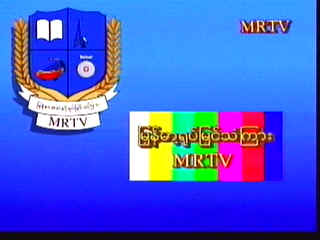
MRTV TV Thaicom 3 Digital signal screenshot

Zee Music currently FTA on Asiasat 3
NEWS
The television revolution that almost nobody will see
From http://www.theage.com.au/entertainment/2000/12/24/FFX6FSM52HC.html
Digital television will be officially launched in Australia on New Year's Day with an audience close to zero.
All television networks will broadcasting digital versions of their programs, but they will be received only by the broadcasters and a handful of others. Nobody else has a suitable receiver or set-top box converter for their TV. Nor will they be able to buy one.
Under present rules framed by the Federal Government, networks must not only begin digital broadcasting but must keep transmitting the present analog signal until 2008. Then, assuming almost all Australians have moved over to digital technology and the country is adequately covered by broadcasters, the analog system will be shut down.
Digital broadcasting, in what a spokesman for Channel Seven called "the beginning of the developmental stage", will begin in mainland capital cities with standard-definition TV (SDTV) digital signals. Towards the end of next year, possibly later, a high-definition TV (HDTV) signal will be added, which will bring cinema-quality pictures, interactivity options and full surround sound.
Critics of the government's policy say HDTV has "laid an egg" everywhere it has been tried overseas because the sets cost too much (about $10,000 for the cheapest) and broadcasting costs are high for a very small audience.
Some industry experts say the government's plan to require both standard-definition and high-definition broadcasts imposes an unacceptable and unnecessary burden on the industry and public.
"Overseas experience has been that after two years only about 1 per cent of the TV-viewing public moved to integrated digital sets," says TV importer and retailer Alex Encel. "Those who moved to digital bought set-top boxes to plug into their existing TV sets. And almost nobody, even in the US, has bought high-definition TV."
Mr Encel believes that will be the pattern in Australia and cites the reluctance of set-top box manufacturers to supply the Australian market at their own risk.
No manufacturer in Europe or Japan could be persuaded to build boxes for our market until the broadcasters agreed to underwrite the exercise. If they do not sell, the networks will have to pay for them.
A first shipment of 20,000 boxes, likely to retail for about $600 each, will not begin arriving until mid-January. Only a few demonstration boxes will be available for the beginning of digital broadcasting.
Colin Knowles, head of the ABC's digital roll-out, said he had managed to obtain only five boxes for the whole of Australia, and would use them to show the signal quality.
Despite the dearth of viewers, broadcasting will start on schedule in Melbourne, Sydney, Brisbane, Adelaide and Perth.
"Some areas in those cities will not be able to receive signals and so, about mid-year, we will roll out translators to cover them," he said.
About the same time, services will start in other cities such as Newcastle, Canberra, Hobart and Darwin. Soon after that, coverage will extend to Ballarat, Bendigo and similar regional centres.
Mr Knowles is optimistic about the long-term future of digital broadcasting: "I think that if we get 5 per cent audience reach by 2003 we will have done exceptionally well, because two years after that we are likely to have up to 80 per cent. That was the trend line that applied to the Internet, to CDs, VCRs and color TV."
Mr Encel and the advertising industry remain sceptical. Will there be enough people to make a viable market in digital TV sets and set-top boxes?
Will the audience be large enough to justify the extra cost of producing and sponsoring digital television programming?
In the beginning everyone is going to simply transmit digital versions of their analog programs. And, says Mr Encel, those viewers who buy into the medium will do so mainly through cheaper set-top boxes.
Digital picture quality is superior to the analog system and not subject to ghosting in difficult reception areas. But the real future is in other services that can be delivered.
"The objective is to have a multimedia platform using the European open standard that will be compatible with PCs, set-top boxes or anywhere else," Mr Knowles said.
Under present plans, the ABC and SBS will produce multi-channel digital programming while the commercial networks will broadcast a single program stream.
Some, such as Channel Ten, intend to offer multi-view through which viewers, using a controller on their set-top box, can select one of several concurrently broadcast views of an event.
Channel Ten did this experimentally at the most recent Melbourne Cup, and the Bathurst motor races.
News Corp forced to buy cable stake
From http://www.theage.com.au/business/2000/12/23/FFXLFK6Q0HC.html
News Corp will be forced to buy partner Haim Saban's 49.5 per cent stake in the Fox Family Worldwide Inc cable network, after Mr Saban exercised an option to sell the stake.
News Corp would pay a price "based on the fair market value of the company as of January 31, 2001", Mr Saban said in a statement. News Corp also owns a 49.5 per cent stake in Fox Family, while the investment bank Allen Co owns 1 per cent.
The purchase could cost News Corp at least $US2 billion ($A3.6billion), The Wall Street Journal and Broadcasting Cable have reported. That could drain News Corp's financial resources, adding to its problems as the slowing world economy is hurting advertising sales on News Corp's broadcast networks.
"Just when the fundamentals are decelerating, they get slapped with this big cash (purchase) to pay," said Ajay Mehra, a portfolio manager at Columbia Management Co.
The Fox Family purchase is being forced as News Corp is trying to raise cash to buy Hughes Electronics Corp, owner the DirecTV satellite TV service. Buying Mr Saban's stake might leave News Corp without enough cash to buy DirecTV.
News Corp also has committed to buying US TV station group Chris-Craft Industries Inc for about $US5.35billion in cash and stock.
News Corp spokesman Andrew Butcher said the company expected negotiations with Mr Saban to be cordial. He declined to comment on how Mr Saban's action could affect News Corp's effort to buy Hughes Electronics.
Fox Family Worldwide includes the Fox Family Channel, a cable network that reaches 78.6 million US homes; the children's TV programming production company Saban Entertainment Inc; Fox Kids Network, broadcast in the US; and overseas operations including a 76per cent interest in Dutch-based Fox Kids Europe NV. Mr Saban, the producer of Mighty Morphin Power Rangers and other top-rating children's shows, formed Fox Family five years ago as a joint venture with News Corp. In 1997, the venture bought International Family Entertainment Inc, then controlled by evangelist Pat Robertson, for about $US1.9billion, gaining its cable network, then called the Family Channel.
The Fox Family Channel lags in the audience ratings behind Walt Disney Co's Disney Channel, Viacom Inc's Nickelodeon and Time Warner Inc's Cartoon Network. Considering its ratings, Fox Family might not be worth the $US2 billion that the Journal reported that Mr Saban wants.
"If they pay $US2 billion for half of that asset, it's saying the market has lots of confidence in that asset," said Angela Auchey, an analyst at Federated Investment Management Co.
The fair market value of Fox Family will be determined by investment bankers hired by News Corp and Mr Saban, according to sources.
Kermit Channel goes off the air in India
From indiantelevision.com
Hallmark, Modi Entertainment may launch family channel, Kermit Channel has ceased transmission in India, the only market where the children's channel was still distributed in Asia.
Crown Media Holdings, the Los Angeles-based company which transmits Kermit, had been in discussions with Modi Entertainment Network (MEN) for pay TV signals throughout India, about a possible joint venture to leverage Kermit's subscriber base for additional distribution and advertising revenue.
Both companies have now taken a mutual decision not to proceed further.
Following this development, MEN is in active talks with Hallmark Entertainment Network for the possible launch of a new channel targeting family audiences.
If that doesn't work out, some sort of an alliance is definitely on the cards, according to sources.
Crown ceased broadcasting Kermit in all other Asian markets in November. Instead, six hours of dedicated programming for kids was added daily to the Hallmark feed. Three hours midmorning and three in the afternoon. The company now will take the same approach in India.
The decision to pull out Kermit from India was apparently taken by EM TV of Germany. EM holds the controlling stake in the channel after it bought out Kermit creator Jim Henson's 50% holding.
23/12/00
NO update today sorry but sick as a dog today
22/12/00
Not much news today getting to the end of the year and not a lot of stuff happening.
Satfacts reports Tvnz-Telstra package to use a second transponder Optus B1 TR 4 VT! that should enable them to provide up to 24 channels of Pay and FTA. It will be interesting to see in the next 3 months how Sky TV plans to compete. Hopefully Telstra will go with some new channels as well rather than the same old standards they really need some movies channels and sports channels to succeed.While theres not much happening later tonight I will work on adding some of the missing satellites and have a cleanup in the gallerys etc. Eliminate some of the stuff thats encrypted and put up shots of some of the newer stuff..
From my emails & ICQ
(RE: Humax NTSC patch)
I have a 2MB file coming in from Humax. There have always been multiple
versions for the different 0016.xxxx files (I've upgraded s/w multiple
times already and was aware of this). I'd pull the file from your site
as loading the wrong version is probably going to crash the box.
Robert
(Note, I have pulled the humax upgrade from the site to prevent problems, it will go up as soon as we have complete info on the situation, Did anyone download and install it while it was up?)
Friday Feeds bit
(not much at all happening sportswise)
Saturday 23 Dec,
7.50 a.m Syd Cricket "Womans world cup final" this will be on pay tv, there should be a feed of it from NZ, on I701?
Sunday 24 Dec,
6.25 a.m Syd Soccer Italian Serie A LIVE (usually on one of the Indonesion channel try RCTI)
10.30 a.m Syd Basketball Conference final Texas vs Illinois (maybe on Pas 2)
From the Dish
Asiasat 2 100.5E 3640 H "ESC 1" is FTA currently.
Koreasat 3 116E The KBS mux has updated on 12730 H "Beam is aimed at South Korea only"
Koreasat 3 116E 12730 H Sr 24800 Fec 3/4 "KSB Movie 1" Vpid 1011 Apid 2011
Koreasat 3 116E 12730 H Sr 24800 Fec 3/4 "KSB Movie 2" Vpid 1012 Apid 2012
Koreasat 3 116E 12730 H Sr 24800 Fec 3/4 "KSB Movie 3" Vpid 1013 Apid 2013
Koreasat 3 116E 12730 H Sr 24800 Fec 3/4 "KSB Board Game" Vpid 1014 Apid 2014
Koreasat 3 116E 12730 H Sr 24800 Fec 3/4 "KSB Synthetic" Vpid 1015 Apid 2015
Koreasat 3 116E 12730 H Sr 24800 Fec 3/4 "Home Shopping" Vpid 1016 Apid 2016
Panamsat 8 166E ABC feeds on tp 14 have ceased
21/12/00
Things were very quiet in the chatroom for the final scheduled chat of the year. The chat room will remain open but next couple of weeks Monday and Wednesdays are not scheduled for chats. The scheduled chats will be back in January, though you can turn up at the usual times and try your luck I don't need to be in there for the chat to work. You never know I might turn up in there anyway if I am on the PC that night. The latest update on the Pas 2 "A Bugs Life" movie according to a source who asked his friend at Napa Panamsat Control, they said it wasn't uplinked from them just going by the vpid and apid in use! more news about it when we get to the bottom of it!
Note, I replaced my address posted yesterday with a PO BOX address.
"Apsattv" P.O BOX 9032 Nelson, New Zealand
If you use the upgrade file to fix your Humax 5400 then send me an email to let me know how it goes.!
We now have the Humax IRCI 5400 NTSC FIX online and available for downloading!
DOWNLOAD IT HERE www.apsattv.com/files/humaxirci-5400ntscfix.zip
If you do not understand the process to upgrade your 5400 DO NOT ATTEMPT IT!!
Instead contact your dealer and have them do it!
(APSATTV.COM will not be held responsible for any problems occuring , USE AT YOUR OWN RISK)
Instructions can be found for updateing the software of the HUMAX 5400 at this page
http://www.humax.co.kr/support/support_down7.htm
This upgrade file is for the Australian HUMAX IRCI 5400 ONLY!
This Below also from the Humax website.
Notice on downloading of NTSC/PAL Multi software
Now, the NTSC/PAL Multi software for IRCI-5400 is available. You can get it by contacting your local dealer.
At this time,you should check the system ID of your receiver at the "Status" menu.
HUMAX receivers have different system ID according to the model name and hardware structure.
You should download applicable software according to your system ID.
And please be aware of that the existing system ID would be changed into a new one after downloading.
The 0016.xxxx of IRCI-5400 is changed into 0025.xxxx The rear 4 digits can be 0000,0200,0400 or 0600
From my emails & ICQ
From Bill Richards the "Bugs Life " movie STILL running on Pas 2 4080!
From the Dish
Thaicom 3 78.5E 3551 H "TV Romania International has left " (Didn't hang around for long!)
Thaicom 3 78.5E 3600 H "CMM Music" (Hindi) has started and will be fta!Vpid 521 Apid 740 on Global Beam
ST 1 88E "Savoir Knowledge Channel" has replaced "ETTV Shopping" on 3632 Vpid 45 Apid 56
Asiasat 3 105.5E 3700 V "Zee Music" is currently FTA, be carefull loading this one on some Satcruisers Alpha Kaveri gives troubles.
Palapa C2 113E 4000 H "Savoir Knowledge Channel" has replaced ETTV Shopping on 4000 H and 11130 V Vpid 45 Apid 46
Koreasat 3 116E "The BQ of channels that used to be on ST1 88E has shifted to this Satellite, KU band (This is a SOUTH Korea Beam not visible in Australia) http://www.kt.co.kr/satellite/moogungwa/moogungwa_5.html
Koreasat 3 116E 12730 H Sr 24800 Fec 3/4 "KSB Movie 1" Vpid 1011 Apid 2011
Koreasat 3 116E 12730 H Sr 24800 Fec 3/4 "Home Shopping" Vpid 1012 Apid 2012
Koreasat 3 116E 12730 H Sr 24800 Fec 3/4 "KSB Movie 2" Vpid 1013 Apid 2013
Koreasat 3 116E 12730 H Sr 24800 Fec 3/4 "KSB Drama" Vpid 1014 Apid 2014
Koreasat 3 116E 12730 H Sr 24800 Fec 3/4 "Home Shopping" Vpid 1015 Apid 2015
Mystery Signals!!
Apstar 2R 76.5E 3800 H Sr 7800 Fec 3/4 something new reported here
Apstar 2R 76.5E 1080?? freq missing digit (maybe KU) Sr 9922 Fec 7/8 ?
NEWS
First Australian digital TV set-top boxes to cost $699
From http://news.ninemsn.com.au/sci_tech/story_5653.asp
Shoppers will have to fork out almost $700 for the first digital television equipment, $100 more than government and industry top-end estimates.
The free-to-air networks clubbed together to commission and subsidise the first shipment of set-top boxes from French manufacturer Thomson Multimedia, which are expected to be on display in shops next week.
But the price tag has been set at a hefty $699, even though the boxes will not allow access to e-mail, home shopping, or enhanced programming apart from sports broadcasts.
Thomson managing director Laurie Ruddock made the announcement at a function at the Nine Network in Sydney last night, ahead of the arrival of the first 500 set-top boxes.
Communications Minister Richard Alston has repeatedly said he hoped the boxes would retail for between $500 and $600, and network executives estimated they would be below $600.
The first set-top boxes, which will allow the digital signal to be translated to appear on normal analogue sets when digital broadcasting starts on January 1, will be largely for display purposes.
Another 4,500 are expected to arrive in January and the remaining 5,000 in February, allowing widescreen viewing, captioning, and access to ABC and SBS multichannelling.
More sophisticated set-top boxes and new digital television sets are not expected until late next year.
The Nine Network said it began shooting all local programming in widescreen format from 0600 AEDT today.
Nine director of digital services Kim Anderson said current affairs, game shows and local dramas would be broadcast in widescreen on its digital channels.
A spokesman for Senator Alston was not immediately available for comment.
Seven ponders its C7 game plan
From http://www.news.com.au/common/story_page/0,4057,1539602%255E462,00.html
SEVEN Network could recast its pay television sports channel C7 as a more general entertainment channel should it lose its battle to retain the Australian Football League.
Seven yesterday maintained it still had the right to fight against the AFL's decision to award the pay television rights to its pay TV rival Foxtel, even though the AFL contends otherwise.
A Seven spokesman said while C7 still had a strong sports line-up for 2001 and 2002, when C7 will televise the Salt Lake City Olympic Games, it may revise its strategy if it loses the AFL.
C7 last week also lost the National Rugby League to Fox Sports which paid $400 million for the six years until the end of 2006.
"It would be fair to say we remain committed to retaining a presence in pay TV," the spokesman said. "You don't fight for three court judgments to get enforced access to Foxtel's platform to walk away from it.
"We have alternatives in other programming," the spokesman said.
The AFL on Tuesday announced it had awarded its pay rights to Foxtel, which is part of the News Limited-backed consortium set up to wrest the rights from Seven.
News (publisher of The Australian), Nine Network, Ten Network and Foxtel combined to bid $500 million for the five years from 2002. It is understood that the pay rights have gone for $30 million a year while the commercial broadcasters have offered at least $45 million a year in cash and another $15 million in advertising support and other benefits to secure the rights.
Seven is expected to meet with the AFL commissioners in mid-January to sight the News consortium bid and then consider its position.
Australian Rugby Union chief executive John O'Neill expressed concern that the AFL and NRL decisions would spell the end of C7 and so quash future competition for sporting rights.
Mr O'Neill also said he was concerned that rugby would miss out on a lucrative broadcast contract when the existing deal runs out in 2004.
"The fact is the (AFL and NRL) deals could spell the end of the other channel," Mr O'Neill said.
Some media analysts have speculated that the Seven Network's pay-TV operation C7 could be forced out of business after losing the AFL and NRL contracts in successive weeks.
Don't fret, says pay TV rival
From http://www.theage.com.au/sport/2000/12/21/FFXEDGBVXGC.html
Optus and Austar subscribers should not fret about their football fix beyond 2001, according to an Optus Television spokesman.
The spokesman said Foxtel had said several times if it were successful in its bid for AFL rights, it would on-sell the games to Optus Television and Austar. He said he was confident Foxtel would honor those statements if Channel Seven's pay TV arm C7 lost broadcasting rights.
But a media specialist with ANZ Investment Bank, Bob Peters, said Channel Seven might not have conceded just yet in the battle for AFL rights.
He said Seven's bid hinged on what proportion of the News Limited Consortium's lucrative deal was allocated to the free-to-air rights. If the purported $100million deal was $60million for free to air and $40million for pay tv, Channel Seven could hold on to the free-to-air rights.
Channel Seven could also starve the pay TV provider of good matches, by screening more games and all the big ones. He said it would probably be wise for Channel Seven to let go of C7 because it was reportedly unprofitable.
* FedSat delayed
From Sat-ND 21/12/00
Australia will have to wait a bit longer than expected before the country's
next satellite will be put in orbit, and besides it will cost A$2.1 million
more than the A$18 million planned. FedSat, a microsatellite weighing 58 kg, was
scheduled for launch last July, then last November, and now it looks the flight
aboard a Japanese rocket will not take place before November 2001.
According to the Canberra Times, the delay is caused by the closure of U.K.
Company Space Innovations Limited, a wholly owned subsidiary of SpaceDev, USA,
in July. SIL's assets were subsequently acquired by Surrey Satellite Technology
(SSTL.) Some of the assets are needed for pre-launch tests, such as thermal and
vacuum chambers.
Australia's Co-operative Research Centre for Satellite Systems is now
examining the feasibility of upgrading domestic test facilities "to accept the
physical side of FedSat," as CRCSS director Dr Embleton put it. "Even if we had
to spend a similar amount of money as doing it overseas, at least we'll
establish a facility here for future use."
Estimates of the updated FedSat programme were submitted to an independent
panel. It would have to make its decision rather soon in order to ensure a
launch in November 2001.
The experiments to be conducted on FedSat include solar-cell testing,
digital-signal processing tests, data transmission and atmospheric sensing.
[FedSat is by no means the first Australian satellite, as falsely stated by
the Canberra Times. Australia was the fifth country to place a satellite
(WRESAT) into orbit in 1967. There are currently eight Australian payloads in
orbit.
* No interest in 147 degrees East
The Philippines have a problem with their geostationary slot at 147 degrees
East: nobody wants it. If no satellite appears there by 2003, the registration
with the International Telecommunications Union (ITU) becomes null and void.
The country's government tried to auction off the slot twice this year--without
success. It now plans a "negotiated bidding."
The National Telecommunications Commission (NTC) offered the slot first last
September. Only one bid emerged: that of PLDT (Philippine Long Distance
Telephone Co,) which apparently was so unsatisfactory that a second auction was
held in mid-December. This time, there was no bidder at all.
An unnamed NTC official was quoted as saying by news reports, the commission
had already identified several companies who might participate in the
negotiated bidding.
20/12/00
Live Chat tonight in the chatroom 8.30pm Sydney time onwards lets have a good turnout tonight as its the final scheduled chat for the year! The site will take a couple of 1 week breaks some time in January or February. We are still waiting on word from our contact as to the "Bugs Life " mystery on Panamsat 2
For those that want to send me "CHRISTMAS CARDS" ;-) my address is
"Apsattv" P.O BOX 9032 Nelson, New Zealand
Not much happening today.
From my emails and ICQ
Hi Craig
Re the Humax IRCI 5400, this is a receiver designed specially for the european market (pal). They were primarily imported into Aust for the Aurora package. It's a far better receiver than the UEC!
The funny card crowd discovered it to be to their liking, in fact in europe they have taken over from the dbox. Currently there is a black market operating in europe as Humax can't keep up with the demand.
Humax has been working on a software update to fix the ntsc glitch. I got mine a few days ago although I havn't put it in yet.
The software updates on the Humax homepage are meant for the european situation and it is not recommended to download the euro software. The ntsc glitch software upgrade is not on the Humax site, contact the dealer you bought the Humax from re this software.
This software upgrade is for the IRCI 5400 only. The upgrade for the F1ACE is about a week away.
I hope this is of some help.
cheers
Hans
( WE will have the Humax IRCI 5400 NTSC patch available, online VERY shortly as soon as someone can send it)
Hi
I just subscriber to your service, I work at Mentor Data System, we make the TARBS box in Australia, as well as boxes for Brazil, Moscow, Portugal, China, Macau, and Taiwan.
I just wanted to congratulate you on an excellant web site - truly outstanding.
I will continue to view your web regularly, good luck and keep up the good work.
John Hawker
PS - Do you know of any thing similar for Nth and Sth America - particlarly Canada and Mexico?
(Thanks for your comments its nice to get some feedback that people enjoy the site, its only at about %20 of my plan for it at this stage, so keep reading it because next year a lot more is planned!. Your PS question I don't know of sites like mine for the Nth /Sth America regions. You might like to ask in one of the satellite newsgroups.)
Keith (who supplied the pictures of "The Bugs life" movie) has suplied a few Screenshots of TVBS-Newsnet off of Pas 2
From the Dish
Intelsat 701 180E "Newsforce Australia" feeds on 3769 R, Dig, PIDs 1160/1120-1260/1220.
Intelsat 701 180E "GlobeCast feeds" on 3740 L have ceased.
NEWS
* KDB to receive South Korean satellite broadcasting license
From Sat-nd 20/12/00
The (South) Korean Broadcasting Commission (KBC) licensed the Korea Digital
Broadcasting (KDB) consortium to begin commercial satellite broadcasting from
October 2001, initially offering 74 channels. The consortium comprises
state-run Korea Telecom, major broadcasting companies, news organisations,
telecommunications firms and other major companies. Korea Telecom said the
group would invest nearly US$2 billion into the business over five years.
Korea Telecom, the country's largest fixed-line service provider, is the
largest stake holder of the KDB consortium with 18 percent. Also members of the
winning consortium are the country's major broadcasters, including KBS with 10
percent, MBC with seven percent and SBS with 3.2 percent.
The KDB consortium competed with the Korea Satellite Broadcasting (KSB)
consortium, in which Dacom, SK Telecom, the Tongyang Group and Keith Rupert
Murdoch's News Corp participated.
By 2005, the number of channels is to have increased to 114. The same year,
the satellite broadcasting industry is expected to have reached 30 trillion won
(US$24.8 billion) and have created 100,000 jobs. The local set-top box and
receiver market is expected to amount to 216 billion won by 2002.
Showbiz TV to launch in first quarter of 2001
From indiantelevision.com
Production company Nimbus Communications has postponed the launch of its entertainment channel, ShowBiz TV, by two to three months.
Uday Sinhwala, Nimbus' Head of Television, said the channel will now be launching anytime in the next three months.
There were still some glitches to iron out, Sinhwala said, explaining the cause of the delay. "We don't want to tie ourselves to a launch schedule and then realise after the channel goes on air there are things which need ironing out," he said. Sinhwala added that their women's channel would go on air towards the end of 2001.
Informed sources have surmised that one reason for the postponement was that the programming library was not yet in place and additionally, the management feels the ad market is not buoyant enough to support such a channel currently.
Showbiz TV will be loosely modelled on E! which is a very popular showbiz pay channel in the US partly owned by Time Warner group Nimbus will also be picking up some content from E!
19/12/00
Thanks those that turned up in the chatroom it did get very busy at one stage. One of the TV networks here in NZ Tv3 has started broadcasting there logo on screen dureing programming this is not going down well with viewers. This channel is also in Sky's Boquet of pay channels perhaps rateings are so bad they are doing it so they will be noticed amongst Skys channels.
Not much other news for today
Page to be trimmed tommorow
From my emails & ICQ
Hi Craig
I loaded the Star bouquet to look at Phoenix InfoNews, good quality, then the trouble started.
Satcruiser would lock up, tried cold re-boot, still locked up.
I then couldn't get out of that channel, even when I switched the receiver to standby!! After a number of re-boots I managed to get off that bouquet.
I tried reloading and the same things happened.
I then removed the Star bouquet and the satcruiser worked perfectly once more.
There must have been some corrupted data!?
cheers
Hans
(A follow up on this from Hans notes that he and his friend both have the same trouble with the Satcruiser 201P on this channel, others in the chatroom report it works fine on Pheonix 333 CI, Strong 4800 and Satcruiser 101)
This via ICQ from Raj
"Mate, CMM is gonna be permanent on Global Beam....its putting the messege at the bottom of the screen...saying that its the first GLOBAL INDIAN MUSIC CHANNEL...and that the new freq will be on the global beam etc etc"
(There you go! tune in to Thaicom 3 and have a sing along to all those famous Hindi pop songs)
From the Dish
ST 1 88E "The KSB korean package of digitals on 3468 V has left"
Asiasat 3S 105.5E 3900 V "NOW TV" has gone power Vu encrypted also changed Sr and Fec 27900 and 7/8 Occasional NOW feeds on SID 2, PIDs 1020/1021. NOW Still FTA on 3760 H
Agila 2 146 E SR for Miz TV on 3853 H is 3600.
Intelsat 701 180E New parameters for the GlobeCast mux on tp 11: 3769 R, SR 20000, with partly a new line-up.
NEWS
* Warsun on PAS-7
From Sat-ND 19/12/00
Warsun International Communications has selected PanAmSat's PAS-7 Indian
Ocean Region satellite for the delivery of its telecommunications services to
the African continent. The agreement was made possible following the recent
co-ordination of PAS-7's C-band frequencies with the Russian government.
Warsun has leased one 36 MHz C-band transponder to offer voice, data and
Internet services to corporations, PTTs and Internet service providers
throughout Africa and the Middle East. Services offered over PAS-7 will be
asymmetrically balanced, with Warsun using 80 percent of the capacity for
Internet applications and 20 percent for telephony services.
PAS-7, an FS 1300 satellite built by Space Systems/Loral, was launched in
September 1998 and is located at 68.5 degrees East. The satellite contains 14
C-band and 30 Ku-band transponders.
* Eighteen licenses for CS in Japan
From Sat-ND 19/12/00
Japan's Posts and Telecommunications Ministry granted licences to 18 firms
for digital broadcast services via medium-power communications satellites (CS.)
The service is expected to start late next year from the same orbital position
(110 degrees East) that is used for high-power BS satellites.
A larger dish will be required, of course, but the CS service offers more
bandwidth and thus more channels.
Among the 18 firms, chosen from 41 applicants, were subsidiaries of major
Japanese broadcasters such as Fuji Television Network and cable companies such
as SKYPerfect Communications Inc.
ESPN-Star to hike subscription rate from Jan 1
From indiantelevision.com
Leading sports channel ESPN-Star is set to hike its package rate by 8.5 per cent to Rs16 per subscriber home from 1 January, 2001
The rates were separately pegged earlier. ESPN's pricing of Rs 8.25 has been in force since October 1999 and Star Sports has been pegged at Rs6.50 since January 2000. Both channels will however continue to be available as stand alone services.
Cable operators were informed on 10 December about the porposed hike and have indicated they have no problems with the move. Pranesh Kerkar of Seven Star Cable Network said the hike would be absorbed by the operators, leaving subscriber rates unaffected.
ESPN-Star has lined up 225 days of live cricket coverage for 2001 which includes 70 one-day internationals.
The coverage will include India's tour of Zimbabwe (two test matches), the India-Zimbabwe-West Indies Triangular series (7 one-day internationals), the Sahara Cup cricket (five internationals), and the India tour of South Africa (three test matches and 7 one-day internationals).
ESPN-Star will also cover the Pakistan, England and Australia Triangular One-day Series (10 one-day internationals) and the Australia Vs England Ashes Series covering 5 test matches.
18/12/00
Livechat tonight 8.30pm Sydney time onwards untill late I will be in the chatroom from 9.30 PM NZ time as usual.This Wednesday night will be the last scheduled chat for the year, then the chat sessions will start back up again in January. I am in negotiations to get a Nokia 9500 S with scssi and Dr Overflow and autosearch tuner with irdeto ca cam. Comments from users of these unit welcome via icq or email and in the chatroom.
"A Bugs Life" movie continues on Pas 2. A contact is checking with Panamsat as to what this signals all about.
Satfacts came out today I have not had a good read of it yet but the Humax 5400 "review" is in it, its got the good and bad points nicely ballanced out submitted by users and you are left to your own conclusion as to the performance of this receiver. Hopefully we will see the writeup about it updated if the magic NTSC fix appears soon.
In the news section we have an interesting item on what happens to those old satellites like Palapa C1 and the original Asiasat 3 etc that don't quite go into proper orbit or are decomisioned.
From the Dish
JCSAT 3 128E "BKT Singapore feeds on 4033 H have stopped
JCSAT 3 128E "BKT" Testcard has new pids Vpid 4194 Apid 4195.
Asiasat 3 105.5E "Phoenix InfoNews" has started on 4000 H Dig Vpid 521 Apid 676 FTA at the moment! (reports needed)
NEWS
Nine alters name for digital TV
From http://finance.news.com.au/common/story_page/0,4057,1525048%255E462,00.html
KERRY Packer's Nine network has renamed itself Nine Digital ahead of the introduction of digital television on January 1.
The top-rated network's logo remains the same but viewers who buy a new digital television set or set-top box to plug into the new medium will get the new-look Nine Digital.
The network's director of digital services, Kim Anderson, said yesterday the new name was part of Nine's campaign to educate viewers about digital TV.
From next week, more than two million Nine Digital brochures will go out to the public via Sunday newspapers and some of the magazines owned by Nine's sister company, Australian Consolidated Press.
The network has also chosen newsreader Kim Watkins to front the promotion.
Ms Anderson said the education drive, which will also include a website accessible through ninemsn.com.au, is separate to the money Nine and the other commercial networks had committed to educating the public about channel changes in some centres.
That campaign has already begun in Brisbane, where SBS is about to switch to channel 36, which is one of the channels used to tune in VCRs.
Ms Anderson believes consumers in poor reception areas will be the first to buy digital televisions, followed by the early technology adopters.
She predicted interactive services such as booking tickets to events or for travel and e-mail will emerge late next year.
* Meet the HGS fleet of satellites
From Sat-ND 18/12/00
Hughes Global Systems (HGS) has, rather silently, started selling used
satellites that are still in orbit but not quite functional. The business
started with Asiasat 3, which after a rocket failure ended up in a useless
orbit. HGS later salvaged the satellite by flying it around the moon, and
subsequently renamed it HGS 1. Meanwhile, HGS has four more satellites in
operation--even one that was considered dead.
Defunct satellites usually become property of the company that insured them,
even though they can't use them. Enter HGS, who refurbish those satellites by
uploading new software. Profits from operating them are then shared with the
insurance companies.
--HGS 1: Asiasat 3. Launched in 1997, the satellite ended up in a wrong orbit
and was placed into a geosynchronous orbit with the help of two lunar trips.
Currently at 63.3 degrees West, inclination 6.9 degrees. Model: HS 601 HP.
--HGS 2: Chinasat 7 (Zhongxing 7). Launched 1996. A Long March rocket failed
to put the satellite into a proper orbit. Currently in an elliptical orbit of
46,616 km x 21,556 km at an inclination of 27.9 degrees. Model: HS 376.
--HGS 3, also known as Anatolia 1: Palapa C1. Launched 1996. The satellite is
unable to recharge its batteries, so transponders have to be shut off during
eclipses. Was declared unfit for original purpose. Geosynchronous at 151.2
degrees East. Model: HS 601.
--HGS 4: Galaxy IV. Launched 1993. The satellite lost both Spacecraft Control
Processors and in consequence its fixed attitude. In addition, it started
spinning. Currently drifting eastward at approx. 0.7 degrees per month. Model
HS 601.
HGS 5: SBS 4. Launched 1984 and officially declared retired by former
operator PanAmSat earlier this year. Currently in a geosynchronous orbit at 77
degrees West with an inclination of 5.7 degrees. Model HS 376.
HGS isn't really new to this kind of business. In 1997, it provided the
Australian military with capacity on PanAmSat's Leasat 5, "which was literally
within days of being propelled into useless orbit, since its service to the U.S.
Department of Defense had been completed," according to Ronald V. Swanson,
president of HGS.
The general idea is that damaged or ageing satellites can still provide
limited capacity that can be sold to companies who otherwise couldn't afford it.
HGS markets capacity on HGS 1 and reportedly is looking for a customer for HGS
2. HGS 3 is used by Kalitel of the U.S., which has sold capacity to Turk Telecom
and other companies. HGS 5 serves U.S. government as well as commercial
customers. What good the spinning and drifting HGS 4 is good for remains a
secret, though. HGS would not disclose the customer.
Salvaging operations don't always work. A rescue mission for Orion 3, which
also ended up in a wrong orbit, was examined. In the end, HGS decided against
it because the company "couldn't find a way to make it profitable," according to
Swanson. Even rather exotic plans were discussed, such as catching the
satellite, attaching a camera to it, and using it temporarily as a moon probe
before putting it into a useful Earth orbit.
* HGS 3/Anatolia 1 details
Kalitel, a U.S. telecommunications solutions provider, contracted with HGS
for lease of the satellite formerly known as Palapa C1, and worked closely with
Turk Telekom to place it into service at a Turkish-licensed orbital location,
50 degrees East. Under present plans, satellite services will be commercially
available by February 2001. Kalitel refers to the satellite as Anatolia 1.
The spacecraft was launched on 31 January 1996 and in November 1998 developed
an anomaly which precludes operation during eclipse periods. For this reason,
Palapa C1 was declared unusable for its planned mission, insurance claims were
paid, and the title of the satellite was passed to the insurers.
Hughes Global Services, Inc. (HGS) of El Segundo, California, USA, struck a
deal to acquire the satellite, and developed the procedures necessary to
maintain full geostationary service operations except during eclipse itself and
brief periods on either side of each eclipse event.
Anatolia 1 has a scheduled service outage which occurs during eclipse season
when the satellite loses sight of the sun. Eclipse season occurs in two blocks
of roughly 44 days twice a year. The outage is always centred around satellite
local midnight and never more than four hours. Thus, the satellite is available
96 percent of the total time, and, for business day use, available for full
service just like any other geostationary, fully operational satellite.
Pricing for Anatolia 1 bandwidth will be lower than standard market prices.
The satellite is equipped with 24 standard C band and six extended C band
transponders, all with 36 MHz bandwidth, as well as four 72-MHz transponders in
the low Ku band.
Zee presses revamp button...yet again!!!!
From indiantelevision.com
The Zee Group, in a major restructuring bid as advised by AT Kearney, has brought all of its diverse activities and businesses under four broad categories - content, corporate, access and education. The company's three lead businesses of content, access and education will have separate heads while support functions like strategy, human resources, finance, legal, corporate communications and marketing research will be handled by the head of corporate services.
At a lengthy open house meeting in Mumbai yesterday, company chairman Subhash Chandra and heads of businesses along with AT Kearney, elucidated the entire structure and strategy of the company, which they claimed, was to ensure a vision for a common pursuit, purpose and goal. In the new dispensation, Alok Dutta, Chief Operating Officer, will be coordinating the content businesses. He will oversee broadcasting, including the businesses of all the Zee Network channels, portals, music, news and sports. Dutta will report directly to Chandra.
R.K. Singh, who was the Chief Executive Officer and earlier responsible for all broadcasting has been designated Group Head of Corporate Services. He will additionally be overseeing international businesses that have been clubbed under the access environment.
Dev Naganand will head the access business which comprises all the distribution driven businesses, including the businesses of cable networking now renamed Home Networking (HN), Direct-to-Operators (DTO), Direct-to-Home (DTH), Internet ISP through cable and numerous other Internet and ISP driven businesses.
The fourth division, the company's education business will continue to be headed by Uma Ganesh. Zee, the management points out, sees a distinct convergence potential in the education business so will be developing it accordingly.
A pro-active team for functions of finance and accounts, personnel, legal, planning and operations at the operative level will also support each Group Head.
Besides the restructuring of the organisation, AT Kearney has also recommended that Zee should focus on building some new core competencies into the organisation, with special emphasis on collaboration with outsiders, more external focus on learning from customers, competitors and partners, greater focus on employment development, more systematic resource-based management and greater transparency in dealing with shareholders, employees, etc.
The restructure also highlights the company's new vision of 'network selling' as opposed to 'single channel' selling. While in the past, Zee emphasised on selling channels as individual single channels, today, in its new structure synchronised with this strategy, more emphasis will be on 'network selling'. The Zee Group, says it, will reorganise according to the AT Kearney structure immediately.
The management says that it is confident that the spotlight on the new structure will bring increased focus in the company's approach to content creation, on the one hand and distribution, on the other, even as corporate services seeks to foster alliances with new partners and collaboration with business constituents with greater zeal and gusto.
17/12/00
Plenty of pictures on the site today thought it would add some colour,
Something I noticed in the last week, since the Signals from St1 at 88E have been mentioned on here lately in the last week most of the channels there have encrypted after being fta for months. I am not sure whats left FTA there but the latest to encrypt are the Koreans includeing the movies channel.Does anyone know about the channel mentioned at the bottom of the news today? Al-Manar Television,"Al-Manar Television, has started permanent 24-hour broadcasts to the Americas, Australia and Indonesia" any ideas where this one is? Hopefully not on Tarbs?
From my emails & ICQ
This From Terri & Selwyn at Telsat (Via the Apsattv.com mailing list, see above to sign up)
Hi all,
TBN has changed its transmission parameters to:
Trinity Broadcasting Network (TBN):
Parameters: Satellite I701 180 Degrees East, 3,769 RHCP, transponder 11 Upper,
FEC 7/8, SR 20.00, channel 3.
With a FEC of 7/8 EIRP's over NZ require a 3.7m quality antenna,
a stable digital ready LNB for reliable reception plus a good
quality circular feed horn i.e. ADL RP1-CP300 with its cross
polarization adjusted correctly.
More on the Panamsat 2 mystery signal, settings are.
Panamsat 2 169E 4080 V Sr 3616 Fec 3/4 "ESPN WORLD SERIES" Vpid 33 Apid 32 PCR 33
On Saturday this signal was seen with the movie "A Bugs Life" being replayed in a number of formats, NTSC/Widescreen/PAL 4:3 etc the programming source appears to be a SONY DVD player.
Sunday, The movie was no longer playing and replaced with screenshots of what appears to be a control room
Pictures supplied by Bill Richards and enhanced by me, Bill reports seeing a big black dog in there at one stage!
From the Dish
ST 1 88E 3468 V "KSB Movie 1" Sr 26667 Fec 1/2 Vpid 1160 Apid 1120 (Has encrypted)
ST 1 88E 3468 V "KSB Movie 2" Sr 26667 Fec 1/2 Vpid 1260 Apid 1220 (Has encrypted)
ST 1 88E 3468 V "KSB Drama" Sr 26667 Fec 1/2 Vpid 1360 Apid 1320 (Has encrypted)
ST 1 88E 3509 H "CTV" Sr 26667 Fec 3/4 Vpid 449 Apid 450 (CTV has replaced Bloomberg)
Agila 2 146E "Miz TV" has replaced "TWS Cinema" on 4080 H, Dig, Vpid 1860 Apid 1820
NEWS
T S I C H A N N E L N E W S - Number 51/2000 - December 17 2000 -
A weekly roundup of global TV news sponsored by Tele Satellite International
Editor: Branislav Pekic
Edited Apsattv.com edition
A S I A
HALLMARK SIGNS TAIWAN AND KOREA DEALS
On December 12, Crown Media Holdings Inc. announced that its international
channel, Hallmark Entertainment Network, has expanded on its affiliate network
in the Asia Pacific by signing with two new partners, Videoland in Taiwan and
Korea’s World Event Network Co. Ltd (WENTV). The addition of these partners
adds to the four other affiliates that have joined Hallmark Entertainment
Network over the last three months - Sri Lanka’s Grant Cable (Pvt), Saarc Media
Services Ltd. in Bangladesh, Macau Cable TV and Home Cable in the Philippines.
Videoland will distribute Hallmark Entertainment Network on a 24-hour basis to
Taiwan’s 4 million cable TV homes - 80 per cent of the market’s total TV
households. Videoland will also represent Hallmark Entertainment Network’s
advertising sales efforts in Taiwan from January 1, 2001. Launched on October
1, WENTV is one of 15 new cable TV channels licensed by the Korean government.
Under the terms of the agreement with Hallmark Entertainment Network, WENTV
will carry 4 hours of programming every night during primetime, from
20:00-24:00, beginning the last week of December. The programming will carry
Korean subtitles in addition to an English-language soundtrack. WENTV currently
has 1 million subscribers - around 60 per cent of Korea’s cable TV homes.
AUSTRALIA
OPTUS TO SUPPLY SATELLITE SERVICES TO ABC
Australia’s Cable & Wireless Optus has signed a five-and-a-half-year agreement
with the Australian Broadcasting Corporation (ABC) for the supply of
satellite-based broadcasting services. Under the agreement, Optus will carry
ABC’s television interchange signals between ABC studios in capital cities and
regional centres across Australia starting this month. In addition, Optus will
also provide the national broadcaster with project management support for the
initial re-configuration of the ABC earth station infrastructure
in all capital cities, as well as 12 regional facilities. The two companies
have worked together since domestic satellite services were introduced to
Australia in 1985.
NTL WINS DTT CONTRACT
NTL Inc., which last year bought Australia’s only national radio and TV
transmission system, said it won a digital television contract with publicly
owned Australian Broadcasting Corp. worth as much as A$1.3 billion. The
contract involves the design, build, management and operation of transmission
services for 15 years, with an option to extend for five more years. NTL, the
U.K.’s largest cable-television company, last year bought the Australian
Transmission Network, which includes 561 TV towers, making it the exclusive
carrier of television signals for television broadcasters in Australia. Digital
television will be available to about four million homes in Sydney, Melbourne,
Brisbane, Adelaide and Perth, starting January 1, 2001. The contract also
includes the extension of NTL Australia’s current analogue television and radio
transmission services until 2009. NTL Australia currently provides analogue
transmission services for ABC TV and ABC Radio.
CHINA - HONG KONG
SUN TV SIGNS DISTRIBUTION DEAL
Hongkong-based Sun TV, has signed a distribution agreement with the territory’s
sole pay-TV platform, Hongkong Cable TV, effective immediately. This adds about
500,000 households to the new satellite service’s numbers. Sun TV, which has an
agreement to transmit History Channel programming blocks in mainland China,
claims to reach 35 million households in China. According to some reports, Sun
TV has attracted about US$21 million in advertising commitments for the next 12
months. The company has also said it is negotiating strategic investments with
pay-TV companies in the region.
SUN TV REPORTS LOSSES
Satellite TV operator Sun Television Cybernetworks Holdings posted a net loss
of HK$63.1 million in the six months to September 30, mainly due to start-up
investment on its newly launched theme channel. The company, formerly Leung Kee
Holdings until its take-over by Sun Television in March, recorded a net loss of
HK$8 million, while turnover was HK$17.9 million. The company announced that it
would re-launch Macau Travel Channel as Sun TV’s second theme channel to
provide additional avenues for generating revenue with limited investment.
INDIA
MTNL AND BHARAT CONSIDER DTH ALLIANCE
Government-owned telephone company, Mahanagar Telephone Nigam Limited (MTNL)
and broadcasting body Prasar Bharati are in talks for a possible alliance to
launch a direct-to-home (DTH) satellite television platform. MTNL’s entry into
the digital satellite market follows confirmation of the total 20 per cent
equity limit of broadcast and/or cable companies in DTH platforms. This opens
the way for non-broadcast partners. Discussions are also being planned with
Bharat Sanchar Nigam Limited (BSNL).
JAPAN
TV CONSORTIUM BUYS WORLD CUP RIGHTS
Japan Consortium of NHK and five commercial networks will broadcast 40 out of
64 World Cup 2002 soccer games to be held jointly by Japan and Korea, either
over the air and via digital satellite. The broadcasting rights to be paid by
the consortium, not officially announced, are rumoured to be somewhere around
Y6.5 billion. Of the 40 games, NHK will show 24 games and commercial networks,
16 games. NHK, however, will not put these games on its analogue satellite
channels because Sky Perfect Communications won the rights to live broadcast
all 64 games.
RECORD PROFITS FOR JAPANESE BROADCASTERS
Both Fuji TV and Tokyo Broadcasting System (TBS) marked record sales and
profits for the six months to September 30, and are likely to post record
annual sales and profits for fiscal 2000 ending March, 2001. Fuji TV came out
with the six-month consolidated sales of Y213.5 billion, thanks to strong 15
per cent growth in spot commercial sales, and net profits of Y12 billion, up
almost 50 per cent from the previous six months. The network expects the total
fiscal 2000 consolidated sales to increase by 4 per cent to reach Y429 billion,
and net profits to rise to Y21.5 billion. TBS also posted a record consolidated
sales of Y143.2 billion, supported by a 17 per cent boost in spot commercial
sales, and net profits of Y11.5 billion in the six months to September 30. The
nation’s oldest network is expecting to record fiscal 2000 sales of Y282.5
billion - up 8 per cent from last year and net profits of Y19 billion, up 39
per cent, at the end of March, 2001. Meanwhile, TV Tokyo, the smallest and the
youngest Japanese commercial network, posted record sales of Y48.7 billion and
profits of Y4.7 billion for the half-year to September 30. Sales increased by
8.4 per cent from the previous six months and profits rose 34 per cent. TV
Tokyo expects its fiscal 2000 (ending March 2001) annual sales to reach Y97.5
billion and profits to reach Y5.4 billion.
AL-MANAR AROUND THE CLOCK
Official Hizbollah station, Al-Manar Television, has started permanent 24-hour
broadcasts to the Americas, Australia and Indonesia. Al-Manar Television began
trial broadcasts over the extended footprint at the beginning of Ramadan, on
November 27. Originally, the plan was to revert to the standard 18-hour daily
schedule at the end of the 30-day period of fasting, but the success of the
operation has prompted the move to make the service permanent. Al-Manar TV is
also preparing to broadcast news bulletins in English and Hebrew, commencing in
February. Additionally, Al-Manar will translate some of their existing
programmes from Arabic into English. The extended broadcast is designed to
reach the large population of Moslems living overseas. The Hizbollah-funded
station broadcasts a variety of programmes, ranging from live talk shows and
discussion programmes, to political and current affairs shows, sports and
children’s programmes. The station was licensed by the Lebanese government in
1997. Since then its stated aim has been to preserve Islamic values and to
serve the Arab and Islamic community.
16/12/00 7.05pm NZT Couple of minor updates to details of PAS 2 mystery signal
16/12/00
Today A bit of action on Thaicom 3 and the LBF French package press release. Also a mystery Pas 2 "world series" signal (NO ITS NOT BASEBALL)
From my emails & ICQ
Official Press release for the Intelsat I701 French services for Australia
CANAL CALEDONIE PRESENTS " LE BOUQUET FRANÇAIS "
CANAL CALEDONIE, subsidiary of MEDIA OVERSEAS, has launched the DTH bouquet of digital channels CANALSATELLITE CALEDONIE on November 15th, 1999 over the whole Territory of New Caledonia.
MEDIA OVERSEAS is a company belonging to the VIVENDI Group.
CANALSATELLITE CALEDONIE is thus the third DTH bouquet launched by MEDIA OVERSEAS and counts, after 1 year of marketing, over 11,000 household subscribers.
CANALSATELLITE CALEDONIE is presently offering in New Caledonia 16 thematic channels and 1 radio. CANAL+, premium channel, is also available on satellite.
The coverage of Intelsat 701 is able, through a spot specific to CANALSATELLITE CALEDONIE, to extend over the Pacific area and cover more particularly Vanuatu, Fiji and the eastern side of Australia, from Cairns to Adelaide (and over).
In response to a keen demand of French households residing in the eastern side of Australia, MEDIA OVERSEAS is devising and will launch early next year «LE BOUQUET FRANCAIS», an offer created specifically for export.
«LE BOUQUET FRANÇAIS» offer consists initially of programs specific for export with the following thematic channels:
GENERAL INTEREST: TV5
ENTERTAINMENT: RTL 9
NEWS: EURONEWS
GENERAL INTEREST: RFOSAT
MUSIC: MCM & RFM TV
RADIO: EUROPE 1
The reception of «LE BOUQUET FRANÇAIS» is possible in most parts of Australia with a satellite dish of 90 to 150 cm diameters, depending on the reception area involved.
Specific Mediaguard digital terminal and smart card are needed for receiving programs of «LE BOUQUET FRANÇAIS».
This equipment will be available for sale, by approved professional distributors of satellite systems, at the beginning of next year.
As «LE BOUQUET FRANÇAIS’» channels are encrypted, the purchase of pre-charged cards, making decoding possible for a 6 or 12 month period, is necessary for the reception of «LE BOUQUET FRANÇAIS» decrypted programs.
The selling price of these cards should be about AUS$ 22, plus AUS$ 165 for 6 months, or plus AUS$ 264 for 12 months (GST included).
For more information or expression of interest, please contact one of our two Australian agents:
- Alain CORROY in Gold Coast, Tel: 07 5539 5488, E-mail: corroyac@australiamail.com
Zone 1: Queensland, New South Wales (North from Port Macquarie to Moree), Northern Territory and Western Australia.
- Thierry DEMENE in Sydney, Tel: 02 4739 1933, E-mail: thierry@ozemail.com.au
Zone 2: New South Wales, ACT, Victoria, South Australia, Tasmania.
Or in New Caledonia: Carle DUCHESNE, Commercial Director of CANAL+ CALEDONIE and CANALSATELLITE CALEDONIE,
Tel: 687 26 53 30, E-mail: cduchesne@cplus.nc
Bill Richards reports (late,Friday)
0525 UTC Friday
Thaicom 3 3695 H Sr 5000 Fec 3/4
Vpid512 Apid650 Textpid 594 PCR 8190 SID1 PMT256 Sky1 Encrypted
Vpid513 Apid660 No teletext PCR 8190 SID2 PMT257 Sky2 FTA (Low Quality Test Channel Only)
"Call Sky for Sky 1 authorisation after repoint.
Sky 2 is currently a low bit rate test channel with no audio.
Customers must call Sky after repointing to Thaicom to have there decoder authorised for the main service on Sky 1.
Please advise Sky of C/N, dish size and type, signal level."
0544 UTC Friday
Thaicom 3 3551 H Sr 13330 Fec 3/4 Vpid 2113 Apid 2115 Textpid 2114 PCR 2113 SID11 PMT 2112
"Romania International" has began service.
Their website is here http://www.tvr.ro/tvri/
Their Prograaming schedule is here (don't forget the time difference) http://www.tvr.ro/tvri/progtv_tvri/
0617 UTC Friday
Thaicom 3 3600 H Sr 26662 Fec 3/4 Vpid 521 Apid 740 Sid 9 Pmt 264 "CMM music (feed)"
0730 UTC Friday
Panamsat 2 3804 V Sr 6620 FEC 3/4 Vpid 1110 Apid 1211 "TBS showbiz feed"
These ones received from Bill On Saturday
2108 UTC
Thaicom 3 3666 H SR 6000 FEC 2/3 Vpid 308 Apid 256 SID1 PMT32 "Myanmar Radio and TV"
S/R is 6000 not as reported 6064 on Lyngsat
Romania International is still running on Thaicom 3 3551, Channel loads as 3551-3 .
CMM is still running on there occa ch 3600H Vpid 521 Apid 740
From SIAM GLOBAL
CAN CONFIRM ROMANIA TV ON THAICOM 2/3 AS PER YOUR WEBSITE TODAY. HOWEVER LIKE SHOP ITALY AT SAME FREQUENCY, ENJOY NOW AS UNLIKELY TO BE THERE FOR LONG.
From the Dish
Thaicom 3 78.5E "TV Romania International" has started on 3551 H, Dig, Vpid 2113 Apid 2115, global beam.
These have started on 3695 V
Thaicom 3 78.5E 3695 V "Sky Racing Channel 1" (enc.) Sr 5000, Fec 3/4, Vpid 512 Apid 650
Thaicom 3 78.5E 3695 V "Sky Racing Channel 2" (clear) Sr 5000, Fec 3/4, Vpid 513 Apid 660
Panamsat 2 169E 4080 V Sr 3616 Fec 3/4 Vpid 33 Apid 32 Pcr 33 "ESPN WORLD SERIES" NTSC
MYSTERY! reports needed please!!!!
A bit of a mystery this one as the screenshot I recognise as being from the Movie "A BUGS LIFE"
Keith in NZ, finds this signal there also at 5.47pm NZT with same programming
Apstar 1A 134E A CCTV mux has started testing on 3840 H (available northern Australia)
Apstar 1A 134E "CCTV 1 test" Sr 27700 Fec 3/4 Vpid 513 Apid 660
Apstar 1A 134E "CCTV 2 tes"" Sr 27700 Fec 3/4 Vpid 514 Apid 670
Apstar 1A 134E "CCTV 7 test" Sr 27700 Fec 3/4 Vpid 516 Apid 690
15/12/00
Not a lot happening today, Microsoft has today released the beta of their latest windows media 8 audio and video encoder, you can download the sample videos when played back Mediaplayer (6.4, or 7) will download the necessary Codec for playback. The 750k stream is very impressive near DVD quality. Its another step towards acceptable online video. I wonder if the Launch of this today (15th) is related to this other website also quoteing a release on the 15th of the new 3IVX Codec
Windows Media Video offers:
Near-VHS Quality at 250kbps
Near-DVD Quality at 500kbps
Best Video for Downloadable Movies
- Guaranteed Quality using true Variable Bit Rate
- Two-Pass Encoding
Integrated Digital Rights Management
Compatibility with Windows Media Player 6.4 and Windows Media Player 7.
http://www.microsoft.com/windows/windowsmedia/en/compare/audvid8.asp
Features of 3ivX?
Decoders (Player); initially for the Windows,
Macintosh, Be and Linux platforms:
a.. Open Source (without encryption)
b.. Free Compiled version (with a basic decryption system)
c.. System Wide available (e-mail application, movie application, internet browsers)
d.. Optimized for high quality, high and low bandwidth streaming Encoders; initially for the Windows, Macintosh Be and Linux platforms:
a.. Basic encoders (with less features) for free
b.. Professional individual encoders (with lots of eatures, including VeriMatch encryption) for a small charge
c.. Professional mass-market encoders (with lots of features, including VeriMatch encryption), based on license fees.
Platforms:
3ivX currently works only on MacOS but it is
expected that the version for Windows and the *nix
version (including Linux) will work shortly. BeOS
and Amiga versions are also under active
development.
www.3ivx.com
From my emails and ICQ
Hi craig:
could you tell me how to receive signals of TVBS Asia,TVBS Newsnet and CCTV4 from Pas8 ku Band that you shown in your site?
paul
Hi Paul, these Signals are on Panamsat 8 at 166E useing KU Band here are the settings.
12686 H SR 28124 Fec 3/4 "TVB8" Vpid 1310 Apid 1320
12686 H SR 28124 Fec 3/4 "TVBS Asia" Vpid 1610 Apid 1620
12686 H SR 28124 Fec 3/4 "TVBS Newsnet" Vpid 1710 Apid 1720
CCTV 4 is on 12686 H SR 28124 Fec 3/4 "CCTV 4" Vpid 1810 Apid 1820 but is currently encrypted
From the Dish
Thaicom 3 78.5E 3551 H "TV Romania International" Sr13333 Fec 3/4 Vpid 841 Apid 843
Above is unconfirmed..
Panamsat 8 166E "Knowledge Channel" on 3880 V is now encrypted.
Friday Feeds Bit
(A collection of possible feeds to watch for dureing the weekend, find anything interesting use the Apsattv mailing list to alert others)
Saturday 16th Dec
11.20 am Syd Cricket Wi vs Australia (Going the the U.S and WI so check I701)
6.35 pm Syd Soccer Strikers vs Kingz (Check mediasat for this one)
Sunday 17th Dec
6.25 am Syd Italian Series A Soccer (check the indonesian channels for this)
10.30 am Syd Ice Hockey Buffalo Sabres vs Florida Panthers (unsure where this one could be)
11.20 am Syd Cricket Wi vs Australia (Going the the U.S and WI so check I701)
NEWS
Top golf goes to pay TV
From http://www.theage.com.au/sport/2000/12/15/FFX3RBNAPGC.html
The biggest golf tournament to hit this town the $9 million matchplay championship from January 3-7 will not be shown on free-to-air television for the first three days.
The five-day tournament at Metropolitan, which features 64 of the world's top players in a matchplay format, will be televised by pay-TV network Foxtel from Wednesday to Friday, and by Channel 10 on the weekend.
This means 56 of the 64 head-to-head matches 32 on Wednesday, 16 on Thursday and eight on Friday will not be seen by most golf fans in Melbourne.
Only eight matches the quarter-finals, semi-finals, final and consolation final will be shown by Channel 10.
But tournament director Tony Roosenburg said he was not disappointed by the development and hoped it would encourage more people to turn up to the course.
?I'm not sad about it at all, I'm quite excited actually,” Roosenburg said. “I'd always be in favor of no free-to-air coverage of tournaments during the week, just the same as Test cricket when it's played in a home city.
?It will be fascinating to see how the crowd numbers differ. But this is how tournaments are televised in America; you'll have ESPN or Fox Sports do the first two days and NBC or ABC after that.”
The bigger tournaments in Australia, such as the Australian Open, 1998 Presidents Cup and Australian Masters, have traditionally been televised, free-to-air, on all four days.
But a spokesman for Australasian PGA tour chief executive Andy Laidlaw said yesterday the tournament would in no way be lessened by the large pay-TV component.
?It's a great opportunity for Melbourne golf fans to get out and watch the event live,” he said. “The Ten Network will telecast the tournament from 12pm to 5pm on the weekend and that coverage will, of course, include the result.”
NRL signs $400m deal
From http://www.news.com.au/common/story_page/0,4057,1519598%255E3,00.html
THE NRL unveiled a $400 million contract with Fox Sports today.
The contract is the biggest pay-TV deal in Australia.
The NRL partnership last night approved a bid by Fox Sports to retain the league pay-TV rights for the next six years.
C7, the pay-TV arm of the Seven Network, made a rival bid.
The Fox Sports deal ensures up to five live games per week on pay-TV.
Channel Nine, which retains the free-to-air rights, has traditionally broadcast two NRL games each week.
NRL chief executive David Moffett said the contract "exceeded expectations" and was proof of a resurgence of faith in the embattled sport.
"It says an enormous amount for the state of the game that we had such interest," Moffett said.
"For all those people who have been signifying the death of rugby league, this signifies quite the opposite.
"Rugby league is here to stay and, not only that, it gives us security about our future."
Moffett refused to speculate about the "cash and kind" breakdown of the $400m and how it would be distributed among clubs.
"That's yet to be determined but there is an absolute understanding on the behalf of the partnership that the clubs need more money," he said.
"But then again, so do all other parts of the game.
"It also accelerates the need to change our structure so that we are in a position to be able to ensure that the distribution of this additional funding is going to the right places: junior rugby league, primary schools, country rugby league."
Moffett said the NRL opted for Fox Sports ahead of C7 because the guaranteed figure was higher, the bid contained no penalty clauses, and matches would reach a larger audience.
C7 came back with an amended offer today but Moffett said the "deal had been done".
"The Fox Sports offer was a better offer than C7," he said.
"It gave us much greater predictability about our levels of income and it didn't have a lot of the minuses."
Moffett also said no matches would be shown on a pay-per-view basis.
He added that Optus would be offered the same rights to broadcast matches under contractual obligations with Optus and News Ltd, and said he felt "very confident" Optus would continue its association with the game.
Hallmark signs major deals in Taiwan, Korea
From indiantelevision.com
Hallmark Entertainment Network on Wednesday signed agreements with two new partners, Videoland in Taiwan and Korea's World Event Network Co. Ltd (WENTV). The move comes just weeks after Hallmark unveiled its extensive channel rebranding under the 'Celebrate Life' tagline.
The addition of these partners adds to the four other affiliates that have joined Hallmark Entertainment Network over the last three months - Sri Lanka's Grant Cable (Pvt), Saarc Media Services Ltd. in Bangladesh, Macau Cable TV and Home Cable in the Philippines.
Videoland will distribute Hallmark on a 24-hour basis to Taiwan's 4 million cable TV homes - 80 per cent of the market's total TV households. Videoland will also represent Hallmark's advertising sales efforts in Taiwan from January 1, 2001.
Launched on October 1, WENTV is one of 15 new cable TV channels licensed by the Korean government. Under the terms of the agreement with Hallmark, WENTV will carry four hours of programming every night during primetime, from 8pm- midnight, beginning the last week of December. The programming will carry Korean subtitles in addition to an English-language soundtrack. WENTV currently has 1 million subscribers - around 60 per cent of Korea's cable TV homes.
Hallmark is attempting a major revamp as part of its effort to have a more significant presence in the Asian region.
OpenTV Trialing Interactive Software in Singapore
From www.spectrum.net.nz
Media Corp of Singapore and OpenTV, (purveyors of Sky TV New Zealand's set-top boxes,) have joined forces to launch an interactive TV trial in Singapore by the end of the year.
The trial will be the first interactive TV trial in the region, and will involve 200 users, with a dedicated set-top box using OpenTV software.
Trial households will have access to four interactive services, including an electronic programme guid (EPG), news and weather.
MediaCorp also has plans to adopt the Digital Video Broadcasting-Multimedia Home Platform (DVBMHP) European interactive standard for use in Singapore.
Star TV looks for the right tempo with Channel V
From indiantelevision.com
The Star TV India management is confident that its music-channel-turned-youth-channel-turned music channel Channel V is going to hit the right rhythm now that it is 87.5 per cent under its control. The channel is currently doing a music road show in Delhi.
The Star TV India management has brought the channel under its management and senior managers of Channel V have been relocated to Star's India hq in Mumbai, while others were let go of earlier this year. Star TV India programming head Sameer Nair says the focus is going to go back to basics: music.
The channel is keen to flog select music lables on its service on a revenue sharing kind of basis. It is also going o revive its road shows in a big way, apart from its music awards show by next year. The Channel V revival gameplan includes leveraging the Internet by conducting online promotions and linking the channel programming and offline events through its website www.vindia.com.
Star TV marketing and ad sales head Raj Nayak say that Channel V will be packaged and sold along with the other Star properties such as Star Plus, Star World, Star News, etc. He expects this tack to work in the channel's favour and is confident enough of targeting a 40 per cent increase in ad revenues in 2000-2001.
India pay TV rates land Star TV in a soup in Pakistan
From indiantelevision.com
A couple of months back, the Pakistn government had awarded Star TV a licence to sell and distribute its decoders, and its channels in that country. On 14 December, Star TV executives were left looking at the ceiling or their shoes as the government suspended that licence.
The reason: the management announced its eight channel bouquet will be sold at Rs 87 per subscriber. The government has objected to this saying Star TV has no right to to unilaterally fix subscriber tariffs on its own without consulting it as the licence conditions stipulate that tariff fixation should be decided appropriately.
Additionally, government officials point out that Star TV charges a much lower subscription fee from subscribers in India.
14/12/00
Sorry not much at all seems to be happening today. More tommorow hopefully. There is quite a bit of interesting reading at the Scat India online magazine to do with the new DTH market in India and how it compares to cable tv there. Good news for fans of Sabe TV they have improved there website and now we have the link on the Asiasat 3 page to the full weeks programming plus also a downloadable guide that you can print out!
There is Cricket India vs Zimbawe ODI , Today on Channel I (Apstar 2R) and DD Metro
From the Dish
Asiasat 3 "NOW" is back on 3900 V Dig Sr 26000 Vpid 1010 Apid 1011.
Digital TV campaign starts
From http://www.news.com.au/common/story_page/0,4057,1518424%255E1702,00.html
A NATIONAL education campaign on digital television starts today as free-to-air and pay TV broadcasters continue to argue over the bill for retuning pay TV receivers.
Digital broadcasts, which will be phased in from January 1, are expected to interfere with reception for pay TV subscribers in some regions as well as televisions tuned through video recorders.
Channels Nine, Seven and Ten have combined to fund a national media advertising campaign and a 1-800 telephone hotline advising people of how to retune their VCRs or pay TV set-top boxes.
A letterbox drop will begin today in Brisbane, where the start of SBS test transmissions is expected to spark the first widespread interference problems.
The Federation of Australian Commercial Television Stations says the networks will fund the cost of retuning VCRs if consumers face special hardships and can't retune them themselves.
But pay TV operators fear they'll be left to fix any problems with set-top boxes, as subscribers ring them direct.
The campaign will hit other major cities later this month.
Telstra tipped to kick in for AFL
From http://www.australianit.com.au/common/storyPage/0,3811,1516674%5E442,00.html
SPECULATION is mounting that Telstra will underwrite more than half of Foxtel and Nine Network's $100 million a year bid for the TV rights to Australian Rules football.
The talk has emerged just as bidders for the rights ready themselves to meet the AFL's commissioners in Melbourne today. A Telstra spokesman said last night that "at this stage it's all speculation and we don't comment on speculation". Foxtel also declined to comment.
But sources said yesterday that Telstra, as the largest shareholder in Foxtel, was behind a push for Foxtel to produce all the games for free-to-air, pay TV and online consumption.
This would free Kerry Packer's Nine Network, which owns 25 per cent of Foxtel, from spending up to $15 million a year in production costs and allow the commercial broadcaster to outbid rival Seven Network in its fight to retain the rights.
It is understood that because of this arrangement, Nine has been able to offer to spend up to $60 million a year for the television rights and still break even on the game.
This is substantially more than the $38 million Seven will pay to the AFL in 2001 for its television rights.
In correspondence with Seven, the AFL has already indicated it expected a substantial increase in what it received for the game's free-to-air rights.
The production arrangement between Foxtel, Nine and Telstra will also enable Telstra to secure the video footage for the webcasting it hopes to deliver over its broadband cable. Sources yesterday said Telstra had offered the AFL at least $3 million a year for 10 years for the code's online rights. It would be expected to match the $10 million a year that Seven currently spends on producing afl.com.au for the AFL.
Sources last night said Seven, which holds the free-to-air, pay TV and online rights to the game, would present its latest broadcast offer to the AFL today before Nine, Ten and Foxtel put their cases forward.
Seven has paid $20 million for the first offer and last right of refusal for the free-to-air rights, but sources last night predicted the network would not be pushed into paying over the odds for those rights.
Seven wants to keep the free-to-air and pay TV rights. The AFL does not expect to finalise the rights holders before Christmas.
Philippines ‘Agila 2' on US Permitted Space Satellite List
From satnewsasia.com
'Agila 2,' one of two Philippine satellites in orbit, has become the first Asian Satellite to be listed in the "US Permitted Space Station List".
This means that the US Federal Communications Commission (FCC) recognizes Mabuhay Philippine Satellite Corporation (MPSC), operator of Agila 2, as a legitimate satellite landing in US territory. The "ALSAT" listings also means that any US company can now access Agila 2 in Hawaii and will not have to submit a complete list of documents.
Johnson Regalado, Mabuhay Senior Marketing Manager, described the FCC decision as a big breakthrough for the company. The decision means that Mabuhay can now claim to have one of the best satellite connection to the US and Asia (including India) outside of US satellite operators, he said. He pointed out that Mabuhay is having a tough go in applying for landing rights in other Asian countries.
The FCC decision also opens the possibility of having a permanent Earth Station license for Agila 2 in Hawaii. The FCC only granted temporary 6 months license.
MPSC provides the Asia Pacific region with direct-to-home broadcast services through Ku-band, allowing high quality transmission even in remote areas of the region. It also provide back-up systems for Asian nations' telephony network.
The company's space segments provide communication links throughout the Philippine archipelago with VSAT systems, and is empowered with voice and data facilities for personal and corporate use that allows for Internet access with downlink capabilities of up to 15 Mbps.
Mabuhay’s partnership with Hawaii teleports gives several advantages. First, Hawaii is the gateway to the US where a majority of the Internet bandwidth is hosted. Hawaii is also a major node for the submarine cable systems such as Southern Crossing connecting New Zealand, Australia and Asia and the US mainland with a fully redundant capacity of 80Gbps. In addition, Hawaii hosts major telecommunications companies like AT&T, GTE, Sprint, UUNET, GST, Time Warner and MCI WorldCom, all of which provide leased line connectivity and frame relay services to the US mainland.
Mabuhay was launched in Xichang, China in August 1997. It has 30 C-band transponders used for telecommunications, broadcast and Internet, and 24 Ku-band transponders used for direct-to-home and satellite news gathering. Its footprint cover West India, North of Beijing, east of the Philippines, and up to Indonesia on the C-band. An additional spot on the C-band covers Hawaii. The Ku-band covers coastal China, Taiwan, north Vietnam and the Philippines.
MPSC is a Filipino company borne from a multi-nation joint venture composed of the telecommunications and broadcast industries of the Philippines, Indonesia and China. Local and foreign owned companies, led by the Philippine Long Distance Telephone Company (PLDT), High Rise Realty Development Corporation, Pilipino Telephone Corp. (Piltel), Beijing High Den Enterprises Limited, Walden Group of Companies, GMA Network Inc., Philippine Satellite Corporation (PSC) Cable Entertainment Corporation (CEC), Siy Yap Group (SYG) and Philippine Communications Satellite Corporation (PCSC) have banded together to put up one of the most powerful and advanced communications satellites in Asia.
For more information, visit its website at www.mabuhaysat.com
Kher files suit, Zee's cup of woes overflows
From indiantelevision.com
The dust just refuses to settle for Zee Telefilms after its decision last week to suspend its much maligned game show Sawaal Dus Crore Ka (SDCK).
Following sacked anchor Anupam Kher's filing an arbitration petition on Tuesday in the Mumbai High Court, it remains to be seen whether co-host Manisha Koirala will follow suit. Manisha has also received her marching orders.
If that were not enough , the channel's decision to drop 16 serials, as reported in The Times of India, can only vitiate the climate further.
Kher's suit urges the court to restrain Zee from discontinuing SDCKwithout him as one of the hosts on the ground that the company had committed breach of contract, according to Press Trust of India.
On 7 December, the actor's petition raised an apprehension on the basis of press reports that he would be removed from anchoring the show. On 9 December, Zee Telefilms Ltd informed him officially that his services were being discontinued.
Kher then urged the high court on Tuesday to allow him to amend the petition since he had already been removed from the show, and got permission from Justice KK Baam.
Kher might file an amended petition by December 21 because Zee has declared that it has already shot six episodes that would last until then.
The actor contends that Zee cannot terminate his services without a 60-day notice one of the conditions of the agreement entered into between the two on October 13.
It all started ten days ago when Gajendra Singh, Zee TV's star producer (Antakshari, Sa Re Ga Ma) paid Anupam Kher a visit. SDCK just wasn't working, said Singh. Zee was bleeding to the tune of Rs48 lakh an episode, and something had to be done.
"I got the feeling that he was trying to tell me to leave the show. So I asked him: do both Manisha and I quit?" Kher told The Hindustan Times' website. Singh said yes. The two, according to Kher, parted after an emotional hug.
But a few days later newspapers informed Kher that Zee had dropped him from the show because of his poor performance and the fact that he and Koirala weren't gelling.
Zee's spokesman Sainath Aiyar says the network has never tried to run Kher down. "The two of them didn't get along and it reflected in the show," says Aiyar.
Kher, however, says that between Manisha and him, there was no doubt about who the better half of the show was. "I had to constantly cover up for her during shoots," says Kher.
Manisha has not commented yet publicly on her rapport with Kher on the sets of SDCK but she stresses the point that since Zee has decided to go in for a complete revamp of the show clearly indicates that the SDCK format was a failure. Blaming the anchors or their lack of chemistry on the sets was simply because Zee refused to own up responsibility for the lack of planning which went into the creation of SDCK.
She makes a valid point there. SDCK suffered enormously when its production values were compared with Star TV's super-slick Kaun Banega Crorepati. The lack of rehearsals was also brought quite clearly as the shows went on air.
The reported lack of chemistry between the two anchors only added to the inherent problems with which the show suffered from the start.
The media feeding frenzy that has surrounded SDCK's unending woes has only served to highlight another potential public relations disaster for Zee TV's executives. There are rumblings in the industry over its decision to drop 16 serials which has heightened the feelings of insecurity all round.
How this finally unravels remains to be seen.
13/12/00
Livechat tonight 8.30pm Sydney time onwards tonight. Satfacts reports CNN will encrypt their Pas 8 signal in February, this will leave just the Palapa C2 CNN signal fta. Maybe we will just have to watch Channel News Asia instead?
From the Dish
JCSAT 3 128E All channels in the C Sky Net mux on 3960 V are now encrypted, except FTV. (That means no more Hollywood Movies)
3 NEW Channels on As3 (Encrypted)
Asiasat 3 105.5E 3780 V "Star Gold" Vpid 516 Apid 656 Videoguard Encrypted
Asiasat 3 105.5E 3880 H "National Geographic Channel Asia" Vpid 512 Apid 640 Videoguard Encrypted
Asiasat 3 105.5E 4000 H "National Geographic Channel Asia" Vpid 519 Apid 668 Videoguard Encrypted
NEWS
Digital set-top boxes arriving
The first digital television equipment will start trickling into shops by the end of the month - but shoppers are unlikely to be able to take it home.
Television networks have clubbed together to order from French manufacturer Thomson an initial shipment of basic set-top boxes, which will convert digital signals for display on existing analogue sets.
But home viewers are unlikely to be able to have them set up in time for the start of digital broadcasting in capital cities on January 1, with only 500 of the boxes expected to arrive this month.
Another 4,500 are expected in January, and 5,000 in February, a total of 10,000 - far short of the estimated 10 million television sets in Australia.
Seven Network corporate development director Simon Francis said Seven, Nine and Ten would underwrite the boxes and retail prices would likely be cheaper than public estimates - which have ranged up to $600.
Network Ten business affairs manager Susan Oddie said the first boxes were designed to go to chosen retail outlets for display purposes, and distribution and sales arrangements were still being negotiated.
"We want the first 500 boxes out there so people can see them, we have not worked out at what point people can take them away or bring them home for Christmas," she said.
Consumers will have to wait even longer to buy top-shelf boxes with Internet access or enhanced programming, such as accessing recipes during a food show or booking air tickets during a travel show.
The first boxes will allow only wide screen viewing, captioning, access to ABC and SBS multi-channelling when they start later next year, and access to multiple angles for sports matches.
But Ms Oddie said they would improve picture quality and sound.
"People who have ghosting or fuzzy pictures, if they are in a digital broadcasting area will be able to buy these boxes and get better reception," she said.
Manufacturers have been reluctant to start producing digital broadcasting equipment because of doubts about take-up but the networks said they hoped the Thomson sets would lead the way.
"The joint efforts of Nine, Ten and Seven will seed the market, and the networks expect other electronics manufacturers to follow a similar timetable," they said in a statement.
Consumers have seven years to buy digital television equipment, with the analogue network not switching off until the end of 2008.
Australian digital TV adopts European equipment
By Rachel Lebihan, ZDNet Australia News
From http://www.zdnet.com.au/news/dailynews/story/0,2000011358,20107584,00.htm
2001 may herald the onset of digital TV in Australia but the first set-top boxes to hit the retail shelves won't be locally made.
Australian commercial television broadcasters, the Seven, Nine and Ten Networks have selected French electronics company Thomson Multimedia from "quite a large number of tenders," Creina Chapman, manager of regulatory and corporate affairs at Nine Network, told ZDNet.
"The networks encouraged companies to submit something even if it didn't meet the specifications, but at the end of the day, looking at price, numbers and specifications, Thomson [Multimedia] was the only one we were assured could deliver," Chapman said.
Although Panasonic is planning to manufacture equipment for the local market here in Australia, according to Chapman, "[currently] there's nothing produced here".
Therefore, for the start up for digital television down under, Chapman said it had to be something produced for another market and adapted to Australia.
Panasonic declined to comment on its intentions to manufacture set-top boxes for the Australian digital TV market.
Thomson Multimedia will supply 10,000 set-tops to coincide with digital TV's debut in January.
The network consortium has confirmed it is underwriting the deal with Thomson - speculated to be worth in the region of AU$5 million.
A suggested price tag of AU$600 per box is "rather exuberant", according to the director of corporate development at Seven Network, Simon Francis.
All 10,000 set top boxes are destined for retail shelves but the network trio is "yet to go into negotiations and discussions with retailers," Francis said.
The number of Australians able to tune into digital TV in the New Year will be limited to 500, with the first batch of boxes expected to arrive in the country by year's end.
A further 4,500 boxes will arrive mid January and the remaining 5,000 sometime in February.
"Our intention is that anyone who wants to put [set top boxes] on their retail shelves can," Chapman said. "It's our view that Thomson Multimedia should not be picking and choosing a couple of preferred retailers."
The networks would not disclose what companies they had canvassed for the contract, saying the information was "commercially confidential".
Digital TV to make deadline
From http://www.australianit.com.au/common/storyPage/0,3811,1512117%255E442,00.html
THE first equipment allowing television viewers to tune into digital television would start trickling into shops by the end of the month, free-to-air networks promised today.
Digital broadcasting is due to start in major cities on January 1, but the lack of enthusiasm by manufacturers to make receiving equipment has cast doubt whether anyone will be able to tune in. Nine, Ten and Seven said today they had commissioned French manufacturer Thomson Multimedia to make an initial batch of 10,000 set-top boxes, which will be underwritten by the networks.
They said some of the boxes, which will translate digital signals for display on existing television sets, would be on sale by the end of the month – with the rest to follow in January and February.
"The decision ... was based on the three networks' determination to ensure the affordability of and availability of consumer equipment for the launch of digital television," the networks said.
"The joint efforts of Nine, Ten and Seven will seed the market, and the networks expect other electronics manufacturers to follow a similar timetable."
Foxtel welcomes review of anti-siphoning laws
From http://www.abc.net.au/news/newslink/nat/newsnat-12dec2000-91.htm
Foxtel has welcomed the Federal Government's review of the sports anti-siphoning regime, but says free-to-air stations are showing less than 20 per cent of all sport on the anti-siphoning list.
Foxtel's chief executive, Jim Blomfield, says if free-to-air TV will not show the sports, pay TV should have equal opportunity to acquire the rights.
Mr Blomfield says Foxtel has no plan to reduce free-to-air coverage of the AFL or NRL.
He says under current proposals, both AFL and NRL are assured of live free-to-air coverage, but says the broader anti-siphoning list works against the interests of sporting organisations, players and viewers.
Dot.TV Domain suffix worth big $
A deal signed in 1998 by the tiny pacific nation of Tuvalu to sell the rights to its.tv Internet suffix to a Canadian company is starting to pay dividends for its 10,600 inhabitants. After repeated inquiries from speculators and companies, the government of Tuvalu auctioned off the rights to the.tv domain name to a Canadian entrepreneur. In return for permission to use the name, Tuvalu was guaranteed $50m over 10 years and a 15 per cent stake in the company selling rights to domain names ending.tv. The deal has seen millions of dollars flow into the nine islands that make up the nation from organisations wanting the two letters to round off their web address. Craig Frances, chief executive of the dotTV company, said the deal had effectively doubled the GDP of Tuvalu, with roads being built, outlying islands are being wired up to give them electricity, and a school is being built on the main island. An airport extension is also planned to allow 737s to land, allowing Tuvalu to export food for the first time. Tuvalu is just one of many nations cashing in on the fact that its country code resembles a well-known phrase. Others include Moldavia (.md), Turkmenistan (.tm), Niue (.nu), Philippines (.ph) and Tonga (.to). So far.tv is proving the most popular and around 170,000 organisations have registered a domain name with dotTV.
12/12/00
Thanks to those that turned up in the chat seems the chatroom dosnt fill up untill around 10pm Sydney time with it being summer. Since the MOSC chatroom dosnt want to shift off Monday nights, I thought maybe next year we can try Sunday Nights and Wednesdays? Although i don't know if its practical some people don't like to stay up as late on Sunday nights with work the next day. Comments and your thoughts to my email address. Oh and we don't HAVE to have 2 nights a week we could cut it to just Wednesdays? in the Summer and go back to Mondays and Wednesdays when the cooler weather starts?
What have we got for today, some news on RTV (Lashkara, Gurjarti on B3) adding more channels, A Dish for sale in New Zealand and the usual reports and news. A firm in Australia has been advertiseing some new high quality dishs with outstanding KU performance see there website for details http://www.sdtaustralia.com
Page to be trimmed and archived tommorow
From my emails & ICQ
Hi Craig. Interesting chat last night, sorry I had to go early. Details of dish for sale:
3.1m Patriot Solid, polar mount, C/Ku rated, good condition, $NZ 1000 + GST.
Brand new price is- $US 999 ! ($NZ 2400) + GST & freight to NZ.
Contact: Steve Johnson, (09) 238 3083, (025) 938 313 or email steve@satcom.co.nz
Thanks Craig
Merry Christmas
This from RAJ
rang up RTV today, they said all those new channels will be available PayTV thru B3 in 2 weeks. Install $350, and $57/month for the full set of channels. Decoder will be supplied and packages are available with less channels
Craigs comment, RTV supplies Lashkara and Gurjarti channels on B3, (also available in NZ)
website is http://www.rtvnetwork.com/
Bill(NSW) in the Chatroom reports RFO on I701 seems to have improved in strength
Someone else in the chatroom (sorry can't remember) said Measat 2 KU Mediasat was no longer there?
From the Dish
ST 1 88E 3509 H "TV 5 Asie" has encrypted
ST 1 88E 3509 H "Mega Movie" has encrypted
ST 1 88E 3632 V "CASA" has encrypted
Palapa C2 113E 4000H "CASA" is now encrypted.
Optus B1 160E "Occasional feeds" on 12336 H, Dig Sr 6980 Fec 3/4.
NEWS
WIN TV broadcasts Australasia's first interactive TV program broadcast
From http://it.fairfax.com.au/breaking/20001211/A632-2000Dec11.html
WIN Television has broadcast Australasia's first interactive TV program in Orange, NSW.
The broadcast, on Saturday evening, was part of an interactive television trial being undertaken by WIN and ICE Interactive in 150 Orange households.
The program travel and lifestyle program, ''Destinations'', was researched, filmed and produced specifically for interactive television.
Trial participants accessed interactive segments of the program by clicking on an onscreen prompt. Viewers navigated through the enhancements using the infra-red remote control or keyboard.
A one hour chat session was conducted by the host of Destinations, Wendy Kennedy, at the end of the programme. Pilot participants accessed chat via the TV screen.
The interactive television trial is scheduled to continue until January 31.
Austar's surge queried
From http://www.theage.com.au/business/2000/12/12/FFX8TRQ0LGC.html
Austar United Communications shares jumped another 12 per cent yesterday as the company was asked to account for its trading surge since announcing fund raising plans last week.
Shares in the pay TV and Internet company closed 23 cents higher at $2.15 on turnover of 1.25 million.
Its shares have gained almost 23 per cent since Wednesday.
Analysts attributed the rise to a positive reaction to the company's fund-raising options and bargain hunters moving in after Austar's steady decline since October.
Austar yesterday declined to comment on last week's press reports that it was exploring asset sales and would scale back its diversification plans.
"The company is not aware of any information that has not been announced which, if known, could be an explanation for recent trading in the securities of the company," Austar assistant company secretary Anne Wilde said in a letter to the Australian Stock Exchange.
"In particular, the company does not have any comments on any recent press reports."
The ASX queried Austar after its shares jumped from $1.75 at the close on December 6 to $1.97 on Friday.
Austar said on Thursday it was considering issuing debt or entering into a joint venture to raise $200 million early next year. An Austar spokesman said the company had plenty of cash in reserve but had started considering options for raising the extra capital it needed to break even.
Austar shares were near record lows last month after disappointing first-quarter results.
Analysts cut their earnings forecasts and downgraded recommendations at the time.
Johnson Taylor dealer Rick Klusman pointed to rumors that a European company would help Austar with funding.
"There is some talk they will get some from a European company," he said.
Austar finds there's little value in panic
Last week's pessimists missed the mark on the pay-TV outfit, says Jan Eakin.
Austar bounced 23c to $2.15 (12 per cent) yesterday, as investors treated last week's fall to a record low of $1.75 as an overreaction to funding fears for the regional pay-TV and Internet player.
Austar now has a market cap of $1.07 billion, implying its 430,000 pay-TV subscribers are worth about $2,500 each. The benchmark value for pay-TV subscribers is about $2,000 a piece. This value should easily be met once the value of Austar's other assets is stripped out. These assets include a 50 per cent stake in programmer XYZ Entertainment, one of the few businesses that makes money for Austar and an asset that would be valuable to XYZ co-owner Foxtel. The Murdoch, Packer and Telstra-owned pay-TV outfit is upset about the minimum subscriber guarantee fees it has to pay to XYZ for its programming, and the fact that they are locked into this arrangement until 2020.
Foxtel would like to rid itself of this liability and, in Austar's moment of weakness, it appears a good time for Foxtel to pounce. Telstra would be the logical buyer for another Austar investment, the 50 per cent interest in Telstra-Saturn, which was formed earlier this year.
Brokers said, however, that Austar was not a distressed seller. They were confident it would raise the funds needed for its investment program during the next few months, even if at higher interest rates
Who will foot the TV bill? Stay tuned
From http://www.theage.com.au/business/2000/12/12/FFXHD7O0LGC.html
There is still confusion about who will pay the potential multi-million dollar cost of retuning video cassette recorders and pay TV set-top boxes when digital TV begins in three weeks.
While many believed the free-to-air TV networks had agreed to pay, a TV network executive involved in the talks denied any agreement.
Television sets tuned through their VCRs or pay TV boxes could get a blurred picture because the VCRs and boxes use a UHF frequency that some digital TV signals will use.
Brisbane is expected to be the most affected when SBS launches its digital channel on UHF channel 36 on January 1.
Industry sources estimate up to 250,000 homes will be affected.
The impact in other areas is unknown, with other outer-metropolitan homes possibly affected if nearby regional TV networks turn on a UHF signal on January 1.
In Melbourne, some homes could be affected by SBS' digital UHF Channel 29, which will start on New Year's Day.
WIN Television network engineer Maurice Healy said yesterday Ballarat residents would be affected when WIN launched its UHF channel 36 on January 15.
He said the region faced an added problem as there was no spare UHF frequency to which the VCRs could be retuned.
"It will cause less interference in Melbourne than Ballarat," he said.
Although the free-to-air TV industry has agreed to fund a letterbox drop in Brisbane and a call centre to take queries, the funding of technicians to visit homes is uncertain. The industry's plan for Ballarat is unclear.
"It's our understanding that after meetings between the government and industry, the (free-to-air) industry has agreed to cover the cost of technicians that will be required to go out and retune VCRs," an Australian Broadcasting Authority spokesman said yesterday.
But the TV executive said nothing had been signed that committed the industry to pay for technicians.
"That's not something that has been resolved," she said.
The Federal Government and industry also remain deadlocked on retuning pay TV set-top boxes.
The government has suggested the free-to-air and pay TV companies split the cost.
But the pay TV industry believes it should not have to pay to fix a problem it has not created.
The free-to-air industry argues that because pay TV knew of the problem when it rolled out the boxes, it should take responsibility.
Also at issue is the new channel to which the VCRs and pay TV boxes will be retuned.
The pay TV industry wants to ensure the ABA sets aside a frequency that will not be affected when other digital services, such as datacasting, start next year.
But the ABA spokesman said he did not believe the ABA would set aside a special frequency as there should be enough available.
Meanwhile, the free-to-air industry is preparing to launch a digital TV education campaign.
Digital Broadcasting Australia, which comprises retailers, the TV networks and TV manufacturers, last week launched a website to inform people about the technology and its impact.
* Intelsat wants Internet satellites, too
From Sat-ND 12.12.2000
The Intelsat board has agreed to solicit proposals for the purchase of a
next-generation broadband satellite system. Investment will total more than
US$1.5 billion, with a contract expected by mid-2001. Conny Kullman, CEO of
Intelsat: "This is a very important part of our growth plan, building on
Intelsat's leading position in the satellite-based IP backbone market."
Starting next year, two-way, high-speed Internet protocol (IP) access
solutions will be offered to service providers on a wholesale basis using
existing satellites. The service will help connect end users to the public
Internet backbone or to the private network infrastructure of the service
provider.
Deployment of the next-generation, high capacity, multi-beam satellites by
2004 will give the company enhanced capabilities and greater network capacity.
It will enable end users to take advantage of new evolutions in ground antenna
products and, ultimately, to choose from upstream data rates of 128 kbps to 8
Mbps and shared downstream rates of 34 to 56 Mbps.
The new satellite system will be deployed on a regional basis starting in
Latin America, Asia-Pacific and Europe, with future expansion to other regions.
Intelsat already has nine new satellites on order for launch in the 2001-2003
timeframe, representing a total investment commitment of over US$3.2 billion.
Australia's internationl cricket season broadcasts for USA and W.I. viewers
(No details on which sat they will hop via but likely to be Pas 2 or I701 TVNZ services)
DISH Network Offers Popular Carlton United Cricket Series to U.S. and Caribbean Territories
The DISH network announced today that it is the exclusive satellite television provider offering the United States and the Caribbean the Carlton United International Cricket Series featuring the West Indies tour of Australia.
One-Day International cricket matches begin on Jan. 10, 2001, and will be offered on DISH Network(TM)DISH-On-Demand pay-per-view in the United States.
DISH Network customers can purchase all 11 of the One-Day International cricket matches for an early bird package price of $149.95 until Jan. 11, 2001. After Jan. 11, the regular package price will be $199.95. Individual matches can be purchased for $19.95 each. The final three matches can be purchased for $29.95 each (schedule follows).
DISH Network is also broadcasting Carlton United Test Matches in cooperation with TV ASIA on channels 613 and 617. TV ASIA is available as part of DISH Network's South Asian Language packages starting at $34.99 per month.
To order TV ASIA or the One-Day International match package, call 1-800/333-DISH (3474). Customers can order individual One-Day International matches with their remote control. Carlton United will also be available to commercial establishments, such as bars, restaurants, universities and clubs, for $349.95. For more information about commercial services, call 1-800/454-0837.
One-Day International Match Schedule:
------------------------------------
Australia v. West Indies ....... 01/10/01 ... 10:30 p.m. EST
West Indies v. Zimbabwe ....... 01/12/01 ... 10:30 p.m. EST
Australia v. West Indies ....... 01/13/01 ... 10:30 p.m. EST
Australia v. West Indies ....... 01/16/01 .... 9:30 p.m. EST
Australia v. Zimbabwe ....... 01/20/01 ... 10:30 p.m. EST
West Indies v. Zimbabwe ....... 01/22/01 .... 9:30 p.m. EST
West Indies v. Zimbabwe ....... 01/24/01 .... 9:30 p.m. EST
West Indies v. Australia ....... 01/25/01 .... 9:30 p.m. EST
Australia v. Zimbabwe ....... 01/27/01 .... 9:30 p.m. EST
Australia v. Zimbabwe ....... 01/29/01 .... 6.00 p.m. EST
West Indies v. Zimbabwe ....... 02/02/01 .... 1.00 a.m. EST
Australia v. Zimbabwe ......... ..... 02/03/01 .... 9.00 p.m. EST
Final No. 1 West Indies/Australia/Zimbabwe .. 02/06/01 .... 9:30 p.m. EST
Final No. 2 West Indies/Australia/Zimbabwe .. 02/08/01 .... 9:30 p.m. EST
Final No. 3 West Indies/Australia/Zimbabwe .. 02/10/01 .... 9:30 p.m. EST
Al time are USA EST. and prices are in US$
EchoStar has also agreed to distribute the programming in the Caribbean to West Indies-based Caribbean Media Corporation (CMC), formally the Caribbean Broadcast Union, which broadcasts the events by terrestrial television to Caribbean territories, including Antigua, Barbados, Cayman Islands, Dominica, Guyana, Grenada, Jamaica, St. Lucia, St. Kitts and Nevis, St. Vincent, Trinidad, Tobago, Turks and Caicos Islands.
"We are very pleased to announce the availability of this enormously popular event via satellite TV to DISH Network customers in the U.S.," said Michael Kelly, senior vice president of International Programming at EchoStar. "We are also very pleased to make this event available to Caribbean territories. By offering this series, DISH Network not only expands its current role as a leader in international programming and special events in the U.S. but also increases its role in the licensing and distribution of international programming and special events in the international marketplace."
DISH Network is a trademark of EchoStar Communications Corporation. DISH Network is EchoStar's state-of-the-art direct broadcast satellite TV system that is capable of offering over 500 channels of digital video and CD-quality audio programming, as well as advanced satellite TV receiver hardware and installation. DISH Network was ranked number one in overall customer satisfaction among cable/satellite TV subscribers by J.D. Power and Associates in 1999 and 2000. EchoStar is included in the Nasdaq-100 Index (NDX). DISH Network currently serves over 5 million customers. For more information, contact 1-800/333-DISH (3474) or visit www.dishnetwork.com.
Zee TV Dumps troubled Game Show
From Indiantelevision.com
Zee TV, finally deciding that discretion is the better part of valour, has decided to discontinue for the present its much criticised game show Sawaal Dus Crore Ka. In the process Manisha Koirala, co-host along with Anupam Kher, has joined him on the casualty list.
However, Manisha's parting of ways doesn't appear to have the bitterness which surrounded the sacking of Kher last week from the programme. Kher went to town badmouthing Zee for the manner in which he was taken off the show.
Initially touted as Zee's answer to the runaway success of Star TV's Kaun Banega Crorepati (KBC), Sawaal had acceptance problems from the beginning. The two anchors didn't come off well in comparison with KBC's Amitabh Bachchan and the programme itself was seen as an unwieldy and poor imitation of Star's product. This was reflected in the TRP ratings Sawaal generated. It could only manage a rating of four against KBC's 14.
According to a press release Zee put out on Sunday, the channel is in the process of chalking out a new version of the game show with a new theme, new composition and a new anchor and, possibly, revised prize money. It is slated to go on air from the first week of January. The question that begs an answer is whether a month will give Zee enough time to come up with a worthwhile challenge to KBC. Another hasty effort could really prove disastrous to Zee's fortunes. Especially since Sony's answer to KBC, Jeeto Chappar Phaad Ke, will have taken off by then. Sony's programme has been under development since August. As Sameer Nair, Star TV's Head of Programming, put it: "It will be interesting to see what Zee comes up with. After all Zee's new show will have to contend not only with with KBC but Sony's Chappad Phaad Ke too." Nair did not take into account Doordarshan's Knockout which will be hosted by Kabir Bedi on Sundays and is set to launch next month. Neither did he mention Sabe TV's Jab Khelo Sab Khelo hosted by the irrepressible Shekhar Suman.
Sainath Aiyar, Zee's VP Corporate Communications, was noncommittal when quizzed for further details regarding the changes being incorporated in the new game show. He also denied that Ashutosh Rana had been finalised as an anchor to replace Kher and Manisha. An interesting possible name that the industry grapevine has thrown up is that of Abhishek Bachchan. Now that would be a really mouthwatering clash of personalities. Using the son to take on the father.
11/12/00
Chat tonight is at the usual time 8.30pm Sydney time onwards.
Two cricket matches on Satellite today.
India vs Zimbabwe ODI on Channel I (Apstar 2r) and DDmetro as well i think..
England vs Pakistan via TWI feed on Asiasat 2, bother games have started..
From the Dish
Optus B1 160E A Mediasat mux has started on 12400 V Sr 30000, FEC 5/6,
TV line-up: Thai TV Global Network, Maharishi Open University Asia,
TRT International. The line-up and other parameters are identical to
Optus B3: 12336 V.
Palapa C2 113E 4071 H "Channel News Asia has started" Sr 14060, Fec 3/4 Vpid 1057 Apid 1058
Palapa C2 113E 4071 H "Channel News Asia has started" Sr 14060, Fec 3/4 Vpid 2081 Apid 2082
Palapa C2 113E 4071 H "TestCard" Sr 14060, Fec 3/4 Vpid 3105 Apid 3106
Palapa C2 113E 4071 H "TestCard" Sr 14060, Fec 3/4 Vpid 4129 Apid 4130
Intelsat 704 66E "ETV Kannada" has started regular transmissions on 3760 R, PAL, 6.60 MHz,
East hemi beam.
NEWS
Foxtel may make play for Austar
From http://news.com.au/newspulse/pulseframe/0,4711,1505908^462,00.html
WHEN Austar's share price dipped below $2 last week, the regional pay TV operator reappeared on Foxtel's radar screen.
With a market value of $960 million, Austar is trading substantially below what Foxtel's shareholders had been prepared to pay for it some 18 months ago. Back in March 1999, News Limited – publisher of The Australian– and Kerry Packer's Publishing & Broadcasting tried to convince Foxtel's largest shareholder, Telstra, that Foxtel should make a bid for Austar.
As part of the deal, Telstra was to sell 8.3 per cent each to News and PBL so that each partner would end up with 33.3 per cent in the pay TV group.
Telstra's then finance director and Foxtel's chairman Paul Rizzo knocked it on the head and Austar went on to list on the Australian Stock Exchange four months later.
Icepick understands that Foxtel has continued to keep an eye on Austar and remains interested in merger possibilities.
No one, however, should expect Foxtel to make a bid for Austar tomorrow.
One of the biggest stumbling blocks for any pitch by Foxtel is Allan Fels. The Australian Competition and Consumer Commission chairman has never taken too kindly to Foxtel's takeover attempts.
The last time Professor Fels thwarted Foxtel, Australis Media went to the wall.
Any attempt by Foxtel to merge or takeover Austar is likely to meet a similar response from the ACCC boss.
His arguments, this time, would have to be different. Professor Fels knocked back Foxtel's two attempts to take over Australis on the ground that it would lessen competition in the local telephony market between Telstra and its arch-rival Optus Communications.
A merger between Foxtel and Austar would have no such effect.
Austar and Foxtel operate in completely different markets, but this is the result of a demarcation agreement between the two companies.
Professor Fels is likely to argue that a merger would put Foxtel in a position of market dominance, both in terms of market share and programming.
Funnily enough, Foxtel is getting to that position without having to take over anyone. It already has 50 per cent more subscribers than Austar and more than three times as many as its city rival, Optus Television.
On the programming side, Foxtel sells several channels to Austar, including movies and sport. Their joint venture, XYZ Entertainment, is one of the few profitable ventures in the pay TV industry.
XYZ posted a $21 million profit for the nine months to September 30, making it the only profitable asset in the Austar stable.
Its regional pay TV business, in comparison, has made a $154 million loss for the year so far while its broadband business ended the period $29 million in the red, while New Zealand operations lost $52.5 million.
Media analysts are not expecting Austar to be cashflow positive until 2004, yet at its current cash burn rate, it will run out of reserves within nine to 12 months.
Austar is shaping up to go to the debt market early next year and since neither it nor its parent, UnitedGlobalCom, meet investment grade, it could end up being expensive debt.
John Porter and his crew have ambitious plans to roll out a broadband internet service over the microwave spectrum Austar just acquired from Mike Boulos's Television and Radio Broadcasting Services. In doing so, Austar will be taking on the broadband cable services owned by Telstra and Optus.
It will be a capital intensive move, with some media analysts predicting it could cost up to $250 million to set up the network alone.
Telstra.com and Optus@ Home have amassed fewer than 70,000 subscribers between them since launching their services at the beginning of the year.
And Austar will not have the benefit of being able to bundle pay TV with the broadband service because of its agreement with Foxtel to keep out of the metropolitan pay TV market.
In part, Austar's strategy is being driven by a need to expand beyond the regional pay TV market. Its footprint covers 2 million homes in regional and rural Australia, but whether it can get much beyond 20 per cent penetration is the big question.
This year – a boom year for the Australian economy – Austar has struggled to meet the subscriber targets it set for itself. It started the year forecasting 90,000 new subscribers, but is looking at somewhere between 60,000 and 70,000.
High petrol prices, the GST and the push for private health insurance have all eaten into discretionary spending, particularly in regional Australia.
Things are not going to get any easier for Austar.
The questions for the market are when will Foxtel make its move and will UGC be prepared to sell its 75 per cent share in Austar
Telstra deals with Foxtel rival
From http://news.com.au/common/story_page/0,4057,1505910%255E462,00.html
TELSTRA has put itself on a collision course with its Foxtel partners by striking a secret agreement with Richard Li's Pacific Century CyberWorks to give the Hong Kong entrepreneur influence over Australia's largest pay TV company
The secret deal puts a new perspective on the crucial debate between the Foxtel shareholders, who also include Kerry Packer's Publishing & Broadcasting and Rupert Murdoch's News Limited, over the type of digital set-top boxes to be deployed in Australia.
In the two-page agreement, called the "Broadband Memorandum of Understanding", Telstra has promised to keep PCCW "informed about specification and deployment of future digital set-top boxes in Australia, so that PCCW can make a suggestion about what may be included in the box to make it compatible with the NOW service".
NOW is Mr Li's Network of the World internet and television service and the arch-rival to News Corp's Asian pay TV service, Star TV.
These high-tech boxes on the TV set will replace analog boxes and Mr Li, thanks to the secret agreement, appears to have emerged as something of a backroom lobbyist to influence Telstra's position.
The digital boxes, which will allow for more channels and interactive internet services on pay TV channels, are critical to the revenue streams at Foxtel.
Telstra's agreement with Mr Li is "subject to third-party obligations", meaning that the exclusive arrangements in the Foxtel partnership will be excluded from the agreement.
A spokesman for Telstra said yesterday the agreements gave PCCW "no rights in relation to the set-top boxes" and Telstra had no obligations to PCCW in respect to pay TV in Australia.
The Telstra undertakings were signed by Telstra group managing director Dick Simpson, who reports directly to chief executive Ziggy Switkowski, and PCCW deputy chairman Alex Arena.
Telstra, a 50 per cent shareholder of Foxtel, has the right of veto over everything that goes into its set-top boxes beyond the pay TV service.
That includes the potentially lucrative interactive services, which give it and, now Mr Li, a strong hand in negotiations over the type of set-top box deployed.
Foxtel has exclusive access to Telstra's hybrid fibre-optic co-axial broadband cable for its pay TV service.
However, this exclusive arrangement has been challenged by the full bench of the Federal Court, which in October ruled Seven Network had the right to access Foxtel's analog set-top boxes and Telstra's cable for its pay TV channels.
Telstra's arrangements with PCCW relate only to the digital set-top boxes.
It is understood, however, neither PBL nor News had any knowledge of this Hong Kong agreement despite the fact the Foxtel partners have been debating for months about the digital set-top box rollout on Telstra's cable.
Those discussions seemed to reach an impasse in October, when Mr Murdoch described negotiations with Telstra as becoming "an artform they've been going on for so long".
PBL executive chairman James Packer said Foxtel had the potential to be the BSkyB of Australia if the partners could work out their differences.
Telstra and PCCW have previously said they would work together to "facilitate use of PCCW's NOW content and applications in Telstra's narrowband and broadband internet offering and distribute NOW's broadband channel in Australia".
But there had been no mention of Telstra giving Mr Li a say in the digital set-top boxes that operate on its cable.
Telstra also plans to distribute NOW on its broadband cable, its digital subscriber line high-speed internet service and satellite high-speed internet service.
While the agreement does not cover NOW TV, Telstra and PCCW have agreed to nut out the final arrangements within three months of NOW becoming available on Telstra.com.
This could leave the way open for Telstra to negotiate with its Foxtel partners to carry NOW TV.
News Corp is unlikely to agree to such a move.
In August, Mr Murdoch's younger son, James Murdoch, launched a blistering attack on Mr Li, claiming he was one of the worst offenders of "paying lip service to the notion of globalism".
James, who is the chairman and chief executive of Star TV, told a conference that PCCW continued to make the mistake of producing English-language content for Indian and Chinese audiences.
News bought Star TV from Mr Li in 1995 for $870 million, a price that many media analysts considered inflated.
Potboiler soaps have all of India tuned to Packer
From http://www.smh.com.au/news/0012/09/text/business3.html
Channel Nine's formula works in any language. Christopher Kremmer reports from New Delhi.
Imagine tuning in to your national broadcaster, and finding the logo of Mr Kerry Packer's Nine Network staring back. For some, perhaps, a nightmare, but for up to 350 million Indians, a reality.
The entry of Australia's media and gambling tycoon to India's crowded media and IT bazaar in March was always going to make waves, but the dazzling speed of his penetration has market leaders like Mr Rupert Murdoch nervously looking over their shoulders.
In a multi-million dollar deal, Mr Packer has bought exclusive rights to a three-hour, nightly prime time slot, seven days a week for one year on the metro network of the national television broadcaster, Doordarshan.
It is the biggest prize in Indian broadcasting, delivering hundreds of millions of eyeballs in 150 cities including New Delhi, Mumbai, Calcutta and Chennai. Satellite TV - in which Mr Murdoch has invested more than a billion dollars over the past decade, without turning a profit - has less than half Doordarshan's reach, and nothing like its power to attract advertisers.
There are no Aussie serials such as Water Rats on Nine's Golden Hours. Instead, viewers are fed heavily promoted, low-budget potboilers produced locally in the Hindi language. The schemes and travails of sari-clad, bindi-spotted memsahibs and betel-chewing villains are sandwiched between swelling crisis music and ads for toothpaste and moisturiser.
The heroine of one series, Smriti (Remembrance), spent much of this week swathed in bandages, only to be rejected by her son when the dressings came off. "That's not my mummy!" the child cried, appalled at the sight of her disfigured features.
Smriti, and many more forgettable programs like it, are produced in collaboration with Himachal Futuristic Communications Ltd, a telephone company in which Mr Packer's Consolidated Press Holdings took a 10 per cent stake for $390 million in March. HFCL's share price this week dropped below the 1,450 rupees Mr Packer paid.
Doordarshan was already commercialised, and with up to 60 other channels competing for advertising rupees, the deal with Australia's richest man provided guaranteed income and the probability of soaring ratings.
"They're getting a quick buck, and Mr Packer is getting a cushy ride on the biggest shoulders in Indian television," said Dr N. Bhaskara Rao, chairman of the Centre for Media Studies in New Delhi.
Like most alliances in a cut-throat market, however, the tie-up may be short-lived, with Nine widely expected to launch its own satellite channel next year.
Driving the race for Indian eyeballs is the convergence of broadcasting, telephony and information technology, a trend which together with liberalised markets has turned India into a potentially lucrative market, a major production centre for TV software and a low-cost source of IT professionals.
Australia's Communications Minister, Senator Richard Alston, yesterday met India's Minister for Information and Broadcasting, Mrs Sushma Swaraj. Senator Alston's program in India was focused mainly on IT but the majority of Australian investment in India is in television.
Mr Packer has been careful to say he will respect Indian law limiting foreign ownership of television stations to 49 per cent.
As in IT, the profits in broadcasting are far from guaranteed.
"Indians are entertainment crazy - only shelter and food are more important to them," says Mr Bhuvan Lall, executive director of the Indian Broadcasting Foundation, a lobby group for private TV interests. "But we have seen in the past decade several companies go to the graveyard, and we expect some existing players also will disappear."
Bedevilling the big players is a tribe of 60,000 cable operators who continue to wag the satellite TV dog. When cable first came to India, it was outside existing law, providing small-time criminals, or "goondas", an opportunity to set up neighbourhood networks.
"This is a murky, murky game. People have been assassinated for control of local networks. The stakes are high, and you have to be tough to survive," says Mr Sunil Kalra, who has written on cable TV.
The cable "wallahs" charge as little as 100 rupees ($25 a month) for 60 channels and understate subscriber numbers to the service providers, squeezing profits.
After a four-year lobbying and legal campaign led by Mr Murdoch, the Cabinet last month approved the introduction of Direct-to-Home (DTH) broadcasting, to bypass local operators by using a small satellite dish. But in a price-sensitive market, even middle class viewers are likely to prefer poor quality cable to the more expensive DTH system.
Because most Indian TV sets are outdated, and limited to receiving eight channels, control over cable networks can be decisive. Having already laid off hundreds of his DTH staff, Mr Murdoch recently took a 26 per cent stake in the main Mumbai cable operator, Hathaway Cable.
"That was an admission that you can't beat the cable wallahs. Mr Murdoch has decided to join them," Mr Kalra says.
But the situation is much worse for Mr Packer, a late entrant to the Indian market, who finds most local cable distribution already sewn up by his competitors.
"The Doordarshan deal gives Packer penetration, but not profits. He'll need to partner with an existing distributor if he's to have a chance of setting up his own channel," believes Dr Rao.
But in India, partners are a problem. Mr Murdoch's original partner, Hindi TV king Mr Subash Chandra Goel, turned against the global tycoon, using local political clout to block his plans, and eventually paying $US296.5 million to buy back STAR-TV's stake in his Zee Telefilms.
Another fight is brewing with one of his hottest properties, newscaster Prannoy Roy, once described as the "Walter Kronkite of India", with signals that Mr Murdoch wants more control over the STAR-News channel run by Roy.
Amid the frenetic chase for profits, with the emphasis on proven money spinners such as sports, quiz shows and melodramas, some observers believe Indians are being exposed to more mediocre programming than ever before.
"No doubt, the social mission of television in a developing country is being overlooked," Mr Rathikant Basu, a former Murdoch executive, whose own company Broadcast Worldwide, broadcasts in Punjabi, Marathi, Bengali and Gujurati, told the Herald.
10/12/00
Not much for today added Colin of Melbourne system to the users page.
From the Dish
Thaicom 3 78.5E Correct SID and PIDs for TMG Enter TV on 3554 V: 4 and 515/643.
Asiasat 3S 105.5E "NOW TV" has left 3900 V (MPEG-2).
Asiasat 3S 105.5E "Zee News" is still on 4135 V Dig Vpid 39 Apid 38.
Panamsat 8 166E "NTV International (Japan)" and "Fuji TV International" have started on
4050 V Dig/PowerVu Encrypt Sr 12000, Fec 3/4, PIDs 1160/1120-1260/1220.
Panamsat 8 166E "TVB 8" has started on 12686 H, Dig, PIDs 1310/1320, in addition
to PIDs 1410/1420. CCTV 4 on PIDs 1810/1820 is now encrypted.
Optus B1 160E Occasional feeds on 12317 H Dig SR 6980 FEC 3/4.
NEWS
T S I C H A N N E L N E W S - Number 50/2000 - December 10 2000 -
A weekly roundup of global TV news sponsored by Tele Satellite International
Editor: Branislav Pekic
EDITED APSATTV.COM Edition
A S I A
CHINA - HONG KONG
STAR TV GIVES UP PAY-TV LICENSE
Rupert Murdoch’s Star TV has scrapped its plans to launch a DTH pay-TV service
in its home city of Hong Kong. In a statement, the operator said, “Star has
decided to defer its plan to start a direct-to-home, pay-TV platform in Hong
Kong. The immediate company focus will be in providing content services in the
liberalised Hong Kong market, leveraging the significant programming assets
Star has amassed over the last year. “The company is open to a license
application in the future, as the Government has indicated that fresh
applications for a pay-TV license can be considered at any time. Star remains
fully committed to Hong Kong, and to the deployment of multi-services digital
television across the Asia Pacific region.” Star TV applied for the pay-TV
licence last year, since when it has made significant commitments elsewhere in
Asia. Currently, it distributes 4 channels, Star World, Phoenix Chinese
Channel, Star Sports and Channel [V], reaching 449,000 homes in the territory.
HONG KONG OPTS FOR DVB STANDARD
The Hong Kong government has preliminarily selected the European DVB standard
for digital terrestrial television. In a DTV consultation paper published
December 1, the Information Technology and Broadcasting Bureau said it aims to
start simultaneous broadcast of analogue and digital terrestrial TV by end 2002
or early 2003. Eva Cheng, deputy secretary for ITBB, said applications for
multiplex licences would be invited as soon as possible to meet the target. A
review will also be undertaken in five year’s time after simulcast has begun,
or when DTT penetration reaches 50 per cent, to decide when to switch off the
island’s analogue signals. Separate licences would also be issued for
programmes and data services. The decision follows a year’s trial conducted by
ITBB, involving the three prevailing DTT standards of ISDB, ATSC and DVB-T.
According to the bureau, DVB-T was chosen because it would maximise the use of
spectrum during the transitional period and enable easier frequency planning.
JAPAN
BS SATELLITE STARTS BROADCASTING
Regular broadcasts started aboard Japan’s new digital broadcast satellite (BS)
on December 1, bringing high-definition and data programming to 1.2 million
Japanese households. Among the 20 broadcasters taking part in the launch were
five new BS stations backed by the commercial networks, as well as BS veterans
NHK, Wowow and Star Channel, a 24-hour movie channel. In their first 1,000 days
of operation, BS broadcasters hope to raise the number of viewing households to
10 million, or nearly one-quarter of Japan’s total number of households.
Japan’s Ministry of Posts and Telecommunications plans to convert all
broadcasts to digital by 2010.
PROFITS DOWN AT WOWOW
Japanese satellite and cable broadcaster Wowow reported a 73 per cent decrease
in profit to Y1.32 billion in the first half of 2000, on turnover down 6.5 per
cent to Y30.02 billion. Operating profit fell 79 per cent to Y988 million.
Wowow officials attributed the disappointing results to slow growth in
subscriptions and the high costs of launching a new service on digital
broadcast satellite. For the 2000 financial year, which ends in March, Wowow is
projecting sales of Y60 billion and a current account loss of Y3.2 billion,
marking the first time the broadcaster has gone into the red since the 1994
fiscal year. At the end of September, Wowow had 2,544,791 subscribers, or 0.4
per cent more than the same period the previous year. On the air since 1991,
Wowow launched a new service on digital BS on December 1 that supplies one
channel of HDTV or three channels of SDTV programming, depending on the time
slot.
SINGAPORE
MEDIA CORP PLATFORM TO USE OPENTV TECHNOLOGY
Media Corporation of Singapore (MediaCorp), one of Asia's most established
broadcasters and content providers, and OpenTV, the leading interactive
television and media solutions provider, on December 4 announced an agreement
to deploy OpenTV's interactive television (ITV) services. The OpenTV-enabled
set-top boxes are expected to be deployed on MediaCorp's digital terrestrial
network by December of this year for a pilot service. MediaCorp will also be
working closely together with OpenTV to jointly migrate towards Digital Video
Broadcasting-Multimedia Home Platform (DVB-MHP), the open digital interactive
standard adopted in Europe, which is also Singapore's platform of choice. The
initially deployed applications resulting from this agreement will include
enhanced programming, news and instant weather, all at the click of the remote
control. MediaCorp TV operates six TV entertainment channels - TCS 5, TCS 8,
SPORTSCITY, Suria, Central (with three distinct programming belts - Kids
Central, Vasantham Central and Arts Central) and TVMobile as well as news and
information service Channel News Asia.
THAILAND
NTL AND MCOT LAUNCH DTT TRIALS
NTL, in conjunction with the Mass Communications Organisation of Thailand
(MCOT) and four national broadcasters, is mounting a Digital Terrestrial
Television (DTT) broadcast trial in Bangkok. Initially a six-channel multiplex,
the system will demonstrate the capabilities and performance of the DVB-T
system. The trial was launched on December 5 and will last for three to six
months. Thailand has not as yet made a formal decision as to which digital
standard to adopt. Dr. Sorajak Kasemsuvan, Director General of MCOT, said: “Our
intention is that the trial will demonstrate a number of future possibilities.
Thailand has placed a lot of emphasis on the importance of Information
Technology (IT) and, in addition to the obvious benefits to the broadcast
sector, DTT will facilitate IT access for the average Thai household. DTT will
provide another means of bridging the ‘digital divide’.”
9/12/00
The England vs Pakistan Cricket Test is on Asiasat 2 see below for details starts around 4 pm Sydney time. Not much for today a bit of news about the Indian satellite scene and a few reports. Later tonight I will upload the feeds pages I have split the main "Feeds" page into seperate pages for each satellite its far easier to keep under control
From my emails and ICQ
Optus B1 2200 UTC 12317 H Sr 6980 Fec 3/4 Vpid 2160 Apid 2120 "ABC Feeds"
They are getting ready to switch off the 3 services on Pas8 Ku and use
3 transponders on Optus B1.
Pas 8 2240 UTC 12686 H Sr 28125 Fec 3/4 Vpid1810 Apid1820 "CCTV4" now encrypted
Pas 8 2240 UTC 12686 H Sr 28125 Fec 3/4 Vpid1310 Apid1320 "Spare 1" has TVB8 Free to Air.

Pas8 0000 UTC 4050 V Sr 12000 Fec 3/4 Vpid 1160 Apid 1120 "NTV International" Encrypted PowerVu
Pas8 0000 UTC 4050 V Sr 12000 Fec 3/4 Vpid 1260 Apid 1220 "Fuji TV International" Encrypted PowerVu
Regards
Bill
From "ZOR" via the Apsattv mailing list last night
Cool, England vs Pakistan TEST cricket. On now at that new sports feed
channel that Craig mentioned on his site today. Poms chasing a big
first innings score!
Asiasat 2 100.5E 3927 V "Trans World International Feeds" (Ocassional) Sr 6666 Fec 7/8
Also via the mailing list, For those of you interested in ABC feeds on Optus B1,
you can occasionally obtain the following freq 12616 H SR 6978 FEC 3/4
Cheers
John McDermott
From the Dish
Asiasat 3 105.5E 4135 V "Zee News" has left Vpid 39 Apid 38, still on PIDs 35/36. Zee Sports to replace it?
NEWS
ETV Kannada Launching, Urdu Channel Next
From indiantelevision.com
Competition in the Kannada TV firmament is all set to heat up with the launch of a new Kannada Channel from Ramoji Rao's Eenadu TV (ETV) stable on 10 December.
Its launch comes just about a year after news of such a channel first surfaced in December 1999. The new general entertainment Kannada channel faces a stiff test from the well settled Udaya of Sun TV, as also the comparatively more recent Ushe and Suprabhat. Udaya at present hogs a whopping 70% share of the Rs850 million worth of ad spending in Karnataka.
The channel will be a 24 hours free to air channel with the programming pattern on the same lines as other ETV regional channels like ETV Marathi. Transmission is through Intelsat 704 at 66°E. The trial run started on 3 December. On Launch day two Blockbuster movies will be shown, one starring Kannada matinee idol Raj Kumar.
Speaking exclusively to Indiantelevision.com, an executive of ETV's Mumbai office said: "The Kannada audience is very discerning on the quality front. This IT savvy, educated audience will not accept just anything that is dumped to them. But our experience in successfully running Marathi and Bengali channels will definitely help us to deliver the best to our Kannada audience."
For Ramoji Rao, after ETV Kannada, the next on the list is an Urdu channel which will be launched sometime in March 2001. The programme compilation has been going on for the last few months. Other regional channels are also in the pipeline.
Star TV brings back old hand for DTH & broadband
Star TV India is bringing in television industry veteran Altaf Ali Mohammed to look after its digital platform - DTH and broadband - in India. Mohammed was earlier looking after the network's distribution operations in India, west Asia, and south Asia before the job was handed over to Arun Mohan, current cable TV distribution head in India.
Star TV has recently taken a 26 per cent equity stake in one of the three largest cable TV MSOs in the country, Hathway Cable & Datacom. According to Star TV CEO Peter Mukerjea, Mohan will continue in his present position increasing penetration for Star's channel bouquet, while Mohammed will be responsible for Hathway and broadband properties. In DTH, Mohammed will be replacing Urmilla Gupta, who recently quit the company.
Prasar Bharati tries to get DTH plan in place
From indiantelevision.com
The Prasar Bharati board yesterday gave the corporation the go-ahead to explore a DTH service in partnership with non-broadcasters. The corporation is believed to be exploring alliances with government run outfits such as MTNL, VSNL, among others. Of course, it could also make an offer to private firms such as HFCL or Reliance, thought the latter says that DTH is a non-starter as government clearance for Ku-band DTH has come too late, and other technically attractive options are available currently.
8/12/00
Who will send me one of those Toshiba RD-2000 DVD HDD VCR's for Christmas? Theres a lot of fancy Toys around that would be ideal for the Satellite tv hobbiest. I will post a few of them over the next few days. There no Friday feeds bit today due to lack of time. A possible feed could be The South Africa vs NZ 3rd cricket test, On I701 or seen last on Pas 4

From from my emails & ICQ
From Bill Richards
Optus B1 160E 2000UTC 12326 H Sr 6980 Fec 3/4 "ABC FEEDS" Vpid 1160 Apid 1120
Optus B1 160E 2000UTC 12335 H Sr 6980 Fec 3/4 "ABC FEEDS" Vpid 3160 Apid 3120
More should appear here to replace the Pas 8 KU ABC Feeds
From Alex in Perth
Optus B1 160E 12400 V "Mediasat" same as B3 Sr 30800 Fec 5/6 "Pixelateing"
ST 1 88E 3468 V "8 channels FTA" Sr 26667 Fec 3/4 useing 3M mesh dish.
From Hans Spitaler
hi Craig
Just thought I'd give you a screenshot of Miracle Network on JCSAT 3.
This seems to be the only fta signal from that satellite. I can load 4 others,all encrypted.
cheers
Hans
From the Dish
Panamsat 8 166E
NOTE ALL SR 27690 FEC 3/4
3980 H "Animal Planet Japan" Vpid 2060 Apid 2020,
3980 H Animal Planet SE Asia Vpid 2160 Apid 2120
3980 H Animal Planet Taiwan Vpid 2260 Apid 2220
3980 H Animal Planet Australia & New Zealand Vpid 2860 Apid 2820
3980 H Discovery Channel Korea Vpid 2960 Apid 2920
have started all started, All Encrypted in Power VU
Asiasat 2 100.5E 3927 V "Trans World International Feeds" (Ocassional) Sr 6666 Fec 7/8
(TWI have rights to A LOT of sports...)
Intelsat 704 66E "ETV Kannada" has started testing on 3760 R, PAL, East hemi beam.
NEWS
World’s first DVD/HDD video recorder
From http://www.zdnet.com.au/products/equip/story/0,2000010416,20107267,00.htm
ZDNetAsia
The days of the videocassette tapes are gone. Digitised media has taken the scene by storm. Riding the gale this time is Toshiba with the world’s first DVD-RAM video recorder that features a hard drive.
Christened the RD-2000, this DVD/HDD video recorder will be on sale in Japan on December 22 and expected price is about US$2,500. This new machine has several rumours of hitting our Australian stores around October 2001, approximately the same cost.
The RD-2000 is capable of 33.5 hours worth of video storage, thanks to its 30GB hard-disk drive and 4.7GB DVD-RAM drive. Designed to play DVD-Video discs, DVD-RAM discs, Video CDs and music CDs, the concept device hints at what is to come into our homes a few years from now. Although the cost of this machine is high, it is actually a steal when you compare it to other DVD-RAM recorders that don’t come with hard disk drives to start with.
Apart from the ability to play various media, Toshiba’s recorder has adjustable recording options for consumers. This allows users to determine the sampling rate, hence balancing the length of recording with the quality of the playback. For those who would rather leave everything to the machine, a simple option lets the recorder take over and after they have chosen which programs to record.
Given the nifty features that this machine packs, we won’t be surprised if the model makes its way around the world within a year.
BBC emerges tops in decision makers' survey (India)
From indiantelevision.com
BBC World has emerged as the most-watched channel in a decision makers' survey conducted by market research firm ORG-Marg for the news and information channel. The research sample covered 1,030 executives designated as general managers and above in private companies, public sector organisations and financial firms.
51.7 per cent of those surveyed said that they had watched BBC World yesterday, 73 per cent said that they had tuned into it the past week and 79.3 per cent said that they switched it on in the past month. As compared to this Star News was watched by 71 per cent in the previous week, Star Plus by 65 per cent and CNN by 52 per cent. Discovery, Sony, Zee TV, DD1 were watched by less than 50 per cent of them in the previous week.
BBC World had commissioned a similar survey in 1997 and it has retained its audience since then among decision makers even in 2000. Star Plus has lost two points dropping from 67 per cent to 65 per cent, DD I from 62 per cent to 42 per cent, Zee TV from 58 per cent to 45 per cent.
Additionally, the survey revealed that nine out of every 10 CEOs said that they prefer BBC World to any other channel. Almost a similar number of CEOs said that they preferred Star News.
With convincing research like this, BBC World should have no problems finding sponsors and advertisers for its India specific programming. Or should it? Watch this space.
7/12/00
Things are very quiet at this time of the year! A few news items today, a few items of interest are over at Satfacts website to do with new Mediasat FTA channels a French one (hmm RFO perhaps?), VTM Vietnam and an Irdeto Encrypted Turkish Movies channel) seems we could gain those channels but elsewhere theres a possibilty of loseing Star Sports, and Channel V analog off Asiasat 3 with Rupert Murdoch pulling out of the Hong Kong market. I can't see them continueing to waste 2 transponders on the popular Asiasat 3 satellite with analog signals that were there for the Hong Kong pay tv market.
Page to be trimmed tommorow
From my emails & ICQ
This from Tony Drexel. "Free to Air Satellite Services"
"Question: Is there a new satellite thats very near to the horizon, or pehaps the picture on the users site 'S' needs a little extra declination to put it right!"
(Craigs Note , ahhh whoops that how that pic was received I didn't notice due to the darkness of the image I will go rotate it 90 deg and enhance it)
Nothing else to report so just for a bit of colour a couple of small screenshots from Insat 2E 83E
ETV and Kairali National both Analogs on Insat 2E 3480V and 3450V
From the Dish
Lyngsat reports nothing!
Insat 2E 4100 V Calcutta National is new, analog audio 5.5
Optus B1 160E "Mediasat Tests reported at Satfacts freqs uncertain either 12939 V or 12400 V Sr 30800 Fec 5/6
Superbird 144E "Panasat testcards seen" on 12306 V, 12314 V Sr 5275 (This beam asia only)
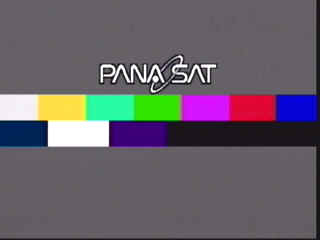
NEWS
PRESS RELEASE
Telstra and AsiaSat Forge Major Satellite “Connectivity” Agreement
From Telstra.com
Australia’s Telstra Corporation and Hong Kong-based Asia Satellite Telecommunications Company Limited (“AsiaSat”) today announced an agreement which establishes a framework for Telstra to use AsiaSat satellite capacity in the Asia-Pacific region, including Australia.
Under this agreement, Telstra has initially reserved four Ku-band transponders on AsiaSat 3S’s steerable beam. The high power steerable beam will be fixed over Australia to support new broadband satellite services.
Telstra’s Managing Director Global Wholesale, Mr John Hibbard, said the agreement will boost the already significant satellite capacity available to Telstra and the IP Backbone Company joint venture being established under the alliance with Pacific Century CyberWorks (“PCCW”).
?We’re confident that, when we begin operations in the near future, the IP Backbone Company will be the number one provider of voice and data/Internet traffic in non-Japan Asia and in the top tier globally,” he said.
?This significant additional capacity via four high-powered Ku-band transponders on AsiaSat 3S, as well as the associated flexibility for regional C-band wide coverage on AsiaSat satellites, will further boost our ability to provide seamless regional and global connectivity for customers. AsiaSat has a long track record of high quality service in the region and we have high aspirations for this relationship.”
Mr Hibbard explained that the agreement with AsiaSat was also an indication of the added value that will be brought to Telstra by the IP Backbone Company’s relationships in Asia and worldwide.
?It’s a prime example of how Telstra’s regional and global expansion will generate flow-on benefits for the people of Australia,” he said.
?The initial capacity reserved by Telstra on AsiaSat 3S will provide national coverage at higher power levels than presently available and will support Telstra’s introduction of new broadband satellite services to the Australian market in 2001.
?We’re confident that this relationship with AsiaSat will facilitate unprecedented access by Telstra’s customers to the most advanced broadband satellite communications services in the world.”
Mr Peter Jackson, Chief Executive Officer of AsiaSat said, “This agreement marks a great step forward of our entry into the Australian market through our strategic partnership with Telstra, Australia’s leading telecommunications provider. AsiaSat 3S has demonstrated exceptional coverage and power across Australia. We are excited to be part of Telstra’s delivery of new national broadband services, and look forward to the future opportunities we have together.”
?We are also pleased that our long-term relationship with PCCW can be further strengthened by this newly established partnership,” Mr Jackson added.
Notes to Editors
About AsiaSat
AsiaSat, Asia’s leading satellite operator, serves over two-thirds of the world’s population with its fleet of satellites. The AsiaSat satellite system provides services to both the broadcast and telecommunications industries. Over 100 analogue and digital television channels and 90 radio channels are now delivered by the company’s satellites, reaching over 80 million households, with more than 300 million viewers across the Asia Pacific region. Many telecommunications customers also use AsiaSat for public telephone networks, private VSAT networks and high speed Internet and multimedia services.
AsiaSat is a wholly owned subsidiary of Asia Satellite Telecommunications Holdings Limited, a company listed on both the Hong Kong (SEHK: 1135HK) and New York (NYSE: SAT) stock exchanges. AsiaSat’s two major shareholders are China International Trust and Investment Corporation (CITIC) and Société Européenne des Satellites (SES), the operator of Europe’s premier ASTRA satellite system.
For more information: www.asiasat.com
About Telstra
Telstra is Australia’s premier communications carrier and a world-class fully integrated, full service provider across wireline, ADSL, HFC, satellite and digital wireless networks and platforms. It is Australia’s leading ISP, has the most highly accessed family of Internet portals and sites and provides entertainment and multimedia content over its broadband network and through its Pay-TV joint venture.
Telstra owns and operates one of the most technologically advanced networks, offering end-to-end solutions ranging from broadband, IP, mobile and intelligent network services, to voice and data network hubs, call centres and advanced multimedia and e-commerce applications. It has business operations in 19 countries in North America, UK/Europe and the Asia-Pacific region.
At the XXVII Olympiad, hosted by Sydney Australia, Telstra’s Millennium NetworkTM allowed the world’s media to deliver the Games to an estimated daily global audience of up to 4 billion. This was the most extensive peacetime telecommunications project in the world and the first time in the history of the Olympic Games that a single provider had designed, installed and maintained the entire network. Linking into Telstra’s national and international networks, the infrastructure used to convey the 2000 Games to the world utilised enough optical fibre to circle the planet 37 times.
For more information: www.telstra.com
About the Telstra-PCCW alliance and IP Backbone Company
Earlier this year, Telstra forged a pan-Asian alliance with Pacific Century Cyberworks which is expected to become a leading operator in voice, data and Internet in the Asia-Pacific region, and in the top tier globally. Key elements of the joint venture include establishment of an IP Backbone Company, a regional wireless company and an Internet Data Centre company.
The IP Backbone Company joint venture is expected to become the number one carrier of voice and data/Internet traffic in non-Japan Asia, and to be among the top global wholesale carriers. It will tap into the strong global demand for connectivity and fill a gap in Asia, which is currently under-served.
For further information, please contact:
Edelman Public Relations Worldwide (HK) Limited
Miranda Barham / Anna Wan / Erika Leung
Tel: 852-2804 1338 Fax: 852-2804 1303
Email: mbarham@edelman.com.hk
Telstra Corporation
Martin Ratia
Telstra Public Affairs
Tel: +61 418 418 610 Fax +61 2 9264 4897
Email: martin.ratia@team.telstra.com
Asia Satellite Telecommunications Company Limited
Sabrina Cubbon
General Manager Marketing
Tel: (852) 2805 6650
Fax: (852) 2504 3875
Email: scubbon@asiasat.com
Winnie Pang
Corporate Affairs Manager
Tel: (852) 2805 6657
Fax: (852) 2504 3875
Email: wpang@asiasat.com
Alston tunes in digital operators
From http://www.australianit.com.au/common/storyPage/0,3811,1493852%5E442,00.html
COMMUNICATIONS Minister Richard Alston called together the free-to-air television networks and pay-TV operators last night to ensure consumers were not left with poor reception when the digital revolution begins on January 1.
Senator Alston flies out on a two-week trade mission today and will not be in the country for the first real test of whether there will be disruption to consumers' VCRs. The interference issue has come about because the Australian Broadcasting Authority decided to utilise airwaves traditionally used to tune in VCRs and pay-TV set-top boxes.
The first test begins on December 18, when SBS turns on its digital signal in Brisbane. SBS has been allocated channel 36, which is usually the channel used for tuning VCRs.
Channels 36, 37, and 38 will be used in the outer reaches of Sydney and Melbourne by the regional television operators, who are unlikely to begin transmission until April, while in Adelaide, Perth and Darwin, these channels have been set aside for datacasters.
The pay-television operators, Foxtel, Optus and Austar, are believed to be concerned that they may be forced to retune thousands of boxes.
There have also been claims many of Australia's 9 million VCRs could have to be retuned. However trials by Seven, Nine and Ten networks of their digital signals in Sydney have prompted few complaints from consumers.
The networks estimate that fewer than 4 per cent of consumers will be affected.
Sources said the meeting agreed to set up a committee of pay-TV and free-to-air networks to oversee any problems that might arise from the introduction of digital TV.
The television networks have also committed $1 million to an education campaign for the Brisbane market and plan to set up call centres around the country to help consumers retune their VCRs.
Austar trawls debt market
By Rachel Lebihan, ZDNet Australia News
From http://www.zdnet.com.au/news/dailynews/story/0,2000011358,20107443,00.htm
Pay-TV provider Austar United is trawling the debt market for a suitable saviour to bail out its cash-strapped business.
"We're looking to raise whatever funds we need to execute our business plan," a spokesperson for Austar told ZDNet. However he wouldn't confirm that Austar is seeking a AU$200 million lifeline.
"If funding proves to be too expensive in the debt market we will look at other options," the spokesperson said. "We want to make sure we do it on the right terms."
Austar confirmed its cash burn rate of AU$81 million in the September quarter.
"We're very closely monitoring costs and spending," he said. "We'll be as efficient as can be going forward.
With AU$422 million in the bank as of September 30, the regional Pay-TV provider claims to have enough cash on hand to last up to a year.
"It's a question of how we manage it," the spokesperson said. "We have the capability of slowing down if we need to."
However, Austar said it would like to be in the position to do something "sooner rather than later" to break even.
"We're scoping our options at the minute," the spokesperson said. "We'll be working on it early in the New Year."
DCL takes digital TV to Indonesia
By ZDNet Australia Staff
From http://www.zdnet.com.au/news/dailynews/story/0,2000011358,20107421,00.htm
Perth-based digital datacasting developer Data & Commerce Ltd has struck a deal with Indonesian company PT RekasisCom Widya to provide television broadcasting infrastructure in Indonesia.
The deal will allow the rollout of Pay TV services, digital TV, digital radio, interactive multimedia and two-way wireless Internet to Indonesia.
Initially, DCL will deliver a digital television broadcast facility, a data centre and a small LMDS data service in Indonesia costing the company US$3.7 million.
RekasisCom - owner of Indonesian TV Channel 11 - will deliver the services to Jakarta, Bogor, Tangerang, and Bekasi.
According to a statement, DCL can enable datacasting transmission of digital content to users simultaneously using satellite, terrestrial, cable or ADSL.
Furthermore, the deal gives DCL a 3-year term licensing agreement to supply further purchases of digital set top boxes and broadcasting infrastructure, according to the statement.
6/12/00
Live chat tonight 8.30pm Sydney time onwards, for all the latest exciteing concrete developments. Some more info on the Telstra announcment is over at the Satfacts website. Things are pretty quiet on the satellite scene.
We welcome a new page in the users section,"S" in Perth has supplied some info on his setup.
http://www.apsattv.com/Articles/user/s/s.html
From my emails & ICQ
The site host Jamie is checking out the message discussion forum software, hopefully we will have it up and running soon!in place of the dead Sattrader section
Alex in Perth, reports the India vs Zimbawe ODI cricket was on DD1 on Insat 2E as well as being on Channel I Apstar 2R yesterday.
From the Dish
Not much for today just
LMI 1 75E "MSC" has left 3435 H
NEWS
Merger failure hammers Austar
From http://www.australianit.com.au/common/storyPage/0,3811,1489908%5E442,00.html
INVESTORS deserted regional communications group Austar yesterday after its parent company pulled out of a $US5 billion ($9.17 billion) pan-European merger with Excite@Home and amid growing concerns about the Australian company's cash burn.
Shares in Austar slumped to below $2 for the first time, ending the day 27.6c lower at $1.994. More than 1 million shares changed hands and several market sources said at least one institutional investor was behind yesterday's selling. The selling came after UnitedGlobalCom, Austar's 72.3 per cent shareholder, announced its European-listed arm United Pan-Europe Communications had walked away from plans to merge its broadband interests with Excite@Home.
The merger, announced in July, would have combined Excite@Home's European and Asia-Pacific interests with Chello Broadband, which operates in Europe, New Zealand, Chile and Australia. UGC, however, said there had been a "number of difficult business decisions to resolve," on which it and Excite@Home had been unable to reach agreement.
Excite@Home said: "United Groupo recently indicated to Excite@Home that, due to market conditions, they were unable to move forward with the Excite Chello transaction as planned and asked Excite@Home to consider various alternative transaction proposals".
Market watchers here blamed the slump in Austar's share price in part on the fact that Chello's Australian operations would have benefited from a merger with Excite@Home.
Chello Broadband's rollout in Australia has largely been confined to regional Australia and is lagging its metropolitan rivals Telstra.com and Optus@Home – Excite's Australian broadband partner – in subscribers.
Excite@Home has also built a strong brand presence since it launched here in March, when it ranked 52 among portals. It is now the fifth most visited site in Australia according to internet measuring group Red Sherriff.
Analysts and funds managers said, even without the collapse of the international merger, investors were bearish on Austar.
"At their current rate of spending they will run out of cash in nine months and yet they are not expected to be cash flow positive until 2004," said one institutional investor who declined to be named.
Telstra to use Asiasat capacity
Telstra will co-operate with the Hong Kong based satellite operator Asiasat
to broaden its coverage of the Asia Pacific. The companies reached an agreement
under which Telstra will for two years be allowed to take up "reserves in the
satellite capacity when needed."
Telstra has reserved four Ku-band transponders on a high powered steerable
beam that will be fixed over Australia to support broadband services, including
in remote outback areas. The Australian government, a major shareholder in
Telstra, has urged the communications carrier to ensure services in the
Australian bush match those provided to people in the cities.
The future of digital television in New Zealand
Media Release From: Television @ Evolution
05 December
ONE DAY CONFERENCE-Auckland 7 February, Wellington 13 February, Christchurch 14 February
In 2001 interactive television will become a reality in New Zealand, via digital broadcast. For the first time advertisers and marketers will have a one on one relationship with the viewer. Via their television, viewers will be able to shop, bank, e-mail, play games and interact with TV programs.
The Television @ Evolution conferences will introduce delegates to the changing face of television.
By attending this conference delegates will learn:
How interactive TV will effect the way you advertise and market your products
How to prepare your business for interactive television
The latest software being used worldwide to meet the needs of interactive TV
Speakers
International speaker-Miranda Dyson, former Director of Business Development for Open TV, is an authority on interactive television. Miranda began working in the field in 1995 with the BBC in London and has provided consultancy services on Interactive TV to major worldwide broadcasting companies. She will discuss:
Global picture of interactive TV
Future of interactive TV in NZ
Who this will effect
How to prepare
And show demonstrations of interactive TV
International speaker Roshi Yousefi, Worldwide Director of Open Advantage - world leaders in interactive media solutions. They provide the television networks with the technology platform to produce interactive TV. She will discuss:
The Open Advantage program
Developing for interactive television
Profile of a developer
Chris Lambourne, Business Development, TVNZ
TVNZ are committed to providing viewers with the best in television. They will discuss;
Interactive TV according to TVNZ
TVNZ Plans
Timeframes
Future developments
Sean Wynne, Director, Telstra Saturn
Telstra Saturn is a new type of company that offers entertainment, communication and information. They will soon turn your TV into a computer, and your computer into a phone. TelstraSaturn will discuss:
Plans for interactive TV.
What will be available for Saturn customers
Where TelstraSaturn differs
Nathan Price, Head of Oktobor
Oktobor bring the look and feel of mass media to interactive media; the web, interactive TV and games. Oktobor are New Zealand’s leaders in creating interactive advertisements.
They will:
Show examples of interactive advertisements
Detail passage of how adverts have developed and how they are changing
Registartion for the full day is $350.00 and the price includes speaker notes, morning and afternoon tea, lunch and GST
For more information go to-www.interactiveanswers.co.nz
e-mail: enquiries@interactiveanswers.co.nz
Zee TV jettisons Kher, takes on new male anchor for game show
From Indiantelevision.com
In a continuation of its press-the-panic-button-react-in-a-kneejerk manner Zee TV has given veteran actor Anupam Kher marching orders from its game show Sawal Dus Crore Ka. The management is reportedly pointing fingers at Kher for the game show's not so impressive ratings and has hence shown him the door. Replacing him is Hindi-belt actor Ashutosh Rana as the show's co-host with actress Manisha Koirala.
Observers say the Zee programming and production team and senior management are behaving like a fish gasping for its last breath and flailing out in a bid to stay alive. But they should remember panic in a difficult situation never did anyone any good.
Zee hems and haws over Kher eviction
From indiantelevision.com
Zee Telefilms has responded to the charge that it has asked Sawal Dus Crore Ka co-anchor Anupam Kher to go as part of its revamp. According to a Zee TV spokesperson, the issue is that "if Kher has got other commitments, he could well go. And if he is going then we will look at alternatives."
Anyone will tell you that that is quite a roundabout way of asking a person to go. The decision has surprised many an industry professional as they expected the axe to fall on co-host Manisha Koirala's head, rather than Kher's.
Kher told local daily Indian Express that he had to leave five or six films for the show and he was being made the fall guy. He had also told indiantelevision.com sometime back that he had planned his film shooting schedules around SDCK.
However, Zee TV and Kher will part only if it is mutually agreed upon, the Zee TV spokesperson said. The spokesperson said no final decision had been taken about Kher's replacement Ashutosh Rana.
Kher examines legal options over eviction from game show
From indiantelevision.com
The let's-make-a-mess-of-it sorry saga continues at Zee Telefilms. Its decision to unceremoniously and injudiciously sack Sawal Dus Crore Ka co-host Anupam Kher could see it getting embroiled in a legal tangle. The company has rattled the veteran anchor so much that he told a local daily that he was considering legal opinion as to how he should react to Zee TV's decision to dump him and retain Manisha Koirala.
"As per our contract they were supposed to inform me 60 days in advance in writing," he said. "One expects matters to be handled in a professional manner."
He revealed that his contract was for a year and spanned 156 episodes and that he had turned down five to six films to be part of the show. He added that he had not been informed officially about his termination and that he was awaiting official intimation.
5/12/00
Chat was a bit busier than usual, even if it was just guys makeing fun of my concrete. Not much else today!
Another user page has been added http://www.apsattv.com/articles/user/holbrook/holbrook.html
From the Dish
Optus A2 122E Optus A2 is not deorbited, but has moved to 122 East. It's inclined by 5.5 degrees.
Thaicom 2 78.5E 3865 H TVT Channel 11 has new pids Vpid 512 Apid 650 (for those that can receive it)
Insat 2E 83E AIR - All India Radio has started on 4089 V: 6.15, 6.55, 7.02 and 7.62 MHz, zone beam.
Insat 2E 83E AIR - All India Radio is on 3809 V: 6.10 and 7.10 MHz.
LMI 1 75E "MSC" is back on 3435 H Dig Sr 3500 FEC 7/8 Vpid 1160 Apid 1133
NEWS
Satellite Deal
Telstra Corp, Australias Largest phone company, said it plans to use Asia Satellite Telecomunicatiotions Co Ltds satellite capacitt to expand its coverage in the Asia Pacific region. An agreement between Sydney based Telstra and Hong Kong based Asia Satellite would be detailed later today, Martin Ratia, a Telstra spokesman.
4/12/00
Live chat tonight 8.30pm Syd time onwards.
Our first User page is up go to http://www.apsattv.com/articles/user/alex/alex.html
More to be added later, I found a very good message board forum I have emailed our site host to see about installing it. It will replace the Sat Trader page, with 4 or 5 message boards to start with. No at this stage we won't be running a MOSC message forum.
From the Dish
Thaicom 3 78.5E "TMG Enter TV" has started on 3554 V Vpid 514 Apid 642, Asian beam.
Thaicom 3 78.5E "ETC Channel Punjabi "has started regular transmissions on 3616 V PAL 6.60/7.02 MHz, Asian beam.
Asiasat 2 100.5E New PIDs for Fashion TV on 3795 V: Vpid 308 Apid 256.
NEWS
Indian cabinet approves Insat launches
India's federal cabinet has approved Europe's Arianespace contracts to launch
its Insat-3A and Insat-3C satellites. The Insat-3A launch will cost US$74
million, that of Insat-3C US$70 million. Insat-3A is expected to be launched
during the last quarter of 2001 or the first quarter of 2002, while Insat-3C
may lift off in the second half of 2002.
Zee Sports to start soon.
From www.zeetelevision.com
Media giant Zee on Tuesday said it will soon launch its much-delayed Sports channel, for which over 80 per cent content is ready, and an announcement on the final date was likely in the first week of December. "Zee Sports will be launched as soon as the graphics content is finalised; we`re over 80 per cent ready in terms of other content," CEO of Zee Sports Satish Menon said.
He said Zee had taken a position to provide Sports and sporting events of interest to the Indian viewers, including major domestic as well as international sporting events. "Take for example soccer. We will promote this game in a big way once the channel is launched," Mr Menon said adding the company has bought extensive properties in soccer, cricket, WWF and many other sporting events to make the channel most watched in India.
Mr Menon said channels like ESPN heavily promoted world events which sometimes had little relevance for the Indian viewer but Zee would aim at showing events which an average Indian Sports lover identified with. He also denied media reports that Zee Churchill had severed ties with the football association (AIFF
Asia-Pacific Has An Edge in E-commerce
From Satnewsasia.com
A just released study by Andersen Consulting gives the Asia-Pacific region high marks in its preparedness for the “second wave” of e-commerce.
The study, "Riding the Next Wave: The Strategic Implications of Interactive TV and Broadband Services in Asia Pacific,” said the region’s base of digital TV systems positions it favorably to shop, bank and do business electronically, activities that constitute the second wave of e-commerce.
The study, which involved Japan, China, Hong Kong, Taiwan, South Korea, Singapore and Australia, also noted that digital TV presented investors with impressive opportunities for growth. It also gives Asia-Pacific an edge in developments relating to digital TV.
Forrester Research predicts that e-commerce in Asia-Pacific will surge to $1.6 trillion in 2004, by which time the second wave should be in full swing. Also by 2004, Forrester predicts that the global Internet economy should reach US$7 trillion.
Forrester identified falling trade barriers and government enthusiasm for e-commerce as factors in Asia-Pacific’s coming e-commerce boom.
Japan is expected to dominate the region with close to $900 billion in online sales in 2004. Forrester predicts that more than 15% of total sales in Australia, Korea, and Taiwan will be conducted online.
Worldwide, Forrester says that e-commerce will contribute some 9% of worldwide sales of goods and services in 2004. The United States will remain the global e-commerce leader with online sales reaching $3.2 trillion in 2004 or close to half of the world’s e-commerce sales..
Sun TV in the Hunt for Strategic Partners
From satnewsasia.com
Sun Television Cybernetworks Holdings Ltd. (Sun TV) is looking into strategic investments with a number of Taiwan cable TV operators and Macau Satellite TV.
The company is considering swapping programs with Taiwan and Macau operators if it could earn from program sales and enjoy higher returns from profit sharing. Chief Executive Tsui Siu-ming said the company’s “program-stake swap strategy” would generate additional revenues at minimal cost.
Sun TV estimates ownership of some 10,000 hours of programming in the next five years. It now has about 4,500 hours of TV footage, 3,000 of which were acquired from China. About 40 per cent of its targeted programming will be self-produced shows. The company estimates a yearly production cost of HK$ 60 million.
Just three-months old, Sun TV targets Chinese viewers in the mainland with programming leaning heavily towards Chinese history, culture and lifestyle. Sun TV has an estimated viewership of 35 million TV households in China, which it hopes to increase to 50 million by mid-2001.
Optus to Deploy LMDS
From satnewsasia.com
Cable & Wireless Optus is now ready to deploy its Local Multipoint Distribution Service (LMDS) following its purchase of a wireless spectrum for this purpose.
Optus acquired the 27 gigahertz band spectrum for $37.5 million to provide high-speed data services to Australian business. The spectrum will allow the deployment of LMDS, a new technology that has had its share of problems with operators in the US.
Agility Networks, an Optus subsidiary, will operate the LMDS service. The service will be rolled out to some 50 locations in the next year. The LMDS network is presently in all state and capital cities as well as in a number of regional locations.
The LMDS rollout is expected to cost Optus some $100 million over the next year. Optus previously tested the system and is confident enough to launch the service.
3/12/00
There isn't much to report for today. I have ran the link checker over the site and made a few alterations and corrections one thing I noticed Channel V China on Asiasat 3 has a different website now.I have edited the TSI news to remove the stuff not of interest to our part of the world.
My search for 2.4GHZ video senders with remote senders, has turned up the following site in Australia, they also have a NZ dealer so following up on that one. Maybe we can do a deal with them.
http://www.eon3.com/content/products/product-detail.asp?intProductID=35
From my emails & ICQ
Nothing to report!
From the Dish
Lyngsat chart list nothing for our region.
NEWS
T S I C H A N N E L N E W S - Number 49/2000 - December 3 2000 -
A weekly roundup of global TV news sponsored by Tele Satellite International
Editor: Branislav Pekic
AUSTRALIA
FOXTEL BOOSTS PAY-TV OFFER
Foxtel, Australia’s largest pay-TV operator, on November 27, unveiled its first
major change to its channel line-up in some years with the addition of a
handful of new and extended services, all coming on line for subscribers.
Foxtel, which is jointly owned by News Corp., Kerry Packer’s Publishing &
Broadcasting Ltd., and dominant telco Telstra, will add four channels, taking
its suite of services up to 40 (including its electronic publishing guide). The
changes include the introduction of a new music channel, musicMAX, which is
skewed to older audiences to complement its other music services, Channel [V]
and MusicCountry (formerly Country Music TV). Another new service, sources
said, will be Fashion TV, beamed in from France.
NINE AND TEN NETWORKS TO SUBSIDISE DIGITAL BOXES
Australian broadcasters Nine and Ten networks are to underwrite French
electronics giant Thomson’s delivery of digital set-top boxes by up to A$6
million. All three commercial networks called for expressions of interest from
manufacturers to build STBs with a non-proprietary platform, but reports
suggest that Seven network has broken ranks after a disagreement of the
applications platform. Thomson is expected to announce that it will deliver
10,000 STBs by the third week in December, 2000. The STBs will be capable of
receiving both SD and HD transmissions, and should cost less than A$600. It is
understood that Thomson hopes to have at least 30,000 of these boxes in
Australia and at least one digital television set retailing for less than $2000
by March 2001. Other television manufacturers Teac and Thorn are also believed
to be planning to launch low-cost set-top boxes and televisions for the
Australian market early next year.
CHINA - HONG KONG
SUN TV PLANS TO EXPAND INTO MACAU AND TAIWAN
Hong Kong-based satellite TV broadcaster, Sun Television Cybernetworks
Holdings, is in talks with Macau Satellite TV and Taiwan CATV operators on
potential alliances. According to chief executive Tsui Siu-ming, one possible
partnership is exchanging programmes with local operators for stakes. He said
this would allow Sun TV to generate extra revenue with minimal investment. The
three month-old company offers Chinese language programmes educational
programmes such as documentaries and lifestyle and culture programmes at
targeted at Greater China audiences.
INDIA
DD CONSIDERS SATELLITE VENTURE
Indian state broadcaster Doordarshan is in negotiations with Modi Entertainment
Network for the distribution of its 5 DD cable channels (National, Metro, News,
Sports and World) via satellite; talks are also ongoing with satellite
operators such as Echostar and Astra to distribute DD-World in 79 countries.
Alliances are also being considered in the programming field - with Bollywood’s
B4U in a revenue-sharing alliance for 26 blockbuster movies; Australian Kerry
Packer’s Nine Network for a 3-hour prime band slot on DD Metro; ESPN for sports
programs; and BBC, UTV, Buena Vista and Crest for children’s programming.
MURDOCH-DOORDARSHAN TALK ON DTH PLATFORM
Rupert Murdoch is reportedly in talks with Indian state broadcaster Doordarshan
about partnering on a direct-to-home (DTH) satellite platform, following the
Indian government’s decision to open its doors to such services earlier this
month. However, under Indian law, Murdoch would only be able to take a direct
stake of 20 per cent in the venture. In addition, total foreign equity in DTH
broadcasting in India has been capped at 49 per cent.
ZEE TELEFILMS TO LAUNCH SPORTS CHANNEL
Zee Telefilms has promised to launch its new sports channel by January 2001.
The long-delayed service claims to have acquired 80 per cent of the necessary
content, according to Zee Sports’ CEO, Satish Menon. The new channel will focus
on national and international soccer. A free-to-air model will be adopted in
the launch phase. Financial details have not been disclosed.
BTL BUYS NINE NETWORK INDIA
Actor Jeetendra Kapoor’s production house, Balaji Films Limited (BTL), has
acquired Nine Network India, the joint venture between Kerry Packer’s Nine
Network subsidiary and Indian telco manufacturer HFCL, for Rs340 million. Nine
Network will hold 20-per cent equity in BTL. Nine Network recently won a bid
for three hours of prime time programming on state broadcaster Doordarshan
(DD), and is believed to be pitching for more DD bands. BTL produces around 35
hours of programming for various satellite channels and DD.
INDONESIA
PT NUANSA KELIR ANNOUNCES PAY-TV PLANS
New Indonesian company, PT Nuansa Kelir, will enter the pay-TV industry in 2001
with a limited hotel-only access service. Branded SmarTV, the new platform will
target the resort island of Bali. A soft launch is planned for April 2001. The
full service will be up and running by June 2001. The total capital is $3.5
million, with expected revenues of $2 million a year. Similar services are
being planned within three years for Bintan near Singapore. President director,
David Irwan, says SmarTV expects to provide its services pay per view, games on
demand, tourist information, Internet access, and live coverage of conference
or weather reports - to 3,200 hotel rooms in Bali’s Nusa Dua resort enclave.
Only VOD programming will be charged for. Hotel rooms will be equipped with a
set-top box, a keyboard and a remote control to gain access to the service.
SGN ENTERS INDONESIAN TV MARKET
Australia’s Singleton Group Limited (SGN) has entered Indonesia’s television
market with a deal that leads indirectly to an equity stake in the country’s
third-ranked terrestrial station, SCTV. SGN said it had joined a consortium
investing in Indonesian firm PT Abhimata Mediatama, which owns a 33-per cent
share in PT Cipta Aneka Selaras (CAS). The remaining 67 per cent is split
between PT Bhakti Investama Tbk and PT Mitrasari Persada. These two firms own
73 per cent of SCTV. Other parties involved in the consortium are Carnegie,
Wylie & Company Fund, John Singleton, Mark Carnegie and John Wylie privately
and Emtek, a medium size Indonesian telecommunications and IT company.
JAPAN
NHK ANGRY WITH GOVERNMENT
Japan’s national broadcaster NHK is resisting government pressure to change its
collection system to pay per view with the introduction of digital broadcasting
next month, according to a report in the South China Morning Post. Currently,
NHK requires households to pay ¥1,395 a month to watch NHK, and an extra ¥945 a
month to receive NHK’s two satellite channels. With the launch of a new digital
broadcasting system a government advisory panel suggests the signals be
scrambled and viewers pay per view to unscramble them. NHK opposes the plan
claiming uncertainty of revenues would disrupt its budget plans, and the system
would force NHK to worry about ratings.
BS OFFICIALLY LAUNCHES DBS SERVICE
Japan’s long awaited broadcasting satellite (BS) based digital TV service was
officially launched on December 1. Digital BS gives viewers access to
high-resolution picture quality and high-quality sound, as well as TV
enhancements such as news updates and weather, all via a remote control. A
total of eight broadcasters, including pubcaster Japan Broadcasting Corp.
(NHK), will offer BS services. While many of the services will be free, NHK,
WOWOW and Star Channel will offer paid services. The BS platform will include a
total of 10 channels.
DTH broadcasting sectoral cap is final, says government
From indiantelevision.com
Despite consistent lobbying by a clutch of broadcasters right from Zee TV to Star TV to Prasar Bharati chief RR Shah, the government is not going to budge on the 20 per cent sectoral cap for broadcasters laid down in the DTH guidelines announced in early November.
This was announced by information & broadcasting (I&B) minister Sushma Swaraj yesterday. She told a local news agency that she had spoken to all the ministers who had aired their concerns and informed them that the clause had been inserted to prevent the emergence of vertical monopoloies.
She added that she had even spoken to senior BJP cabinet member and home minister L.K. Advani about the issue. With the government being firm on this issue broadcasters will have to resort to ingenious corporate restructuring to be able to put together a DTH platform. Or lobby even harder.
2/12/00
Nothing to report for today so I am takeing a day off doing the site although later this evening I will be working on the content, checking links etc anything I fix up or add will be mentioned tommorow.
1/12/00
I had a loan of a digital camera again, took a view more shots of the progress with the dish eventually it will all go up on my users pages section. If you want to send pics of your system I will put them up on a new part of the site. I also brought ANOTHER 128 megs ram its so cheap at the moment $165 NZ for 128megs PC133 ram. Its on its way back up though.
Friday Feeds Bit
These events are on dureing the weekend and may appear somewhere on a satellite feed
Friday 1st Dec
12pm Syd Golf Australian PGA
1.20pm Syd Australia vs West Indies Cricket test (This is going to the u.s, maybe via Pas 2)
2.00pm Syd NBA Supersonics vs Lakers (anyone seen NBA feeds yet)?
6.30pm Syd South Africa vs NZ, I701 maybe
Saturday 2nd Dec
12pm Syd Golf Australian PGA
1.20pm Syd Australia vs West Indies Cricket test (Day2)
6.30pm Syd South Africa vs NZ, I701 maybe
Sunday 3rd Dec
12pm Syd Golf Australian PGA
1.20pm Syd Australia vs West Indies Cricket test (Day3)
6.30pm Syd South Africa vs NZ, I701 maybe
From the Dish
Intelsat 704 66E An ETV Telugu info card has started on 3760 R PAL, East hemi beam.
LMI 1 75E 3446 H "Rupawahini 1" Sr 4000 Fec 3/4 this one only for our readers in South Asia.
Asiasat 3 105.5E 4000 H "Star Tv" package has a Phoenix InfoNews test card on 4000H Vpid 521 Apid 676
Asiasat 3 105.5E 3880 H "Fashion TV" and "AXN" have left "Star Package"
Asiasat 3 105.5E 3780 V "Star Mosaic" 1-2 has left
NEWS
TV a la carte, on a set at your place
From http://www.theage.com.au/entertainment/2000/12/01/FFX6B0I66GC.html
Canberra, per capita the most prosperous community in Australia, will be first in the nation to taste video-on-demand, a technology forecast to sweep the home entertainment market. It means, ultimately, television with pause, rewind and fast-forward buttons.
The Canberra system is due to start in January with a pilot of a similar scheme planned for Melbourne early next year and for Sydney later in 2001.
In its embryo stage the Canberra system will allow subscribers to order videos and overseas TV-style programs over the $21 million, high-speed fibre optic cable network now being rolled out across the ACT.
Depending on contracts being negotiated here and overseas, some current television content, including international and, possibly, local sport, will be be available to subscribers when they want to see it rather than when stations broadcast it.
A deal signed yesterday with TransACT, the Canberra telecommunications network operator, owned by the ACT Electricity and Water Authority, allows Total Television Australia Ltd to market its video on demand service to the 100,000 households and businesses in the territory.
The rest of Australia would be "truly envious of Canberra", said TransACT Communications chief executive Richard Vincent.
Geoff Babidge, chief executive of Cable and Telecoms, the Australian partner in Total Television with British content provider, Yes Television, said his company's service would follow the TransACT roll-out, starting towards the end of January and continuing until mid-2002.
Video content, ranging from movies to TV programs such as Friends and sports coverage, would be offered from centrally located network servers. "We will have a suite of offerings from movies to programs of TV-type but in video format so it is on demand," Mr Babidge said. Pricing had not yet been fixed but would be competitive with video rentals, he said.
All the programs will be ordered through set-top boxes connected to television sets. The programs will be stored in libraries on local server computers or drawn over broadband lines with Yes TV's resources in Britain. Users will be able to view a program as often as they please, stop, start, rewind, pause and revisit it at any time during the paid-for period.
DTH: Overhyped and overpriced
From http://www.indiaserver.com/thehindu/2000/11/30/stories/0830000f.htm
On November 1, the Indian government finally cleared the technology that will allow its people to receive television programmes directly via satellite, using a small dish antenna - without having to depend on cable TV providers or terrestrial transmitters. But is it likely to offer consumers a viable choice? Anand Parthasarathy checks out the technological promise - and the ground reality - of direct-to-home broadcast systems.
IN THE latter half of the Second World War, the US entered the fray on the side of the Allies - and dispatched its troops to staging points all over Britain, a nation which had already borne the brunt of the German onslaught for over two years. The large numbers of American soldiers, seemed to form a privileged elite, enjoying a luxurious lifestyle in comparison with local Brits, subject to a stiff wartime rationing system. With their free supplies of chocolates, real coffee and nylon stockings, they were able to impress the local girls no end, to the grumbling resentment of British males. It gave rise to the famous grouse that the Americans were ``Overpaid, over sexed and over here''.
Do not be surprised if the announcement earlier this month that Indians can now legally receive television broadcasts in the Ku satellite transmission band in their homes, directly via a small dish antenna, is soon greeted with similar scorn by those currently owning television sets. They may find the new and already much-hyped technology, too costly even to contemplate. And like the war-time American presence in UK, it might in the short term, merely create a new digital divide between a privileged few who can afford DTH with its promise of superior quality and choice - and the overwhelming majority who cannot.
Nevertheless, Direct-to-home television broadcasting - an activity that the government banned in 1996 before reversing its decision now - represents one of a handful of interesting technologies whereby TV content providers are trying worldwide to enter our homes.
The good old method of course, is to send out television programming from terrestrial transmitters which we have been accustomed to receive with small and cheap ``half wave dipole'' antennas - the type that works for the local Doordarshan transmission. Most of us installed these systems after 1984 when the government vigorously expanded the range and reach of LPTs - low power transmitters.
Then came the explosion of satellite-based television services - and the local cable operator who received these channels currently between 50 and 75 in India, using 1 or more 3-4 meter diameter dish antennas and then sent them to individual homes using a coaxial cable, for a monthly subscription that varies in India from Rs. 75 to Rs. 200. The price varies with different cable providers because they offer a varied menu, in turn paying a fixed fee per home to the creator of TV content who chooses to charge for the service. Some - like the language services of Doordarshan, and quite a few foreign broadcasts, are ``free to air''
So what's new with DTH ?
It works like this: The broadcaster creates his television content and beams it up to a geostationary satellite using a large dish antenna. The satellite sends the signals bouncing back to earth using the channel that is currently allotted for this service: the Ku band which extends across a frequency range of approximately 11 to 15 gigahertz. This frequency band is much higher than the one currently employed by the satellite TV broadcasters - the C band which extends from 3.4 to 6.65 GHz. Here lies the main advantage of the new DTH system: since the broadcast frequency is much higher, the size of the antenna required to receive the signal is much smaller ( higher frequency means lower wavelength; and the receiver diameter is directly proportional to the wave length). Where one required dishes of between 1.5 to 4 meter diameter to receive the C band transmission ( this is the type the neighbourhood cable operator uses) one can now use a dish that is just 35-40 cms in diameter. In other words, it is small and light enough for you to park the antenna on the ledge of your window and run a short cable to the TV set. The signal must be passed through a small receiver which makes it suitable to be seen on the TV screen. If any one is out there broadcasting free TV programmes in the Ku band, you can receive it even today.
However the agency that provides this direct-to-home TV service will probably offer not one single channel but a bouquet of channels, much as the cable operator does now. Inherently the Ku band DTH system allows one to receive over 100 channels. So, for putting together a package of channels, the DTH provider will expect to be paid - in other words, the signal sent will be coded and can only be unscrambled if the customer has paid a fee. To ensure this, DTH operators will provide a ``set top box'' which is a satellite receiver with a special decoder. Only an authorised receiver will be given the code to unlock the TV signal. In all probability this coding will take the form of the SIM cards currently used to sell air time to mobile phone users. You can then buy Rs 500 or Rs 1000 worth of programming from a particular DTH operator - and slipping this ``smart card'' into the set top box will unlock the service for a given number of hours. When it's over, you buy another card to renew the service.
So how does DTH stack up cost wise against the cable service we are used to: right now, it is a no-contest. You must buy the small antenna dish and the receiver/set top box which together cost around Rs 20,000. Then you have to pay the monthly charge - by smart card or otherwise - and indications are that in India they will charge at least Rs 500 for this service.
It is estimated that in India, there are currently about 75 million TV owners of whom 37 million are subscribers to cable services. By end 2000 cable-enabled TV users are expected to number just under 50 million. But how many of these - currently receiving over 50 channels for around Rs 2-3 a channel will spend an additional Rs 20,000 or Rs 25,000 and also make a monthly commitment of Rs 500 or more? The numbers are likely to be extremely small. There are advantages for those who can: direct satellite transmissions are said to be superior in quality and not subject to the vagaries of cable. But remember, once you are a DTH user, you are alone: if the DTH provider decides to increase the cost of his bundle, you do not have a 1000 others in the neighbourhood to share the cost. It may well be that your precise needs cannot be met by one DTH consortium; you may well have to subscribe to more than one service - and each will require a separate decoder.
However, some of the Indian agencies that are ready to plunge into the DTH arena are not unaware of these realities - so they are ready to pare costs to the bare minimum in order to get subscribers. The Chennai-based Sterling Infotech hopes to tie up with Zee TV network and offer a DTH package under its Dishnet brandname, which will provide, the full DD and Zee channel range as well as some other -as yet un named- channels. It will also provide a dish and set top box for a combined price of below Rs. 5000.
DTH is not something new. It has been around in the US since 1993 when Hughes Communication launched the first Direct Broadcast Satellite (DBS) service. Rival providers like DirecTV, EchoStar and PrimeStar were soon offering services based on competing technologies like Digital Video Broadcast (DVB) and Digicipher (DISH). Both technologies use a form of data compression so that they can send up to 200 channels to every subscriber. The largest provider, DirecTV, owned by Hughes, has about 7 million subscribers in the US, while the rival system accounts for around 4 million. Together they still make for a small fraction of total TV owners who are estimated to be around 90 million. The equipment for DBS costs between $100 to 300 and a typical subscription to under 100 channels is around $30 per month. However in the US at least, the quality of DBS reception is not much better than cable because broadcasters have to achieve a via media between quantity and quality of service.
The next wave: Satellite Internet
The real breakthrough in DTH systems is yet to come- and will be a marriage of broadcast TV and the Net. It is important to remember that DTH - as contemplated in India now - is a one way system: You can receive what ever the TV broadcaster sends, but you cannot transmit. This rules out access to Internet which is a two way process.
Elsewhere, satellite-based Internet is available - well almost. EchoStar has teamed with Israeli vendor, Gilat and Microsoft, to offer satellite based Internet where you can connect at 500 KBPS one way (download) and 153 KBPS (upload) in the other direction. The facility was launched in the US this month. The Net connection can be made using a conventional PC with a satellite modem costing under $400. The monthly charge is $70. However EchoStar's TV customers can bundle the Internet service with their existing DBS TV service for under $100.
Interestingly, Gilat has been in the Indian market for over a year now and is trying to interest the government and large corporates in the benefits of a satellite-based Internet communication system for connecting into the huge rural hinterland. This at least indicates that direct satellite services have a role beyond providing elite infotainment for the well heeled. It may serve a larger social and national purpose by e-nabling millions in rural India, with a network for disaster management and education.
Today DTH in India may be limited in reach to the desi 'bold and beautiful' people. Tomorrow, perhaps, if government puts its own resources on line, it could play an earthier part in achieving our official mantra: ``IT For All by 2008''